G-Shock x Coca-Cola GA-2100CC: Two Cult Brands, One Dial
A fizzy proposition
I'll admit it upfront: I am a Coca-Cola partisan. The hiss of a chilled bottle cracked open on a summer afternoon. The oversized cup paired with cinema popcorn. Condensation beading down a glass. The familiar weight in the hand. These are not product experiences; they are cultural memory. So when G-Shock and Coca-Cola announce a joint watch to mark the brand's 140th anniversary, I cannot claim neutrality. Which is precisely why a close reading is warranted.
G-Shock x Coca-Cola
G-Shock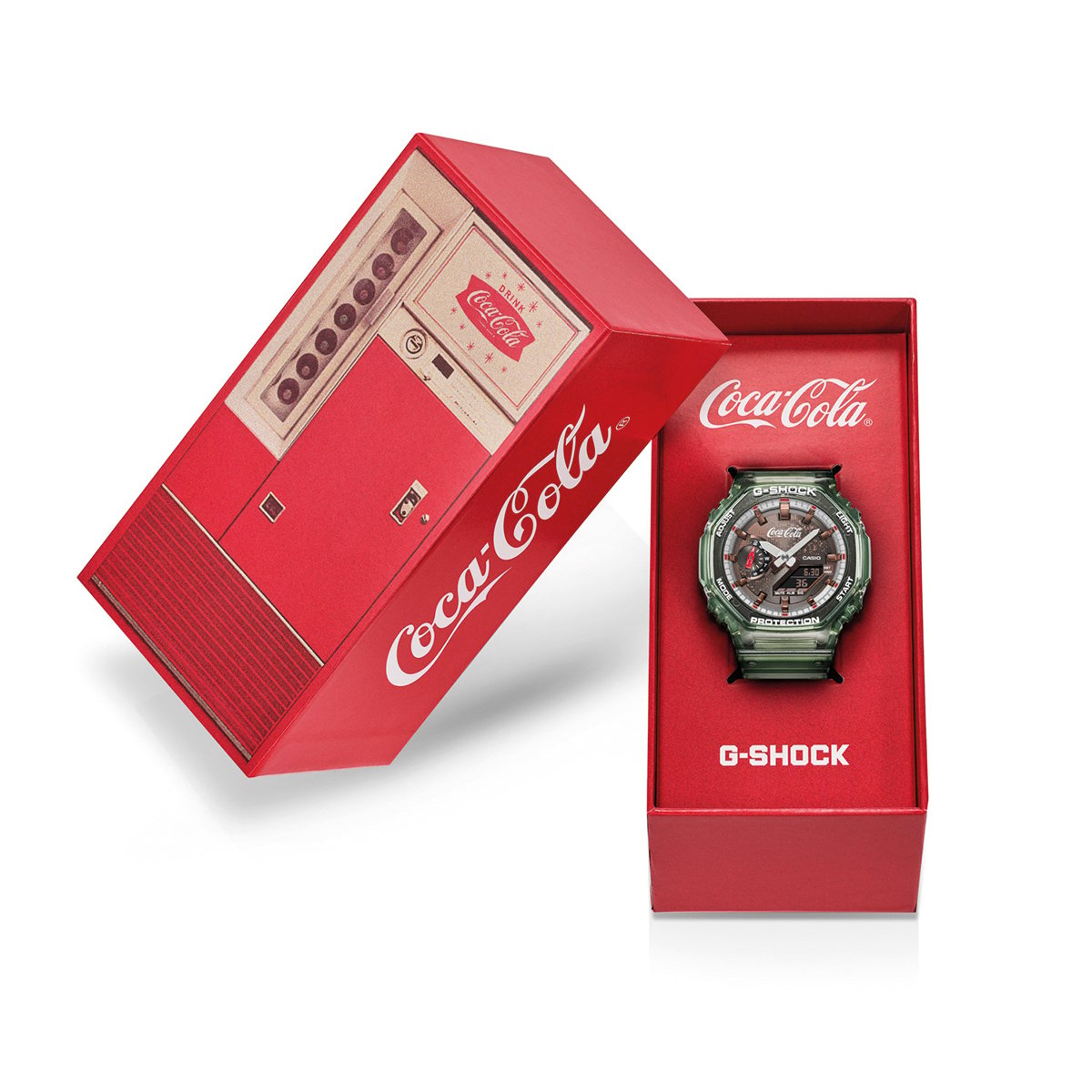
The Platform: A Proven Case
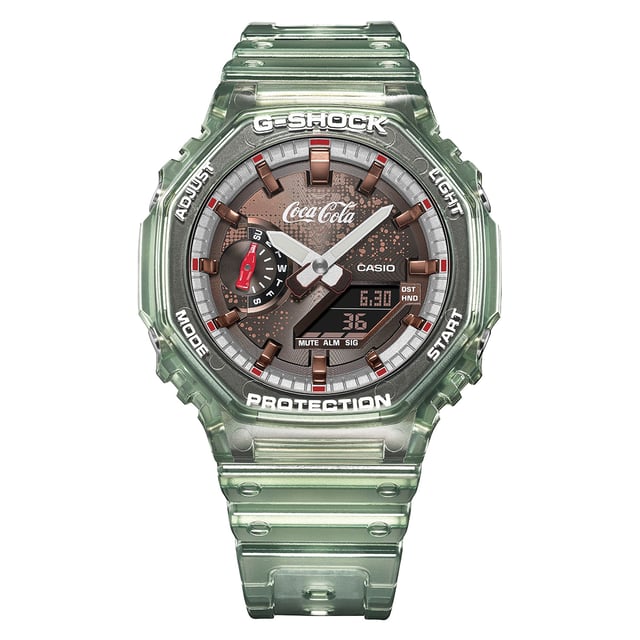
Casio drew on the GA-2100 as its base reference — a logical choice. The model carries an octagonal carbon and bio-resin bezel that has earned it the collector nickname 'CasiOak', a nod to its formal resemblance to a well-known Swiss luxury sports watch reference. At 48.5 x 45.4 x 11.8 mm and a surprisingly light 51 grams, the case wears larger than it feels. Water resistance is rated to 200 metres; construction follows Casio's Carbon Core Guard architecture; shock resistance meets the full G-Shock specification. The foundation is credible.
G-Shock und Coca-Cola – Ref GA-2100CC-3A
G-Shock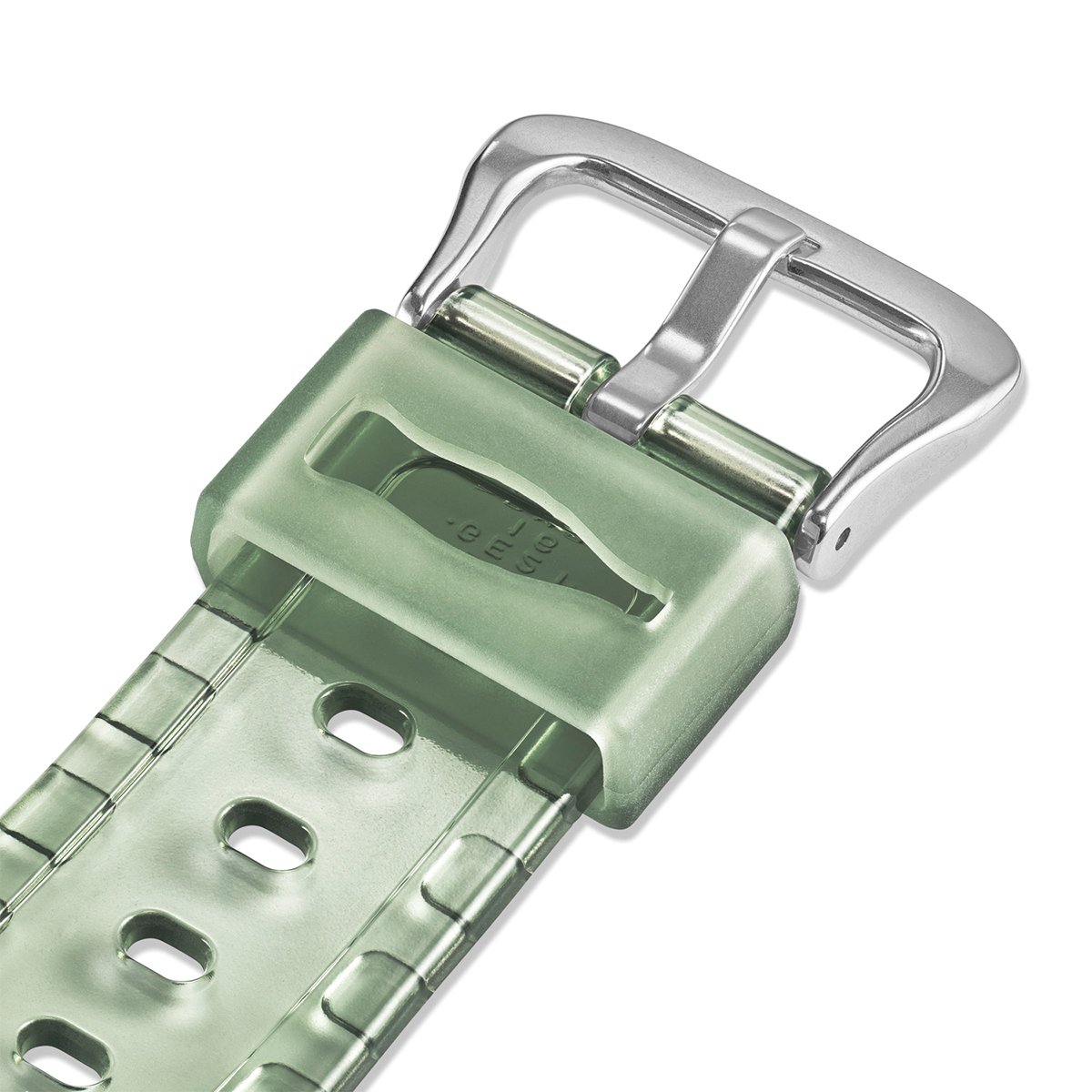
The Design: A Considered Reference
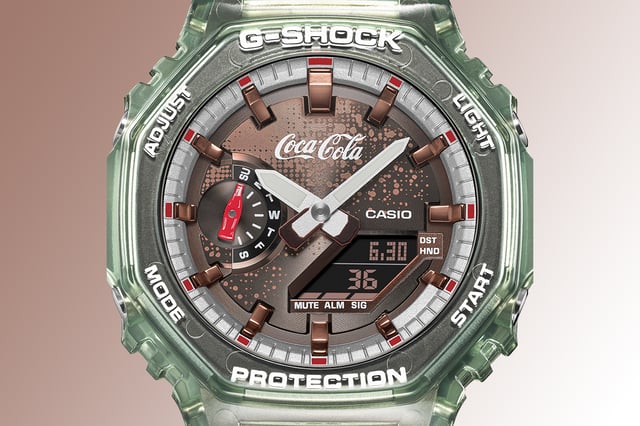
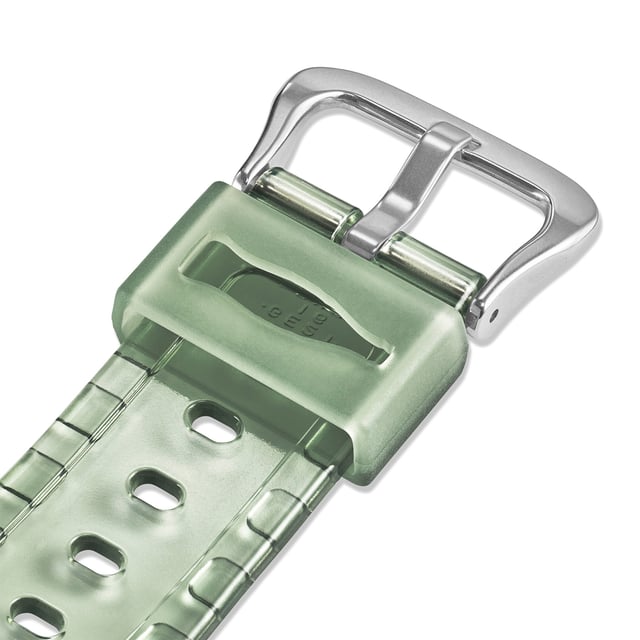
What Casio has built on that foundation is more considered than most collaborations at this price point. The colorway is keyed not to Coca-Cola's iconic red can, nor to the white script, but to the glass-green of the 1915 contour bottle. The 1915 contour bottle is arguably the most formally resolved object in the entire Coca-Cola visual canon — identifiable by silhouette alone. Casio follows through on that logic: the day display hand at 9 o'clock and the band loop each carry a ridged bottle engraving; the dial combines period-appropriate Coca-Cola palette tones with a graphic that alludes to carbonation; the caseback bears an embossed crown cap. As a piece of thematic design work, the execution holds together. (A Spotlight on Casio: How Casio’s Casiotron and G-Shock helped redefine durability, design, and everyday usefulness — from Tokyo to Yamagata)
G-Shock und Coca-Cola – Ref GA-2100CC-3A
G-Shock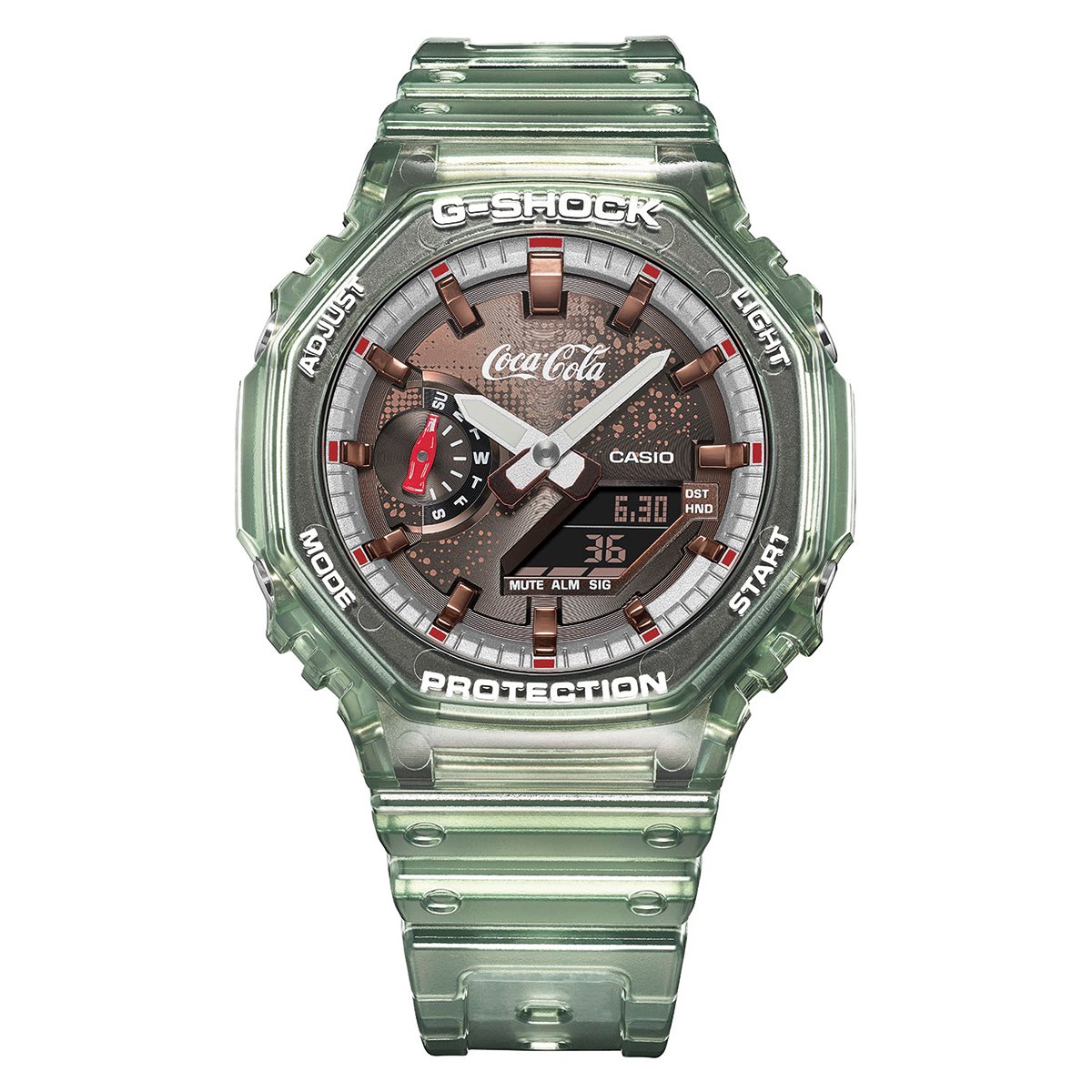
Technical Specifications
The movement is a quartz module with ±15 seconds per month accuracy — well outside the territory of mechanical horology. For the intended buyer, this is immaterial. The GA-2100CC features world time across 31 time zones and 48 cities, a 1/100-second stopwatch module, five daily alarms, a 24-hour countdown timer, and a double LED illuminator. The crystal is mineral glass; the strap is bio-resin rubber, sized for wrists between 145 and 215 mm. Battery life runs approximately three years on two SR726W cells.
Heritage Marketing at Scale
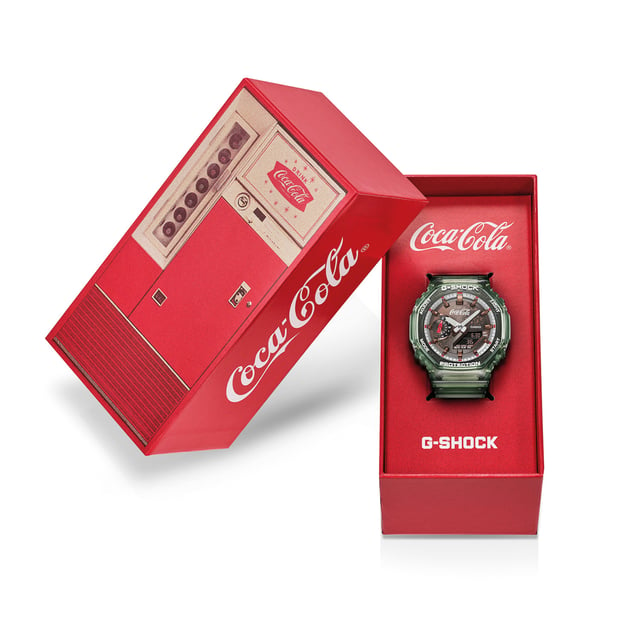
What is more interesting, from an industry perspective, is what this collaboration reveals about brand strategy. Both G-Shock and Coca-Cola operate in the heritage-marketing register with consistent discipline. The 140th anniversary provides a narrative anchor that transcends the transactional. The Coca-Cola red special-edition packaging reinforces that effect. Buyers of this piece are acquiring a cultural artefact first, a functional timepiece second.
The GA-2100CC is priced at $200. It is a limited edition, though not serially numbered. Secondary market premiums are likely: the collector audience for branded collaboration pieces is established, growing, and particularly active at accessible price points. The absence of serial numbering may temper some resale enthusiasm, but demand for coherent, story-led limited editions at $200 retail shows no sign of softening.
For collectors who treat brand collaborations as a serious collecting category in their own right, the GA-2100CC earns its place. The design is coherent rather than opportunistic. The price is honest. And the cultural resonance? That comes at no additional cost.
To learn more, visit G-SHOCK, here.
This article was originally published on WatchTime.net, here.