Indestructible: A Spotlight on Casio
How Casio’s Casiotron and G-Shock helped redefine durability, design, and everyday usefulness — from Tokyo to Yamagata
The success story of the watch division began in 1974, when Casio's co-founder Toshio Kashio shook up the watch industry with the Casiotron. Kashio, the visionary behind innovations such as compact calculators and electronic musical instruments, laid the foundation for Casio's rise from an electronics group to a leading watch manufacturer. The reason “K” was not used in the brand name “Casio” was the four founding brothers’ desire to expand into international markets. They believed people would immediately associate this label with the Cassiopeia constellation, which was fitting for a cutting-edge machine like their calculator.

The original: In 1983, the DW-5000C was the first G-Shock to come onto the market.
Photos by Casio and Shirin Blum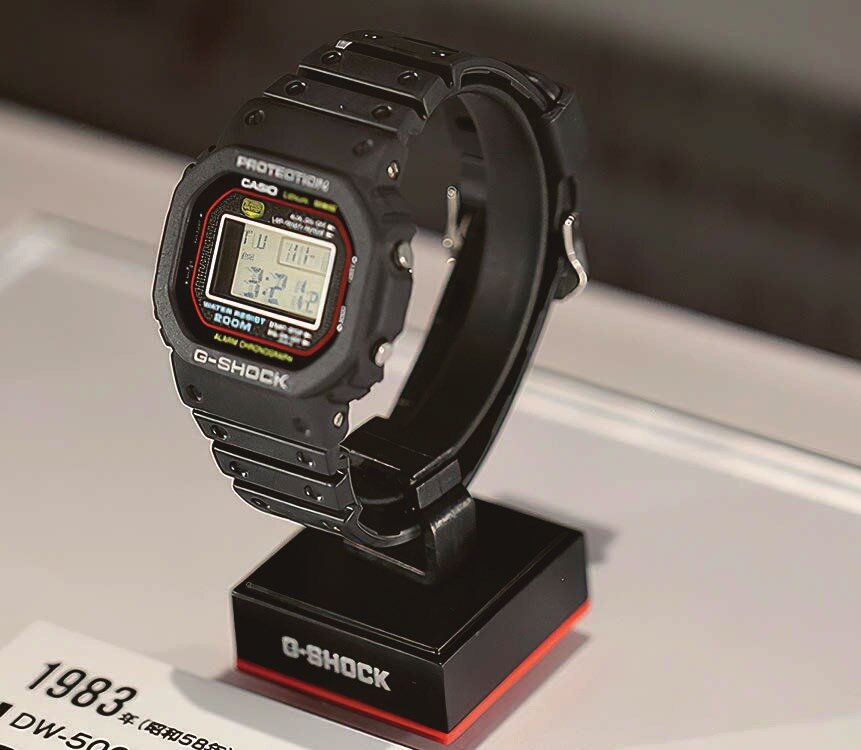
A fitting place to pay tribute to the roots of this success story is the Toshio Kashio Memorial Museum of Invention in Tokyo, the former home of the Casio founder. It was here that Kashio's career began with the development of the 14-A, the world's first compact, all-electric relay calculator. Today, Casio's watches — especially the G-Shock — are at the heart of its global success, a legacy that visitors to the museum can experience firsthand. It is also where we got to meet the inventor of the G-Shock, Kikuo Ibe, and Casio’s current head of development, Ryohei Saito.
The Beginning of a New Era: The Birth of the G-Shock
When Kikuo Ibe joined Casio in 1976, the watch industry was changing. Quartz watches were seen as the future of timekeeping: precise, affordable and modern. But Ibe had a vision that went further. He was inspired by a life-changing experience: The watch his father had given him had fallen to the ground and was irreparably damaged. This experience became the initial spark for the development of a timepiece that could survive falls and shocks unscathed. After two years of intensive research and around 200 failed prototypes, Ibe found the solution: a case that imitates the shock-absorbing properties of a ball, paired with a suspended movement. The result was the DW-5000C, which was launched in 1983 with the so-called “Triple 10” criteria: drop-proof from a height of 10 meters, waterproof to 10 atmospheres and equipped with a battery that lasts for 10 years. To test their durability, Ibe threw the prototypes out of the windows of Casio's headquarters in Tokyo — an unparalleled approach in the watch world.
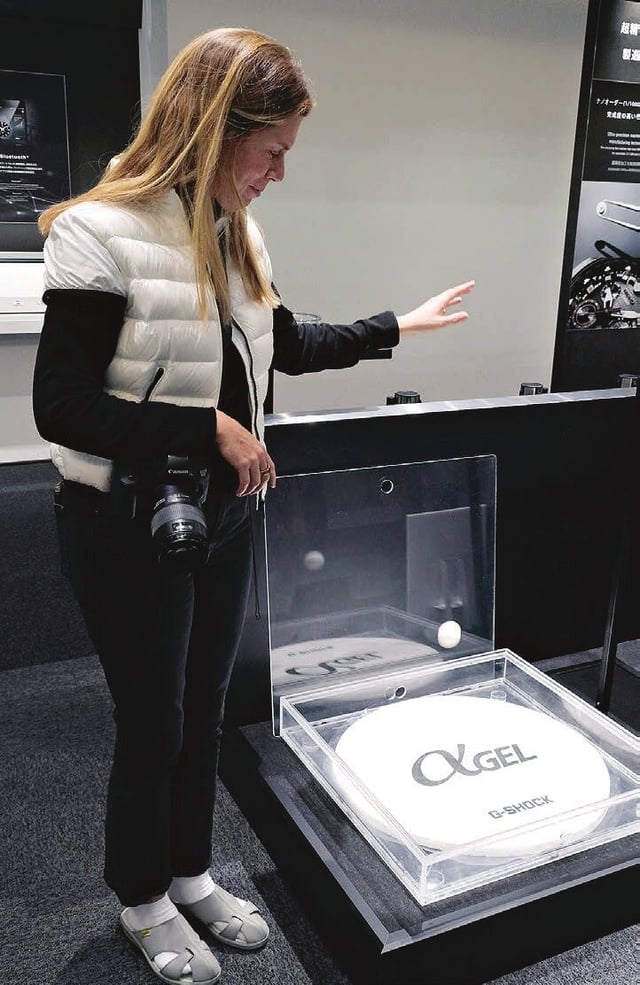
G-Shock's premium models are manufactured and thoroughly tested at the production facility in Yamagata. To illustrate this, we were allowed to drop raw eggs onto a shock-absorbing mat.
Photos by Casio and Shirin Blum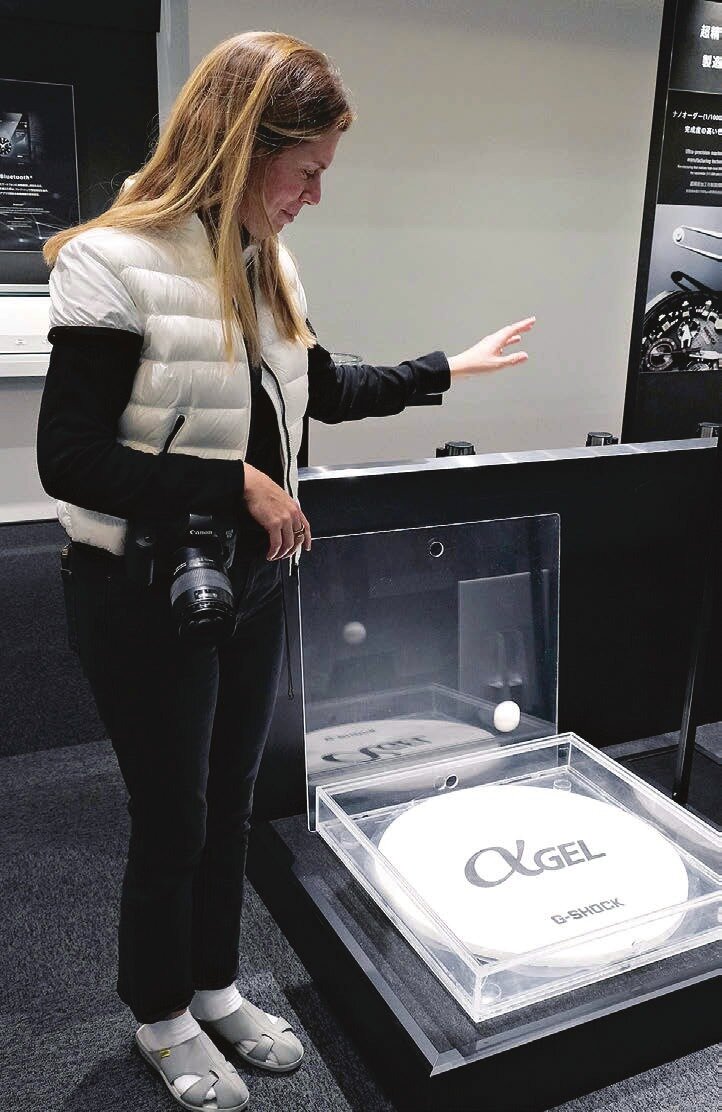
From Insider Tip to Cult Object
Initially, the market entry was slow. But when influential and rebellious audiences like skateboarders discovered the rugged design for themselves, the G-Shock began to catch on. Functionality, affordable prices and later colorful designs made the watch an indispensable accessory of the ’90s, often linked to waiting lists. Its versatility ensured that it easily overcame age limits, genders and style preferences. Another factor in Casio's success is its connection to pop culture. For example, Keanu Reeves wore the classic DW-5600 in 1994 in the movie Speed. This appearance took G-Shock to a new level, as Ryohei Saito noted.
Progress as a Philosophy
Over the years, the G-Shock has been continuously refined: Today it is even more robust, more self-sufficient and more technologically advanced than ever before. Energy-saving systems that make battery changes unnecessary, automatic time zone adjustments and the use of increasingly resilient materials have taken the watch to a new level. Its core values, however — robustness against extreme conditions, from heat and cold to shocks and water — always remained a central focus.
What may have started as a bold experiment has long become a global phenomenon, and its popularity grows with each new generation. When visiting Casio's headquarters in Tokyo and the production facility for the premium line in Yamagata, one thing becomes immediately clear: The quest for innovation and improvement is at the heart of the brand. Everything Casio develops is determined by its usefulness for the wearer. What once began as a manifestation of “form follows function“ has now developed into a comprehensive design approach that combines technical sophistication with colorful collaborations and innovative materials. "Our design process is a constant dialogue with the market,“ explains Ryohei Saito. "We observe trends, listen to the opinions of our global networks and actively solicit ideas from our colleagues [...]. We also travel to meet people on-site and develop a feel for their needs. It is particularly important to us to give young talent a voice in our company. Their perspectives inspire us to create products that capture the spirit of the times.”
This philosophy is also reflected in the advanced technology of the G-Shock, which now accounts for 60 percent of Casio's sales. Although the watches offer numerous functions that can also be found in smartwatches — from pedometers to displaying notifications and alerts — Casio has remained true to its philosophy: Practicality takes priority. “A watch that has to be charged every day does not fit our DNA,” emphasizes Saito. Instead of imitating competing products such as the Apple Watch, Casio therefore focuses on essential functions that offer users real added value.
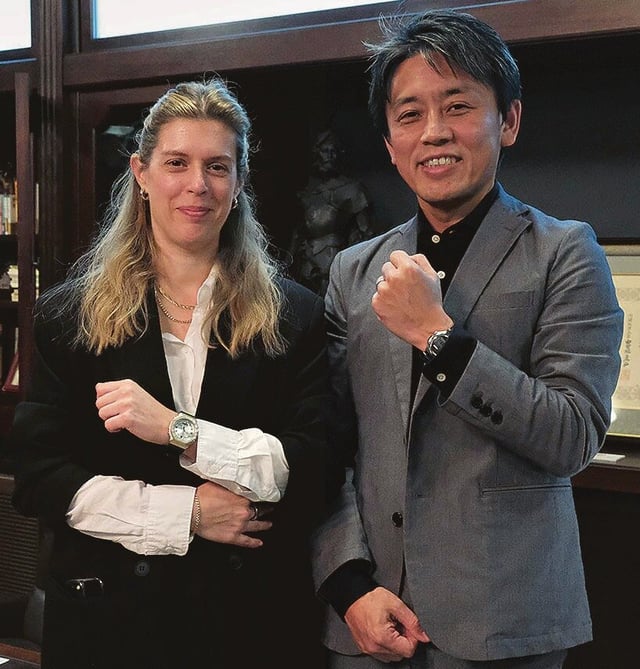
Wristcheck with Ryohei Saito, head of development at G-Shock
Photos by Casio and Shirin Blum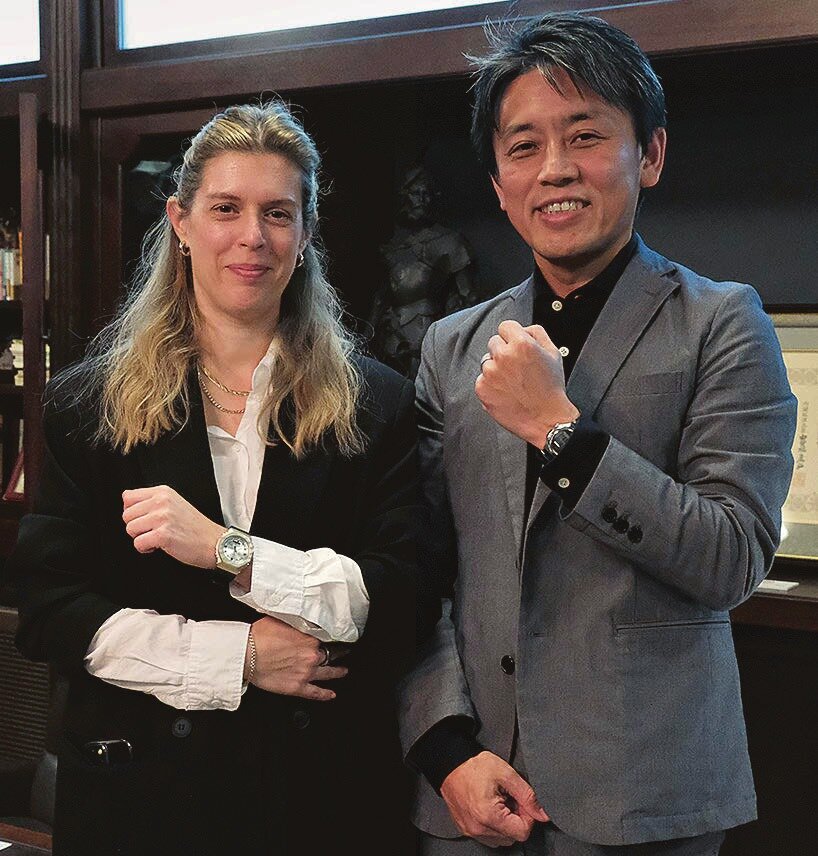
Yamagata: Aiming for Perfection
Casio's premium factory is located in the heart of Yamagata Prefecture (in the Tōhoku region of Honshu), known for its lush cherry orchards and pears. Not only are the G-Shock models from the MR-G and MT-G series manufactured here, but so is the luxurious Oceanus collection. The factory, which opened in 1979 and now consists of seven buildings, is considered the blueprint for all Casio production facilities. The newest building, “G,” was built specifically for watch production in 2018. In addition to production, the approximately 600 employees — 42 percent of whom are women — also oversee the international factories in China and Thailand, where lower-priced models and electronic products are manufactured. “The customers themselves define how we differentiate our models,” explains Saito. “We analyze specific user groups, like surfers, rescue workers or luxury watch lovers, and develop tailor-made products for each group. The needs and preferences of these groups change over time, and we adapt accordingly. Many ideas are tested, but not all of them make it to market. In the end, it is the customers who shape our development.“
The strengths of production in Yamagata lie in integrated manufacturing from mold making to delivery. The “Made in Yamagata” quality, which is synonymous with the “Made in Japan” seal of quality, is ensured by a highly qualified assembly team, which mainly consists of — as is traditional with many Japanese companies — long-standing employees. Another special feature is a medal system that reflects the status of the employees: gold, platinum and master. Only a few reach the highest level, which is awarded after a combination of theoretical and practical exams. The corresponding tests take place annually and consist of theoretical and practical components. Currently, only one employee has been awarded the title of master. She is therefore able to carry out all production steps from start to finish.
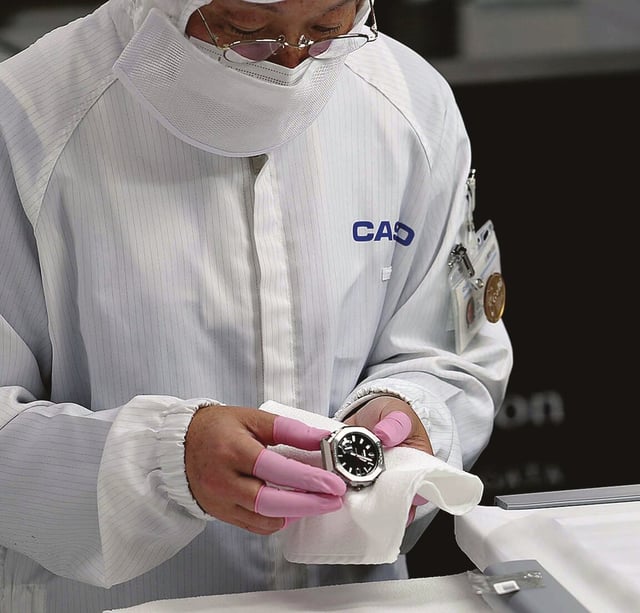
The MRG-B2100, which impresses with its metal processing and titanium alloy Ti64, after assembly
Photos by Casio and Shirin Blum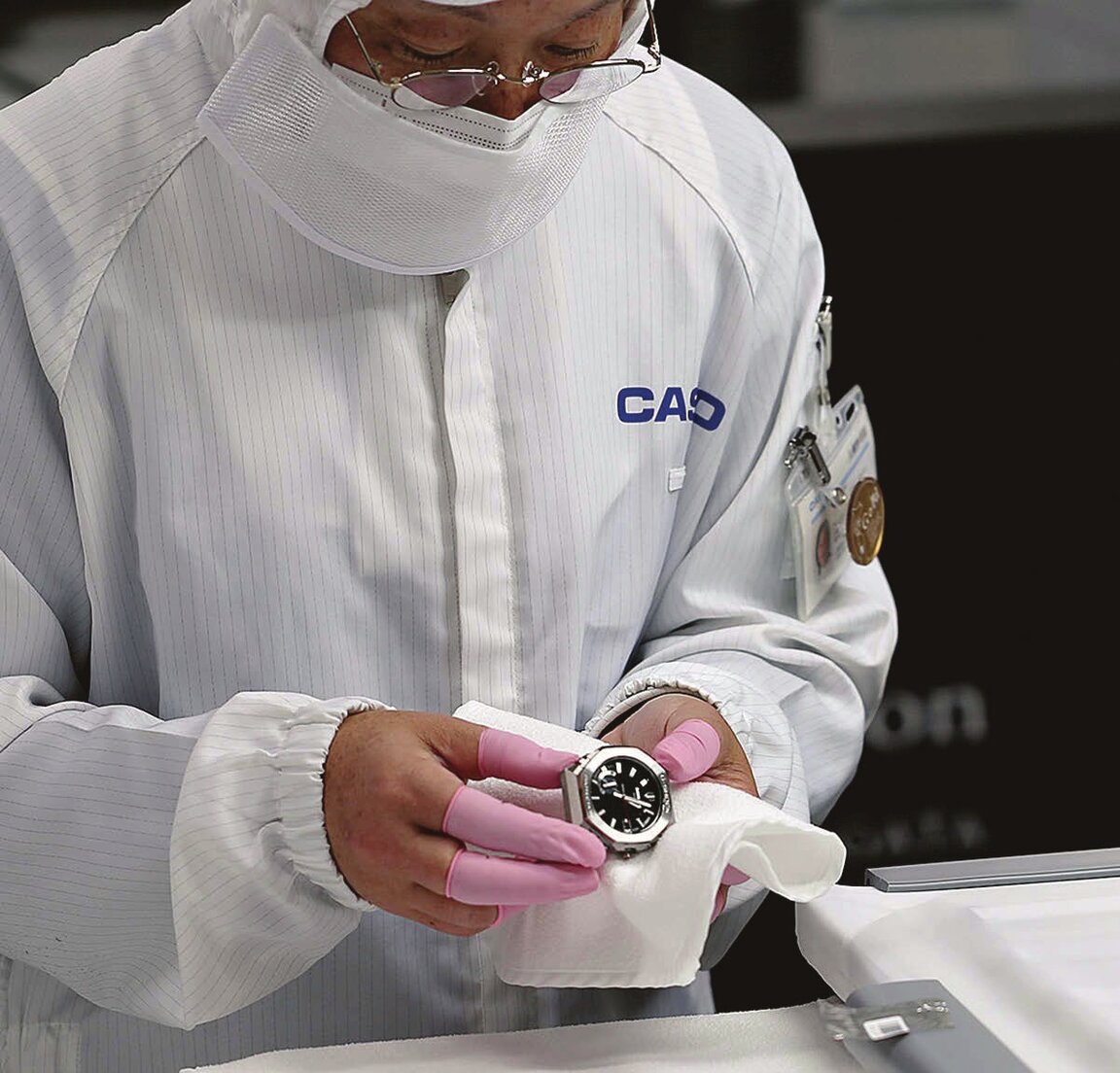
Premium Production Line
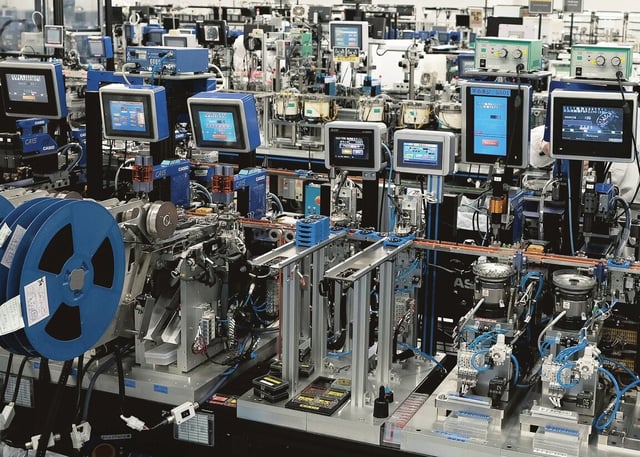
Before we got to see the assembly lines, our group was greeted in the showroom, where some watches made in Yamagata were on display — including a large aquarium with fish swimming between G-Shock watches. The shock resistance of the brand’s watches was demonstrated in an equally playful way: We got to drop raw eggs onto a shock-absorbing mat made of “Alpha Gel,” a soft, slightly sticky silicone material for shock and vibration absorption (and yes, the eggs remained undamaged). After putting on protective clothing and entering the airlock, we finally got to see the company’s state-of-the-art machine park, where series of the MRG-B2100 were assembled, among others. The case, dial and hands are put together and checked step by step. After assembly, each model is tested for water resistance, airtightness and durability. Two different models can be assembled at the same time in the premium production line.
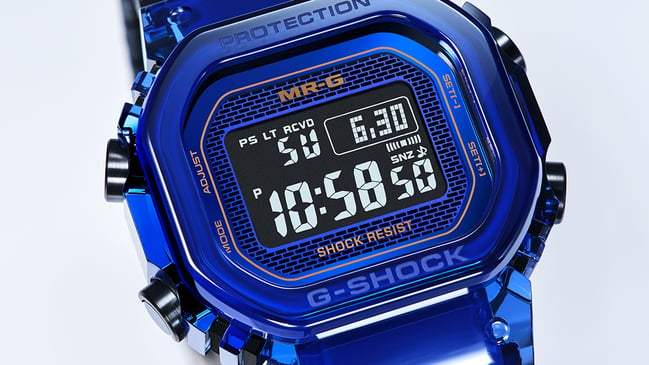
The vast majority of G-Shocks are still very affordable, while some models have moved up into a more luxurious league in terms of materials and price over the years — particularly in the MR-G and MT-G subfamilies. The most expensive G-Shocks, many of which are limited editions, cost $1,500 or $3,000 and, as in the case of the MRGB2000JS1A, can cost $8,000, making them comparable to luxury Swiss watches with mechanical movements.
A Significant Anniversary
Casio watches celebrated their 50th anniversary in 2024. With well over 100 million G-Shocks produced and a product range that extends from affordable everyday watches to luxury models, Casio has shown that functionality and design are not mutually exclusive. And as we are guided through the museum and the factory, one thing becomes clear: Every G-Shock tells a story.
This article was originally published in the March / April 2025 Issue. To subscribe to the print edition of WatchTime Magazine, click here.