Green Rambles: Investing in the Obsolete
This article is from the WatchTime Archives and was originally published in February 2022.
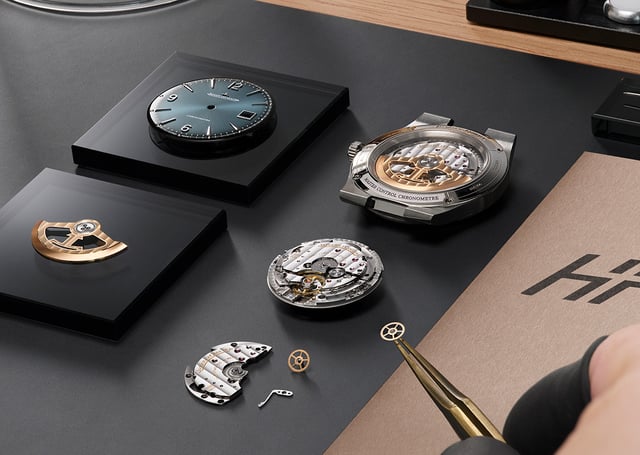
I cannot think of a more successful obsolete technology than mechanical watches. Even when you invest several hundreds of thousand euros or dollars into a triple tourbillon delight, it is outperformed by the cheapest quartz watch, which in turn has a hard time competing with your smartphone. For decades a mechanical watch doesn't make sense anymore, and in all honesty, we can apply the same verdict to its quartz-powered sibling. Nevertheless, mechanical watches are still a multi-billion dollar/euro industry. What is even more remarkable is that this same industry is investing hefty amounts in research and development to make mechanical watches more precise, knowing that it will never be enough to come even close to the precision offered by a quartz watch, let alone radio-controlled timepieces, smart watches, and other cellular products. Are we fooling ourselves?
My straightforward answer to this is no. While mechanical watches were initially a practical invention with a sense of beauty because we wear them on our wrists, the quartz crisis proved that their functional supremacy was over and passed on to the next generation of technology. In most fields, such a transition is brutal and means the end of the obsolete. In the business-to-business market, this is a law. No airline would order a zeppelin anymore for its intercontinental flights, just as the market for steam engines vanished. In the consumer market, this is slightly different, as there is room for emotion. It doesn't mean that any surpassed technology survives, but it has a chance. We see this, next to watches, also with vinyl records.

If consumer demand stays strong, that changes everything for an industry. It is then not only profitable to continue making the obsolete product but also to introduce new models. But shouldn't we draw the line there? Why fool ourselves with developing thinner, more accurate, more complex mechanical watches that don't stand a chance against today's cheaper, more accurate, and more versatile devices? It is because it has become an art. It is not about beating another technology but excelling in one's own category. It is about celebrating human ingenuity and the appreciation that all those tiny little parts, sometimes even put together by hand, can function at incredible precision. That is what makes this obsolete product worth investing in, for both consumers and the industry.
Why are you still buying mechanical watches? Let us know in the comments!