Gaining Steam: Hands-On with the Mondaine evo2 SBB Automatic
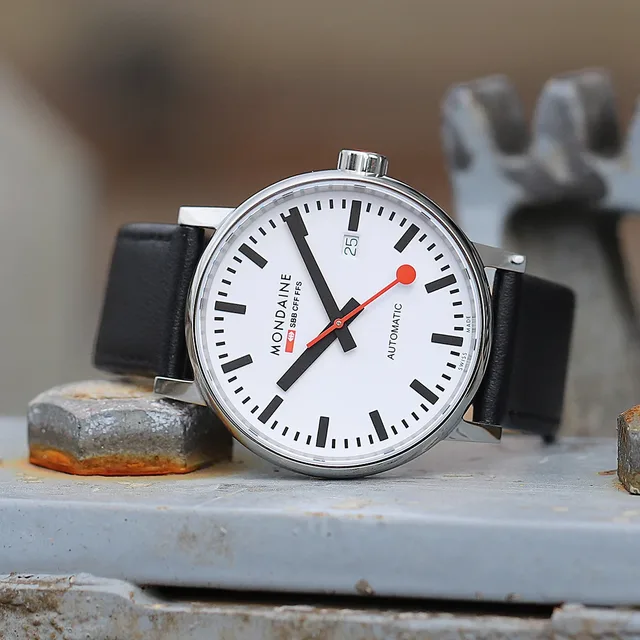
Since August 2021, Mondaine has been offering a mechanical version in its evo watch collection, using the unmistakable design of the famous “Official Swiss Railways Clock.” In this visit to the WatchTime archives, we take a look at the evo2 SBB Automatic, appropriately on a quick train ride across Switzerland.
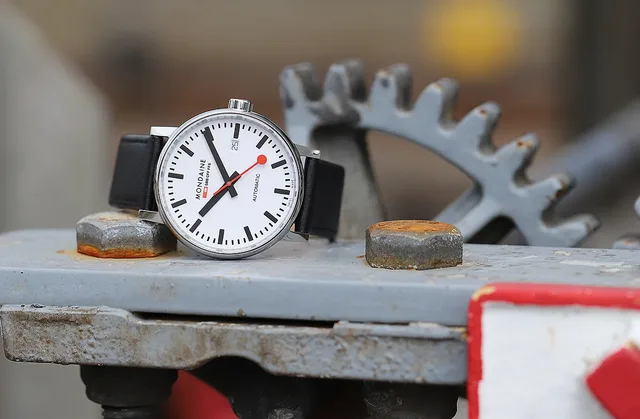
Like any railway company, the 1902-founded Swiss Federal Railways (often referred to by the initials of its German, French and Italian names SBB, CFF, FFS), too, knew about the significance of coordinated precision timing early on, in order to build and safely operate what should eventually become the densest rail network in Europe. Today, the Swiss travel more by train than any other nation in the world, clocking up an average of 2,400 km per person every year within the country’s boarder. Switzerland is also home to the highest railway station in Europe (at 3,454 meters), the longest railway tunnel in the world (measuring 57 km long), 5,200 km of railway lines, a 21,500-km public transport network and 1,000 km of mountain railways. In other words, the Swiss indeed take punctuality quite seriously, and that’s not just because of the many watches that are being made there.
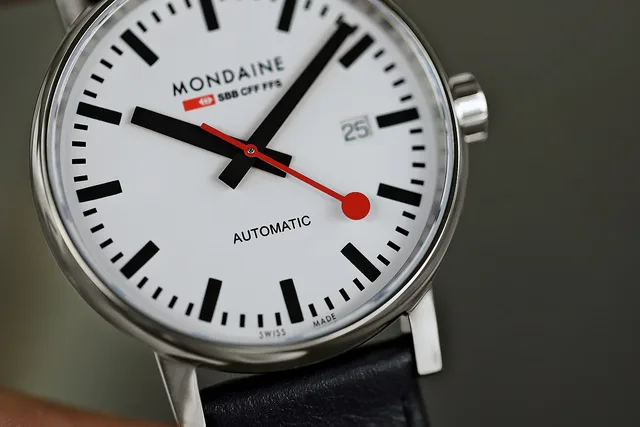
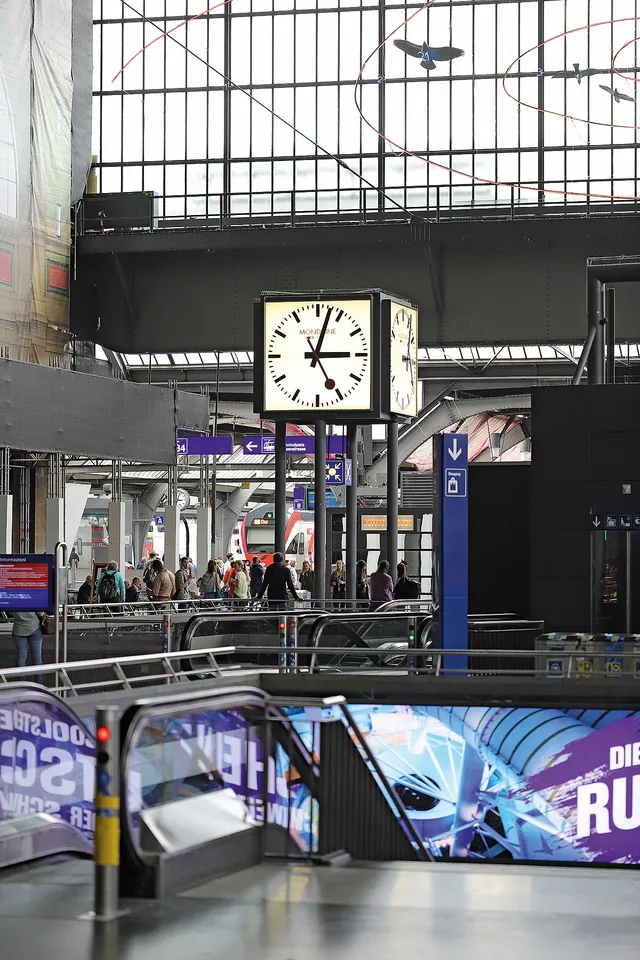
In the 1940s, the fully state-owned railway company began with the introduction of synchronized station clocks. Because trains in Switzerland always leave the station on the full minute (railway timetables therefore do not list or require seconds), each clock received an electrical impulse through the telephone line from the central master clock at each full minute, resulting in the synchronized advancement of the minute hand each minute. These clocks were designed by Hans Hilfiker (1901 - 1993), a Swiss engineer and SBB employee, and produced by W. Moser-Baer in Sumiswald in the canton of Bern. Hilfiker had already designed a clock for the train station in Zurich in 1932, and worked on a prototype version with second hand as early as 1943. It would, however, take another couple of years for the red second hand, designed after the shape of the conductor’s baton used by train and station staff (thus nicknamed the rote Kelle or red signal), to become a standard feature of the very design that has now officially been in use since the 1950s.
On the original clocks, the second hand is driven by a motor independent of the master clock and requires only about 58.5 seconds to complete the rotation, then the hand pauses briefly at the top of the clock. It starts a new rotation as soon as it receives the next minute impulse from the master clock. The SBB clock was not Hilfiker’s only contribution to modern living in Switzerland. He had also developed the concept of the fitted kitchen and was responsible for the standard Swiss dimensions for kitchen components. With the red second hand, however, he most likely had the biggest impact on the nation's collective appreciation for punctuality, having created an extremely effective signalization design, and one of the most recognizable and known watch designs in the history of Swiss timekeeping (there are currently 798 train stations in Switzerland). Commuters simply have to look at the red second hand in order to know how much time is left to catch the train (or to learn the train had already left the station). Unsurprisingly, this design has also been recognized by various museums around the world and has won several awards (and was briefly used by Apple, which had used the design without permission for its mobile operating system iOS6, released in September 2012, which resulted in a patent dispute with the Swiss railways that got settled in October 2012 for a widely reported but unofficial sum of several millions).
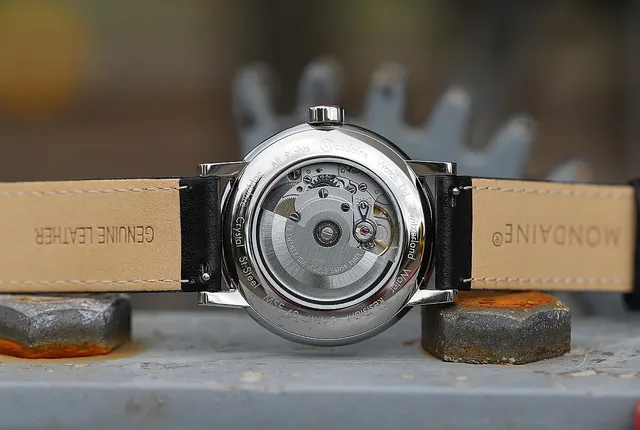
Swiss watch brand Mondaine has been licensed to make wall clocks, desk models and wristwatches based on the design since 1986. Not surprisingly, the watch immediately became one of the key products of the family-owned company. Mondaine board member André Bernheim says, “The iconic, unmistakable and minimalist design of the SBB clock at the train stations has remained unchanged since 1944. It has been produced by us based on the original plans from that time and has been a central pillar for the Mondaine brand since 1986. The collection today offers a wide range from wall clocks to table clocks and wristwatches, with a choice of different case shapes, purist, slightly rounded, thin and even cases made of sustainable materials such as castor oil. We also offer a choice of various functions such as our patented backlight, stop2go, and different movements, allowing us to appeal to a wide audience with a consistent design.” Now, the Swiss watch brand finally brings back a version powered by a mechanical movement (the Sellita SW 200-1). Bernheim adds, “We have had mechanical watches in our Mondaine range for around 20 years [in 2012, for example, Mondaine introduced the first hand-wound mechanical railway watch (ETA 2801-2) as a limited edition of 400 pieces]. We have now developed a few additional models that we can offer at a significantly lower price, Swiss Made, with a steel case in 316L and sapphire crystal.” And he also mentions another reason for the mechanical option, “Sustainability has been a central concern for us for decades, and now that we are probably the first watch company in the world to be completely CO2-neutral, automatic movements obviously reflect perfectly both our strategy as well as the Zeitgeist, which is another reason why we are expanding our range of automatic watches.”
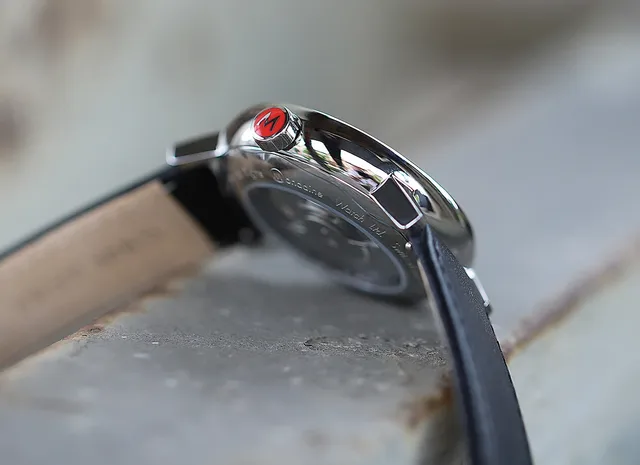
The latest mechanical version of the watch is part of the evo2 collection, described by Mondaine to feature “subtle and respectful design enhancements in keeping with Mondaine’s vanguard reputation." The case has indeed become more organic, with rounder curves that reach around the case folding into the transparent caseback. The case lugs have also been slightly refined and the crown modified to increase its functionality, resulting in an overall more balanced look. Mondaine offers two case sizes, the 40-mm version shown here with red (Ref. MSE.40610.LC) or black leather strap (Ref. MSE.40610.LB), and a 35-mm version with black leather strap (Ref. MSE.35610.LB). Alternatively, both case sizes can be purchased with a mesh bracelet instead (Ref. MSE.40610.SM in 40 mm, Ref. MSE.35610.SM in 35 mm). The watches are assembled in Mondaine’s factory in Solothurn, Switzerland, and every watch is tested for water resistance up to 30 meters and comes with a 2-year international warranty.
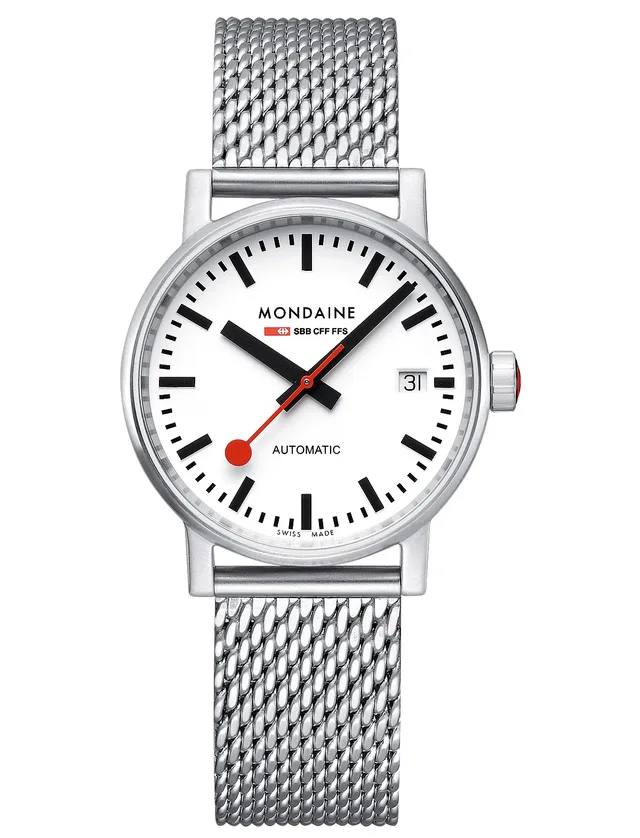
From a design point of view, the dial design uses red, white and black colors, in itself already synonymous with Switzerland, and as a wristwatch with a mechanical movement, the watch also brings together the country’s watch industry and national train system, both undoubtedly a symbol of pride for most Swiss people. Not surprisingly, dial legibility is excellent. In this case, Mondaine decided to not cover the black hands, minute markers and indexes with luminous material (the company uses in some watches a concept called “Backlight Technology” using extra-strong Super-LumiNova material, which is painted on the back side of the watch hands), which will leave people traveling on a night train literally in the dark. On the other hand, Mondaine has managed to offer the watch at an extremely attractive price, making it quite a unique offer, given the significance of its design (especially since the Tissot Heritage Memphis comes exclusively with a quartz movement).
The Mondaine evo2 Automatic costs about as much as two months’ unrestricted access to the Swiss railway network (in second or standard class), but will obviously be a travel companion for a much longer time. The Sellita SW200-1 certainly won’t add much of a novelty factor to a watch collection, but continues to be a reliable engine. Since the design originated as a non-mechanical concept, and the Sellita SW200-1 obviously cannot replicate the quintessential pause of the second hand at 12 o’clock, one of the central elements of the clocks is missing, but fans of mechanical watches finally have another option to wear a lot of Swissness on the wrist. Bernheim concludes, “We have created this watch for people that value traditional watchmaking, are passionate about mechanical movements, timeless design and long-lasting, sustainable products — and at a very competitive price for a Swiss Made watch.”
SPECS:
Manufacturer: Mondaine Watch Ltd., Etzelstrasse 27, 8808 Pfäffikon, Switzerland
Reference number: MSE.40610.LB
Functions: Hours, minutes, hacking central seconds hand, date display
Movement: Sellita SW200-1, automatic 28,800 vph, 26 jewels, 38-hour power reserve, diameter = 25.6 mm, height = 4.6 mm
Case: 316L stainless steel case, sapphire crystal above the dial, water resistant to 30 m
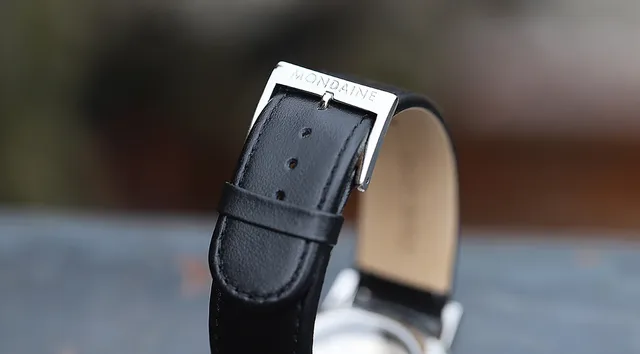
Strap and clasp: Black leather strap with pin buckle
Dimensions: Diameter = 40 mm, height = 10 mm, length = 46 mm, weight = 60.0 g
Variations: With red leather strap (Ref. MSE.40610.LC); with mesh bracelet (Ref. MSE.40610.SM)
Price: $665 on strap; $720 on bracelet