May 7, 2014
Reading time 3 min.
Dive Watch Wednesday: Remembering the 1970s' Aquastar and its Pioneering Divers' Watches
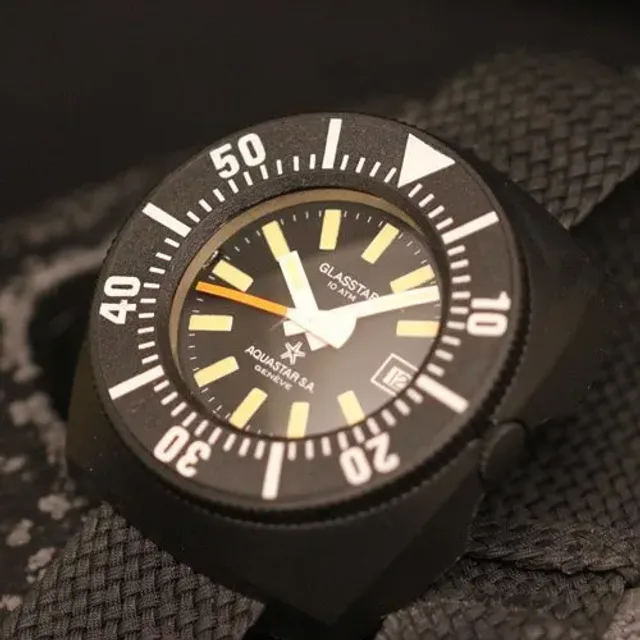
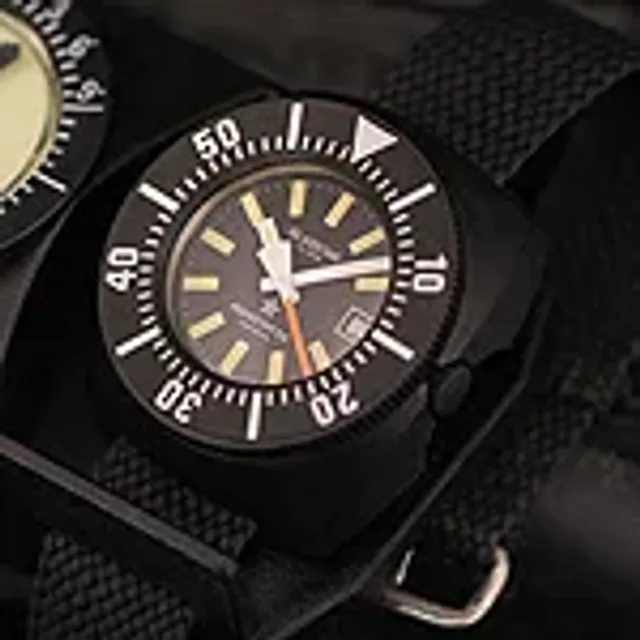
Aquastar Geneve Glasstar Navigator Panel
PR
In our inaugural "Dive Watch Wednesday," the latest ongoing feature on our WatchTime blog, dive-watch enthusiast Roger Ruegger from DiveintoWatches.com explores the contributions of the nowadays lesser known watch brand Aquastar Genève, including how its watchmaking mastermind influenced the course of other, more famous dive watch models.
The year 1962 can be considered the birth year of a watch company that added quite a bit to the diversity of dive watches of that era. Aquastar, initially introduced as a sub-brand of JeanRichard, not only wanted to offer professional watches for diving and sailing; the company simultaneously started to develop a comprehensive range of instruments for most of a diver’s other needs, as well — dive compasses and depth gauges and even small instruments fitted to watch straps such as mountable compasses and thermometers. All these were offered in addition to (for example) the first dive watch with an internal bezel that could be operated with only one crown and, of course, the company’s most iconic and sought-after models, the Benthos 500 and the 1000-meter water resistant Benthos I, both featuring the characteristic central minute counter provided by Lemania.
In the 1970s, Aquastar was one of many watch brands to explore the possibilities of alternative case materials, and as a result introduced in 1975 the Glasstar (Ref. 02), an affordable and indeed “completely corrosion proof” dive watch in a black resin case (with either a black or yellow “one-way click bezel”). The watch was powered by an automatic movement by A. Schild, which probably might prove difficult to access nowadays without breaking the case. But more importantly, the 100-meter/300-feet water-resistant Glasstar could also be used as the third module of the remarkable Navigator Panel, a set offering “compass, depth gauge and seat for a divers watch, all instruments visible at a glance”. It wasn’t the company’s first attempt to offer such a comprehensive collection, but the earlier version, made of metal, is quite difficult to find nowadays.
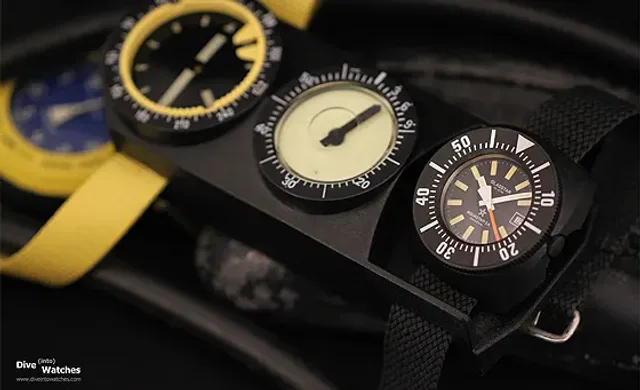
The now-rare Aquastar Geneve Glasstar Navigator Panel
PR
And there is, of course, a reason for its scarcity: while it was a perfect example of the Aquastar’s unique dedication to diving, the rather huge console (6 inches/15 cm long) was most likely not the most practical piece of equipment to wear — and with its two straps immediately started to become loose when it was used in greater depths.
It therefore can be regarded as one of quite a few fascinating innovations bearing the Aquastar name that were developed and patented by one man during that period: Frédéric Robert, a passionate diver and inventor who, after leaving Aquastar, joined Omega to support the further development of the brand's Seamaster collection of dive watches in the 70’s.
Incidentally, in 2009, another watch brand name known for its dedication to divers' innovations surfaced in a more traditional navigational console for divers: A UX dive watch from Sinn was integrated in a nautical instrument manufactured by W. Ludolph.