Zenith Chronomaster Solo Sport Is the First El Primero Without a Chronograph
The El Primero loses its chronograph — and enters new territory
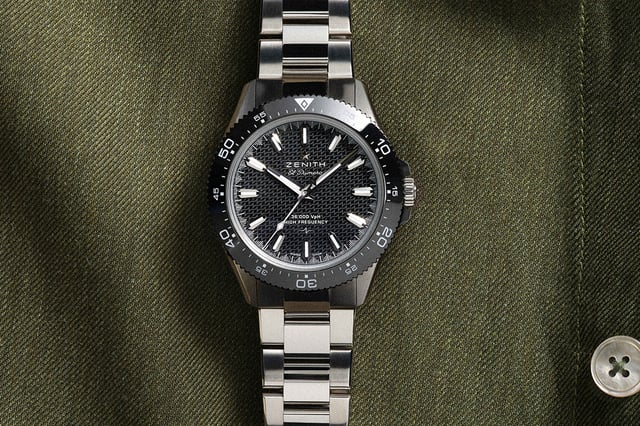
Since its debut in 1969, Zenith’s El Primero has been inseparably linked to one function: the chronograph. Introduced at the time as the industry’s first automatic, integrated high-frequency chronograph movement, the caliber built its reputation on a 5-Hz regulating organ and the resulting ability to measure tenths of a second. With the Chronomaster Solo Sport, Zenith breaks that link for the first time. The new reference eliminates the chronograph display and reduces the Chronomaster down to a three-hand watch with date. The movement, however, remains an El Primero.
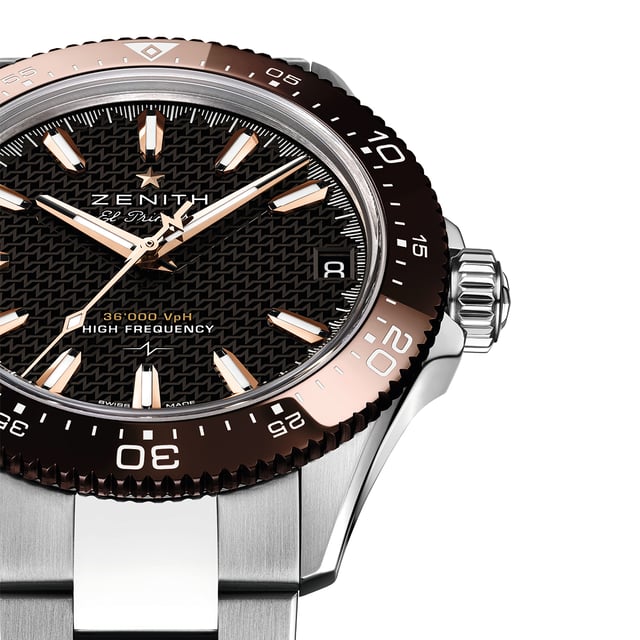
Zenith Chronomaster Solo Sport
Zenith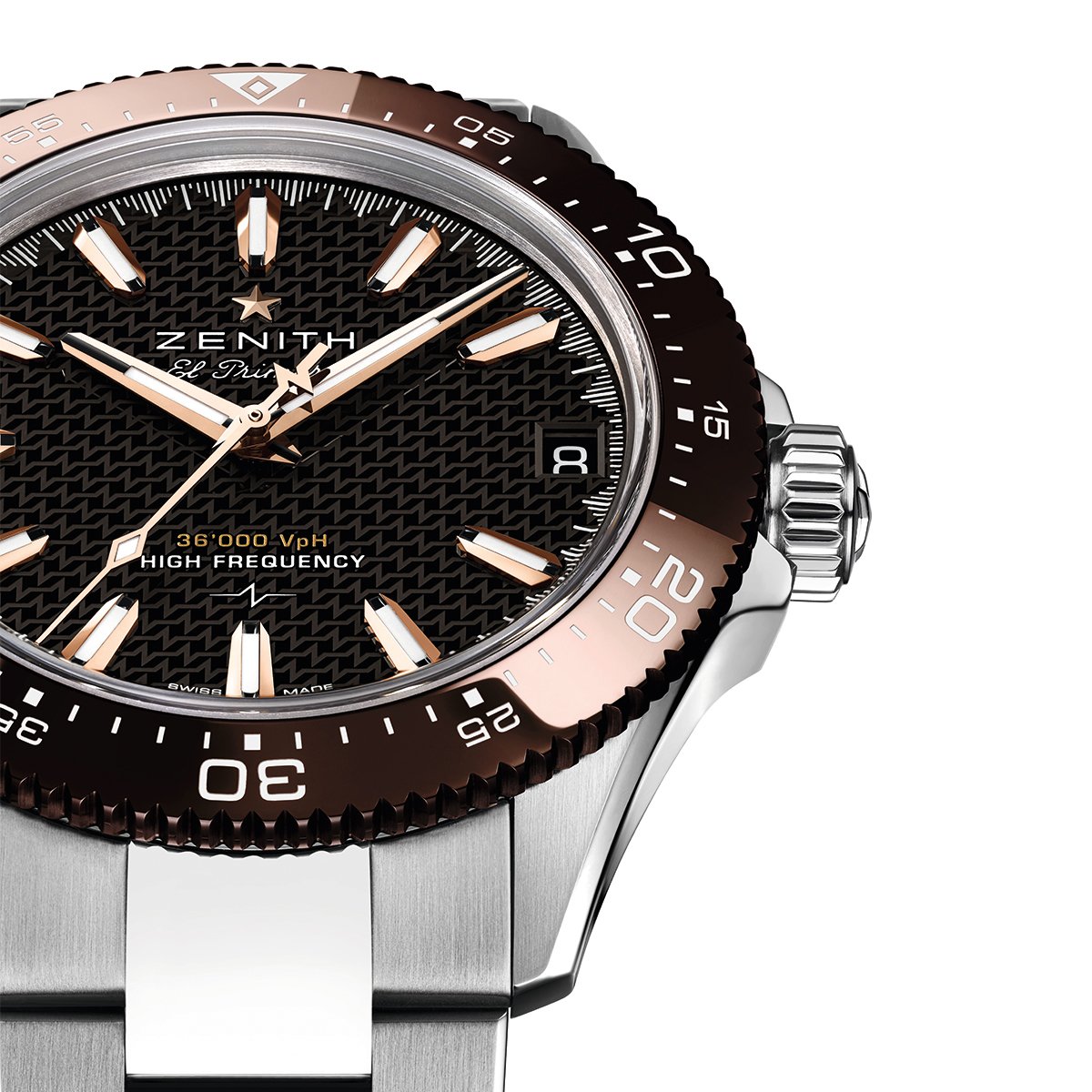
An El Primero Without Its Defining Function
The decision is significant because the El Primero has rarely appeared in Zenith’s communications without a direct connection to the chronograph. For the Solo Sport, Zenith has reworked the El Primero 3600, the movement that serves as the basis for several current Chronomaster models into the El Primero 3620, removing the chronograph mechanism altogether. According to Zenith, the frequency of 36,000 vibrations per hour, or 5 Hz, remains unchanged, as do the silicon escapement, hacking seconds, and 60-hour power reserve. The movement also retains the star-shaped skeletonized rotor. Technically, this means the Solo Sport uses the El Primero’s high-frequency regulation purely for timekeeping accuracy rather than for the one-tenth-of-a-second chronograph function that historically defined the caliber. For collectors, it represents a purist interpretation of the El Primero that has not previously existed in the collection.
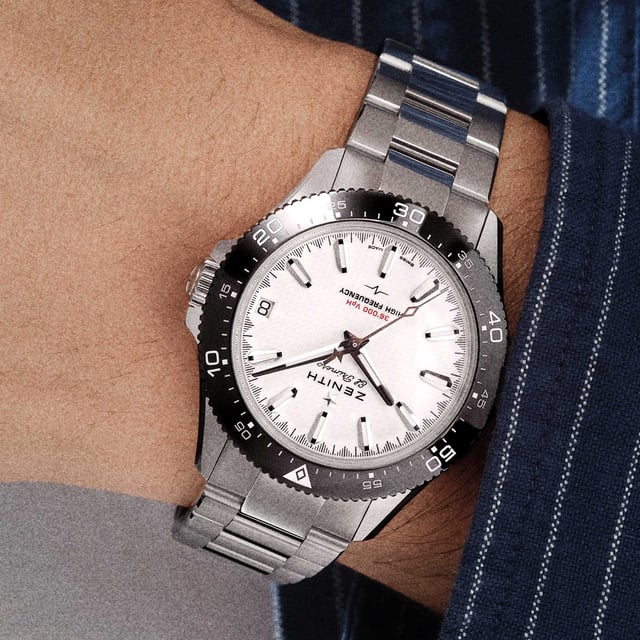
Zenith Chronomaster Solo Sport
Zenith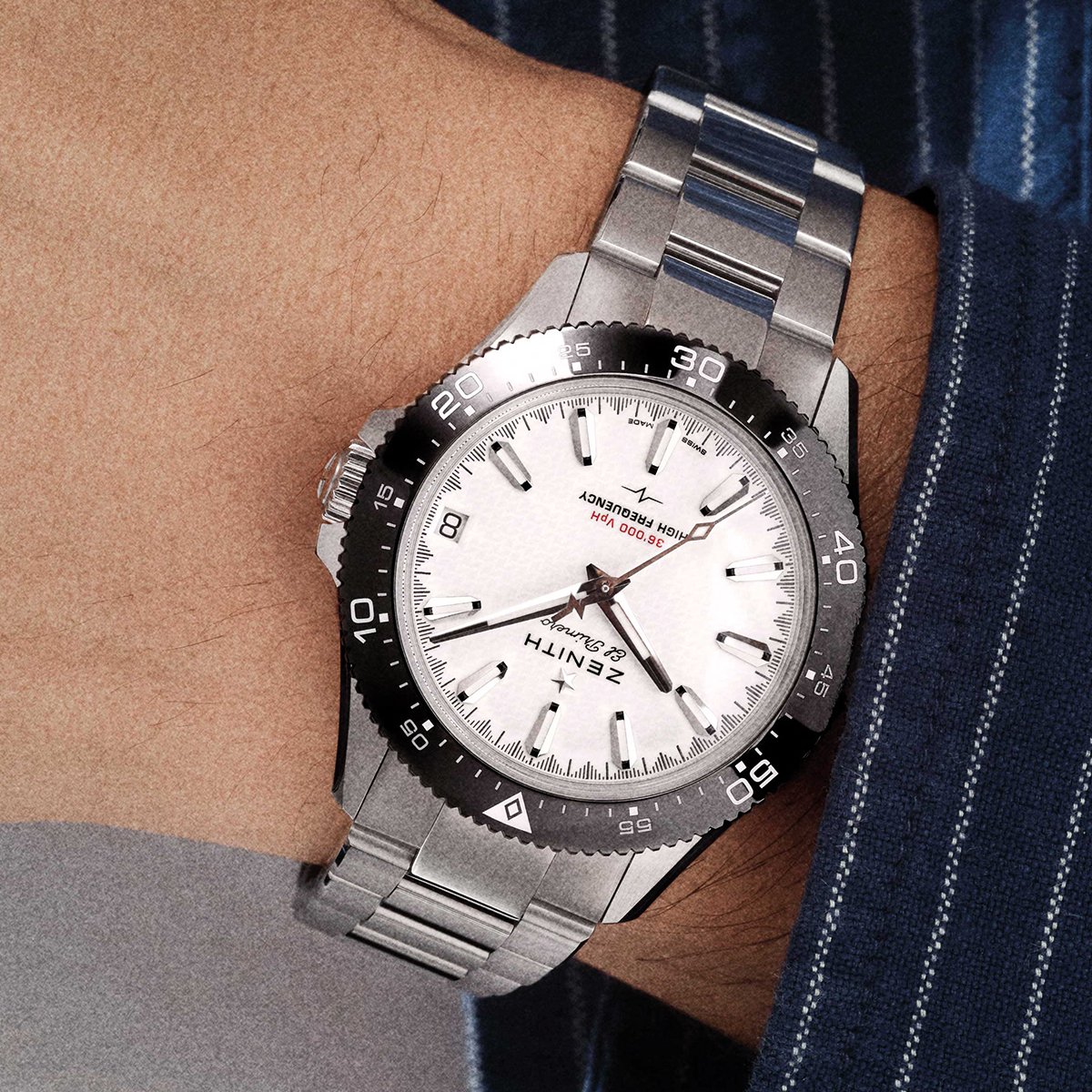
Sporty Architecture Without The Chronograph
The 40mm stainless-steel case is cleaner and more streamlined than that of existing Chronomaster chronographs, with the start, stop, and reset pushers eliminated entirely. A unidirectional ceramic bezel gives the watch a more sporty and functional character, according to the brand. The screw-down crown and protective guards help provide water resistance to 20 atm, reinforcing the Solo Sport’s positioning as both an everyday watch and a serious sports model.
High-frequency Motif Instead of Chronograph Registers
Without chronograph subdials, Zenith needed to give the dial a new visual identity. Its solution is a repeating 45-degree “Z” motif engraved into the ceramic and rendered, depending on the version, in sunburst-finished white ceramic, polished black, or polished brown. Zenith describes the pattern as a graphic interpretation of the movement’s high frequency. In practice, it also gives the dial the structure normally provided by chronograph registers. The design is complemented by a “shark tooth” minute track, a detail Zenith traces back to historical models, as well as a stylized counterweight on the seconds hand.
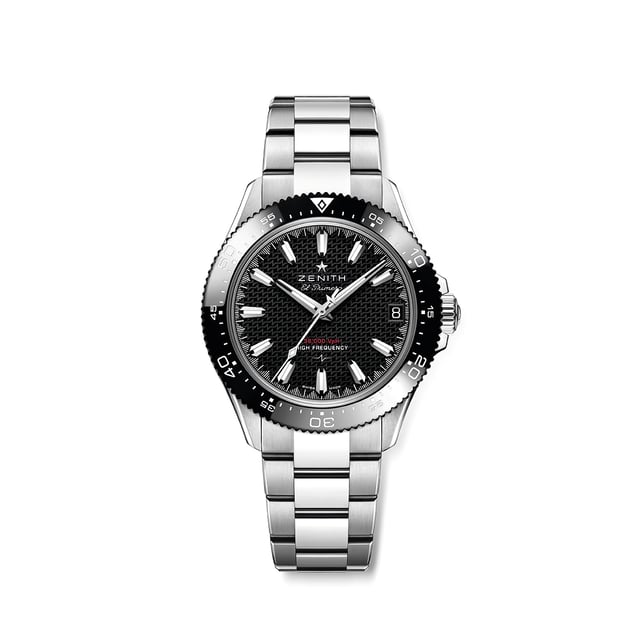
Zenith Chronomaster Solo Sport
Zenith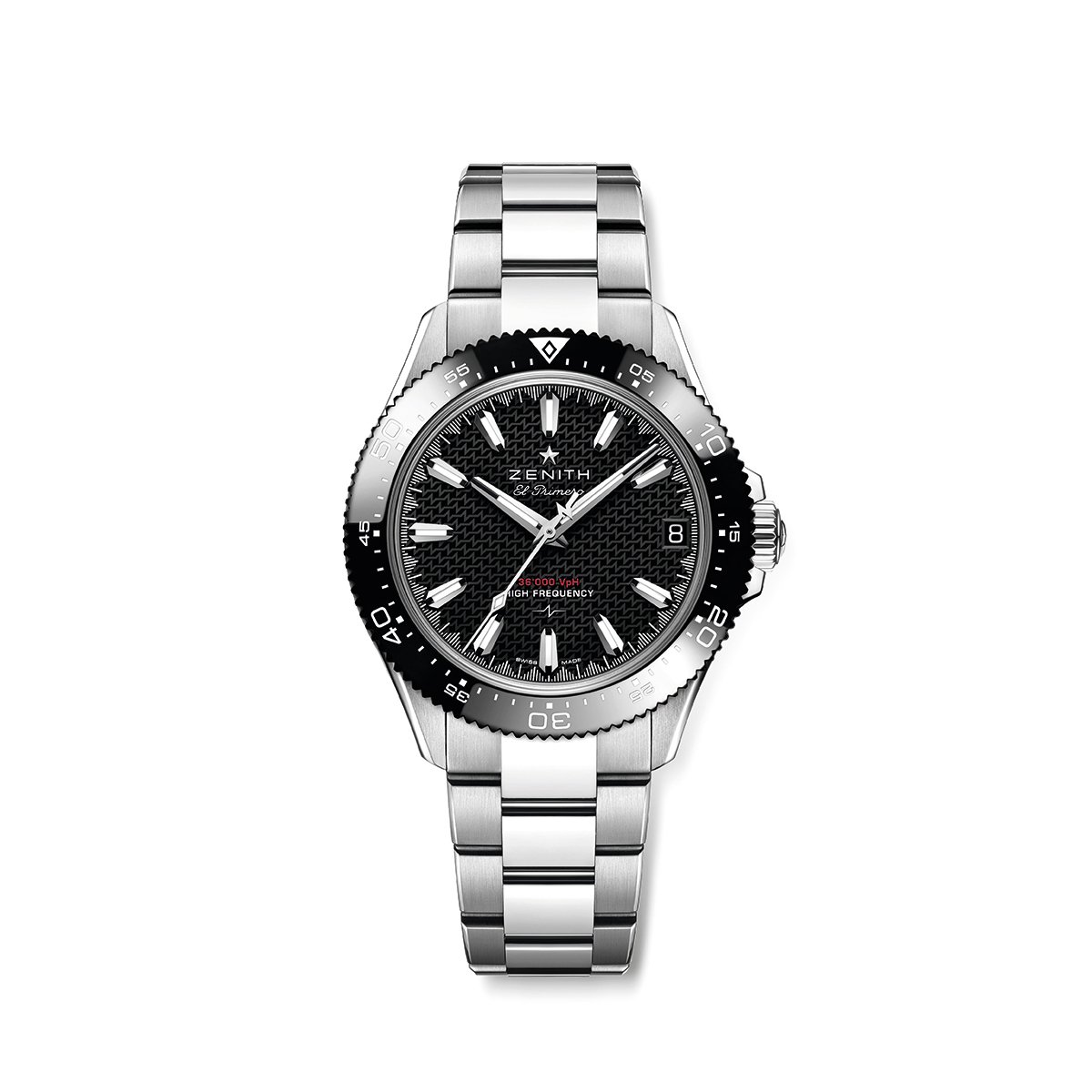
ZenClasp with Ceramic Ball Bearings
Alongside the Solo Sport, Zenith is expanding the use of its ZenClasp folding clasp, first seen on the Chronomaster Sport Skeleton. The mechanism consists of 41 components, including 10 ceramic balls used for locking and positioning. It also incorporates a tool-free micro-adjustment system with 2.5mm increments across a total range of 10mm, accessed by lifting a secondary cover. According to Zenith, the clasp required three years, or 1,800 hours of research and development, along with endurance testing exceeding 600,000 opening and closing cycles. The brand says this corresponds to more than 10 years of simulated wear. ZenClasp is currently available on selected Chronomaster Sport models and throughout the Solo Sport collection, with a gradual rollout to additional Chronomaster Sport references planned.
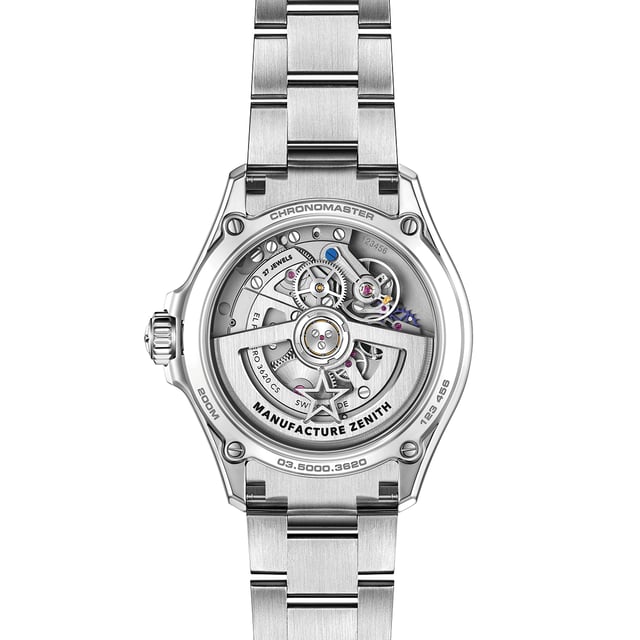
Zenith Chronomaster Solo Sport, Caliber El Primero 3620
Zenith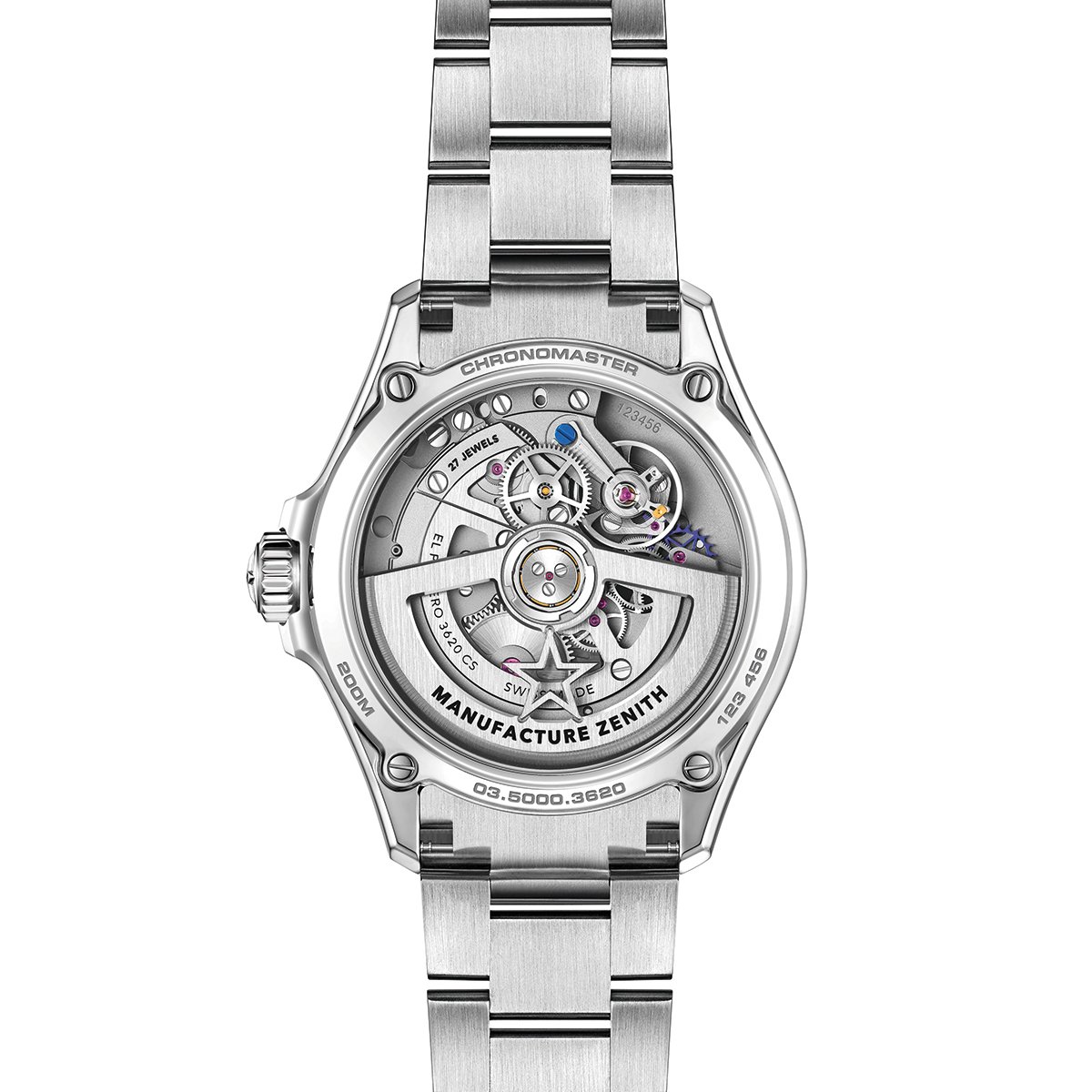
Three Dial Colors, Plus a Purist Option
The collection launches with three ceramic dial colors: white (Ref. 03.5000.3620/69.M5000), black (Ref. 03.5000.3620/22.M5000), and brown (Ref. 03.5001.3620/72.M5000). Each features central hours, minutes, and seconds, along with a date display at 3 o’clock, and is priced at $10,900. The collection also includes a black no-date version (Ref. 03.5000.3620/21.M5000) priced at $9,800. It is aimed at buyers who prefer the cleaner symmetry of a dial without a date window. All versions are fitted with a three-row stainless-steel bracelet and Zenith’s ZenClasp.
Pricing for the Chronomaster Solo Sport starts at $9,800 for the no-date model, while versions with the date display at 3 o’clock are priced at $10,900.
This article was first published by WatchTime Germany.