Tambour Convergence Mirror Steel: Louis Vuitton’s Guichet Watch, Now in Steel
Mirror polish meets hardened steel
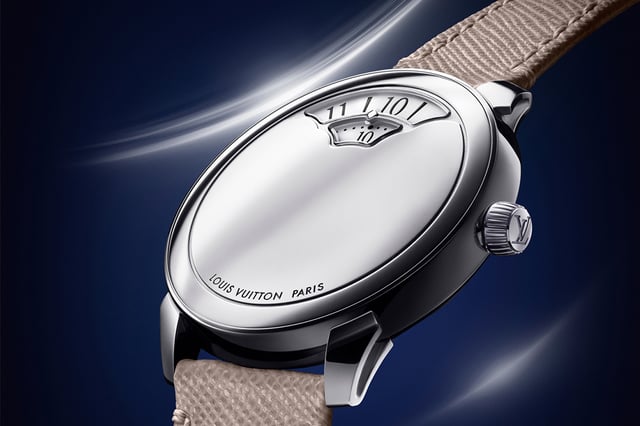
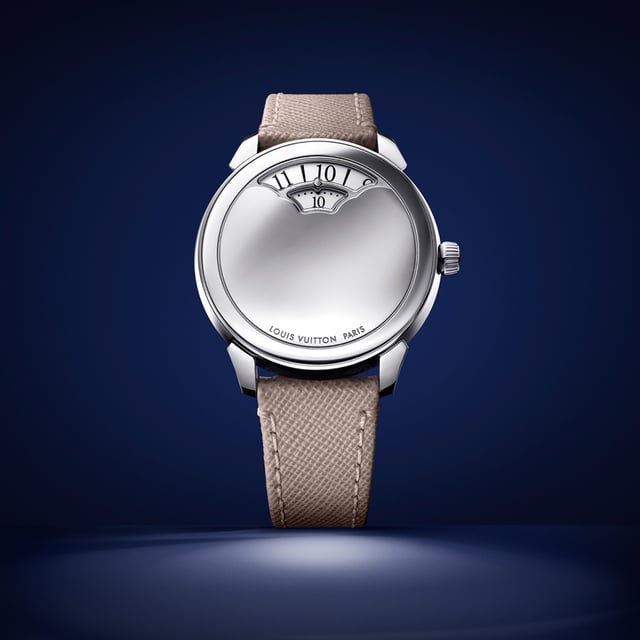
A year after its debut, the Tambour Convergence receives its first steel case. Until now, Louis Vuitton’s guichet watch was available only in rose gold and platinum. The new reference W9ST11 is cut from a hardened stainless steel and mirror-polished across every surface. Louis Vuitton rates that surface at 1,130 Vickers, nearly six times harder than untreated steel.
A Window, Not Hands
Some context first. The Tambour Convergence arrived in 2025 as the first guichet watch conceived entirely at La Fabrique du Temps Louis Vuitton. Instead of hands, two rotating discs carry the hours and minutes. They pass beneath an arched aperture with a scalloped edge, and the time is read against a sculpted lozenge set between them. The display drags rather than jumps: the discs turn continuously. That separates the Convergence from classic guichet watches such as Cartier’s Tank à Guichets of 1928, which used a jumping hour. Reading the exact minute on Louis Vuitton’s version asks for a bit more attention. In return, it does without the mechanical complexity of a jumping mechanism. The three earlier models leaned on decorative craft: a fully polished rose-gold version, a platinum model with snow-set diamonds, and a rose-gold variant with an engine-turned exterior. The Mirror Steel shifts the emphasis from ornament to material.
Louis Vuitton Tambour Convergence Mirror Steel
Louis Vuitton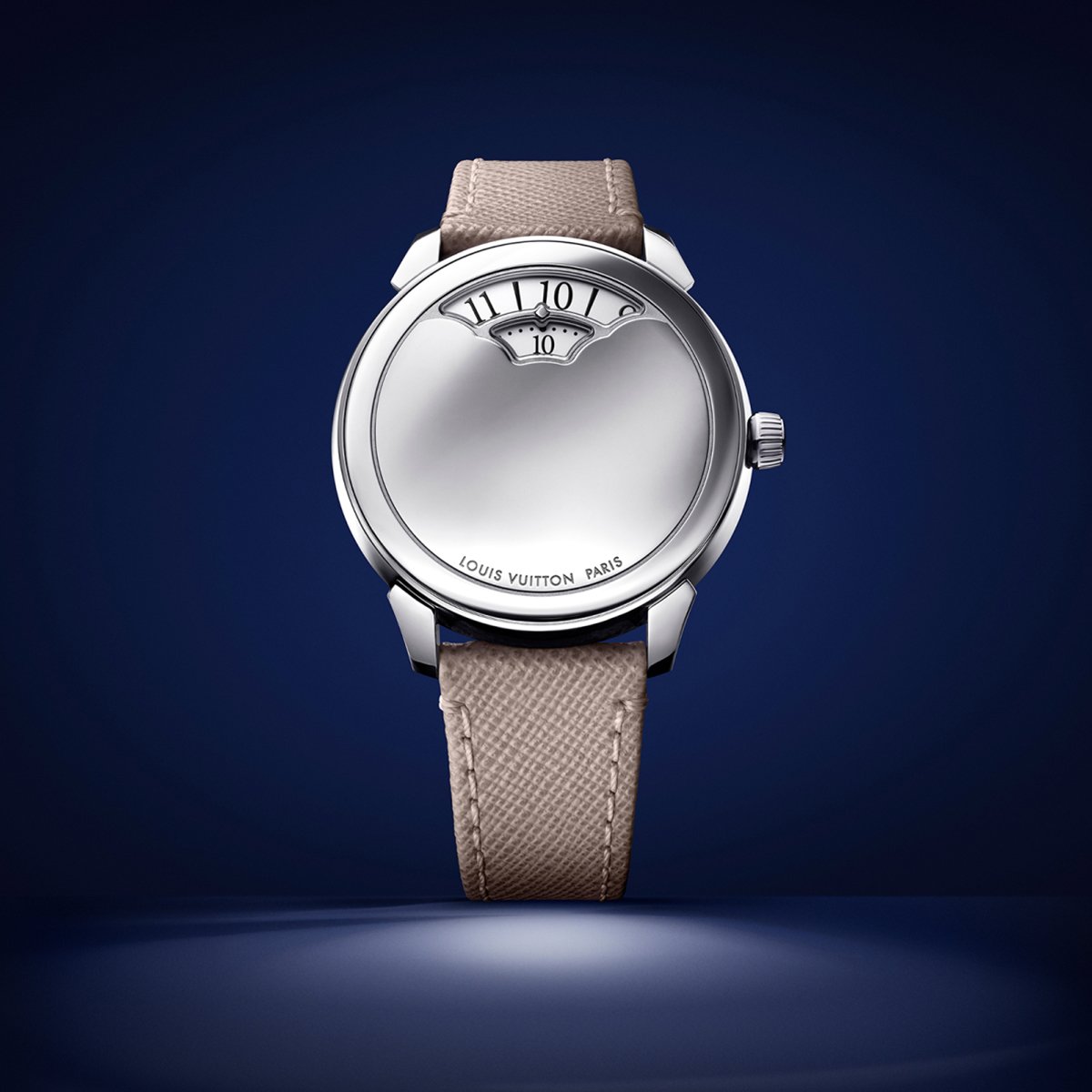
Hardness as the Argument
What makes this interesting is the pairing of hardening and polish. Surface-hardened steel cases, such as Sinn’s Tegiment-treated models, are usually brushed or bead-blasted. Here, the hardening exists to preserve a high polish, and polished surfaces are typically the first to show every scratch. The steel’s purity matters too, beyond the marketing copy: the fewer inclusions a steel contains, the fewer micro-pits remain after polishing, and the deeper the shine.
Polishing at the Limit
The harder material has consequences in the workshop. At La Fabrique des Boîtiers, the house’s own casemaker, finishing a Mirror Steel case takes up to three times as long as finishing the rose-gold model. That is a notable reversal. Gold is usually considered the more demanding material; here, it is the soft, forgiving one. The case, lugs, and crown are polished. Bead-blasting adds matte contrast on the inner faces of the hollowed lugs and along the arcs and circles that frame the aperture. The discs are made of hand-brushed brass with a galvanic rhodium finish and black transfer-printed numerals and indexes. At 37mm across and 8mm thick, the watch stays compact. The gently domed surfaces and softened edges suit an everyday watch. Water resistance is 30 meters, however, which is a little modest for that role.
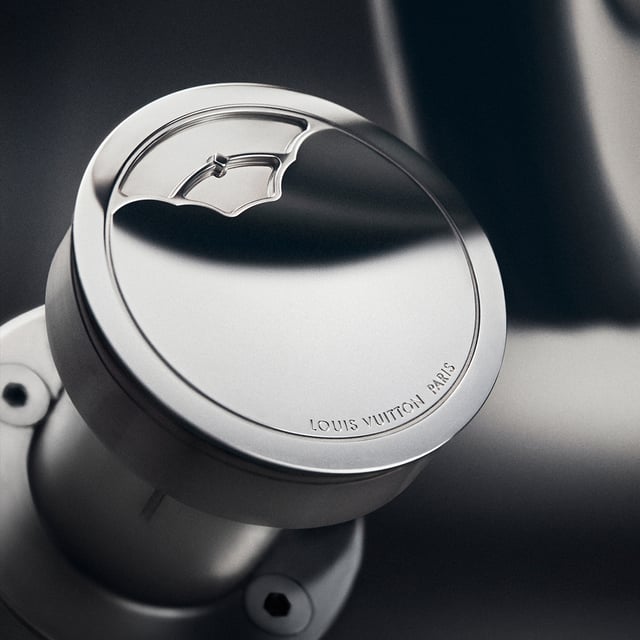
Louis Vuitton Tambour Convergence Mirror Steel
Louis Vuitton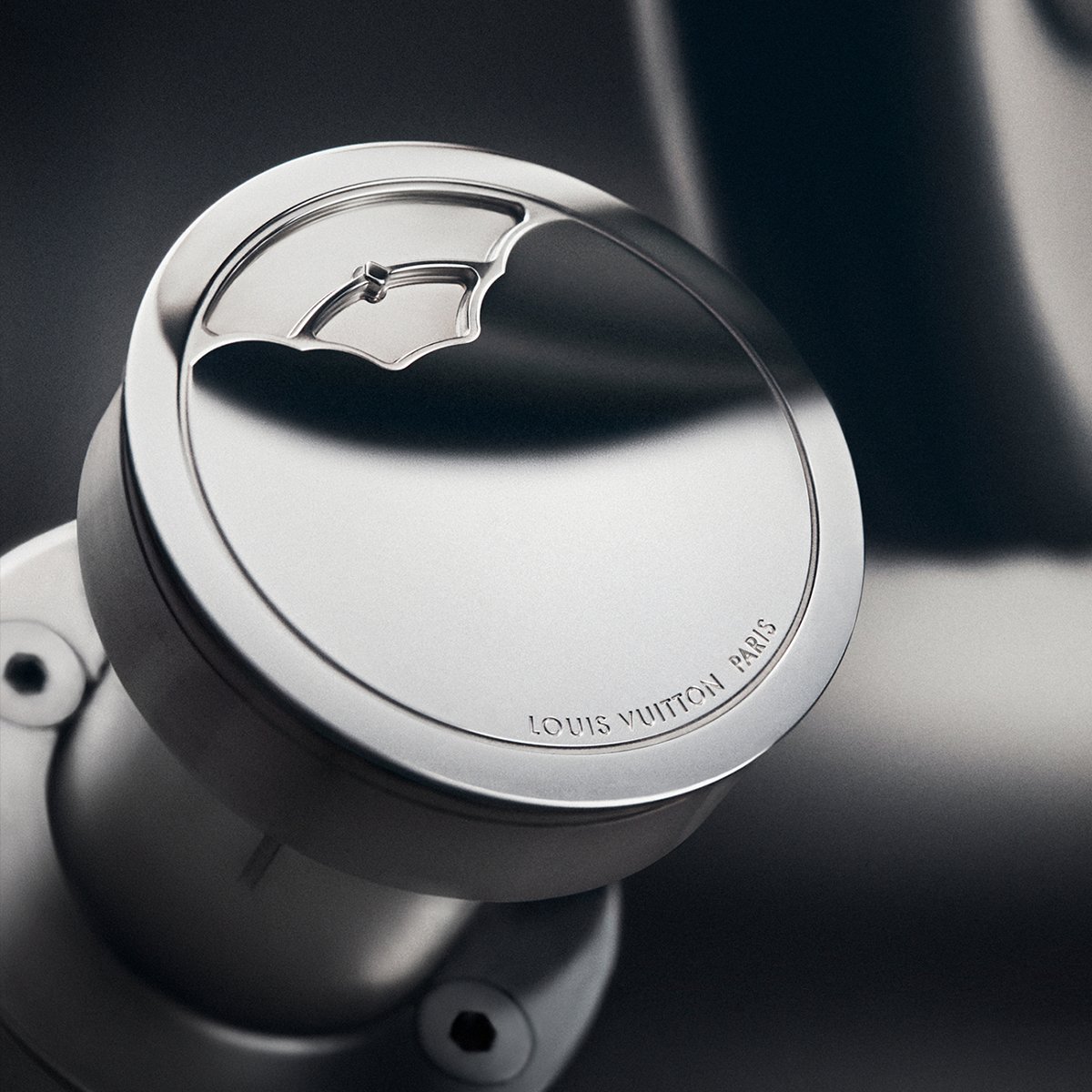
The LFT MA01.01 Caliber
Inside is the self-winding caliber LFT MA01.01, the first time-only automatic movement designed and produced entirely in-house by La Fabrique du Temps. It beats at 4 Hz, or 28,800 vibrations per hour. Its free-sprung balance is regulated by inertia weights rather than a regulator index, a design generally considered more resistant to shocks and more stable over time. The 18-karat rose-gold rotor is visible through the sapphire caseback. The 45-hour power reserve is solid, if not especially generous.
The Tambour Convergence Mirror Steel is not an entry-level steel model but a materials project. Louis Vuitton uses the collection’s familiar form to put one technical promise front and center: a polish that is meant to last. The watch is worn on a gray Saffiano calfskin strap with a beige lining, fastened by a pin buckle in the same hardened steel. It is priced at $25,200.