How Ressence Reinvented the Mechanical Watch
Oil, magnets, rotating discs, and a very different way to tell time
Certain watch brands have perfectly captured an essential identity: their own perception of what it is to measure time, expressed in aesthetic and mechanical form. Consider Richard Mille’s iconic tonneau shape or the Cartier Tank. Not least among these is Ressence, a relative newcomer to the watch sphere that offers a presentation of time that’s entirely unique.
Founded in 2010 by the brilliant industrial designer Benoît Mintiens, the brand has pioneered a particular circular vision of time, as told by rotating discs that indicate each of the watch’s functions and features. As remarkable as Ressence’s aesthetic innovations are, it’s equally important to focus on the mechanical developments that drive them. Turning time into a spinning disc doesn’t come easy.
The Belgian brand has carved out a place as one of the finest sources of technological advancement in the horological world, and yet all too little are its pioneering developments considered alongside those of more mainstream brands. That ends here. Let’s talk Ressence.
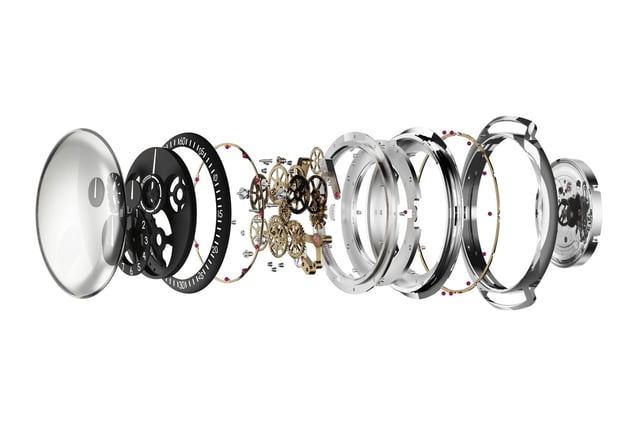
The ROCS 1 in exploded view
Ressence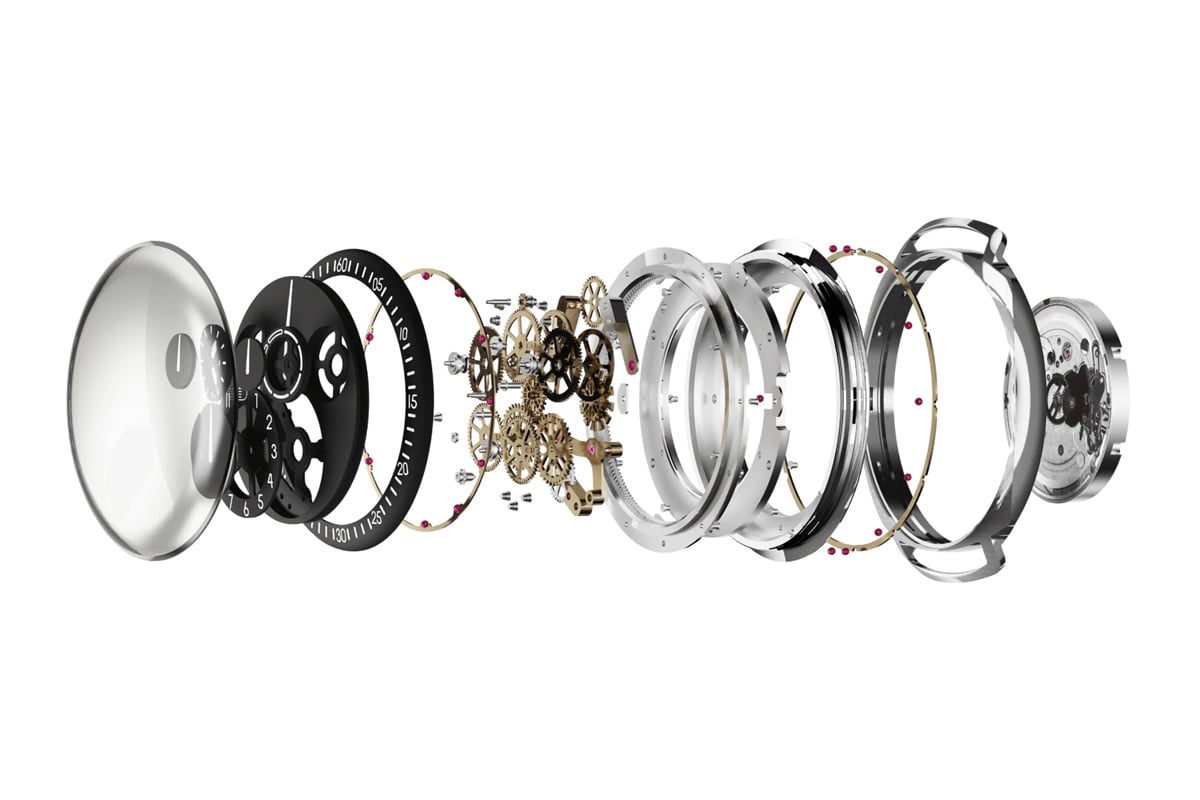
Ressence Orbital Convex System
The quintessential Ressence invention is its ROCS module, which lies at the heart of the brand’s instantly recognizable aesthetic identity. Its purpose is to take a standard multi-level watch dial — which usually has the dial with numerals and then a set of hands floating above it — and reduce it to one planar level. As such, this not only creates a gorgeously striking appearance but also makes telling the time much easier once the owner gets used to Ressence’s particular way of doing so.
The ROCS drives discs of 12.5cm radius, subdials that continually revolve even as the main disc they’re set in does also. As such, the dial’s appearance is continually changing and will rarely display the same time the same way twice in its lifetime, if ever. The ROCS has seen numerous iterations, beginning, of course, with the ROCS 1. Driven entirely by the minute axle of a customized ETA 2824/2 base caliber, this module comprises 107 components and displays seconds, minutes, hours, and day of the week.
Patented under US8743664B2 and US11314206B2 in the States, it represents a rather uncomplicated first step toward powering Ressence’s design language. Later iterations quickly followed. The ROCS 2 is powered by an ETA 2892 and includes photovoltaic cells for quick charging. The ROCS 3 is a return to the 2824/2 and introduced another Ressence staple: oil-filled construction. It also powers quite a few more complications: minutes, hours, day of the week, runner, date, and oil temperature. The final and most recent iteration, the ROCS 5, is rather more pared-back and is equally oil-filled but includes fewer components than its predecessors and fewer complications as well.
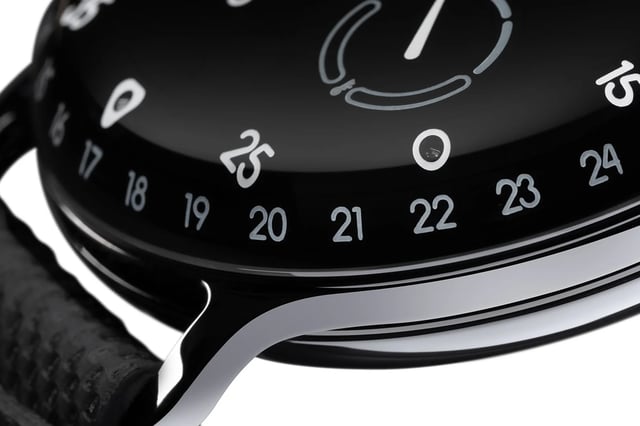
An example of the appearance of a Ressence oil-filled watch. Notice how the dial details appear to be right up against the surface of the crystal.
Ressence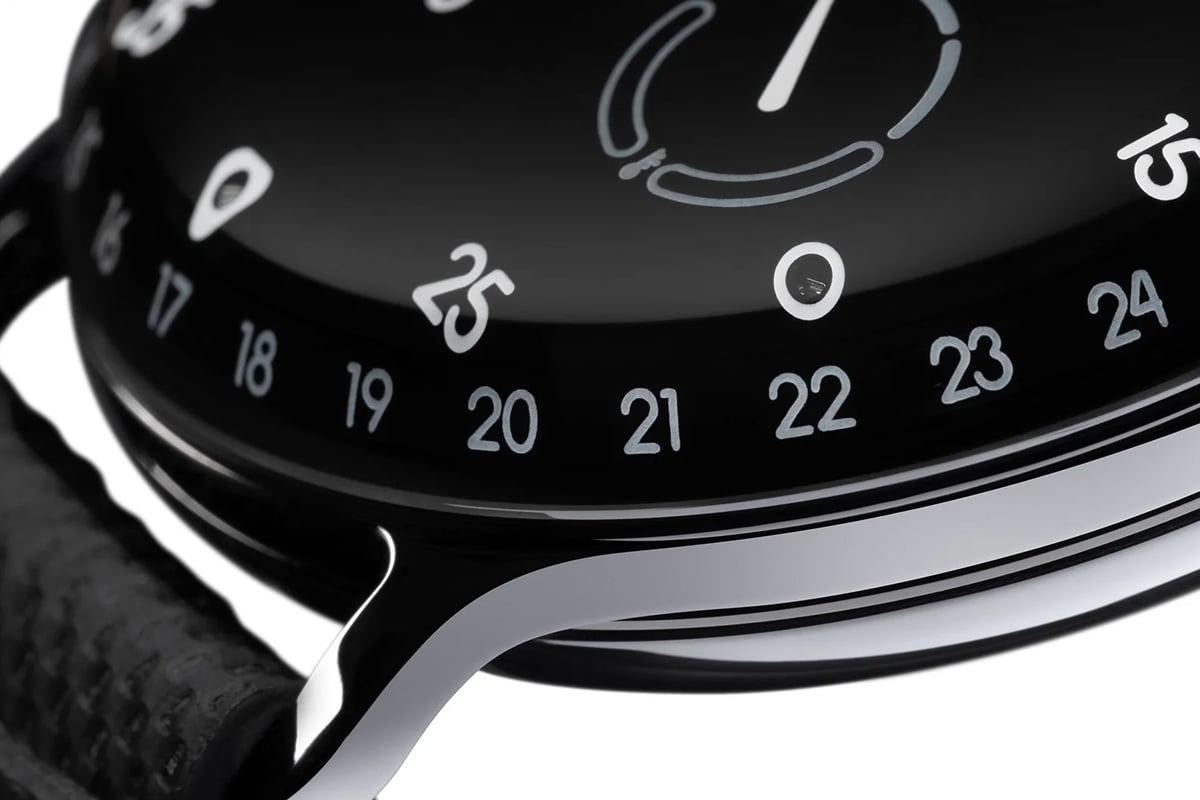
Oil-Filled Systems
Oil-filled watches have received a tremendous surge in popularity in recent years, with many modders even converting their own normal timepieces into oil-filled behemoths. Not only does filling the dial area with oil boost legibility by making it appear as if the dial functions are right up against the crystal, but it also reduces reflections and distortions underwater, as well as boosting water resistance.
Ressence’s oil-filled watches are far from the level of a simple Seiko mod, however. A variety of technical developments serve the dual purpose of maximizing the efficiency of this system and powering Ressence’s technological developments through the new oil-laden ecosystem.
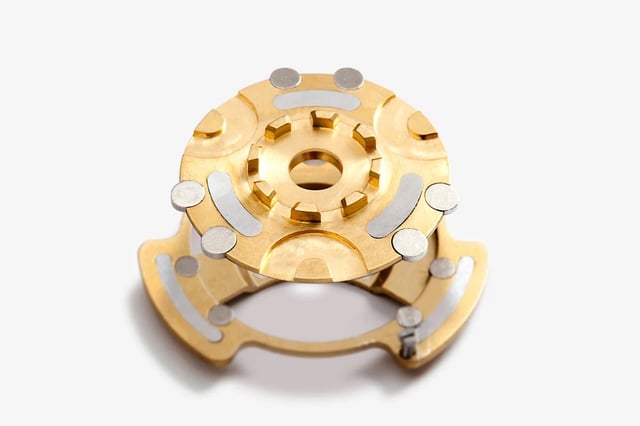
Ressence's Magnetic Transmission system
Ressence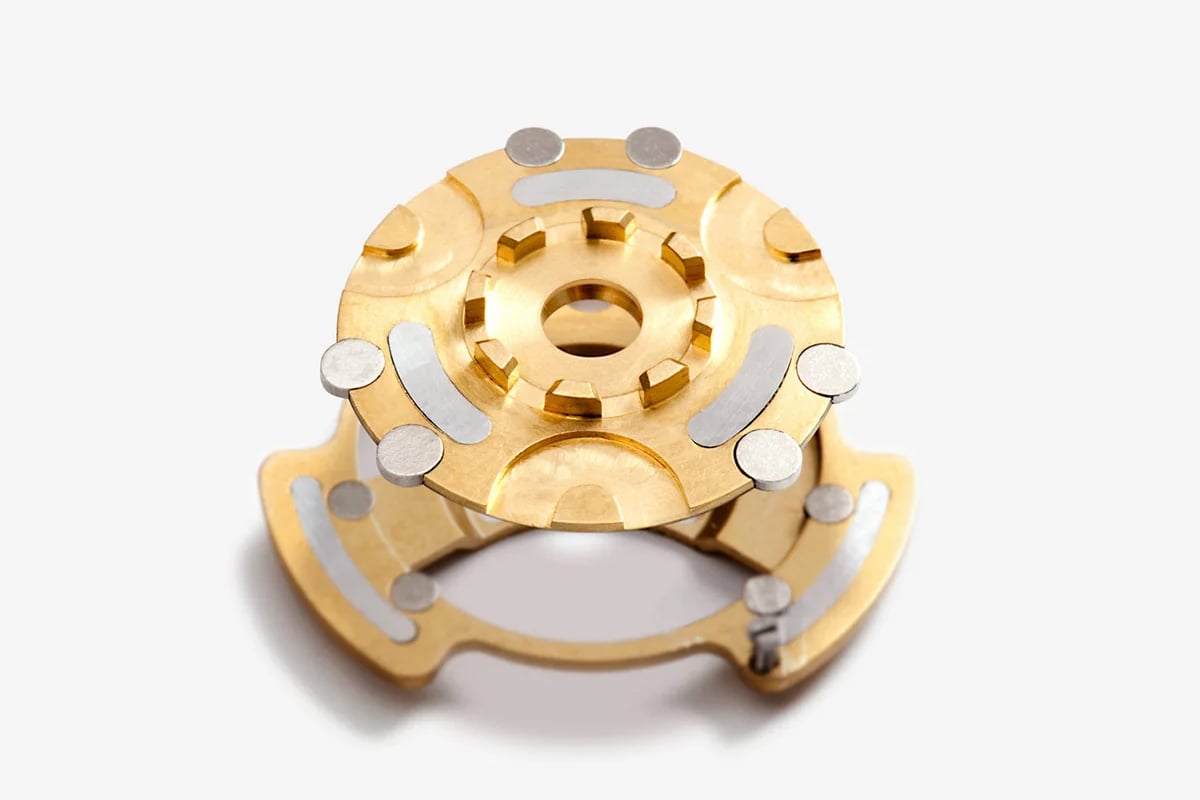
First among these is Ressence’s proprietary Magnetic Transmission. Due to the oil suspension in models Type 3 and Type 5, the ROCS module must be physically separated from the rest of the watch to create a hermetically sealed chamber for the oil. As such, power and control of this module can only be transmitted without physical contact — a problem Ressence chose to solve with magnetism. Micro-magnets are positioned in the upper and lower halves of the watch and connected to each other to transmit timekeeping information even through a titanium membrane. The movement of these magnets controls the movement of the ROCS module, enabling the heart of the watch to dictate the display of time even through a physical barrier.
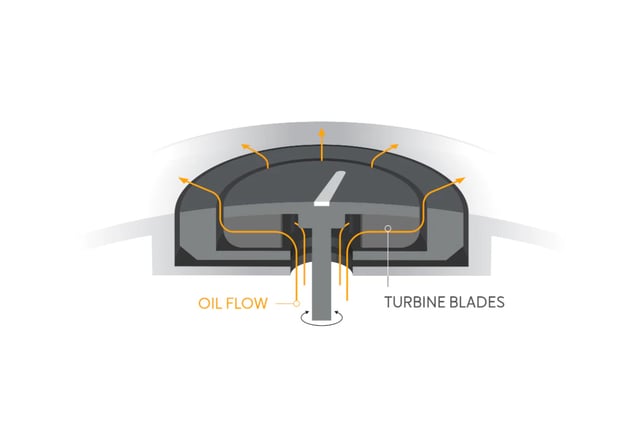
The construction and function of Ressence's hydraulic shock absorber system
Ressence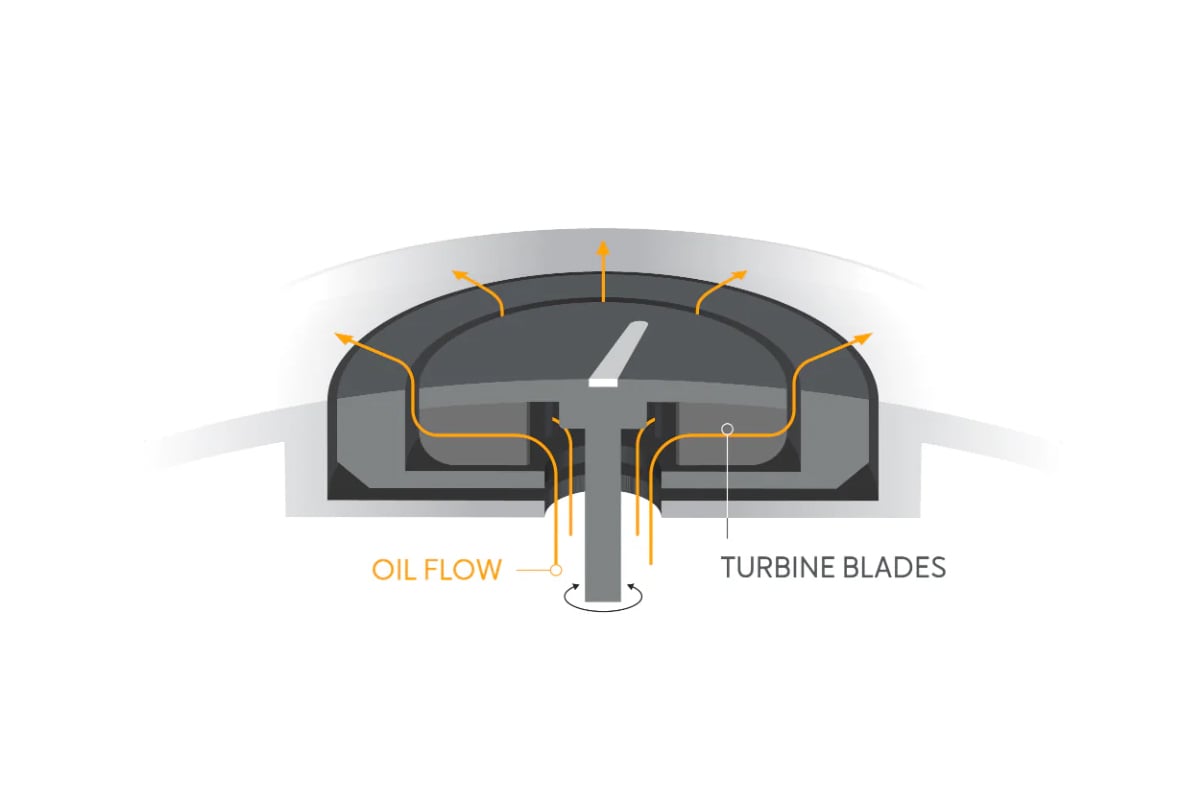
The use of magnets to drive the ROCS module, however, could present a significant issue: under shock, magnets are prone to decouple due to the relative weakness of their connection, which could separate the entire timekeeping module from the rest of the watch. Ressence has cleverly solved this with a hydraulic shock absorber, based on a bottlenecked oil flow where oil is guided through small apertures by blades. Under shock, the oil flow increases beyond the bottleneck’s capacity and creates hydraulic friction, which then slows down the rotation of the runner disc, which is mechanically connected to the rest of the watch. The slowed rate and resistance of the oil flow prevents the ROCS module from detaching or skipping away from the correct time.
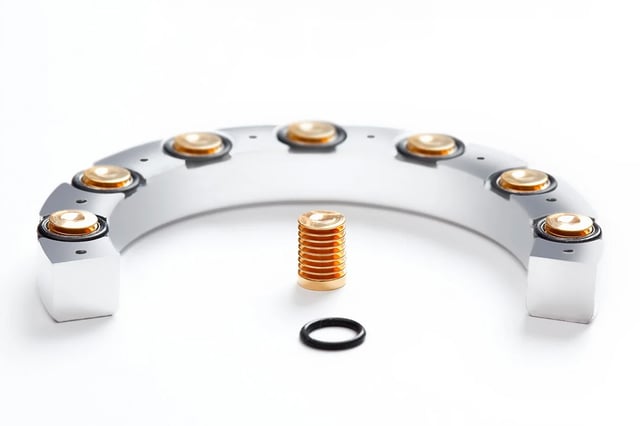
Ressence's proprietary bellows system
Ressence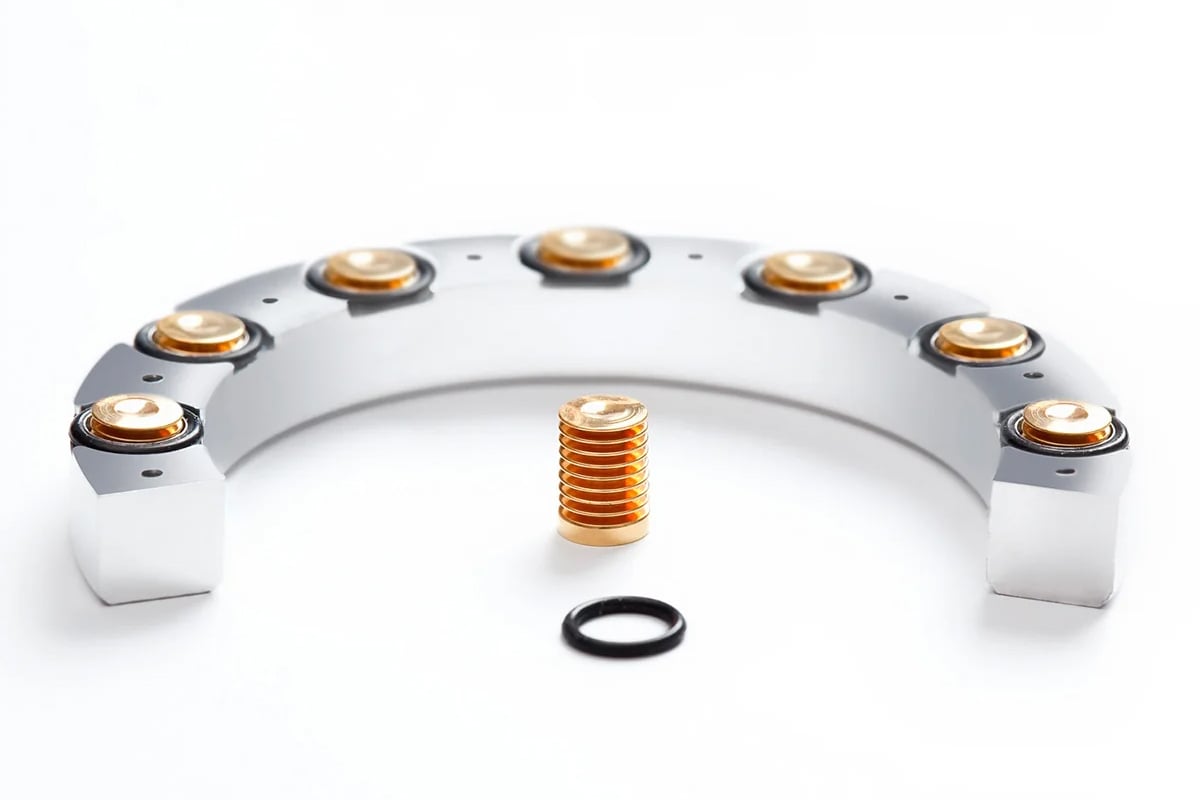
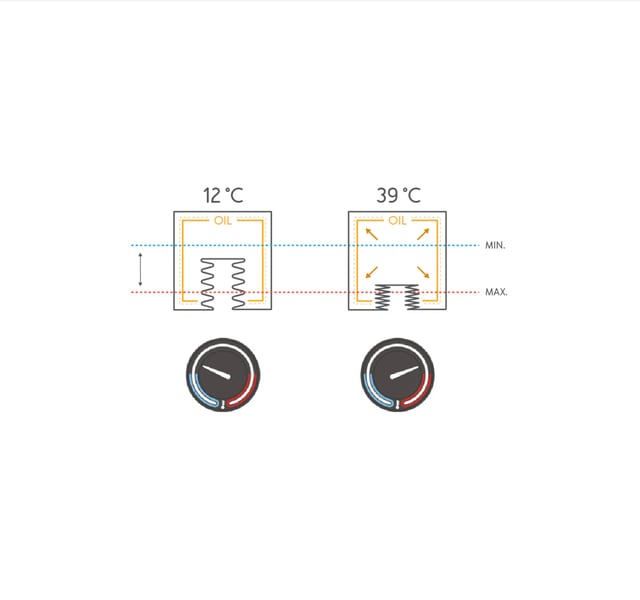
Demonstrating the function of Ressence's bellows system
Ressence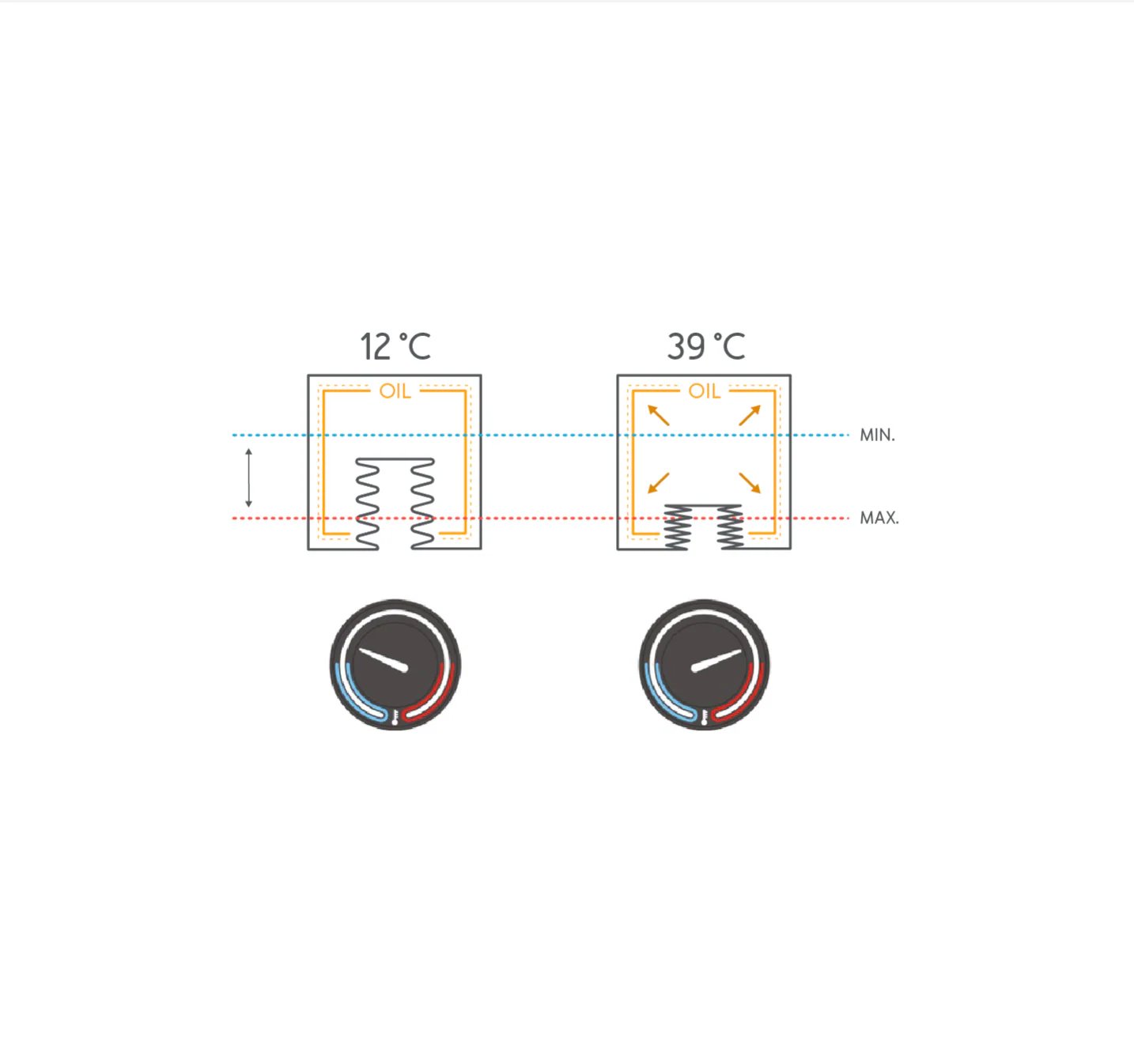
A final problem presented by the introduction of oil into the head of the watch is its fluctuation in volume. As most school students could tell you, materials expand or contract under hot or cold temperatures, so with oil it would be impossible to avoid introducing either a vacuum as the oil contracts when it cools or a significant degree of pressure against the crystal as the oil expands under heat.
This problem is ingeniously resolved by the introduction of a small bellows system, which is self-equilibrating under pressure. It takes up a measure of oil when the oil expands and releases it when it contracts, allowing the volume within the watch head to remain the same under any conditions. Furthermore, since its movement is directly related to the temperature of the oil, Ressence has on numerous occasions linked it directly to an oil-temperature gauge, so the owner can verify the watch’s thermal stress.
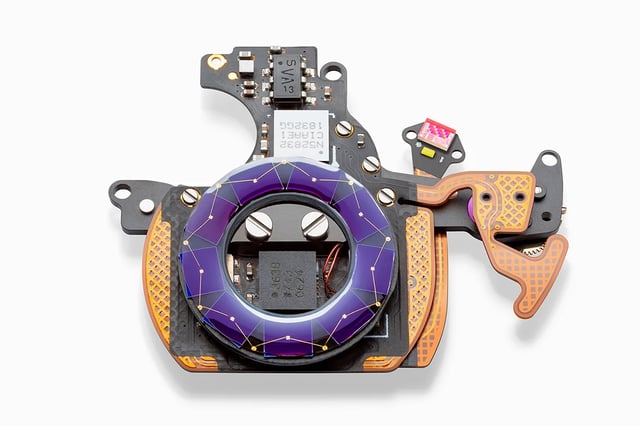
Ressence's eCrown system
Ressence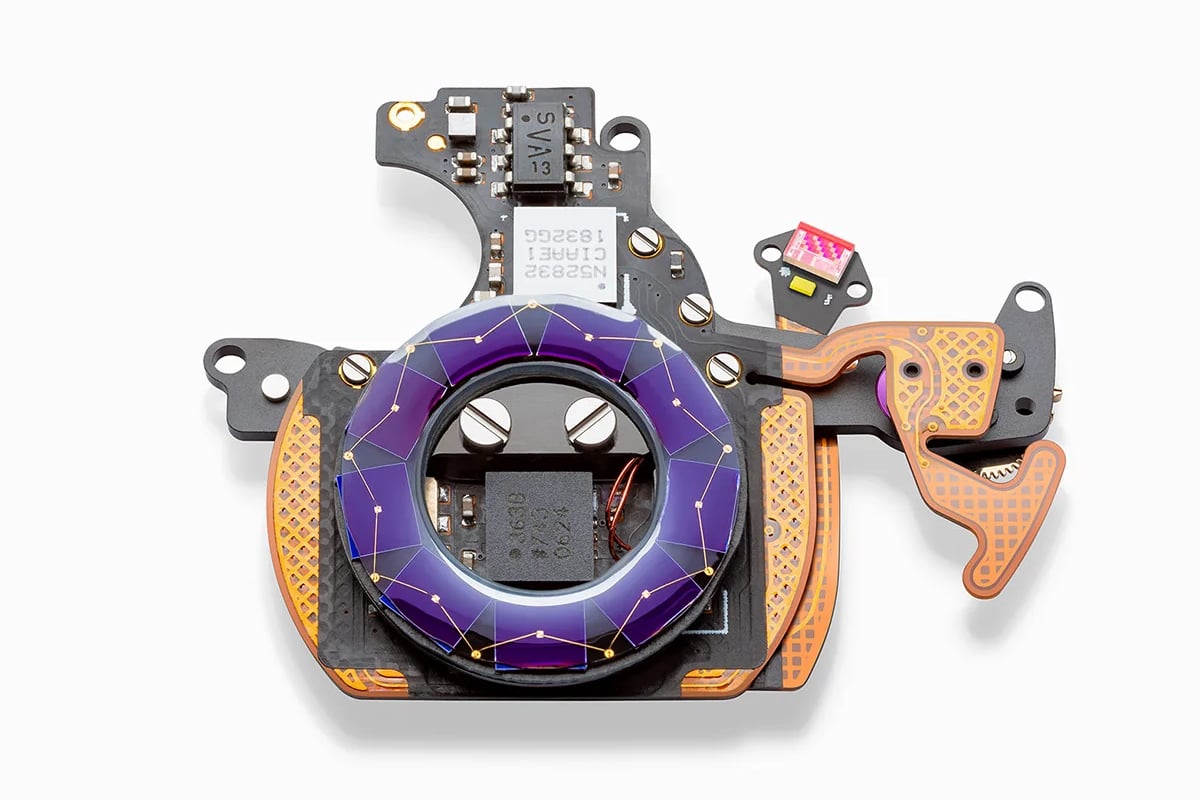
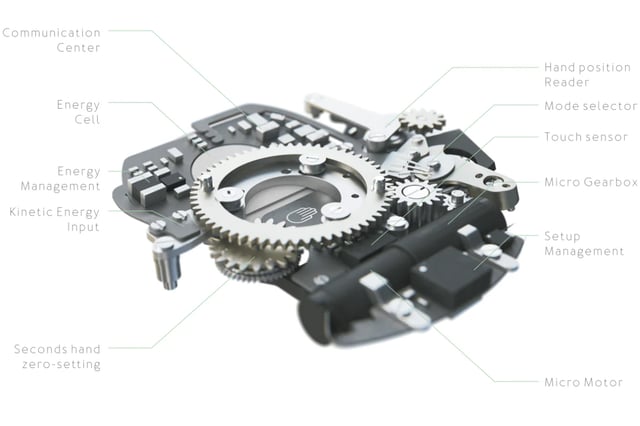
Demonstrating the function of Ressence's eCrown
Ressence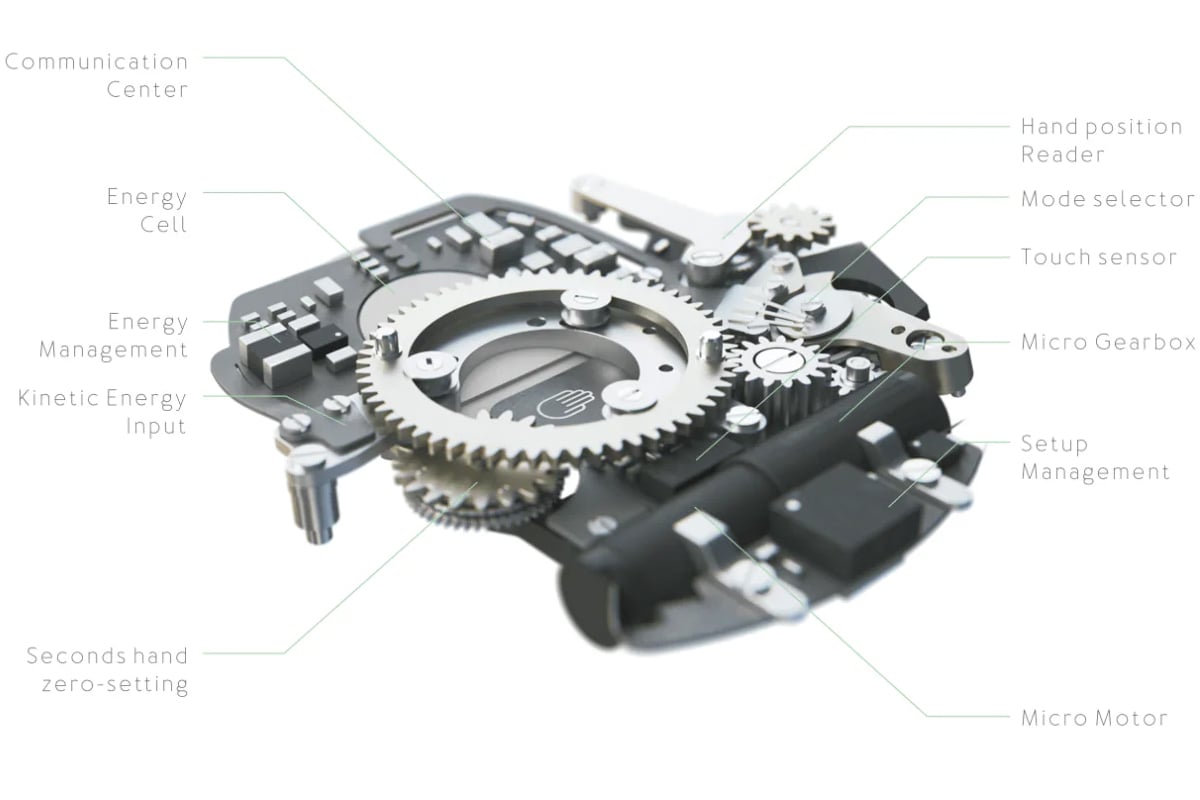
eCrown and Crown-Free Setting
Ressence loves to challenge the status quo. One of the most fascinating ways it has done that recently is with the utter abolition of a crown. Most of its watches are driven by a complex crown-free system, which relies on automatic winding to keep them running. When the watch dies, it’s set by a special caseback feature: a handle, normally flush with the rest of the caseback, pops up, and rotating it sets the time. Even as the time is set, it also simultaneously winds the watch enough to get it running again, at which point the automatic rotor takes over. As intriguing as this is, Ressence’s integrated eCrown is even more so.
An electromechanical embedded system that lies at the heart of Ressence movements with an ROCS module, the eCrown is an exceptional example of what I like to call “cyborg watches”: mechanical souls with electronic enhancements. Built from 87 components and running on just 1.8 joules of energy every day, it’s touch-controlled by a tap on the crystal and can be switched on or off without affecting the movement in any way, based on the user’s personal preferences.
It connects via Bluetooth to a phone app, allowing for selection of city time zones in the event of travel. The eCrown is able to register the time when set manually via the caseback lever but is also self-regulating: it monitors the time at least once a day displayed by the graphical hands and then automatically adjusts the discs’ positions if needed, as long as the movement is running. Oh, and it’s fully self-sufficient, powered by photovoltaic cells hidden behind ten micro-shutters on the dial.
Conclusion
Many brands today are afraid to challenge the status quo. New models become rearrangements of the same pieces and design elements: Breguet numerals, alpha hands, blue-emission lume. Ressence is not one of those brands. Its aesthetic achievements speak for themselves, but it’s in the area of mechanical complications where its work is truly set apart from the crowd. This dedication to mechanics worthy of the beautifully aesthetic dial is what makes Ressence a true watchmaker, and one of the greatest maisons operating today.