Métiers d’Arts: Straw Marquetry
A spotlight on Marquetry and making straw fit for a king

Straw marquetry is an unusual and ancient craft. It takes something rather common, rye straw, and turns it into something noble. It was practiced by the Sumerians from southern Mesopotamia, which flourished between 4500 and 1800 BC, and was also among the goods Marco Polo brought home from China. As it takes a lot of time, patience and effort to master, it is not a surprise that straw marquetry in the Western world was first practiced in monasteries. The beauty of Bibles with straw marquetry decorating the cover soon captured the hearts of the nobility, turning it into a true artistic decoration technique, or as it is called in French, “métiers d’arts.”

Both versions of the Slim d’Hermès La Source de Pégase utilize straw marquetry to bring the delicate nature of the wings to life.
Hermès
The nobility not only liked their Bibles decorated with straw marquetry but often utilized it as well in their home decor. That is how it is used today, if you can find a craftsperson who still masters this art. It is increasingly difficult to find, mostly because it takes a lot of time and dedication to get the technique right. Even then, decorating an object with straw marquetry remains a tedious task that cannot be hurried. The reward is twofold: for the artisan to have completed yet another masterpiece and for the (future) owner to enjoy an ancient and nowadays rare craft.
The only type of straw used for straw marquetry is rye. It has a unique combination of flexibility and strength that makes it perfect to apply on a wide variety of objects, including watch dials. Rye straw also has natural varnish that gives it a unique shine, which elevates the experience of the straw marquetry to another level.
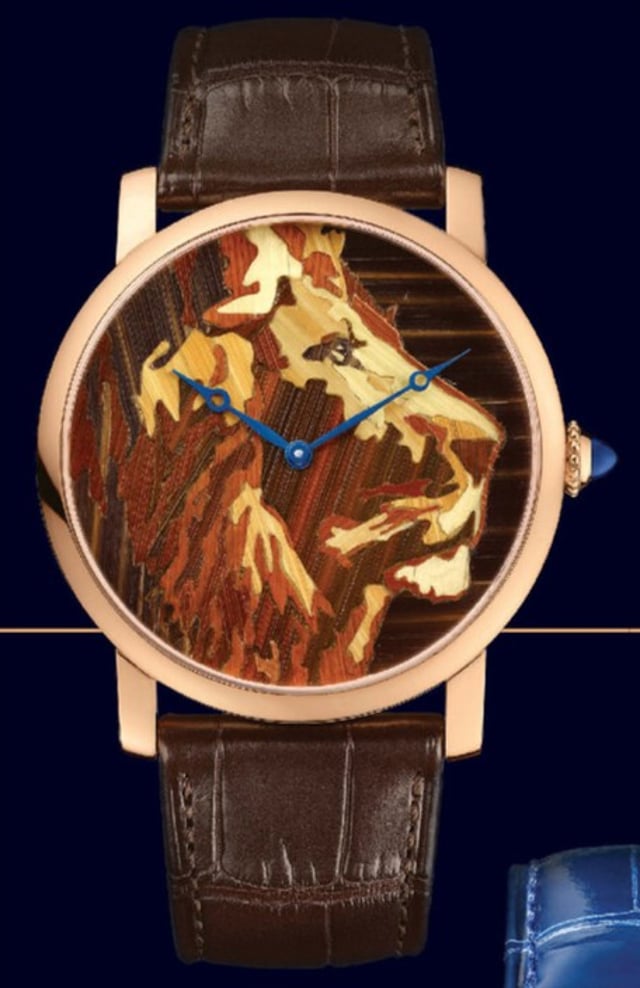
This Cartier Rotonde de Cartier shows like no other how playing with shades can create a sense of depth in the straw marquetry dial.
Cartier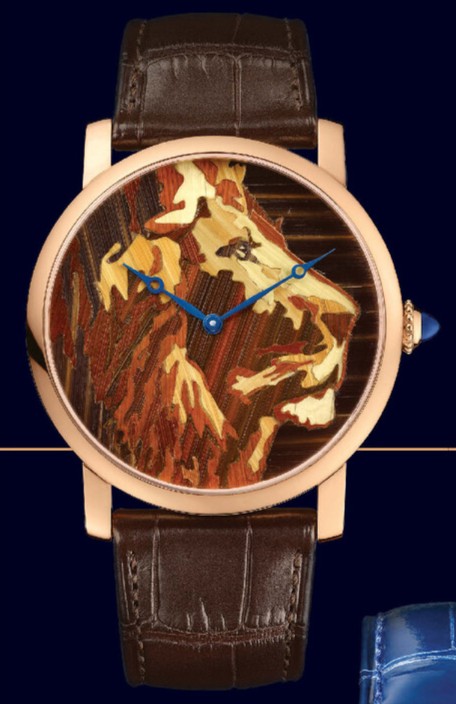
The straw comes from a supplier named Jean-Luc Rodot from Burgundy, France, one of the last of its kind, if not the only one. He mastered not only selecting the right quality of straw but also developed the pigments and procedures to dye the rye in a wide variety of colors. It might be hard to fathom in today’s world of standardization, but even with all his expertise and experience, colors can often not be exactly replicated, as the straw itself is a natural product. For the artisans, this means that they need to order all the straw required for a project at once so that no color differences will occur.
Of course, with something as small as a dial, this is less of a problem. Here, the challenge is more about working on a very small surface, where the designs are intricate and miniature yet also have to be expressive. First, the straws are cut open and flattened, after which the artisan glues them onto a paper base. From this, the designs can be created, and for watches, they are often so miniature that a microscope is a necessity. The straws are recut on their paper base and put together into the order that will make up the final design. They have to be placed perfectly right away. Otherwise, the only solution is to start all over again.
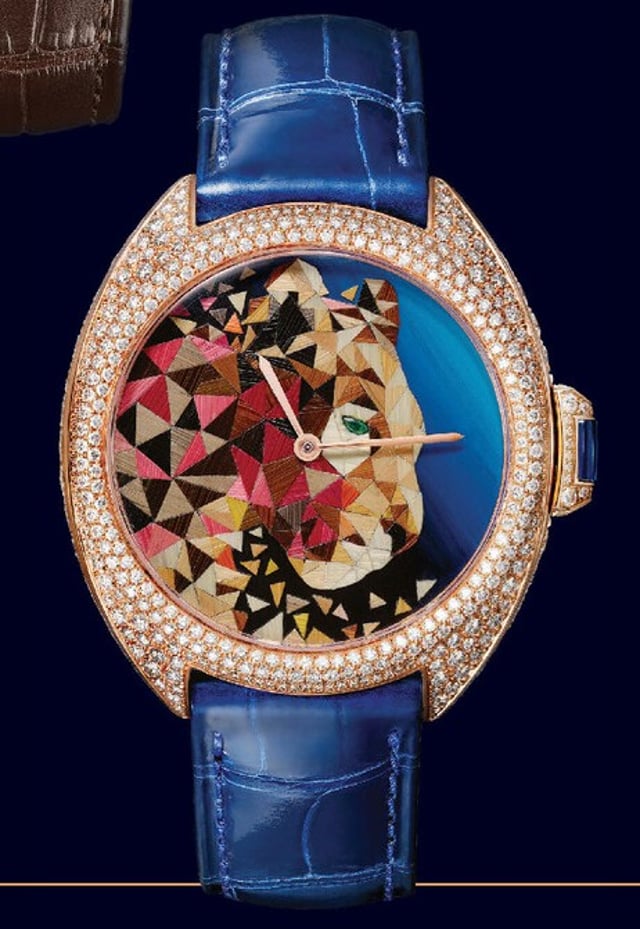
Straw marquetry may be a centuries-old craft, but it is often utilized in a modern way as this Cartier Clé de Cartier with panther motif in straw marquetry shows.
Cartier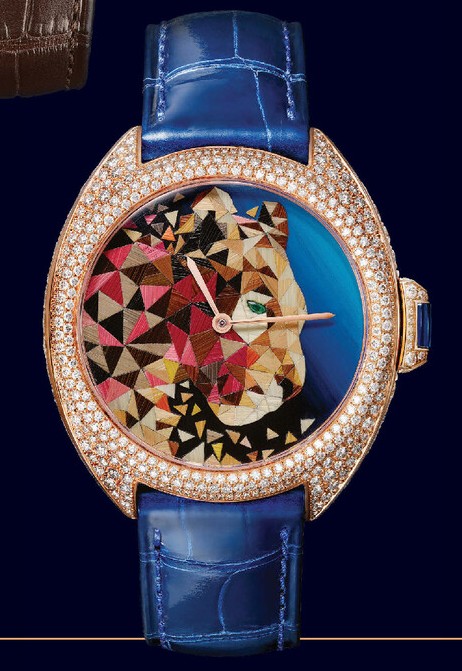
Straw marquetry, therefore, requires a steady hand, concentration, and a lot of patience. The straws should be placed tightly together so that none of the material underneath is visible, but also not too tight so that you run the risk that they push too hard against each other and might fall off over time. This is one of the many precise skills that the artisans really need to have in their fingers.
The craft’s rarity means that even in high-end watchmaking, where métiers d’arts are celebrated and embraced, straw marquetry is hard to find. Unlike what you might expect from something that was initially practiced in monasteries several centuries ago, most straw marquetry designs used for watches are surprisingly modern.
A good example of this is a unique edition of the Clé de Cartier, where the dial is decorated with an artistic impression of the brand’s hallmark panther. Put together as a mosaic, the artisan’s capabilities are tested to the max, as this means that there are numerous edges that need to fit just perfectly. At the same time, this design works to showcase the unique texture of the rye straws.

The Isotope Mercury M
Isotope
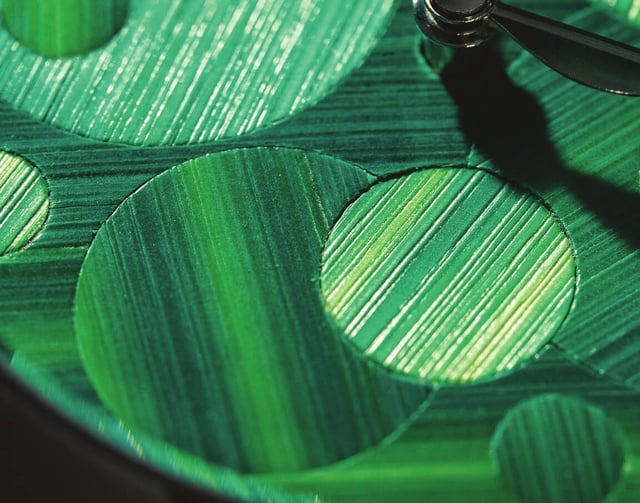
A detail of the dial, highlighting the incredible play of light of the straw marquetry
Isotope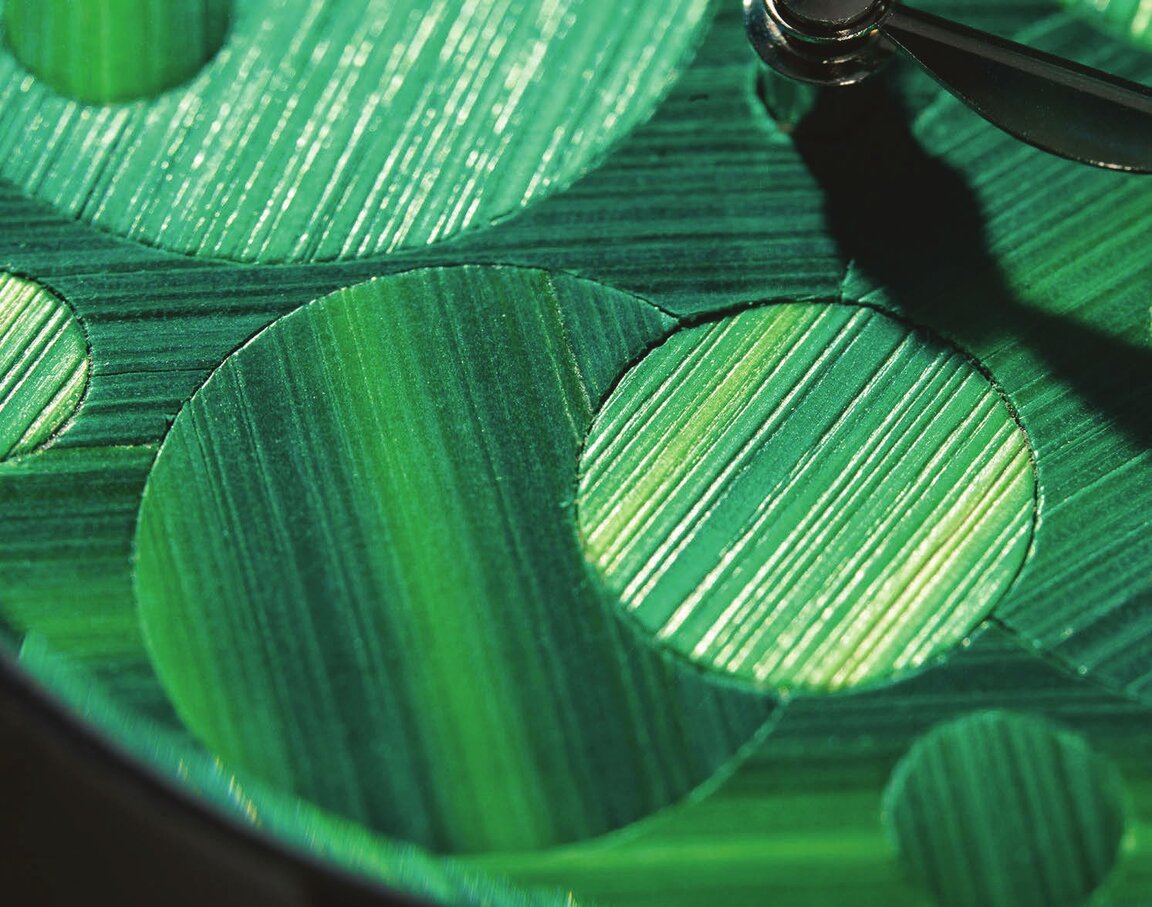
The same can be said of the limited edition of the Rotonde de Cartier, where we see an “en profile” image of a lion. Here the straws are colored in a more toned-down and natural way, with their texture enhancing the impression of shadows.
It can hardly come as a surprise that Hermès is also a brand that has utilized straw marquetry in its watch collections. In 2010, Hermès recreated furniture by the famous French interior designer Jean-Michel Frank in straw marquetry. Two different designs were available in the Arceau case originally created by Henri d’Origny in 1978. Both are a combination of pale blue and black straws, yet one has a chevron motif, while the other is decorated with small squares placed in opposite directions next to each other.
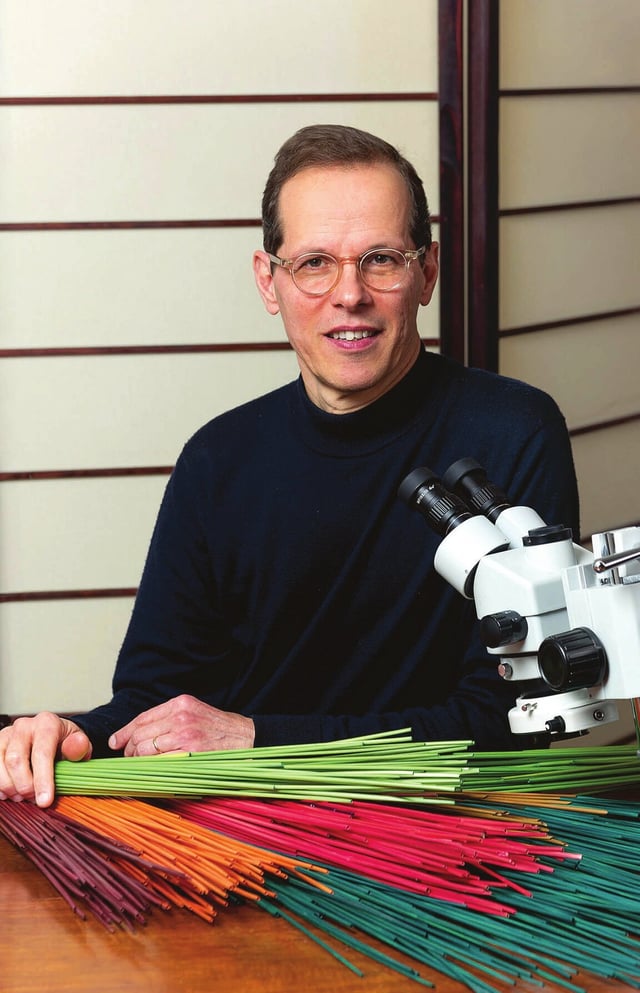
Bernardo d’Orey with different colored rye straws and the microscope under which he makes his creations
Isotope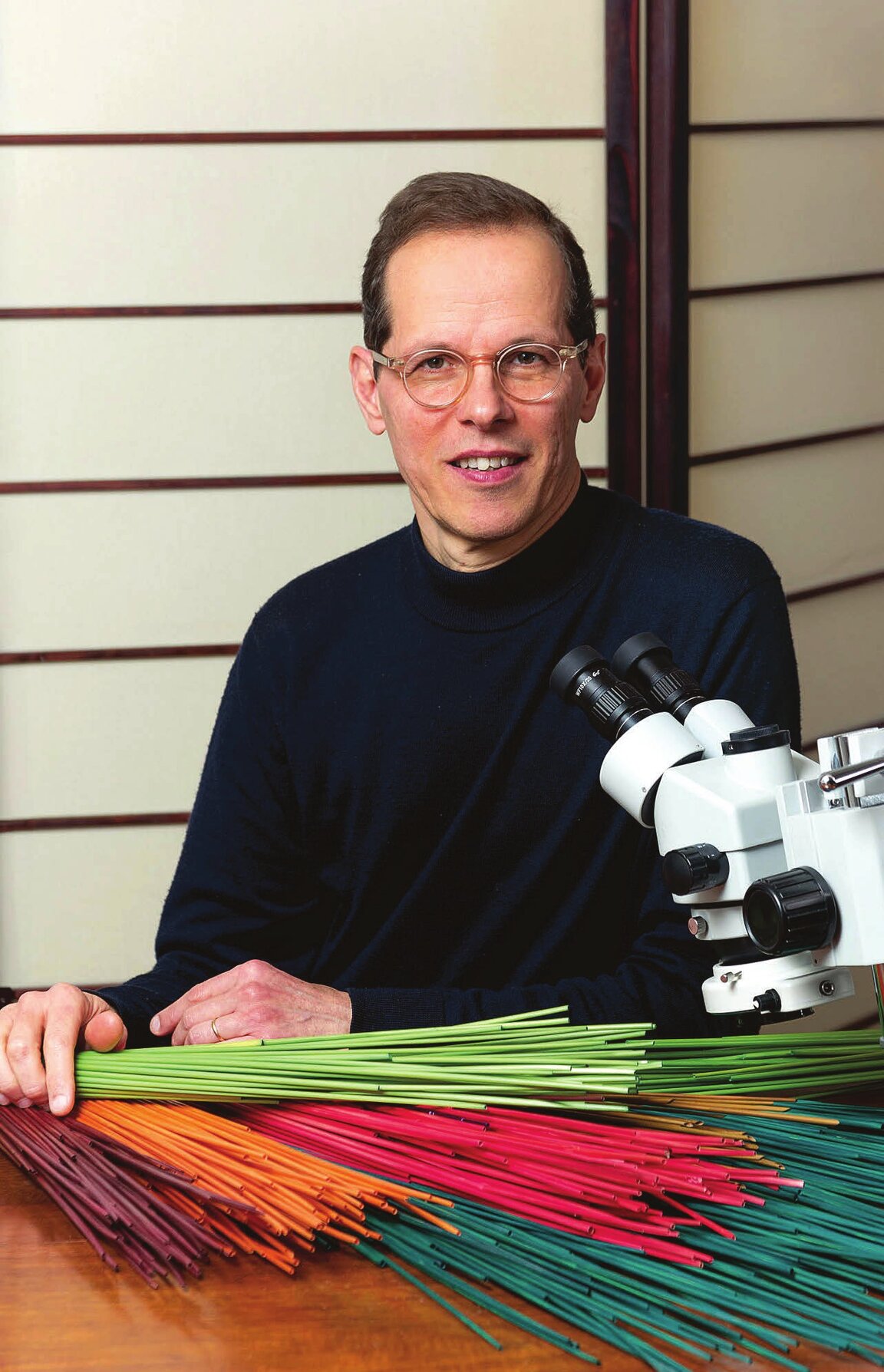
An unexpected entry in the world of straw marquetry is the British microbrand Isotope. The brand has already made quite a name for itself with its charismatic divers’ watches, but it recently launched the Mercury. This elegant and streamlined watch has a design inspired by the futuristic Mercury steam trains that traveled throughout the United States in the 1930s. Collaborating with Bernardo d’Orey, a straw marquetry artisan based in Paris, France, Isotope launched the Mercury M collection, with the “M” standing for marquetry, priced at an unprecedented 4,800 pounds sterling.
D’Orey is a rising star in the world of straw marquetry, being initially taught by Lison de Caunes, one of the grand masters of straw marquetry today. Now, his mentor is Rose Saneuil, who is skilled in a wide variety of marquetry types, including straw, and who gets to count Louis Vuitton and Piaget among her clients.
The first two green dials that d’Orey made for Isotope also show the appeal of straw marquetry. The distinct bubble design gives the dial a dimensional twist, while the unique play of light of the rye straws is also perfectly visible. It is almost like it is a more vibrant version of malachite, although this design is entirely man-made. As the straws are a natural material, no two dials will be alike, even when they feature the same design. Simultaneously, the time-consuming nature of the craft, combined with the very limited number of artisans that master it, make it so that these dials will never be produced in bulk and remain a true treat for discerning watch collectors.
This article was originally published in the March / April 2025 issue. To subscribe to the print edition of WatchTime Magazine, click here.