Here Come the Dutch: The Innovators Behind Van der Klaauw to Grönefeld
How a small country makes a significant contribution to the world of watchmaking
The Netherlands, located in Western Europe, is one of the smallest countries in the world. Adjacent to Germany and Belgium, about 18 million people live in an area slightly less than twice the size of the state of New Jersey. The Dutch conquered a substantial amount of this area from the sea, using dunes and dikes to prevent the water from reclaiming it.
While the country is traditionally also known for its flowers, windmills, and cheese, its contributions to the world of watchmaking are disproportional to its size. This has earned the Netherlands the nickname, “Switzerland by the sea.”
One of the earliest and most profound contributions to watchmaking was made by Christiaan Huygens, a Dutch mathematician. In 1656, he crafted the first clock using a pendulum, followed in 1673 by the publication of Horologium Oscillatorium, in which he carefully explained the workings of the pendulum. While he is sometimes mistakenly identified as the inventor of the balance spring (that credit should go to Robert Hooke), Huygens did improve on the concept by simplifying it.
In those days, the Dutch were a premier producer of high-quality clocks, which are today replaced by wristwatches. In terms of volume, the Netherlands is a minor player, but in creativity and quality, they are making their mark, as the following five brands testify.


Christiaan van der Klaauw, the Astronomical Wizard
When Christiaan van der Klaauw started his own business in 1974, clocks were still very much in fashion. As he was fascinated by astronomy, he constructed the most ingenious complications showing the exact position of the planets in our solar system and integrated this into his creations. As gifted as he was, Van der Klaauw joined in 1990 the AHCI (Académie Horlogère des Créateurs Indépendants), an elite group of independent watchmakers that includes François-Paul Journe, Svend Andersen, Andreas Strehler, and Philippe Dufour, amongst others.
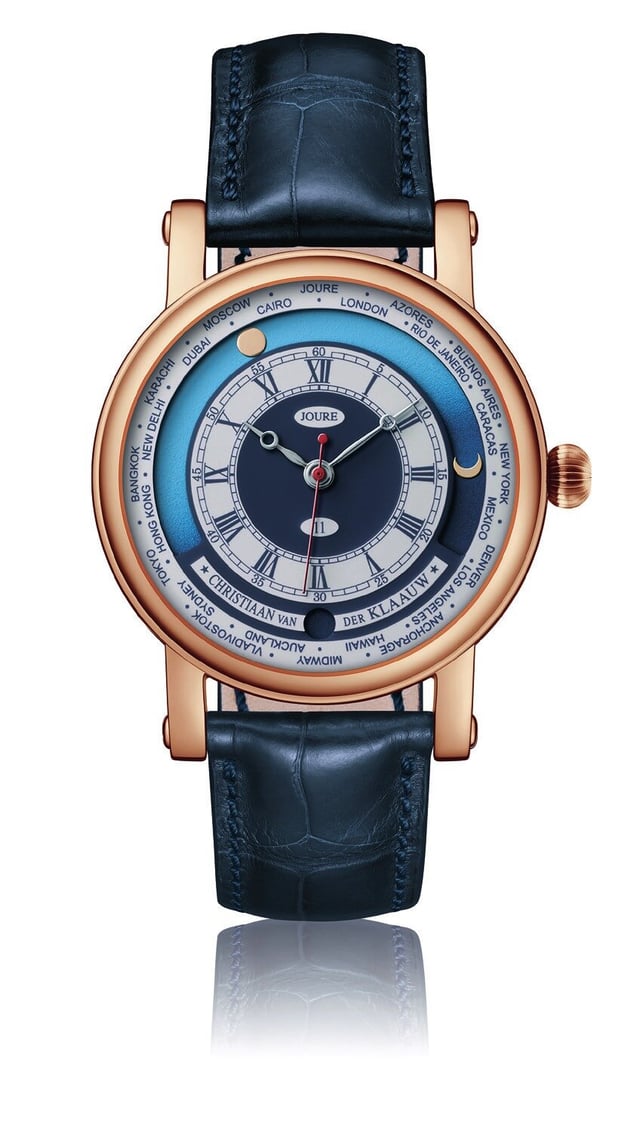
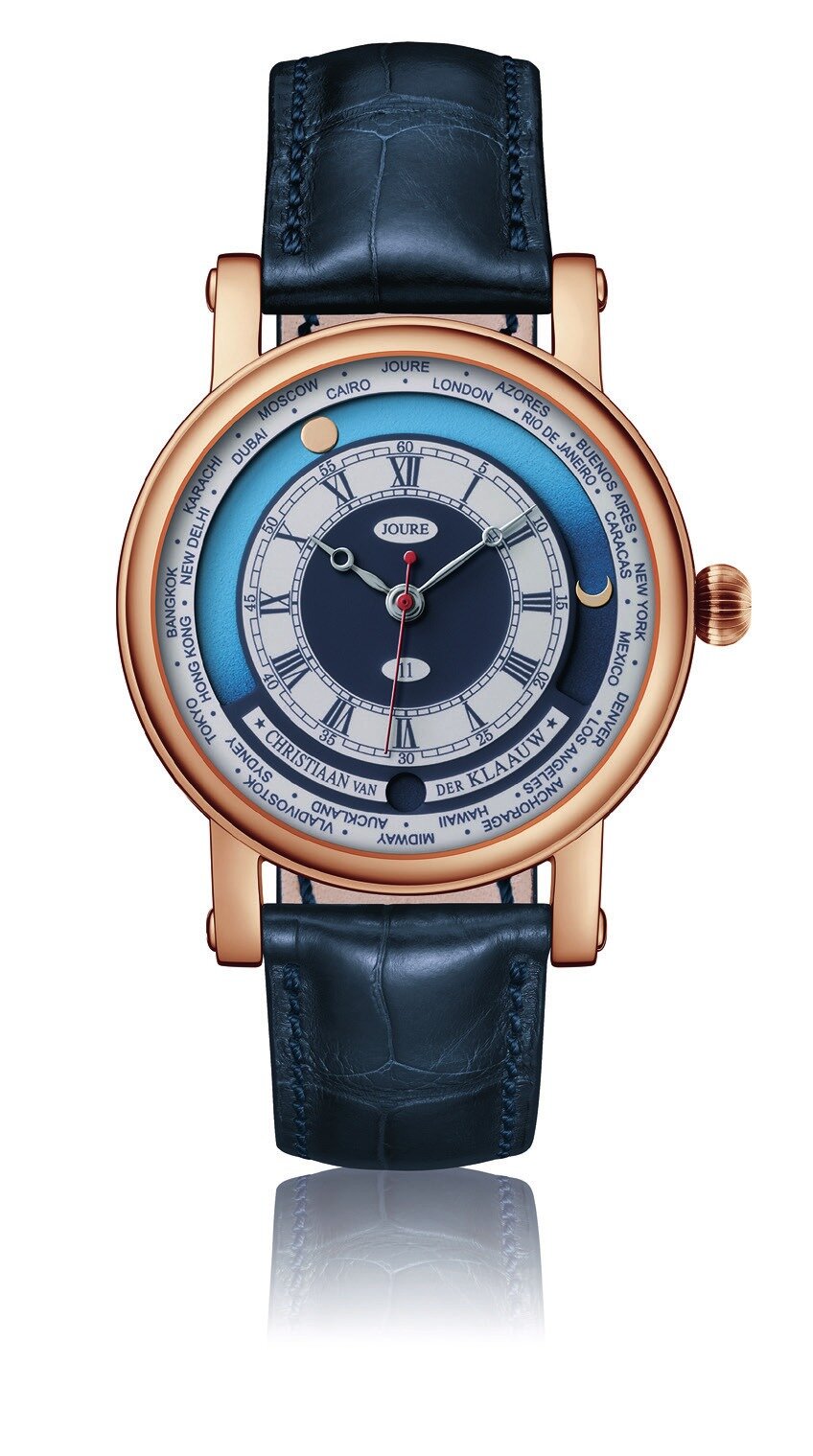
While his clocks were always well received, trends switched to wristwatches, and so did Van der Klaauw. He took on the challenge of miniaturizing the astronomical complications he loved so much, which resulted in 1996 with the introduction of the ‘Satellite Du Monde.’ This cleverly designed watch showed intuitively the time around the world as well as the moon with its position relative to the sun.
At the turn of the millennium, Van der Klaauw launched his most outstanding achievement, the ‘Planetarium.’ This watch contained the smallest mechanical planetarium in the world and has become a signature model for the brand. In the years that followed, many other new models joined the collection, including the ‘Real Moon,’ with its precise moon phase indicator, and the ‘Astrolabium,’ which mapped out the positions of the sun, moon, and stars as seen from Earth with great precision.
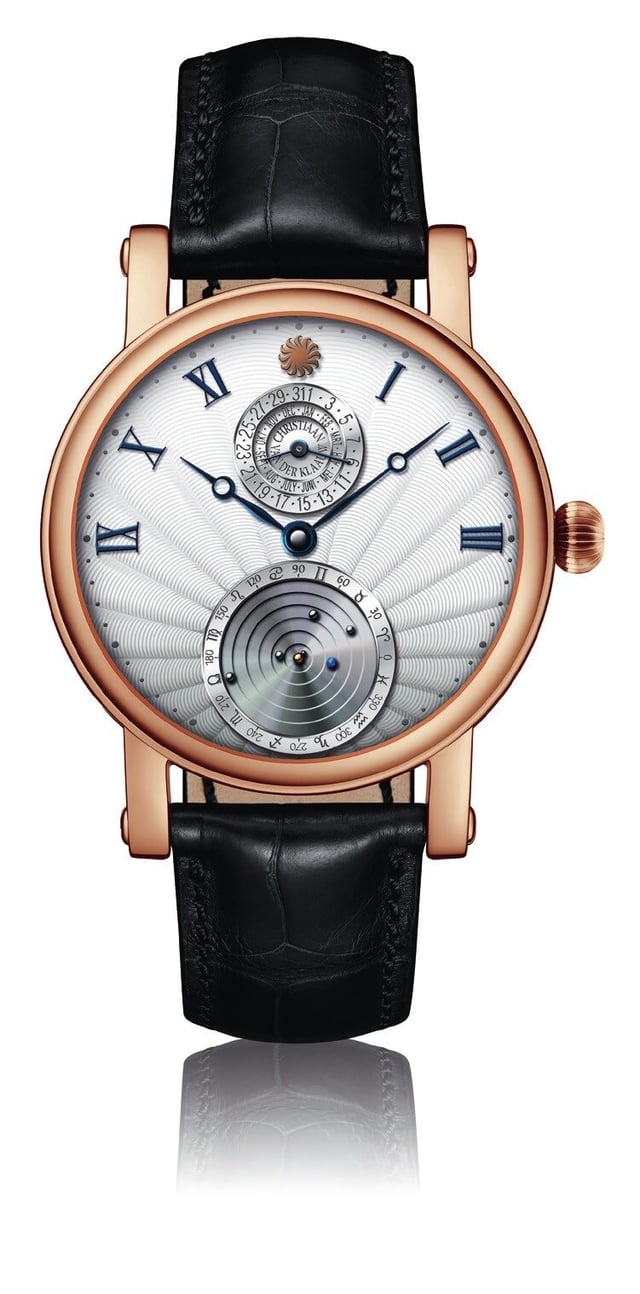
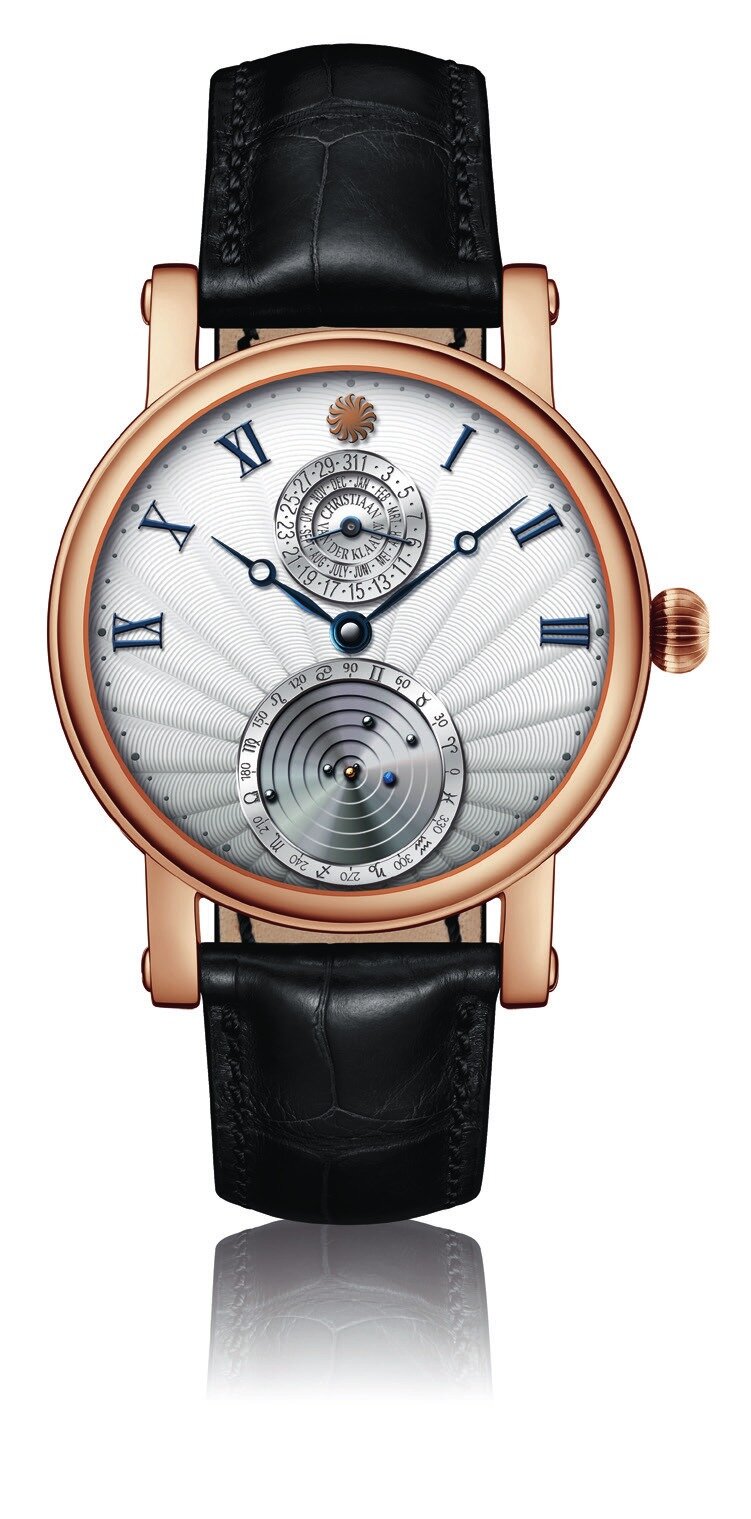
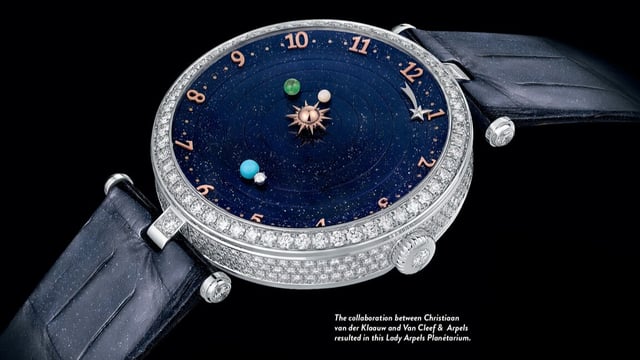
As he lacked a family successor, Van der Klaauw passed his legacy in 2009 on to Daniël and Maria Reintjes. These very successful designers had known Van der Klaauw for many years and ushered his brand into a new era. They started to focus entirely on astronomical complications and introduced a new design language that was very well received. The brand also received recognition from others, as in both 2014 and 2018, it teamed up with Van Cleef & Arpels. Christiaan van der Klaauw developed the complex planetarium modules for the ‘Midnight Planétarium Poetic Complication,’ followed by the ‘Lady Arpels Planétarium’ four years later.
In 2021, the couple brought home the Calendar and Astronomy watch prize from the prestigious Grand Prix d’Horlogerie de Genève (GPHG). They won this with the ‘Christiaan van der Klaauw CVDK Planetarium Eise Eisinga.’ The dial of this watch was hand painted by artist Gaël Colon to resemble the ceiling of Eise Eisinga’s (1744–1828) former home. Although a wool carder by trade, he was also a passionate amateur astronomer who invested seven years of his life to build an orrery of our solar system in his living room ceiling. This is now the oldest still-functioning planetarium in the world.
In 2022, a new chapter opened for the Dutch watch brand as Pim Koeslag joined as the majority shareholder. Koeslag is best known as the former technical director of Frederique Constant, which Dutch couple Peter and Aletta Stas founded. There, Koeslag was the driving force behind the development of over 30 manufacture calibers, including tourbillons and perpetual calendars, clearly indicating that the brand Christiaan van der Klaauw is passed on once again into capable hands.
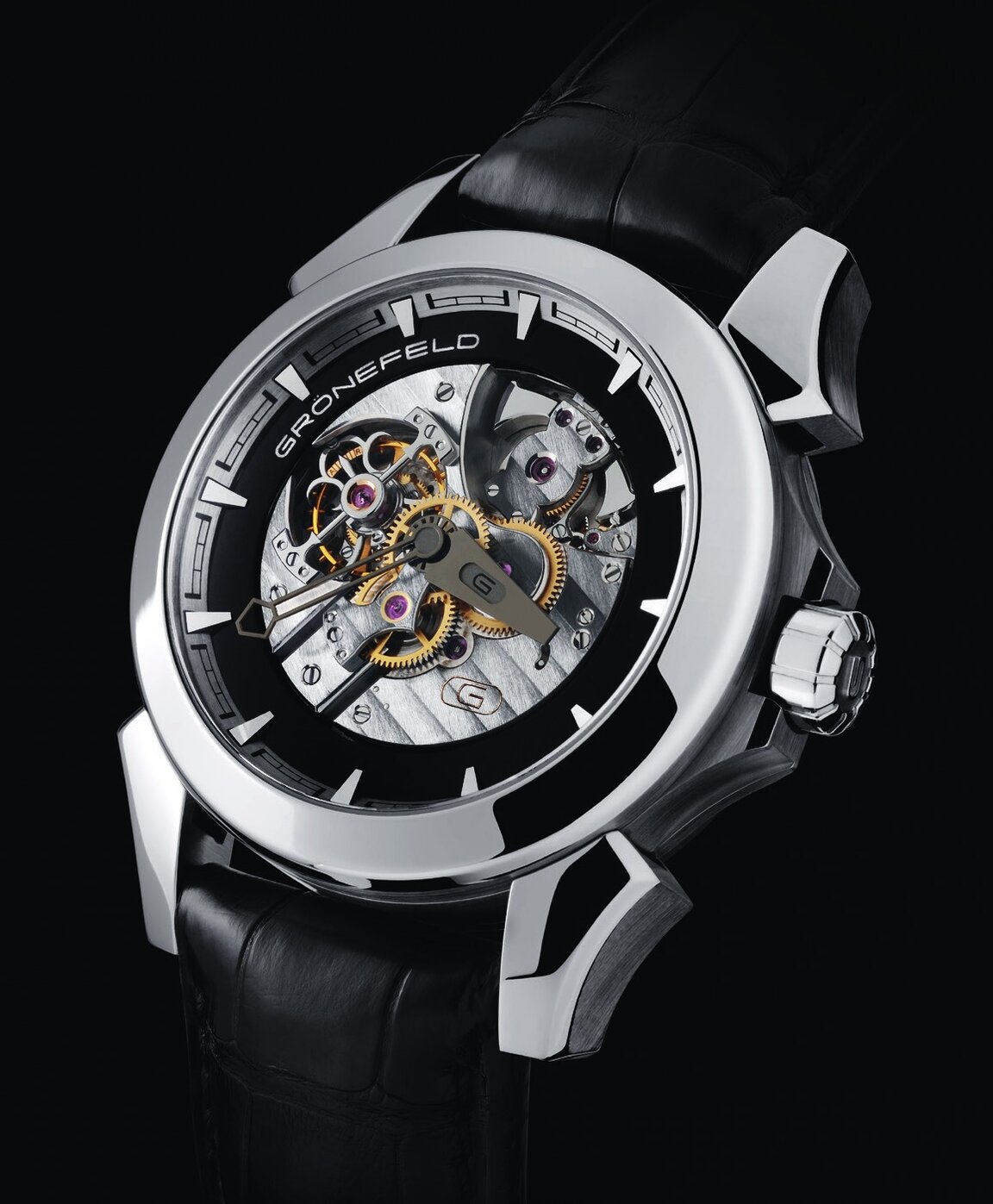
Bart and Tim Grönefeld, the Horological Brothers
Bart and Tim Grönefeld grew up in the watch store their grandfather founded in 1912 in Oldenzaal, a town in the east of the Netherlands, close to the German border. This would also be the seed of a lifelong passion that would bring the family’s heritage in watchmaking to new heights. Both brothers attended the technical school in their hometown before completing basic watchmaking training in the Netherlands. Then, they were on to the prestigious watchmaking school WOSTEP in Neuchâtel, Switzerland.
After they finished their education, they both landed jobs at Renaud et Papi, best known for making some of the world’s most complex watch movements, most notably for Audemars Piguet. There, the brothers worked side by side with people like Peter Speake-Marin, Robert Greubel, and Stephen Forsey. Their talent, combined with their technical skills and expertise, made them rise quickly through the ranks, and in a matter of months, they were not only working on minute repeaters and grande sonneries but also training new watchmakers and playing an essential role in the quality control of the most complicated pieces.
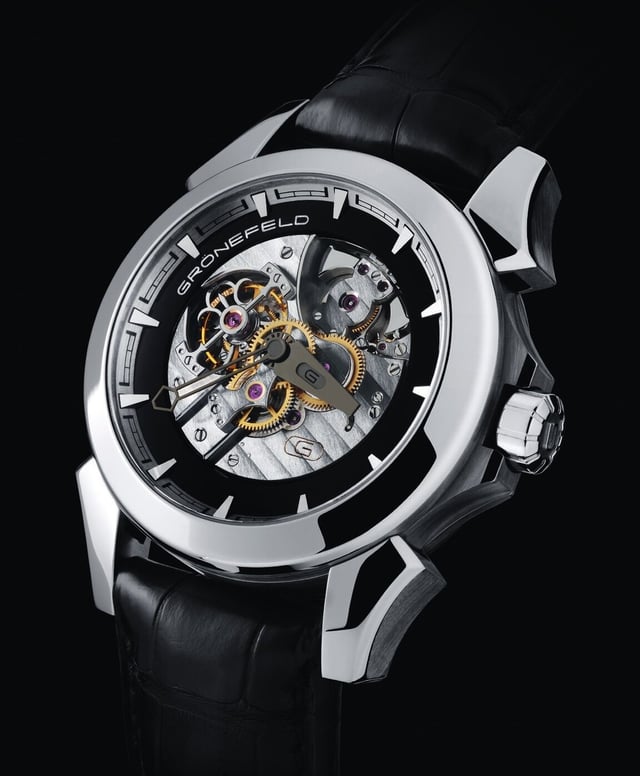
In 1998, the brothers returned to the Netherlands, to their hometown of Oldenzaal, to start their own workshop. They worked mainly behind the scenes, taking care, for example, of the servicing and repairs of Breitling. As over time this didn’t bring the satisfaction that they desired, they decided to launch Grönefeld as a brand. They did so in 2008 with a bang, or rather a gong, as the first Grönefeld watch featured a tourbillon as well as a minute repeater. Taking over six months to construct, assemble, and regulate, it was a complex watch that showed the horological muscles of the Grönefeld brothers.
However, one watch doesn’t make a brand, but Bart and Tim quickly established a style of their own and did so with their following watch, the ‘One Hertz.’ Here, the center stage is for the dead-beat-seconds function, whose scale hovers over the dial. It is flanked by a subdial showing the hours and minutes and an indicator that tells you if the crown is in setting or winding mode. The ‘One Hertz’ has two mainspring barrels that each have a power train of its own, one for the dead-beat seconds and the other for the hours and minutes. While their first watch was based on a caliber made by Christophe Claret, this movement was entirely developed by the Grönefelds themselves. In terms of design, the Horological Brothers also found their sweet spot with clean lines that contrast nicely with the complexity of their movements.
Over the years, the brothers were also able to place quite a few trophies on their mantle. This includes three prizes from the GPHG, where they took home in 2014 the award for Best Tourbillon with their ‘Parallax Tourbillon,’ in 2016 for Best Men’s Watch with their ‘1941 Remontoire,’ and in 2022 the award for Best Chronograph, with their ‘1941 Grönograaf.’ While the latter is a classic chronograph in many ways, with a column wheel and lateral clutch, for the reset-to-zero function the brothers utilized a centrifugal regulator. This device is commonly used in repeaters to control the speed of the chiming, but now also found for the first time a function within a chronograph, perfectly demonstrating the ingenuity of the Grönefeld brothers.
All this success also resulted in an increasing demand for their watches, a two-and-a-half-year waiting list, and a workshop that got very cramped. To battle this, the brothers bought and renovated the historic building in the center of Oldenzaal, where they once both went to kindergarten. Here, they now try to not only meet demand but also to create new horological dreams.
Van der Gang Watches, Precision Engineering
In the north of the Netherlands, we find the manufacture of Wybe van der Gang, who launched his first watch a mere 20 years ago in 2004. For him, this was somewhat of a second career, as he was originally trained as a precision engineer, upon which he founded his own company, Exakt Fijnmechanika. This company quickly became a leading player in making the smallest possible parts for the aerospace, aviation, and medical industries.
It was his passion for precision mechanics that made Wybe van der Gang think, why not make a watch? Being a born entrepreneur, Van der Gang quickly built up his watch manufacture, along with an impressive catalog of watches. His passion for precision engineering is clearly visible, as he designs all the models himself. He is always looking for a perfectly balanced design and doesn’t want a single detail to dominate any of the others.
A Van der Gang can easily be called overengineered, as there is a lot of focus on getting every detail just right, and no corners are cut to get there. For instance, Van der Gang uses 1-kilogram blocks of stainless steel to carve out a single watch case that weighs, when finished, only 18 grams. He does so, as this allows him to get the perfect shape for the wrist, and makes his cases stand out by their slender and elegant lugs.
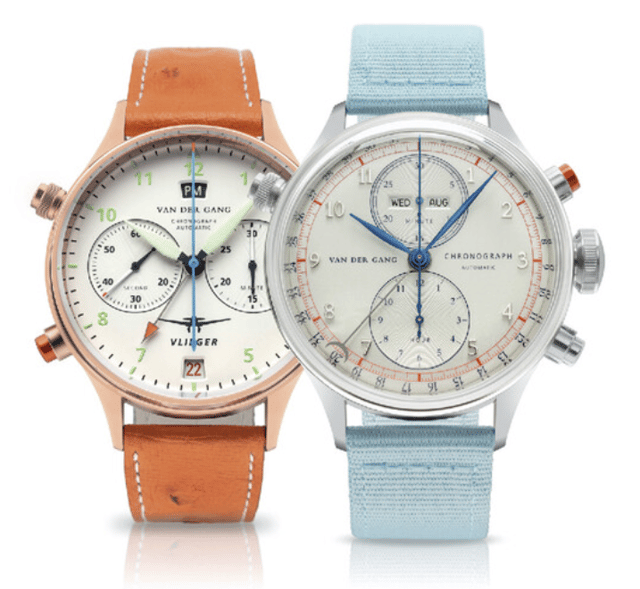
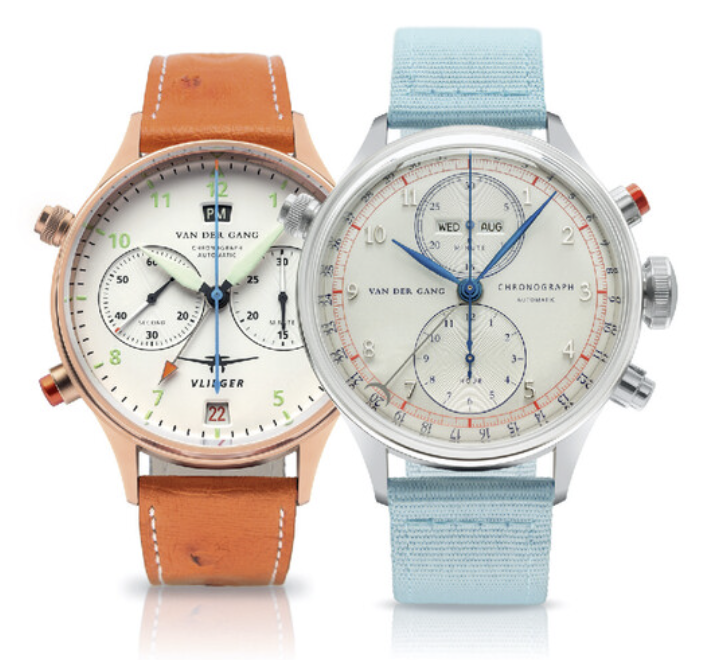
The collection of Van der Gang shows a passion for complications, as well. There is a wide variety of GMT models, some even including a power-reserve indicator or an oversized date, but chronographs are also a favorite. The most emblematic is the ‘Vlieger,’ meaning aviator in Dutch. This 41-mm-large watch has a profound ‘tool watch’ look and feel, with an oversized crown and four pushers and correctors. It is powered by an ETA/Valjoux 7751, which Van der Gang converts in-house to a bicompax layout for the chronograph, a second time zone function with AM/PM indicator that can be set with half-hour increments, and a date function. With a height of 15.53 mm the ‘Vlieger’ is a substantial watch to wear on the wrist, which is all part of its appeal and earns Van der Gang a unique place in the Dutch watchmaking landscape.
Holthinrichs, Printing the Future of Watchmaking
Like Wybe van der Gang, Michiel Holthinrichs also has a unique background. As Holthinrichs is the son of an artist and an automotive engineer, he was intrigued early on not only by the mechanical part of watches, but also their aesthetics. Trained as an architect at the esteemed Delft University of Technology, he specialized in restoring and transforming historic buildings so that they can be preserved for the future and remain serving society. During his studies, he did the same with watches, as he found vintage pieces, serviced them, and sold them to fund his education, giving them a new lease of life. Inevitably, he brought all this passion and expertise together in a brand of his own, with the launch of its first watch in 2016.
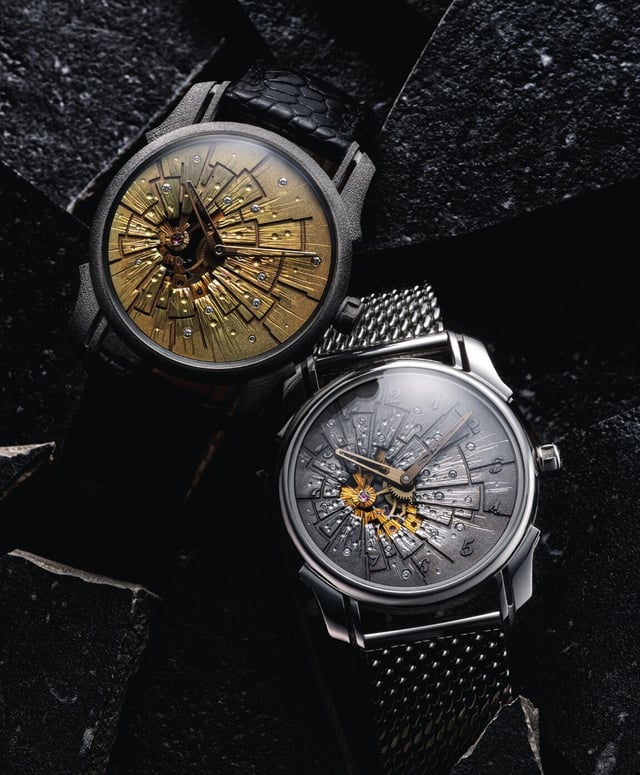
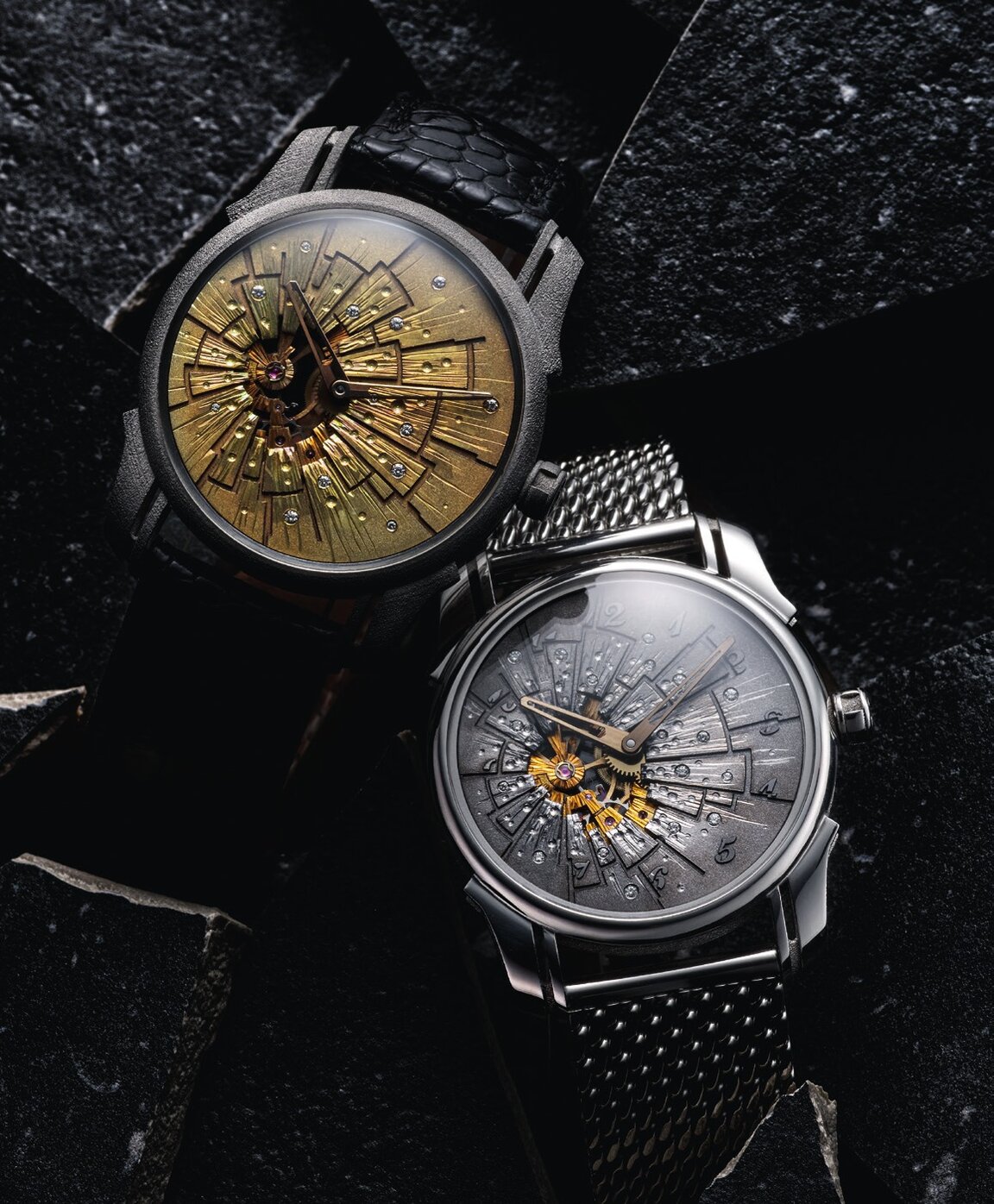
What makes Holthinrichs so unique is the way that he creates parts and cases for his watches. Convinced by the capabilities of 3D metal printing, Holthinrichs spent four years pioneering this technology and how to apply it to watchmaking. The result was the ‘Ornament 1,’ based on a design by Holthinrichs himself. The case has a charming elegance, inspired by the Art Deco and early Modernism movements that Holthinrichs loves so much. As a nod to how the watch is created, Holthinrichs only finishes certain surfaces of the watch, leaving the rest raw, which creates a unique dynamic.
This style became a signature for Holthinrichs, and his next watches allowed him to explore this further. His current collection consists of two models, with the first being the ‘Liminality series.’ This can be seen as the sequel to the ‘Ornament 1,’ featuring a similar case, but instead of a classic dial with Breguet numerals, it seems like the inside of the watch exploded, creating a stunning effect on the dial that Holthinrichs further emphasizes by setting it with diamonds.
The second model is the ‘Deconstructed,’ which Holthinrichs himself calls, “a radical recomposition of the essence of the traditional wristwatch.” He couldn’t be more right, as he took all the components of a traditional watch and reconstructed the way that they are placed and interact. Combined with the unique 3D metal printing techniques that Holthinrichs utilizes, it results in a timepiece that is futuristic and classical at the same time. Holthinrichs also developed a unique bracelet for the watch, a first for the brand. Also 3D printed, it has an asymmetrical design and looks like it could very well be the skin of a metal dinosaur.
While Holthinrichs uses the gear train of a Peseux 7001 manual-wound movement, the entire movement is redeveloped to fit the theme of the watch, including an enticing architecture of 3D-printed bridges. With these watches, Holthinrichs is quite literally printing the future foundation of Dutch watchmaking, one timepiece at a time.
Stefan Ketelaars, the Self-Taught High Potential
Another rising star in the Dutch watchmaking scene is Stefan Ketelaars. At the age of nine, he already got himself his first wristwatch and his passion has grown ever since. He likes that time is something intangible and that we all have to endure its passing without having any control over it. This led him to open up his own workshop in 2017, being just in his mid-twenties and self-taught, using each new prototype and every new watch as a way to hone his skills further. Ketelaars’ approach resembles in many ways the old master watchmakers, as he tends to do everything himself, just with the aid of some tools, many of which he also made himself.
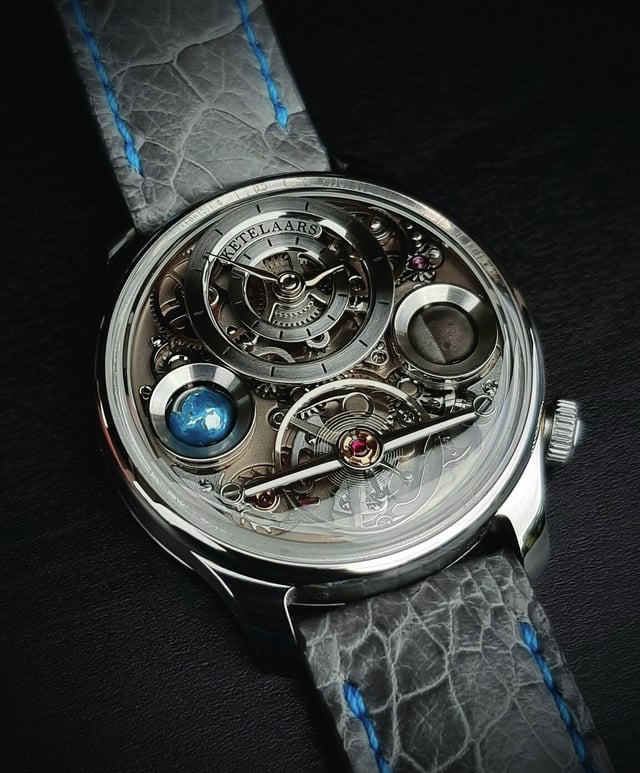
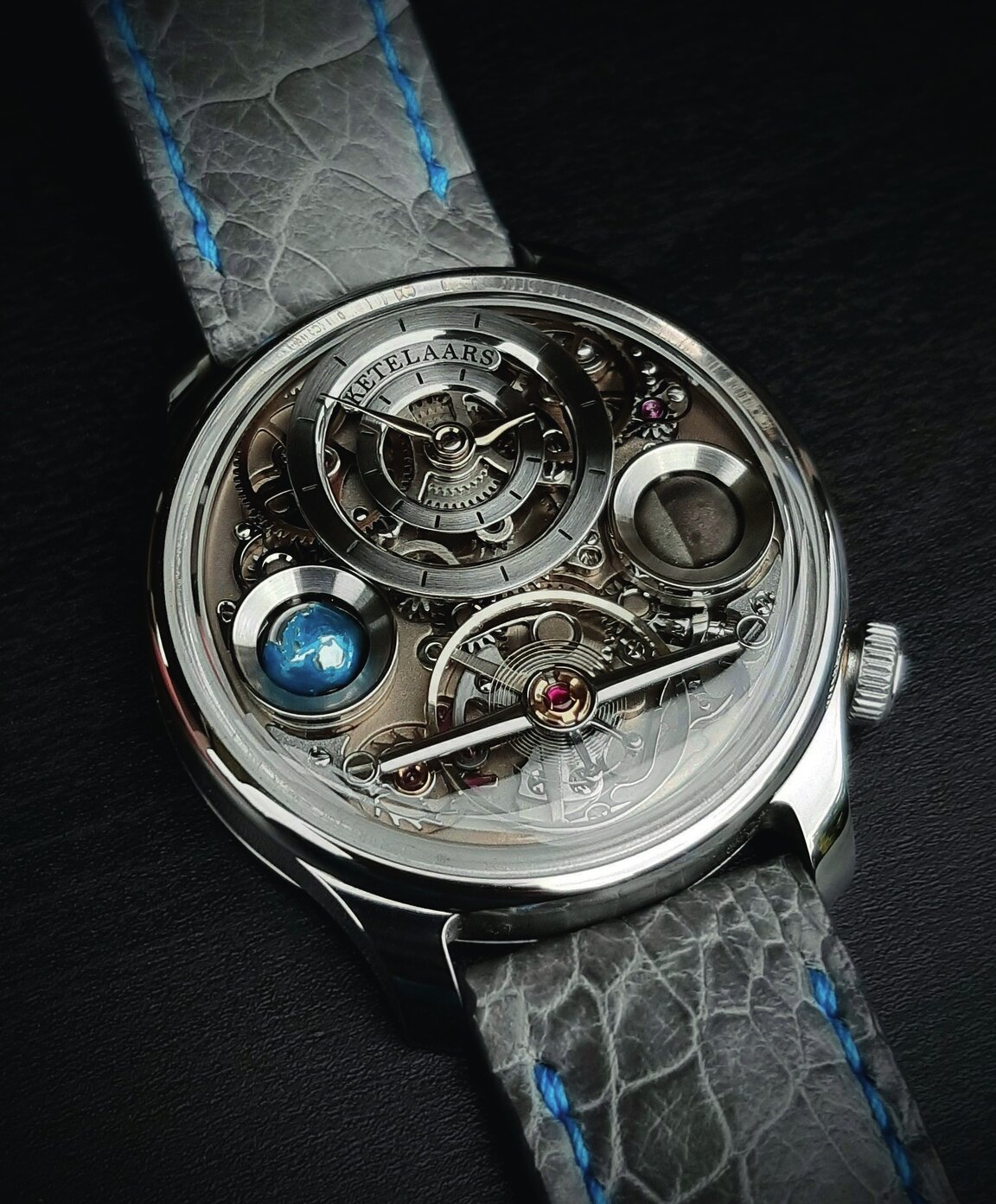
What started with skeletonizing ETA-Unitas movements quickly evolved into developing his own complications, and now even his own movement. The latest is the ‘Terra Luna,’ a watch that combines a 3D earth complication with a 3D moon phase. Ketelaars started the development of this watch in 2018 and was able to finish the prototype last year. He invested a total of 2,500 hours into the watch to make sure that every detail is done right. Crafting the 3D earth alone requires a significant amount of work as it is hand-engraved and hand-painted by Ketelaars.
While combined with the enticing layout of the movement and the superb hand finishing of each component, this is all very impressive, there is another aspect of the Terra Luna that is perhaps even more incredible. Ketelaars wanted the watch to have dress-watch dimensions and, therefore, restricted himself to a maximum diameter of 39 mm and a thickness of just 9.8 mm. This makes the Terra Luna a bold entrant in the world of hand-made complicated watches by an independent watchmaker and confirms Ketelaars once more as one of the Netherlands’ most promising high potentials in watchmaking.
While these are not even close to all the watchmakers and watch brands that are active in the Netherlands, they do illustrate that the country’s passion for watchmaking is very much alive, and its contribution to the watchmaking world as a whole substantially larger than one would expect from such a modest-sized country.
This article was originally published in the January / February 2024 print issue. To subscribe to WatchTime Magazine, click here.