L’Epée 1839 Introduces the Belly Tank Racer and The Gekko
Two mechanical objects shaped by speed and nature

Two new objects, one common principle: L'Epée 1839 expands its portfolio with the Belly Tank Racer and The Gekko. Both pieces are limited to 99 examples each, both operate with an in-house movement offering an eight-day power reserve, and both follow the typical approach of the Vallée de Joux manufacture: to understand a sculptural object as a watch case. What separates them is the reference world: here, the aerodynamics of the golden age of postwar ingenuity; there, the organic design language of nature.
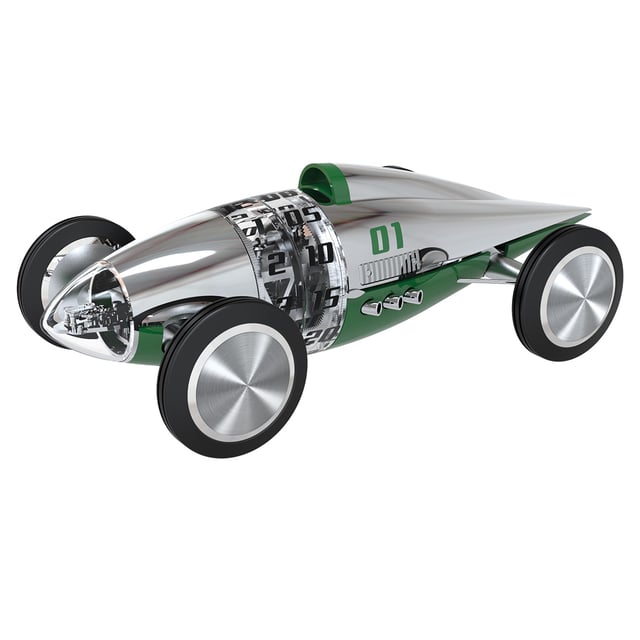
Belly Tank Racer by L'Epée
L’Epée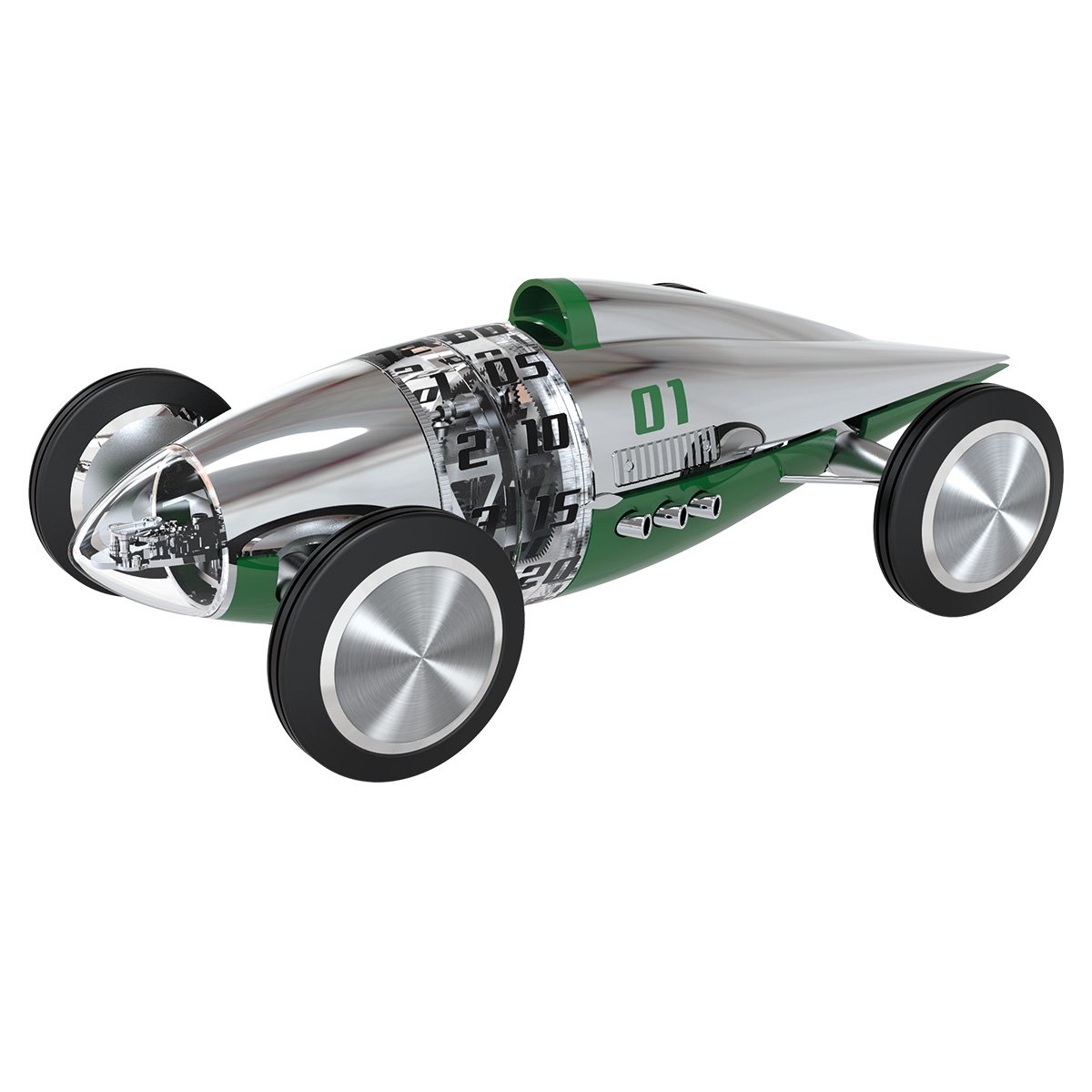
Belly Tank Racer
The conceptual starting point of the Belly Tank Racer is a little-known episode in American automotive history. Returning fighter pilots after World War II used decommissioned drop tanks, known as belly tanks, as bodies for homemade race cars. The teardrop-shaped aluminum tanks, originally mounted under fighter planes to extend range, provided an almost complete race car body due to their aerodynamic shape. The most well-known of these vehicles set records on the Bonneville Salt Flats starting in the late 1940s.
L’Epée translates this silhouette into a table clock at scale. The elongated teardrop body, made of painted aluminum, sits on four wheels, whose steel rims are equipped with soft rubber cuffs. The body is available in five colors: metallic gray, red, blue, green, and black. With 420 millimeters in length, 212 millimeters in width, and a weight of 5.4 kilograms, the object is noticeably substantial. (Read also: L’Epée 1839 Sets Sail with La Regatta Métiers d’Art).
The manufacture movement is visibly housed inside the body. It is wound by turning the rear wheels, referencing the pull-back mechanism of classic toy cars. Hours and minutes are displayed on two overlapping transparent discs, which can be read against opposing markings. The time is set by manually moving the minute disc. With 11 jewels and an eight-day power reserve, the movement operates within the framework typical for L’Epée.
The construction is consistent: palladium-plated brass, polished stainless steel, and acrylic glass for the cylinder and dome. Polished, satin, and sandblasted surfaces alternate. There is nothing that is not visible, and nothing that does not serve a functional or narrative purpose.
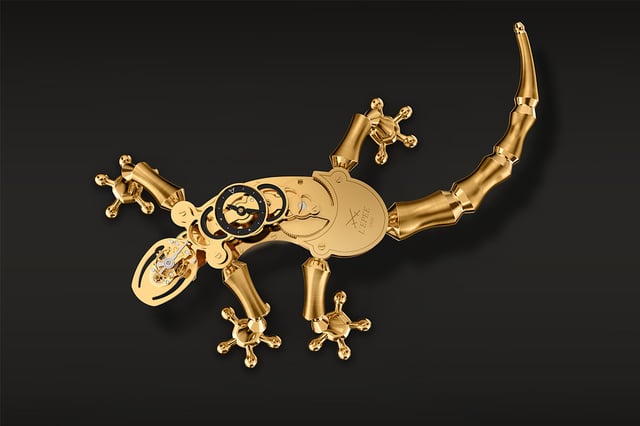
L’Epée 1839 The Gekko
L’Epée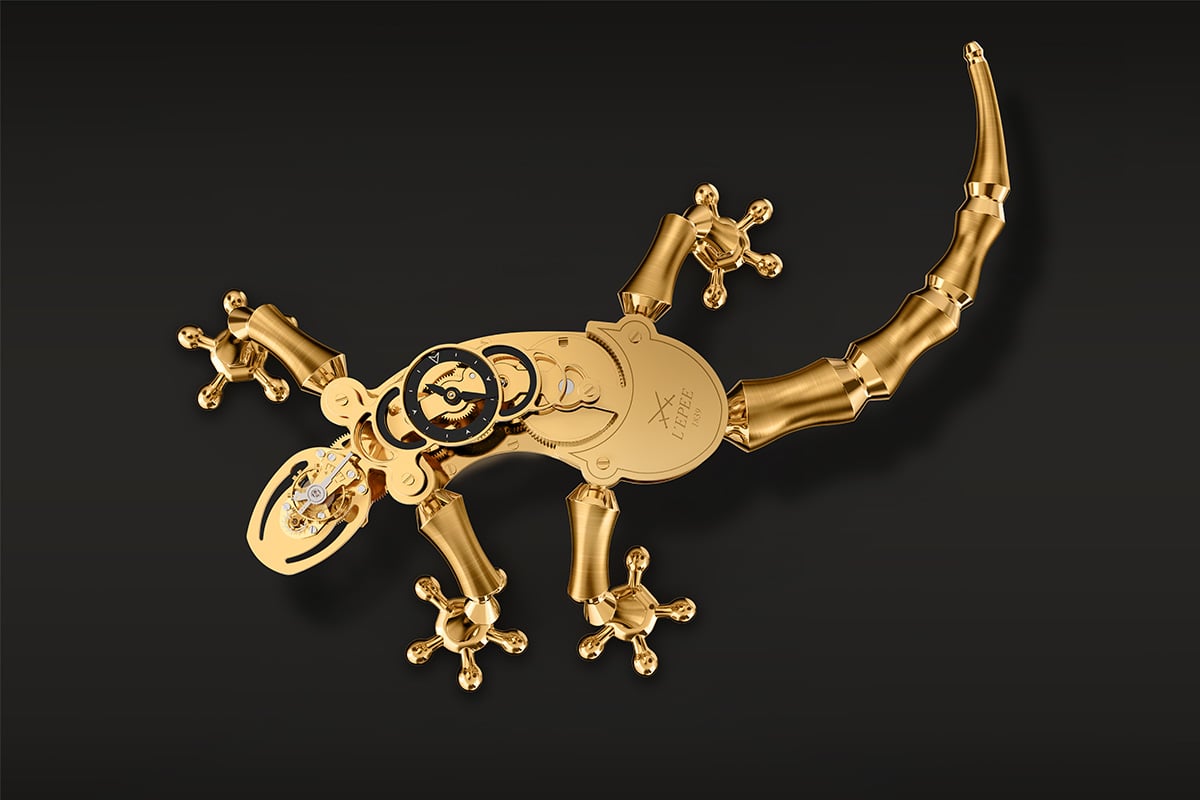
The Gekko
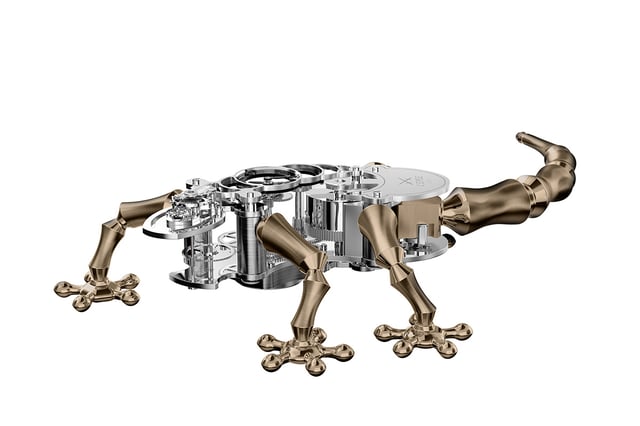
The Gekko takes a different path. Instead of industrial history, natural history is the reference system here. The table clock takes the form of a gecko, 290 millimeters long and 180 millimeters wide, weighing 1.4 kilograms. Legs, tail, and body are made of lacquered brass and stainless steel, satin-polished on the extremities and tail, with a specialized lacquering technique on the body.
The skeletonized manufacture movement, comprising 220 components and 11 jewels, sits within the body of the animal and is fully visible. The escapement is integrated into the head of the gecko. The placement carries symbolic significance, although L’Epée does not make this explicit.
The dial features a fine metal structure, inspired by the texture of real gecko skin. A rotating ring allows the time display to be realigned depending on the position of the animal, ensuring readability in any position. This is perhaps the most intelligent technical detail of the object: The Gekko can be mounted in ten different wall positions or set up free-standing. The wall-mounting system is integrated into a neutral bracket that does not alter the animal itself.
The time is set via a dedicated key on the underside, while winding is done through the laterally movable tail. The Gekko is available fully gilded, in black and silver, and in champagne.
L’Epée 1839 The Gekko
L’Epée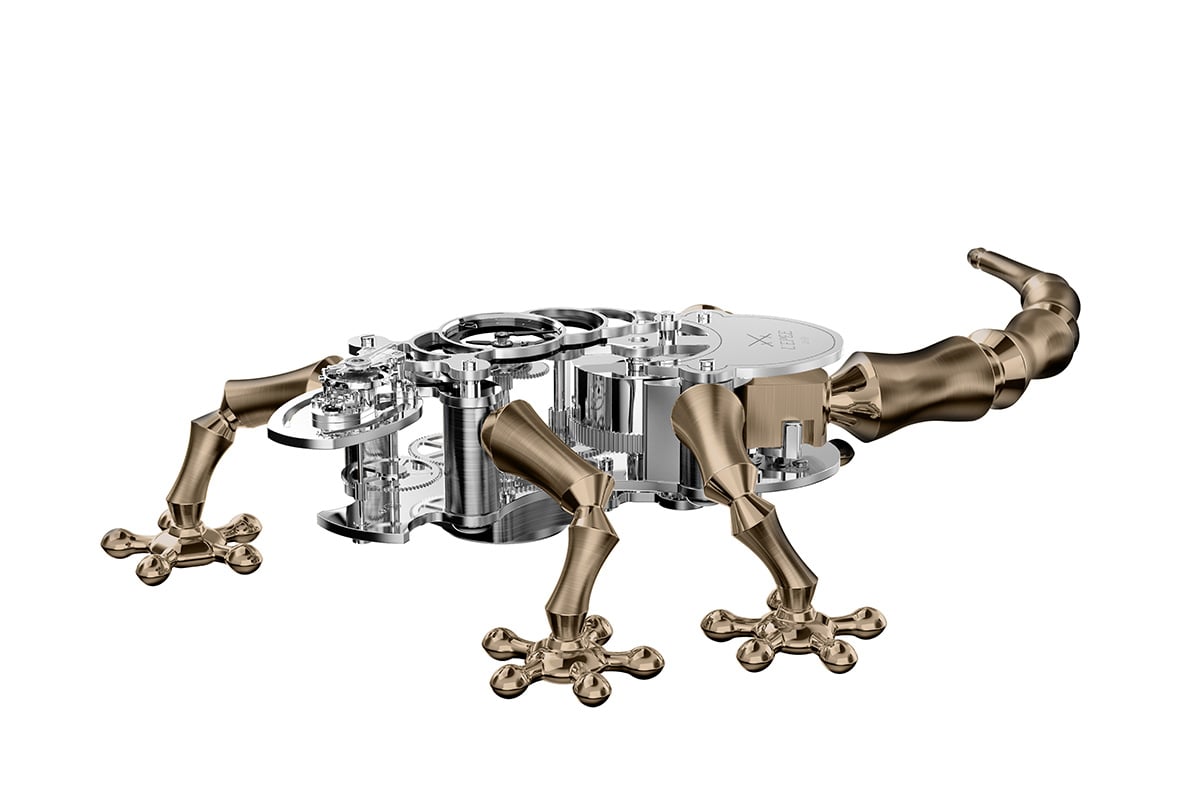
Both new pieces follow the brand approach that L’Epée 1839 has consistently expanded in recent years: table clocks as three-dimensional objects with independent narrative layers, rather than conventional case shapes with visible movements. This distinguishes the manufacture from most players in the segment of sculptural watchmaking, who either work purely formally or address narrative only superficially.
L’Epée has been part of the LVMH Group since 2024 and works closely with other houses in the group, while also serving as a partner for external maisons in the development of table clocks, as seen in its collaboration with Chopard. In January, Louis Vuitton presented its version of a Camionnette, created in collaboration with L’Epée, demonstrating how the group uses the manufacture as both a technical and creative resource.
The Belly Tank Racer and The Gekko, by contrast, stand as original L’Epée developments without external brand collaboration. The limitation to 99 pieces per model clearly places both objects in the ultra-luxury segment. Price upon request. Those interested should contact the manufacture directly or authorized dealers.
To learn more, visit L'Epée 1839, here.