L’Epée 1839 Sets Sail with La Regatta Métiers d’Art
LVMH Watch Week 2026
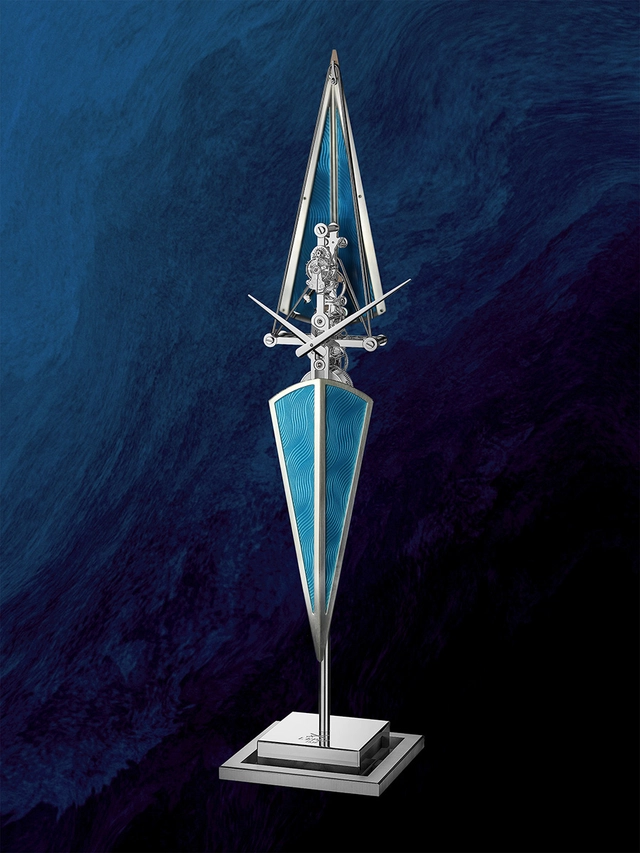
At LVMH Watch Week 2026, L’Epée 1839 underscores its position as Switzerland’s leading high-end clock manufacture with La Regatta Métiers d’Art, a refined artistic reinterpretation of one of its most serene and architectural creations. Known for its expressive craftsmanship and uncompromising mechanical integrity, the maison now elevates its La Regatta timepiece into the realm of Métiers d’Art, using centuries-old enameling techniques to explore light, depth, and motion. Time is displayed through hours and minutes, reinforcing the clock’s calm, contemplative nature. Each La Regatta Métiers d’Art clock is produced as a unique, one-of-one creation, with customization available upon request.
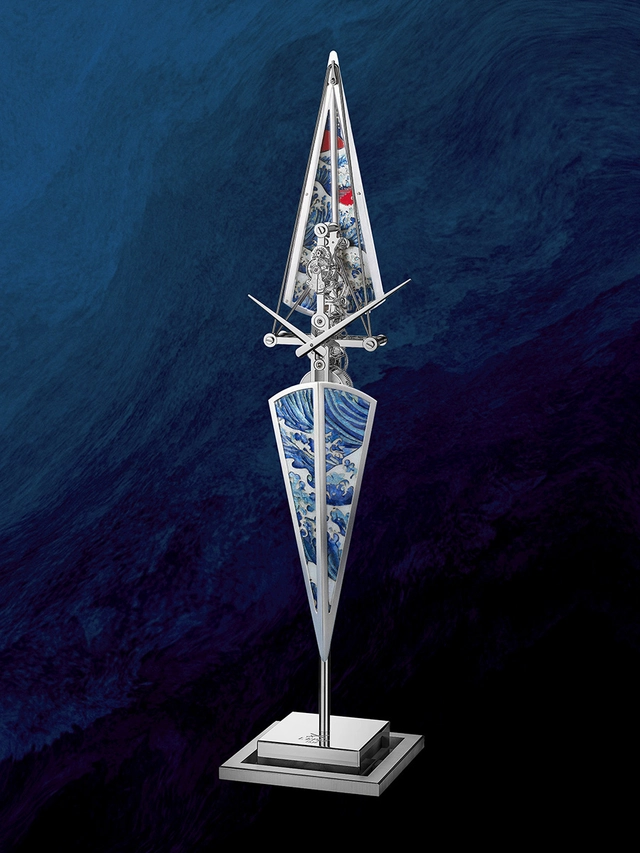
Designed as a vertical clock with a slender, understated silhouette, La Regatta takes its inspiration from a racing skiff gliding across the water. Its calm, elongated form conveys discipline and equilibrium, while the fully visible movement, aligned along a single vertical axis, reinforces the sense of harmony. For this Métiers d’Art series, L’Epée 1839 collaborates with the world-renowned Georgian atelier David Kakabadze Enamel, transforming the clock’s “hull” into a canvas for some of the most demanding enameling techniques in contemporary horology.
At the heart of La Regatta Métiers d’Art lies grand feu enameling, a labor-intensive craft whose origins date back to Byzantine and Georgian art of the 8th century. Entirely executed by hand, the process involves applying multiple layers of vitrified enamel onto a metal surface, followed by successive firings at temperatures between 700 and 750 degrees Celsius. Each firing intensifies color and depth while leaving no room for error, as even a slight deviation can compromise weeks of work. The result is a surface of exceptional luminosity and permanence, where light seems to flow across the enamel much like water beneath a rowing shell.
Each La Regatta Métiers d’Art piece is conceived as a unique work, defined by a specific enameling technique and artistic inspiration. La Regatta Umi, named after the Japanese word for “sea,” draws inspiration from the iconic wave depictions of Hokusai. It features finely executed cloisonné enamel, in which ultra-thin gold wires are shaped into delicate cells that are individually filled with enamel colors. The composition is further enriched by the paillons technique, using extremely thin silver leaves placed beneath transparent enamel layers. This combination creates a vibrant sense of movement and depth, capturing the power and rhythm of the sea as the regatta confronts the elements.
La Regatta Blue Horizon returns to the clock’s minimalist roots while introducing the depth of blue flinqué enameling. This rare technique combines engine-turned guilloché engraving with translucent enamel, allowing the engraved pattern beneath to remain visible. As light shifts across the surface, the enamel subtly changes in tone, enhancing the impression of motion and reinforcing the nautical character of the piece.
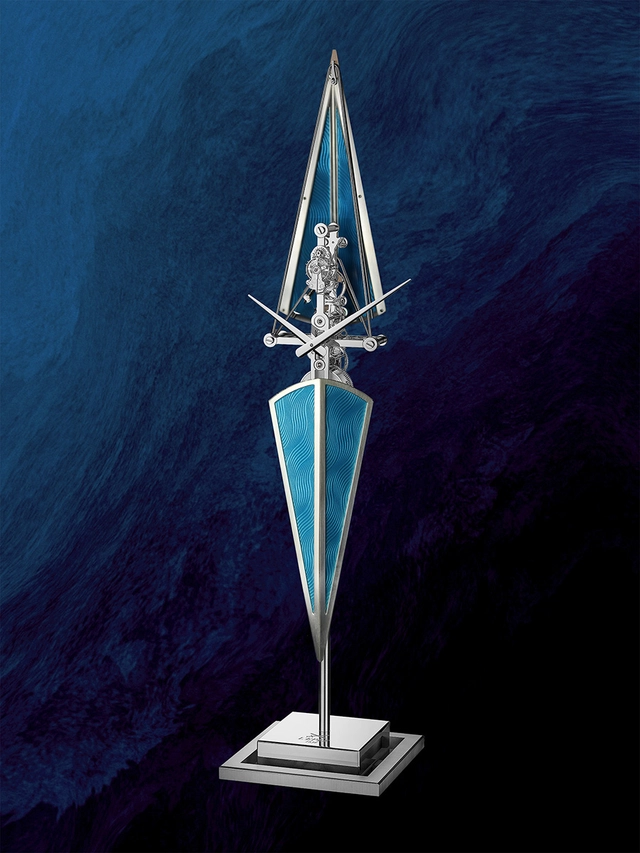
La Regatta Blue Horizon
L’Epée 1839Beyond its artistic surface, La Regatta remains a showcase of L’Epée 1839’s mechanical expertise. The clock is powered by an in-house caliber, operating at a frequency of 2.5 hertz, or 18,000 vibrations per hour. The movement is equipped with 26 jewels and delivers an eight-day power reserve, underscoring its endurance and functional reliability. An Incabloc protection system safeguards the balance against shocks, while the movement components are crafted from palladium-plated brass and polished stainless steel. The entire gear train is aligned along a single vertical axis, with the barrel positioned at one end and the escapement at the other.
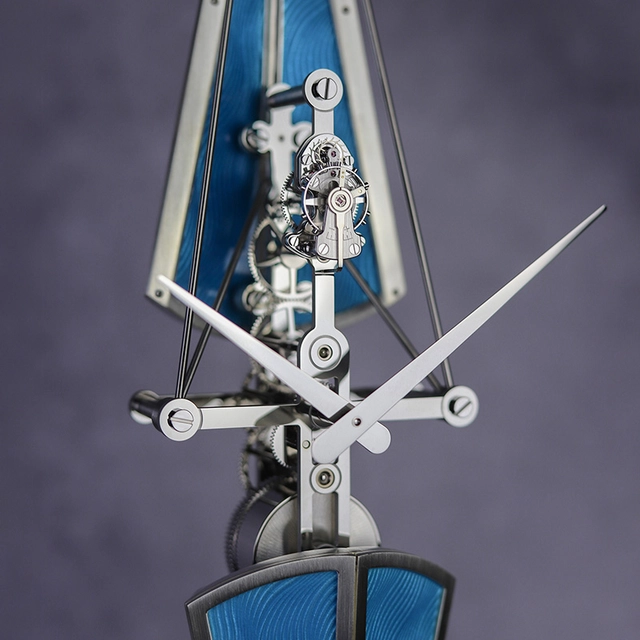
L’Epée 1839
La Regatta measures 518 millimeters in height and rests on a square base measuring 120 millimeters on each side. The case construction combines palladium-plated brass, stainless steel, and aluminum, with surfaces alternately polished, satin-brushed, and sandblasted.
Pricing is available upon request.
To learn more, visit L’Epée 1839, here.