The Golden Age of Chronometry: Zenith Unveils G.F.J. Watch at W&W 2025

When Georges Favre-Jacot established his manufacture in 1865, his objective was to create ‘the perfect watch,’ in the finest, most precise, and most reliable timepiece ever made. This quest for perfection is reflected the very name of his brand, Zenith, referring to the highest point in the sky. To celebrate its 160th anniversary and its quest for excellence in all fields of watchmaking art, the watch manufacturer releases a stunning time-only watch powered by an exceptional movement. Named after the initials of Georges Favre-Jacot, the sleek, slender and elegant G.F.J. brings back to life the legendary caliber 135, a highly awarded movement from an important chapter of observatory chronometer competitions that took place in the 1950s and 60s.
A brief history of chronometric time
These observatory trials were of immense significance, not only advancing the field of chronometric science but also boosting the reputation of the brands involved. These prestigious timing competitions drew considerable attention, highlighting the remarkable precision that expert watchmakers could achieve. Recognizing the potential for heightened prestige, watchmaking brands submitted specially prepared movements to compete. Zenith, for instance, participated in these trials as early as 1897, and throughout the years, the brand has amassed an unparalleled 2,333 chronometry prizes.
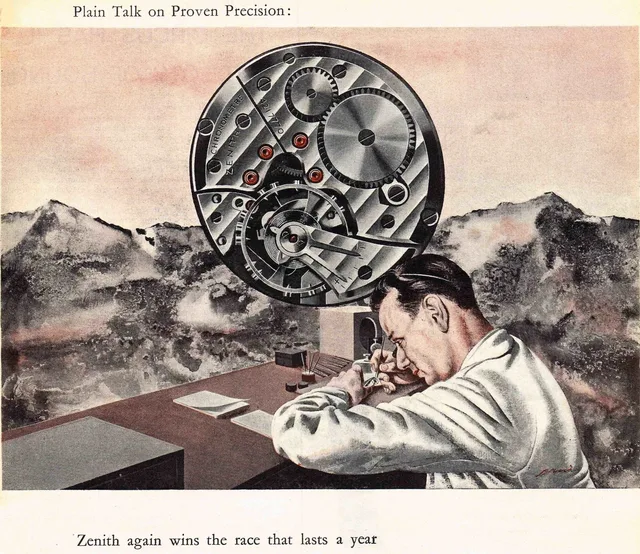
Among these, a movement outshone all others, the legendary caliber 135. Designed by Ephrem Jobin at the request of Charles Ziegler, Technical Director of Zenith, this chronometer movement was specifically developed to compete in chronometry competitions at the Observatories of Neuchâtel, Geneva, Kew Teddington, or Besançon. Its name is derived from its dimensions, 13 lines (or 30mm, the maximum size allowed in the wristwatch category competition at the Neuchatel Observatory trial) and 5mm in thickness. It was produced from 1949 to 1962 in two distinct versions: a commercial variant (135), and an “O” iteration (135-O) created exclusively for observatory chronometry trials.
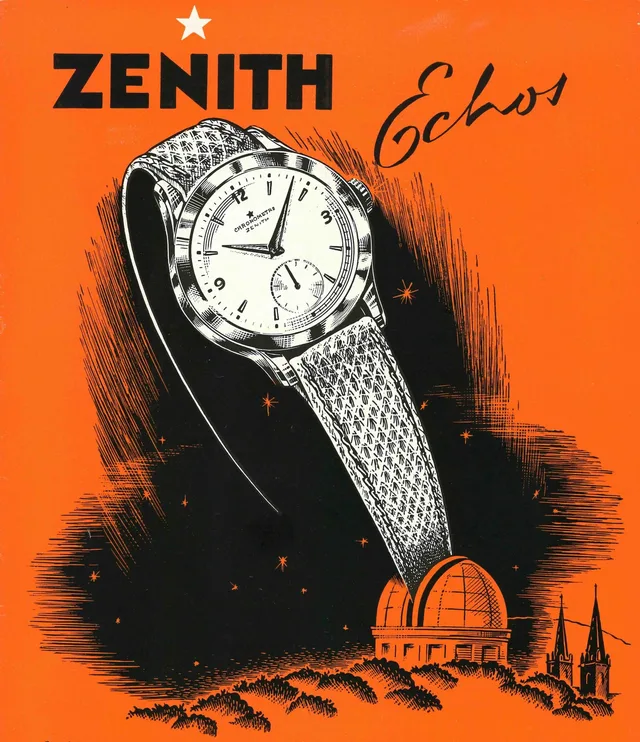
The caliber 135-O received 235 chronometry prizes, an absolute record in the history of watchmaking. Regulated by renowned Zenith “chronométriers” Charles Fleck and René Gygax, this movement set an extraordinary record with five consecutive first prizes in the wristwatch category at the Neuchâtel Observatory, from 1950 to 1954.
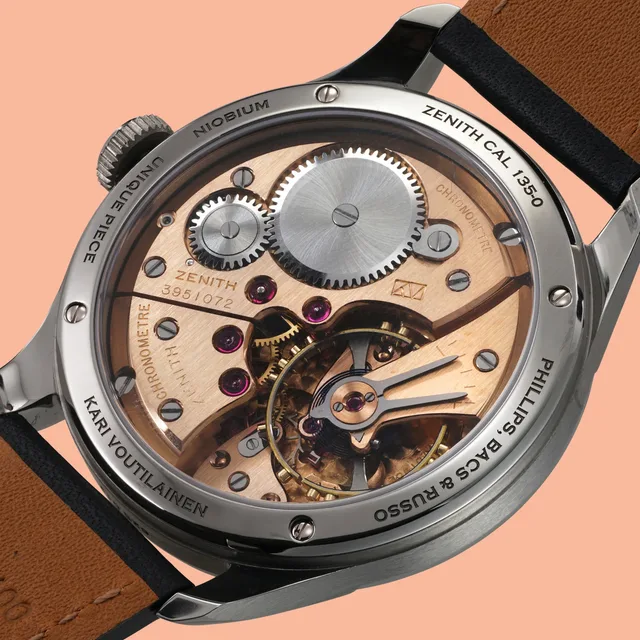
The caliber 135-O was revived in 2022 through an exceptional collaboration with watchmaker Kari Voutilainen and the auction house Phillips in Association with Bacs & Russo. Ten vintage movements from the 1950-1954 "serial winning" years were restored and decorated to the highest degree possible by master watchmaker Kari Voutilainen within an ultra-exclusive limited edition that struck a deeply resonating chord with discerning collectors.
The resurrection of the caliber 135-O
At Watches and Wonders 2025, Zenith takes things a step further, resurrecting this caliber and bringing it into the 21st century. This new version of the movement uses the dimensions, the look and the architecture of its ancestor. It incorporates an offset center wheel, creating space to accommodate the oversized balance wheel that improves both precision and stability.
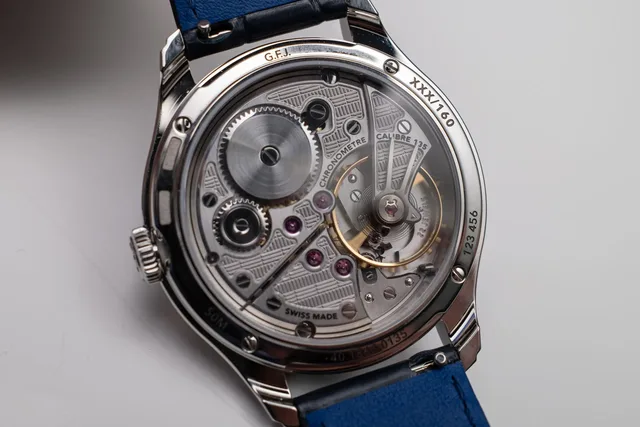
However, it's not just a reproduction, but has been re-engineerred to integrate modern day technical solutions and materials wherever possible. The barrel now delivers 72 hours of power reserve compared to 40 hours in the 1950s version. It drives a new gear train with an optimized tooth geometry for enhanced efficiency. Operating at 2.5 Hz, the balance wheel boasts regulation screws and a Breguet overcoil. A signature feature of the 135-O, the double arrow-shaped regulator allows for precise adjustment, while a stop-second mechanism has been added to set the time to the exact second. The balance staff is now protected by spring-mounted jewel settings. The movements are regulated to be precise within +/-2 seconds per day, and their precision is officially certified by the COSC.
Each component is meticulously finished. The bridges are distinguished by their “brick” guilloché finishing, inspired by the distinctive façade of red and white-painted bricks of the Zenith manufacture that proudly spell out the letters "G.F.J.," the initials of Georges Favre-Jacot. The barrel features circular a satin finish and the crown wheel is black-polished. The large jewels add another refined touch.
The G.F.J. watch
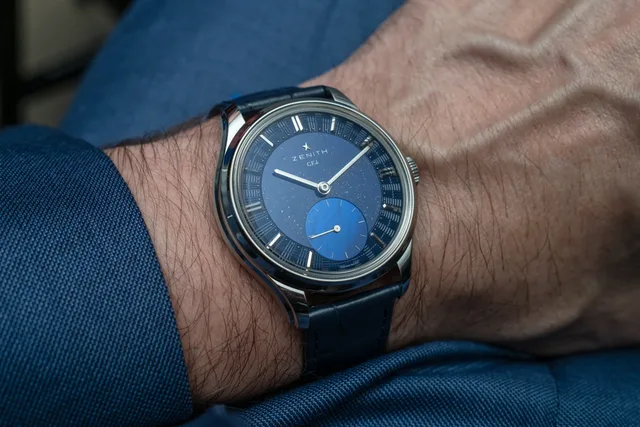
True to the era of the caliber 135, the limited G.F.J. watch seamlessly blends a striking 1950s vintage elegance with modern refinement. Its 39mm platinum case features a stepped bezel and curved lugs, with a slim profile and exceptional finishes. The notched crown is marked with the G.F.J. initials.
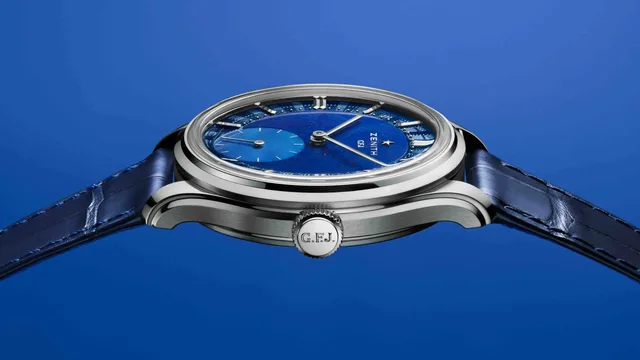
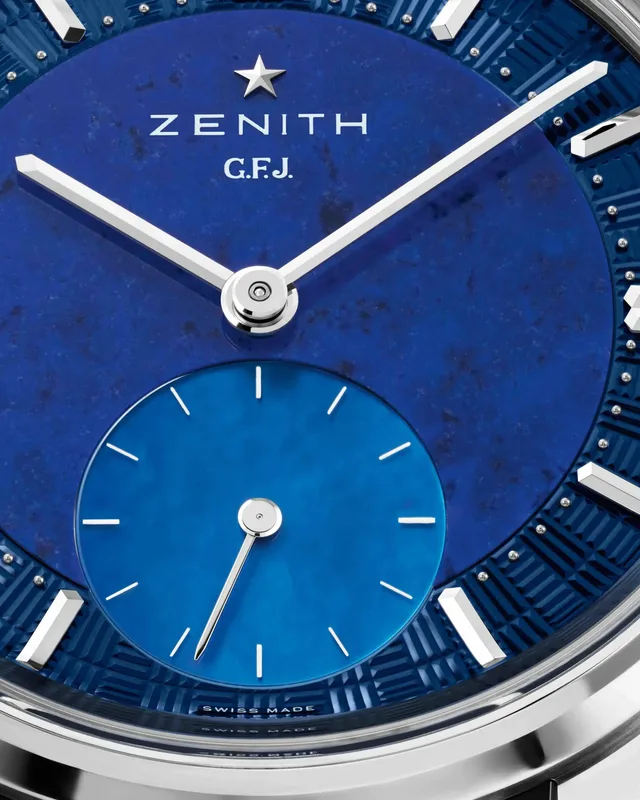
Beneath the box-style sapphire crystal, the blue dial–the signature Zenith color–reflects the brand’s connection to the sky. The dial’s guilloché outer ring, faceted white gold markers, and hand-applied minute pearls add sophistication, while the central Lapis Lazuli section with gold pyrite flecks recalls a starry sky. The prominent subdial at 6 o'clock in mother-of-pearl tracks the seconds, and white gold baton hands, also beautifully angled, indicate the hours and minutes.
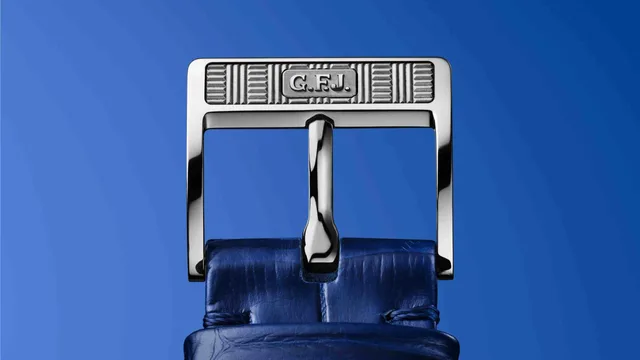
The G.F.J. is offered with three different straps: a dark blue alligator leather strap, a black calfskin leather strap, and a blue “Saffiano” calfskin leather strap. The platinum pin buckle is engraved with the G.F.J initials and the brick pattern. It is also available upon request with a seven-row platinum bracelet, whose center links are embossed with the brick pattern.