Nov 27, 2018
Reading time 6 min.
11 Watch Brands That Make Their Own Metals
FEATURE
We take a look at 11 watch brands, including Rolex, A. Lange & Söhne, Hublot and Omega, that have invented their own alloys by combining different metals.
We're all familiar with the most popular materials for watch cases — steel, rose gold, titanium, et cetera. But what about Rolesium, Ceragold, and Powerlite? While many watch brand take great pride in making their own cases, movements and dials, only a handful have gone the extra mile and actually invented their own materials, mostly for use in cases, but sometimes even for parts inside the watch. Many of these have come about as watch brands invested in developing new alloys in an effort to make stronger, lighter, and/or more scratch-resistant substances. Below we take a look at 11 brands that have invented their own alloys by combining different metals.
1. Rolex
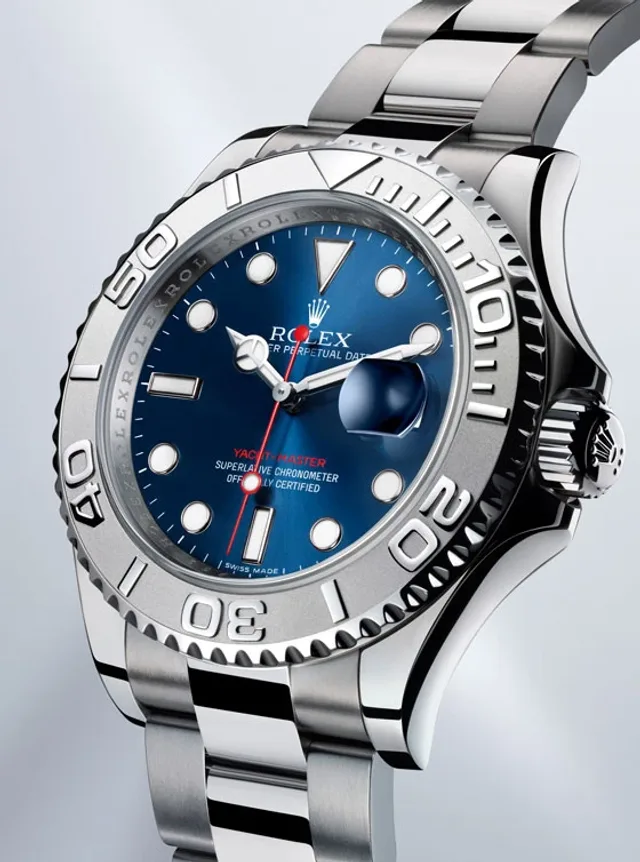
Rolex Yacht Master with Rolesium case
PR
One of the metals developed by Rolex is a material known as Rolesium, a combination of 904L stainless steel superalloy and 950 platinum. Rolesium was used in the 40-mm diameter Oyster case of the Rolex Yacht-Master seen here.
Rolex also developed Cerachrom, which it has used on the bezels of the Rolex Submariner and the 50th Anniversary Rolex Cosmograph Daytona, which was launched at Baselworld 2013. Cerachrom is an extra-hard, corrosion-resistant ceramic; Cerachrom bezels have engraved numerals and graduations coated with a thin layer of platinum via a PVD (physical vapor deposition) process. Rolex has also used Cerachrom for the bezel of its redesigned Daytona, which debuted last year.
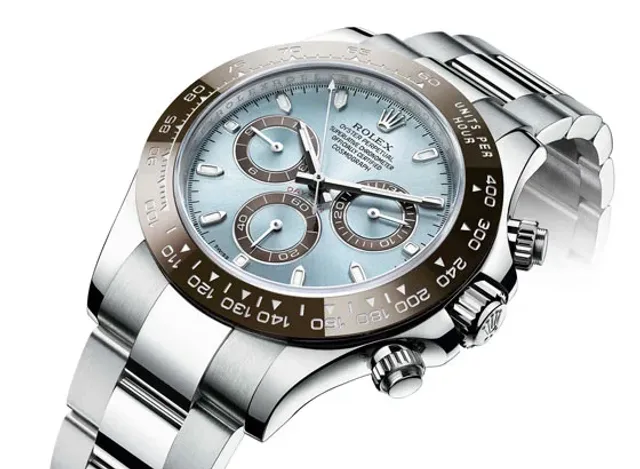
50th Anniversary Rolex Cosmograph Dayton with Cerachrom bezel
PR
The movement of the 50th Anniversary Rolex Cosmograph Daytona also features a hairspring made of blue Parachrom, another Rolex-exclusive material that is uncommonly resistant to magnetic fields. Hairsprings made of Parachrom, an alloy of niobium, zirconium, and oxygen, are said to remain stable through temperature variations and be much less susceptible to shocks, remaining, according to Rolex, 10 times more precise in case of shocks than a traditional hairspring.
2. Omega
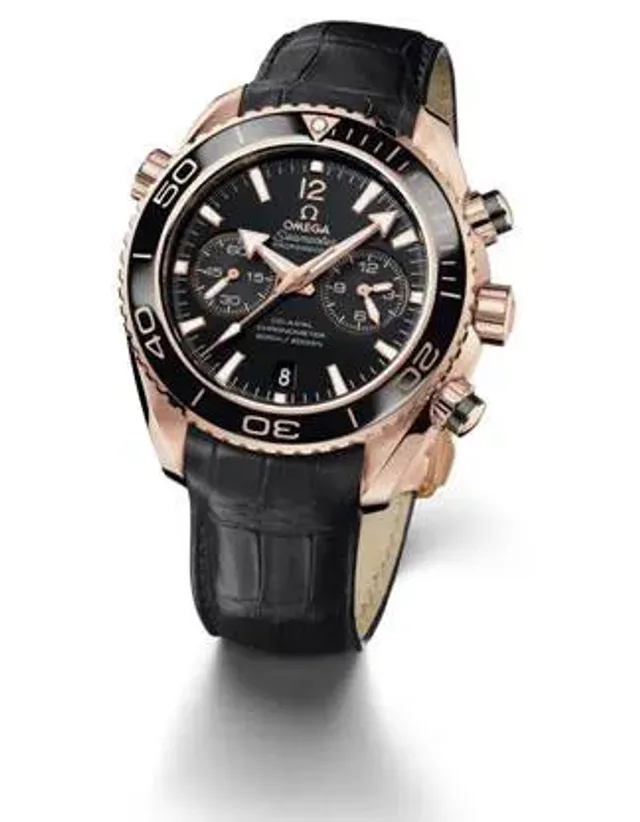
Omega Planet Ocean with Ceragold bezel.
PR
Omega spent years developing a material blending ceramic and 18k gold, known as Ceragold. The technique used to make Ceragold allows for the growth and bonding of 18k gold in ceramic, and is used to create ceramic bezels with gold numbers that are smooth to the touch, as in the Omega Seamaster Planet Ocean Ceragold.
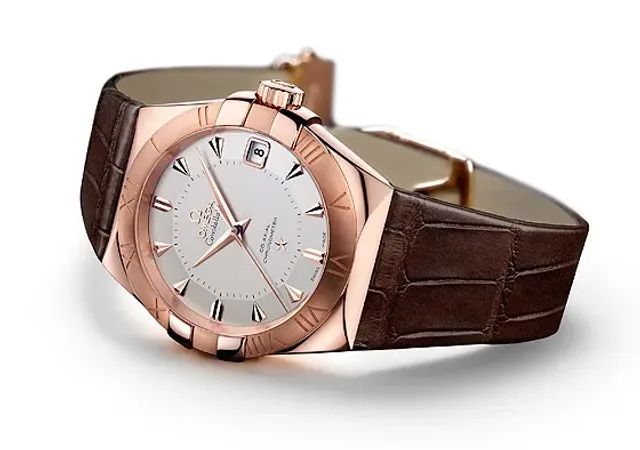
Omega Constellation Sedna
PR
The Omega Constellation Sedna features a case crafted in 18k Sedna gold, an alloy developed entirely in-house by the Swatch Group, which blends gold, copper and palladium for, Omega says, an uncommonly long-lasting reddish hue. The alloy requires a minimum gold content of 75 percent, along with a precise portion of copper, to create the vibrant red color, while the palladium strengthens the material’s luster and makes it longer-lasting. “Sedna” is the name of a Trans-Neptunian object — i.e, a body in space that orbits our sun at a greater average distance than the planet Neptune — whose surface has been described as one of the reddest in the Solar System.
3. Hublot
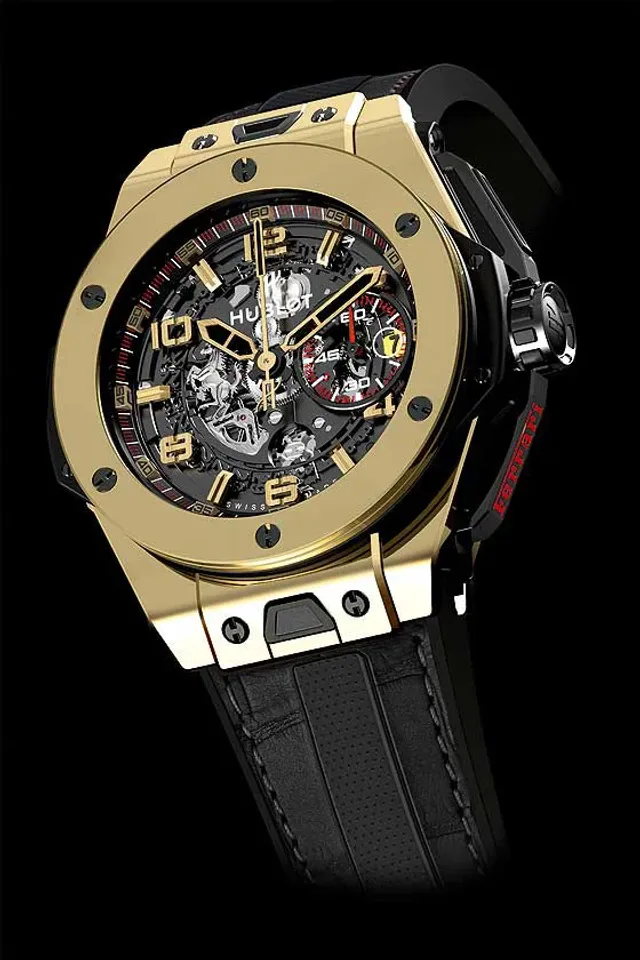
Hublot Big Bang Ferrari Magic Gold
PR
As part of its "fusion" philosophy, Hublot has developed several of its own materials. Among them are Cermet, which mixes ceramic and metal, and Hublonium, an alloy composed of magnesium and aluminum. The brand also created a hard, scratch-resistant gold alloy known as Magic Gold. Made of 75% pure gold, Magic Gold is made by a process in which gold is melted and fused with ceramic (which is porous and harder than gold), resulting in a harder gold. For details on Hublot's Magic Gold development process, click here.
4. Linde Werdelin
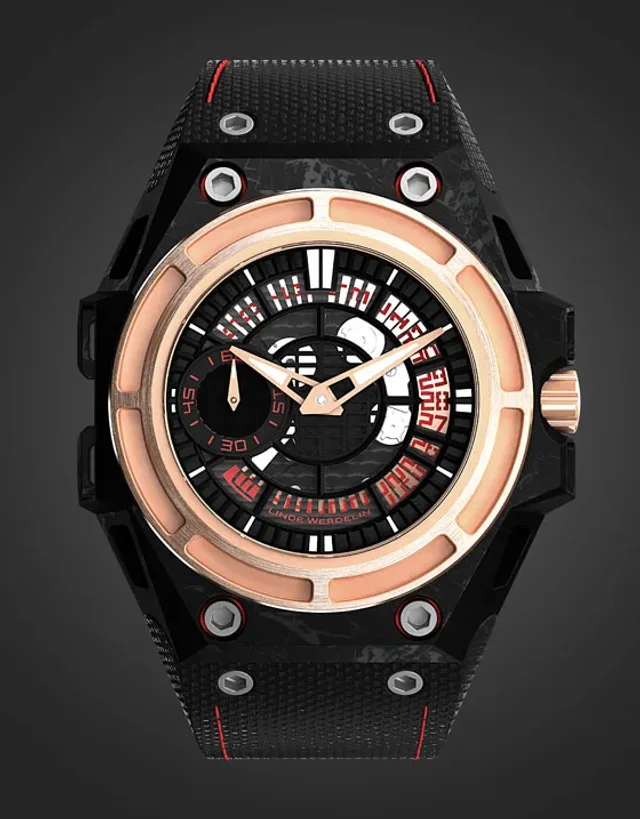
Linde Werdelin SpidoLite II
PR
Unveiled at Baselworld 2013, the Linde Werdelin Spidolite II Tech features a proprietary material, ALW, or "Alloy Linde Werdelin." To make a lighter watch, Linde Werdelin incorporated an outer case of carbon and an inner case of ALW, which is an alloy 50% lighter than titanium. The ALW inner case, which retains the same strength as steel, receives 25 microns treatment to harden its surface, while achieving a radiant red or green color visible through the angular hollows of the skeletonized outer case sides.
5. Ulysse Nardin
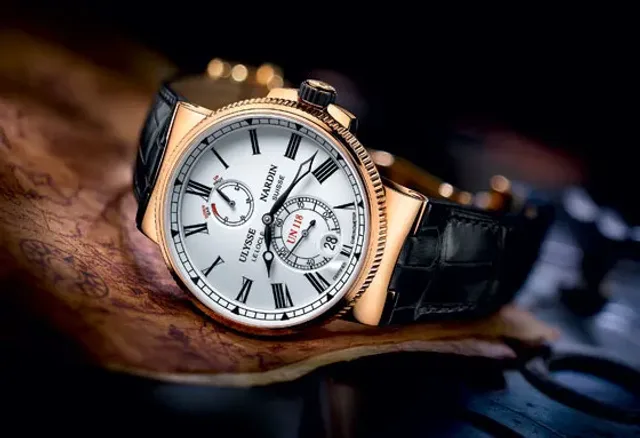
Ulysse Nardin Marine Chronometer Manufacture
PR
Ulysse Nardin used its own material, Diamonsil, in the Ulysse Nardin Marine Chronometer Manufacture.
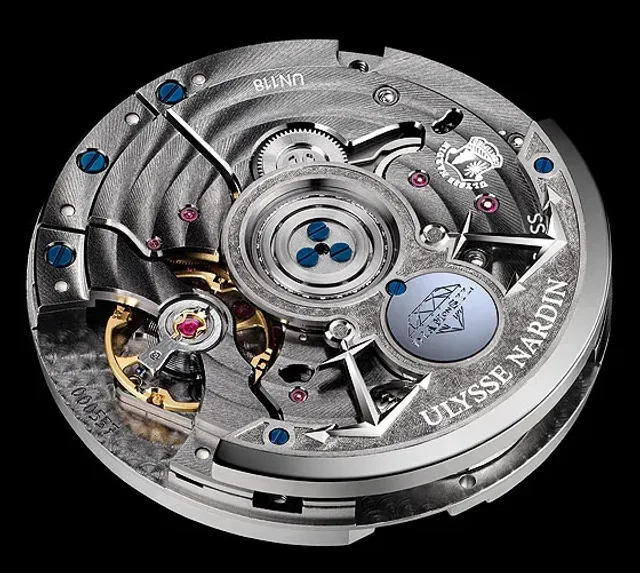
Caliber UN-118
PR
The escapement in its movement, Caliber UN- 118, is made of Diamonsil, the result of a collaboration between Ulysse Nardin and the Swiss firm Sigatec, which consists of synthetic diamond grown on a silicon base.
6. A. Lange & Söhne
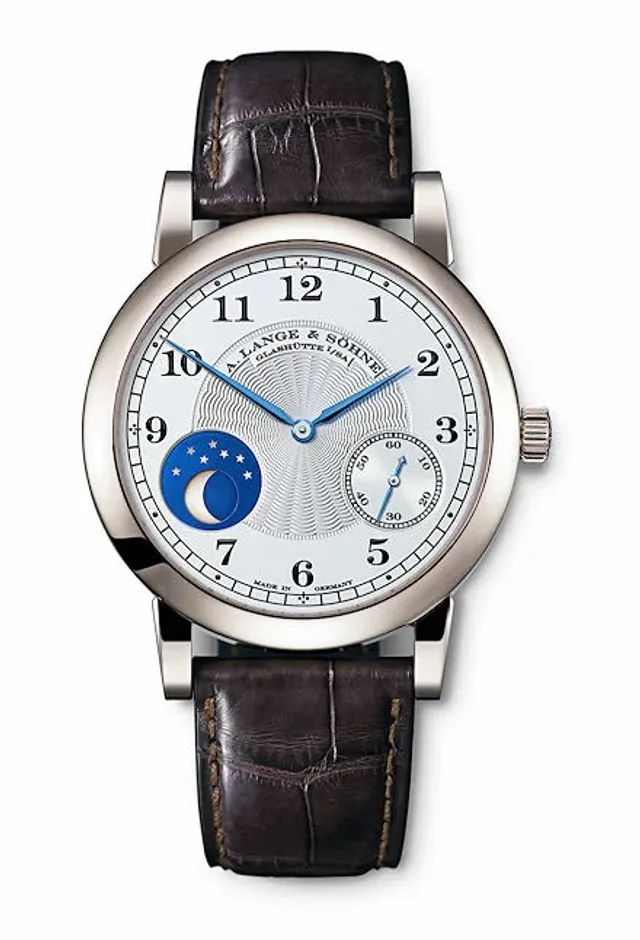
A. Lange & Söhne 1815 Moon-Phase in honey gold
PR
Germany's A. Lange & Söhne developed a proprietary alloy that it calls "Honey Gold," whose composition is a closely guarded secret and which resembles warm, shiny brass. Lange CEO Wilhelm Schmidt has said that because of the difficulty in machining cases in this scratch-resistant material, it will be used only in very small quantities and in very special pieces, such as the limited-edition Lange 1815 Moonphase "Homage to F.A. Lange."
7. Harry Winston
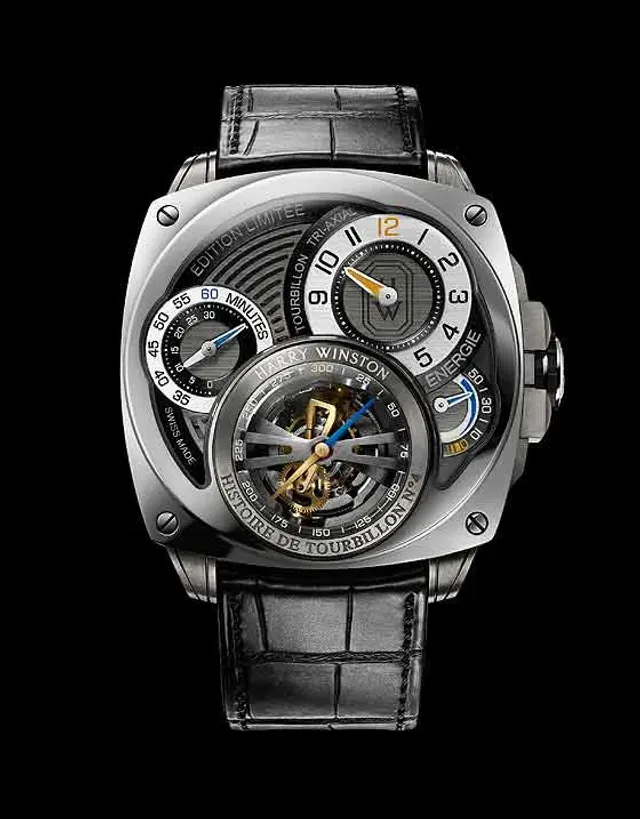
Harry Winston Histoire de Tourbillon 4
PR
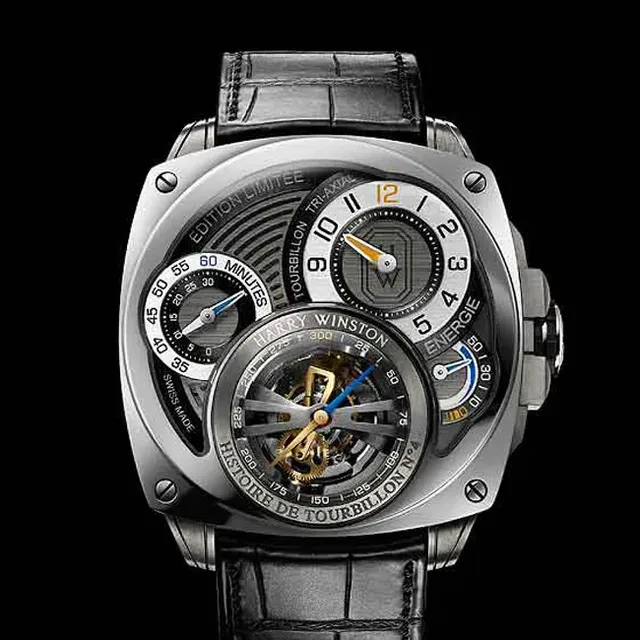
Harry Winston is incorporating its proprietary Zalium material, with DLC treatment, as part of the Histoire de Tourbillon 4, on the watch's caseband, arches, and lugs, as well as for the bezel of the tourbillon. An alloy composed of aluminum and zirconium, Zalium is a durable and ultralight material also used in aeronautical engineering. For more on the Histoire de Tourbillon 4, click here.
8. Chanel
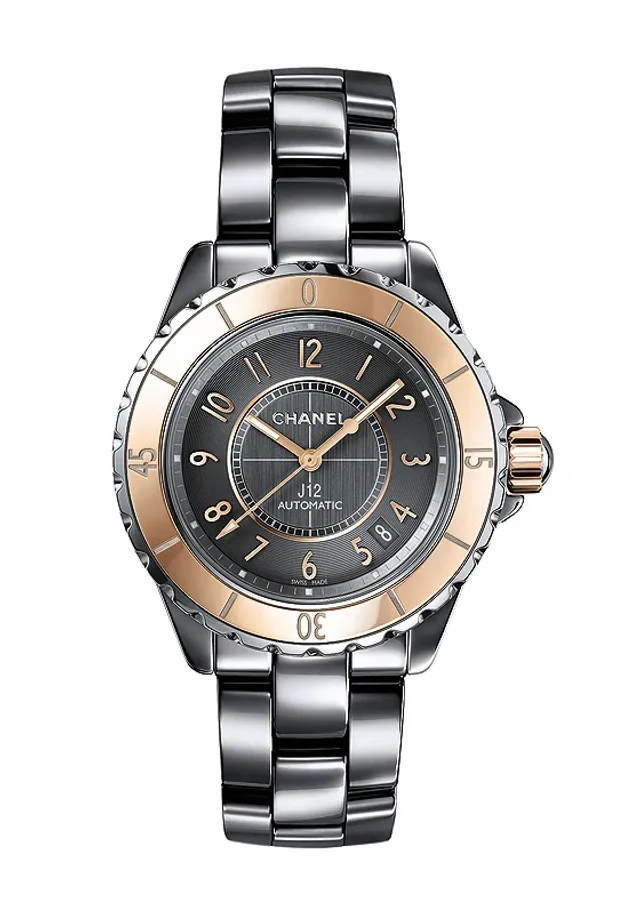
Chanel J12 Chromatic Beige Gold
PR
Recently, Chanel added to its J12 Chromatic line of watches a ladies' model made of a new, patented material called “beige gold,” an alloy of rose gold formulated so that it doesn’t tarnish as much as standard rose-gold alloys. The 38-mm case of the J12 Chromatic Beige Gold combines the new material with titanium ceramic; inside is an automatic movement with a 42-hour power reserve.
9. Maurice Lacroix
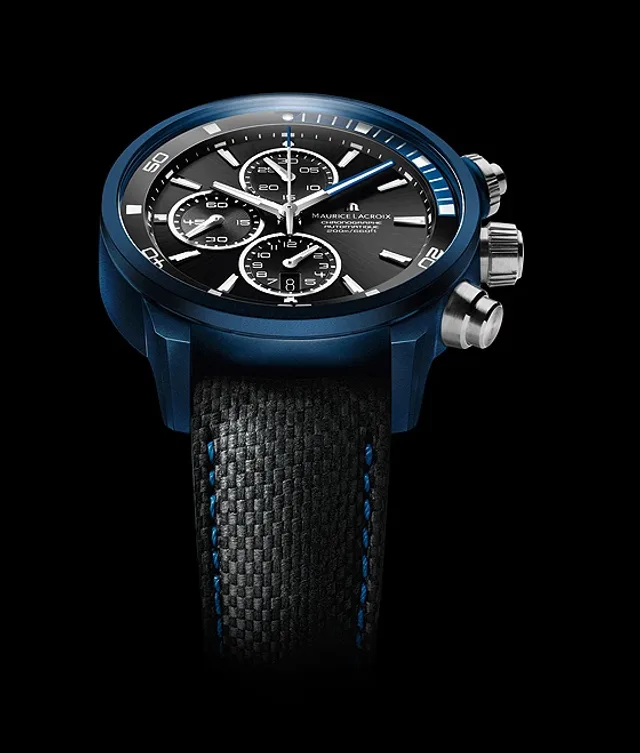
Maurice Lacroix Pontos S Extreme
PR
Maurice Lacroix developed a proprietary alloy called PowerLite, composed of five elements — aluminum, magnesium, titanium, zirconium, and ceramics — and specially engineered to provide for a wide palette of color treatments. PowerLite reacts much better than other aluminum alloys to anodizing, the surface color treatment used in vehicles, aircraft and architecture, and weighs half as much as steel but is twice as hard. Maurice Lacroix uses PowerLite for the colorful cases and bezels of its Pontos S Extreme sports watches, introduced at Baselworld 2014.
10. Seiko
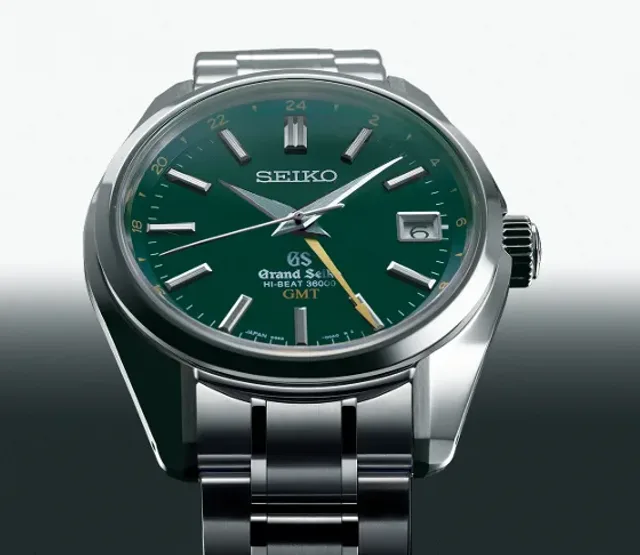
Grand Seiko Hi-beat 36,000 GMT Limited Edition
PR
Japan's Seiko spent five years developing a special alloy called Spron 610, which has greater resistance to shocks and magnetism than standard alloys, for use in the hairsprings of several of its in-house movements, including Caliber 9S86, used in the Grand Seiko Hi-Beat 36,000 GMT model. The brand developed another alloy, Spron 530, for use in the caliber’s mainspring. Spron 530 enables the spring to withstand the stronger torque required by the movement's high-frequency balance and contributes to the watch's impressive power reserve of 55 hours.
11. Rado
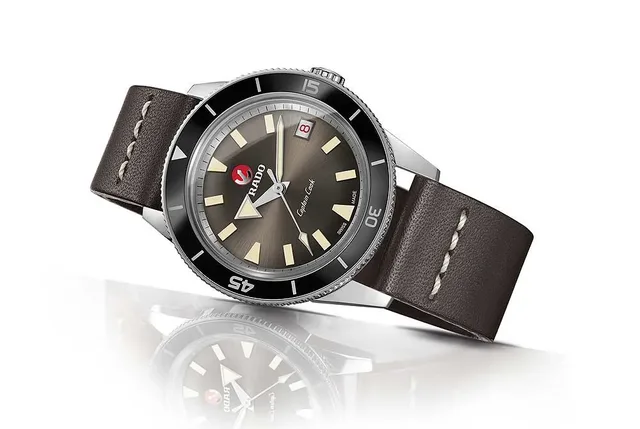
Rado Captain Cook - reclining
PR
While it's not a metal per se, we're giving an honorable mention to Rado's plasma high-tech ceramic, from the Swiss watchmaker most associated with popularizing the use of ceramics in high horology. The company uses a patented, cutting-edge process to forge this colorful, metallic material, which starts out as standard, finished white ceramic, in an oven at extreme high temperatures — with gases activated at 20,000°C to raise the temperature of the ceramic to 900°C, imparting a warm, shiny metallic glow and allowing it to change its surface color. The process changes the chemical composition of the surface without altering its structure, so the other favorable properties of the ceramic — hardness, scratch resistance, lightness, and hypoallergenic character — are unaffected. Rado uses plasma high-tech ceramic for watches in its DiaMaster and HyperChrome families, including for the bezel insert of the recently introduced Captain Cook (above).
This article was originally published in 2013. It has been updated with new photos, information and links.
Save
Save
Save
Save
Save