Lebond Attraction: An Homage to Gaudí’s New York Skyscraper That Was Never Built
The Attraction is the first in a collection inspired by designs from historically renowned and innovative architects. While Lebond is Swiss-made, its home is in Barcelona, a city in which Antoni Gaudí left an incredible legacy, with the nearly completed Sagrada Família as his ultimate masterpiece. This year, Barcelona is the UNESCO-UIA World Capital of Architecture, and it is also a century after Gaudí's death, making it a fitting time to introduce this watch.
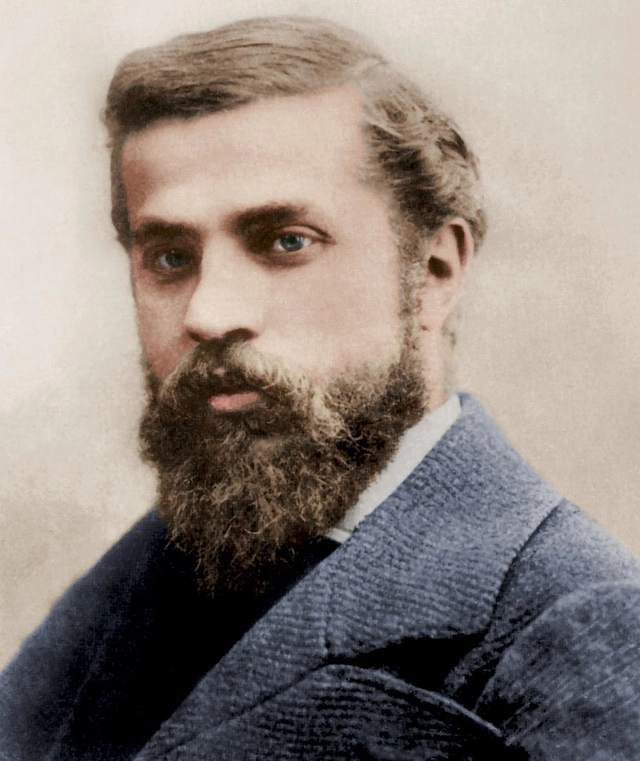
Antoni Gaudí
Pau AudouardGaudí was already 56 when he was approached by two ambitious American businessmen who wanted him to design a skyscraper unlike any other to be built in New York. While not short on work, Gaudí accepted the assignment and made extensive drawings on a magnificent building that included a theatre, different museums and restaurants, and even a grand hotel. It was topped with an observation platform for people to visit and would even include a 'Homage Hall to America,' highlighting all that the young country has achieved. It would be 360 meters, close to 1200 feet tall, and in a style very different from the skyscrapers New York is known for today.
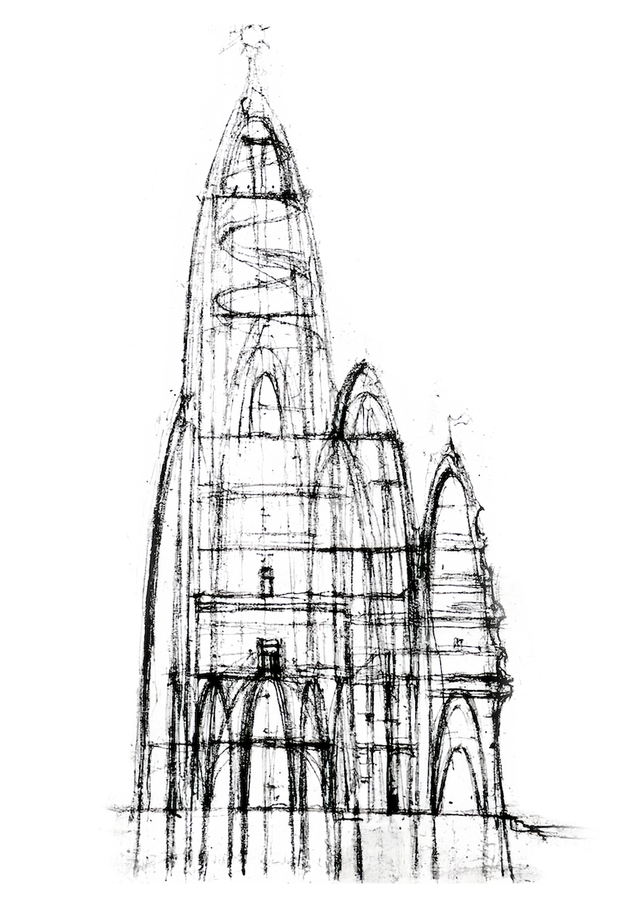
Sketch of the Hotel Attraction by Antoni Gaudí
Antoni GaudíAfter Gaudí took on the task, the architect caught Maltese fever soon after, and while he did recover, his health was too fragile to make the long ocean voyage, with many demanding projects, like the Sagrada Família, Casa Milá, Parc Güell, and the church in the Colonia Güell, to attend to in Barcelona. Gaudí's sketches of the project lay dormant after his death in 1926, to be destroyed in the bombing of Barcelona during the Spanish Civil War in 1936. What was thought to be lost forever resurfaced in 1956 in the form of copies published in the memoirs of Juan Matamala, who had worked as an apprentice sculptor at the Sagrada Família. While there was some scepticism that these drawings were indeed by Gaudí, as they do not form a conclusive set, various studies conducted since have underscored the likelihood that the design is indeed from the master himself.
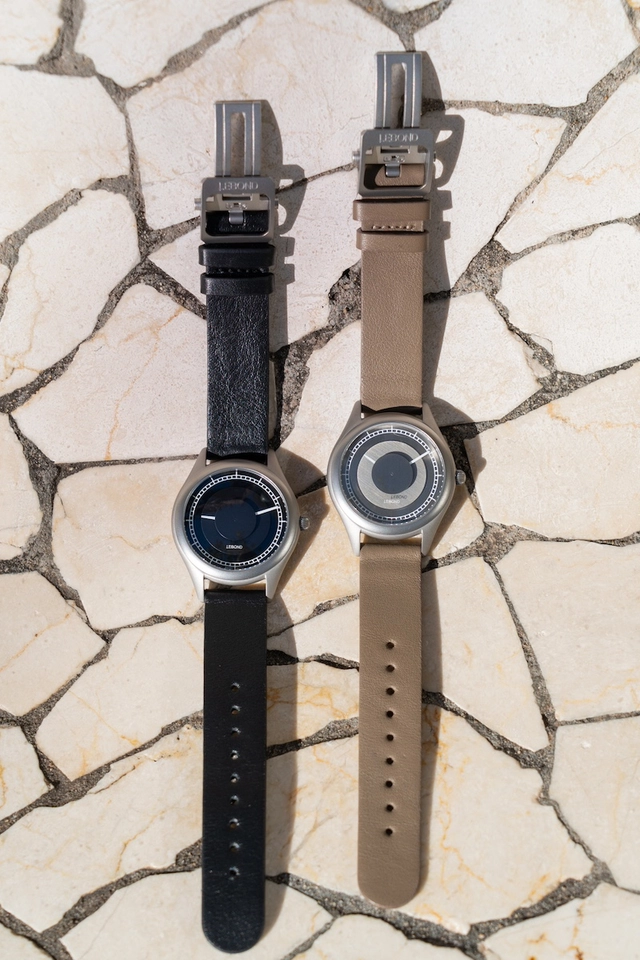
The Original Edition (right) and the Dark Edition (left) of the Lebond Attraction
William MulvihillEnter Asier Mateo, the modest and very talented founder of Lebond, and an established architect himself. He created the Attraction with Gaudí's design principles in mind. This started with the organically shaped case, highlighting the catenary curves that are so important in Gaudí's work. They end in slightly elongated lugs, all well-rounded like pebbles in a stream, a nod to Gaudí's deep passion for nature and organic shapes. Matched with a slender bezel crafted in the same manner, Mateo did not deviate from Lebond's preferred material, using sandblasted Grade 5 titanium for its watches, now with an improved anti-fingerprint coating. This results in a feather-light creation that will retain its natural luster and sit wonderfully on the wrist. The smoothness of the case, combined with its light weight, makes the Attraction very comfortable to wear.
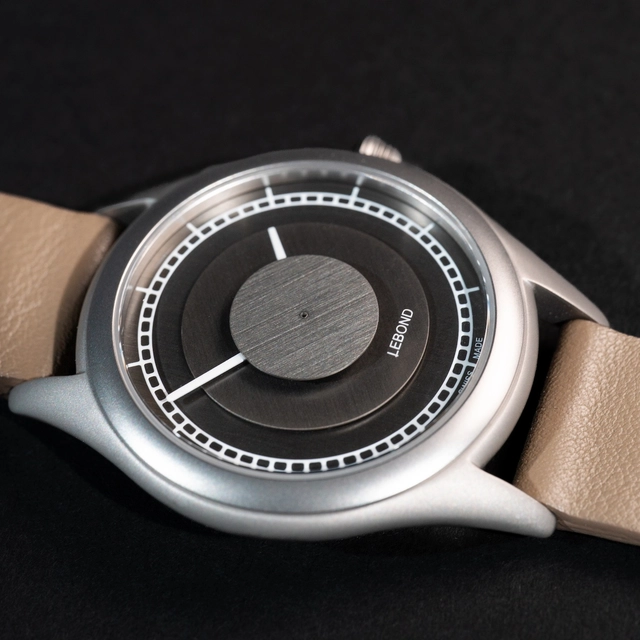
The Lebond Attraction features a very balanced design that entices through subtle details and an exceptional finish
William MulvihillAs balance is everything in architecture as a whole and Gaudí's work especially, the Lebond Attraction has a diameter of 38mm. Combined with a lug width of 18mm and a mere 10.4mm in height, this results in a well-proportioned timepiece that is sleek enough to naturally tuck under your cuff, while still demanding a presence on the wrist. It is not only the case that achieves that, but also the way the Lebond Attraction tells time.

The Super-LumiNova is subtle yet stylish
William MulvihillHere, another one of Gaudí's favorite 'architectural tools' is utilized: the play of light. While the Lebond Attraction utilizes a monochromic color scheme on the dial side, it plays with texture and depth to create a mesmerizing display of time. The base dial features a railroad-track, indicating the hours and minutes, printed in Grade A Swiss Super-LumiNova. Placed on top is a satin-brushed disc with the hour hand printed in the same color, Grade A Swiss Super-LumiNova, the same material used for the minute hand, which peeks out from underneath the top disc. While that disc seems to be motionless, subtle changes in the light reflection of the satin-brush finish tell you that it is, in fact, moving. It reflects the poetic side of Gaudí, as time is passing, yet not indicated to the precise second.
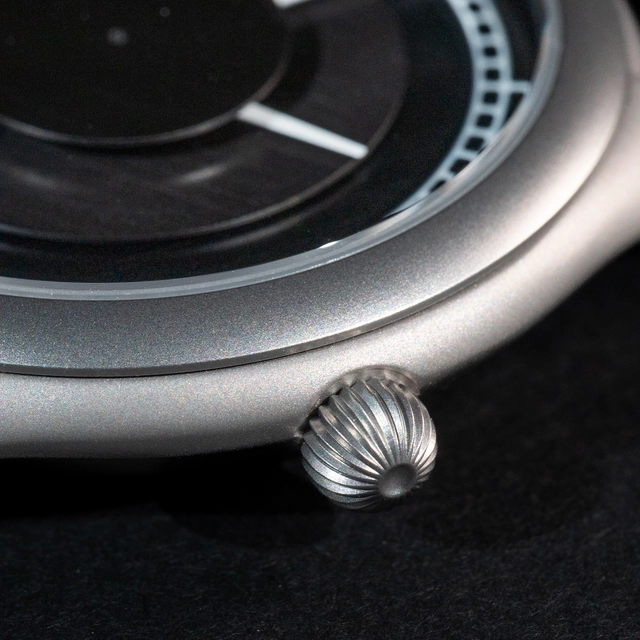
The crown on the Lebond Attraction is a masterpiece
William MulvihillThe discs are layered, each at a different distance from the slightly domed sapphire crystal, which has an anti-reflective coating on the inside. Due to their texture, this creates different moments when the reflection turns them from light to dark and vice versa. Like Gaudí's work, it evokes beauty without sacrificing functionality. The same can be said of the elegant and understated 'onion crown.' What looks delicate feels firm between the fingers, with just the right grip and resistance to wind, and set the watch.
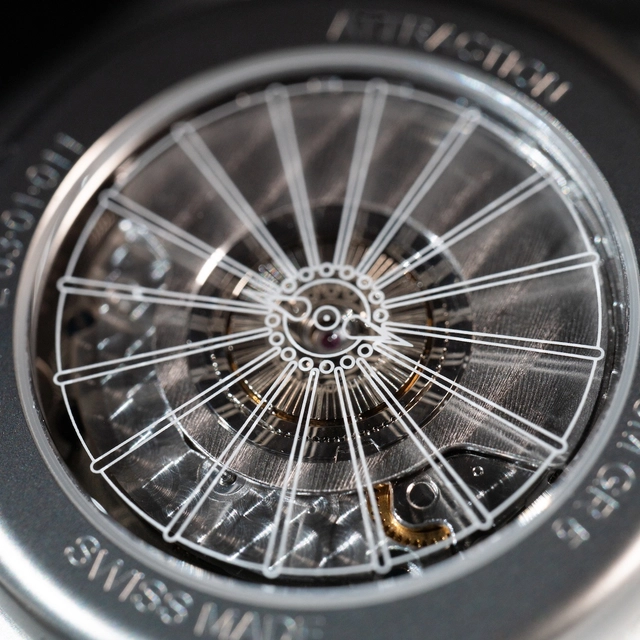
The caseback shows a top-view print of Gaudí's Hotel Attraction printed on the inside of the sapphire crystal
William MulvihillThe Grade 5 titanium caseback features a sapphire crystal insert with a top-view print of Gaudí's Hotel Attraction design printed on the inside. Underneath this image ticks the heart of the Lebond Attraction, ETA's renowned caliber 2892-A2, with a very pleasing finishing. Lebond offers the Attraction in an 'Original Edition' and a 'Dark Edition,' both fitted with a matching Nappa leather strap and a very well executed folding buckle in Grade 5 titanium. Both versions are priced at €2.400, which seems to be a fair price given the movement, grade 5 titanium, beautiful dial setup, and overall exceptional finish.
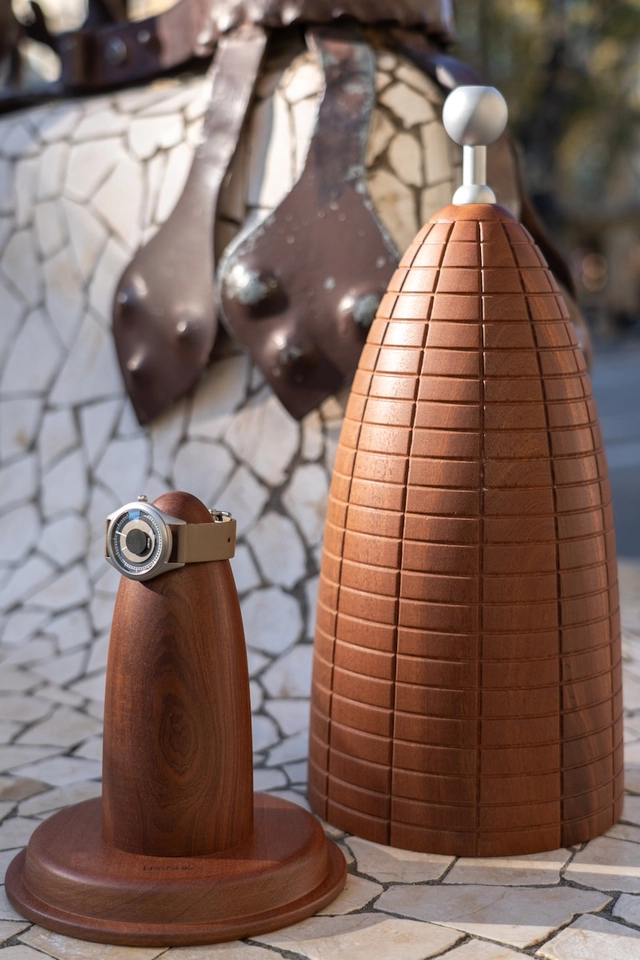
The optional wood-carved storage/display box brings Gaudí's vision even more to life
William MulvihillOptionally, you can also get a wood-carved storage/display box, shaped like Gaudí's Hotel Attraction. Crafted and finished by hand, it evokes the vision Gaudí had in mind for a skyscraper that was, unfortunately, never built.
For more info, visit Lebond, here