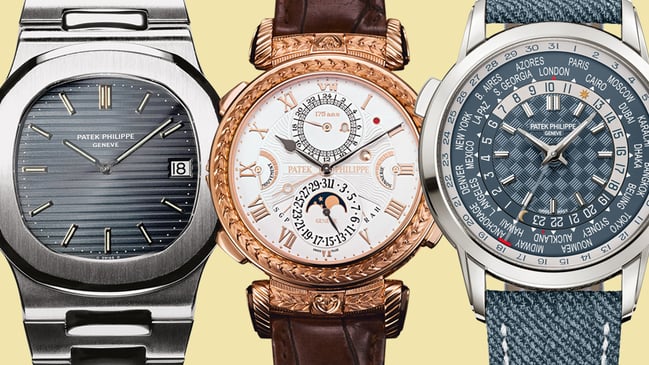
An In-Depth Look at Patek Philippe’s Annual Calendar
From Invention to Collection Cornerstone
The most widely used calendar in the world was introduced in October 1582 by Pope Gregory XIII. Named after him, this so-called Gregorian calendar offers quite the challenge for watchmakers, as the length of the months is not equal. Even more challenging is that an extra day is added every four years to compensate for this discrepancy. But the Earth takes slightly more than 365 days to orbit the sun. To avoid mistakes, there were only two ways in which a watchmaker could hold this problem at bay: either solve it fully by designing a perpetual calendar movement that changes the date every time around midnight, or create one that is accurate for three years. Only once in those three years would an adjustment be needed, most commonly in March. As this is a simple procedure with most watches, automatic and hand-wound, the vast majority of users find this less concerning. The main reason for this is because solving such a problem entirely is complex and costly. That does make the perpetual calendar, as this complication is called, quite desirable but also rare. As it could handle both the different lengths of the months as well as the leap years, the owner never had to adjust the date as long as the watch was running.
Making a perpetual calendar required a lot of knowledge, craftsmanship and resources, while you also needed to have a clientele willing to pay a hefty premium to obtain this complication. It was, therefore, mainly the territory of the few maisons and maisons in watchmaking that had this kind of timepieces in their collections. One of them was Patek Philippe who, in 1925, also created the first perpetual calendar wristwatch. In 1889, the brand patented a movement with this complication, but it required an annual wind, as the power reserve only lasted so long. This made Patek Philippe the first to turn it into a wristwatch a quarter of a century later, making history in the process and laying the foundation for the annual calendar as it would become a more accessible variant. The evolution of Patek Philippe’s perpetual calendar would become the foundation for the development of their complication, which was introduced with the Ref. 5035 in 1996.
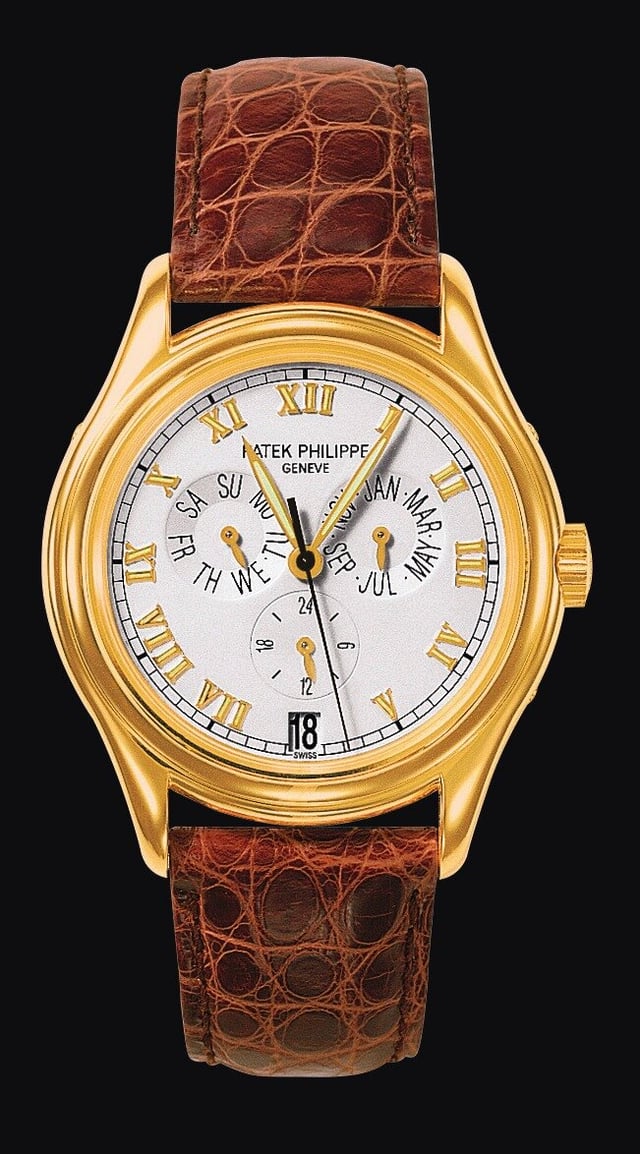
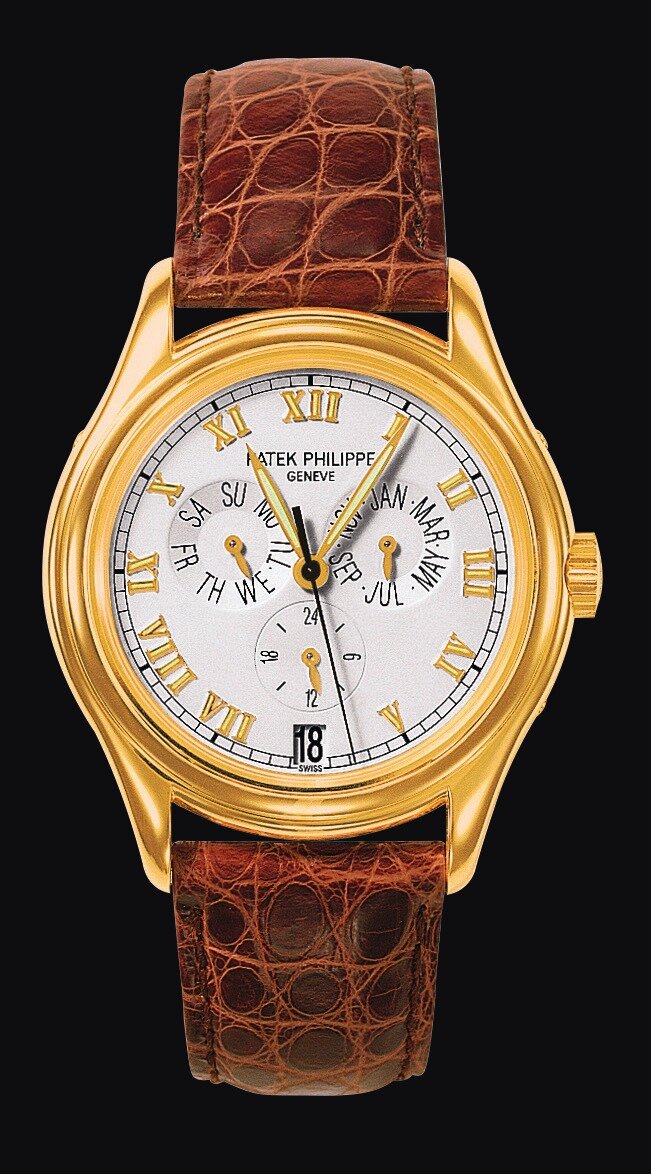
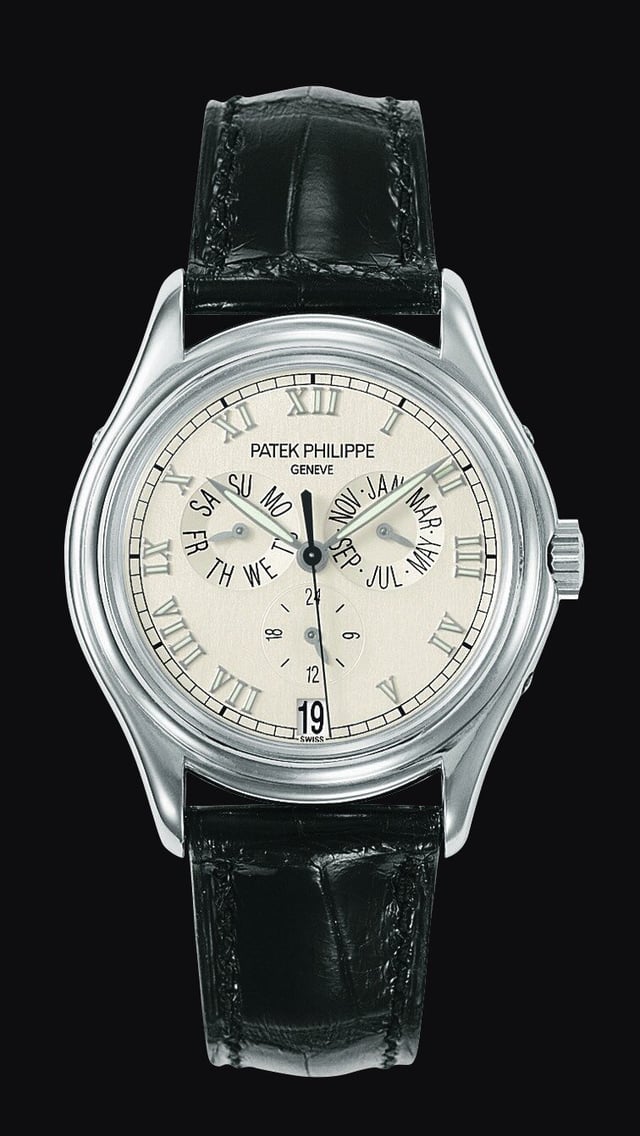
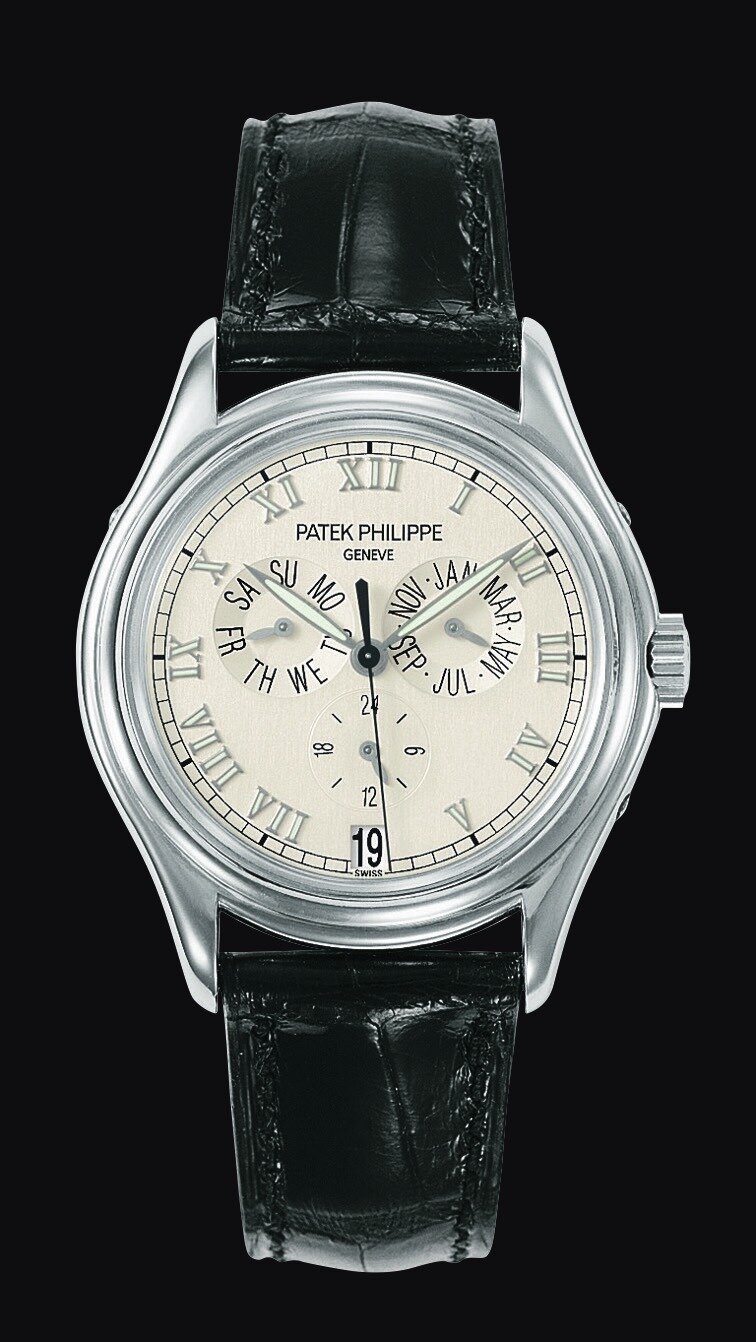
While these two watches marked the beginning of Patek Philippe’s reign as one of the most prominent producers of perpetual calendar watches, the brand eventually also started to explore other directions. When looking at the Gregorian calendar, the only month that is not always the same length is February, so what if you created a complication that only needs manual adjustment in that month? Although still rather complex, it wouldn’t be up to the level of a perpetual calendar, while it does have the benefit of needing to be adjusted once a year instead of three times for an ordinary watch with a date. After extensive research and development, Patek Philippe launched the so-called annual calendar complication in the spring of 1996.
As the name suggests, all of a sudden, there was an entirely new complication that was convenient, satisfying complex, yet attractively priced, costing less than half of Patek Philippe’s perpetual calendar models. With Ref. 5035, the brand presented this complication in a classic package. With a diameter of 37 mm, it has quite a presence on the wrist, being more aimed at men. Shown on most of Patek Philippe’s dress watches, the Roman numerals and leaf-shaped hands add further subtle historical references that fit in superbly with the brand. Patek Philippe went for super legibility instead of showmanship and with its luminous leaf hands was more than ready to meet the desires of the contemporary man. The Ref. 5035 is still sought after by collectors, as it was available in white and yellow gold as well as in platinum.
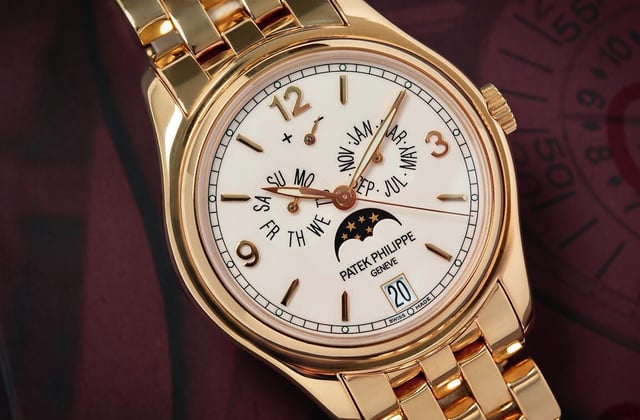
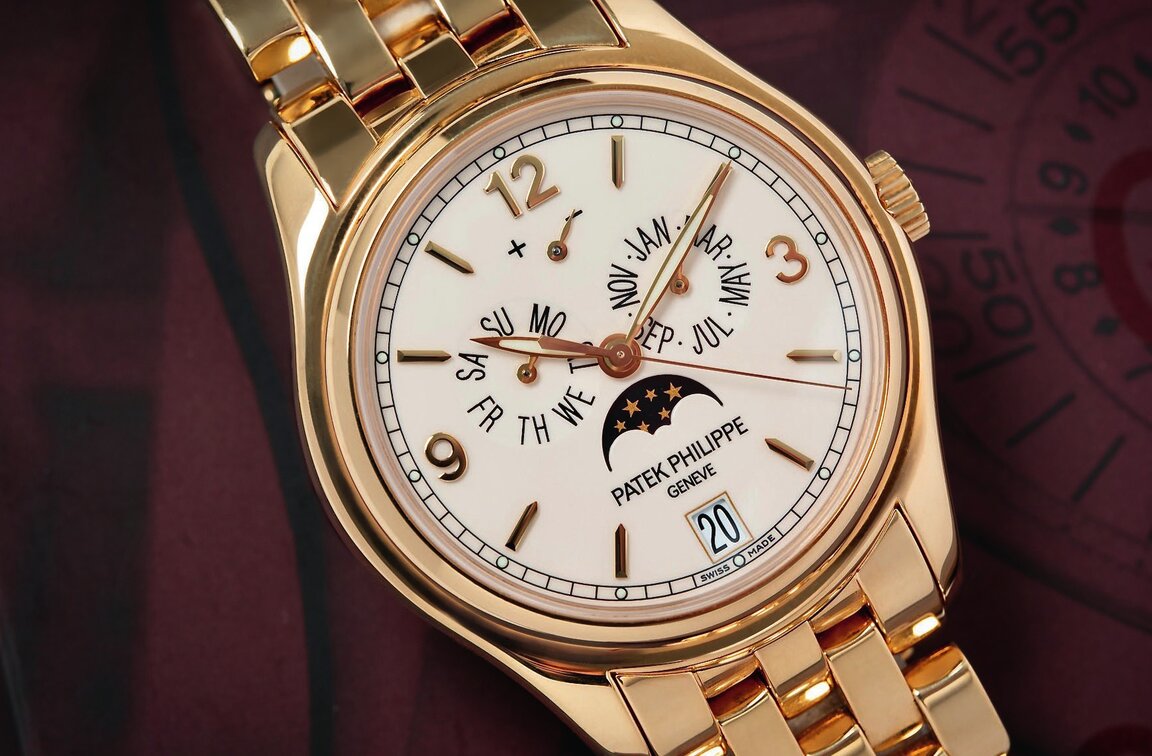
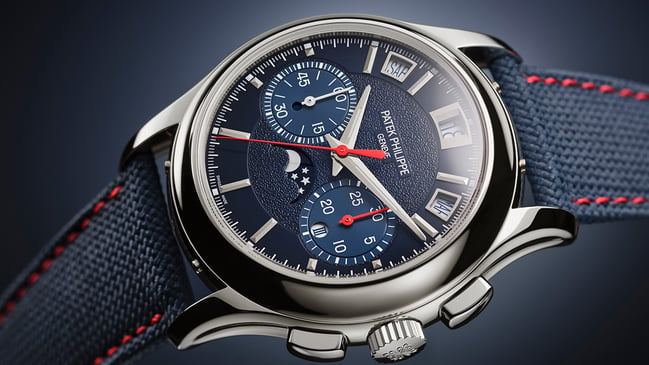
In 2006, they used these calendar-aperture display indicators on the Ref. 5960P, combining for the very first time, an annual calendar with a fly-back chronograph powered by an automatic movement. A year later, they made the annual calendar even more noble by combining it with a minute repeater, introduced with the Ref. 5033P. This shows the popularity of the complication among Patek Philippe’s clients on one side, and that the annual calendar is somewhat easier to integrate with other complications than a perpetual calendar while still creating a very desirable watch in the process.
Between 2005 and 2008, Patek Philippe also launched three limited editions of the annual calendar as part of its Advanced Research collection. These were developed by the Advanced Research department at Patek Philippe, which was founded to explore and further generate both new technologies as well as materials. The first, launched in 2005, was the white-gold Ref. 5250, which was fitted with a silicon escape wheel. A year later, it was the pink-gold Ref. 5350 that showed the capabilities of the Spiromax balance spring, which can now be found in most movements made by Patek Philippe. It is made from Silinvar, a specific type of silicon that is proprietary to Patek Philippe. As it is harder and more corrosion resistant than steel, while at the same time being lighter and more resistant against shocks and magnetism, it is the ideal material for making a balance spring. Even more so, it doesn’t require lubrication. In 2008, Patek Philippe also used this material in the platinum case Ref. 5450, which took the technology as first presented in the Refs. 5250 and 5350 to new heights by not only using a silicon escape wheel but also the lever made from Silinvar.
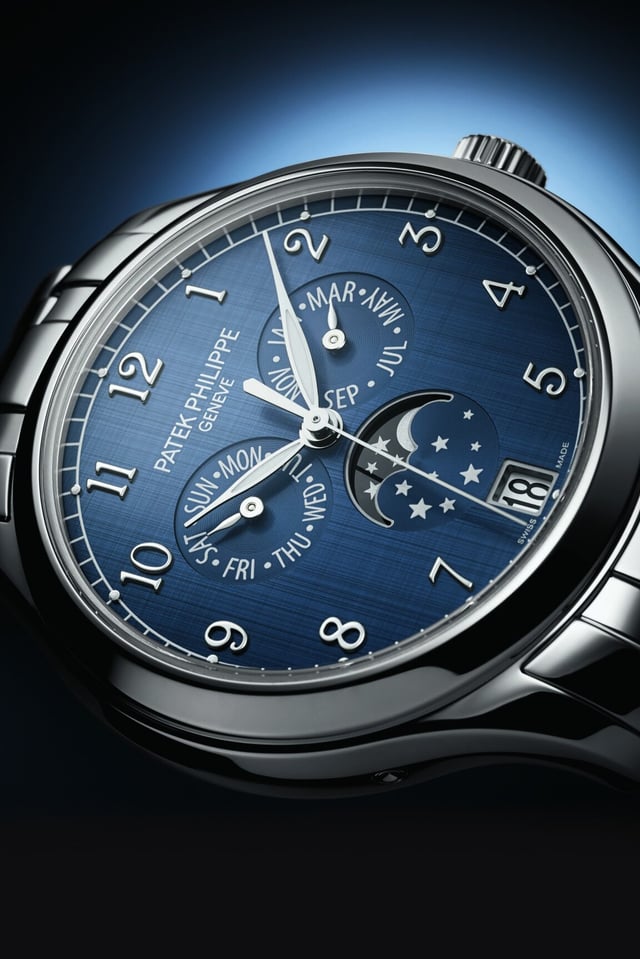
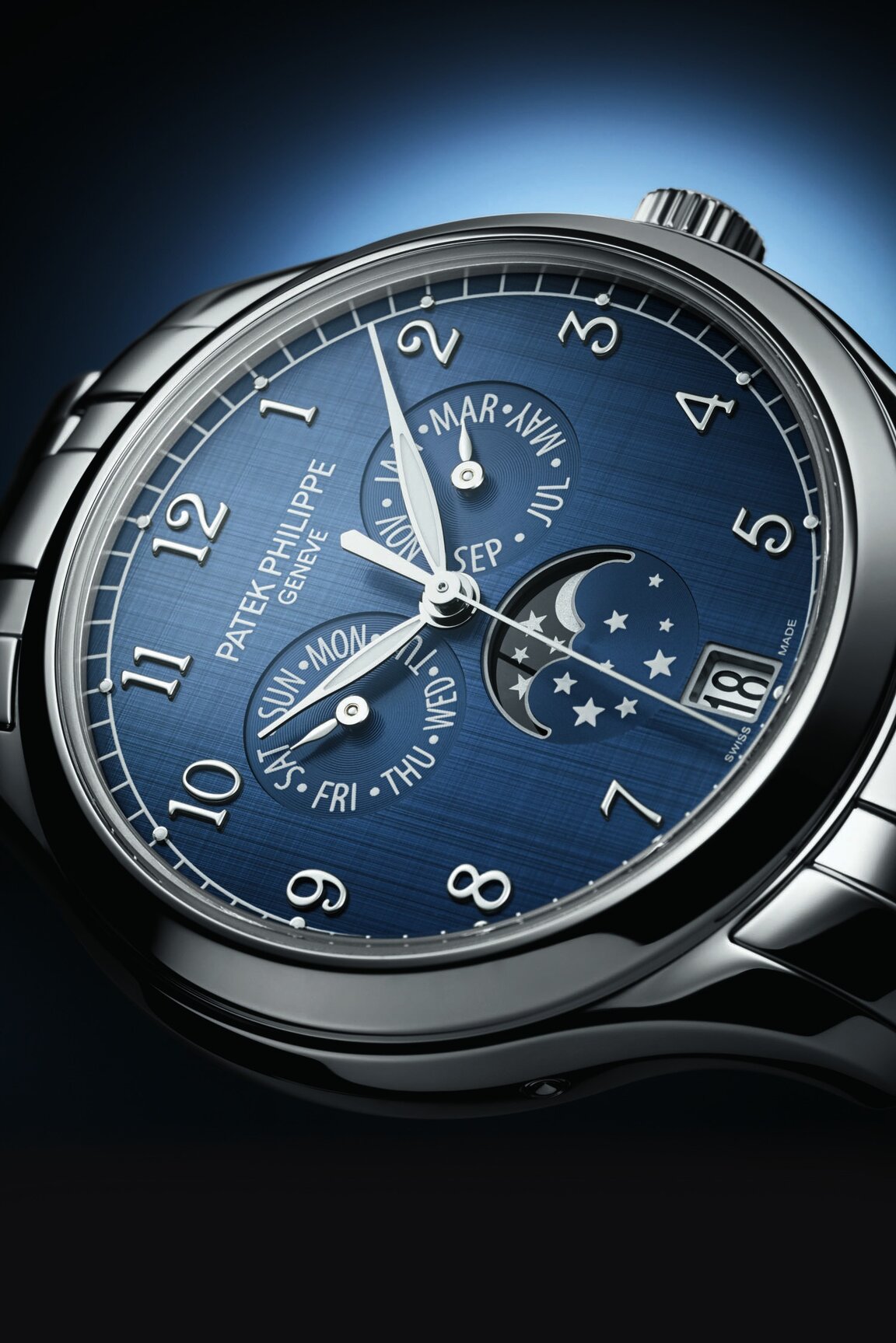
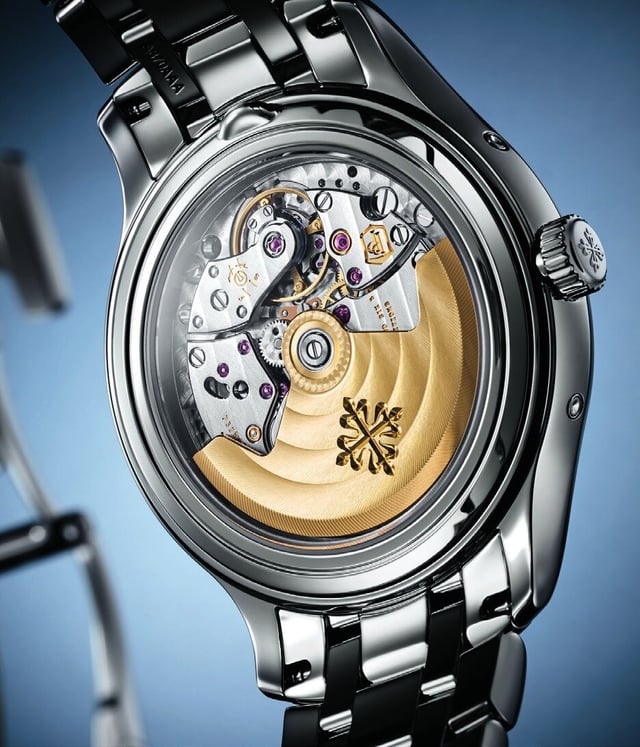
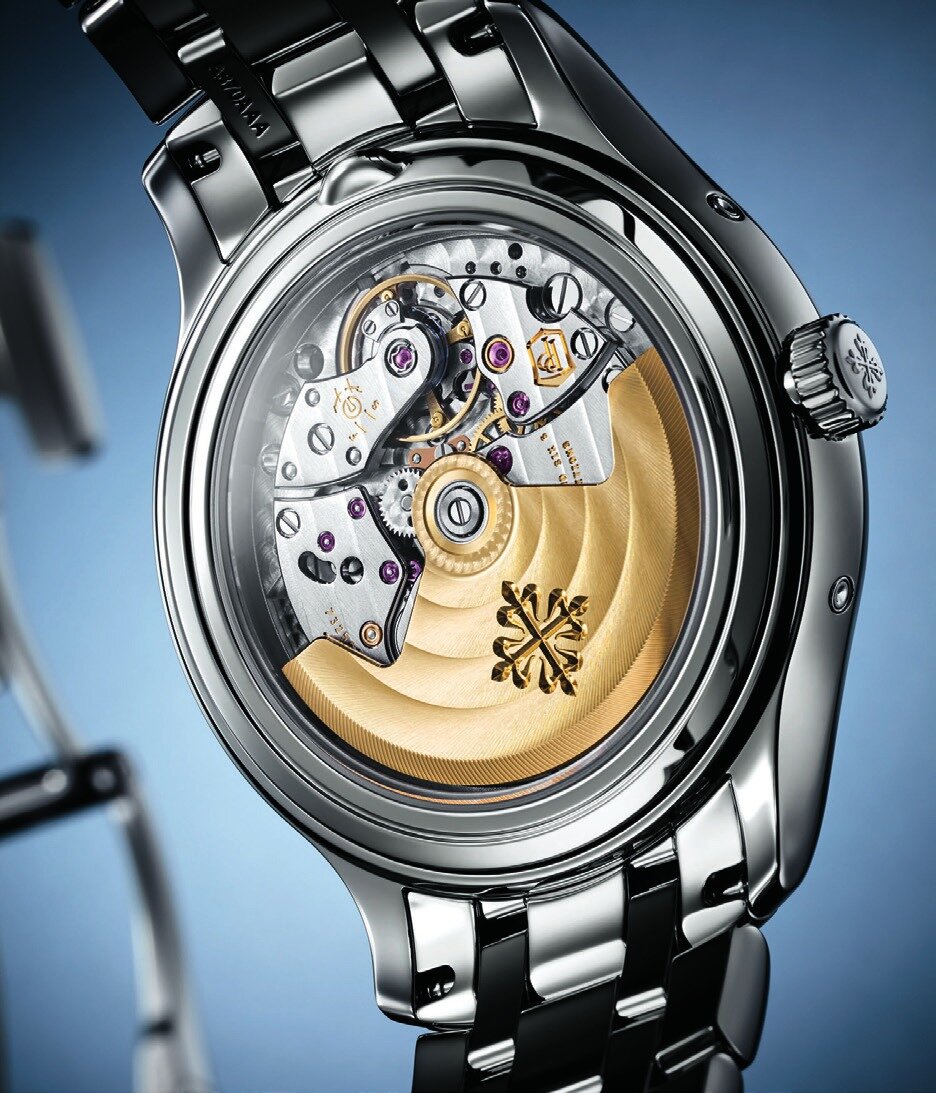
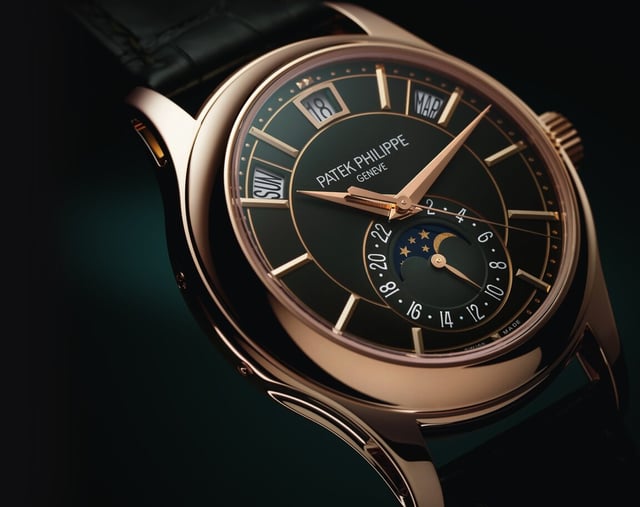
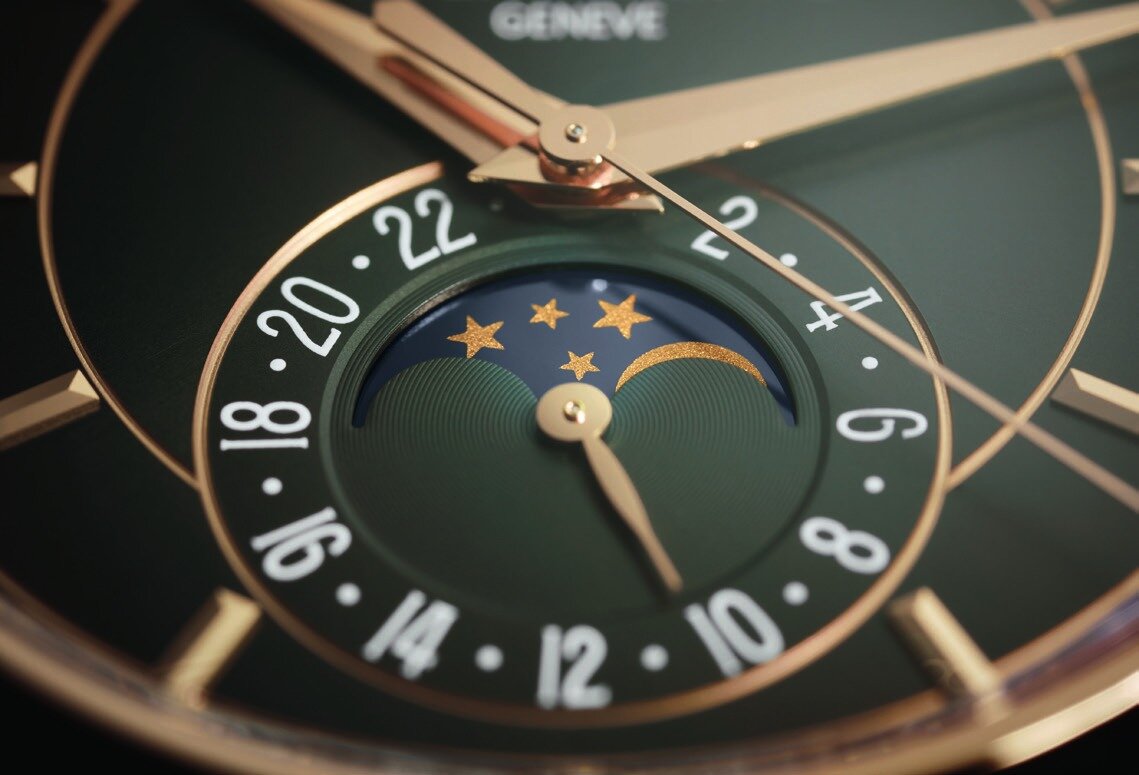
The fact that Patek Philippe released three versions of the annual calendar under its Advanced Research collection further underscores the importance the brand has obtained. It can, therefore, not come as a surprise that the annual calendar continues to play an important role in the brand’s collection. In 2012, the annual calendar was further incorporated in what is arguably Patek Philippe’s best-known model: the stainless-steel Ref. 5726/A. The brand opted to design the layout of the annual calendar in a style that was often a favorite for full calendars (watches that also showed date, day and month, often with the moon-phase as well, without the functionality of either an annual or perpetual calendar). This style was introduced six years before in the Ref. 5396G, which was part of the Calatrava collection, making it the first in this collection to have aperture-display indicators.
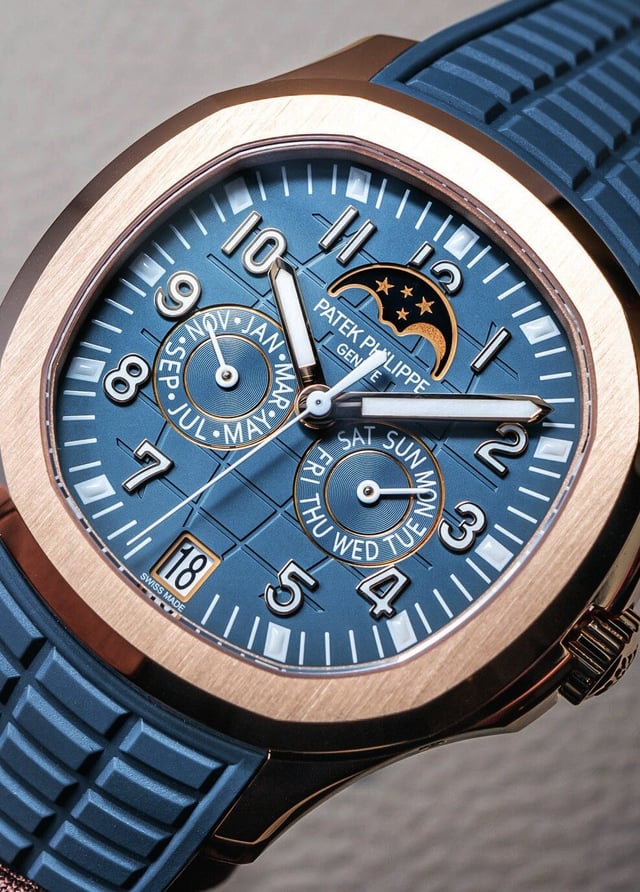
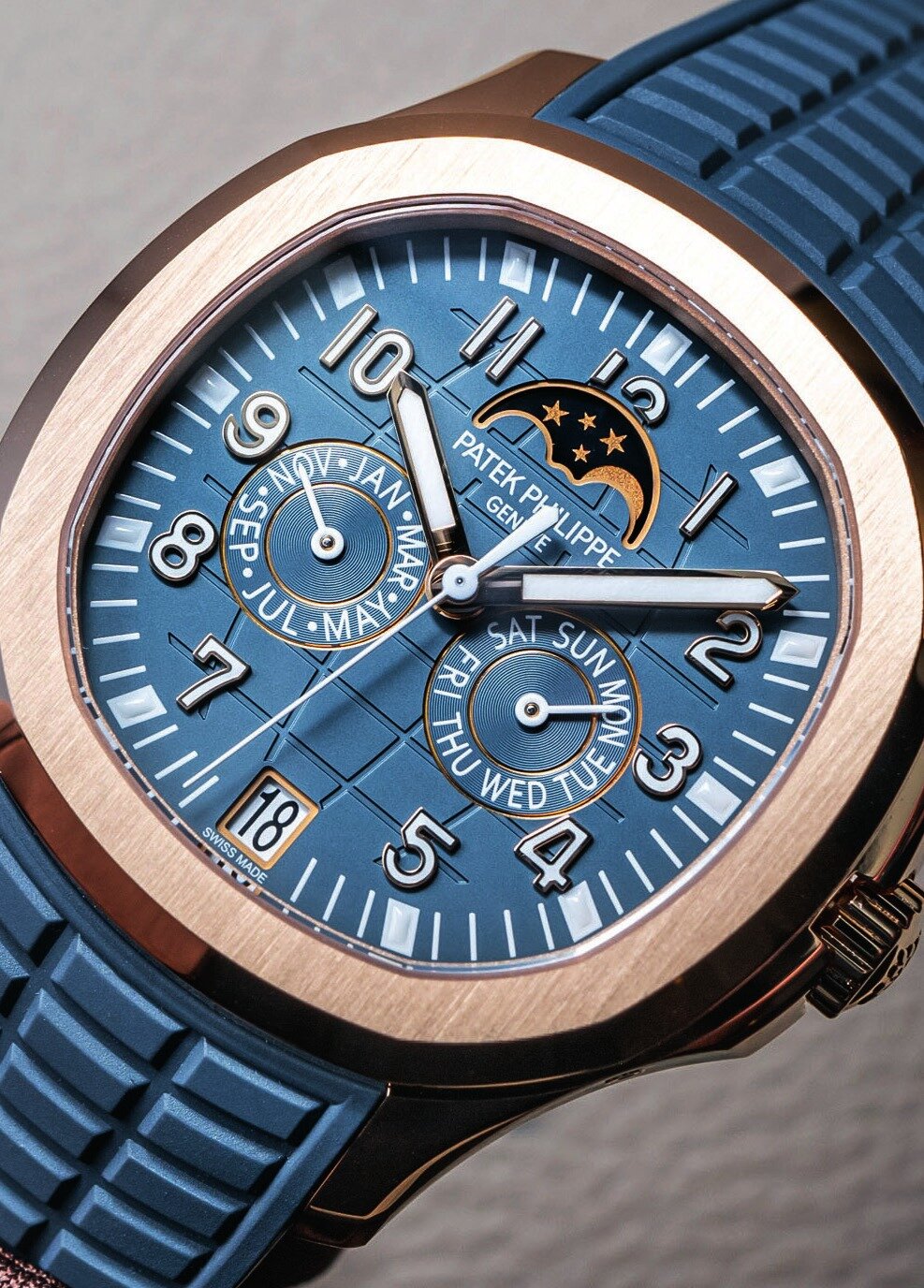
Another well-known sports model from Patek Philippe, the Aquanaut, is also available with a perpetual calendar. Patek Philippe did something interesting here because rather than mimicking the layout of some of its other annual calendar watches, they reversed the orientation of the annual calendar module. This puts the moon-phase indicator at the top, with subdials for the month and day below it. The date is shown once again through a window at 6 o’clock to maintain the symmetry of the design.
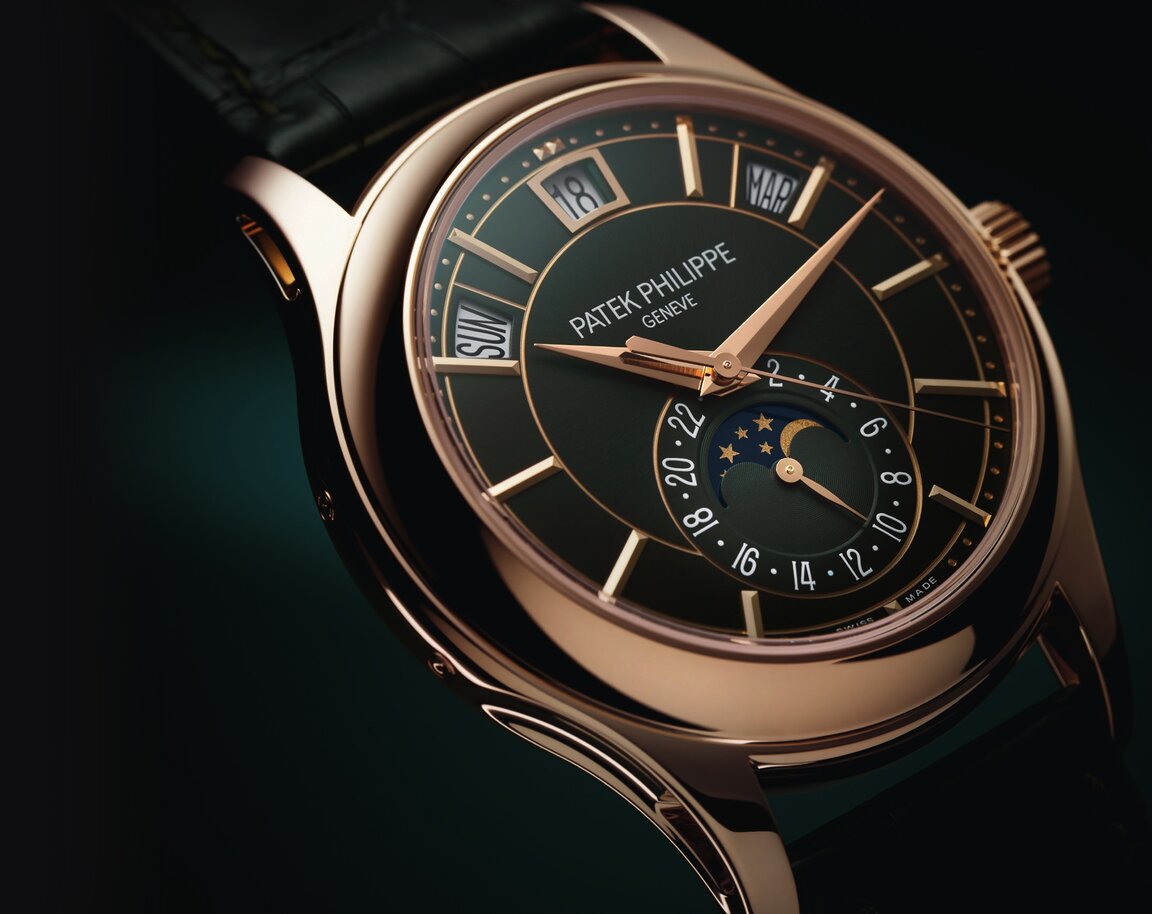
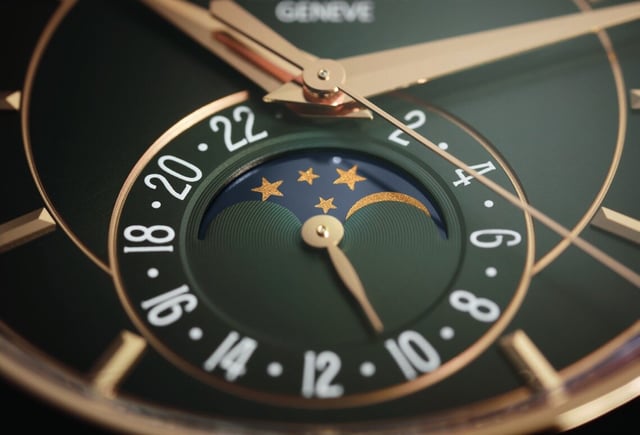
While over the years other brands have found ways to create an annual calendar complication without infringing on the patents owned by Patek Philippe, the brand is still the undisputed gold standard for this type of watch. Born from its innovative spirit, the annual calendar grew to become an inseparable part of Patek Philippe’s DNA and one of the pillars of its collection.
This article was originally published in the June 2024 print issue. To subscribe to WatchTime Magazine, click here.