The Watches That Defined Patek Philippe
Fourteen milestones from the Calatrava to the Cubitus
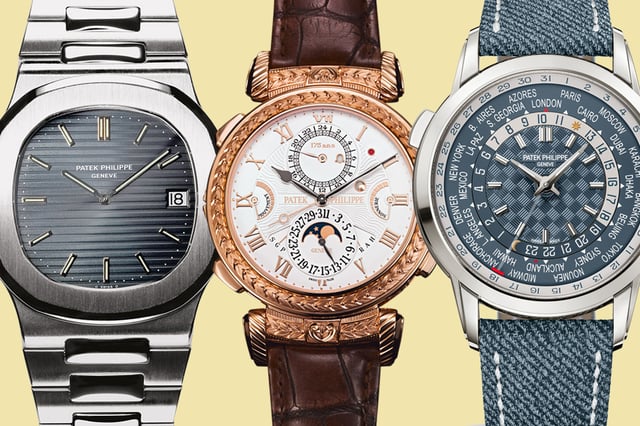
Few names in watchmaking command as much respect as Patek Philippe. For generations, the family-owned Geneva manufacture has built its reputation on exceptional craftsmanship and an unwavering commitment to its core principles: uncompromising quality, relentless refinement, and a willingness to embrace new materials and manufacturing techniques without sacrificing tradition. The watches featured here showcase not only the breadth of Patek Philippe's watchmaking expertise, but also the remarkable diversity of its creations. Many have become some of the world's most sought-after collector's pieces, with several achieving extraordinary prices at auction.
1932: The Calatrava
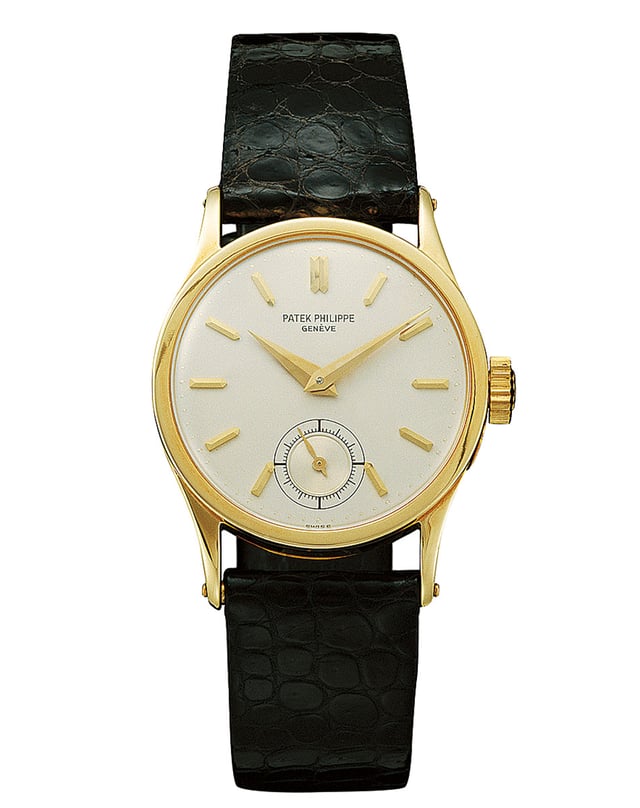
Patek Philippe: Calatrava Ref. 96 from 1932
Patek Philippe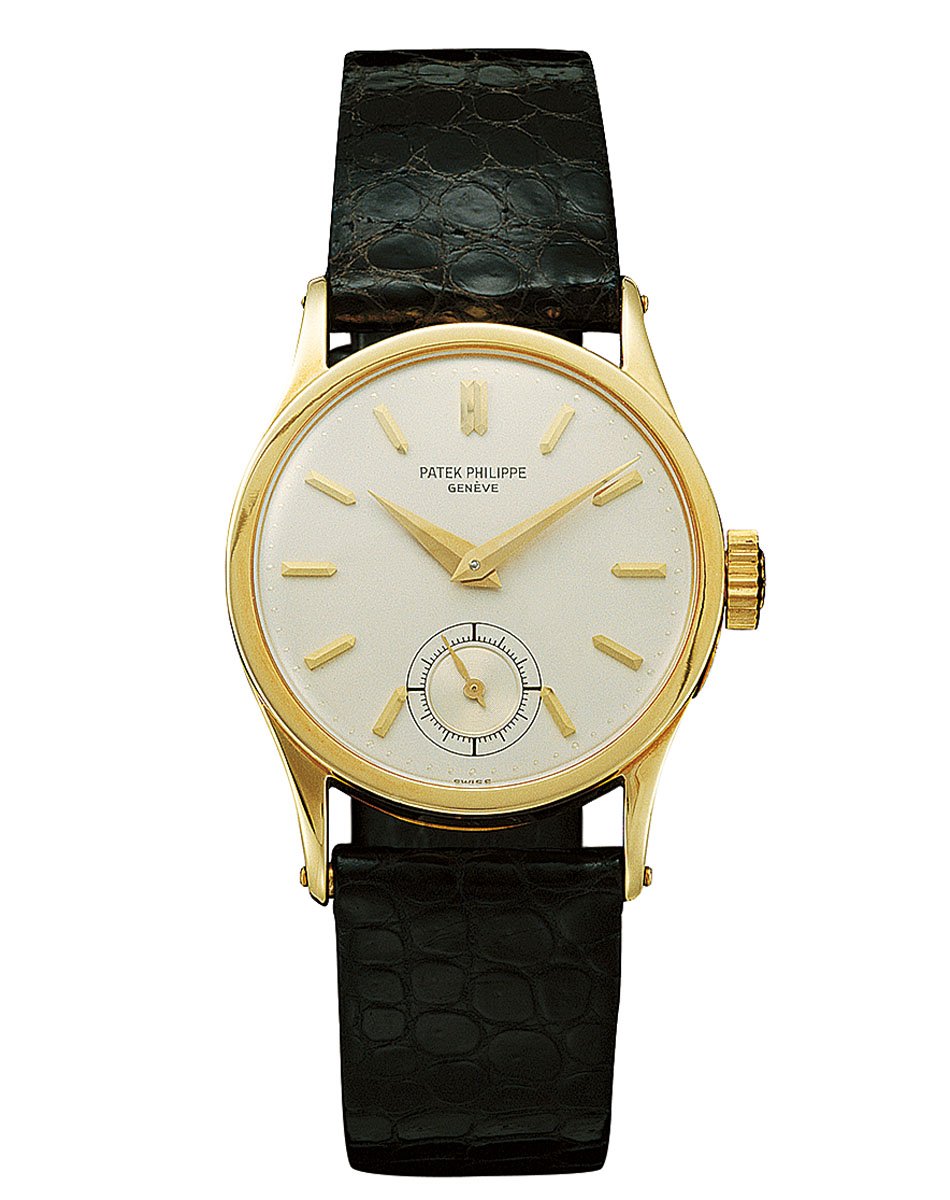
Long before the Nautilus became Patek Philippe’s defining icon, the Calatrava was arguably the brand’s best-known named collection. Unlike shaped watches such as the Gondolo, it has always followed a remarkably clear design code: a refined round dress watch with a slim bezel, traditionally with small seconds or, in its purest form, a two-hand display. The story began in 1932 with Reference 96, the same year the Stern family acquired Patek Philippe. The Calatrava name came later, inspired by the Cross of Calatrava, the emblem of a Spanish order of knights founded in 1158. Patek Philippe had registered the cross as its trademark as early as 1887, and it remains one of the manufacture’s defining symbols, appearing on crowns and clasps to this day. Among the collection’s most celebrated references is the Calatrava Ref. 3919, introduced in 1985. Its signature feature was the hand-guilloched Clous de Paris hobnail bezel, a motif that became closely associated with the line. In 2021, that design returned in a modernized form with Reference 6119.
1937: The World Time Watch
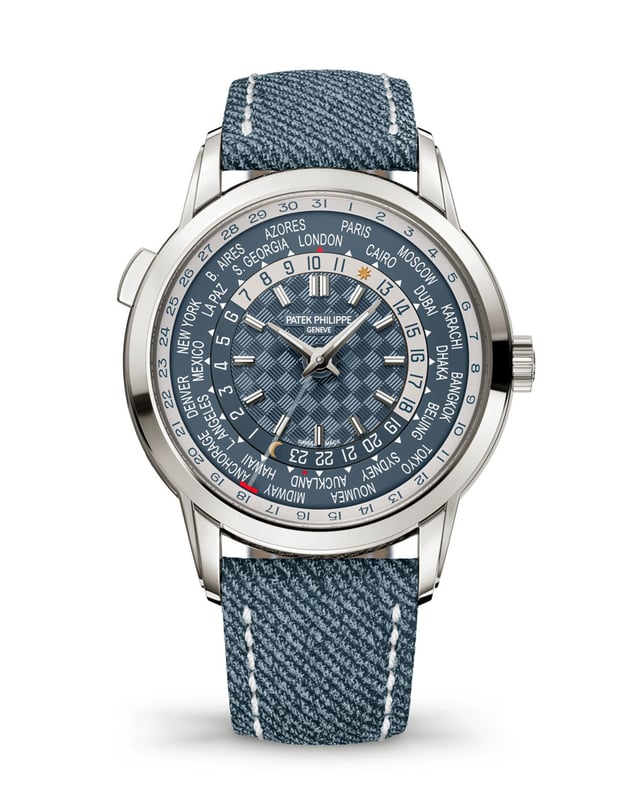
Patek Philippe: Reference 5330G from 2023, World time watch with date
Patek Philippe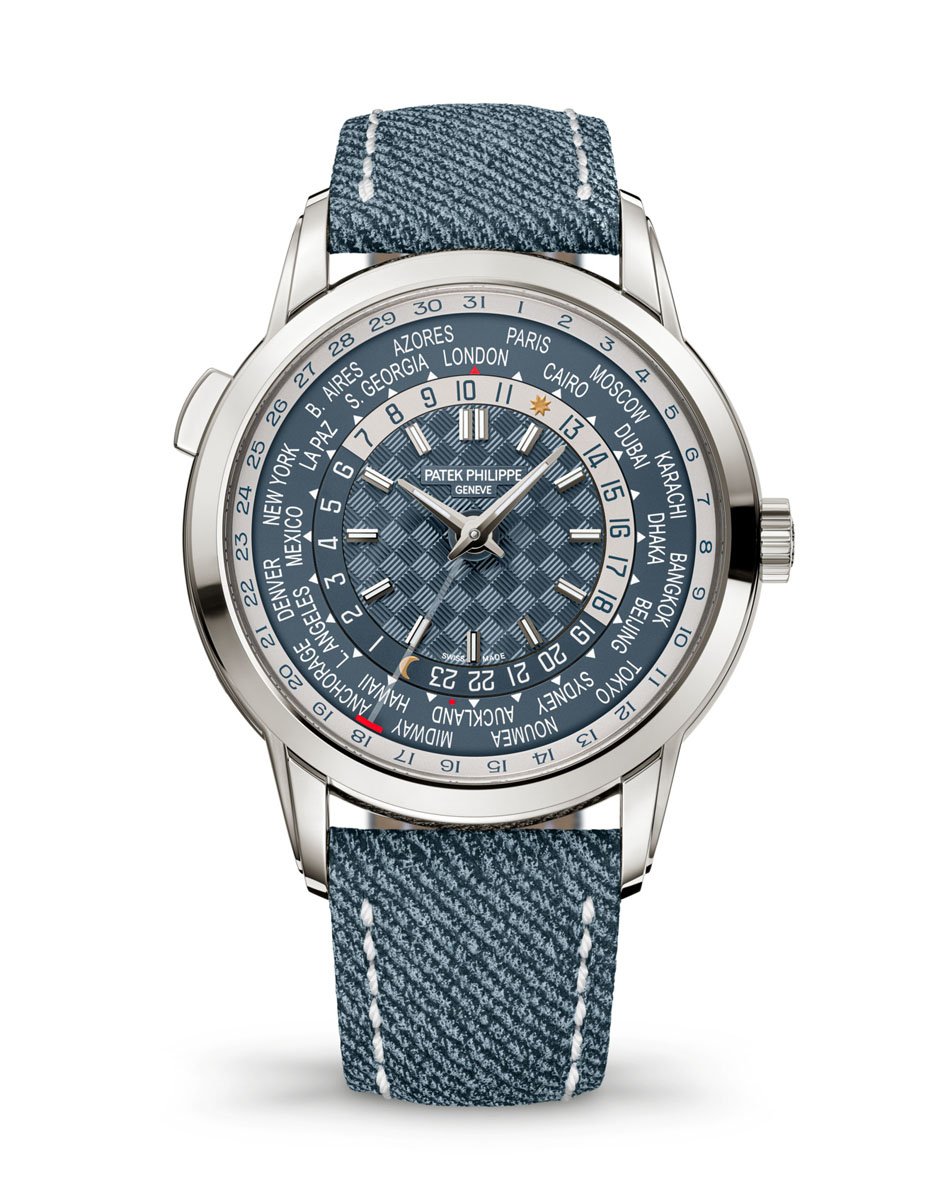
Few complications are as closely associated with Patek Philippe as the world time watch. The Geneva manufacture introduced its first example in 1937, developing the mechanism with independent Genevan watchmaker Louis Cottier. The first model, the rectangular Ref. 515 HU (Heure Universelle), placed Greenwich Mean Time (GMT) at the center of the display. At the time, Paris shared the same time zone as London. Later that same year, Patek Philippe and Cottier refined the concept with the round Ref. 542 HU, whose rotating bezel carried the names of major cities and made the watch far more practical. The next major breakthrough came in 2000 with Ref. 5110. Available in yellow, white, and rose gold as well as platinum, it was Patek Philippe’s first world time watch since the 1960s and introduced a more intuitive adjustment system. With each press of the 10 o’clock pusher, the hour hand, 24-hour ring, and city ring advance by one position. Patek Philippe still uses this elegant mechanism today. Over time, the World Time collection expanded in size and complexity. In 2014, Refs. 5575 and 7175 added a moon-phase display. In 2016, Ref. 5930 combined world time with a flyback chronograph. The next major technical step arrived in 2023 with Ref. 5330G. For the first time, Patek Philippe added a pointer date synchronized with local time. Managing the date change when crossing the International Date Line posed a significant challenge, solved by a differential integrated into Caliber 240 HU C.
1941: Ref. 1518 – Perpetual Calendar Chronograph
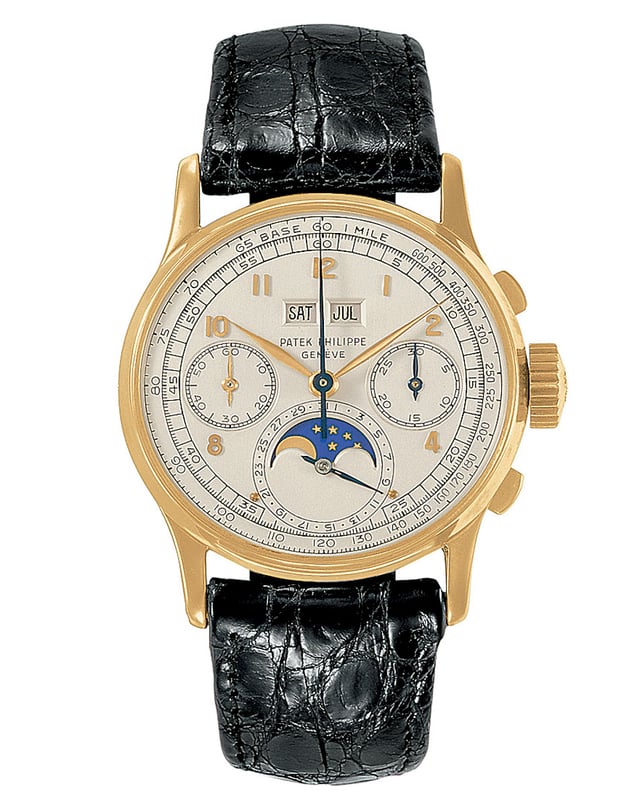
Patek Philippe: Ref. 1518, chronograph with perpetual calendar from 1941
Patek Philippe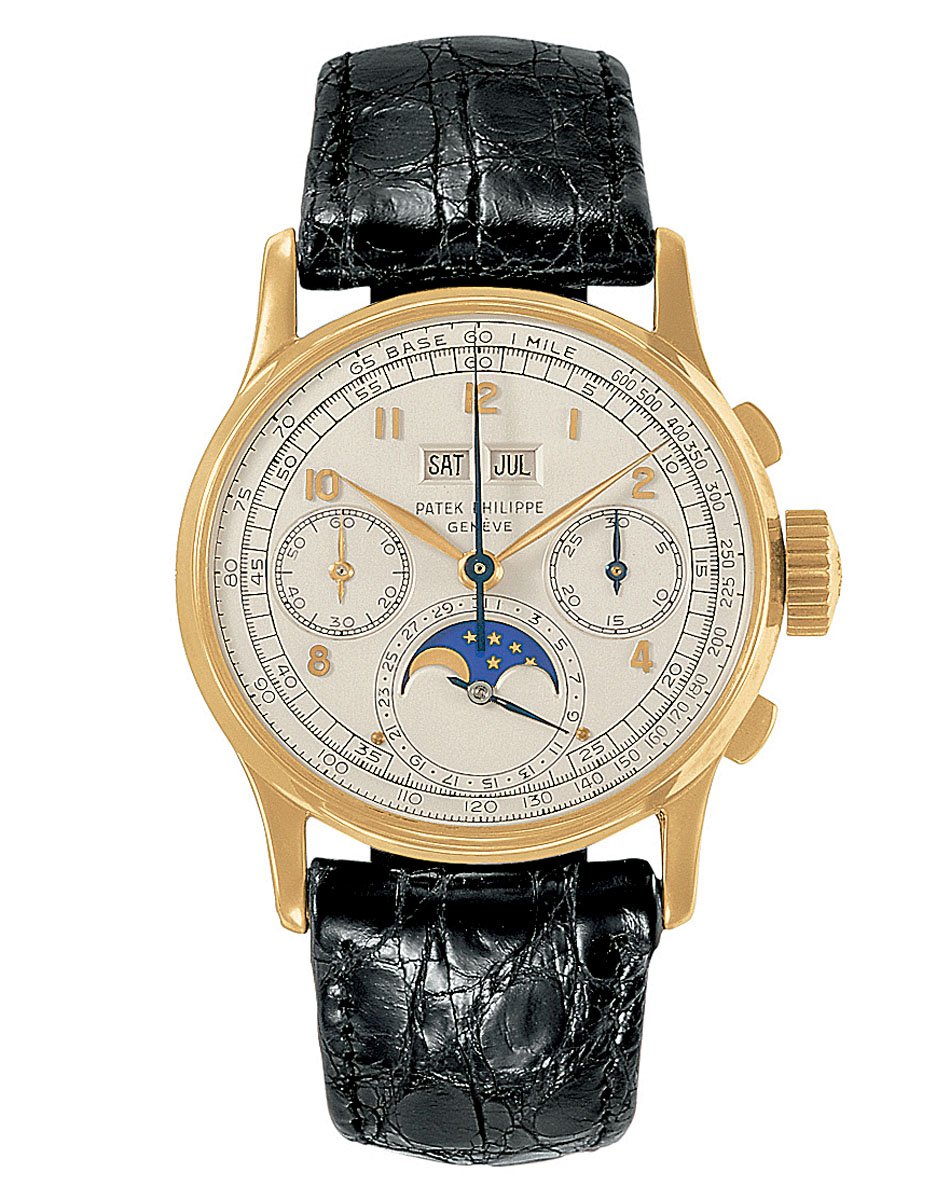
The Patek Philippe Ref. 1518 ranks among the most important watches in the manufacture’s history. Introduced in 1941, it was the world’s first serially produced wristwatch to combine a chronograph with a perpetual calendar, still one of the highest disciplines in classical watchmaking. Its dial layout became the blueprint for generations of complicated Patek Philippe wristwatches: day and month in twin apertures at 12 o’clock, date and moon phase at 6 o’clock, and two chronograph subdials. The Ref. 1518 was produced only 281 times until 1954, mostly in yellow or rose gold. The few known stainless-steel pieces are among the most coveted vintage watches in the world, with auction results to match. In 2016, a steel Ref. 1518 sold at Phillips for CHF 11 million, becoming the first wristwatch ever to exceed CHF 8 million at auction. In 2025, another steel Ref. 1518 surpassed that mark, achieving CHF 14.19 million, again at Phillips. Gold versions also regularly reach seven figures, especially in rose gold or with rare dial configurations. The 1518’s direct successors include References 2499, 3970, and 5970. Today, Patek Philippe continues the perpetual calendar chronograph tradition with Reference 5270, powered by the in-house, manually wound Caliber CH 29-535 PS Q.
1968: The Golden Ellipse
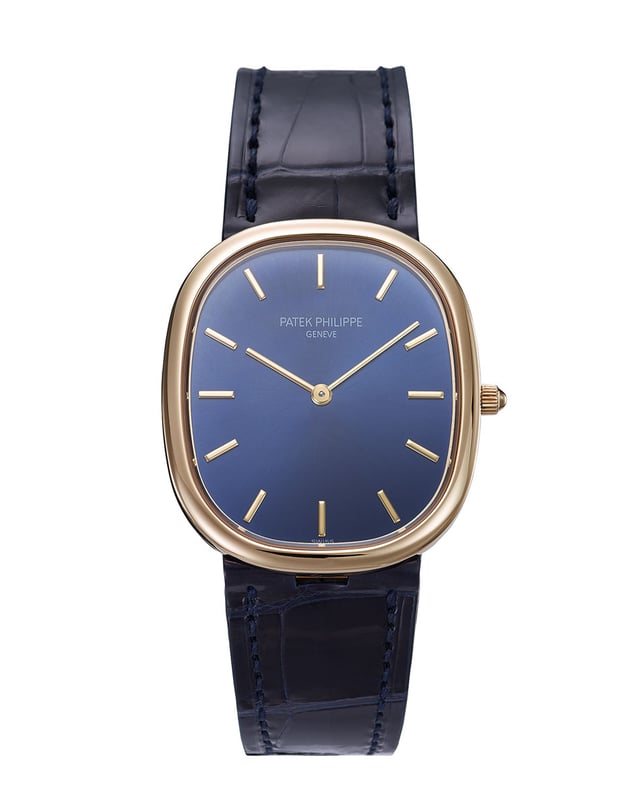
Patek Philippe: first Golden Ellipse Ref. 3546 from 1968
Patek Philippe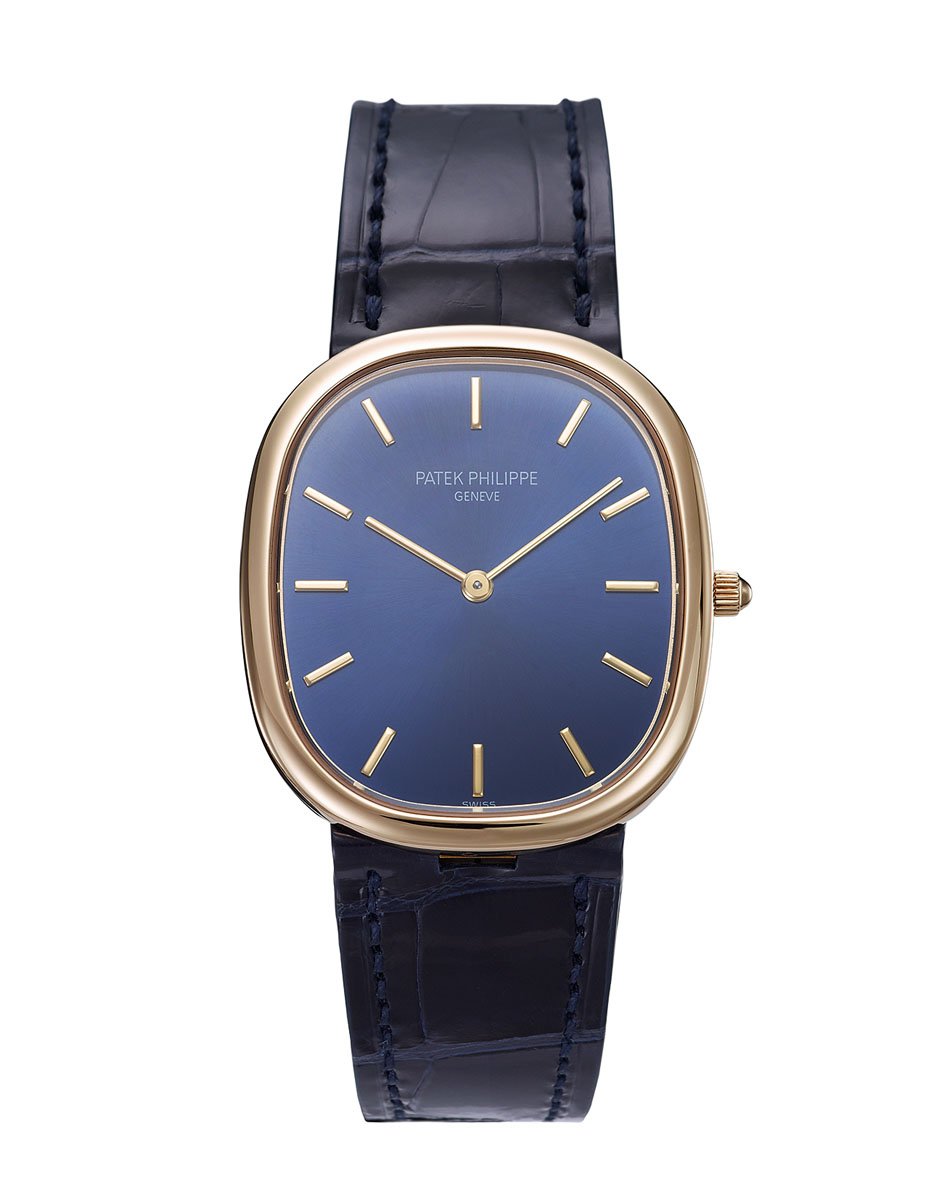
Alongside round, rectangular, square, cushion, and tonneau-shaped cases, Patek Philippe has created a form entirely its own: the Golden Ellipse. Over the decades, it has become one of the manufacture’s quietest, most enduring icons. When the original Ref. 3546 debuted in 1968, it deliberately broke with the dominant case shapes of the era. Despite its name, the Golden Ellipse is not a true mathematical ellipse. It is closer to a hybrid of ellipse and rectangle, with proportions based on the Golden Ratio. The first model paired a gold case with a shimmering blue-gold dial, produced using a proprietary process Patek Philippe kept secret. In the 1970s, the Golden Ellipse became a symbol of understated elegance. The manufacture offered it in different gold alloys, sizes, and dial colors, often with elaborate chain or Milanese bracelets. A defining milestone was the ultra-thin self-winding Caliber 240 with micro-rotor. Still used in the collection today, it gives the Golden Ellipse its slim, almost jewelry-like presence.
Today, Patek Philippe offers the Golden Ellipse in two sizes. The 2026 novelties include the larger Ref. 5738, measuring 34.5 × 39.5 mm and just 5.9 mm thick, and the smaller Ref. 3738 at 31.1 × 35.6 mm. Both share the same 5.9 mm profile thanks to the ultra-thin 2.53 mm self-winding Caliber 240. Each comes in white gold with an olive-green dial and matching olive-green calfskin strap.
1976: The Nautilus
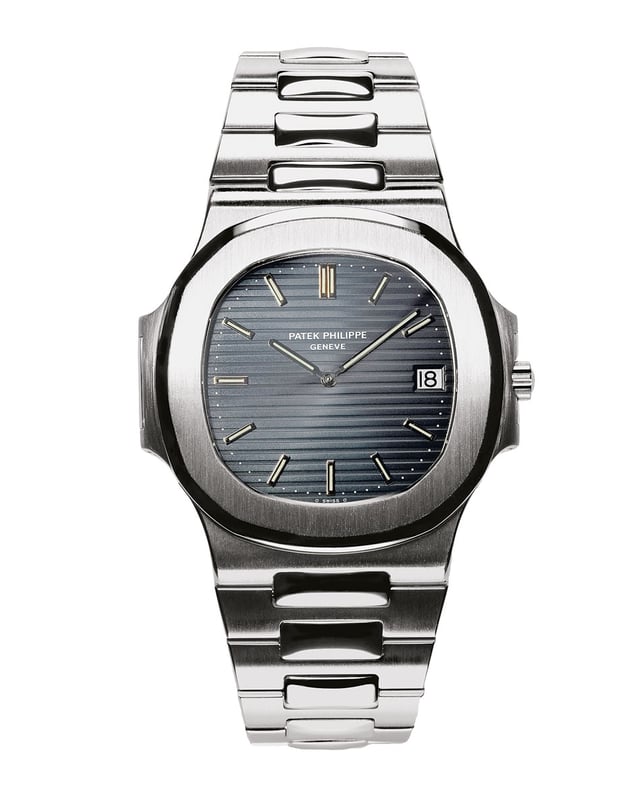
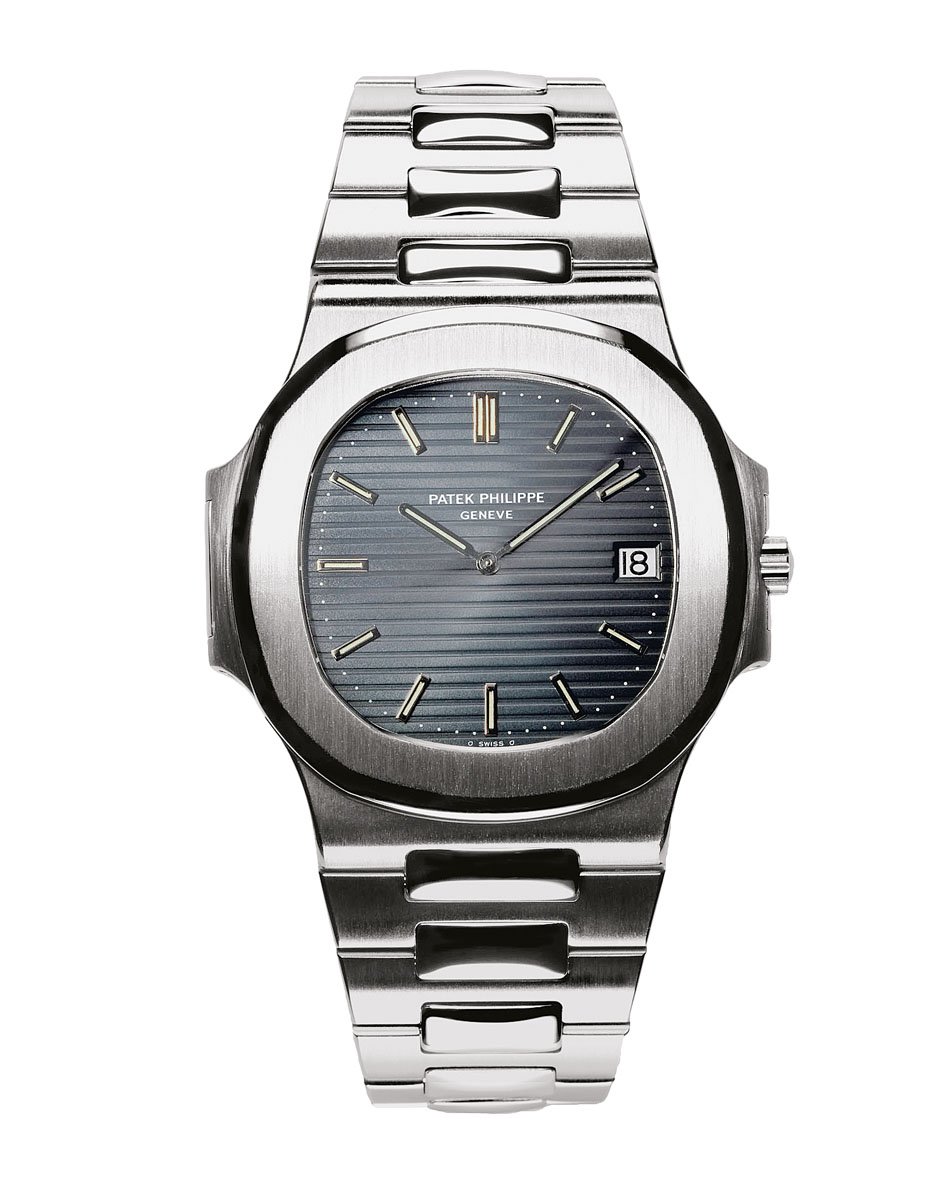
When Patek Philippe unveiled the Nautilus Ref. 3700/1A in 1976, it was a bold statement: a large, ultra-thin luxury sports watch in stainless steel from a manufacture best known for gold dress watches and high complications. Designed by Gérald Genta, who had created Audemars Piguet's Royal Oak just four years earlier, the Nautilus featured a porthole-inspired case with distinctive side "ears," an integrated bezel, and a seamlessly integrated bracelet. At 42 mm, it was unusually large for its era and soon earned the nickname "Jumbo." Beyond its slim profile, 120-meter water resistance, and the ultra-thin Caliber 28-255 C, derived from the Jaeger-LeCoultre 920, the Nautilus stood out for its horizontally embossed dial, a signature that remains central to the collection today.
Commercial success came slowly. Demand did not truly accelerate until the late 1990s, reaching a turning point in 2006 with the launch of Ref. 5711/1A. Faithful to the original, it introduced a modern three-piece case, a sapphire caseback, central seconds, and the in-house Caliber 324 S C. Its diameter also grew slightly to 43 mm. Over the following years, Patek Philippe transformed the Nautilus into a complete collection, adding complications such as a moon phase with power reserve, annual calendar, chronograph, and Travel Time chronograph. In 2018, Ref. 5740/1G became the first Nautilus to pair the collection's sporty aesthetic with a perpetual calendar.
At the same time, the Nautilus evolved into a global collector phenomenon. The stainless-steel Ref. 5711, in particular, became the ultimate symbol of modern watch desirability. After its discontinuation in 2021, secondary-market prices briefly climbed into six figures. The olive-green farewell edition became an instant collector's prize, while the Tiffany Blue version, limited to just 170 pieces, sold at Phillips later that year for an astonishing $6.503 million. Early Ref. 3700 models have likewise achieved exceptional auction results for years. Like many cultural icons, the Nautilus defies a simple explanation. Its enduring appeal lies in the rare combination of Gérald Genta's timeless design, the integrated sports-watch concept, Patek Philippe's prestige, and the manufacture's carefully managed exclusivity. Today, the Nautilus sits at the pinnacle of Patek Philippe's sports-watch collection. Since 2022, the white-gold Ref. 5811/1G has succeeded the 5711, joined by models such as the rose-gold Ref. 5712/1R with moon phase, the Ref. 5990/1R Travel Time Flyback Chronograph, and the perpetual calendar Ref. 5740/1G. What began in 1976 as a provocative stainless-steel sports watch has become the single model most closely associated with the name Patek Philippe.
1996: The Annual Calendar
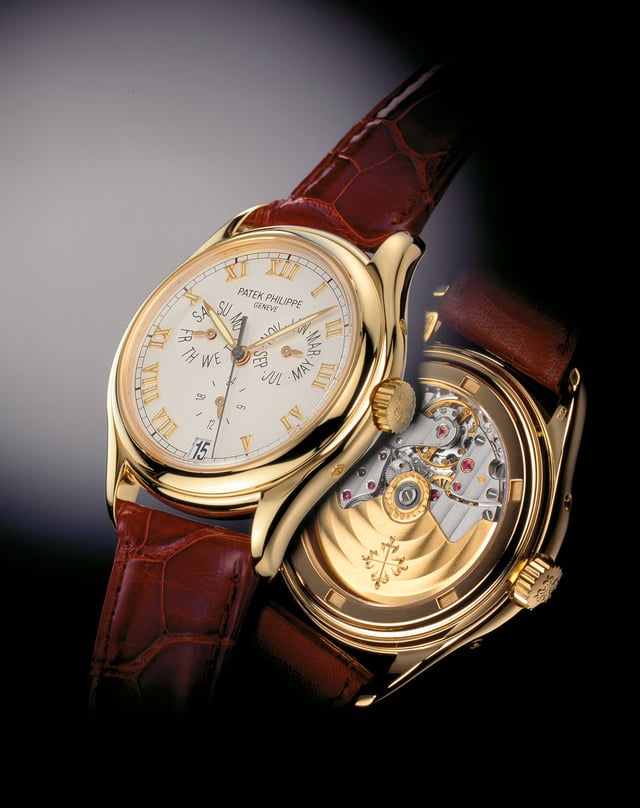
Patek Philippe: Annual Calendar Ref. 5035J from 1996
Patek Philippe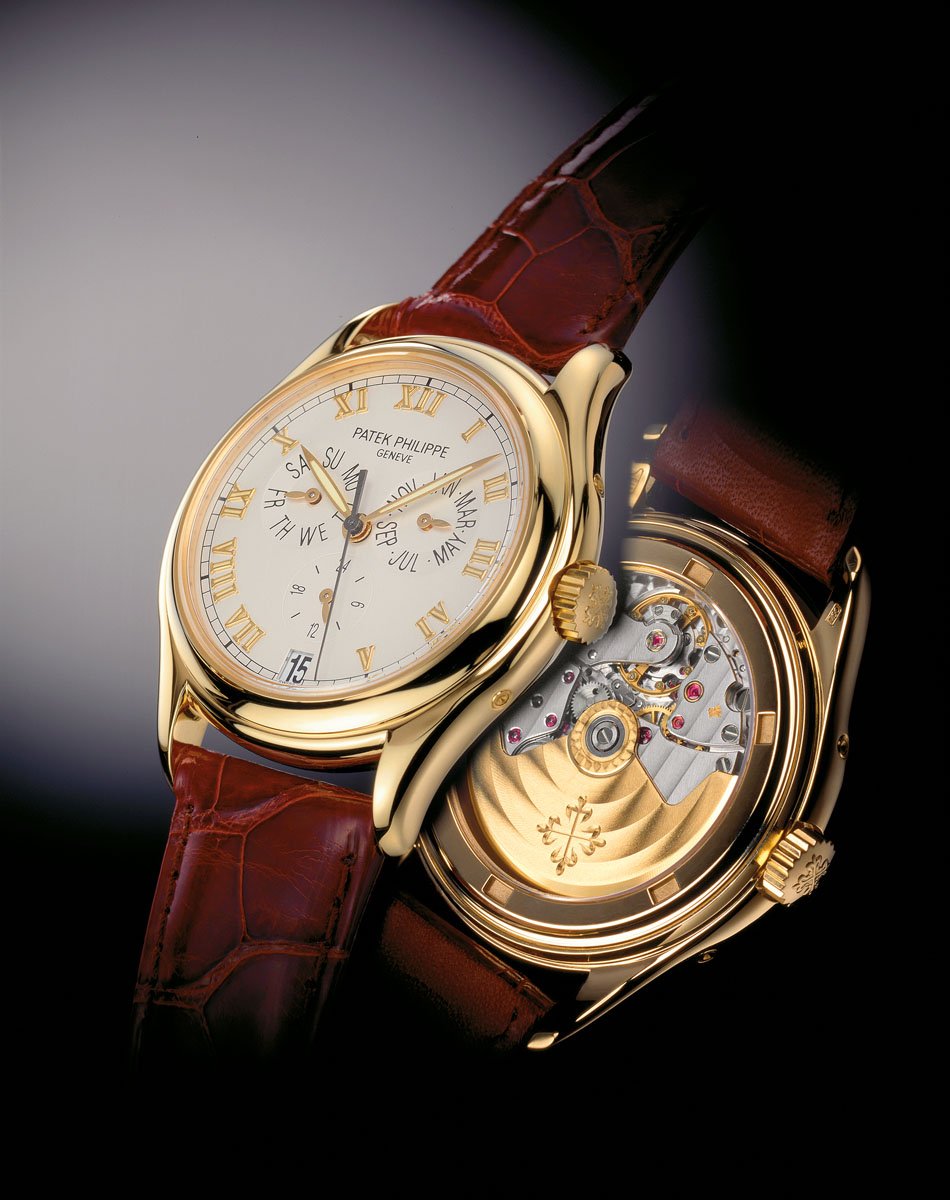
For some collectors, Patek Philippe is synonymous with the Nautilus. For others, it is the Annual Calendar. This highly practical complication, a simplified interpretation of the perpetual calendar was introduced by Patek Philippe in 1996 with Ref. 5035. The concept is elegantly simple. Like a perpetual calendar, an annual calendar automatically accounts for months with 30 and 31 days. Only February requires manual correction, once a year on March 1. That makes the complication considerably easier to engineer while remaining exceptionally practical for everyday wear. Ref. 5035 displayed the date, day, and month, complemented by a 24-hour indicator at 6 o'clock to simplify setting the calendar. Over the past three decades, Patek Philippe has developed the Annual Calendar into one of its signature complications, creating a wide variety of references with distinctly different dial layouts. Notable examples include the Ref. 5036 and 5146, which add a moon-phase display and power-reserve indicator; the Ref. 5396 with day and month displayed in a double window at 12 o'clock; the Ref. 5205 with its distinctive triple-window display across the upper half of the dial; and the regulator-style Ref. 5235. Patek Philippe has also paired the Annual Calendar with a range of additional complications, including a Flyback Chronograph (Ref. 5960), a Minute Repeater (Ref. 5033), and a second time zone in the Annual Calendar Travel Time (Ref. 5326).
1997: Travel Time
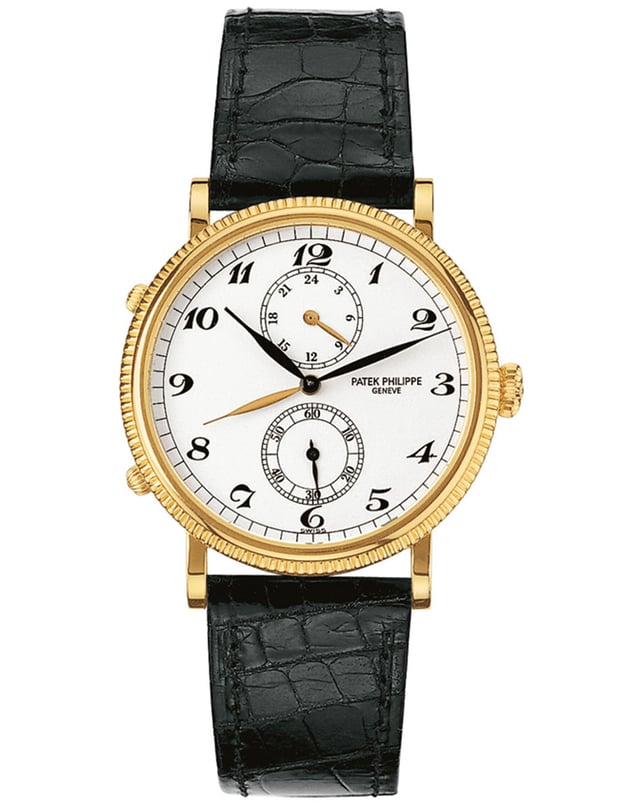
Patek Philippe: Travel Time Ref. 5034J from 1997
Patek Philippe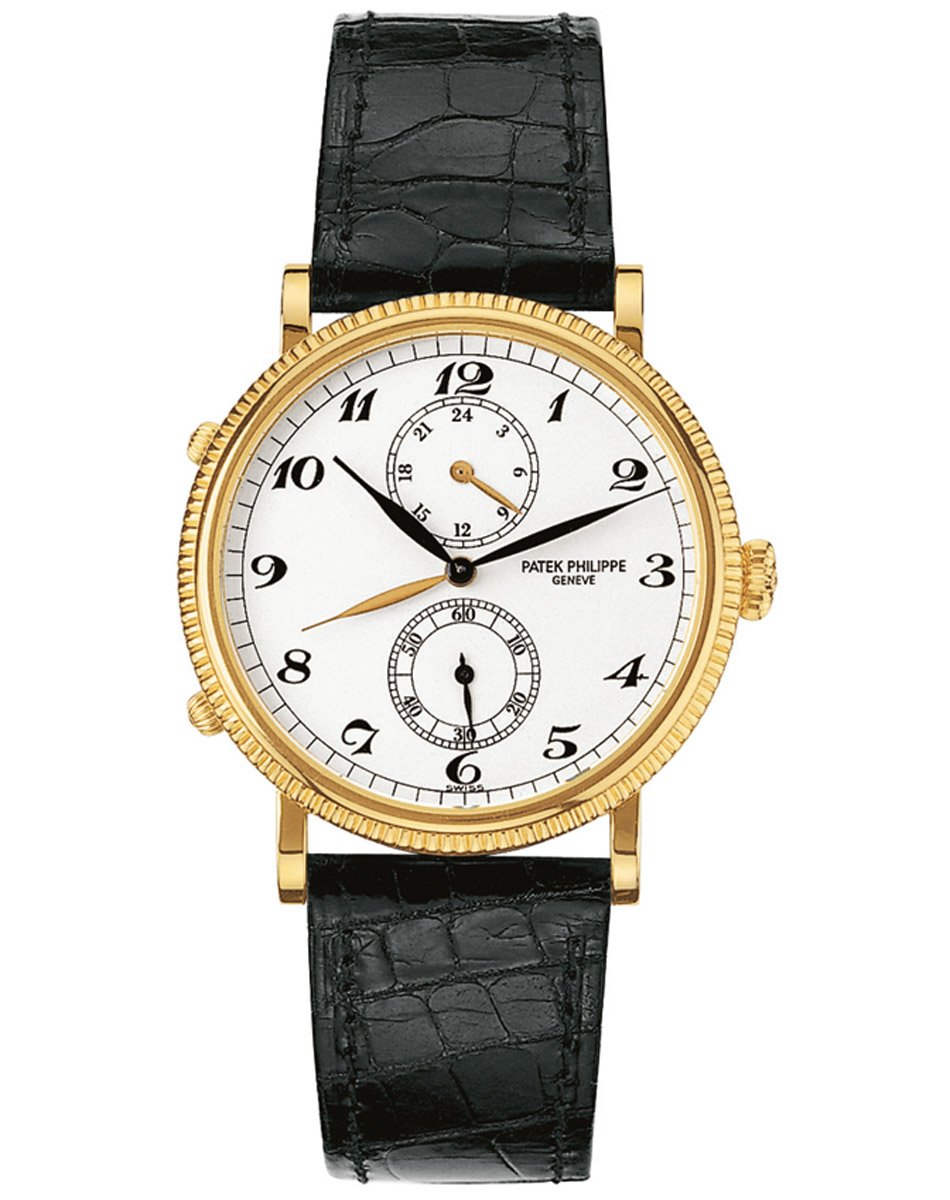
The Travel Time is one of Patek Philippe’s most important practical complications, solving a familiar travel problem with characteristic elegance. It displays local and home time via two hour hands, complemented by a 24-hour day/night indication. The idea predates the name. In the late 1950s, Patek Philippe worked with Geneva watchmaker Louis Cottier on Ref. 2597, whose local hour hand could be advanced or moved back in one-hour increments via pushers. A later generation added a dedicated hour hand for home time.
The modern Travel Time arrived in 1997 with Ref. 5034: a classic gold Calatrava with a Clous de Paris bezel, powered by the manually wound Caliber 215 PS FUS with small seconds and 24-hour display. Upon arrival in a new time zone, the wearer adjusted the black local-time hour hand forward or backward using the case-side pushers, while the minutes and seconds continued running uninterrupted. The gold hand remained fixed to home time.
The larger Ref. 5134 followed in 2002. Later, Patek Philippe brought the complication into sportier and more contemporary collections, including the Aquanaut, Nautilus, and Calatrava, and combined it with additional functions such as a flyback chronograph in Ref. 5924 and an annual calendar in Ref. 5326.
1997: The Aquanaut
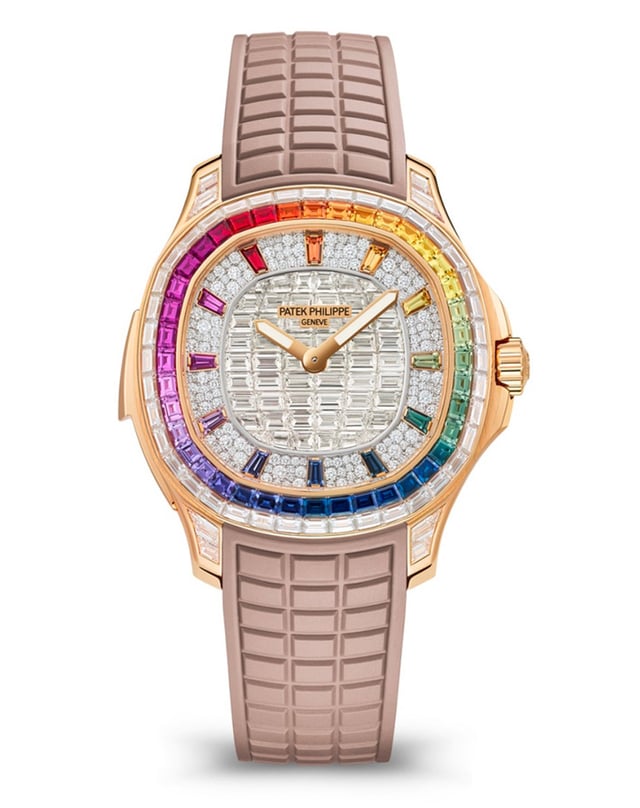
Patek Philippe: Aquanaut Minute Repeater Ref. 5260/355R from 2023
Patek Philippe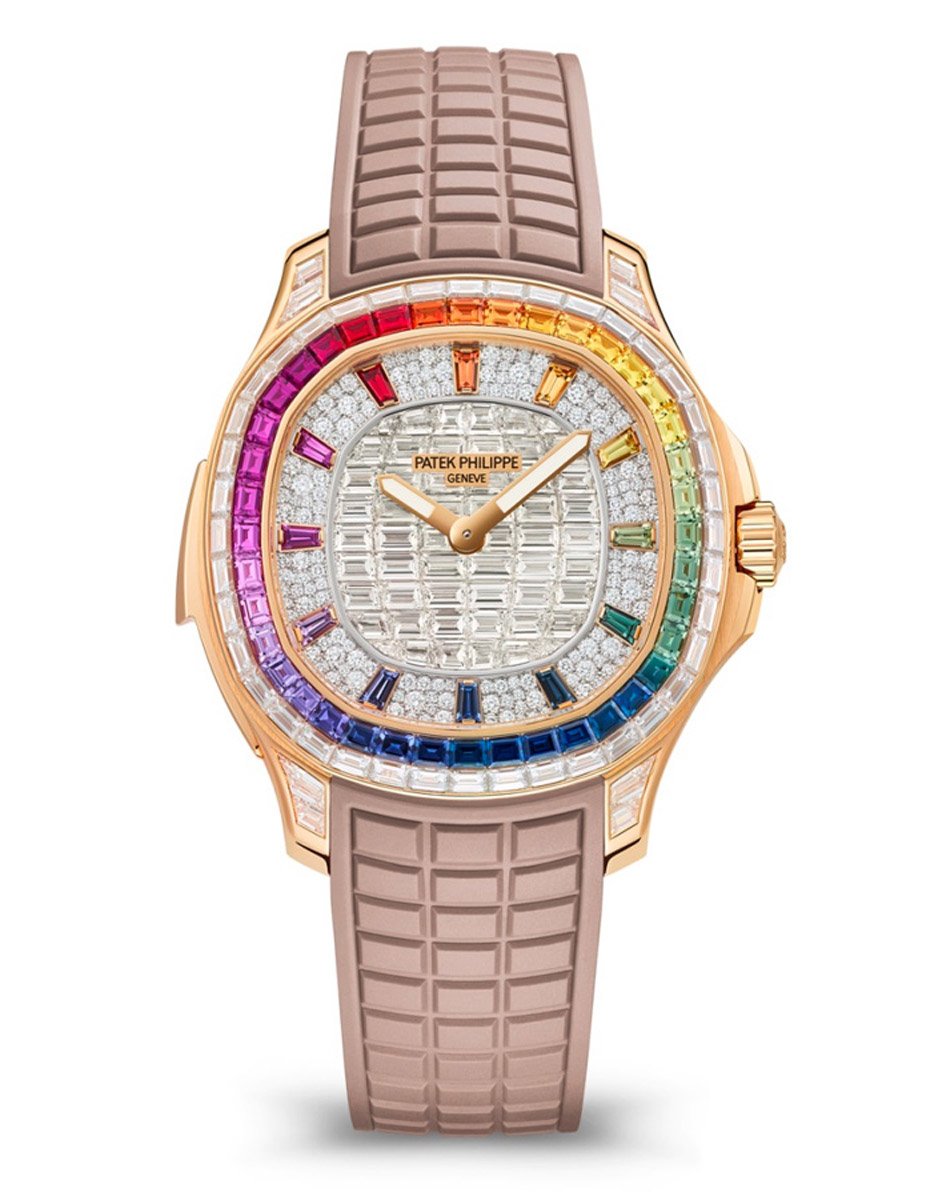
When the Aquanaut debuted in 1997, Patek Philippe described it as the “youngest member of the Nautilus family”. It did not stay in its older sibling’s shadow for long. The stainless-steel Ref. 5066A borrowed the Nautilus’s rounded octagonal bezel and alternating polished and satin-brushed finishes, but gave them a younger, more casual, and distinctly sportier character. Its defining features were the embossed checkerboard dial and matching composite strap. The Aquanaut became a steel luxury sports watch that leaned more heavily into sport than luxury, clearly setting it apart from the more refined Nautilus. Introduced for the collection’s 10th anniversary, Ref. 5167A remains the quintessential three-hand Aquanaut today. Patek Philippe has since used the line as a platform for both practical and highly sophisticated complications, from the Ref. 5164A Travel Time launched in 2011 to the Aquanaut Minute Repeater Ref. 5260 of 2023. The latter also represents the technical pinnacle of the women’s Aquanaut Luce collection.
2001: Sky Moon Tourbillon
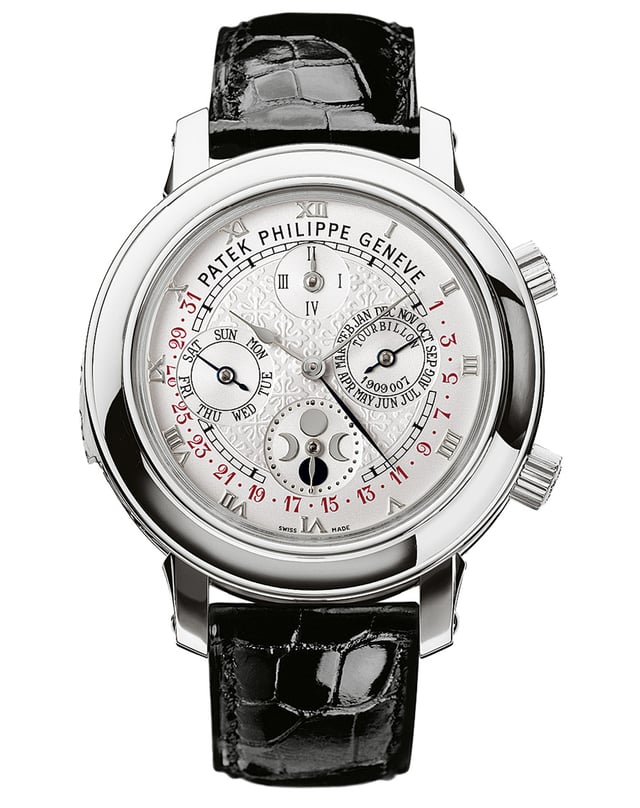
Before the Grandmaster Chime, the most complicated wristwatch by Patek Philippe: the Sky Moon Tourbillon
Patek Philippe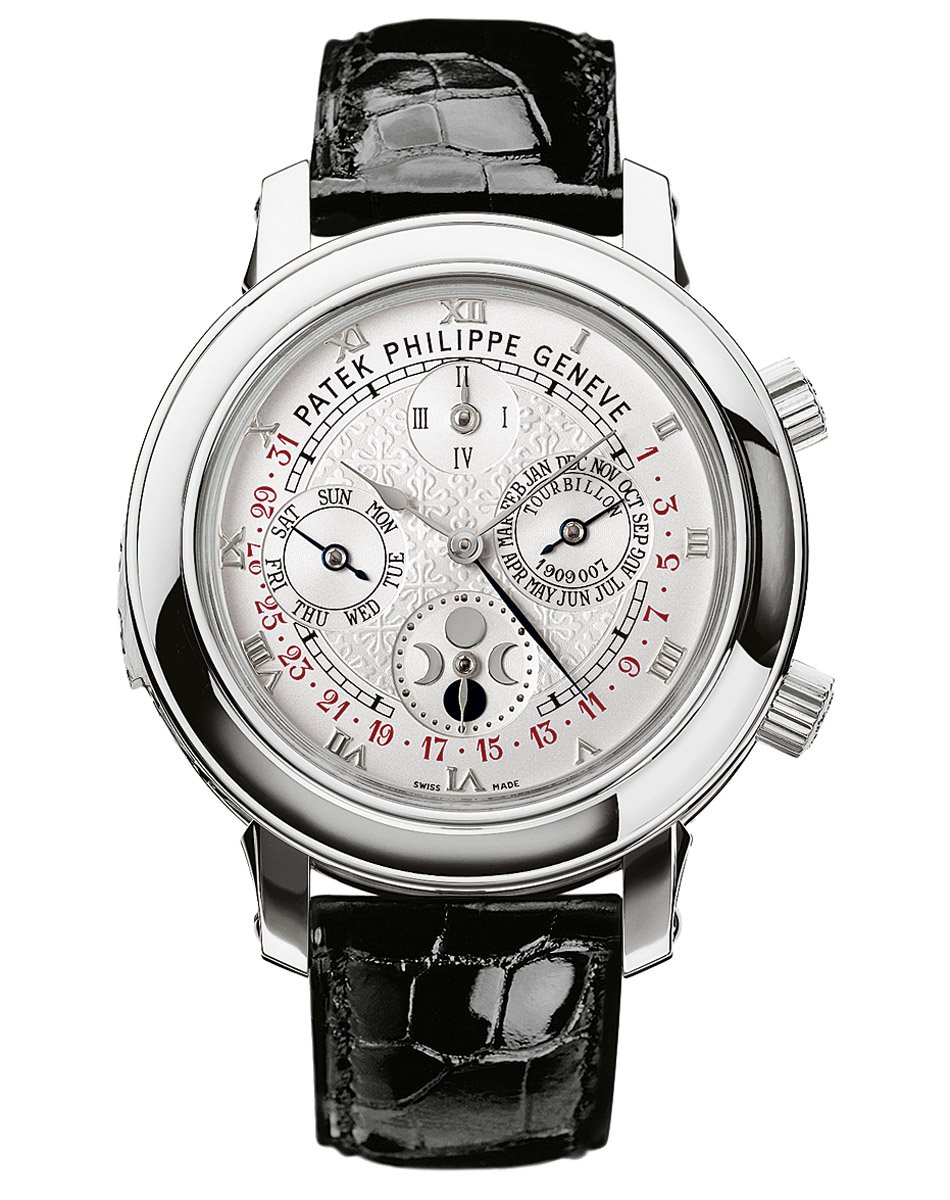
Introduced in 2001, the Sky Moon Tourbillon Ref. 5002 belongs to Patek Philippe’s great lineage of watches created to test the outer limits of mechanical complexity. Until then, mechanisms of this astronomical ambition were found mainly in legendary pocket watches, from the Henry Graves Supercomplication of 1933 to the Calibre 89 of 1989 and the Star Caliber 2000. At its launch, the Sky Moon Tourbillon was Patek Philippe’s most complicated wristwatch to date and the first with displays on both sides of the case.
Ref. 5002 combined 12 complications, including a minute repeater with cathedral gongs and Patek Philippe’s signature concealed tourbillon. The front showed a perpetual calendar with leap-year indication, retrograde date, moon phase, and sidereal time. The back displayed a rotating celestial chart of the Northern Hemisphere, including the moon’s orbital motion.
In 2013/2014, Patek Philippe introduced the technically related Ref. 6002G. Mechanically close to the 5002, it moved the concept firmly into Rare Handcrafts territory with a fully hand-engraved case and elaborate Grand Feu enamel work. In 2021, the white-gold model was succeeded by the rose-gold Ref. 6002R with a brown Grand Feu enamel dial, which remains the current Sky Moon Tourbillon. Alongside the Sky Moon, Patek Philippe continued to explore astronomical displays through the Celestial collection, beginning with Ref. 5102 in 2002 and continuing most recently with Ref. 6105G, introduced in 2026 with sunrise and sunset indications.
2005: The Split-Seconds Chronograph Ref. 5959
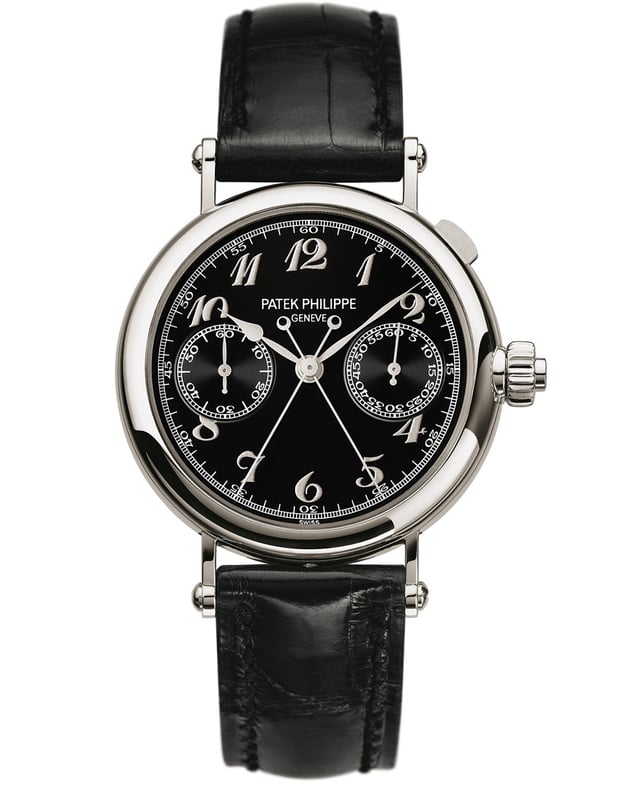
Patek Philippe: Split-seconds Chronograph Ref. 5959P from 2005
Patek Philippe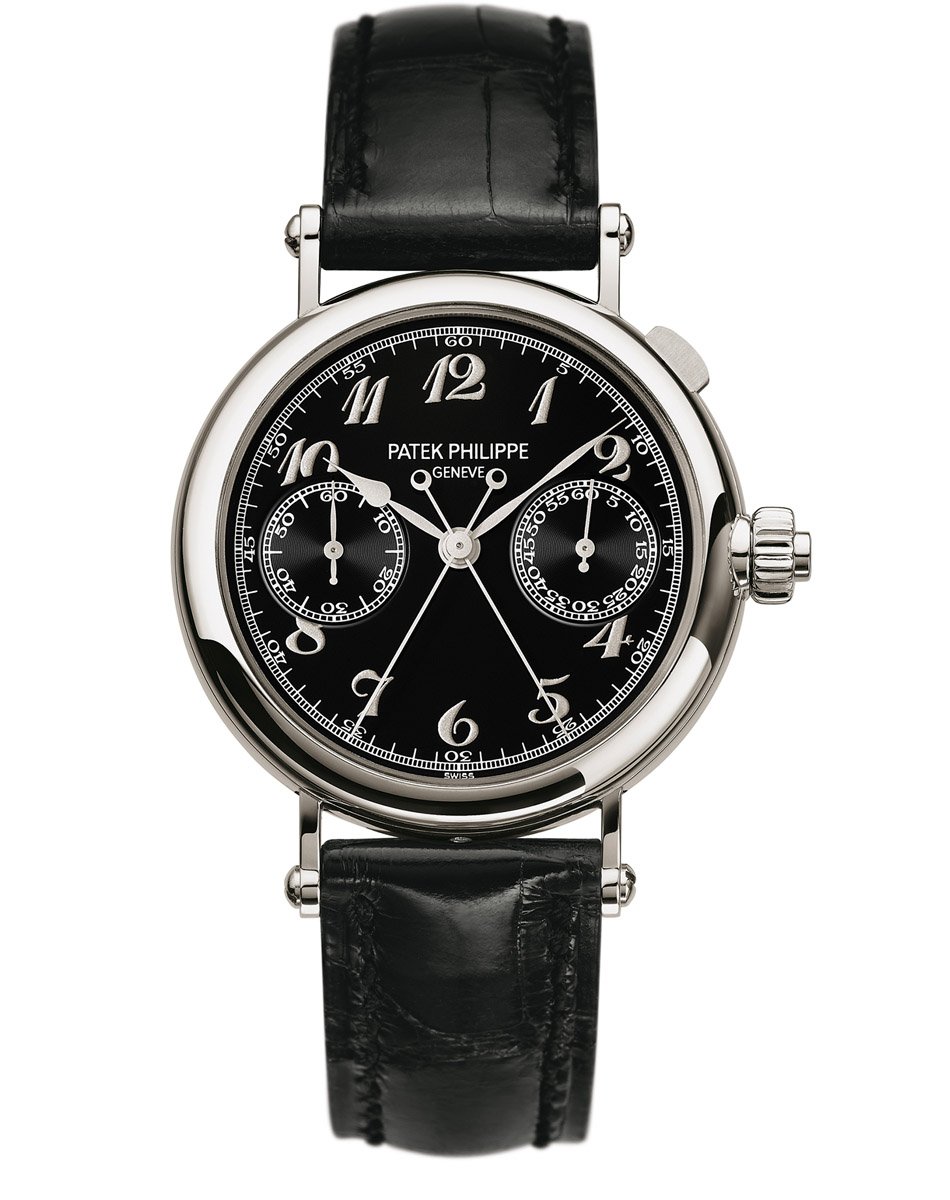
Patek Philippe’s chronograph history stretches back more than a century. In 1923, the manufacture sold its first split-seconds chronograph, No. 124824. Another milestone followed in 1934 with the celebrated Ref. 130, powered by a caliber from the renowned movement specialist Valjoux. With the platinum Ref. 5959P, Patek Philippe introduced its first chronograph driven by a fully in-house movement. The manually wound Caliber CH R 27-525 PS was remarkable for more than its provenance. At just 5.25 mm thick, including the split-seconds mechanism, it ranked among the slimmest rattrapante chronograph movements ever made. Housed in a compact officer-style platinum case, the watch paid tribute to Patek Philippe’s 1923 split-seconds chronograph while signaling a bold new technical direction. The movement later formed the basis for models such as the cushion-cased steel Ref. 5950A and Ref. 5951P, which paired the ultra-thin rattrapante caliber with a perpetual calendar. The complication reached its modern expression with Ref. 5204, introduced in 2012. Powered by the larger manufacture Caliber CHR 29-535 PS Q, it combines a split-seconds chronograph with a perpetual calendar, two column wheels, and a horizontal clutch. The latest chapter arrived in 2026 with Ref. 5204G-010. Crafted in white gold, it pairs a sunburst midnight-blue dial with a white printed tachymeter scale and a sporty blue composite strap with contrasting red stitching. What began with the understated Ref. 5959 has evolved into one of Patek Philippe’s defining Grand Complications.
2011: Ref. 5550 with Oscillomax Escapement
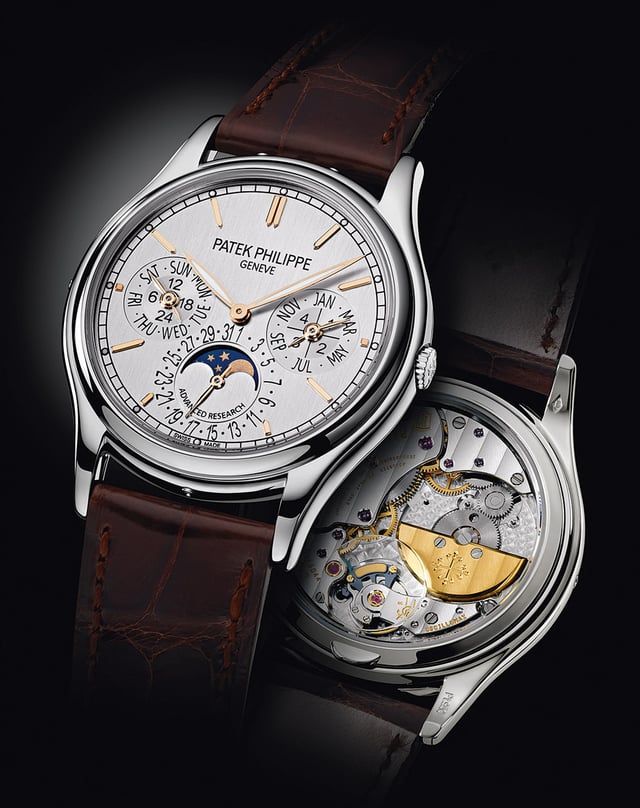
Patek Philippe: Ref. 5550P from 2011
Patek Philippe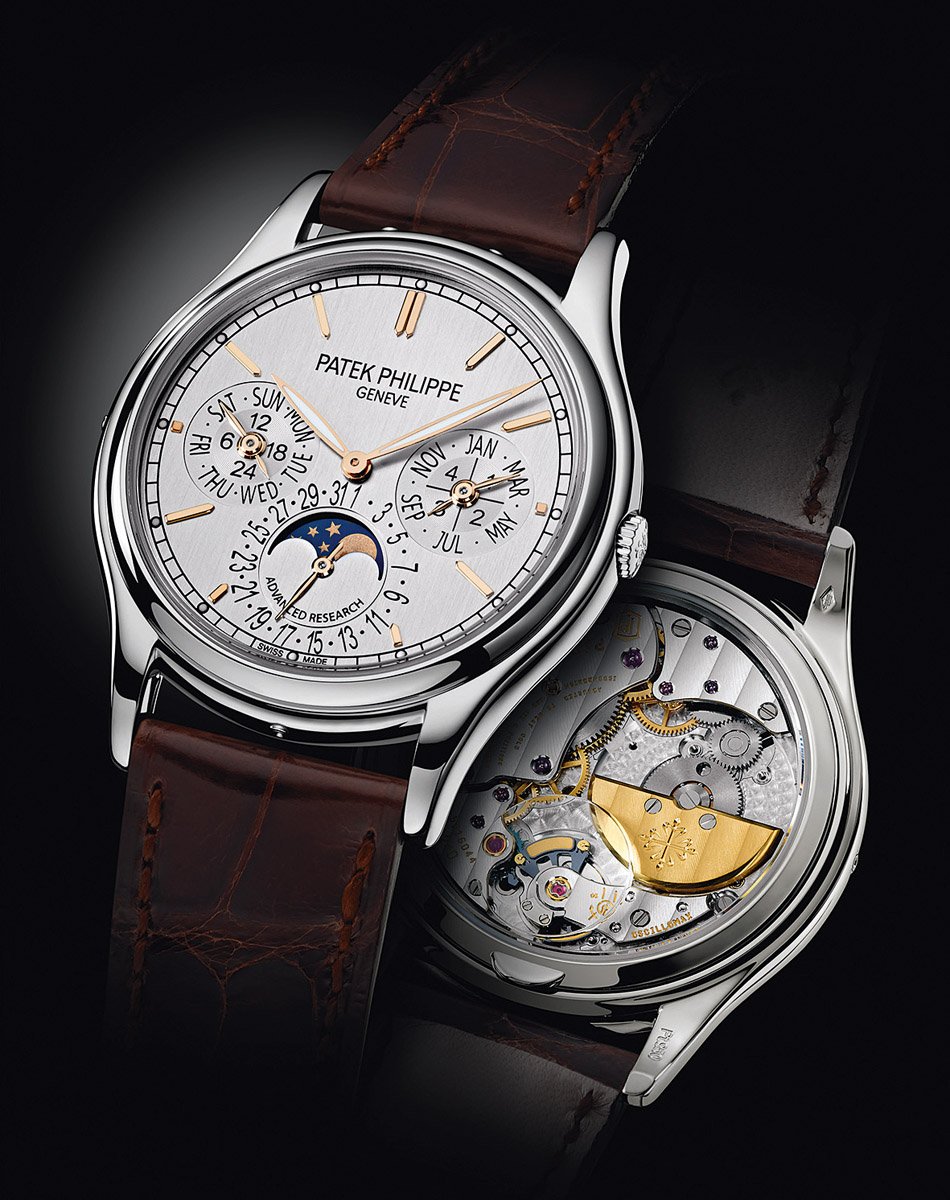
The Ref. 5550P Advanced Research, introduced in 2011, marked an important milestone in Patek Philippe’s work with advanced materials. The journey began in 2005 with the creation of the manufacture’s Advanced Research division, established to improve precision, energy efficiency, and long-term reliability through new materials and movement technologies. Its first breakthrough came that same year with Ref. 5250, which featured an escape wheel made of Silinvar, Patek Philippe’s proprietary temperature-stable silicon-based material. In 2006 came the Spiromax balance spring in Ref. 5350, followed in 2008 by the Pulsomax escapement in Ref. 5450, with optimized geometry for the escape wheel and pallet fork.
Limited to 300 pieces, the 37.2mm platinum Ref. 5550P brought all three innovations together for the first time in a perpetual calendar. Its Caliber 240 Q Si incorporated the complete Oscillomax regulating system: Pulsomax escapement, Spiromax balance spring, and the newly developed GyromaxSi balance. The benefits were clear: lower friction, improved energy efficiency, greater rate stability, and an extended power reserve of around 70 hours. Since then, several Advanced Research developments have entered regular Patek Philippe production. The most important is the Spiromax balance spring, now used in various manufacture calibers. An improved version debuted in 2017 with the Aquanaut Travel Time Ref. 5650G.
2014: Grandmaster Chime
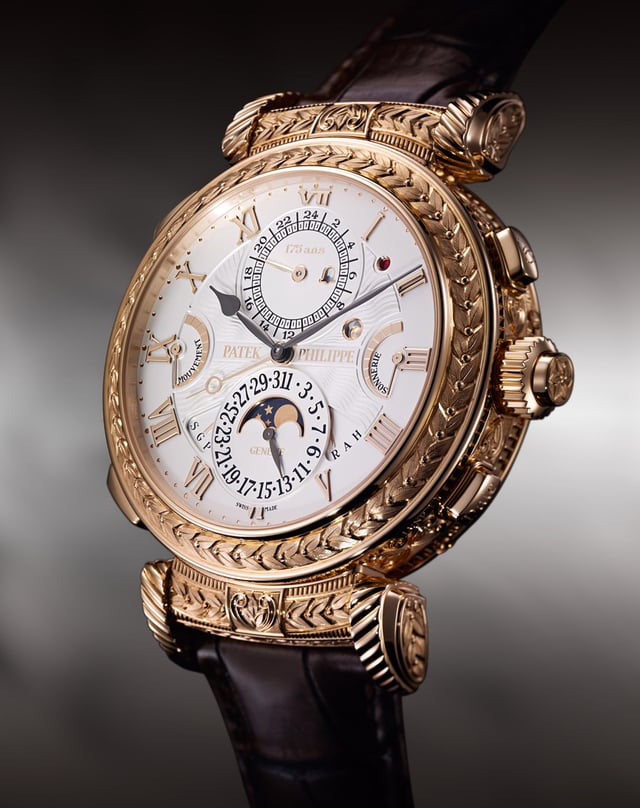
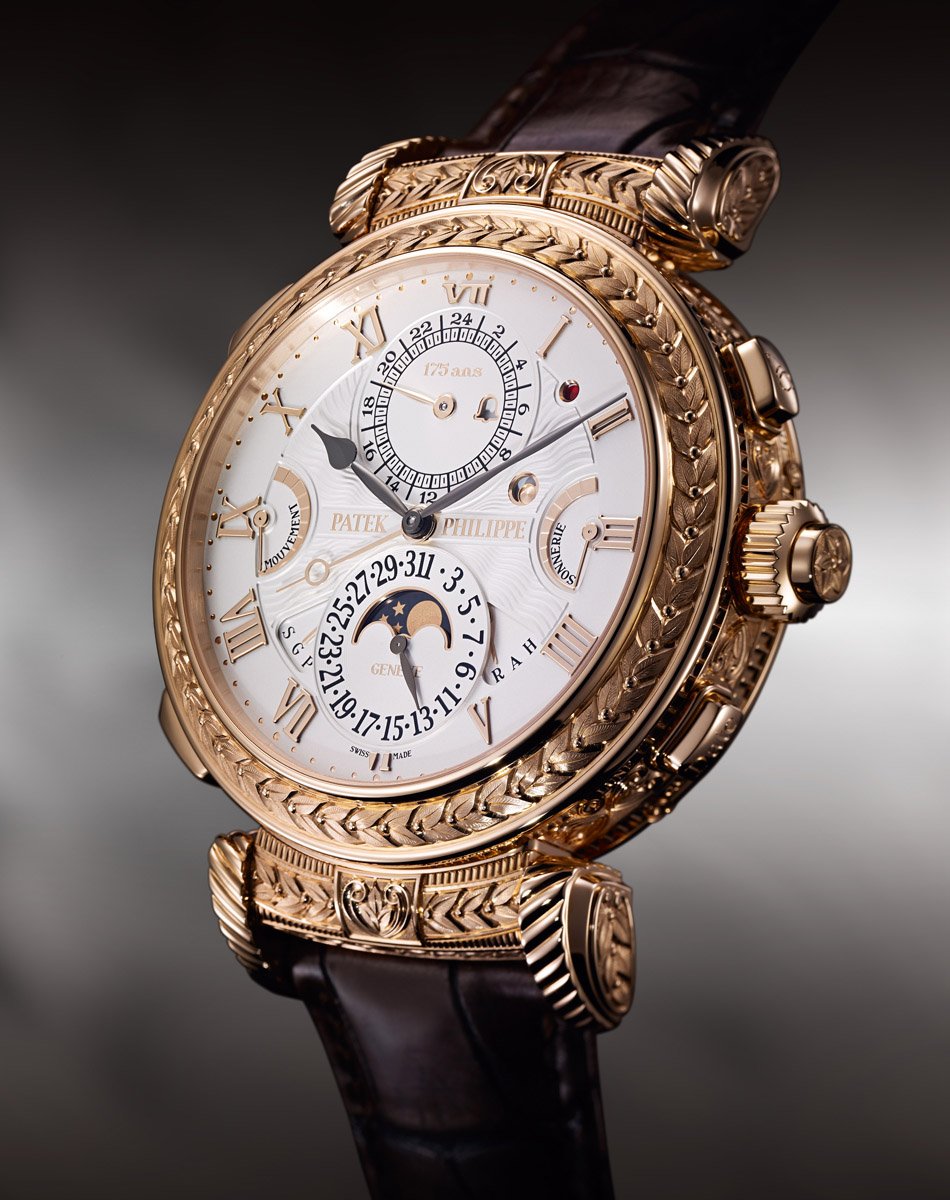
Grand Complications have long been a defining strength of great manufactures, and few embody that tradition more completely than Patek Philippe. Among its most famous achievements is the Henry Graves Supercomplication, commissioned by New York banker Henry Graves Jr. and delivered in 1933 with 24 complications. That record stood until 1989, when Patek Philippe marked its 150th anniversary with the Calibre 89 and its astonishing 33 complications. Both, however, were pocket watches. For its 175th anniversary in 2014, Patek Philippe brought that level of complexity to the wrist with the Grandmaster Chime, still the most complicated wristwatch in the manufacture’s history.
Its ornately engraved, reversible gold case measures 47.4 mm in diameter and 16.1 mm thick. Inside is a movement of 1,366 components, driving 20 complications across two dials. At the center are the acoustic functions: Grande Sonnerie, Petite Sonnerie, Minute Repeater, Alarm with time strike, and Date Repeater. They are joined by a perpetual calendar, second time zone, moon phase, and multiple power-reserve and function indicators.
The anniversary Ref. 5175R was limited to seven pieces. In 2016, Patek Philippe followed with the white-gold Ref. 6300G as the regular-production model. Three years later, the unique stainless-steel Ref. 6300A, created for Only Watch, made auction history when it sold for CHF 31 million, becoming the most expensive watch ever auctioned. Patek Philippe has since expanded the collection with Haute Joaillerie editions set with diamonds, sapphires, or emeralds, as well as the two-tone white- and rose-gold Ref. 6300GR, introduced in 2023.
2024: The Cubitus
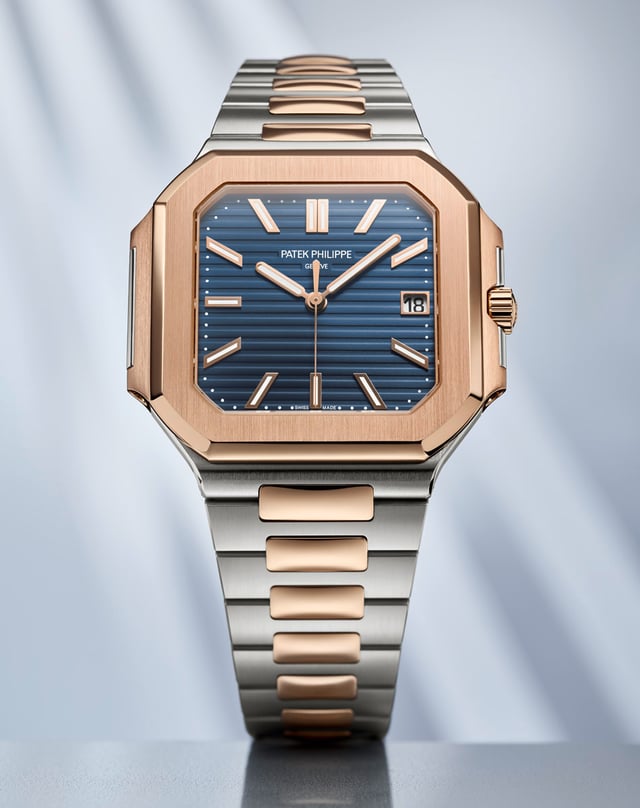
Patek Philippe: Cubitus Ref. 5821-1AR-001
Patek Philippe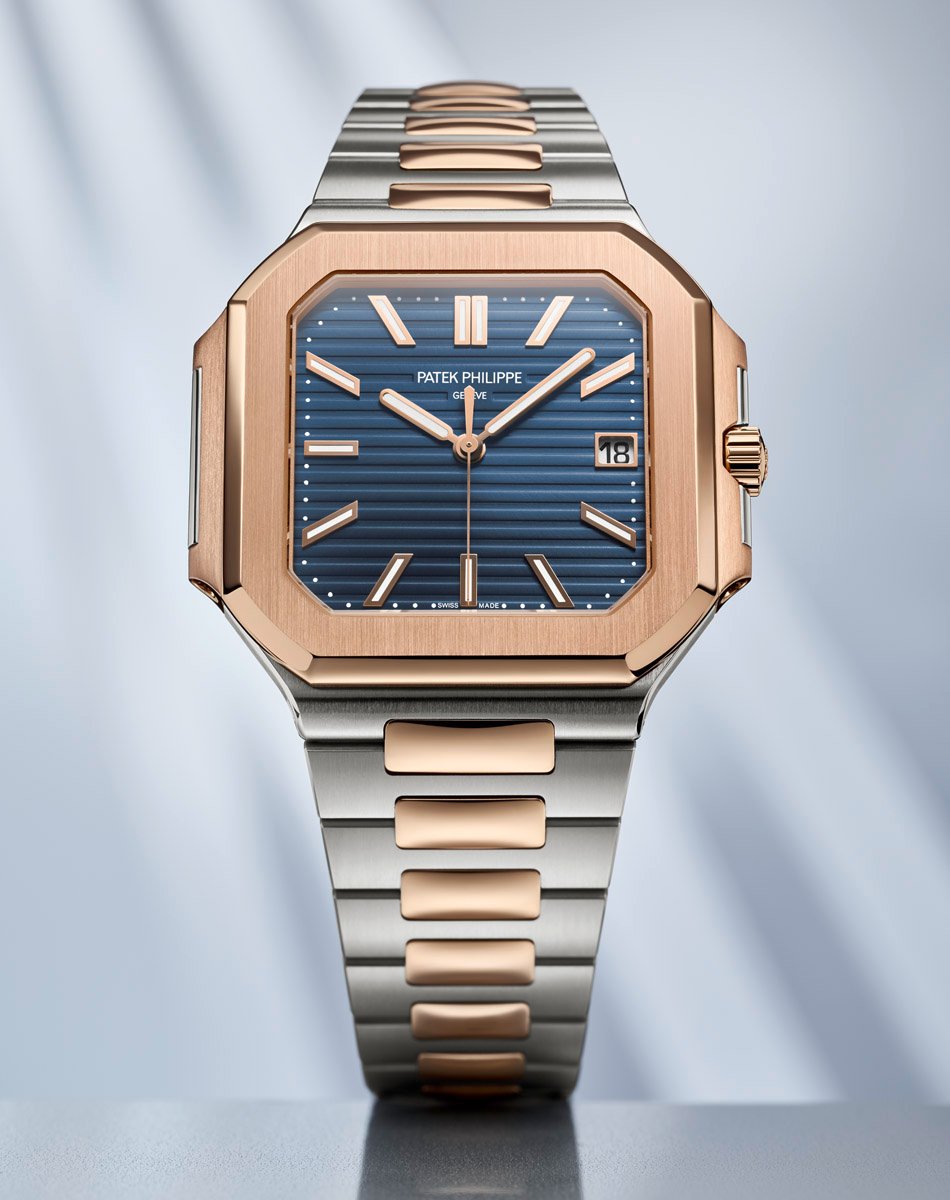
Whether the Cubitus will ultimately be remembered as a milestone in Patek Philippe history remains to be seen. What is certain is that its 2024 debut made an enormous impact. It was the manufacture’s first entirely new collection in 25 years, and its first new men’s line since the Aquanaut in 1997. Patek Philippe President Thierry Stern had pursued the idea for years: a square, sporty-elegant watch suited to daily wear, yet unmistakably Patek Philippe. The Cubitus borrows familiar Nautilus codes, including the horizontally embossed dial and alternating satin-brushed and polished finishes. It translates them into a more angular architecture, defined by long straight lines, chamfered corners, and a slim two-piece case.
The collection launched with three 45mm models: the stainless-steel Ref. 5821/1A with a green dial, the two-tone Ref. 5821/1AR in steel and rose gold with a blue dial, and the technically ambitious platinum Ref. 5822P. The latter became the line’s flagship. Its newly developed self-winding Caliber 240 PS CI J LU combines a large date, day display, moon phase, and small seconds. The large date, day, and moon phase all jump simultaneously at midnight, while the two date discs sit on the same plane. Patek Philippe filed six patents for the movement’s construction.
Since then, the Cubitus has steadily expanded. In 2025, the 40mm Ref. 7128/1G in white gold and Ref. 7128/1R in rose gold introduced a more wearable, more unisex interpretation of the design. In 2026, the platinum Ref. 5840P marked the next major step: a skeletonized perpetual calendar and the first Grand Complication in the Cubitus family. In only a few years, the Cubitus has evolved from a bold new case design into a full-fledged platform, spanning sporty everyday watches, Haute Horlogerie, and one of contemporary watchmaking’s most polarizing aesthetics.
Rare Handcrafts
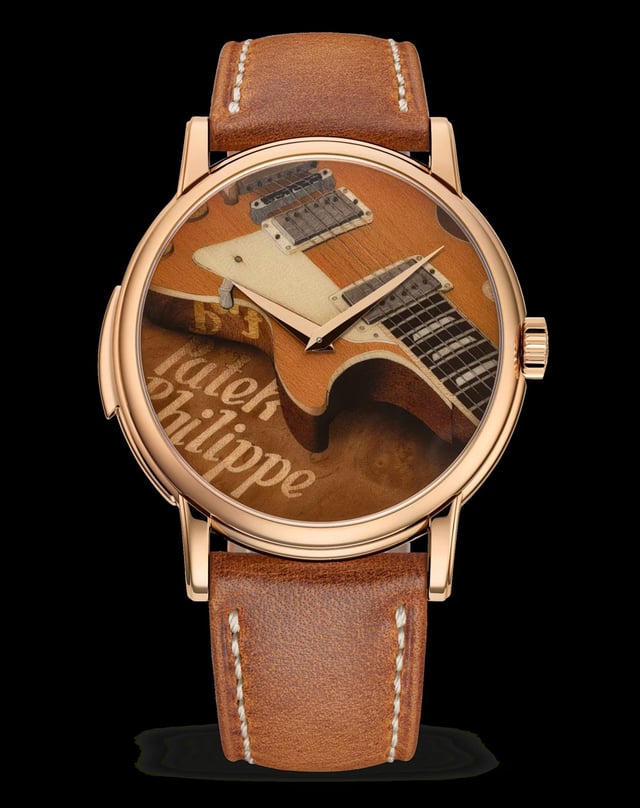
Patek Philippe: Rare Handcrafts Ref. 5278/50R-011 "Electric Guitar"
Patek Philippe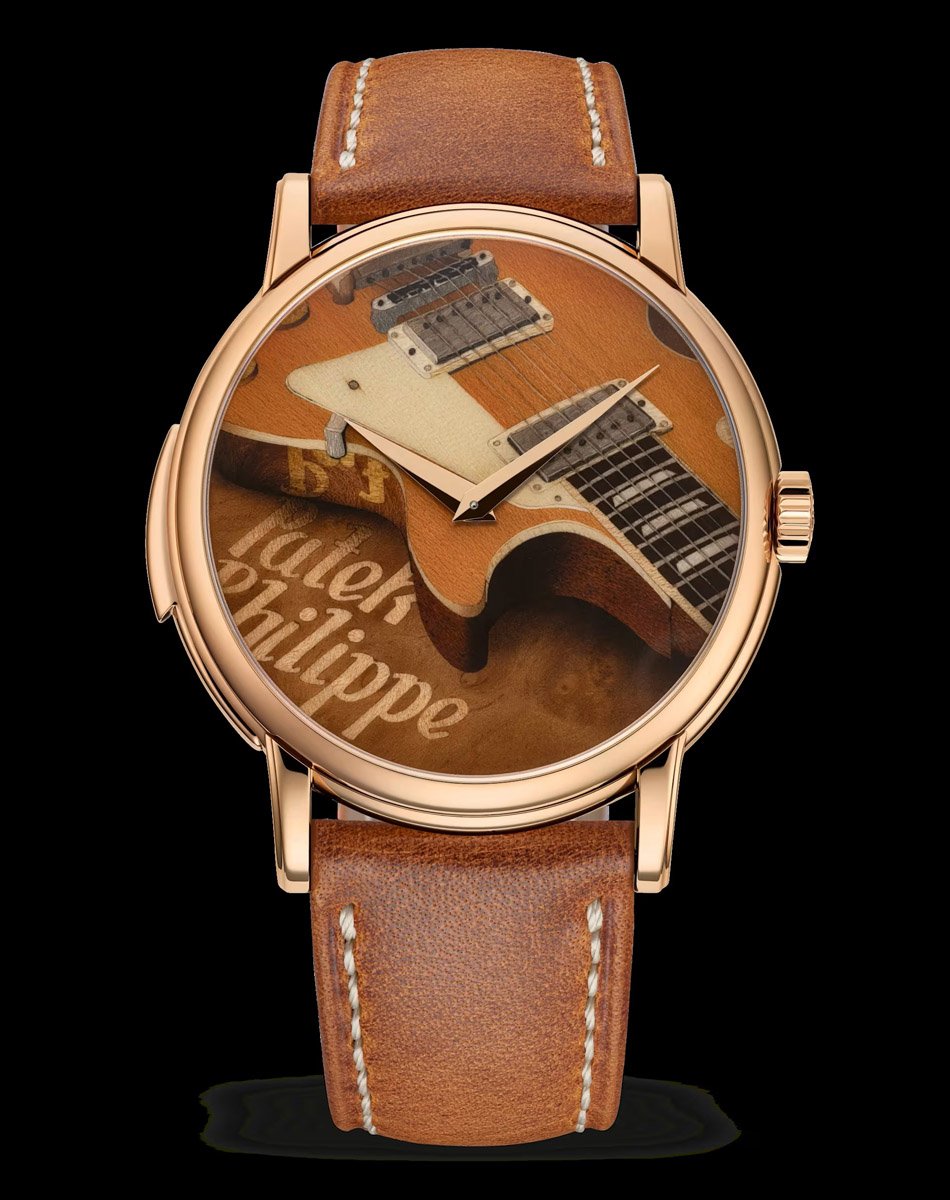
Under the banner of Rare Handcrafts, Patek Philippe preserves the decorative arts that have flourished in Geneva for centuries. Enamel painting, gem-setting, engraving, guilloché, marquetry, and other traditional métiers d’art come together in extraordinary wristwatches, pocket watches, and table clocks. Rare Handcrafts is not a single model or collection, but a philosophy that can be expressed across many different timepieces. Each year, the manufacture presents unique pieces and limited editions that showcase the highest levels of artisanal skill. One recent example is the Ref. 5278/50R-011 “Electric Guitar,” introduced in 2026. This rose-gold minute repeater, powered by the manually wound Caliber R 27, features a dial depicting an electric guitar in intricate wood marquetry. To capture details such as the strings, bridge, pickguard, and reflections, artisans assembled 336 tiny veneer pieces and 18 additional inlays from 17 different woods. The result captures the essence of Rare Handcrafts: preserving centuries-old techniques in miniature and transforming them into wearable works of art.
To learn more, visit Patek Philippe.
This article was first published by WatchTime Germany.
- 1932: The Calatrava
- 1937: The World Time Watch
- 1941: Ref. 1518 – Perpetual Calendar Chronograph
- 1968: The Golden Ellipse
- 1976: The Nautilus
- 1996: The Annual Calendar
- 1997: Travel Time
- 1997: The Aquanaut
- 2001: Sky Moon Tourbillon
- 2005: The Split-Seconds Chronograph Ref. 5959
- 2011: Ref. 5550 with Oscillomax Escapement
- 2014: Grandmaster Chime
- 2024: The Cubitus
- Rare Handcrafts