A Focus In: Exploring Montblanc’s Nicolas Rieussec Collection
How this historically inspired monopusher chronograph put Montblanc firmly on the haute horological map

Within the world of watches, Montblanc is a unique brand, mainly because of its rich heritage. Unlike many others, it isn’t strictly limited to watches and jewelry but unites different universes. What started out as a premium producer of pens, founded in Hamburg in 1906, has evolved into an ambassador of understated luxury. While Montblanc is now also successful in the field of leather goods and scents, to name a few, it is also a significant player in the field of fine watches. For Montblanc, it was a natural expansion of its universe and something that it has always approached with great care.
Its first collection, launched in 1997, was called Meisterstück, an ode to the brand’s most famous pen design. It was the first step in a calculated plan that placed watchmaking at the core of Montblanc’s DNA. The hometown of its Watch Division became Le Locle, in the Swiss Jura Mountains. The careful expansion of the collection got a new impulse when parent company Richemont acquired watchmaker Minerva in 2006 and incorporated this a year later in the Watchmaking Division of Montblanc. While this expanded the technical capabilities of the brand tremendously, Montblanc made it a point to keep its timepiece collection balanced in terms of pricing and complexity. Right in the middle of it is the Nicolas Rieussec, the watch that perhaps best tells the story of what watchmaking at Montblanc is all about.

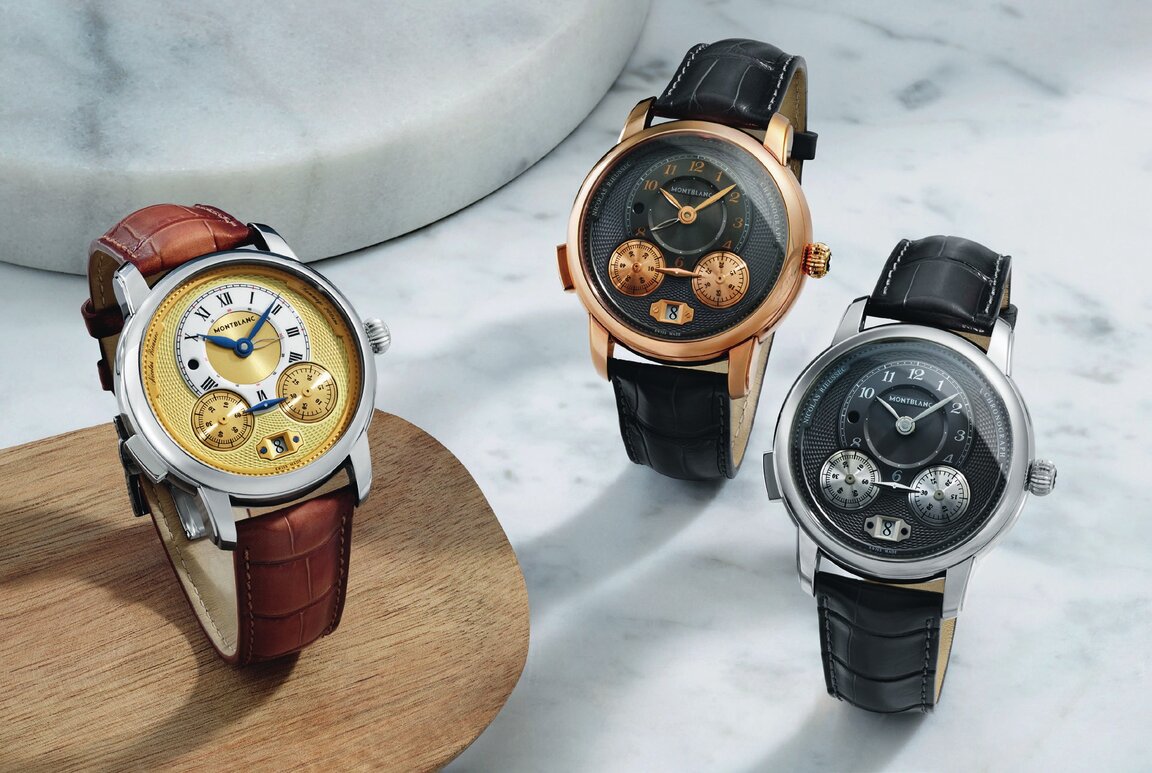
The model is named after the French watchmaker Nicolas Mathieu Rieussec, who was made ‘Watchmaker to the King’ of France, Louis XVIII, on Jan. 31, 1817, at the age of 36. This appointment didn’t really come as a surprise, as Rieussec had already looked after the different clocks and timepieces in the Royal household for a few years. While this was an esteemed appointment, it was horse racing that would cement the watchmaker’s place in history. He was not alone in this, as his older brother Nicolas Joseph was a man of standing in the French equestrian scene, breeding some of the finest thoroughbreds in the country.
What fascinated Rieussec most was the challenge to measure the time it took the horses to travel the prescribed distance. His solution was a small box on which two dials turn as time passes. A small nib marks the dial with ink when the horse passes the finish line. While it was initially called a ‘chronometer,’ most likely referring to the movement powering the complication, its name was soon changed to ‘chronograph,’ appropriately combining the Greek words for time and writing. Rieussec successfully demonstrated his invention on Sep. 1, 1821, at the horse race at the Champ-de-Mars in Paris, earning full recognition, which later was also acknowledged by the French Academy of Sciences. Throughout his life, Rieussec continued to perfect his chronograph, earning several patents for them along the way, but Montblanc took his first creation as inspiration for the wristwatch that it named after him.

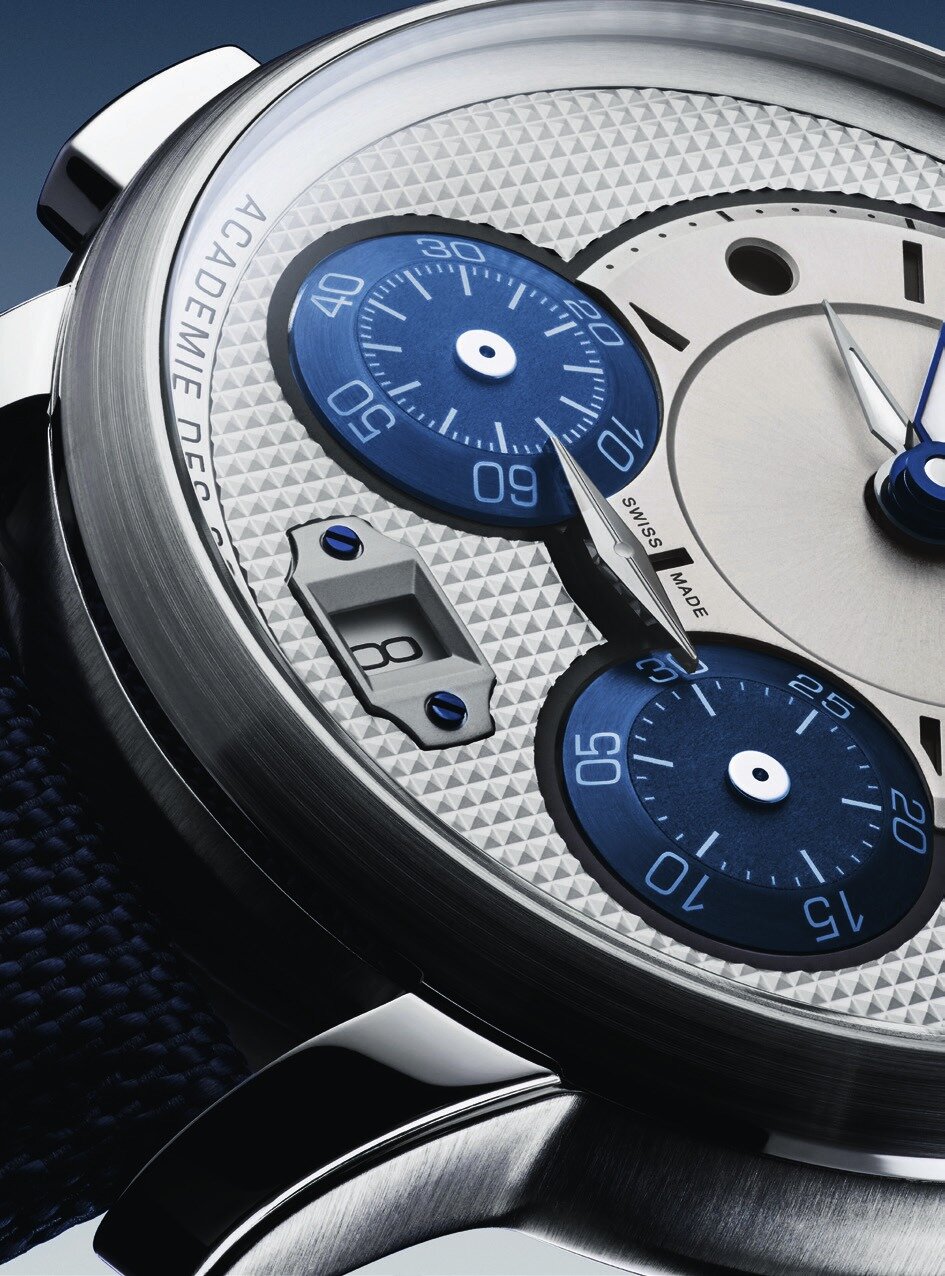
There was a good reason for this because the two rotating disks were very expressive, and incorporated in a wristwatch, would create a chronograph that stands out in the crowd. While Rieussec’s original chronograph didn’t show the time, Montblanc incorporated this for obvious reasons in its watch. They found the perfect balance by placing the rotating disks at the bottom half of the dial, while a large subdial placed above it shows the hours and minutes. This was not only aesthetically pleasing but also made the timepiece highly legible. To accommodate the unique setup of the different indications, Montblanc developed its first two manufacture movements, making the introduction of the Nicolas Rieussec Chronograph in 2008 all the more special.
While technically mostly similar, the difference between Caliber MB R100 and MB R200 is that the latter featured automatic winding and a second time zone. Montblanc cleverly integrated the second time zone indication in the subdial that also showed the hours and minutes. To maintain symmetry, this dial was flanked on both sides by windows, with the one on the right showing the date and the one on the left serving as a day/night indicator. Housed in a 43-mm large case made of stainless steel, it positioned the Nicolas Rieussec Chronograph as a high-end sports watch with a compelling combination of complications. For the chronograph function, Montblanc also didn’t cut any corners. For both calibers, the function was operated by a single button, allowing for a cleaner case design. A column wheel and a vertical clutch ensured the precise operation of the device, while two mainspring barrels provided a generous power reserve of 72 hours.

For Caliber MB R100, this had to be obtained by manually winding the watch. As this caliber also lacked the second time zone complication, Montblanc could integrate a pointer date within the subdial for the hours and minutes. This creates a slightly cleaner and more classic look, which is also exactly what the brand aimed at, as this movement was exclusively used in versions with a precious metal case.
For Montblanc, the Nicolas Rieussec Chronograph meant the start of a new chapter for its Watchmaking Division. It not only established them as a manufacture, but also further specified their unique DNA in this field. As the brand further evolved, taking full advantage of the integration of Minerva within the company, the Nicolas Rieussec Chronograph was here to stay. Montblanc knew that they had a good thing going, so they never expanded the collection beyond the chronograph model, but merely fine-tuned it to keep it in line with current preferences.
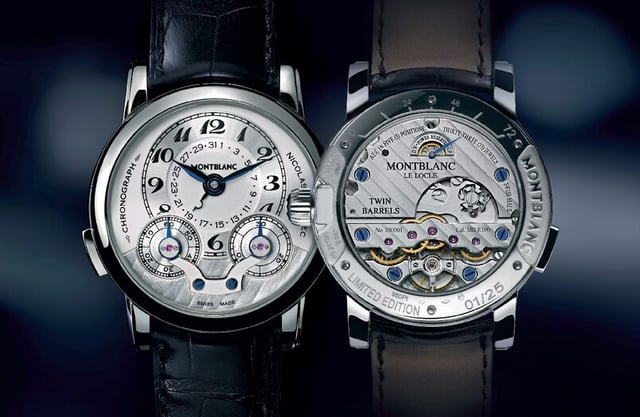
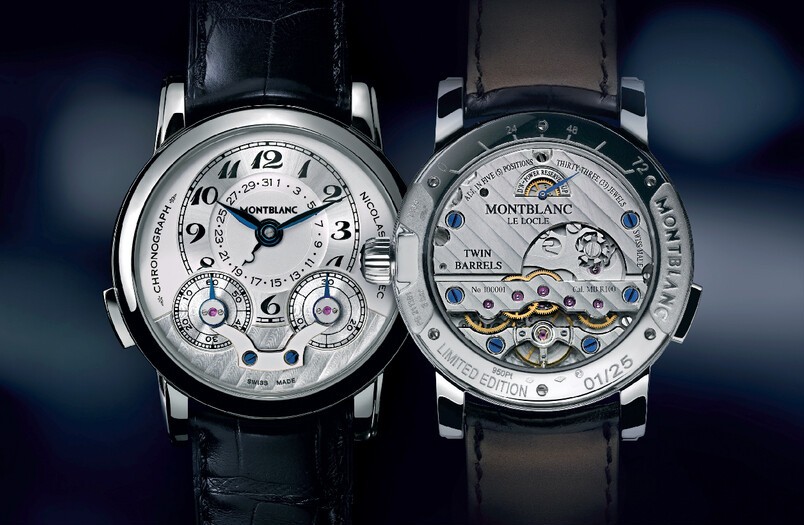
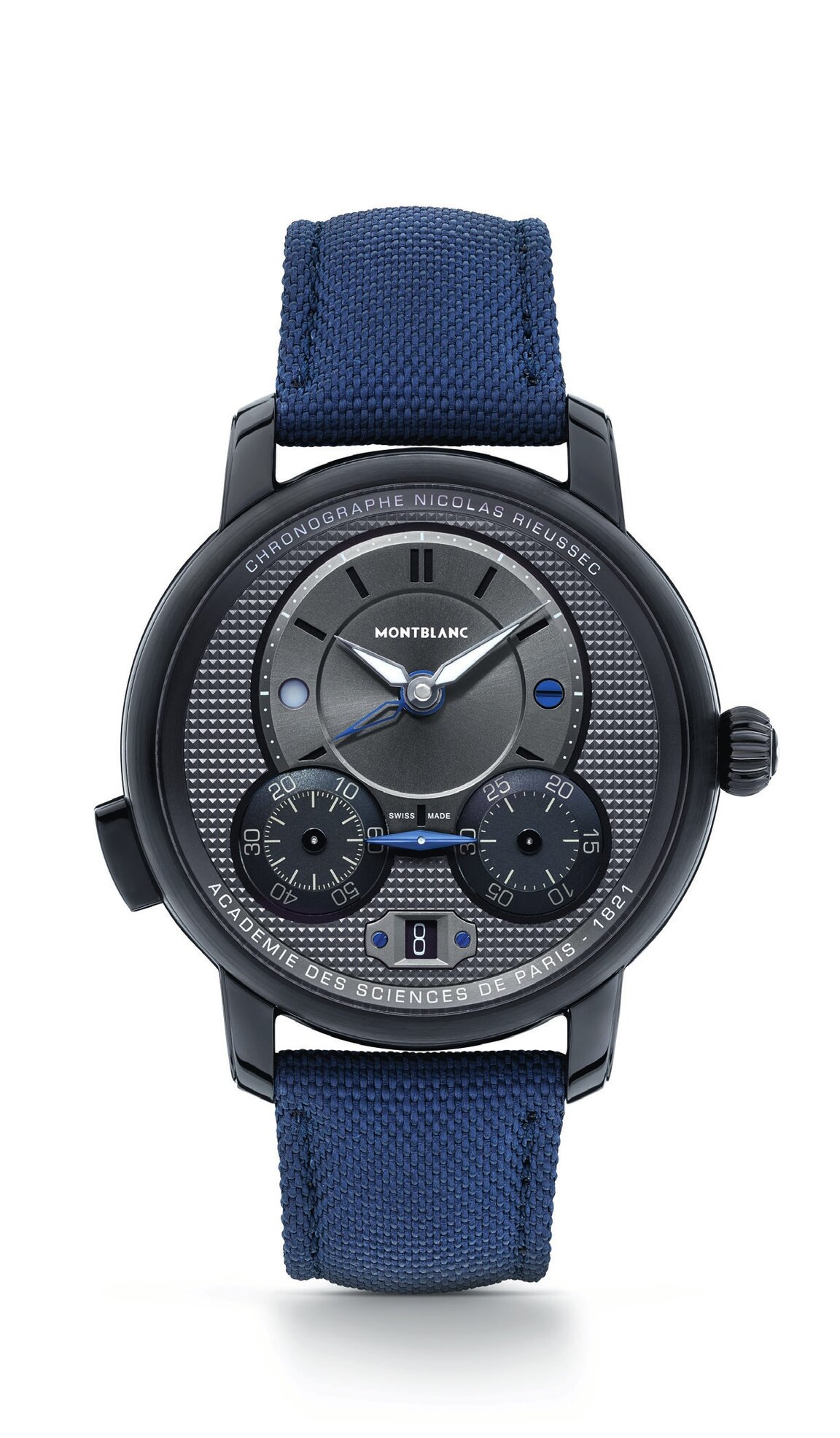
A good example of this is the Nicolas Rieussec Chronograph Limited Edition, which pays tribute to the Champ-de-Mars horse racing track in Paris, where it all began. Montblanc resisted the temptation of making a classic ode but went instead in the opposite way. The stainless-steel case has been given a black DLC coating, matching the dial that features a Clous de Paris texture.
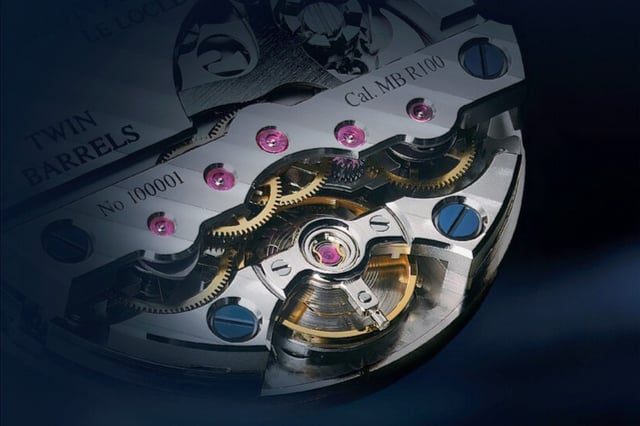
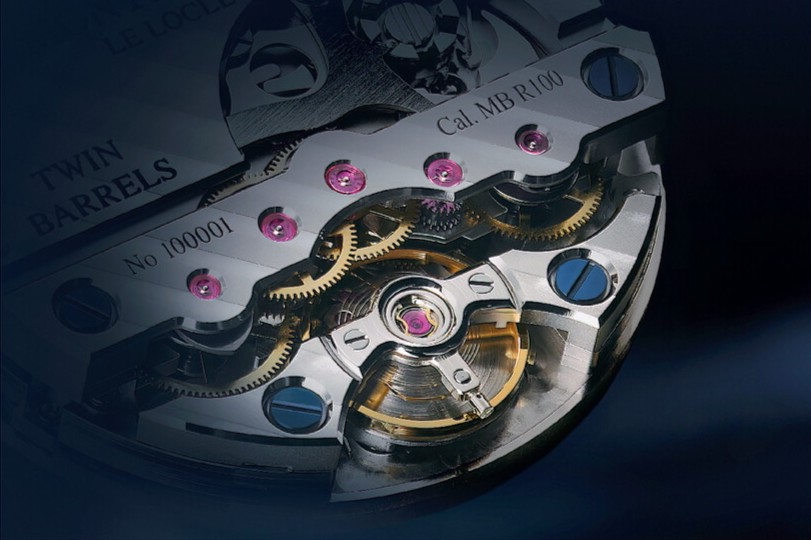
The same can be said of the non-limited edition of the Nicolas Rieussec Chronograph. Here, it also becomes clear how Montblanc has evolved the design to make it even cleaner. The prominent bridge over the rotating disks of the chronograph has made room for an elegant bar, similar to that on Rieussec’s original chronograph. The date window is now positioned at 6 o’clock, while the day-night indicator has a subtle window at 9 o’clock, with the hand for the second time zone still mounted in the middle. This gives Montblanc more room on the dial of the Nicolas Rieussec Chronograph to play with texture. The guilloché motif is designed in such a way that it not only highlights the different functions of the watch but also creates a sense of depth.


As Montblanc is celebrating the 100th anniversary of the Meisterstück writing instruments collection this year, they also created a limited edition of the Nicolas Rieussec Chronograph to commemorate this. The dial shows the original blueprints of the brand’s famed fountain pen, while the inside of the subdial that tells the time is donned with the dimension table of Montblanc’s snowcapped emblem, which can also be found on the crown of this timepiece. As these drawings are made with luminescent paint, this Montblanc is also a spectacular sight in the dark. Even more so does this limited edition of the Nicolas Rieussec Chronograph close the circle, reuniting the watch again with the design of what might very well be the most recognizable fountain pen in the world — on the oscillating weight of the Caliber MB R200 manufacture movement. Pink-gold details add an understated luxury effect, while not taking away from its rather sportive appearance.
This article is from the July / August 2024 print edition of WatchTime Magazine. To subscribe, click here.
To learn more, visit Montblanc, here.