A Sapphire G-Shock: Can It Take a Hit?
The first G-Shock in sapphire
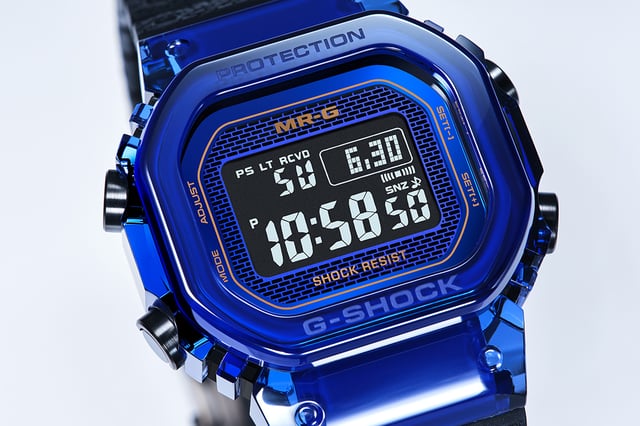
Sapphire and Shock Resistance don't usually mix. Sapphire crystal rates a 9 on the Mohs hardness scale, which makes it nearly scratchproof. The trade-off is brittleness: it handles impacts and concentrated loads poorly. For a brand whose entire identity rests on shock resistance, it seems like exactly the wrong material. Casio has been wrestling with that contradiction since 2018. That year, the G-Shock team showed a concept watch with a sapphire case in Basel. It failed to meet the brand's own shock-resistance standards and never went into production. The same year, the "Dream Project" led by G-Shock creator Kikuo Ibe produced the G-D5000, a one-off made entirely of 18k gold, from the case down to the screws.
From Titanium to Sapphire: The Blue Rose Project
The MR-G team took the work from there. Kikuo Ibe has stepped back from hands-on development but continues to advise G-Shock to this day. The key finding from years of testing: an outer case split into multiple interlocking components absorbs impacts far better than a single-piece case. That insight became the Multi-Guard Structure, which debuted in titanium on the MRG-B5000 in 2022. Adapting it to sapphire was known internally as the "Blue Rose Project," a reference to the blue rose as a long-standing symbol of something nature simply won't allow.
The shape is familiar. The 5000-series case traces back to the square silhouette of the very first G-Shock, the DW-5000C of 1983. Casio has already built it in gold, steel, and titanium. Sapphire is the next chapter, which turns the line into something of an ongoing materials experiment.
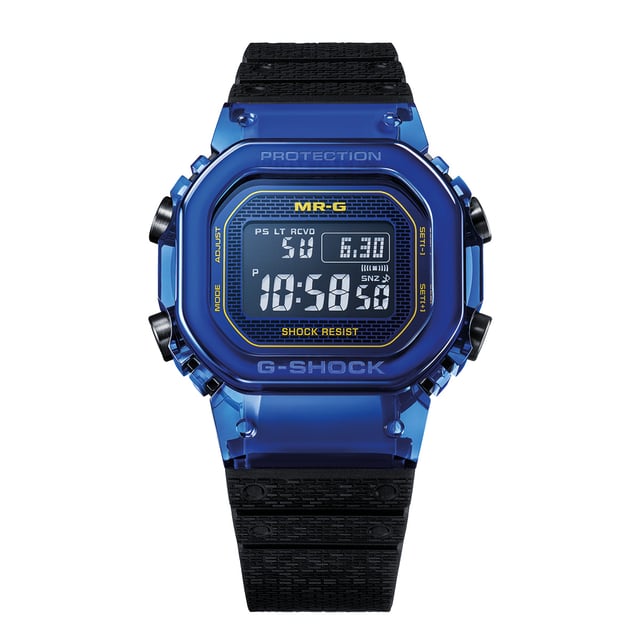
MRG-D5000: Blue sapphire bezel and case, with screwless Multi-Guard Structure
G-Shock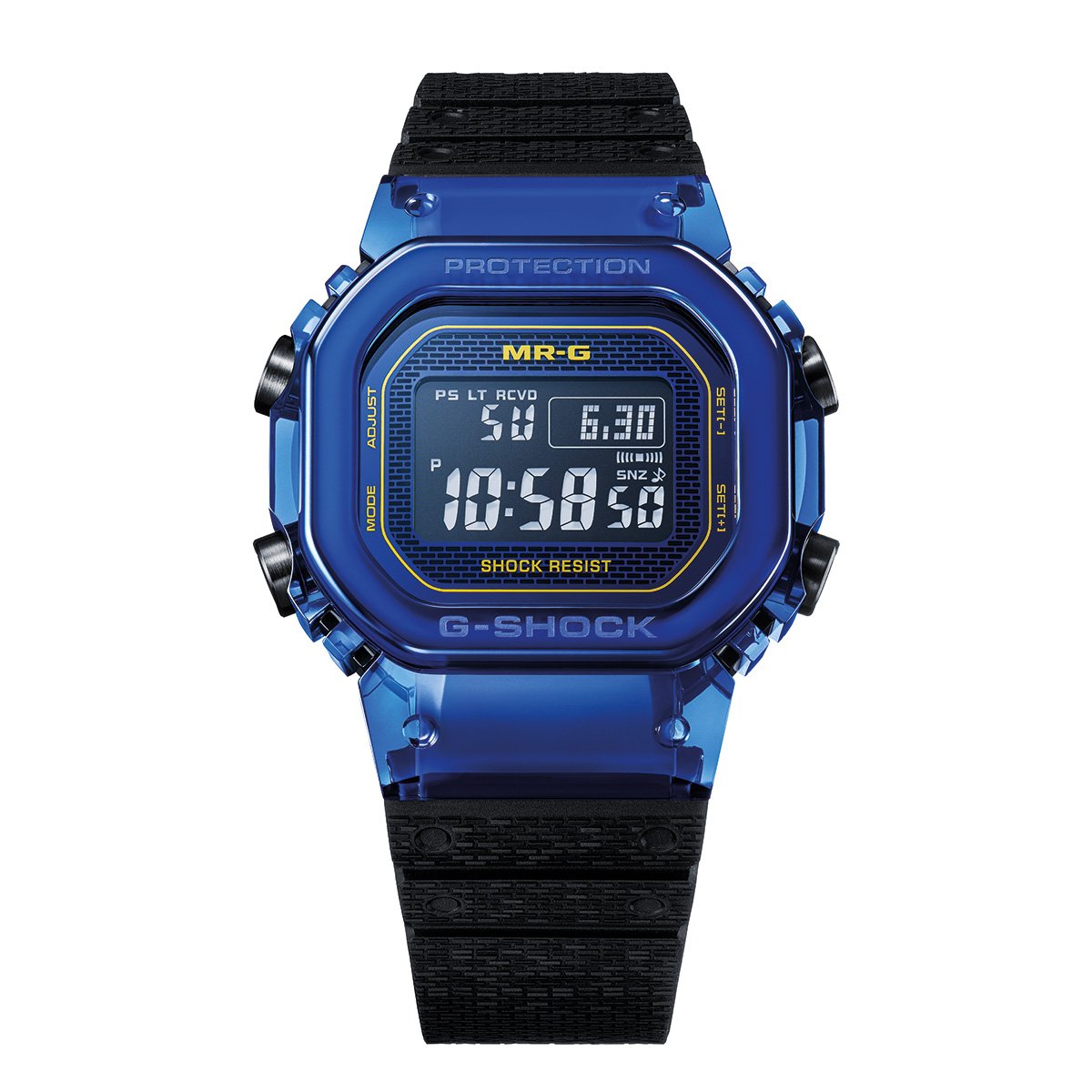
Why the MRG-D5000 Has No Screws
The critical difference from the titanium MRG-B5000 lies in how the parts are held together. On the titanium model, screws secure the components. According to Casio, those very fasteners are a common cause of fractures in sapphire: drilled holes and tightening torque create stress concentrations where cracks can form. That's why the MRG-D5000's bezel and middle case are assembled entirely without screws. Casio says it analyzed how impact forces travel through the sapphire components and engineered the structure specifically to protect the material.
How Casio's Approach Differs From Other Brands
Sapphire cases have been part of high-end watchmaking for years, from brands like Hublot and Richard Mille, typically in small runs and at six-figure prices. There, the focus is on transparency and the sheer difficulty of machining the material. Casio flips the priorities: here, sapphire has to live up to the brand's shock-resistance promise. And at approximately $90,000 the MRG-D5000 actually undercuts many of its Swiss sapphire counterparts.
Sapphire Down to the Caseback
The screw-lock caseback also features blue sapphire crystal, and each of the 20 pieces is engraved there with an individual serial number. Power comes from a module with Gallium Tough Solar, which Casio says holds up exceptionally well under intense light while charging efficiently. The watch is fitted with a Dura-Soft band featuring G-Shock's signature brick pattern and ships in a custom transparent presentation box.
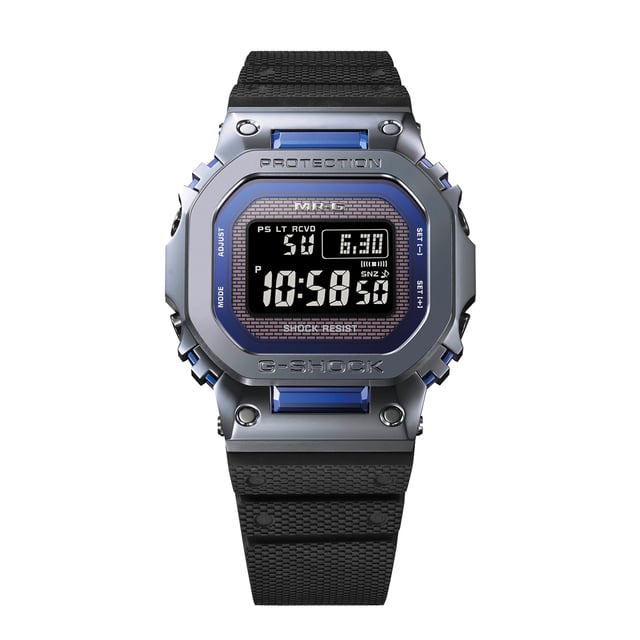
MRG-B5000SA: Titanium MR-G with facet-cut sapphire crystals
G-Shock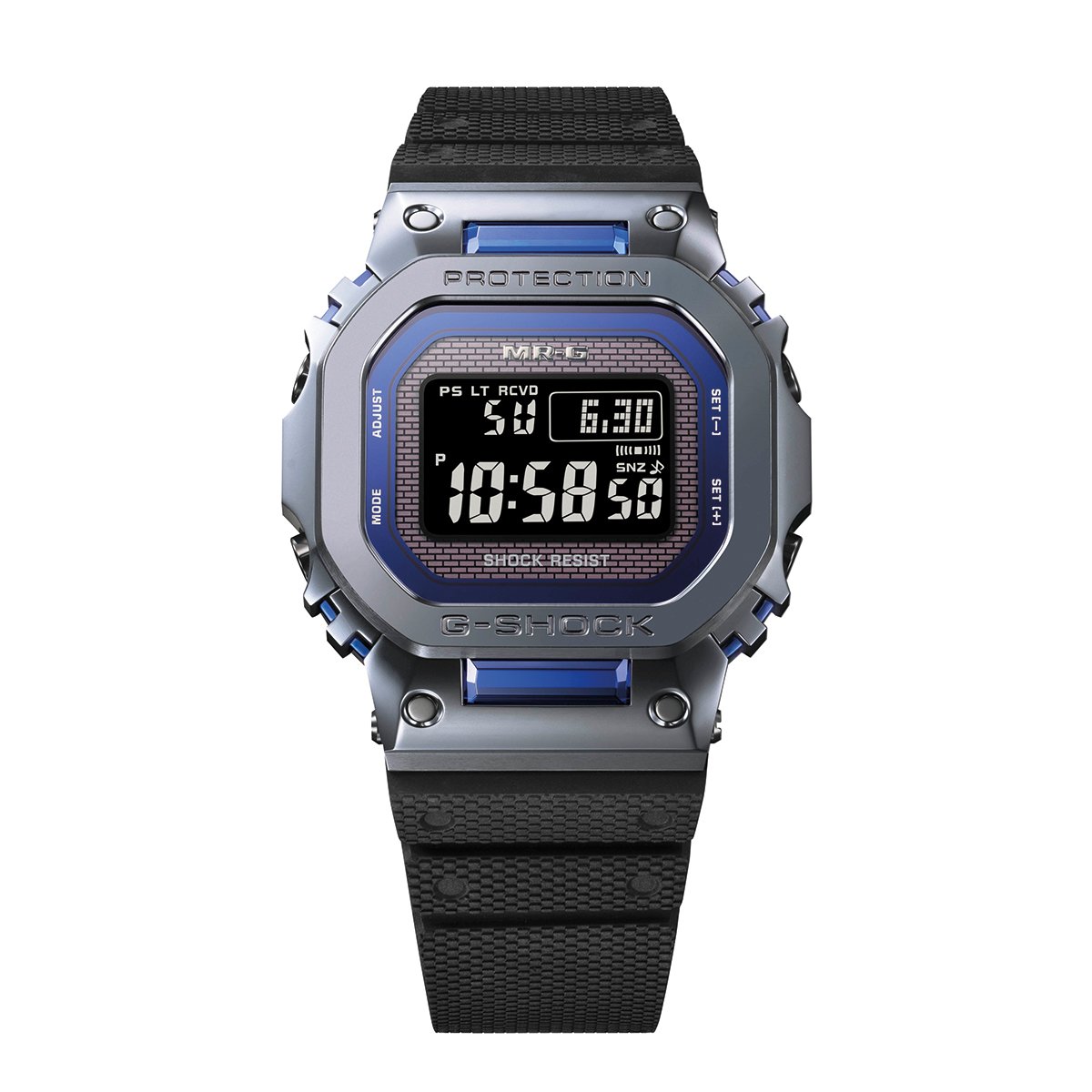
MRG-B5000SA and GMW-B5000SB: Sapphire as an Accent
Alongside the flagship, Casio is releasing two models that bring the theme to a broader audience. The MRG-B5000SA features two-carat, facet-cut blue sapphire crystals at the top and bottom of the case. The bezel is made from a hardened alloy, and both case and bezel are finished in blue arc ion plating (AIP). It's limited to 500 pieces at approximately $7,500.
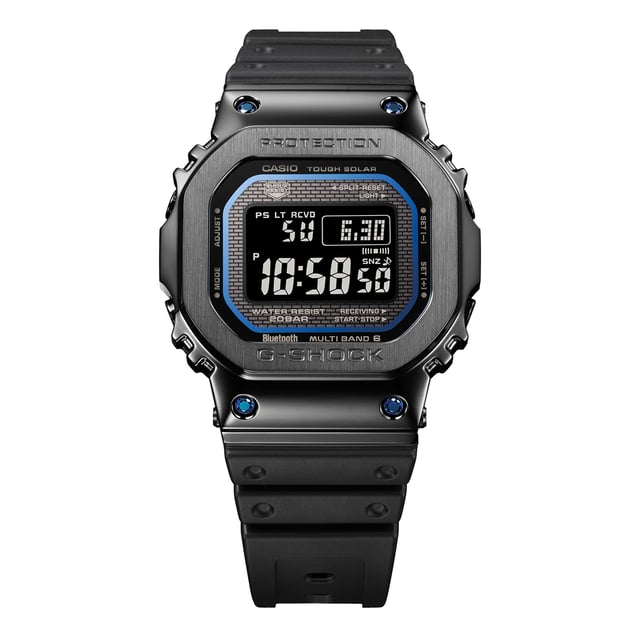
GMW-B5000SB: Full-metal G-Shock with four sapphire stones
G-Shock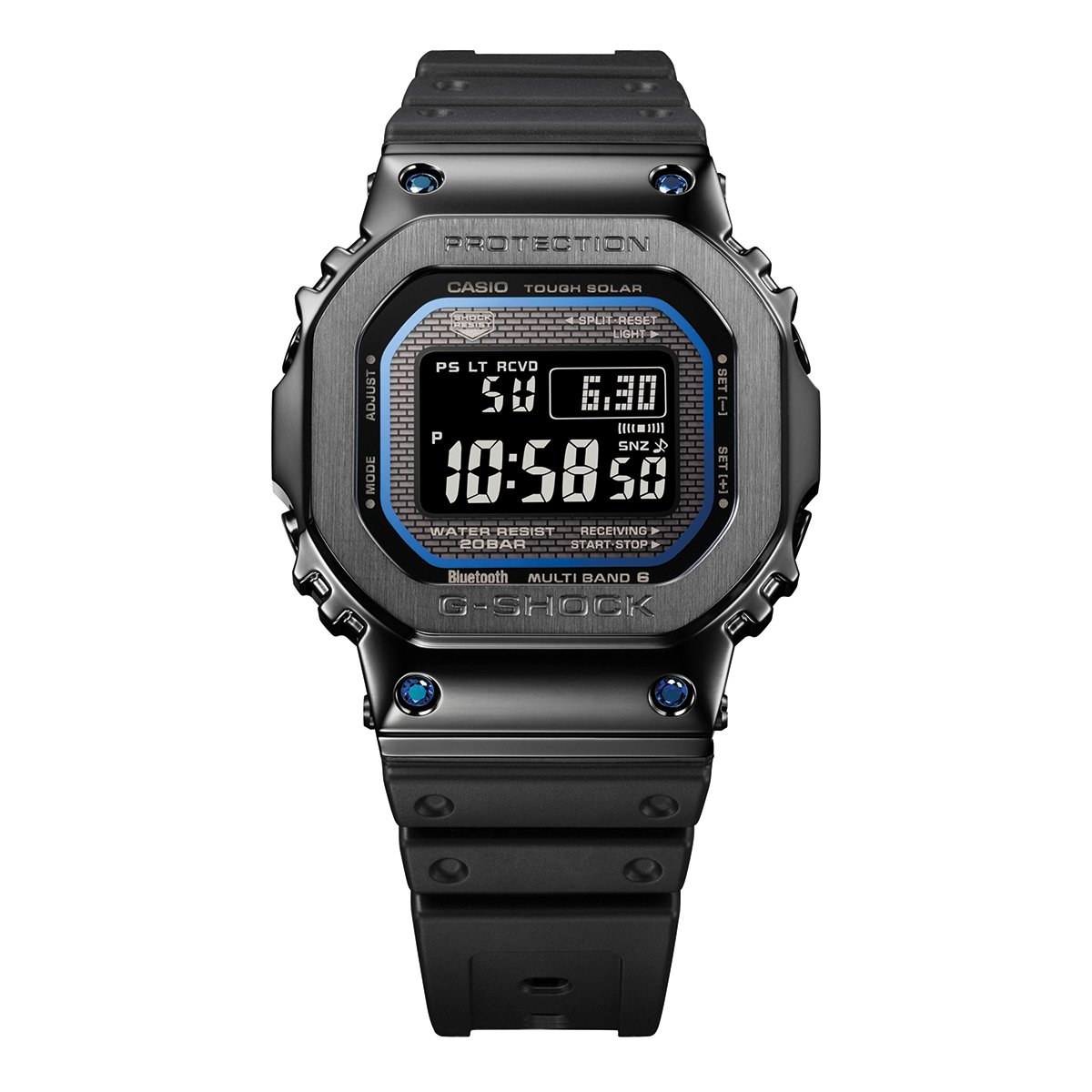
The full-metal GMW-B5000SB sets four blue sapphire stones into the front of the bezel. At approximately $900, it's the most accessible of the trio, and with 680 pieces available, we'd expect it to sell out quickly. On both watches, sapphire is decorative rather than structural. The MRG-D5000's construction can't simply be scaled up. The color story can.
Proof of Concept
At 20 pieces, the MRG-D5000 is first and foremost a proof of concept. Its real significance is the engineering: if sapphire can be made shock-resistant without screws, that raises questions for an industry where sapphire cases have so far been mostly display pieces. One question remains open: what testing protocols Casio used to validate the watch's shock resistance. We've witnessed G-Shock's durability testing firsthand at the Yamagata factory in Japan, and frankly, we have a hard time imagining a sapphire construction surviving it. Those details will determine how much weight the claim "first shock-resistant G-Shock in sapphire" can really bear.