Longines: The Conquest of the Sky
A spotlight on Longines and aviation
Flying today isn’t the way it was when aviation began. Conquering the skies was a daring undertaking long before flying would become common. The ease with which we now go to an airport, hop on a plane, and be in a different environment thousands of miles away in a matter of hours was not the world in which the first aviation pioneers lived.
When planes had been developed that could fly for an extended period of time, one of the main challenges became navigating. Initially, this was mainly done visually, focusing on landmarks or distinct features in the terrain that could indicate the position of the plane. Weather conditions could make this very challenging, and flying at night or across an ocean was nearly impossible. The focus of the first aviation pioneers was, therefore, on perfecting navigation in the sky, as this would truly give them the freedom that, until then, only birds got to enjoy.
While the challenges aviation pioneers had to overcome were similar to those experienced by the first ocean explorers, the conditions under which they had to determine their position were even more challenging. The speed of even the early planes was far greater than that of ships. This meant that navigators not only needed to work faster but also that even the slightest error could put them miles off course. Cramped, often open, cockpits, with winds howling at 100 miles per hour around you and freezing temperatures meant that goggles and thick gloves were a necessity, complicating things further. For the pilot/navigator, time was an essential aid for navigating, and in fine-tuning their contribution to aviation, Longines-Wittnauer played a key role.
Weems
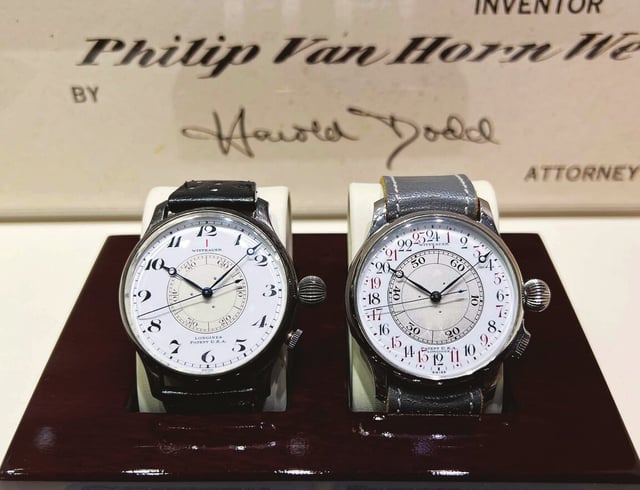
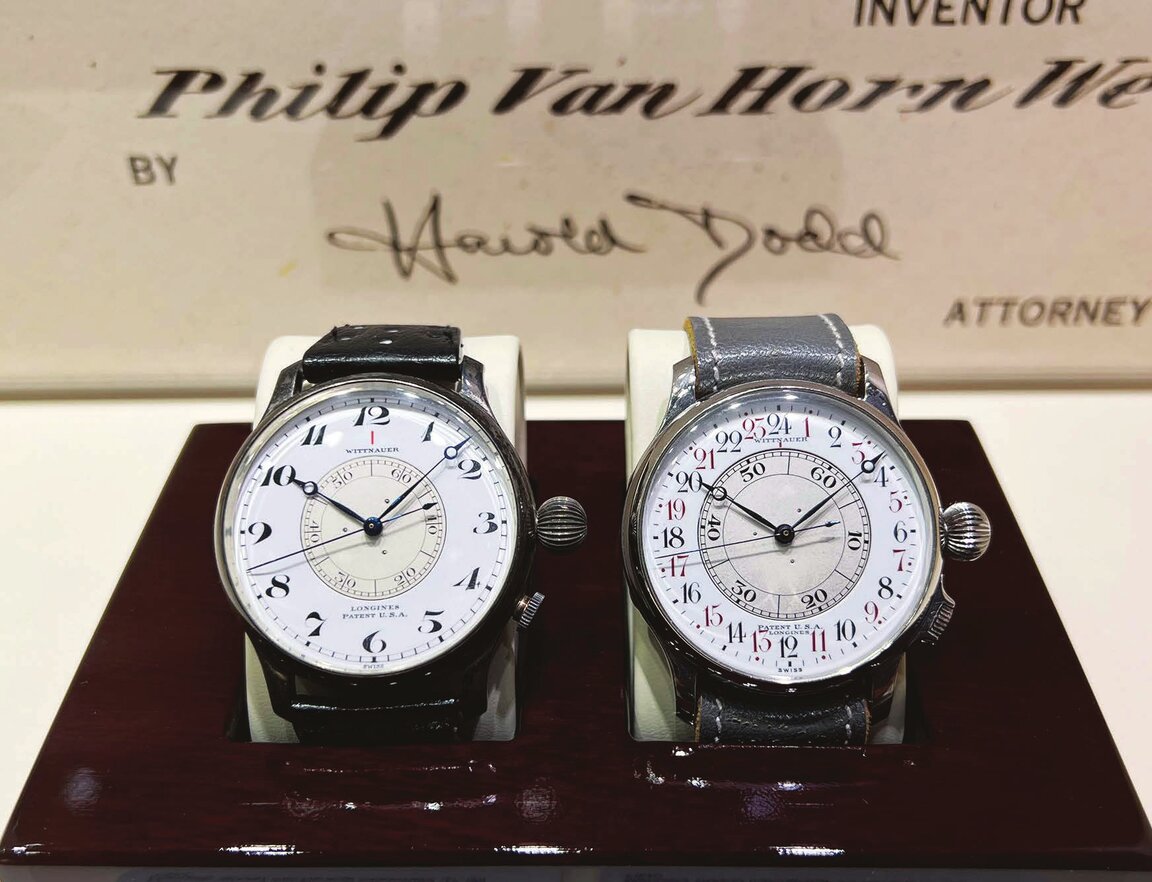
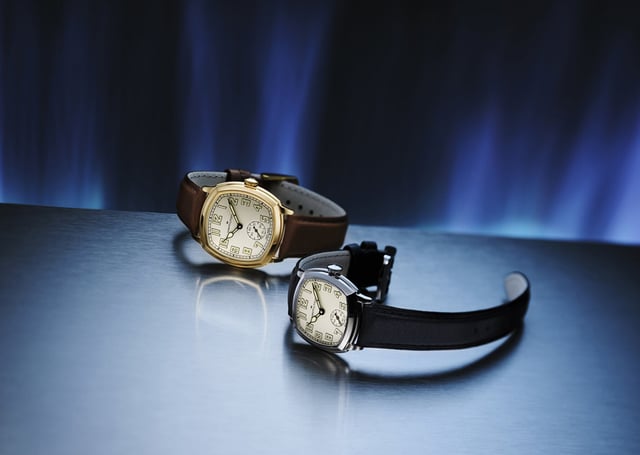
U.S. Navy officer Lt. Cmdr. Philip Van Horn Weems was one of the pioneers of air navigation. He created new ways of celestial navigation that would become the standard in long-range navigation for three decades. A key element for celestial navigation was to know the time as exactly as possible. As marine chronometers were not an option in planes, the wristwatch became the preferred option. Radio signals were used to set watches accurately, but until 1927, this could only be done to the minute and not to the second. As an error of a mere 30 seconds could result in a 7-mile error in the calculations, Weems was keen to solve this problem. He collaborated with Longines’s U.S. branch, then known as Longines-Wittnauer, creating the Weems Second-Setting Watch. At the center of the enamel dial was a silver-colored disk that aviators/navigators could turn, allowing them to set their watches to the exact second, and thanks to a large, onion-shaped crown, this could even be done wearing gloves. These hallmarks are still present in the current version of the Weems Second-Setting Watch.
Its diameter of 47.5 mm is still reminiscent of the time when pilots wore their watches over the sleeves of their coats. Back then, this watch was all business, but as time passed, it got a classic sense of elegance. Longines offers this model with either Roman or Arabic numerals in a stainless-steel ($4,825) or 18-karat pink-gold case ($18,625). All versions are powered by Longines Caliber L699, based on the ETA A07.111. It can be admired when the closed back is unlocked by using the pusher placed just below the crown.
Lindbergh
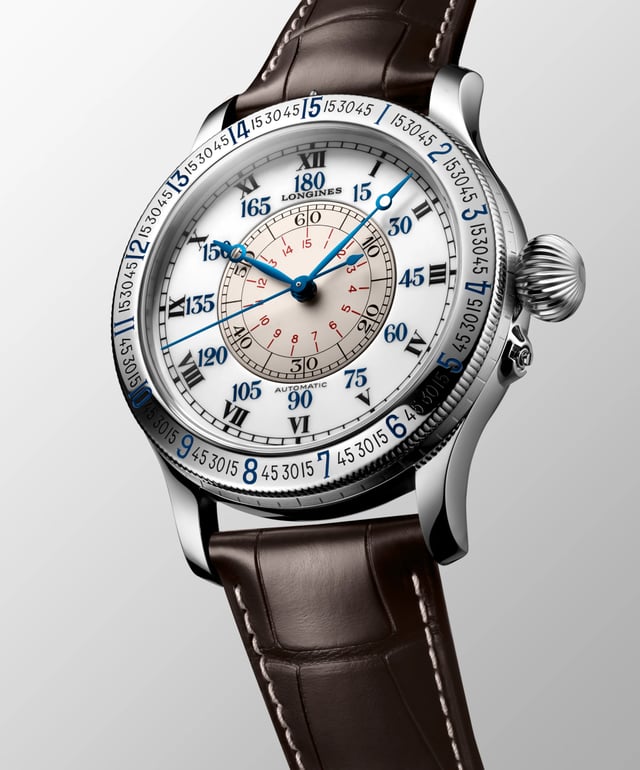
One of the people who recognized that Weems’s approach to air navigation represented the future was aviation pioneer Charles Lindbergh. While he started his career in 1924 as a U.S. Army Air Service cadet, he soon joined the U.S. Air Mail, yet it was his determination to push the boundaries of aviation that would give him his claim to fame. You can still see his famous “Spirit of St. Louis” in the Smithsonian Institution after he donated the plane in which he made the first successful transatlantic solo flight in 1928. In that same year, Lindbergh got to spend two weeks with Weems, who instructed him in his system of celestial navigation, and the two giants of the sky kept in touch afterward.
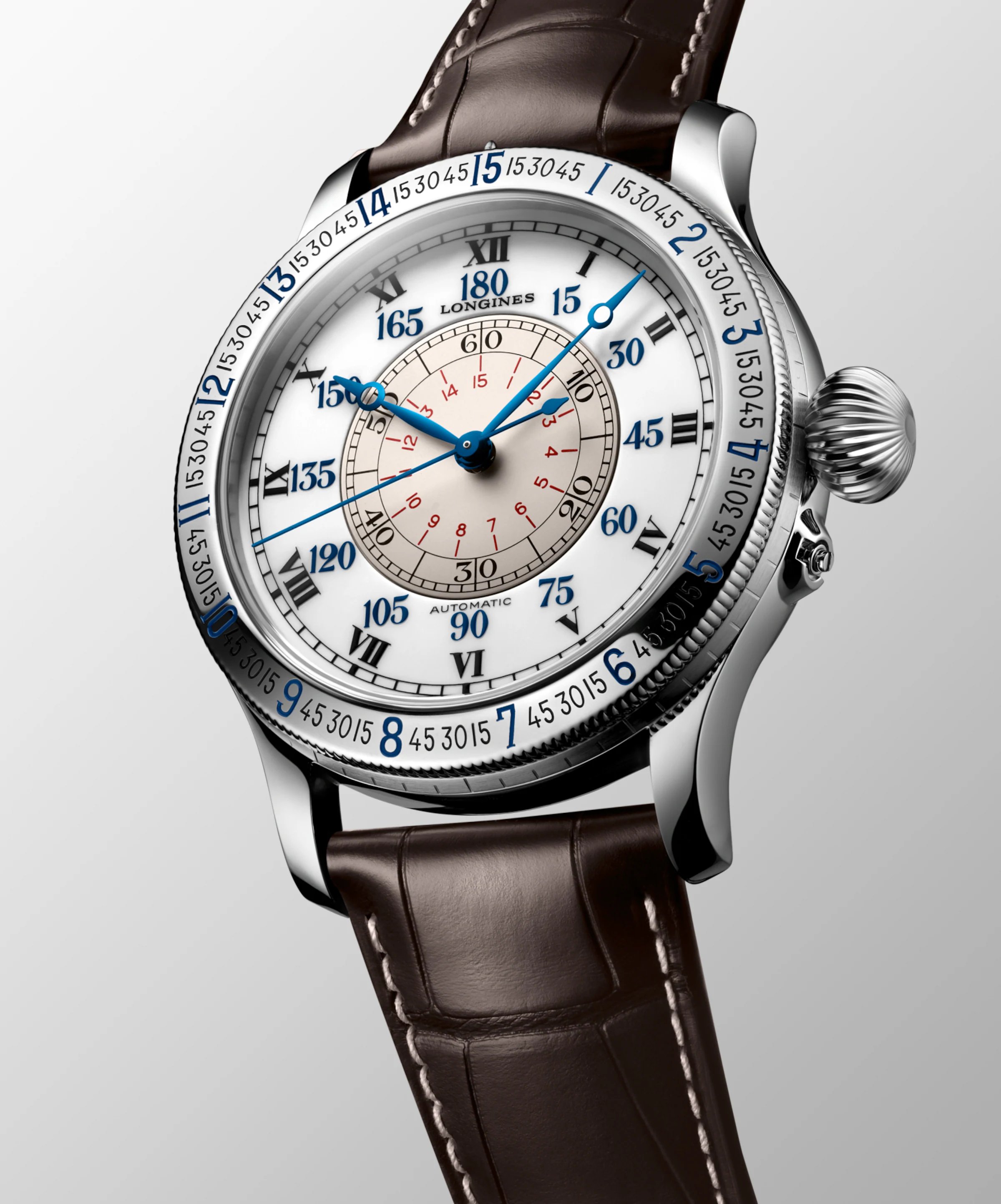
It was also Lindbergh who developed the famous Hour Angle Watch, which was an improvement of the design made by Weems. Lindbergh proposed his ideas to Longines, as he believed that this watch would make navigation while flying even easier, and it went into production in 1931, and is still available today. While Longines has made different versions of the watch in the past, the Lindbergh Hour Angle Watch is currently only available in stainless steel with a 47.5-mm diameter ($5,400). It looks largely the same as the Weems Second-Setting Watch, yet with additional red-colored markings on the inner disk. The Lindbergh Hour Angle Watch also comes with a bidirectional bezel, whose engraved numerals are filled in with blue lacquer. While practical for a pilot, it also adds a great deal of charm for those who prefer to sit in the back of a plane.
Majetek
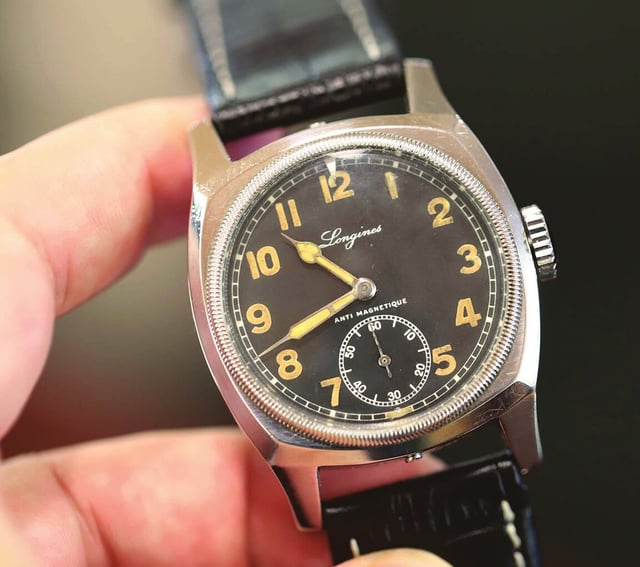
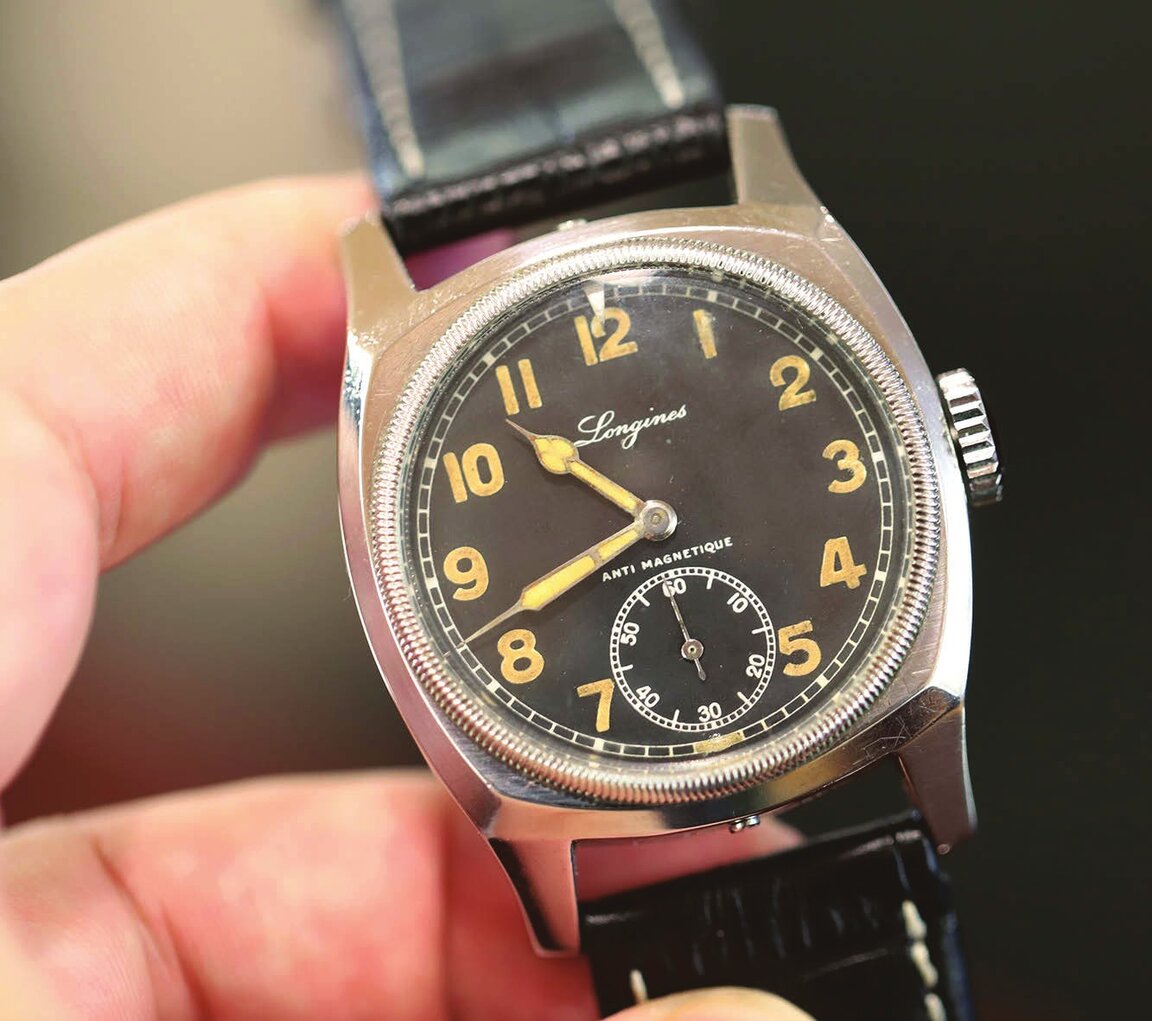
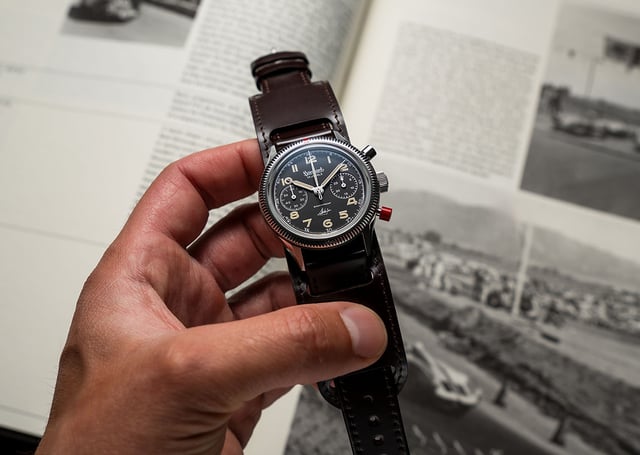
Due to the reliability of its watches and the collaborations with Weems and Lindbergh, Longines made quite a name for itself in the world of aviation. In 1935, it launched the Majetek, which was created upon the request of the Czechoslovak Air Force. One of the requirements was that the watch was fitted with a rotating bezel that could be used to mark a specific time. Additionally, both the marker, hands, and numerals needed to be luminous so that they could also be read in low-light conditions. This gave the Longines Majetek an already distinct look, as the bezel was coarsely ribbed to provide traction for the aviators' thick gloves. Its tonneau-shaped case and distinct lugs did the rest.
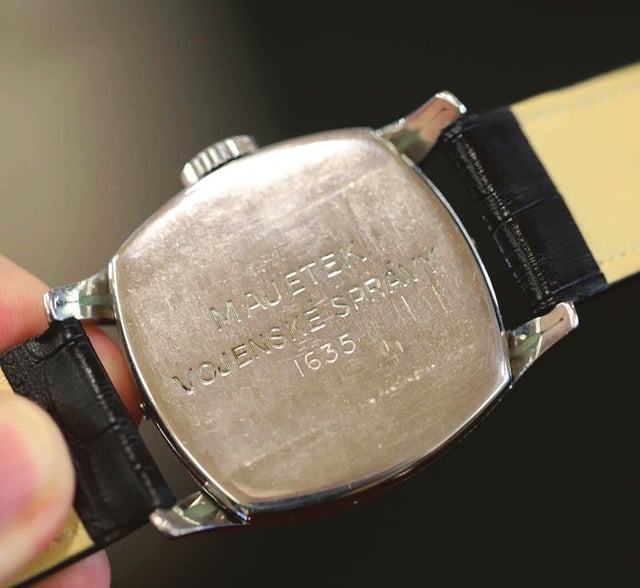
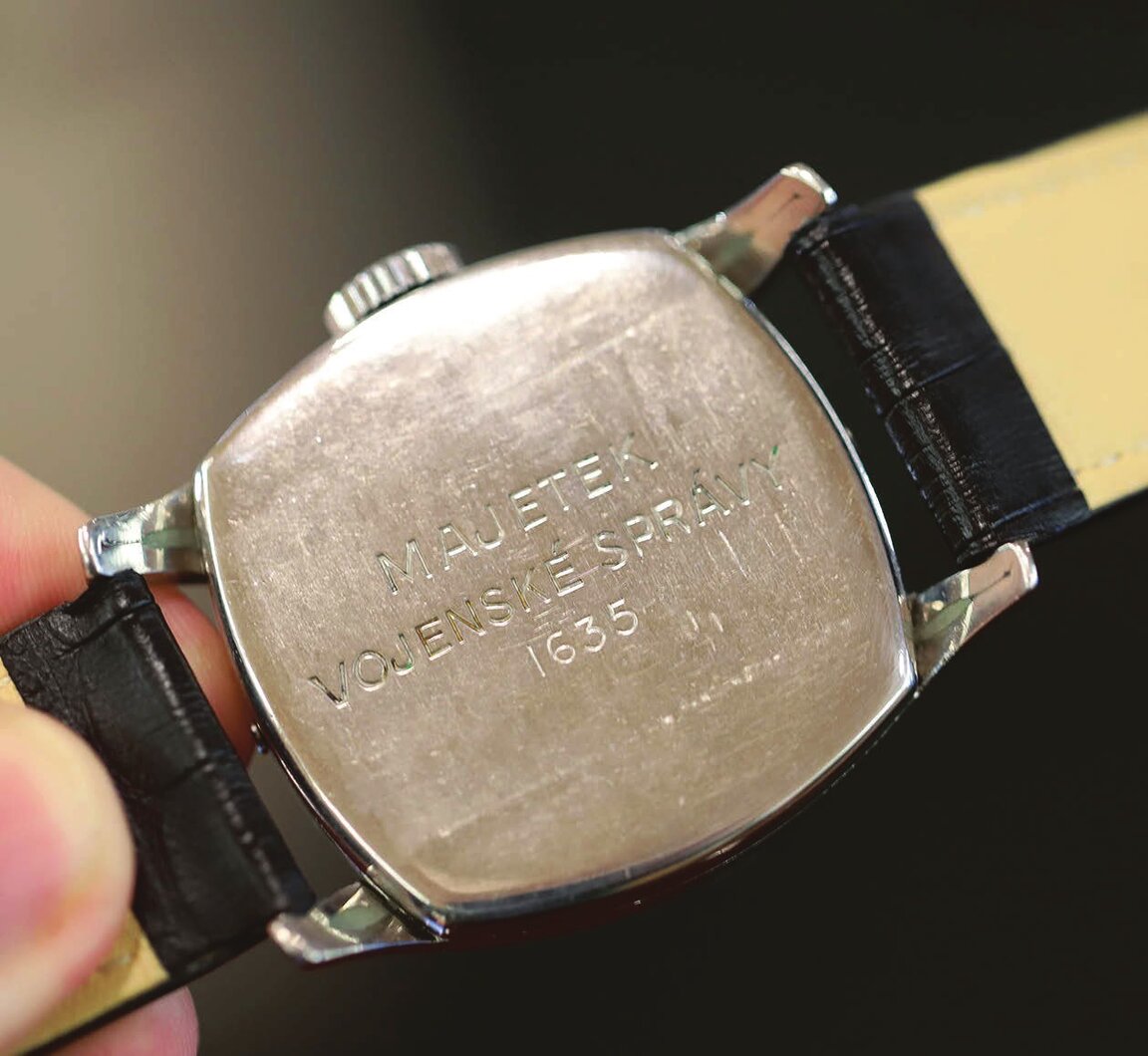
Longines made around 1,700 of these watches for the Czechoslovak Air Force pilots who saw action during World War II. While the original version was, for its time, very large, with a diameter of 41 mm, the current version is 43 mm. That makes it a substantial watch on the wrist, amplifying the charisma of the unique case and bezel.
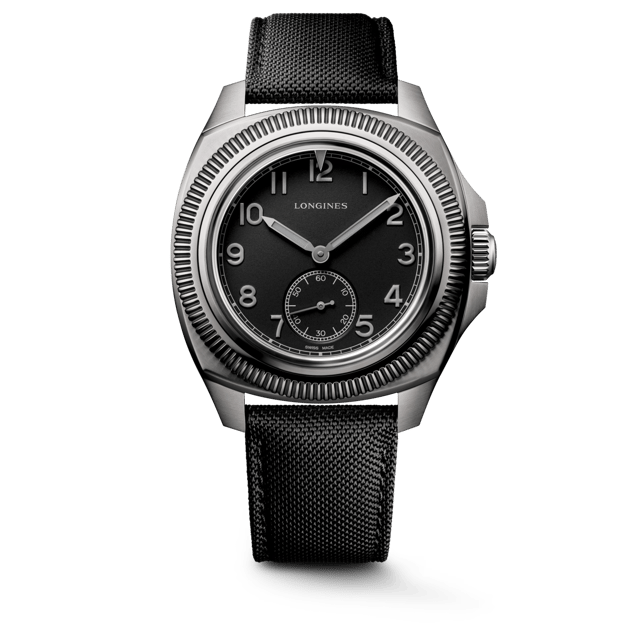
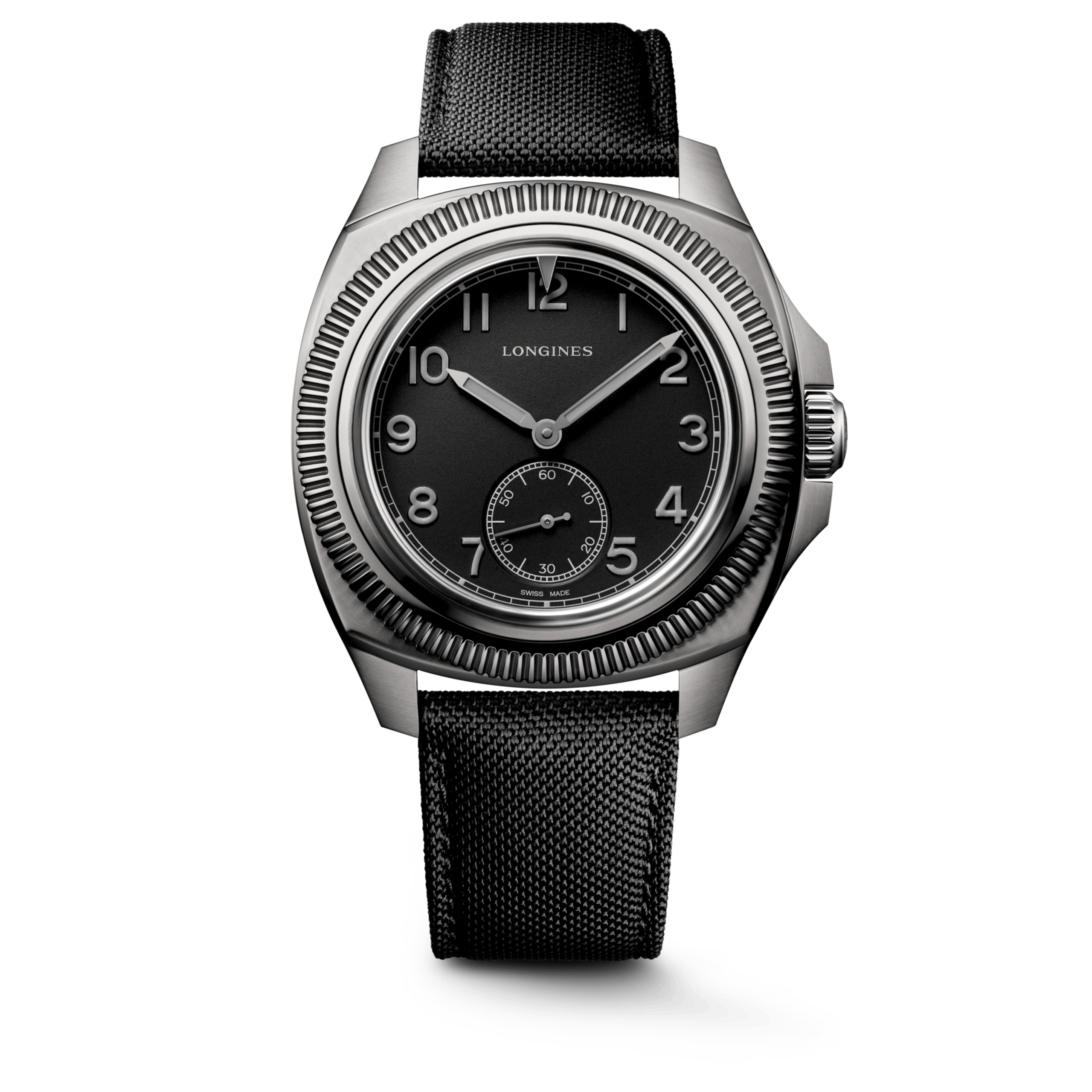
Like the other Longines aviation watches, the Majetek also has a generous dose of character. It is available in stainless steel ($3,750) or as a limited edition in titanium ($5,000), always powered by Longines Caliber L893. This modern, automatic movement is chronometer certified and based on ETA Caliber A31.L91, which is exclusively made for Longines. Thanks to its monocrystalline silicon balance spring, it has a high resistance to magnetic fields, while the power reserve of 72 hours is generous.
Avigation
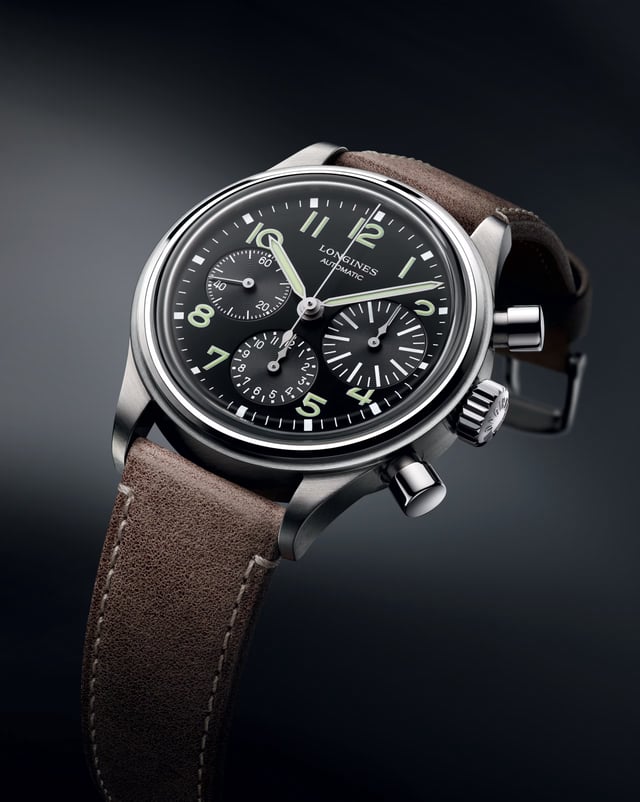
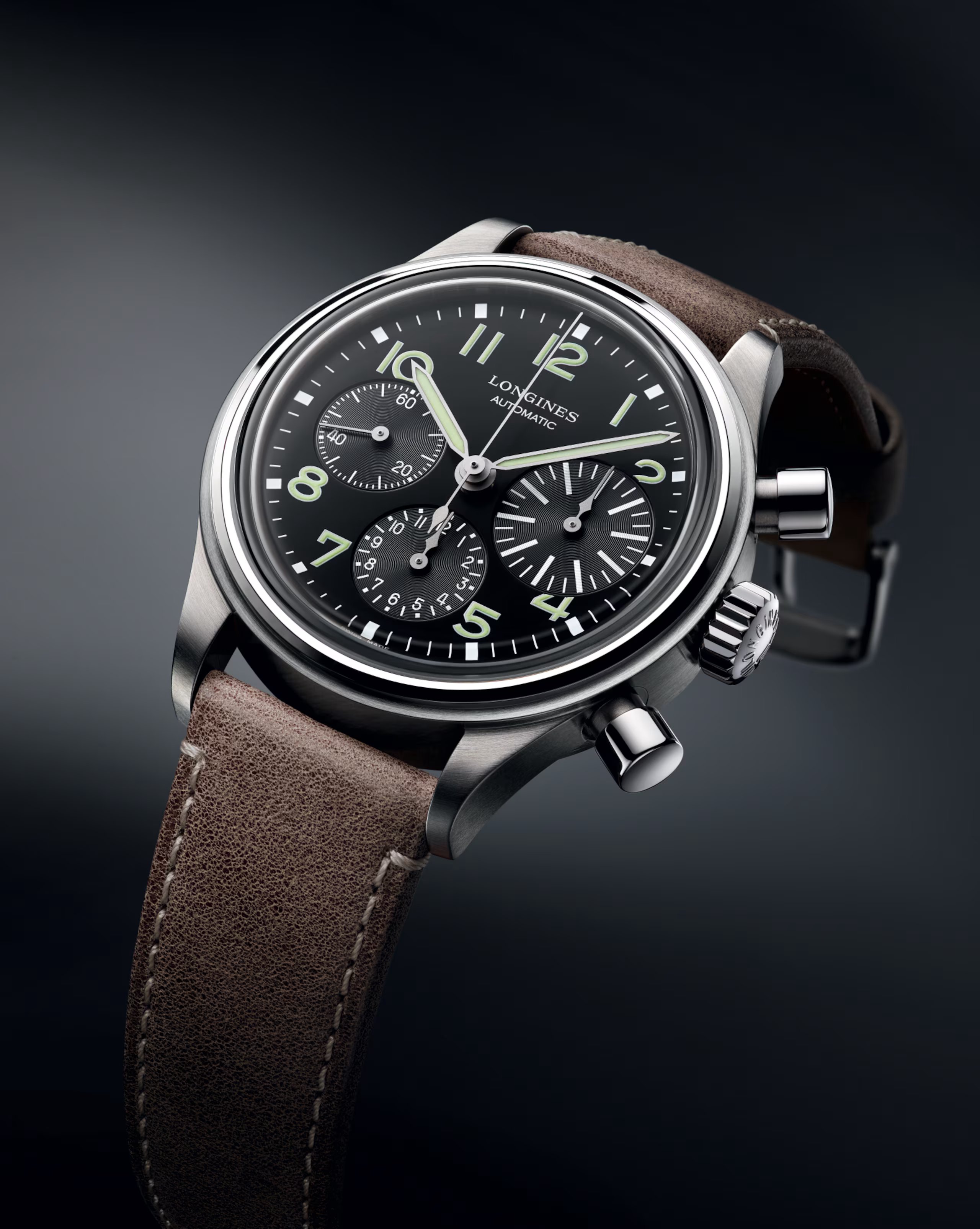
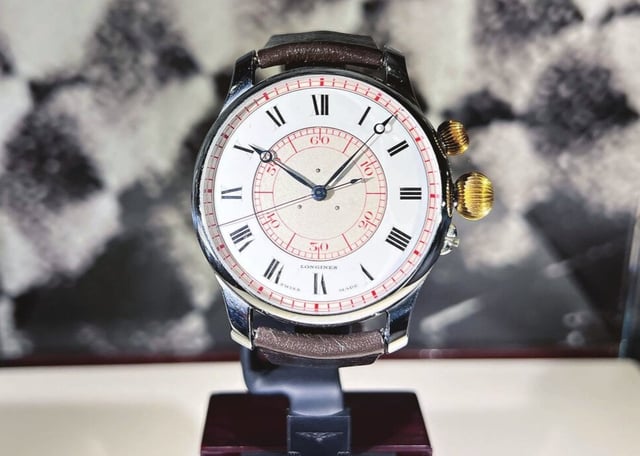
What turned into the Avigation BigEye was a watch brought to Longines by a collector. That 1930s chronograph was quite a mystery, as it was an original Longines, but not part of its archives. Its pedigree could therefore not (yet) be established, but visually it was quite the treat. This inspired Longines to recreate the watch and launch it as part of its regular collection in 2017.
The Avigation BigEye has proven to be a big success for the brand. Its name comes from the early air navigation pioneers, who wanted to call their trade “avigation” to distinguish it from navigating at sea. It never really caught on, but was for Longines the perfect name for the watch. BigEye comes from the minute counter on the dial, which is larger than the others so that it would be easier to read. With a diameter of 41 mm, the Avigation BigEye is smaller than its aviation siblings in the Longines catalog, although the pushers still need to be added to this number.
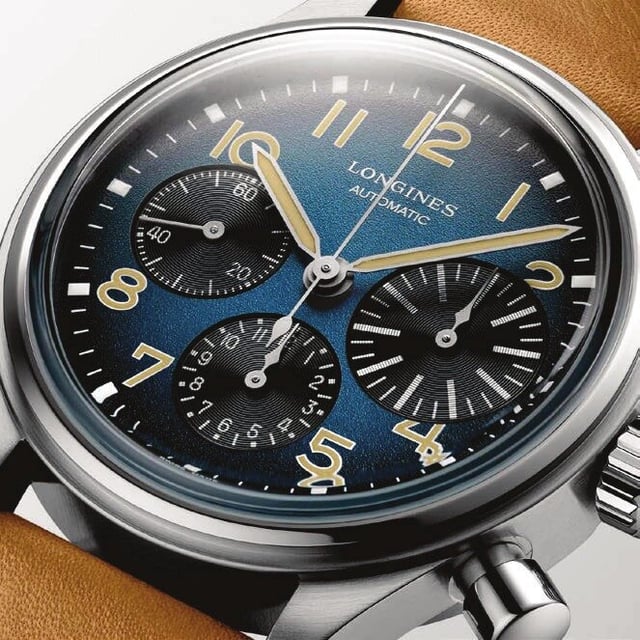
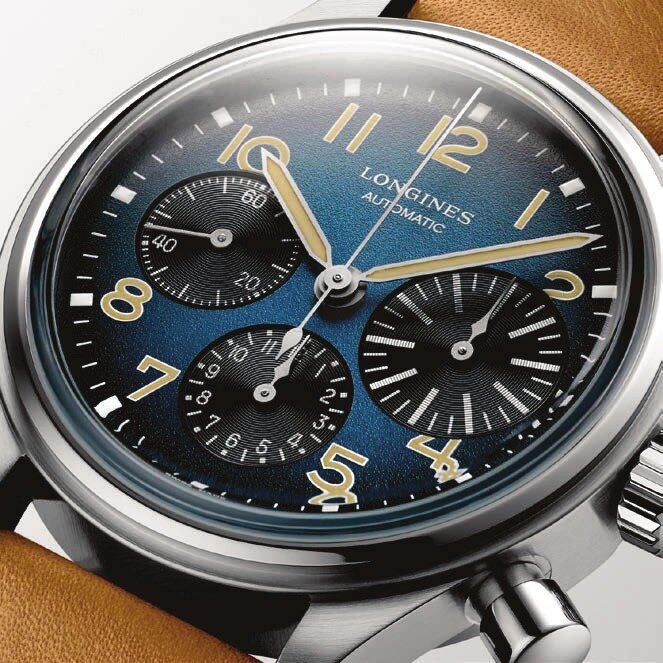
Longines offers the Avigation BigEye in two versions: One features a stainless-steel case with black dial ($3,000), while the other combines a titanium case with a rather attractive degradé granulated textured dial, which is jeans blue at the center and considerably darker on the perimeter. Inside ticks, in both cases, Longines’s automatic L688.2 caliber, based on the ETA A08.L01, which is actually a Valjoux ebauche that is extensively modified. Not only does it feature a 54-hour power reserve, it is also equipped with a silicon balance spring for increased resistance to magnetic fields. To ensure smooth operating of the chronograph, a column wheel is also added to the movement.
As we are closing in on almost a century of Longines’s involvement in the world of aviation, its pioneering watches are still going strong. While flying itself has lost quite a bit of its flair and sense of excitement, this is not at all the case for the watches that helped the aviation pioneers plot their course through the clouds.
This article was originally published in the March / April 2025 Issue. To subscribe to the print edition of WatchTime Magazine, click here.