Blast from The Past: A Vintage Look at the Longines Signet
A historical hands-on
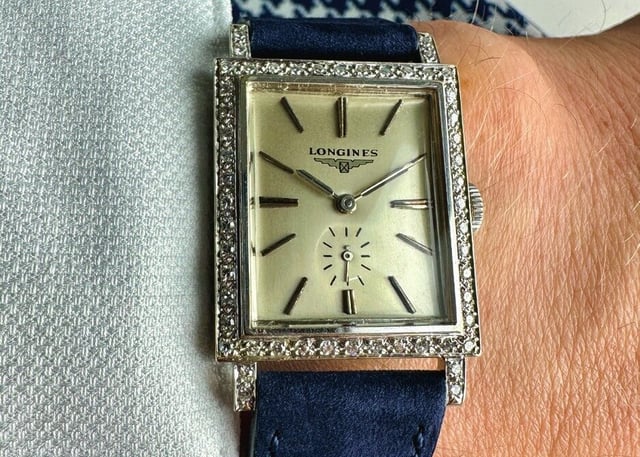
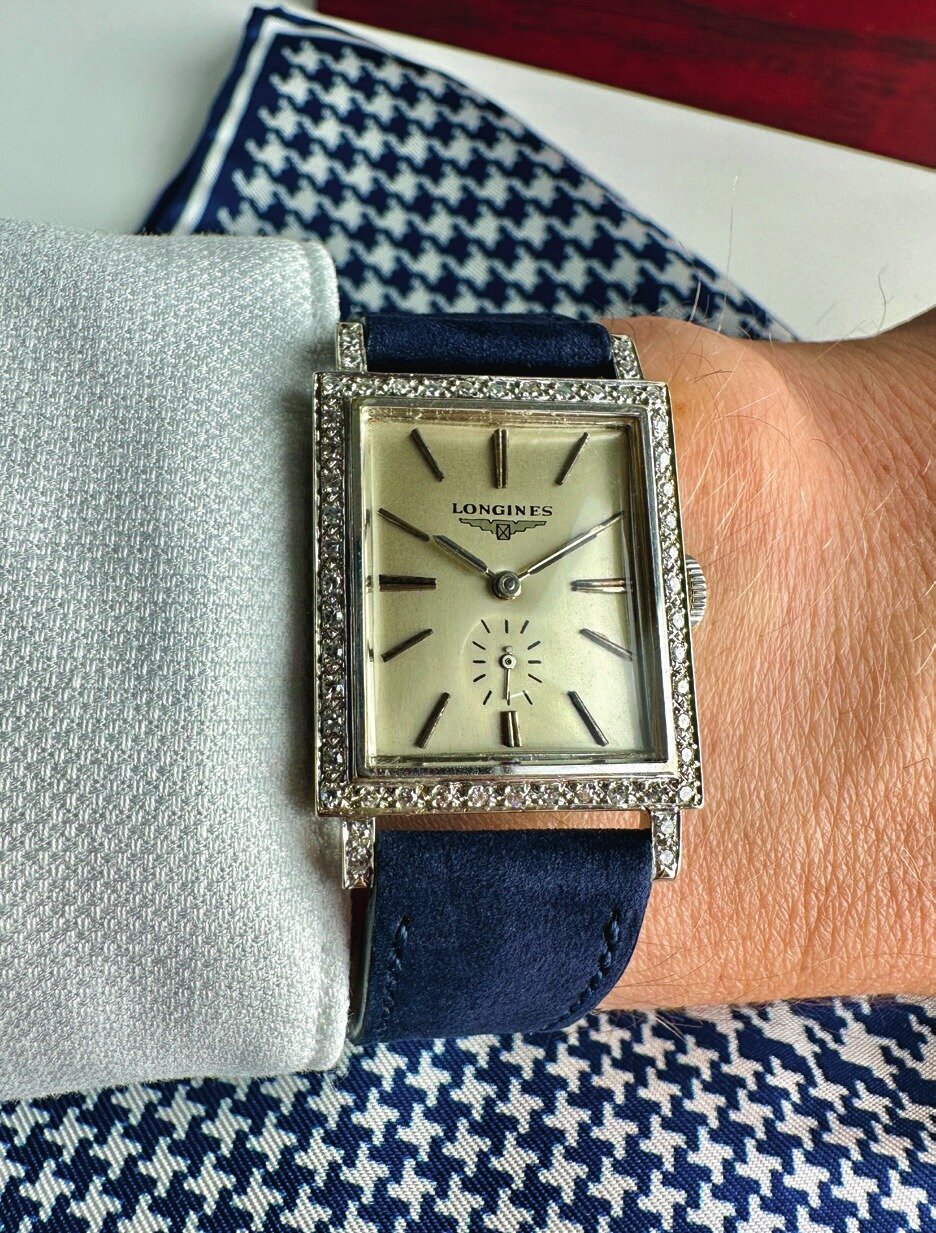
When looking at a vintage watch, it is always important to consider its historical setting. This is especially true of diamond-set watches. They are now often immediately regarded as ladies’ watches not only because of the use of gemstones but also due to their usually modest size. However, this was quite different in the years they were made. Especially in North America, there is a long tradition of men wearing diamond-set watches. While now often associated with the music and entertainment industry, back in the 1950s and ’60s, it was often established businessmen who wore a diamond-set watch as a token of their success. And when you really made it, then you would wear this Longines Signet.
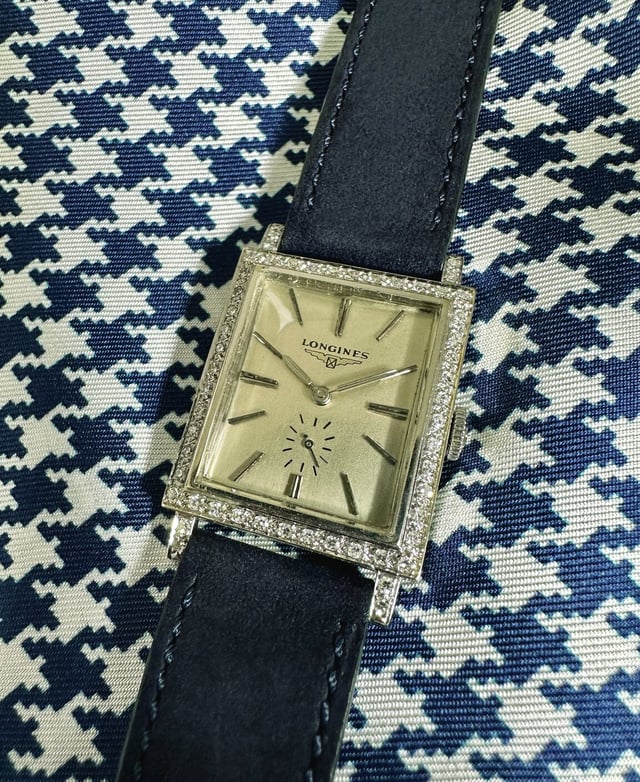
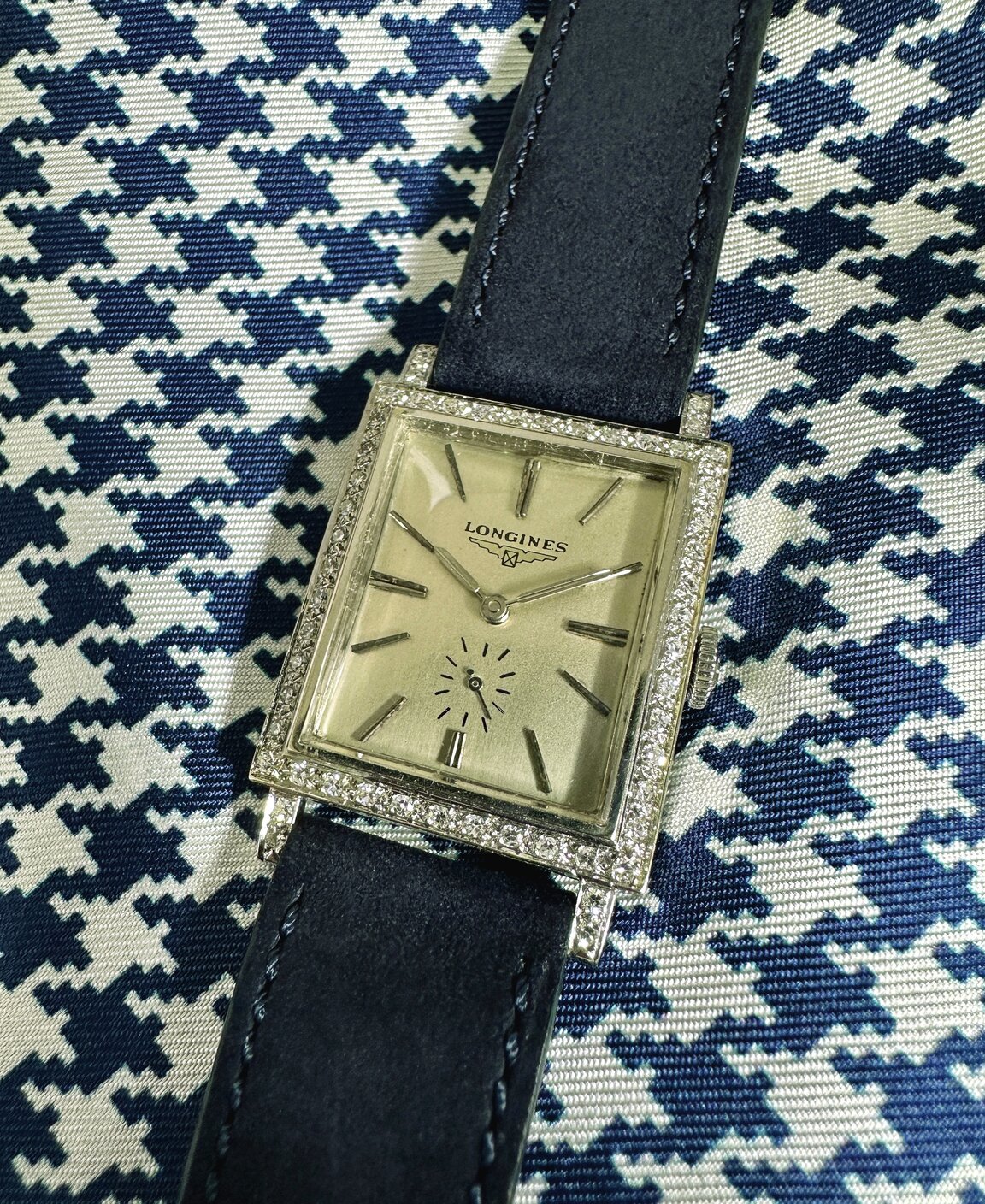
This particular Longines Signet was made around 1956, the year that Elvis Presley entered the charts with “Heartbreak Hotel,” Dwight D. Eisenhower secured his second term as president, and the Bell X-2 became the first manned aircraft to travel at three times the speed of sound. The Longines Signet came with a price tag of $495, making it one of the most expensive offerings of the brand at that time. To put that in perspective, the average income in the United States in 1956 was around $4,500 a year.
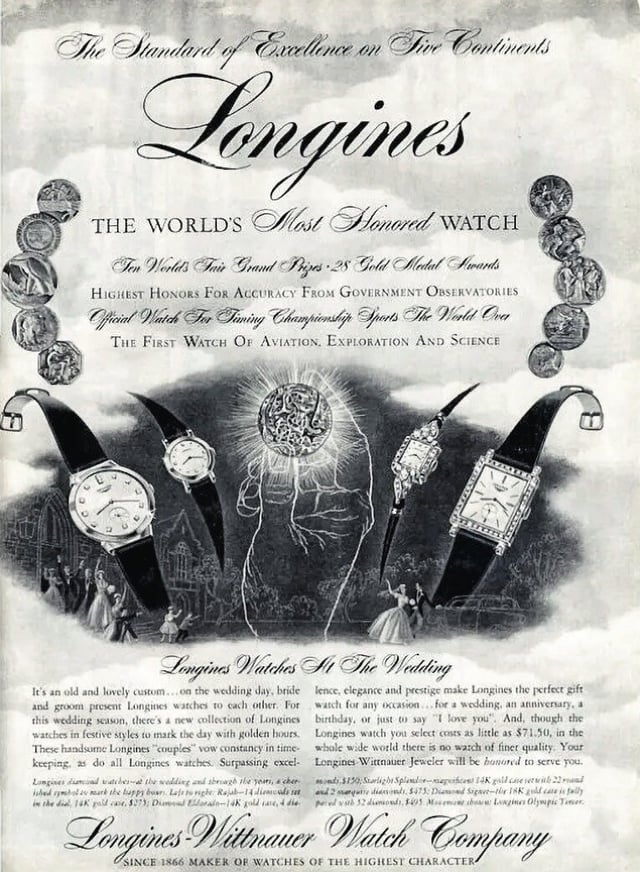
An original 1956 Longines ad showing the Signet on the far right
Longines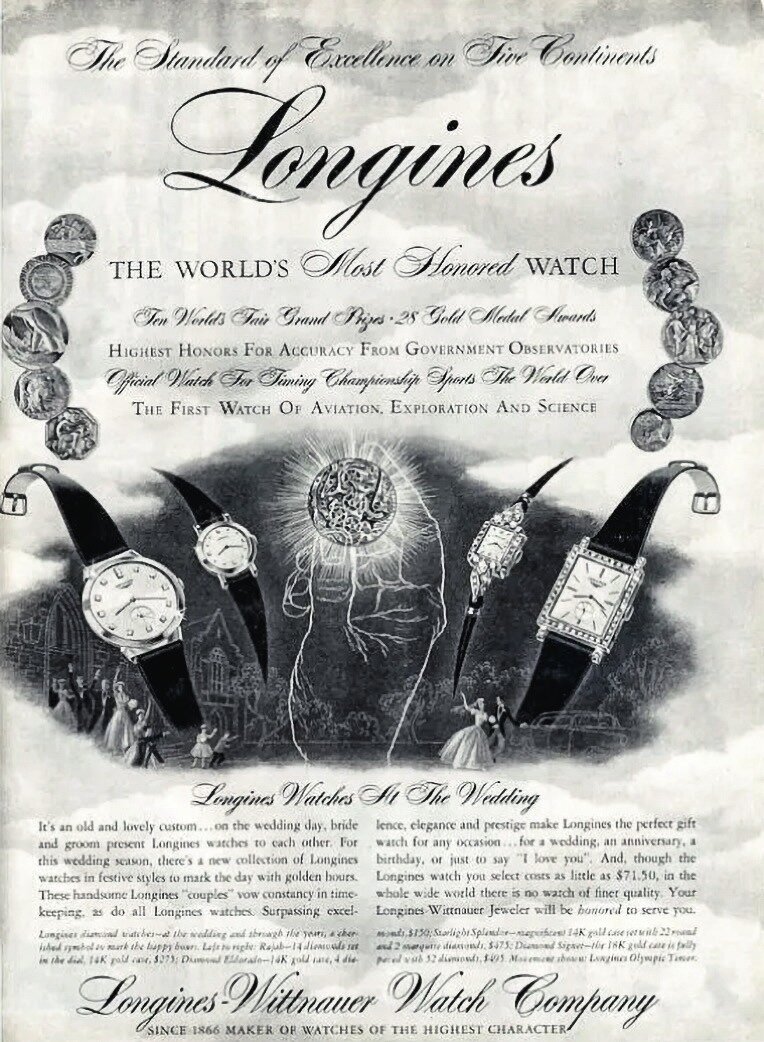
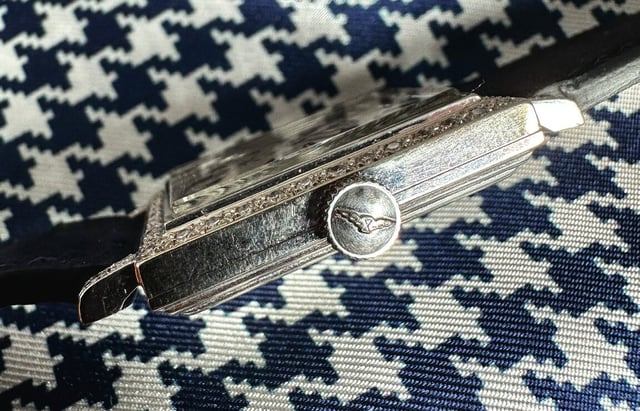
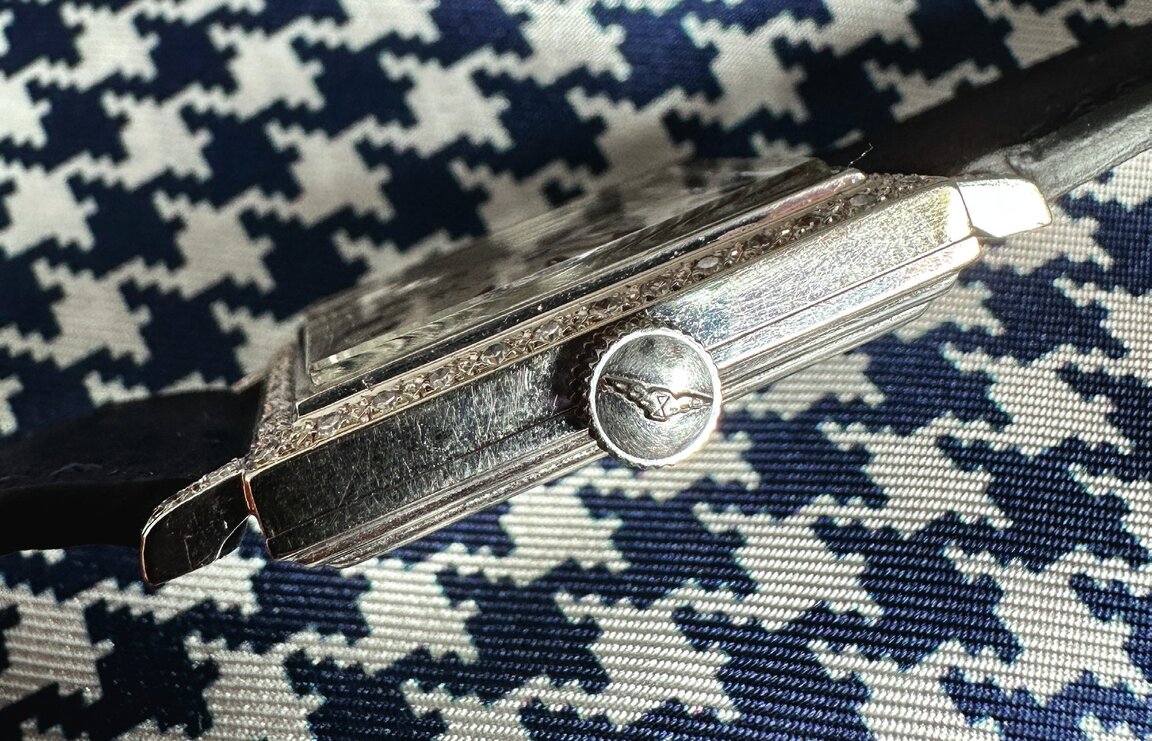
What sets the Longines apart from its peers is, first of all, that its case is crafted from 18k gold, while at that time, in North America, 14k gold was the standard. Diamond-set bezels were fairly common, but for the Signet, Longines opted for rather large stones, which they also used on the lugs. To make them fit, holes are drilled in the bezel to accommodate the culet, the technical term for the tip at the bottom of a brilliant-cut gemstone. As the diamond itself seals the hole, moisture and dust are kept out to the same degree as other dress watches produced in that era.
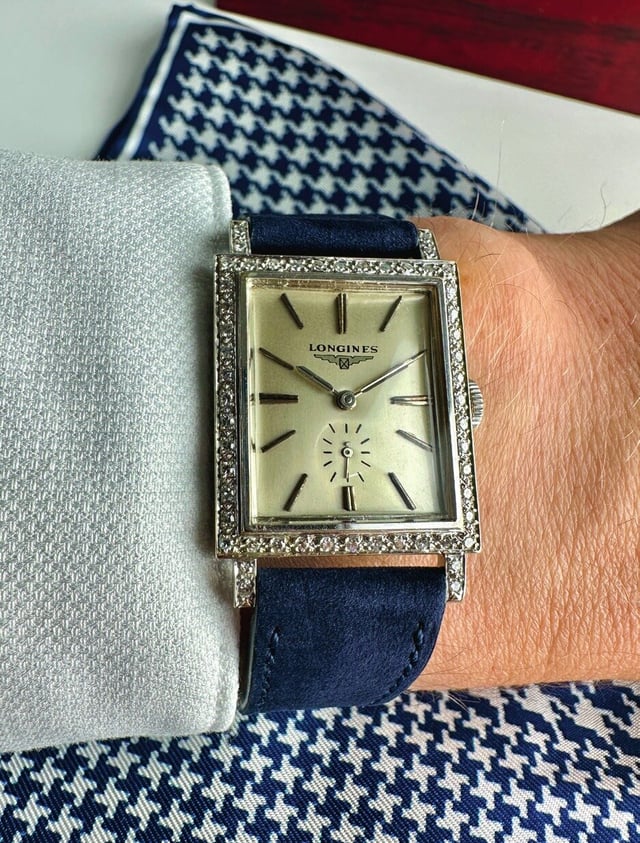
Quite a contrast to its abundant case is the dial. While Longines also offered watches with diamond-set markers in its collection, they went for a more restrained choice for the Signet. The silver-colored dial featured a slightly recessed subdial for the seconds hand, just above the 6 o’clock marker. Those markers are, like the hands, quite slender, and doubled at the 12, 3, 6, and 9 o’clock positions. The Longines name and logo, as well as the markings around the subdial, are the only things printed on the dial. This gives it a very clean look, which not only safeguards legibility but, in a twist, also puts more emphasis on the lavish use of diamonds on the case. This also made it the perfect watch for the self-made businessman, as it could underscore that his considerable wealth had been obtained by a practical and efficient approach.
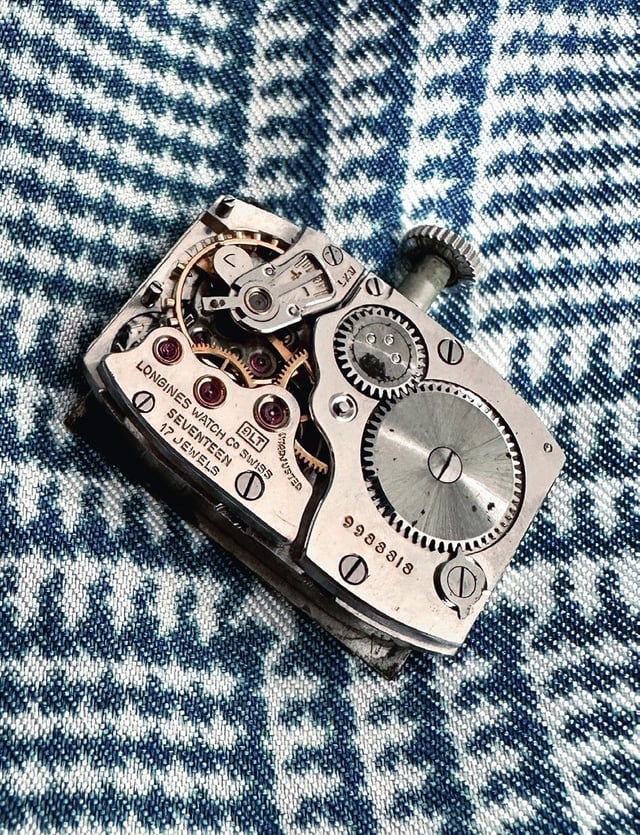
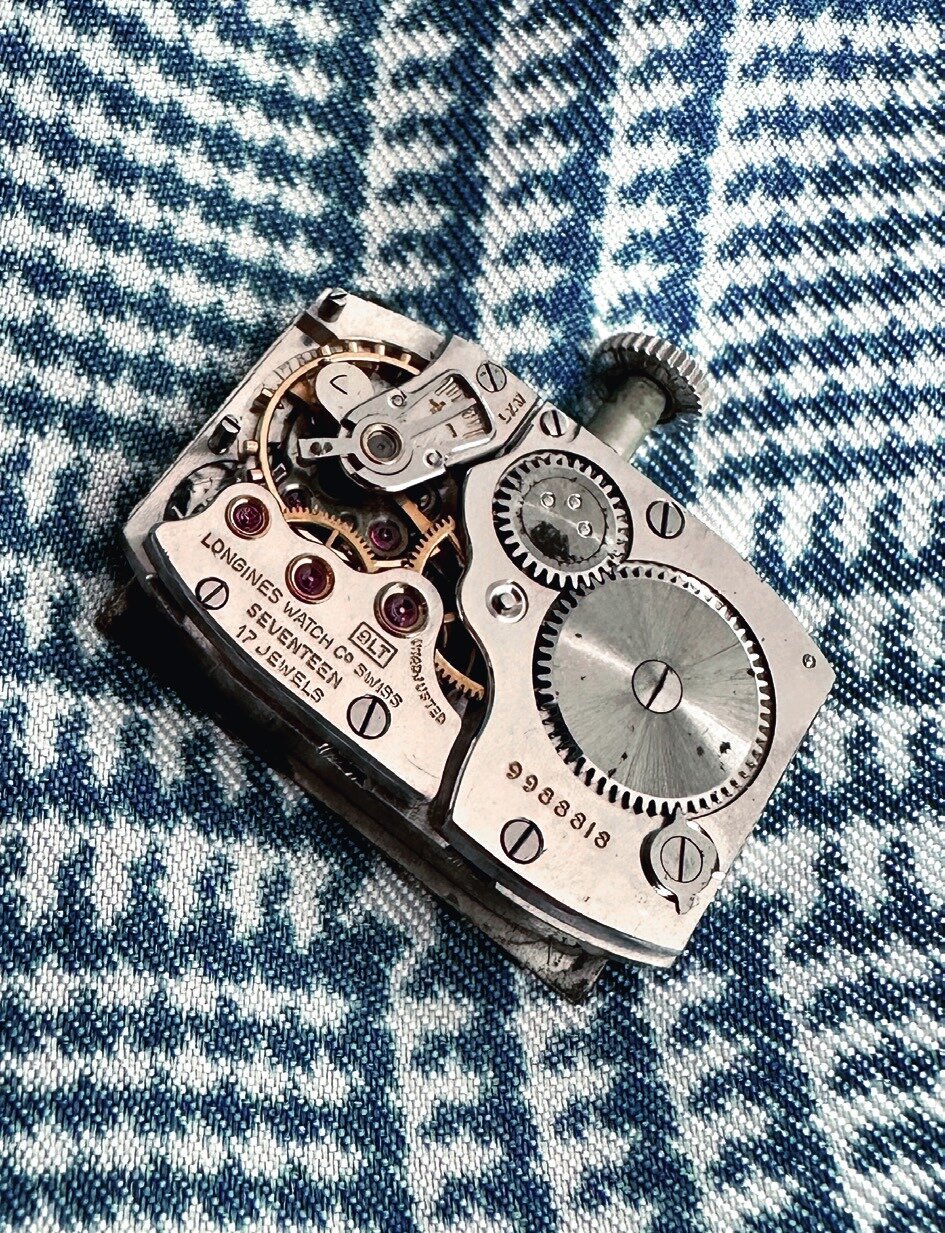
With a width of just above 25 mm and a length of 29 mm (without lugs), the Longines Signet is modest in size by today’s standards, yet unmistakably a men’s watch in the 1950s. Longines kept the corners rather sharp, which prevents the case of the Signet from taking on a feminine elegance, and again, it is the straightforward design of the dial that also plays an important role in this. With a thickness of 7.75 mm, the Longines is also well proportioned in that segment. It gives some body to the case without being overly thick. Inside the case, we find Caliber 9LT. Back in the day, this was a fairly common yet outstanding cushion-shaped manufacture caliber and the perfect fit for the rectangular case of the Signet.
The manual-wound movement was fitted with 17 jewels, of which three were prominently set in gold(-plated) chatons next to the balance wheel. The elegantly shaped bridges show chamfered edges, another indication of the quality of this caliber. Unlike the dial, the movement is signed with “Swiss.” The reason for this is that Longines made these calibers in its manufacture in Saint-Imier, the brand’s headquarters in the canton of Bern, Switzerland. The movements were shipped to the U.S., where a Longines subsidiary company had cases and dials locally made. The reason to do so was that this would avoid the heavy import duties that Swiss-made watches faced in the United States. In addition, it allowed brands like Longines to cater to local tastes and trends. These were quite different, as most of Europe was still recovering from the destruction of World War II, while the economy in the United States was booming like never before. This allowed for the development of local delicacies that now take a unique position in the rich heritage of Longines, of which the Signet might be one of the most precious examples.
This article originally appeared in the September / October 2024 print edition of WatchTime Magazine. To subscribe, click here.