Sinclair Harding: Makers of Fine Clocks
Time ticking with passion
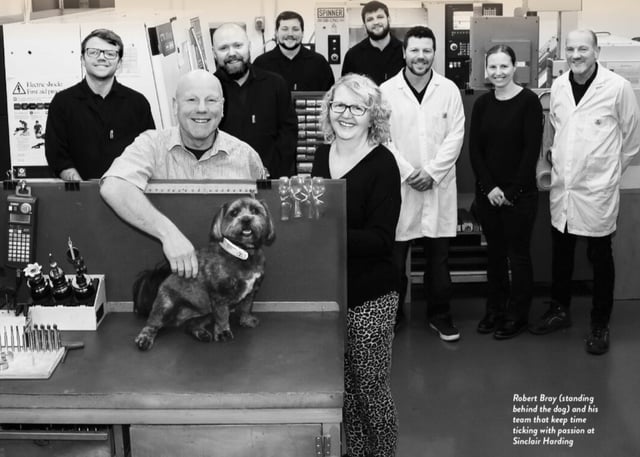
Sometimes, passion overtakes reason. It puts you in a stream that feels natural yet exciting and ushers you into making an almost organic decision that defies logic. Robert Bray made exactly such a decision in 1995, when he decided to take over the clockmaker Sinclair Harding.
What makes this decision so exceptional is that, at the time, Sinclair Harding was one week away from closing for good. Its order books were empty, as was the manufacture as there was also no staff left anymore. On top of that, Bray not only had no prior experience but also four young children at home. What should have been a recipe for disaster became a trail to triumph. The seed for this may very well have been Bray’s approach to business. While lacking experience in this specific field, he immediately set out with the ambition to become a true manufacture, able to create each and every part used in a Sinclair Harding clock themselves. As clockmaking requires quite a wide variety of different expertise and manufacturing processes, from gears and bells to fusee chains, this is quite a daunting task, but a goal that was met in 2017.
Another unique part of Bray’s approach was that he also focused on ensuring that not only would each clock bring a smile to the face of each and every client but that they would be equally joyful to service once that time came. While this may sound like a simple statement, it greatly influences how the clocks are designed and manufactured. It literally means that these clocks have to be designed for eternity, using best-in-class materials and not cutting any corners in the production process. As all parts are produced in-house, this is also something that Sinclair Harding can guarantee.
On the road towards this independence, little by little, crafts were added, and Sinclair Harding’s knowledge and expertise grew by the year. Sometimes, obvious yet still bold moves were needed to get there, such as in 2013, when the company’s supplier of fusee chains announced their retirement. As this is a vital part of quite a few clock movements, Bray decided to buy the company, also allowing the owners to pass on their knowledge to a new generation. Sinclair Harding now has three technicians capable of making fusee chains. They perform the meticulous job of crafting these chains set by set until they reach their full length, which consists of 765 outer and inner links and a total of 510 pins to secure them.
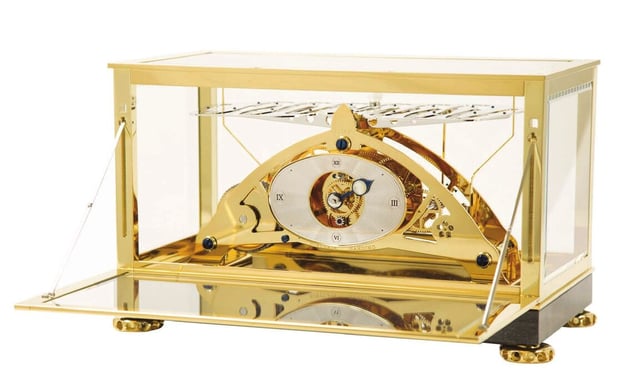
Congrave clocks are not particularly precise but they make up for that in character.
Sinclair Harding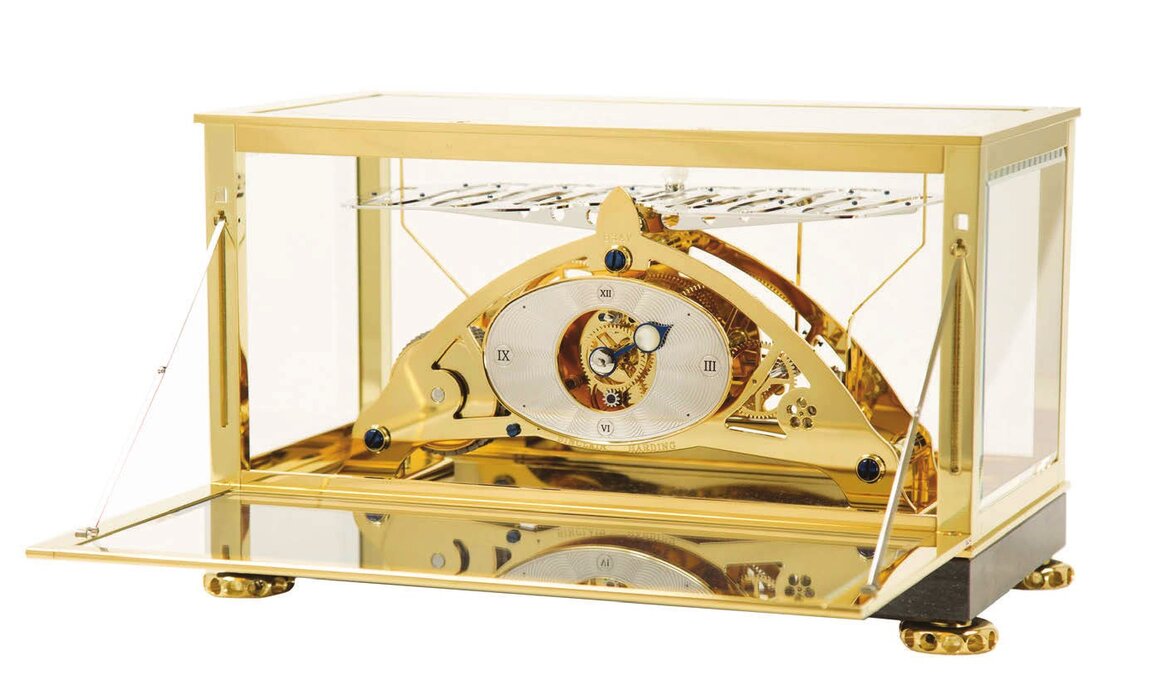
The bells for their striking clocks are also made entirely in-house. They are first cast, after which tuning the pitch begins. This is a delicate task, but one of great importance as the correct tone is of vital importance to obtain the perfect result. Sinclair Harding places a similar dedication on creating the bases of the clocks. Stone, metal, wood or a combination of these is used to create a stable and beautiful grounding for these exquisite timekeepers, using techniques that are also utilized in high-end furniture crafting.
A great deal of time and expertise is also invested in finishing the clocks. While sometimes dauntingly complex, the larger size of clocks, as opposed to watches, means that many of the individual components can be admired with the naked eye. This is especially the case since the majority of Sinclair Harding’s clocks are designed in such a way that their inner workings can be admired from every angle. The superb finishing not only adds to the beauty of these clocks but also acts as a sign of quality and sophistication.
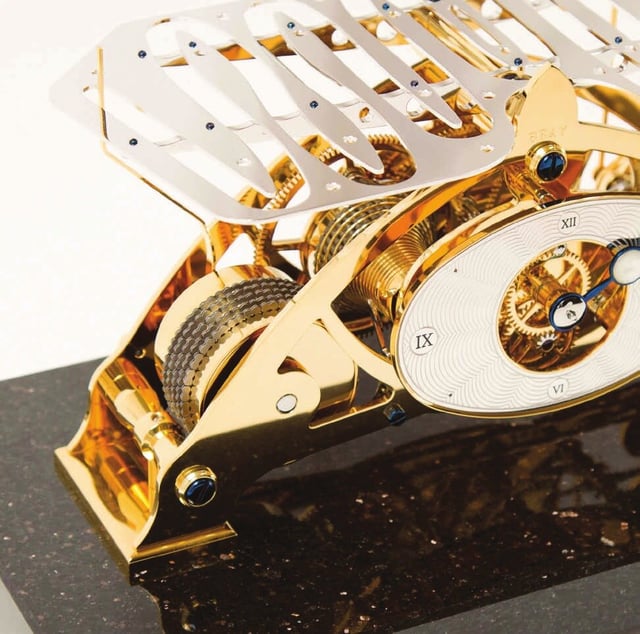
The track on which the ball zigzags to tell time, with the chain underneath that distributes the power off the mainspring
Sinclair Harding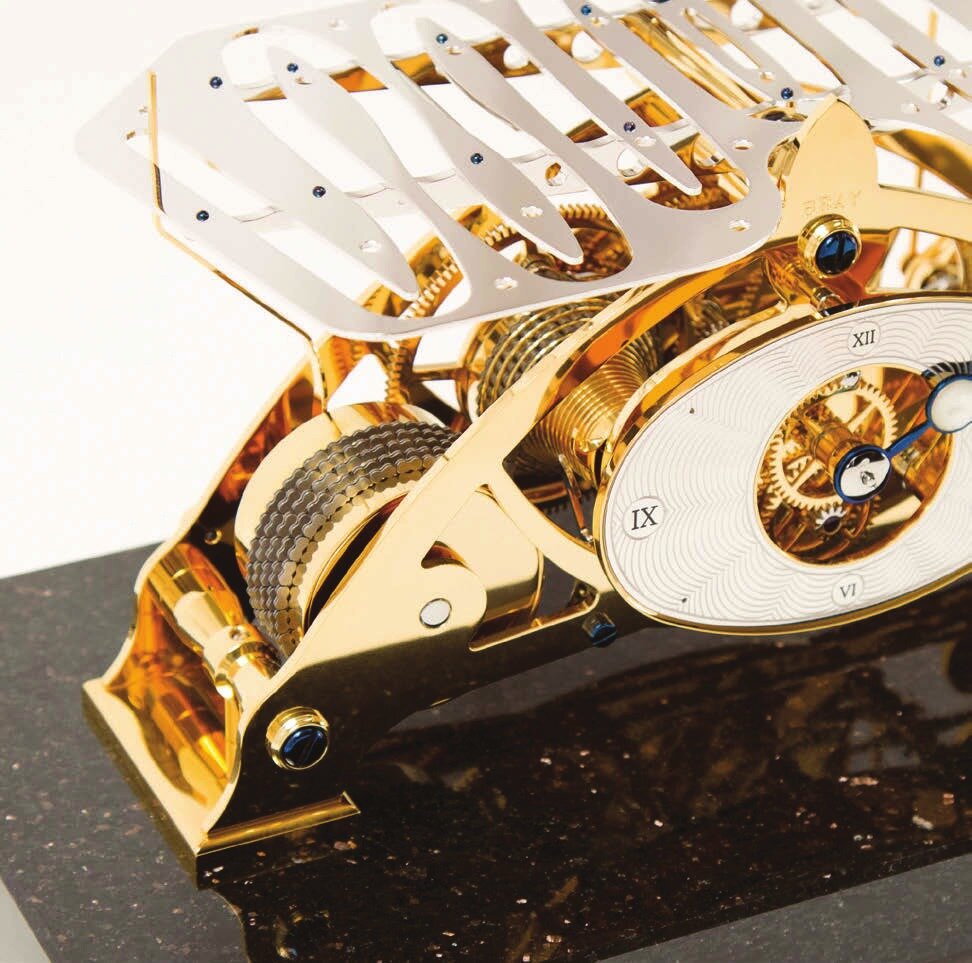
With a sense of typical British understatement, Sinclair Harding calls itself “makers of fine clocks.” While, in essence, very much true, what they consider “fine,” the rest of the world considers extraordinary. Being a British manufacturer, it can hardly come as a surprise that some of Sinclair Harding’s creations are inspired by John Harrison (1693 - 1776), an English horologist who played a pivotal role in solving the longitude problem through his highly accurate marine chronometers.
It took Sinclair Harding five years to develop the H1 as an homage to Harrison. This clock stands on a purpose-built table, to the client’s specifications, balanced by a massive counterweight. In his quest for ultimate precision, Harrison avoided lubrication whenever possible, as the changes in viscosity in the oil could have a negative effect. We also see this element return in Sinclair Harding’s H1, where the arbors of the springs are mounted on rollers. Another great feature of this clock is the fusee assembly, which forms the power train of the movement, and which only needs winding once a week.
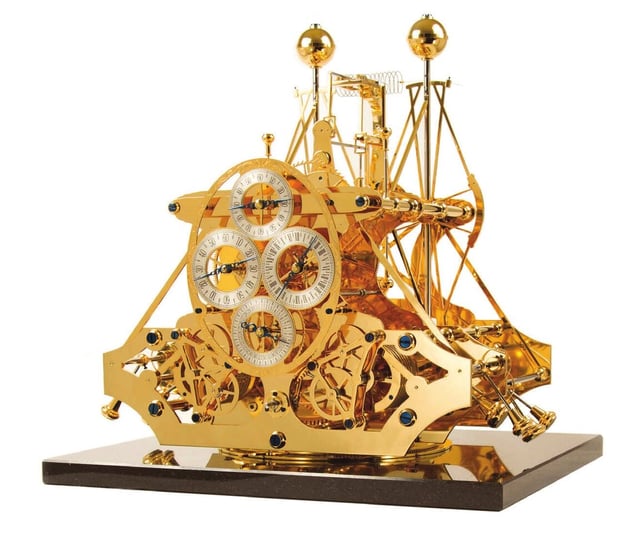
Sinclair Harding’s H1 is an homage to the work of John Harrison.
Sinclair Harding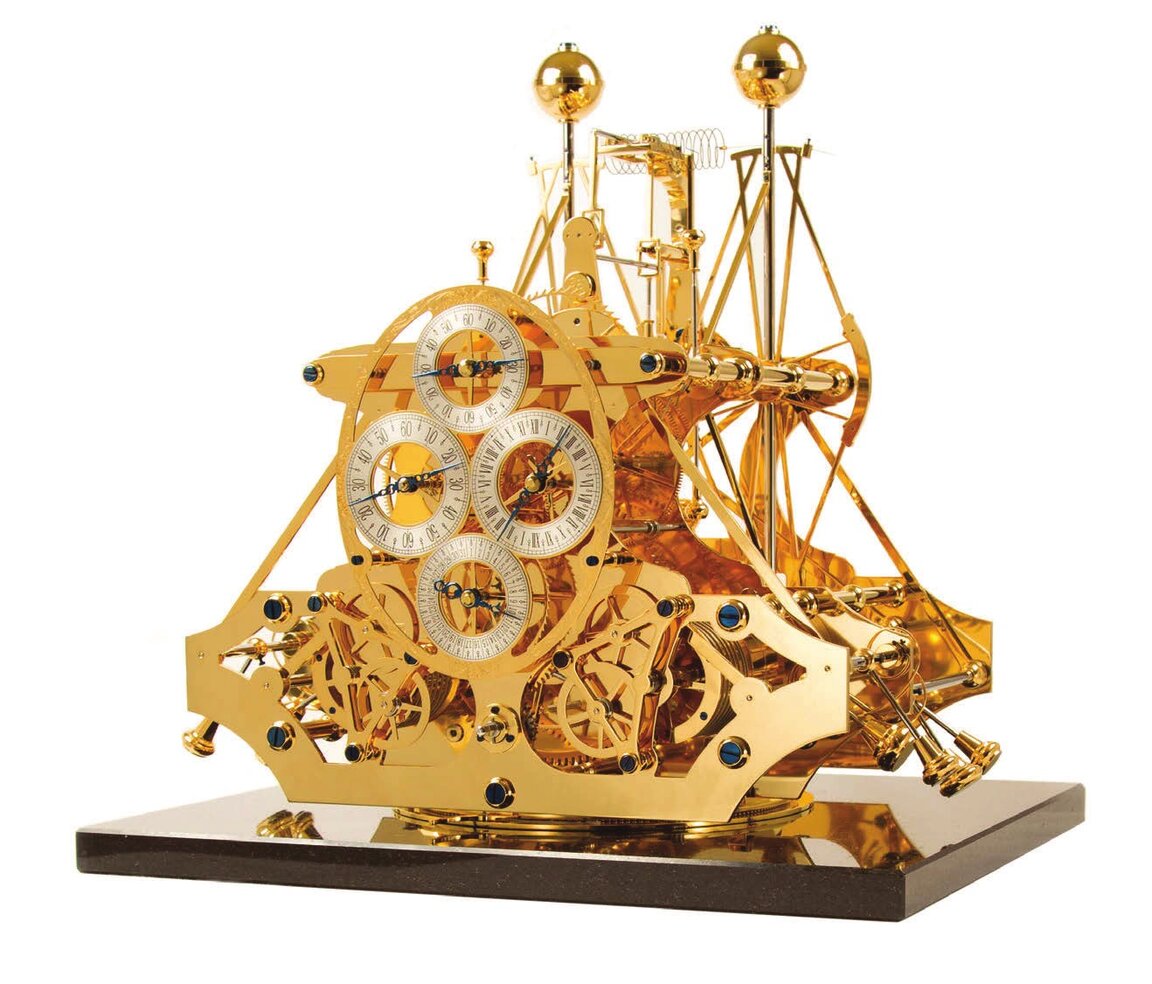
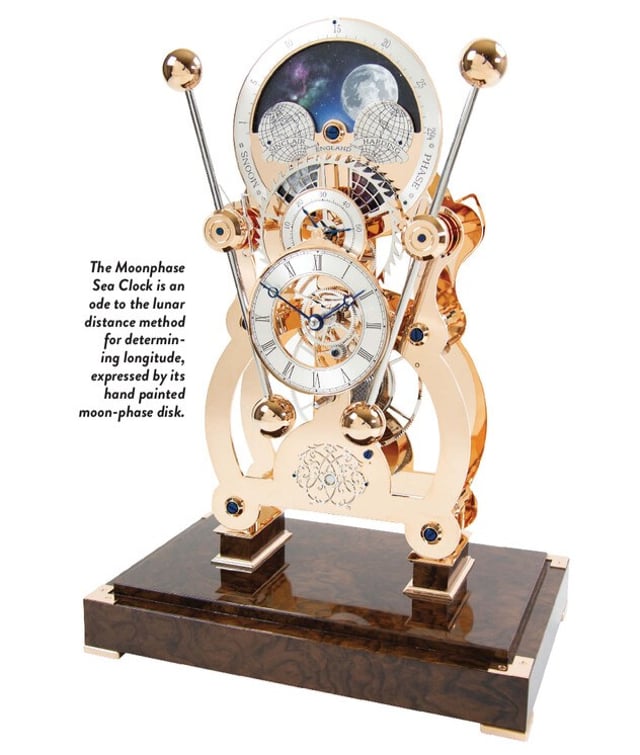
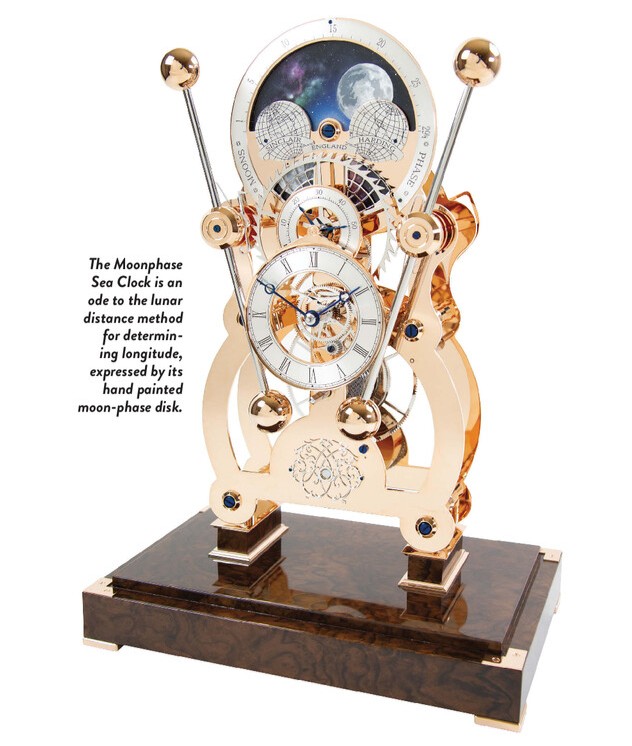
Some things with a slightly more manageable size are the John Harrison Sea Clocks that Sinclair Harding also makes. They highlight a unique escapement, also known under its nickname “The Grasshopper,” in which the subtle action of the pallets allows them to run without lubrication. Sinclair Harding kept the design of these clocks as pure as possible to highlight the unique movement, but for those who want a bit more drama, there is also a moon-phase version of the Sea Clock. It pays homage to the lunar distance method for determining longitude, with a stunning moon-phase dial hand painted by artist Keith Warrington.
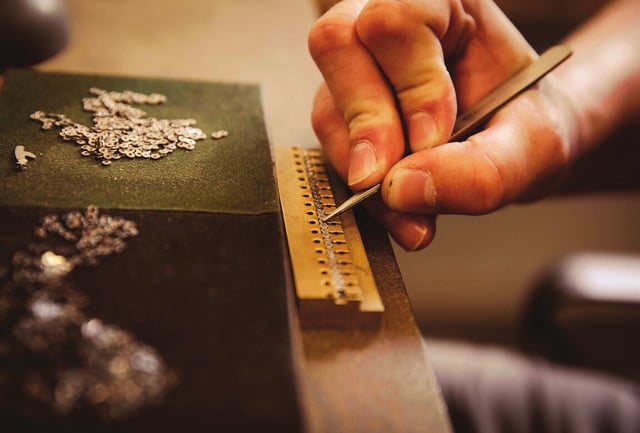
Sinclair Harding is a true manufacture and they even make the chains for the fusee chain movements themselves by hand.
Sinclair Harding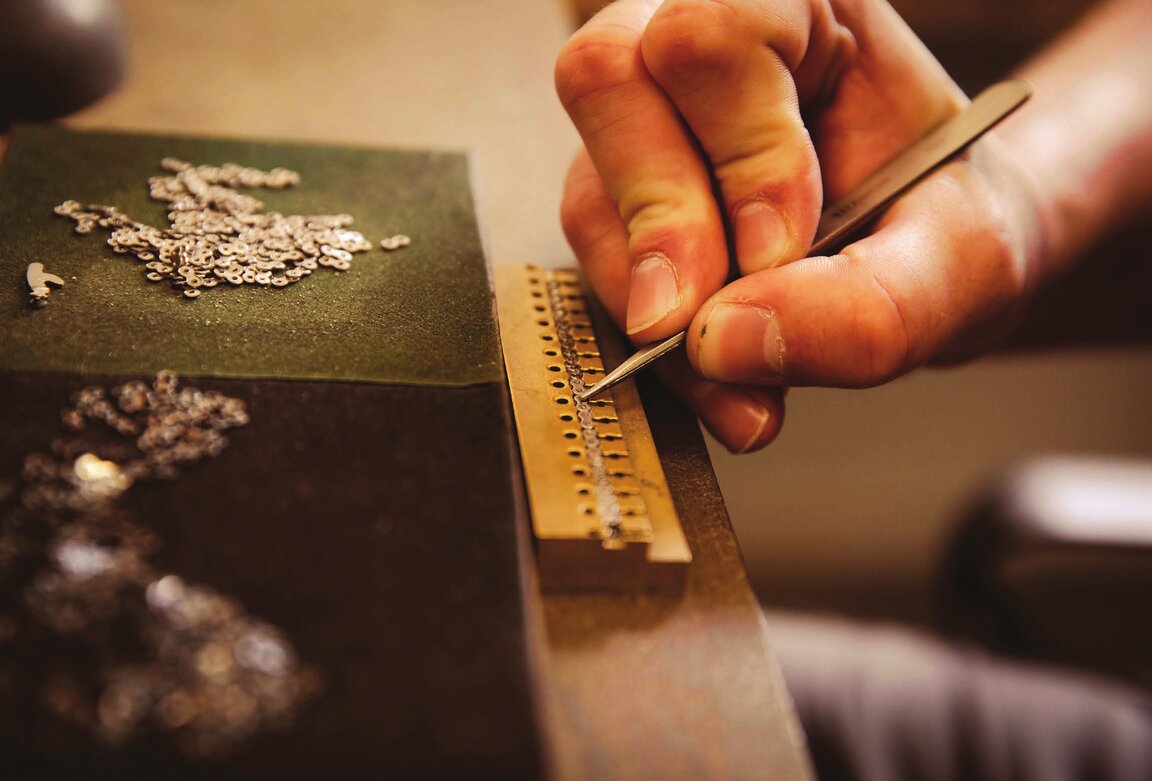
Another very interesting model in the collection of Sinclair Harding is its Congreve clock. It is named after Sir William Congreve, most famously known for inventing military rockets, which were used during the Napoleonic wars. While most of his inventions were focused on the military, he also developed a process of color printing and the unique clock that bears his name. Instead of a hand, it used a ball that rolled down a zig-zag track on an inclined plane, telling the time as it traveled downwards. The plane is then lifted again on the side where the ball is, and its journey starts over. Powered by a fusee chain movement with a power reserve of 8 days, this type of clock, although not the most accurate in the collection of Sinclair Harding due to its nature, is truly mesmerizing.
Another key factor in the success of Sinclair Harding is the optimal blend between past, present and future. Many of the crafts that the team, most of whom are part of the Bray family, perform are deeply rooted in history, yet where quality can benefit from modernity this is not avoided just for the sake of it. Sinclair Harding also utilizes CNC machines for the precise manufacturing of parts, while computers aid the design process. The style of Sinclair Harding can be described as a clean type of elegance. They create a symbiosis between the beauty of the movement and the purpose for which it is made. Future owners can then give the clocks a modern or classic touch as they decide if they want the brass components to be finished in platinum, gold or a combination of the two. The color and material of the base also can be a defining touch to the look of the clock.
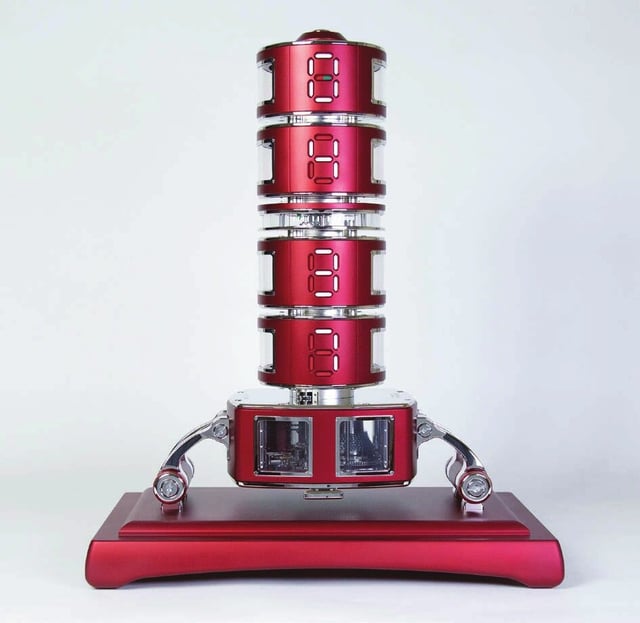
Hysek and Harding: “La Colonne du Temps” shows the true capabilities of Sinclair Harding in a design that is evidence that Jörg Hysek hasn’t lost his touch either.
Sinclair Harding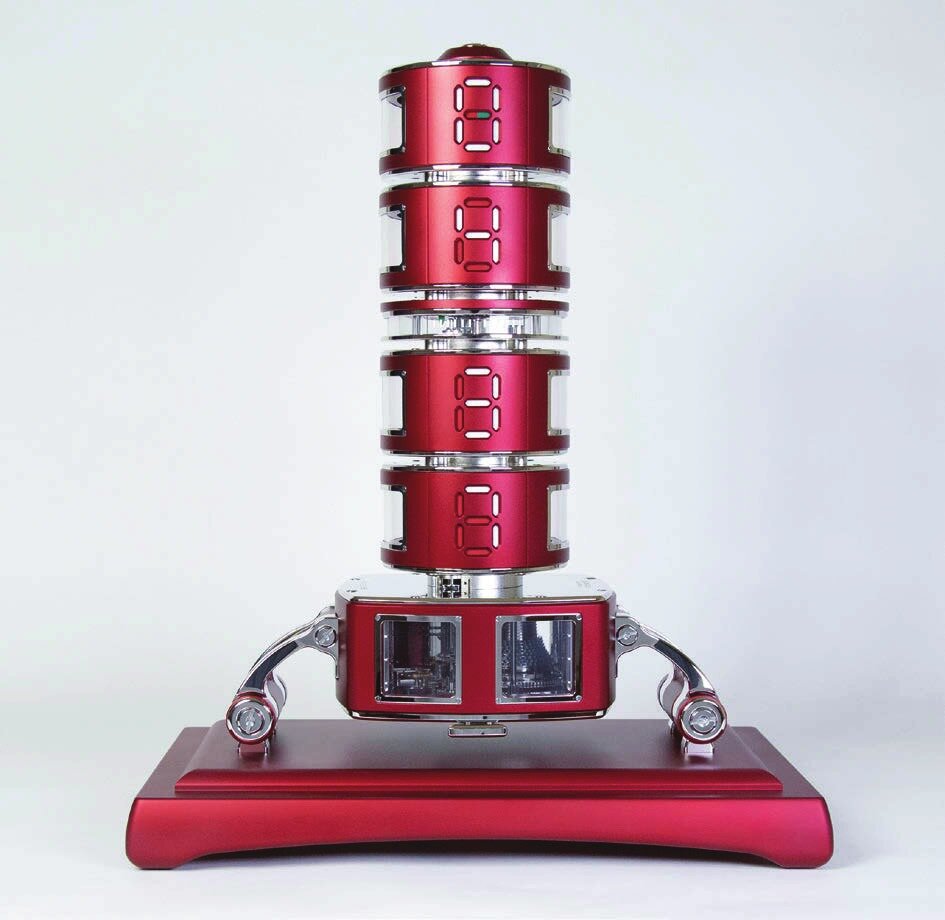
One that is definitively the most modern creation in the collection of Sinclair Harding is the “La Colonne du Temps,” meaning column of time. It came to life in 2017 when Bray was approached by Swiss watch designer and entrepreneur Jörg Hysek, best known for designing the Vacheron Constantin 222 and the TAG Heuer Kirium. He had an idea for a clock that showed the time in a digital format in a vertical column. While others told Hysek that his idea was too complex to execute, Bray thought otherwise. As his Sinclair Harding was now also a manufacture capable of making every part themselves, he was confident that they could make Hysek’s idea work.
While this meant that his team had to learn new techniques, it took them only a year before the first “La Colonne du Temps” could be shown to the public at Baselworld. It shows again what courage, determination and a can-do mentality can result in.
As sanity may dictate caution, passion is key to claiming victory. While Robert Bray has presided over the creation of more than 1,000 Sinclair Harding clocks, turning a brand with no orders and no staff into a true and thriving manufacture, he also plays a pivotal role in preserving old craftsmanship in the most active way possible. This legacy is now also not only his own, with the next generations fully committed to making Sinclair Harding a lasting legacy.
This article was originally published in the March / April 2025 issue. To subscribe to the print edition of WatchTime Magazine, click here.