30 milliseconds: Patek Brings Instantaneous Jumping Displays to the Perpetual Calendar Chronograph
An Italian-exclusive worth knowing
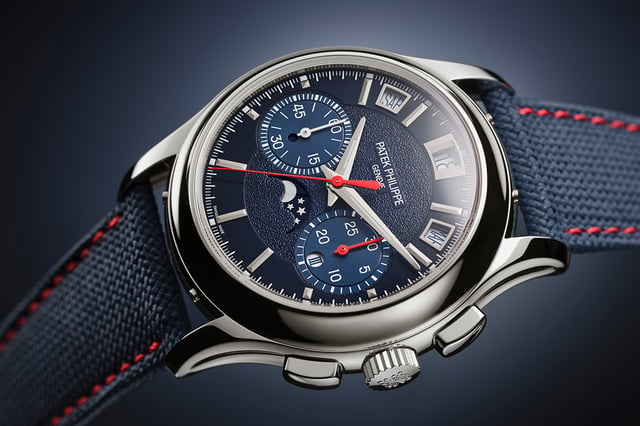
Patek Philippe is presenting a new interpretation of one of its defining grand complications. Unveiled during the Watch Art Grand Exhibition in Milan, the reference 5978P-010 brings together a manually-wound chronograph and an instantaneous perpetual calendar for the first time in this sophisticated configuration. The Instantaneous Perpetual Calendar Chronograph is powered by the new Caliber CH 29-535 PS QI and housed in a platinum Calatrava case. It is dedicated to the Italian market and limited to 120 pieces.
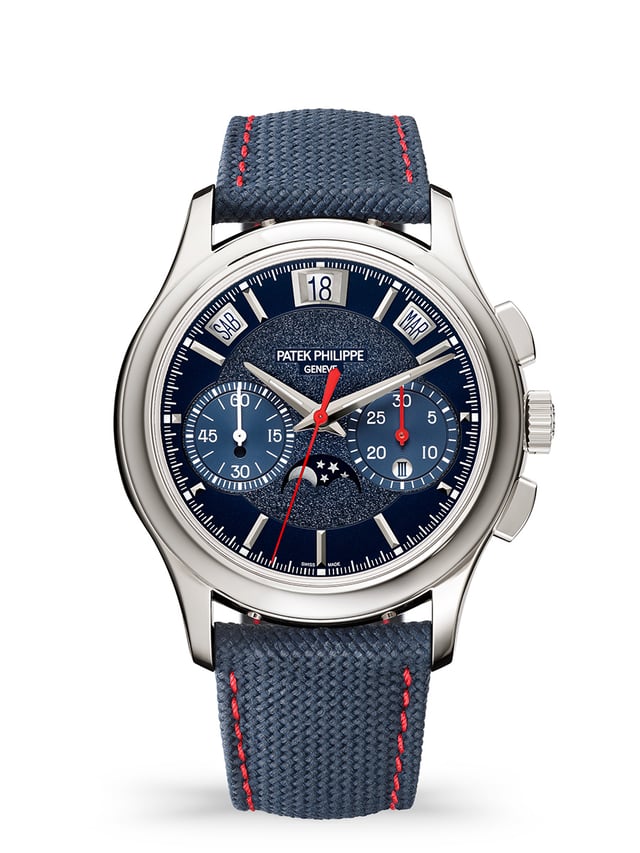
Instantaneous Perpetual Calendar Chronograph, ref. 5978P-010
Patek Philippe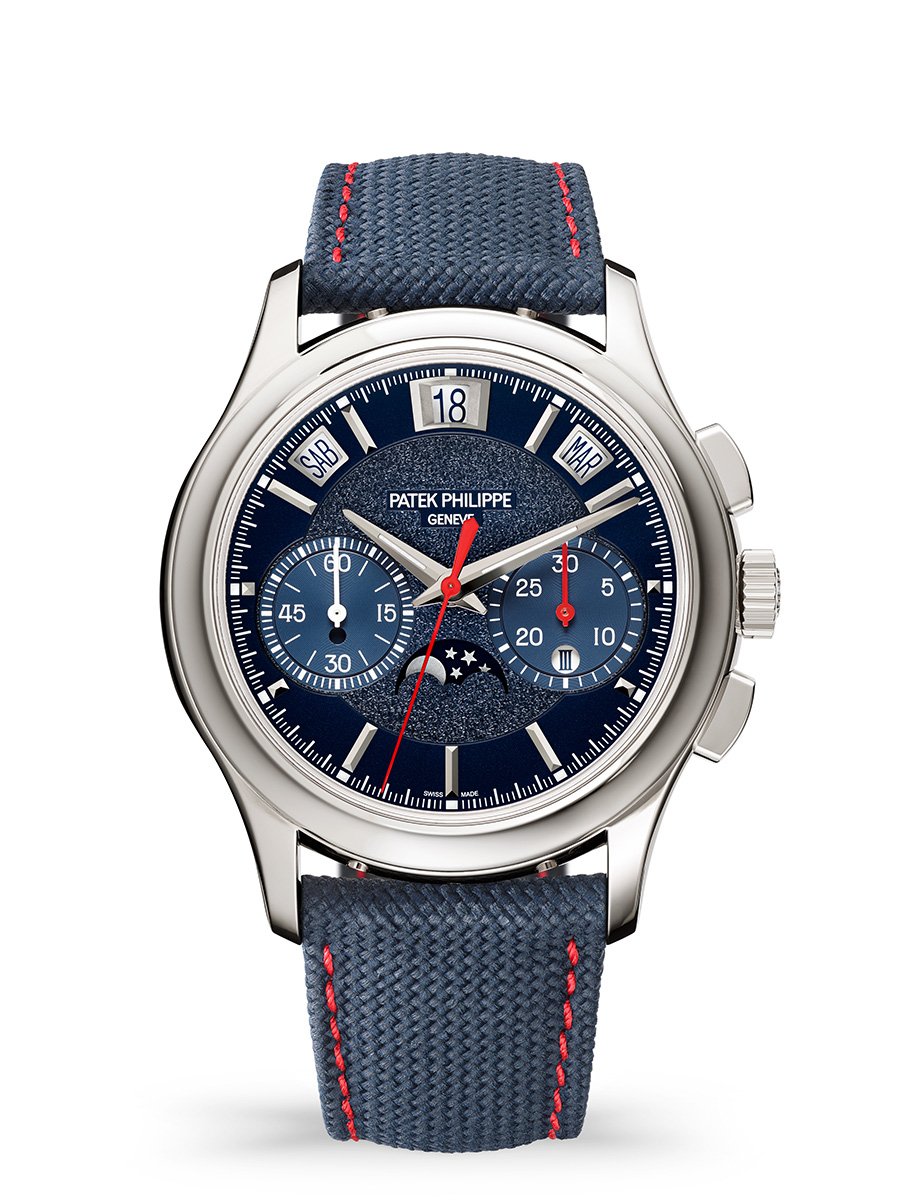
The refined combination of the two quintessential complications has deep roots at Patek Philippe. In 1941, the reference 1518 became the first serially produced wristwatch to combine a perpetual calendar and chronograph. It has remained a cornerstone of the manufacture’s Grand Complication collection, most recently represented by the reference 5270 and its CH 29-535 PS Q movement.
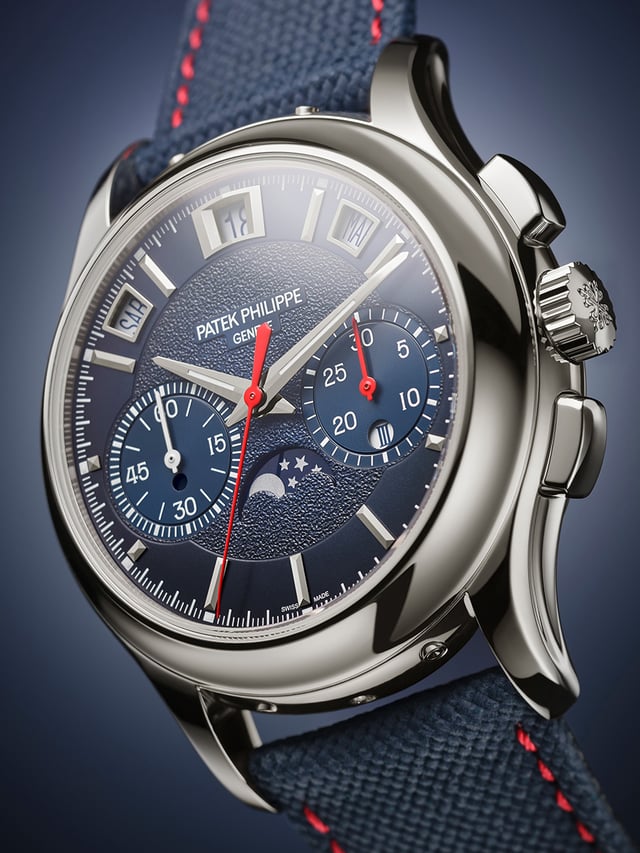
Instantaneous Perpetual Calendar Chronograph, ref. 5978P-010
Patek Philippe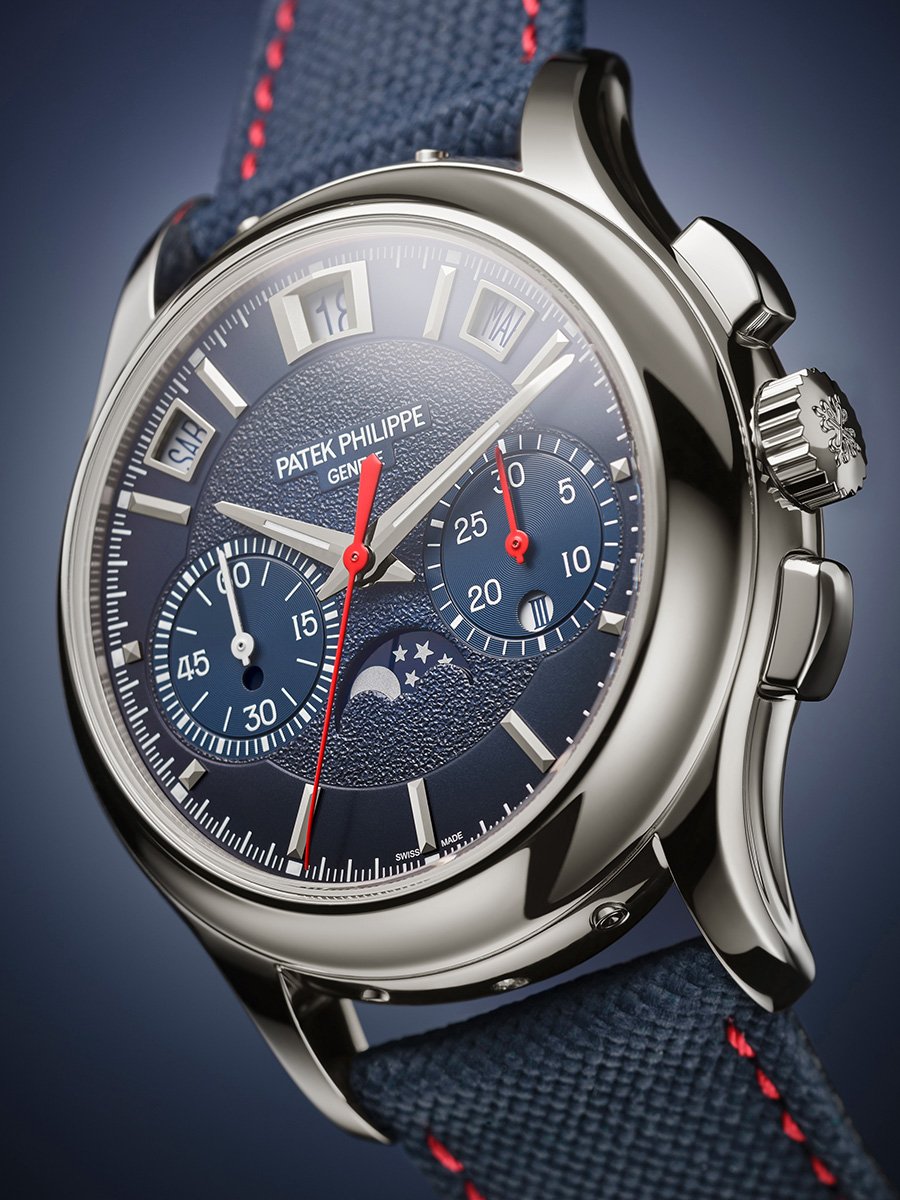
In the Blink of an eye
The key technical feature of the new ref. 5978P-010 is its instantaneous perpetual calendar. The mechanism is based on a mechanism originally introduced by Patek Philippe in 2008 with the Grand Complication reference 5207 and subsequently used in the reference 5208 and, most recently, the reference 5308. Instead of advancing gradually, the calendar indications jump simultaneously in a fraction of a second. The day, date, month and leap-year indications change in approximately 30 milliseconds, even when the movement has only ten hours of remaining power reserve.
This requires considerably more energy than a conventional perpetual calendar mechanism because the indications are displayed on disks rather than lightweight hands. Energy is accumulated over several hours and released almost instantaneously at midnight. A large 15-part lever controls the simultaneous jump, while two complementary jumper springs working in opposite directions ensure a consistent amount of energy is used for each calendar change. The system also accounts for the different jumps required throughout the year, from the one-day change following a 31-day month to the four-day transition at the end of February in a common year.
The complexity of the mechanism is reflected in the dial architecture. Three apertures for the day, date and month are arranged in an arc between 10 and 2 o’clock, giving the instantaneous calendar a prominent position on the navy-blue sunburst dial. The indications are presented in Italian, with the larger central date aperture framed by the smaller day and month windows. A moon-phase display sits at 6 o’clock, while round apertures at 9 and 3 o’clock indicate day/night and the leap-year cycle.
The dial itself combines several levels and textures. Its navy-blue sunburst surface transitions into a black gradient at the rim, while the slightly concave center has a textured finish. The subsidiary dials at 3 and 9 o’clock sit on separate levels and feature a snailed decoration. Faceted white-gold hour markers and dauphine hands with luminescent coating provide a crisp contrast, while the red-lacquered central chronograph seconds hand and 30-minute counter add a vivid accent.
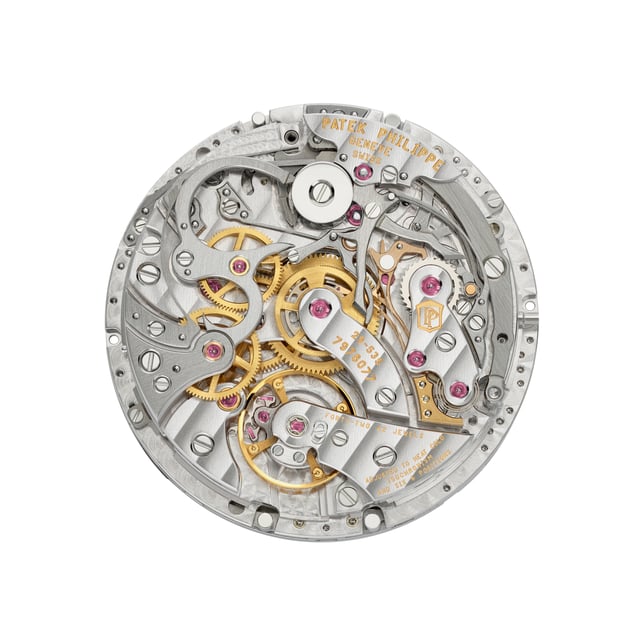
Caliber CH 29-535 PS QI
Patek Philippe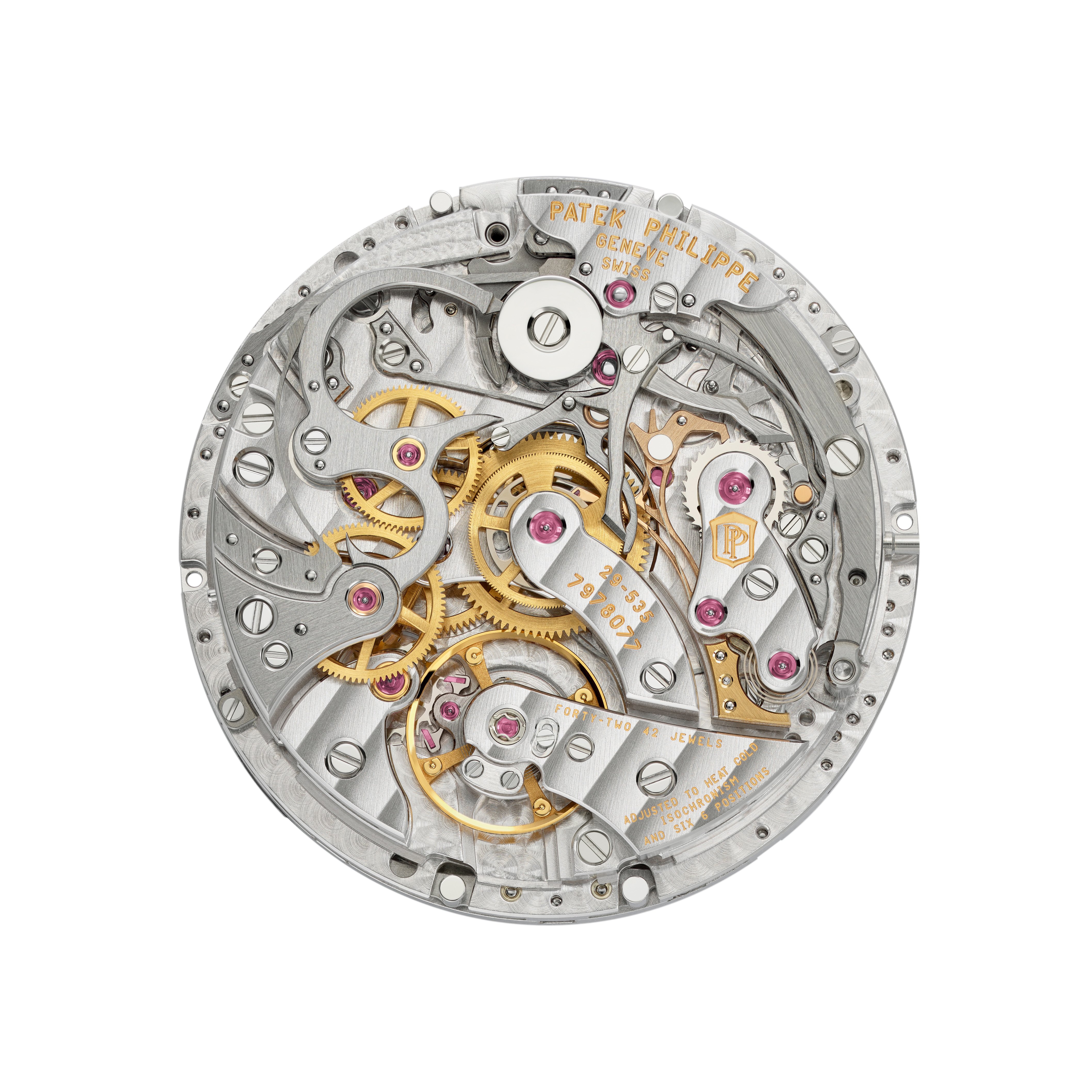
A New Manually-Wound Chronograph Movement
The chronograph side of the new Caliber CH 29-535 PS QI is based on the architecture introduced in 2009 with the manually wound CH 29-535 PS. True to the tradition the brand's manually wound chronographs, its construction combines a column wheel endowed with a polished protective cap and a tooth-wheeled horizontal clutch. The chronograph drive wheel, the clutch wheel and the chronograph wheel present patented profiles that reduce wear, increase the efficiency of energy transmission and avoid all point-to-point contact. Regulating the depth of the gears is not achieved, as is usual, by means of an eccentric, but by a large “eccentric cap” placed on the column wheel that defines the extreme position of the beak of the clutch lever, resulting in more precise adjustment. Notable among the other features optimizing performance are the auto-adjusting zero-reset hammers pivoting between jewels, the system of direct synchronization between clutch lever and brake, and the open-work cam of the minute-counter, conceived to damp shocks during the zero re-set.
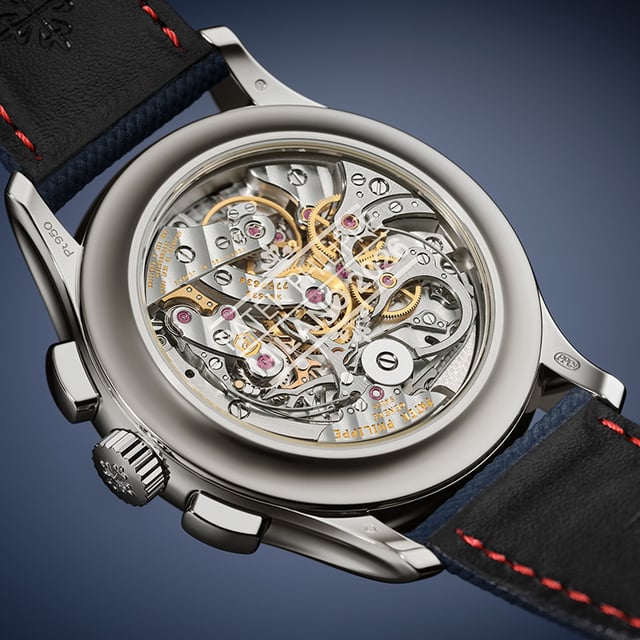
Caliber CH 29-535 PS QI
Patek Philippe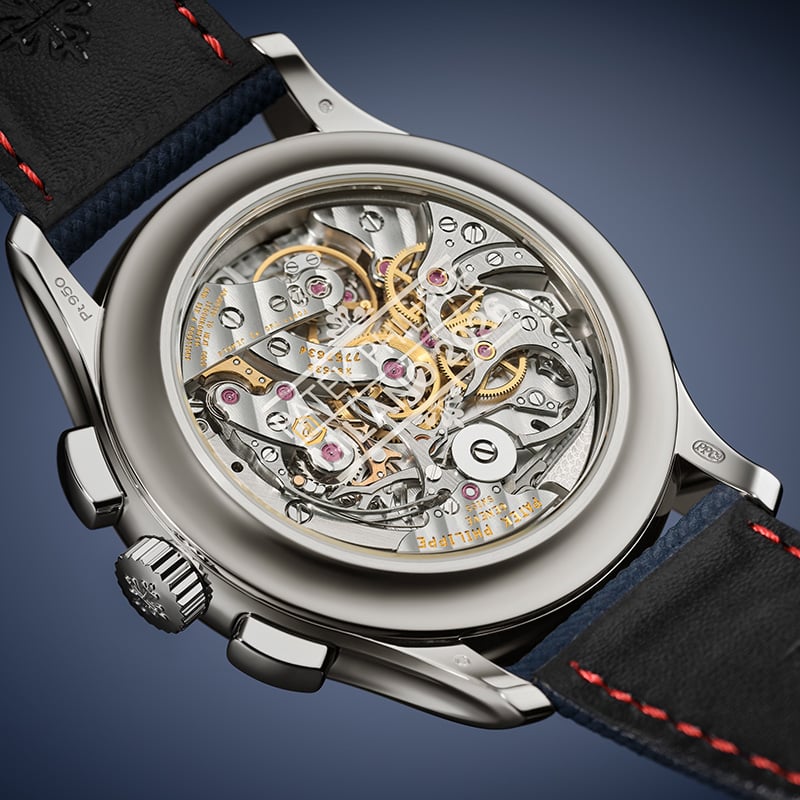
With 500 components, the CH 29-535 PS QI is a substantial movement. It uses a Gyromax balance with four arms and four inertia blocks, paired with a Breguet overcoil balance spring. The balance oscillates at 4 Hz, or 28,800 vibrations per hour, while the movement provides a power reserve of 55 to 65 hours with the chronograph disengaged. Through the sapphire case back, the movement’s top-notch hand-finishing and decoration in accordance with the Patek Philippe Seal can be admired. The sapphire pane carries the inscription “Patek Philippe Milano 2026.”
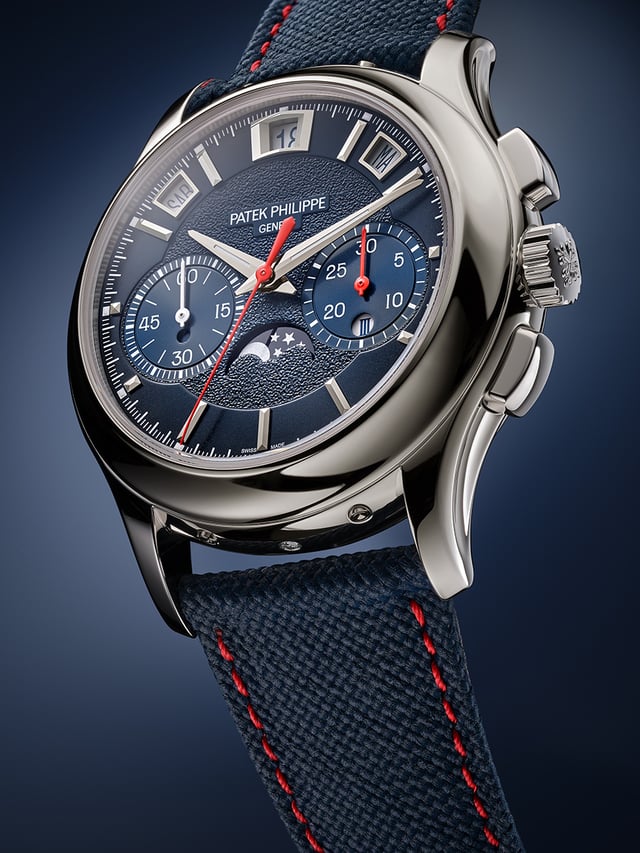
Instantaneous Perpetual Calendar Chronograph, ref. 5978P-010
Patek Philippe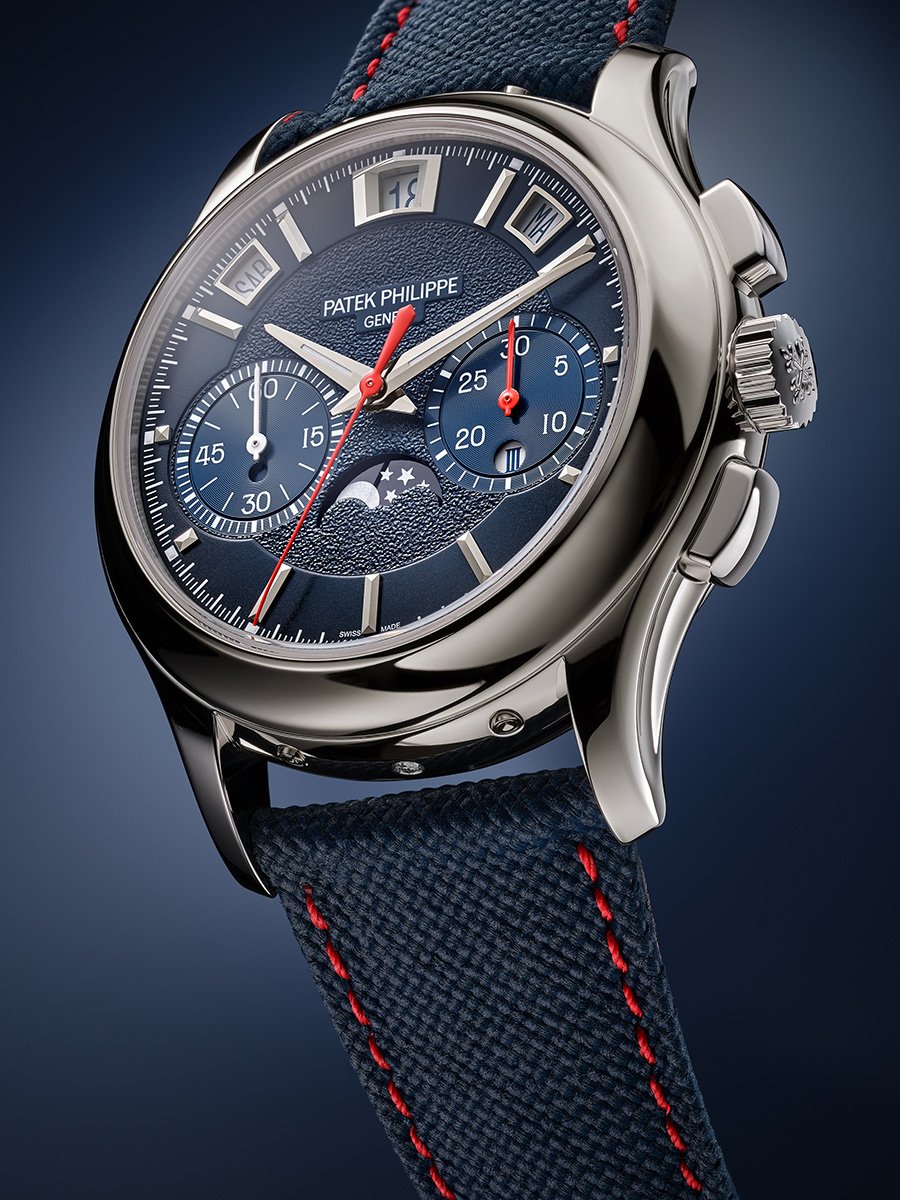
Calatrava Case
The Instantaneous Perpetual Calendar Chronograph has its entrance in a 42mm Calatrava case crafted from 950 platinum. It is fully polished and features a concave bezel and inward-curving, hollowed lugs. Rectangular chronograph pushers with softened edges follow the contours of the case. As customary for Patek Philippe’s platinum watches, a discreet brilliant-cut diamond is set at 6 o’clock. Patek Philippe presents the watch with a navy-blue composite strap featuring a textile-inspired motif and contrasting red stitching. It is equipped with a triple-blade fold-over safety clasp in platinum. Pricing is marked at $337,585.