It's Hip to be Square: A Spotlight on Bell & Ross
How a Shape Took Bell & Ross’s Success to the Next Level

In 1986, Huey Lewis and the News launched the song “Hip to Be Square” as their second single from their album Fore!, which achieved multi-platinum status. As well as the song might have worked for them, the square shape in watchmaking was always met with varied success. While some brands have made successful square watches in the past, it still played third fiddle at best, behind the more popular round and rectangle shapes. As time progressed, and sports watches became increasingly more popular at the expense of dress watches, it was unlikely that the square shape would ever lay a claim to fame again in the watch world.
That all changed when Bell & Ross saw its potential and used it to create a watch whose design was so powerful that it quickly became the hallmark of the brand. Founded in 1992 by Bruno Belamich and Carlos Rosillo, Bell & Ross quickly made a name for itself with its tool watches that stood out because of their clean design with high legibility. Inspiration came from the world of aviation and the military, where form follows function. The brand often explored the less beaten tracks of the watch world. This resulted in the Space series, a collection of chronographs housed in ergonomically shaped cases made for and also worn on space missions. The Type Démineur was a timepiece made to the specification of explosive ordnance disposal specialists, while Bell & Ross also joined the quest to explore the deepest parts of the ocean with the Hydromax, which, thanks to its oil-filled case, could withstand the pressure of 1,110 ATM.


Watches like this quickly established Bell & Ross as a recognized brand within the watch industry. However, this would be elevated to new heights in 2005 with the launch of the BR 01. Bell & Ross wanted to create a new generation of highly legible tool watches and found the answer in an airplane cockpit. Bold hands with matching numerals gave plenty of character and also met the brand’s requirements of legibility. Instead of adapting this design to a round shape, Bell & Ross kept a frame around it, with four distinct screws, making it look like it came straight out of a cockpit. Wearability is always an issue with square cases, as the shape doesn’t go too well with our wrists. When made too large, it can limit our movements while its corners can easily get stuck behind clothing and other materials. This is also the reason why the most successful square watches before have been modestly sized dress watches.

Bell & Ross didn’t want to compromise, either on size or on wearing comfort. They gave themselves quite a challenge, as the BR 01 was not a small watch, with a horizontal diameter of 46 mm. As Bell & Ross had always made instruments for professionals, they have extensive experience regarding wearing comfort. As their timepieces were designed for the most demanding conditions, wearing comfort was equally important, as wearing the watch should not be a distraction or uncomfortable when done for a prolonged time. To tackle this with the BR 01, they first kept the overall height of the watch in check. Secondly, they rounded the corners so that they couldn’t get caught behind something and also felt smooth to the touch. By utilizing very short lugs, they ensured that the watch could be worn with comfort on even more modest-sized wrists.
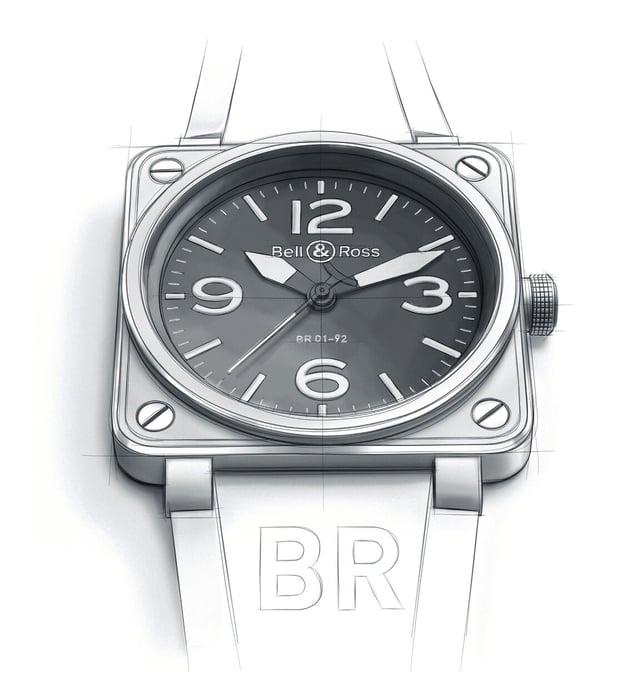
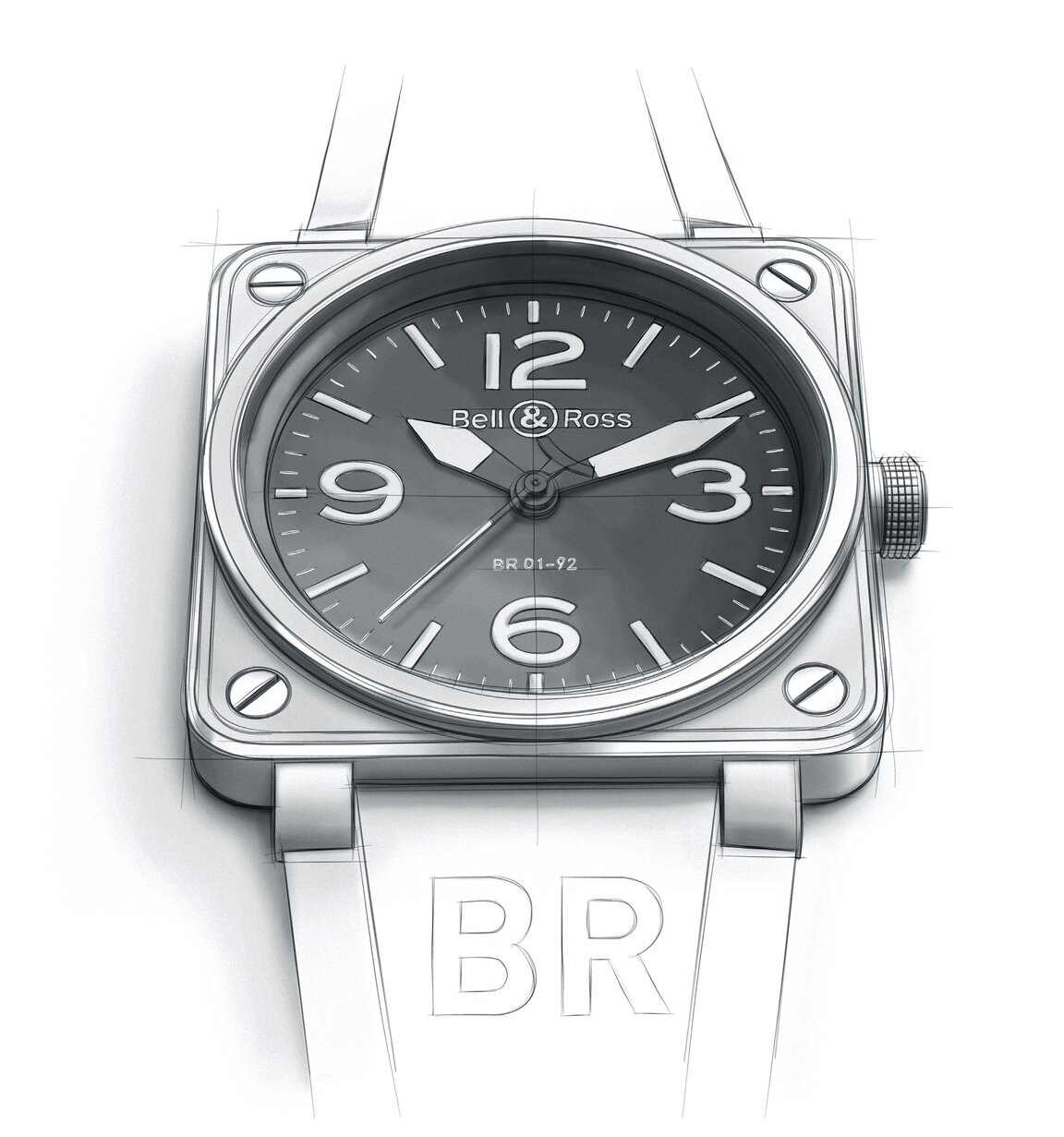
Right after the launch, the BR 01 took off, elevating Bell & Ross’s success to new heights. Almost overnight, this instantly recognizable timepiece became the cornerstone of the brand and evolved into a collection of its own. This so-called Instruments collection also shows the versatility of the design. While the versions with the stainless-steel case, matte black dial, and bold hands and hour markers with luminous coating remain the core of the series, Bell & Ross also explored different directions.
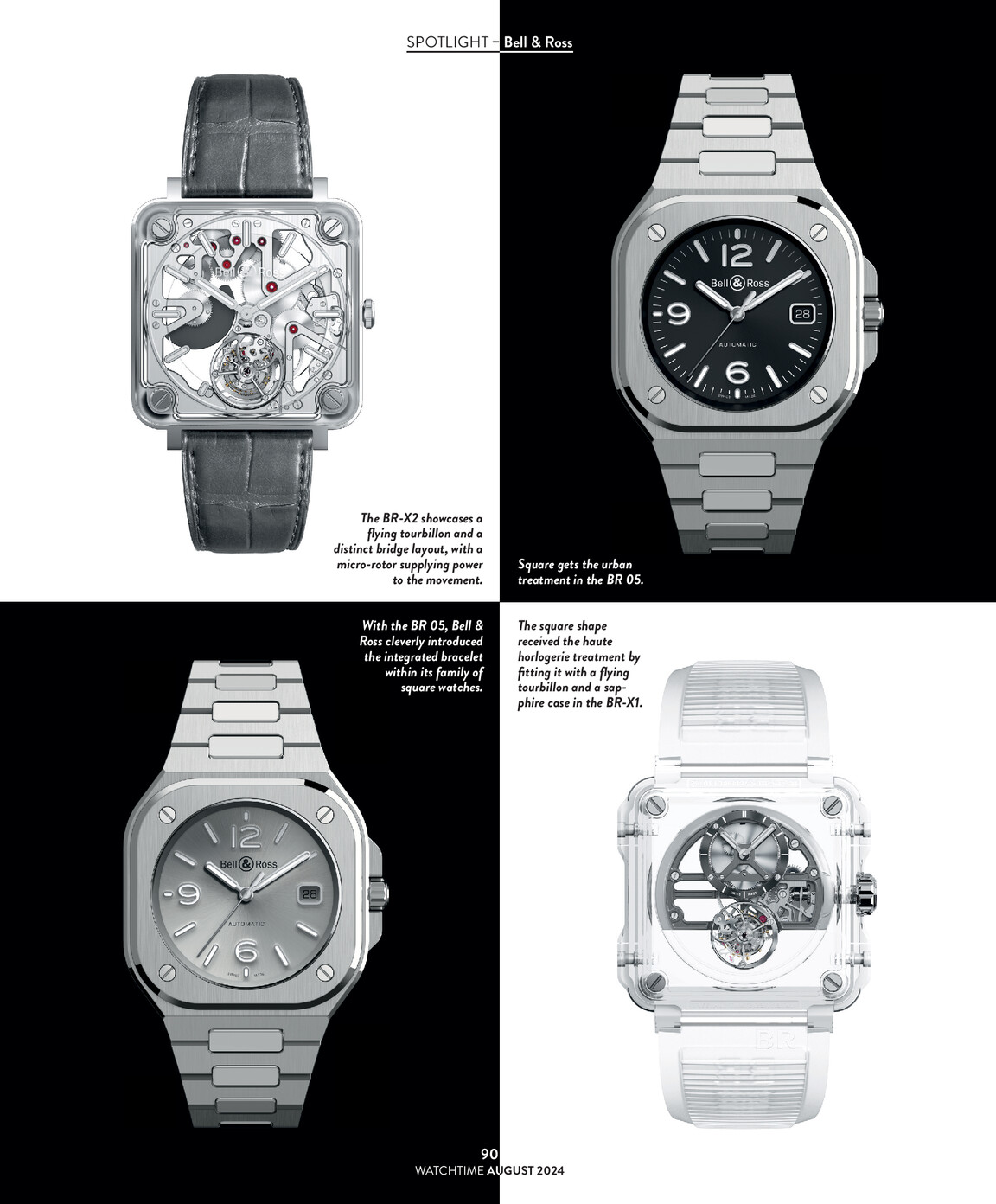
One of the first was the BR 01 Tourbillon launched in 2007. This model was developed in collaboration with BNB Concept, a specialized manufacturer of highly complicated movements that was acquired by Hublot in 2010. It shows a regulator-style dial with a centrally mounted minute hand but a subdial for the hours. The flying tourbillon serves as the seconds hand, as it makes a full rotation every minute. On the left side, there is a power-reserve indicator, while a ‘Trust’ indicator on the right side tells if the power coming from the two mainspring barrels is optimal regarding the precision of the movement.
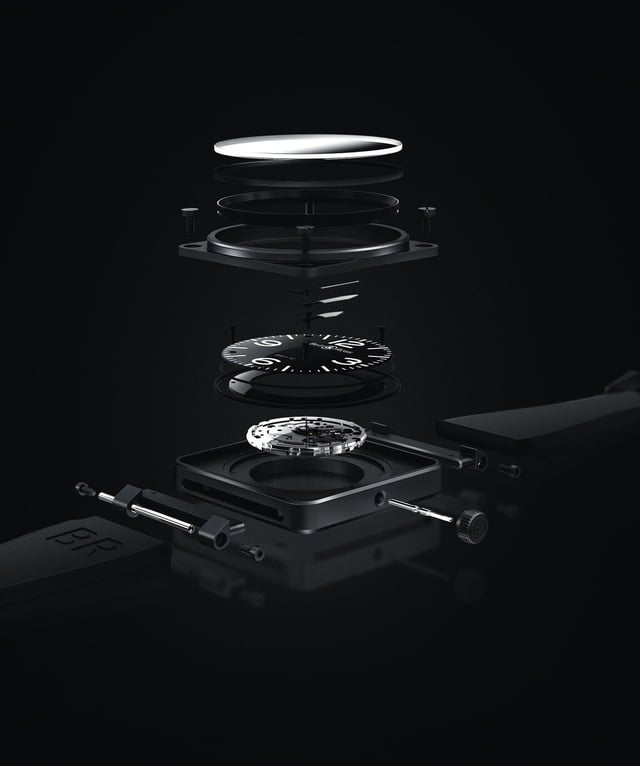
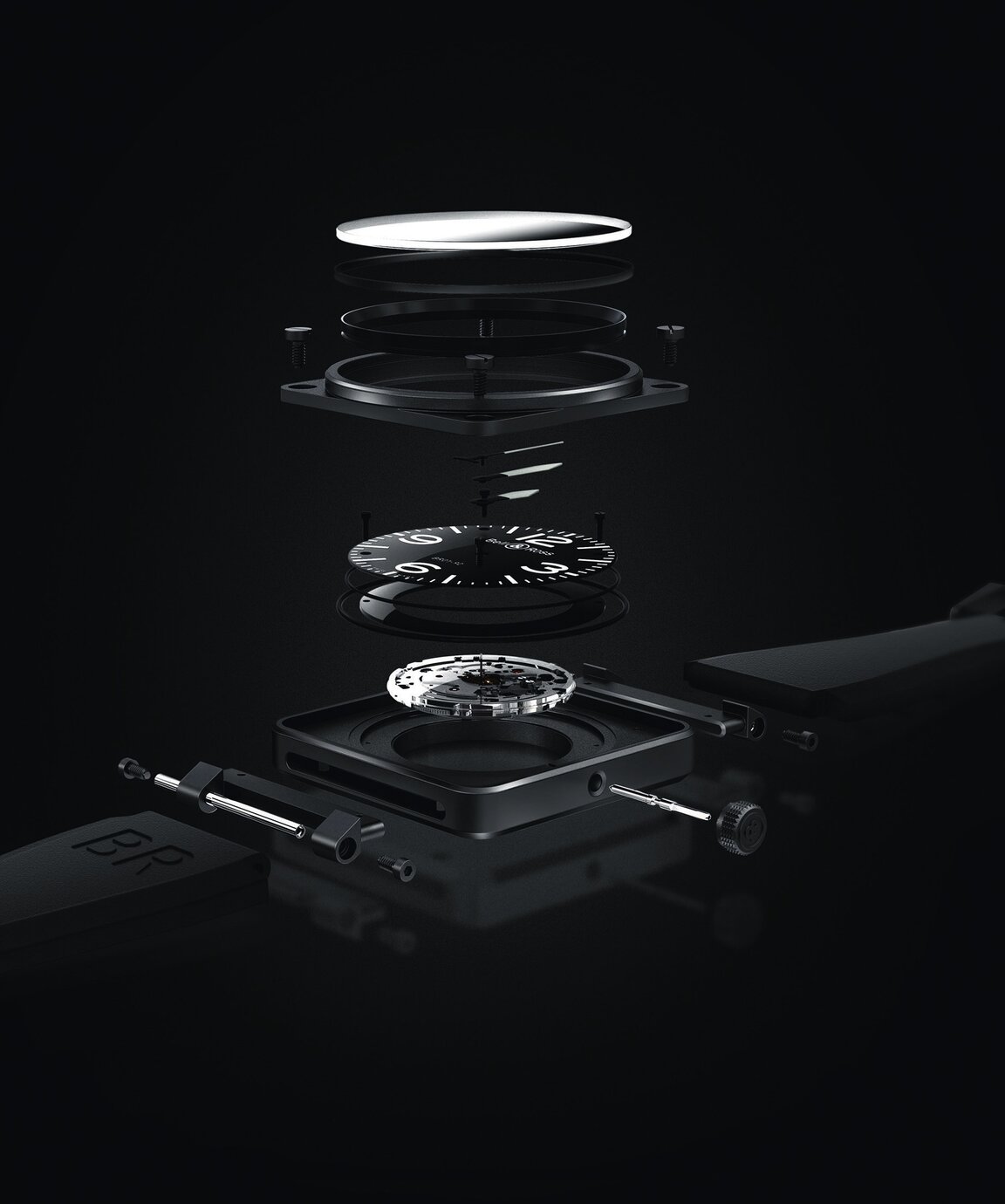
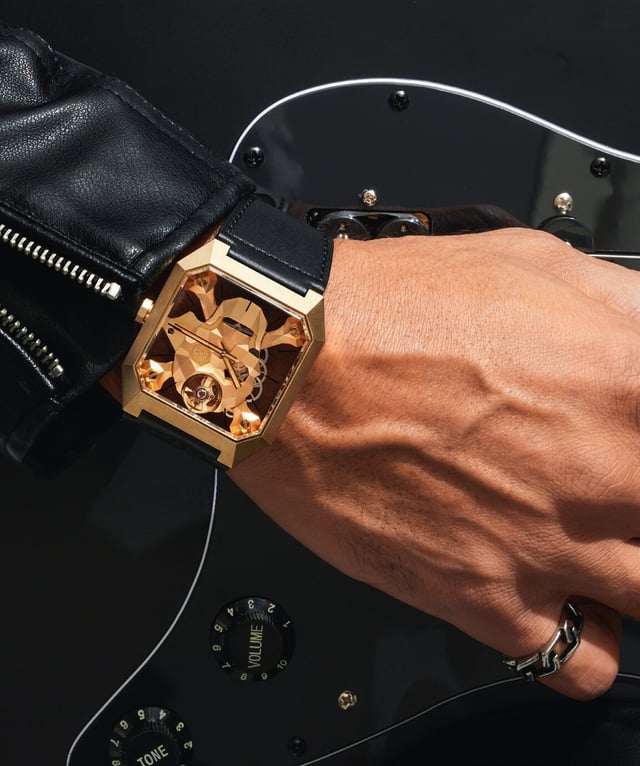
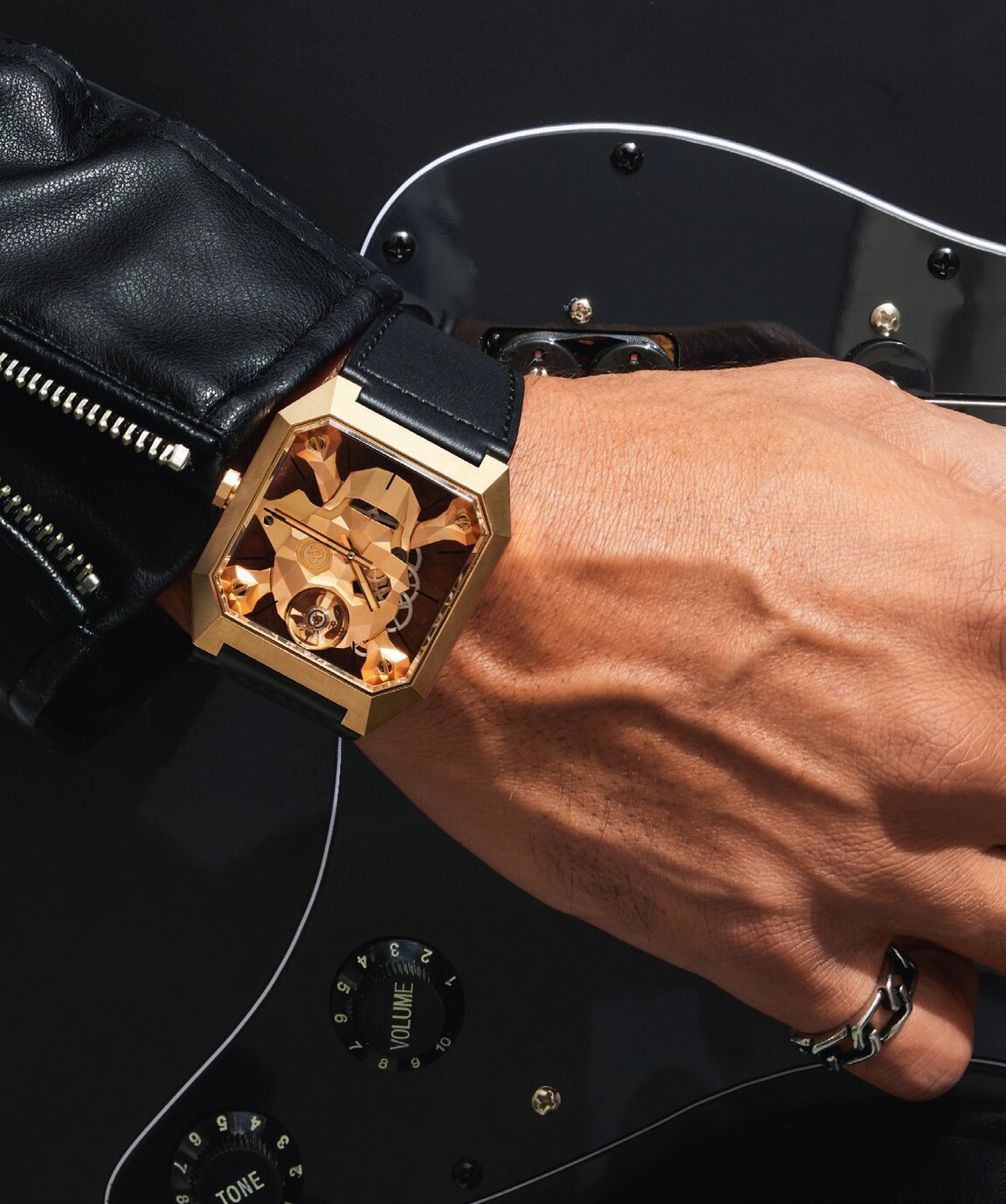
For this model, Bell & Ross also adapted the original case design by flanking each screw with a cross beam. This not only gives the watch even more visual impact but also allows them to increase the height without making it overly chunky. Playing with the shape and the materials that it was made of would become an important part of the Instruments collection. This would range from the highly complex BR-X1 Skeleton Tourbillon Sapphire fitted in a transparent case made of sapphire crystal to various models of the BRS, the BR 01’s smallest sibling, in different colors of ceramic. Next to high-tech materials, Bell & Ross also favored the more time-tested ones like bronze. For the BR 01 Skull Bronze, they reworked the case, making it look like crossed bones within the middle of a skull that doubles as the dial. While perhaps a bit whimsical at first, it is the perfect memento mori and also displays the creativity of Bell & Ross. They enjoy exploring the far edges of a basic design, creating new interpretations, and matching this with a high-end execution.
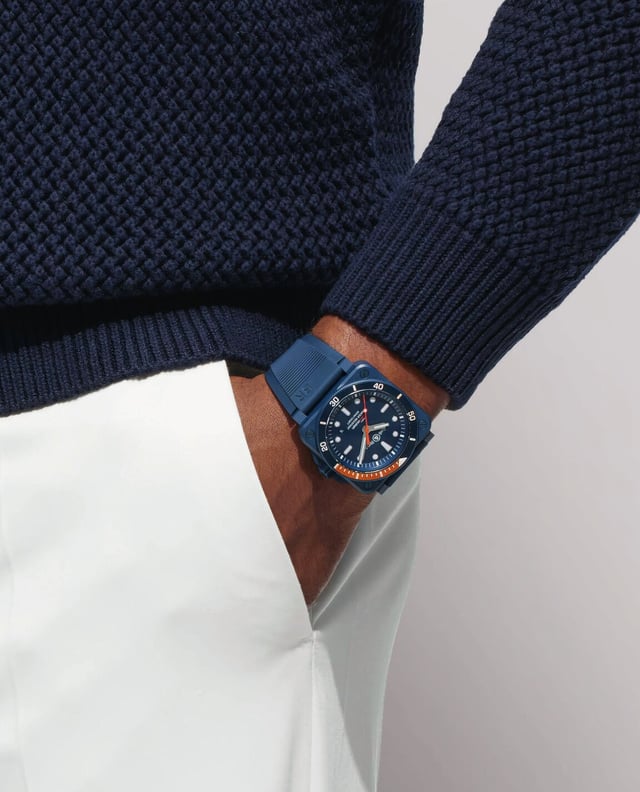
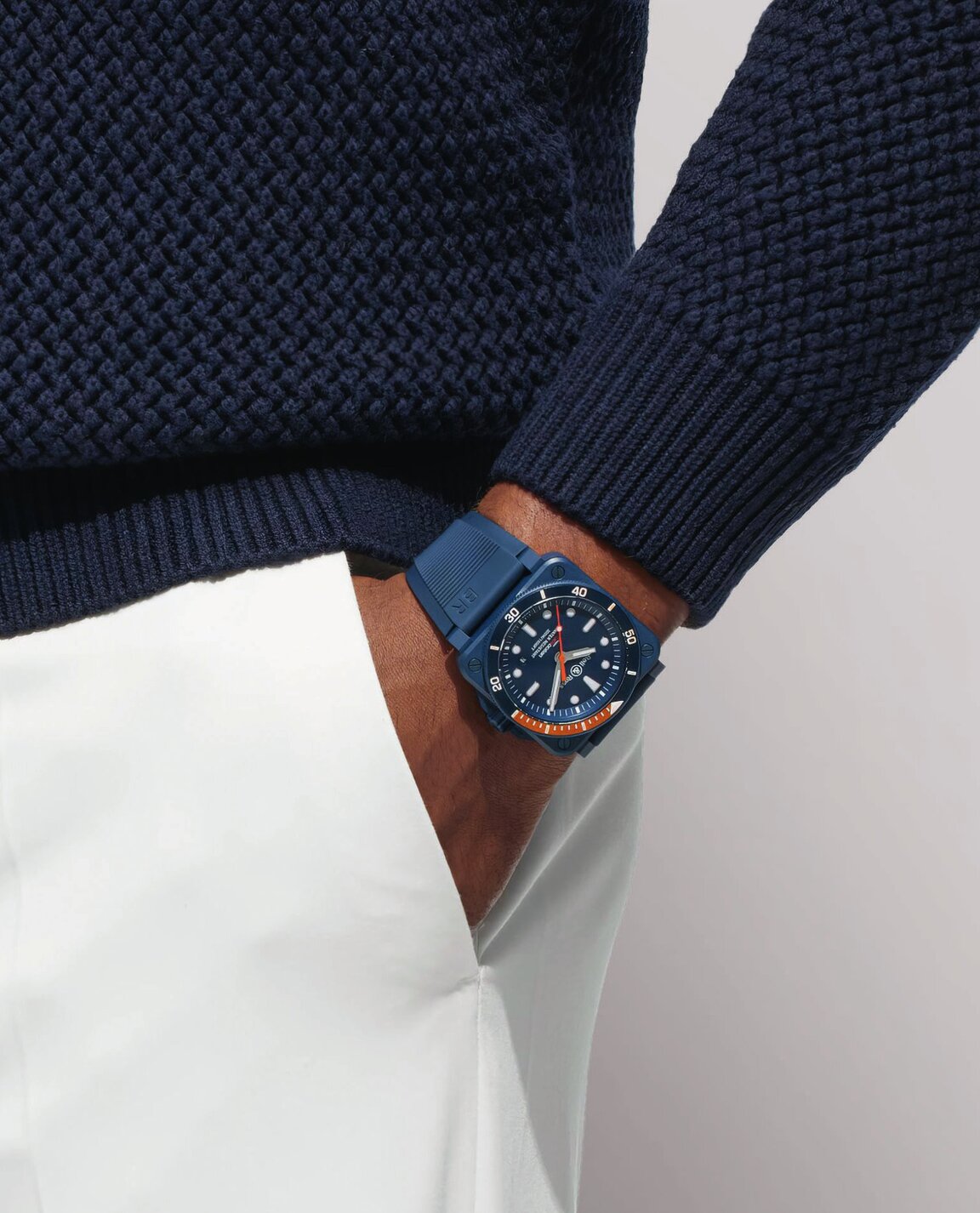
While the BR 01 was conceived as an aviator watch, it also makes for quite the dive watch, as Bell & Ross proves with the BR 03 Diver. With the addition of a unidirectional bezel, crown guards, and a slightly different dial design, it turned into an expressive dive watch. Colors and materials do a lot in this, as Bell & Ross currently offers this watch with a matte blue ceramic case for its limited edition in collaboration with the Tara Foundation, aiding their quest to raise public awareness about the oceans by gathering and sharing scientific knowledge about it. On the opposite side of the spectrum, yet in the same collection, we find the BR 03 Diver that combines a bronze case with a pearl white dial. While technically identical to its blue ceramic sibling, the use of color and material make it that, with a little bit of imagination, this watch could have been on the wrist of one of the divers from Jules Verne’s Twenty Thousand Leagues Under the Sea.
The success of the BR 01 still guides Bell & Ross toward the future, like in 2019, when the brand launched its BR 05 collection. This is a watch with an integrated bracelet and more urban vibes. While even more rounded than the other watches from the Instruments collection, the square shape is still instantly recognizable. This also makes it that nearly two decades after the launch of the BR 01, it is still hip to be square.
This article is from the July / August 2024 print edition of WatchTime Magazine. To subscribe, click here.
To learn more, visit Bell & Ross, here.