Rolex's New Perpetual Padellone Brings Back the Full Calendar
The Crown's next big move
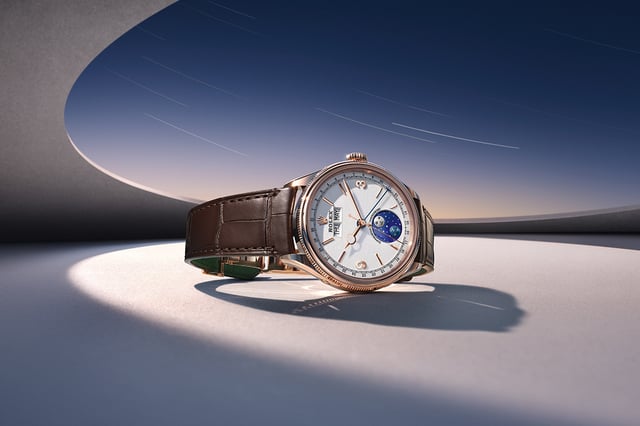
With the Perpetual Padellone, Rolex expands the Perpetual collection it launched in 2023 to include a model with a full calendar and moon phase. The name is telling, though perhaps not quite in the way one might first assume: at Rolex, "Perpetual" denotes the product line rather than the complication itself. The Padellone carries an annual calendar tracking date, day and month, alongside a moon phase — not a perpetual calendar in the strict horological sense, the kind that automatically accounts for varying month lengths across centuries. The distinction matters, not least because the collection's name practically invites confusion. The model name itself is no recent invention, but a term coined by collectors: "Padellone" — Italian for "big pan" — became the informal name for reference 8171, a Rolex full-calendar chronograph from the 1950s notable for its unusually large case at the time. With the new Padellone, Rolex nods to that reference without replicating it — a historical echo rather than a reissue.
The new 2026 Rolex Perpetual Padellone.
Rolex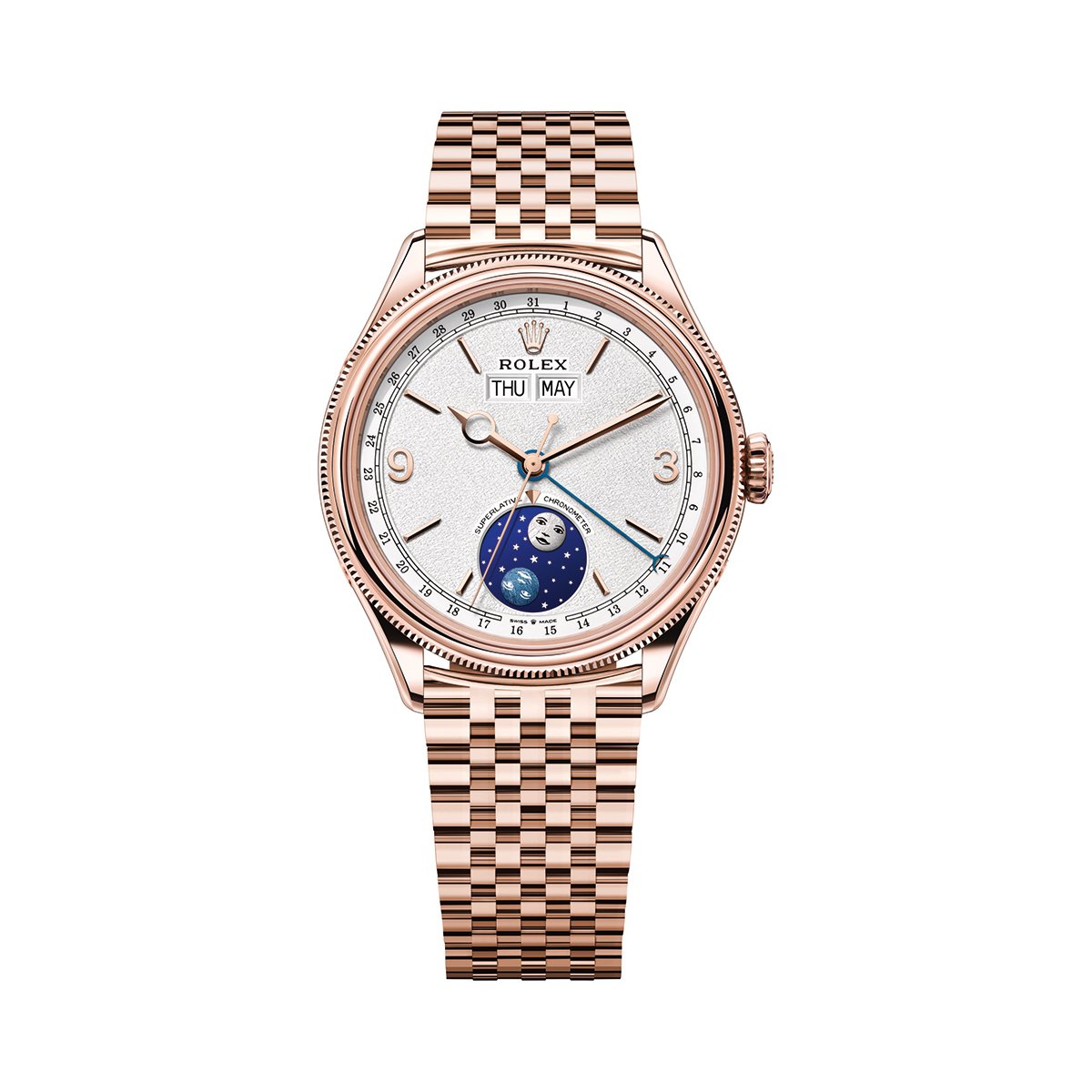
Calibre 7190: Descended from the Land-Dweller Movement
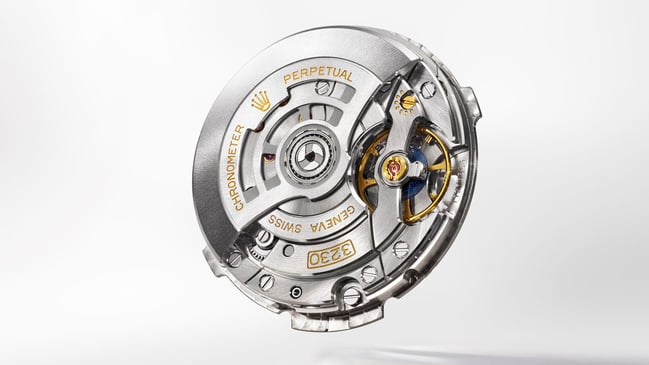
Technically, the Padellone is built on Calibre 7135, the movement introduced with the Land-Dweller collection in spring 2025. For the Padellone, Rolex has developed Calibre 7190, an entirely in-house automatic movement that inherits the same regulating organ: a silicon Dynapulse escapement with sequential force distribution, a Syloxi hairspring, a high-tech ceramic balance wheel and a refined Paraflex shock-absorption system. It runs at 36,000 vibrations per hour — 5Hz — a notably higher frequency than most other Rolex calibres in the 71XX family, which typically operate at 4Hz. At the same time, the 7190 is slimmer than comparable movements in that family, a detail reflected in the finished case's overall height of 12.20mm.
The real ingenuity lies in the calendar mechanism. Rolex calls it "Haplos" and has filed seven patent applications around it, two of them exclusive to this system. According to the brand, it achieves what conventional annual calendar constructions do with far more hardware using just two additional components linked to the date mechanism: an extra driving finger and a year lever. That's a remarkably lean solution for a mechanism that distinguishes between 30- and 31-day months and advances date, day and month together in an instantaneous jump at midnight. A further technical nicety: the annual calendar's programming sits on the reverse of the month disc, feeding the year lever information about the current month. Whether this pared-down component count holds up over years of daily wear remains to be seen — but on paper, at least, fewer moving parts means fewer potential points of failure than more elaborate calendar constructions. Rolex quotes a power reserve of roughly 66 hours, made possible by the combination of the barrel design and the higher efficiency of the Dynapulse escapement. The movement is wound by the Perpetual rotor, finished with Côtes de Genève and an openworked yellow gold oscillating weight.
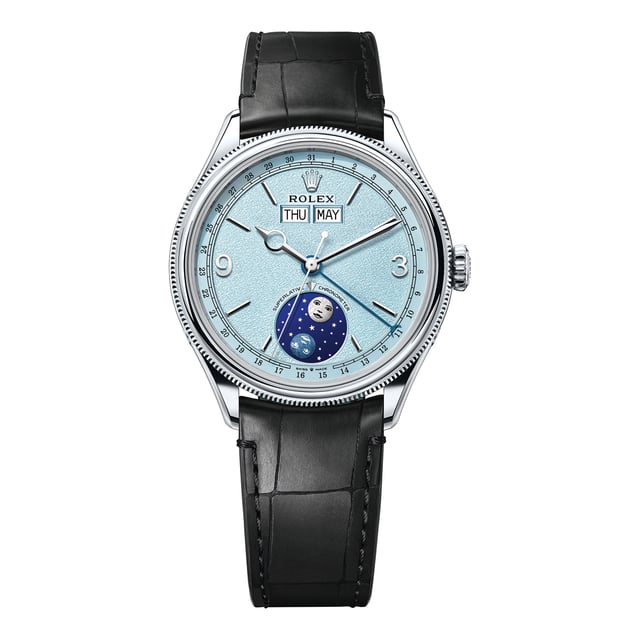
The new 2026 Rolex Perpetual Padellone.
Rolex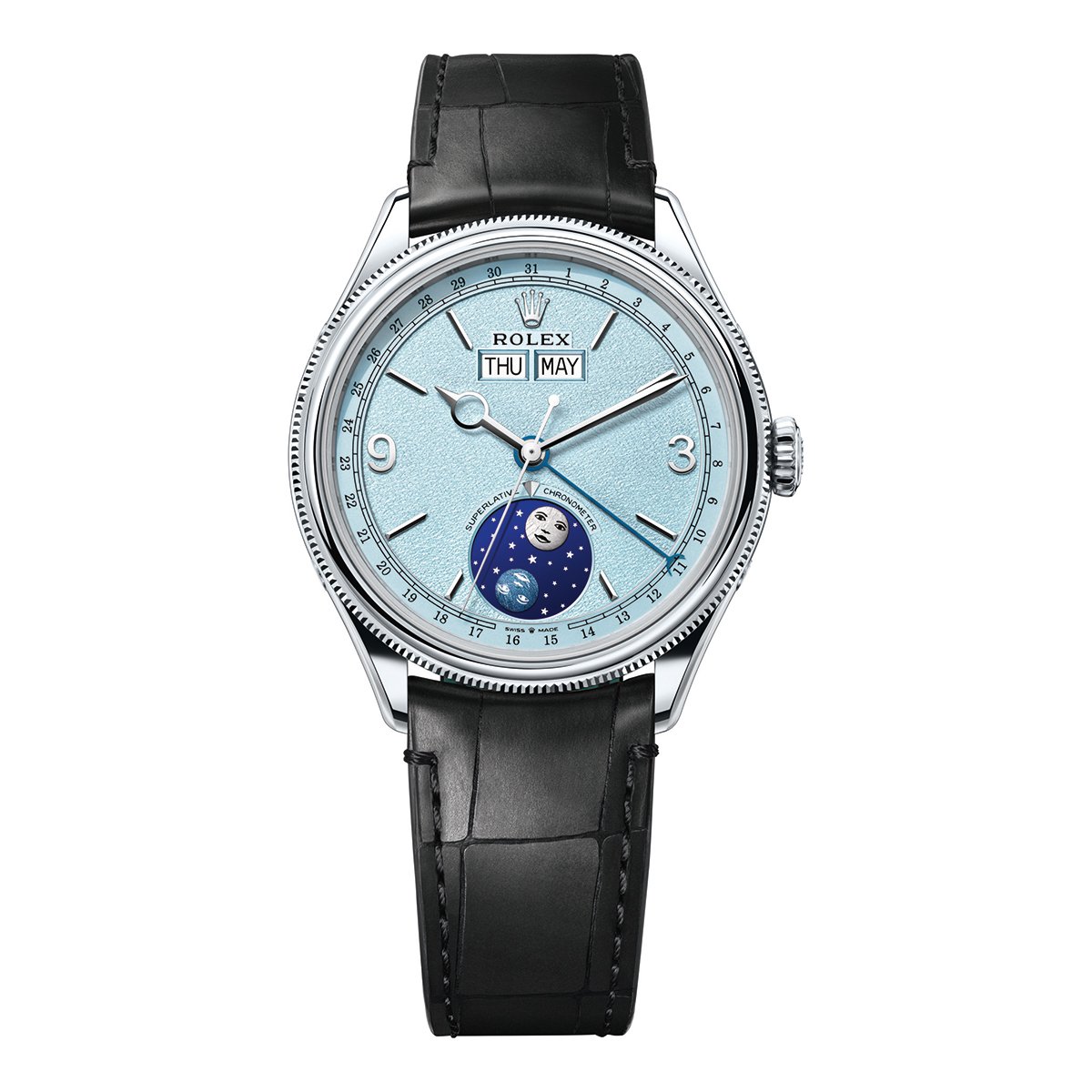
Dial: Meteorite in Place of Lacquer for the Moon Phase
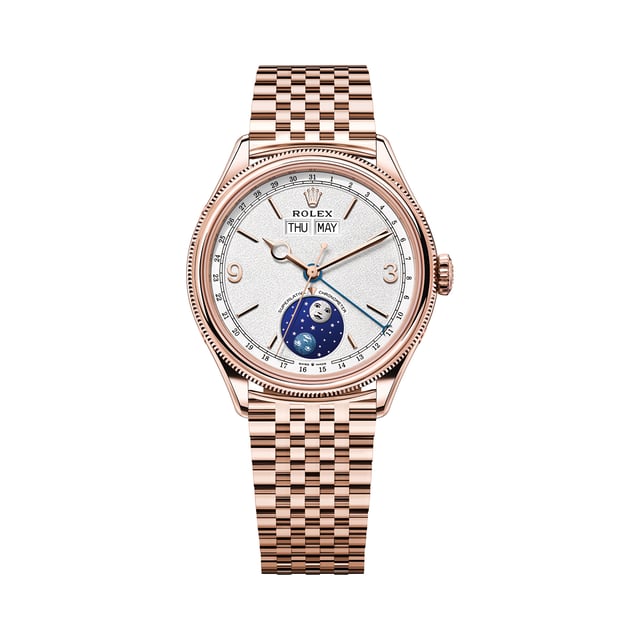
For the moon phase display at six o'clock, Rolex has turned to a material rarely seen in its collections until now: the full and new moon on the blue lacquered disc are rendered in meteorite, with the new moon additionally treated with a dark blue PVD coating, while the silver-toned stars are pad-printed. A central blue hand with a crescent-shaped tip points to the date on a scale around the dial's edge; the date numerals appear in black, with the exception of 31, shown in blue to avoid the inevitable visual clash with the 1. Day and month are displayed in English through two apertures at twelve o'clock.
The two versions differ in case material and dial colour. The 18-carat Everose gold model (reference 53505) features a deep white, grained dial and comes on either a seven-link Settimo metal bracelet or a matte brown alligator leather strap. The 950 platinum version (reference 53506) pairs an ice-blue dial with a matte black alligator leather strap. Both cases measure 39mm in diameter, with a domed fluted bezel and a screw-down, mirror-polished sapphire crystal case back that reveals the movement within. Water resistance sits at a modest 50 metres — standard rather than exceptional for a calendar model at this price point, though Rolex is clearly not chasing sports-watch durability here.
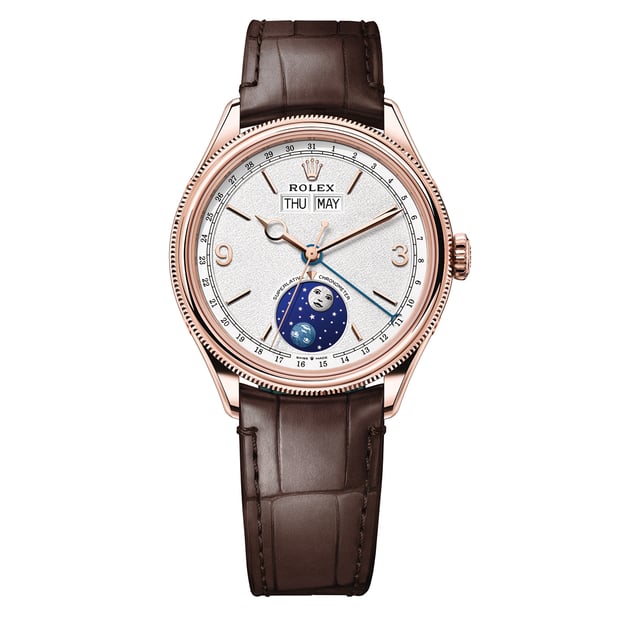
The new 2026 Rolex Perpetual Padellone.
Rolex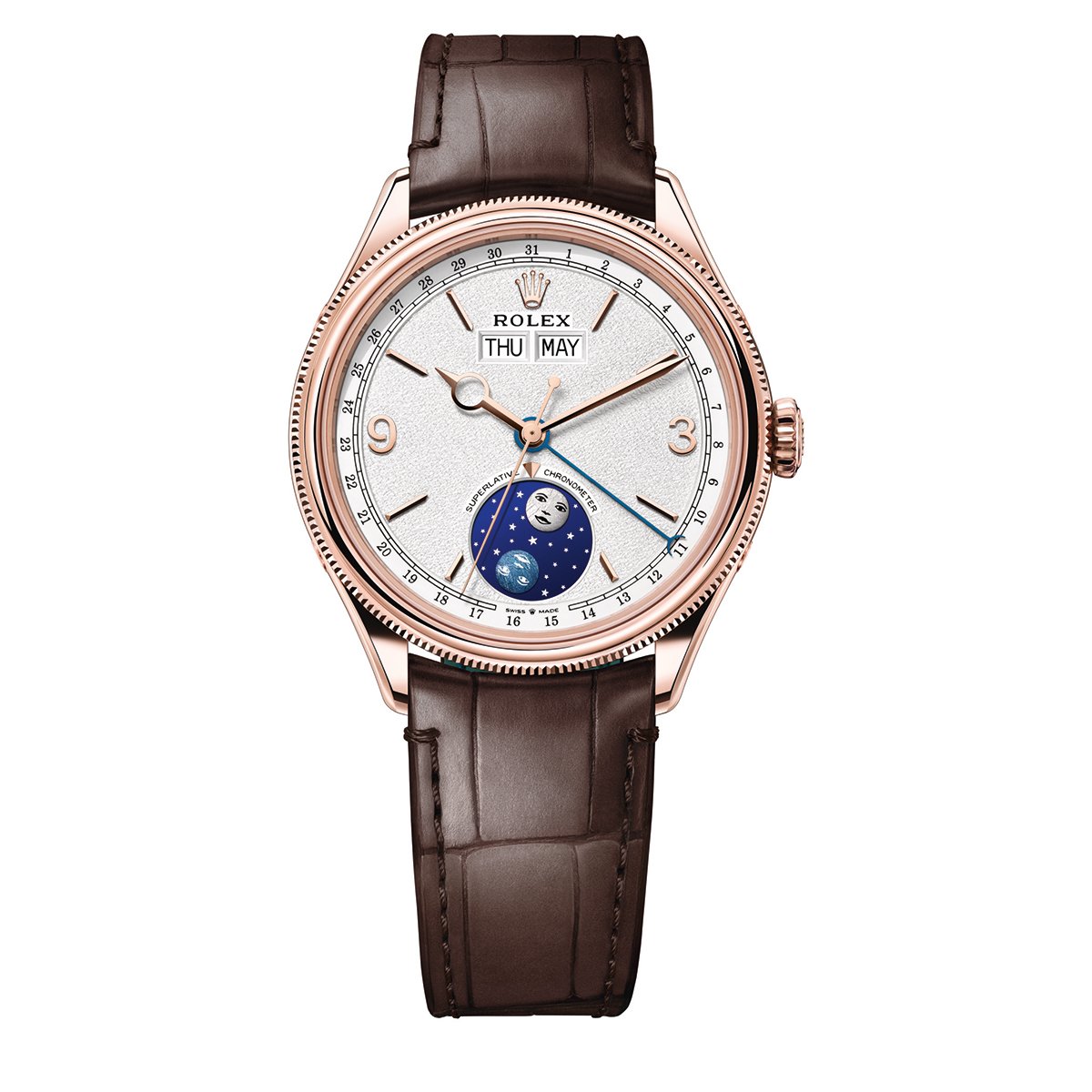
Rolex's Certification Standard, Expanded for 2026
Rolex is also using the Padellone to spotlight again an update to its in-house "Superlative Chronometer" certification: as of 2026, three new criteria join the four introduced in 2015 — accuracy, water resistance, self-winding and power reserve — namely resistance to magnetism, reliability and sustainability. According to Rolex, the fully assembled wristwatch must run accurate to within -2 and +2 seconds per day once cased, a tighter tolerance than the official chronometer certification demands for the movement alone.
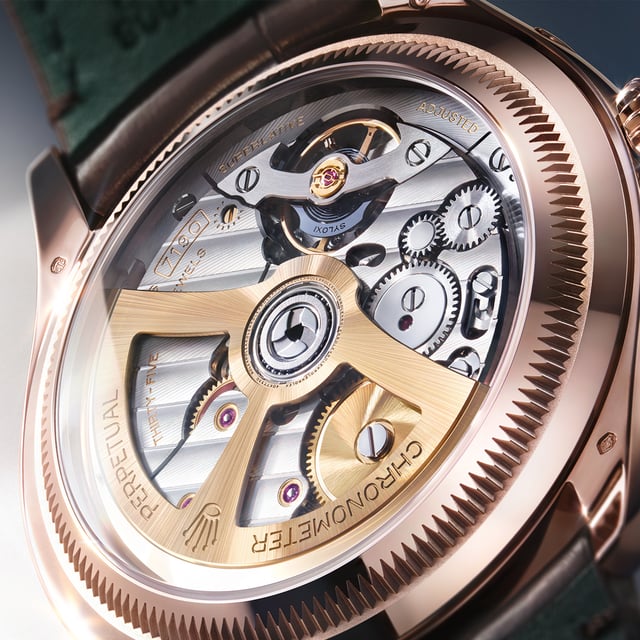
Rolex new caliber 7190
Rolex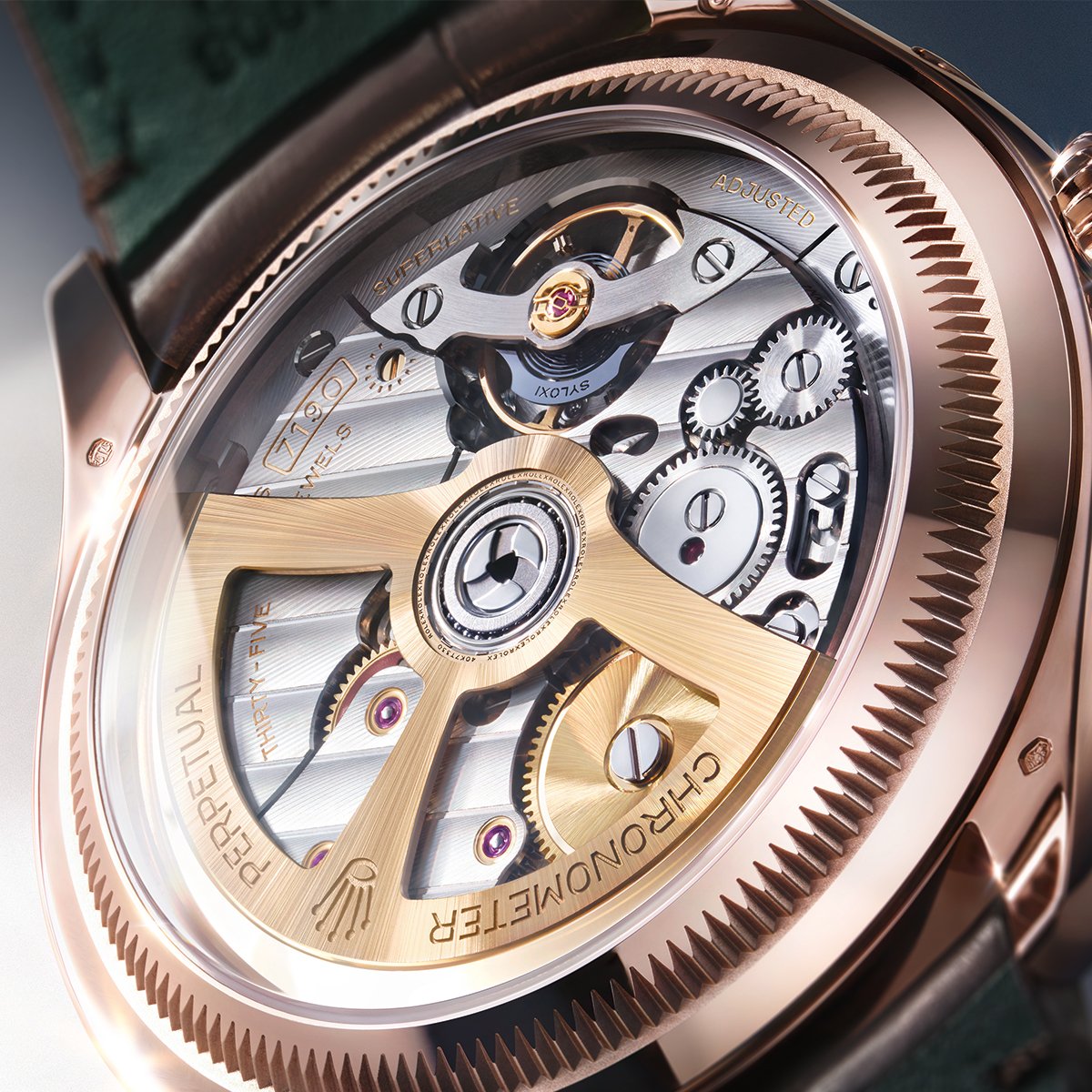
Within the Perpetual collection, the Padellone positions itself as the complication piece — slotting between the pure time-telling of the Land-Dweller and the elegance of the 1908 line, and the more elaborate complications found in the Sky-Dweller and the older Cellini lines. The fact that Rolex chose not to develop an entirely new in-house calibre for the full calendar, but instead built on the Land-Dweller's regulating organ with the new Haplos calendar module, reads as a vote of confidence in Calibre 7135, introduced only in 2025. Rather than basing the Padellone on an established movement from the 71XX family, Rolex has made the Land-Dweller's new regulating organ the foundation for its first calendar watch of this kind — even before Calibre 7135 has had much time on the market. It's a signal of just how central the Land-Dweller architecture is likely to become for the brand's coming generations of calibres, and raises the question of which further complications and models will be built on the same regulating organ in the years ahead. Prices start at CHF 52,500 for the Everose gold model on leather, CHF 64,800 for the Settimo bracelet version, while the platinum edition is priced at CHF 59,000.