The World's Smallest Canvas: How Art and Watches Keep Time Together
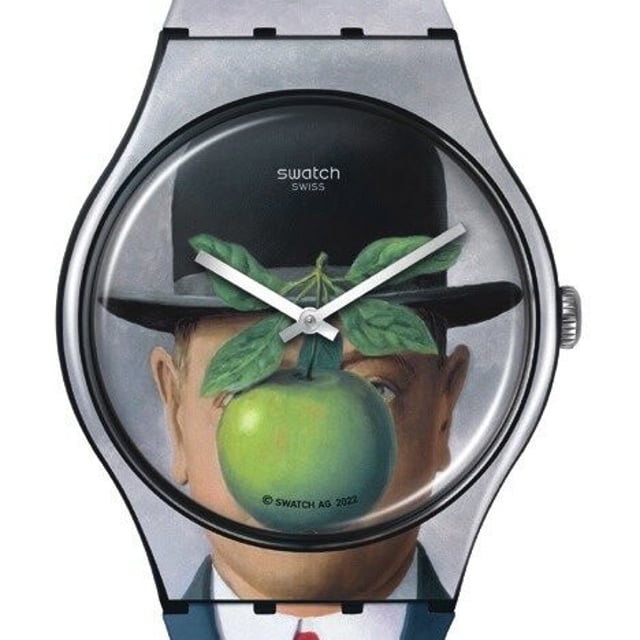
To turn a watch into a piece of artwork seems to be a rather obvious thing to do. When you use the dial as a canvas, the bezel and case form the frame, and there is even a crystal in place for protection. Unlike hanging it on a wall, you can take it with you on your wrist, conveniently ready to admire it whenever you feel like it, with the added advantage that it also tells time. As watchmaking itself can be seen as an art form, over the years, many brands have collaborated with architects and painters, photographers, and tattoo artists to create an artistic synergy that elevates their timepieces in a new dimension.
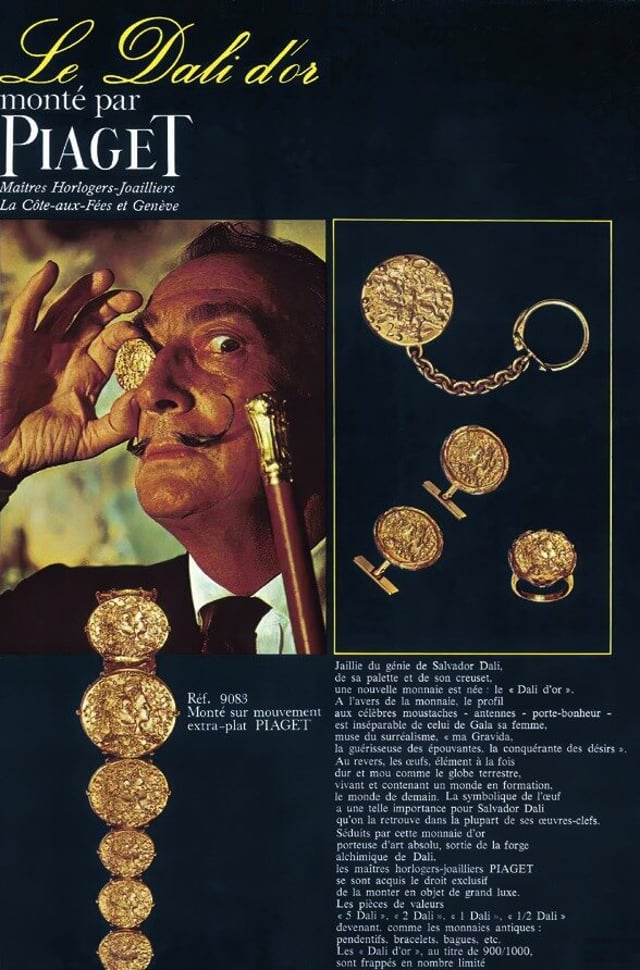
An excellent example of an early collaboration is that between surrealist artist Salvador Dali (1904 - 1989) and Piaget. In 1967, the brand released a limited edition collection that includes everything from cufflinks and tie clips to rings and watches. The concept of this collection was the ‘Dali d’or,’ an imaginary currency in the form of gold coins. Dali has been fascinated throughout his life by this precious metal, making a collaboration with Piaget perfect, as at the time, the brand would only make watches and jewelry in either gold or platinum. The coins show an image of two people, most likely Dali and his muse Gala, in a field of flowers. Thanks to the ultra-slim movements that Piaget was making, the ‘Dali d’Or’ could also be transformed into a coin watch, making for an exquisite blend of watchmaking, jewelry and art.
Gae Aulenti (1927 - 2012) was one of the leading ladies in architecture who graduated in 1954 from the Polytechnic University of Milan as one of two women in a class of 20. With her strong character, she joined the Neo-Liberty movement, which focused on rational and organic architecture, and maintaining a close relationship with the identity of its surroundings. However, her career would not include just buildings; she also designed sets for Milan’s famous opera house, La Scala; lamps for Stilnovo; and furniture for Kartell and Zanotta.
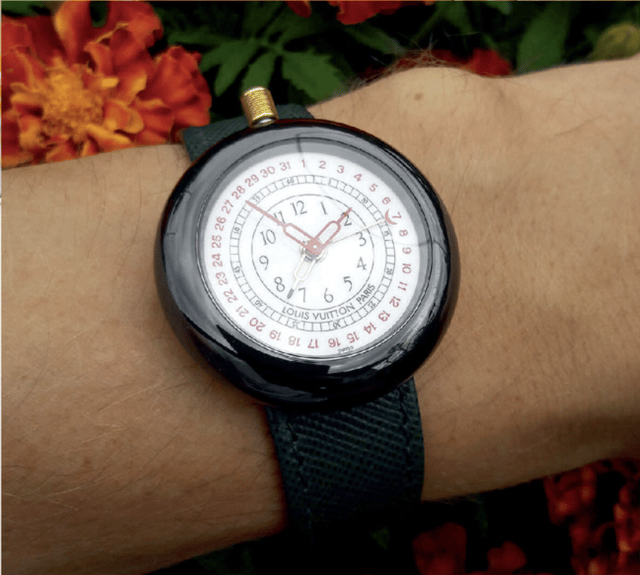
In the 1980s, she was approached by Louis Vuitton and went on to create the brand’s first two watches for them: the Monterey I and II. Both were powered by a quartz movement and featured an unusual disk design with the crown at 12 o’clock. They lacked lugs, as the strap went through the back of the watch, much like a NATO strap. The Monterey I had a gold case and featured a world time complication with moon-phase and pointer date. The Monterey II was smaller and was only equipped with a pointer date and an alarm function. Its case was also not made of precious metal but of ceramic. As only a few brands were capable of working with this material back then, Louis Vuitton turned to IWC to create these cases for them.
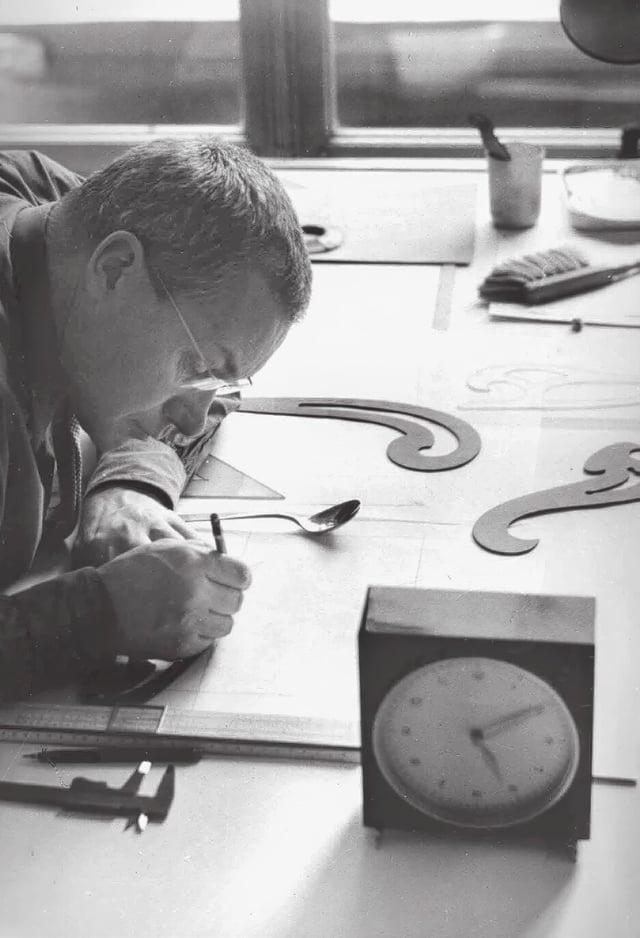
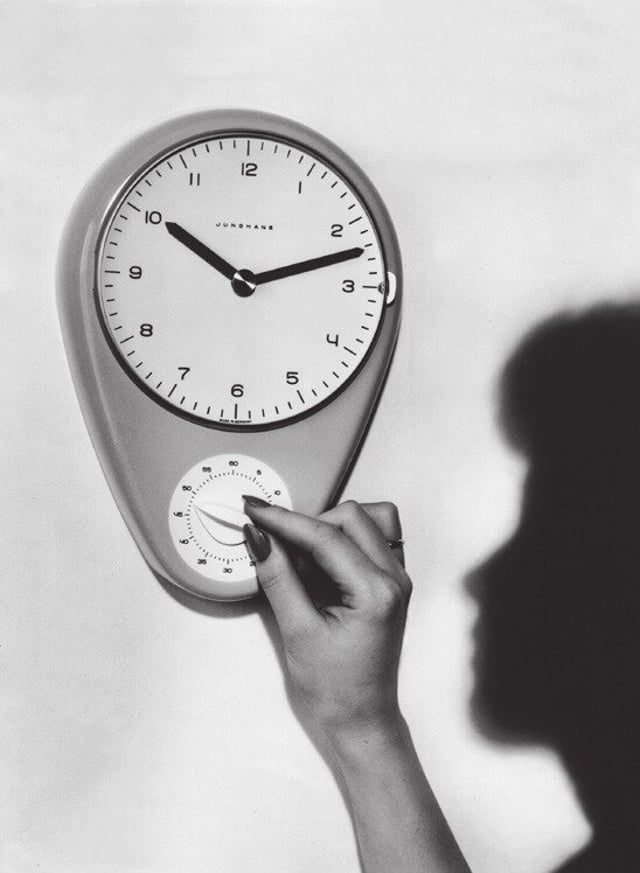
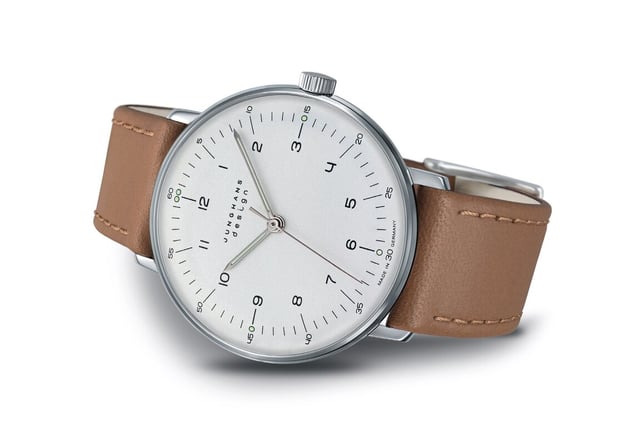
Aulenti wasn’t the only architect designing watches, as the multi-talented Max Bill (1908 - 1994) has also made an impact on watch design. Born in Switzerland, Bill studied at the famous Bauhaus in Dessau, Germany, and was taught by people such as Wassily Kandinsky. He made a profound impact on Swiss graphic design after World War II, and in the 1960s, he joined forces with German watch manufacture Junghans. What started with a kitchen clock became a whole collection, including a series of wristwatches that are named in honor of the architect/artist. One of Bill’s qualities was that he was able to elevate design to transcend time. As Junghans proved to be a careful curator of his work, many of the watches designed by Bill are still available in pretty much the same form as when they were initially released. They testify to the incredible staying power of his work, which can be characterized as timeless.
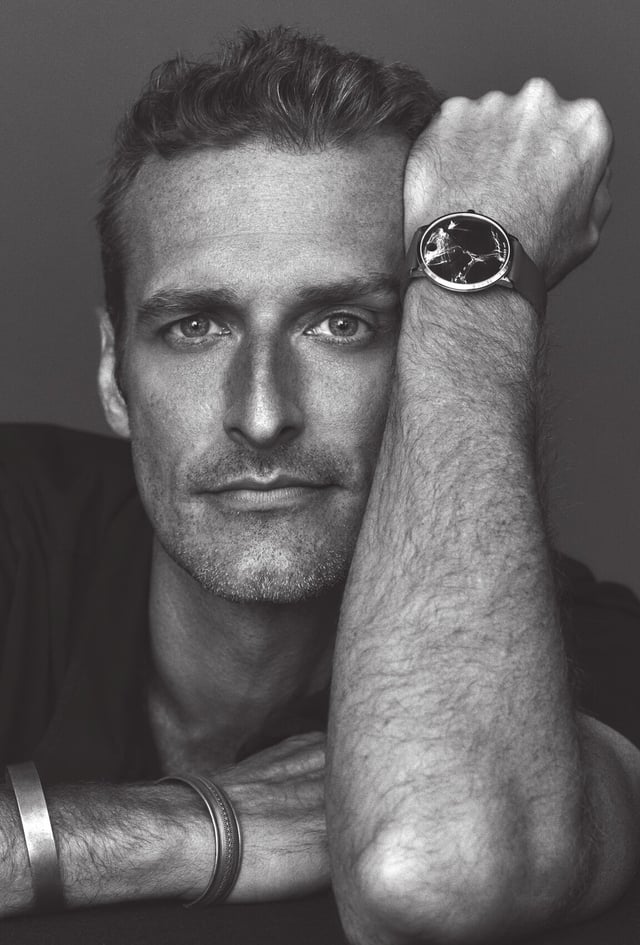
Industrial designer Nathan Horwitt (1898 - 1990) brought the display of time back to its essence when he designed what would become the Movado Museum Watch. With its round case, slim bezel, stick hands, and a circle at 12 o’clock representing the sun, it is simplicity at its best. It was first produced in 1947, and in 1960, it was also the first timepiece to become part of the permanent collection of the Museum of Modern Art in New York. This is how it became the famous and instantly recognizable ‘Museum Watch.’ Movado kept the legacy of Horwitt alive by constantly evolving the concept of the ‘Museum Watch,’ which included letting other artists present their take on this recognizable icon. One is fashion photographer Alexi Lubomirski, whose photos are printed on the dial, turning the watch into a canvas. Through his lens, he captured concepts such as light, water and illumination, essentially creating artwork with Movado that tells time.
Two brands that are serial collaborators with artists are Swatch and Hublot. For Swatch, this started in 1985, when they created a 140-piece limited edition with Kiki Picasso. This French artist, whose real name is Christian Chapiron, is one of the co-founders of the group Bazooka Production, mainly known for its strong and sometimes controversial images. For Swatch, it was the first step in exploring what they like to call ‘the world’s smallest canvas.’ Many other great names would follow over the years, like Keith Haring in 1986, architect and designer Alessandro Mendini in 1990, photographer Annie Leibovitz in 1996, and Yoko Ono in that same year. Also memorable are the food-inspired Swatches made by Alfred Hofkunst. In typical Swatch style, the three watches of this collection were sold at vegetable markets in Switzerland in 1991.
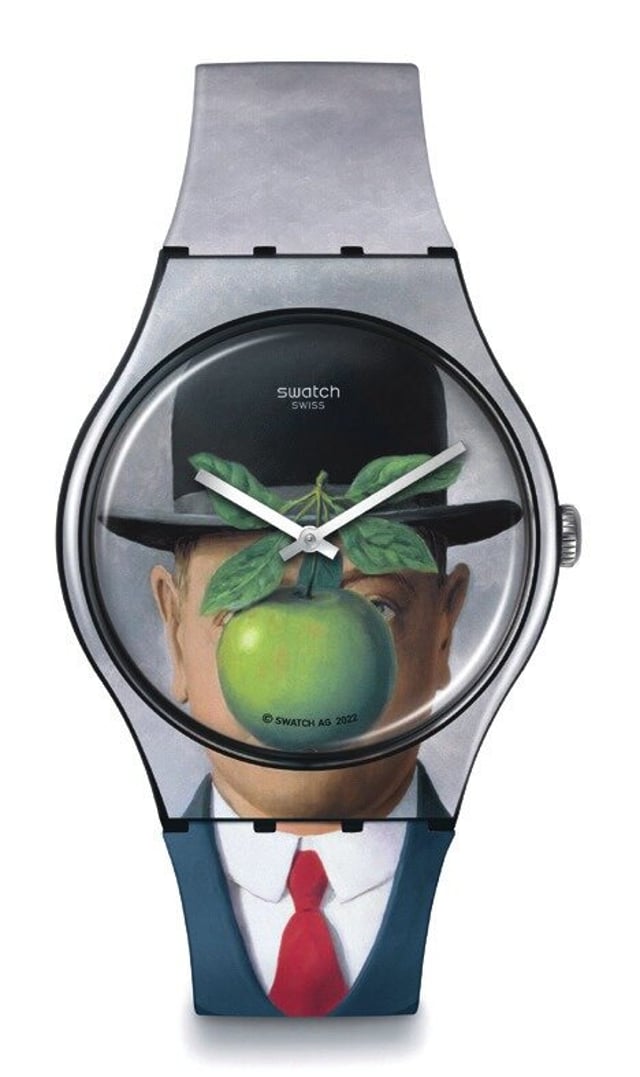
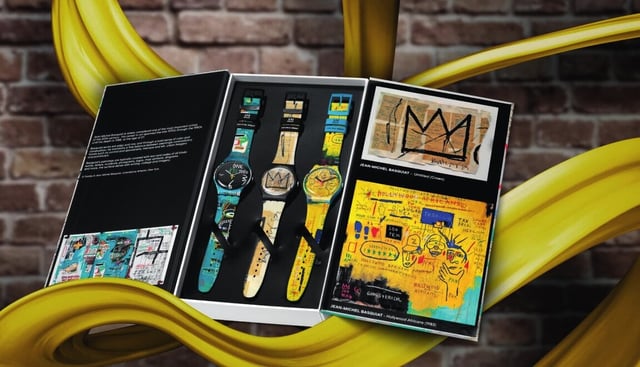
For Swatch, art has become an indispensable ingredient for its watches. In its current collection, they made some unique watches featuring the work of the Belgium surrealist painter René Magritte, as well as that of American street art pioneer Jean-Michel Basquiat. They not only work with artists but also with some of the world’s leading museums. In collaboration with Gallerie Uffizi, Swatch offers two masterpieces by Botticelli as a wristwatch while they celebrate 100 years of Roy Lichtenstein with MoMA.
This article was originally published in the Design 2024 print issue. To subscribe to WatchTime Magazine, click here.