Extreme Strapmaking: Spotlight on Manufacture Jean Rousseau

The French city of Besançon could come straight out of a fairy tale. A charming medieval city center is looked over by a sprawling citadel perched on a hill. Inside the city‘s imposing cathedral, you find something that gives a clue about which trade is vital for Besançon: a unique clock with 70 dials, 11 movements, and 122 indications from the phases of the moon and the tides to a 10,000-year perpetual calendar. Located conveniently close to the Swiss border, Besançon is the historic heart of French watchmaking. Today it is beating at a slightly different pace as part of traditional watchmaking has been replaced by innovative companies in the eld of micromechanics and biomedical engineering.

The area remains the home of a few remaining French watch brands and quite a few high-end suppliers to the industry as a whole. Among them is Manufacture Jean Rousseau, which specializes in luxury leather goods, supplying them to well-known brands and directly to the end consumer through its webshop and its boutiques in Paris, London, New York and Tokyo.
In the almost 70 years that Manufacture Jean Rousseau has existed, a lot has changed in the world of watch straps. From a relatively conservative market and consumer approach focusing on traditional colors and materials, we have now entered a renaissance in which new textures, colors, materials and techniques make for exciting new straps. For Manufacture Jean Rousseau, innovation has also become a way of life. In part, this is to continue having the edge over the competition, but perhaps an even stronger drive behind it is curiosity, passion, and a desire to push the envelope. This isn‘t always easy or successful, but when persisting, it can lead to exciting results that offer new possibilities to clients.
Some of these innovations tap into senses that are hardly utilized within the world of luxury leather goods, such as smell. Some might remember the rubber straps on early Hublot models, which smelled like vanilla, but how about a chocolate-scented strap? By spreading micro-capsules on the surface of alligator leather, Manufacture Jean Rousseau was able to develop a strap with the scent of cacao. The fragrance is only released when the strap is gently rubbed with a finger so as not to create a constant craving for chocolate.

A craving is also what the owner of a Rolex Daytona Ref. 6241 had. While an important piece of watchmaking history, this particular Rolex also holds great sentimental value, as this collector inherited this timepiece from his father. While not too keen on wearing it on its gold bracelet, he also disliked the gap between the lugs when attaching a traditional strap.
To solve this problem and ensure the perfect fit, Manufacture Jean Rousseau made a three-dimensional scan of the watch. An insert was created using a similar approach to what Rolex does with its Oysterflex bracelets. is allowed the craftspeople of Manufacture Jean Rousseau to construct an alligator leather strap around it. Working with a precision of 1/10th of a millimeter, a prototype was first made for the client to experience fit, form and function. After some tweaking, the final strap in blue alligator met all the collector‘s requirements, and he now can wear this precious family heirloom in his own personal style.

Like watches, we tend to observe straps by the end results, not always aware of the expertise and craftsmanship needed to create them. It starts by selecting suitable materials. This is an important aspect, as it will not only significantly affect the strap‘s look and feel but also its performance. The challenge here is to work as sustainably as possible. This starts with the basics, like buying from tracible sources and strictly observing the terms set out by CITES (Washington Convention) and the REACH regulations, which Manufacture Jean Rousseau also checks itself by auditing its suppliers.
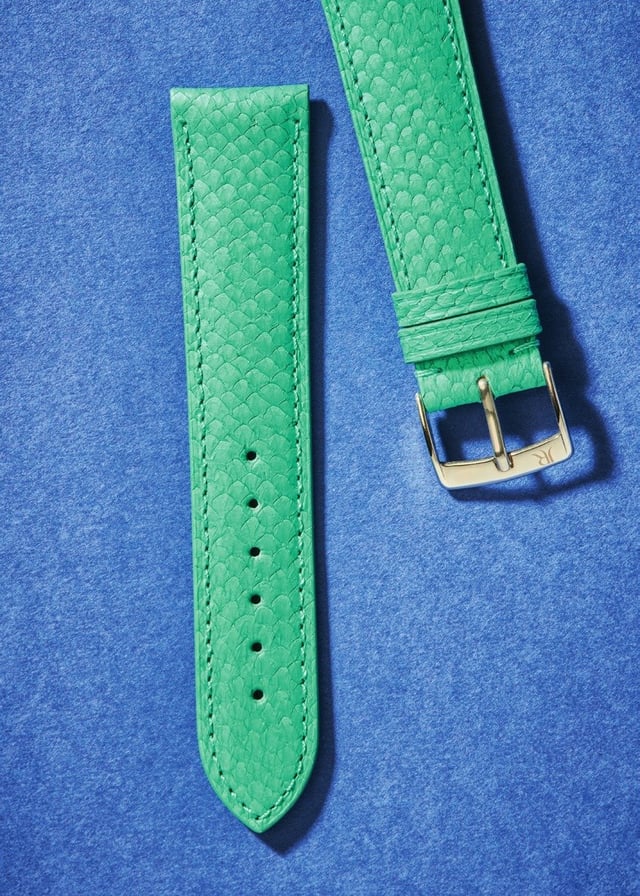
Another exciting development in this field is looking for alternatives. Skins discarded by the food industry provide an interesting source. In particular, marine leathers, such as salmon and sturgeon skin, are quite suitable for making leather straps. Normally these skins would be discarded as garbage, but now they are also being processed into a high-quality product of their own. Combined with vegetable tanning, the salmon skins are transformed into durable leather with an exotic look and feel.
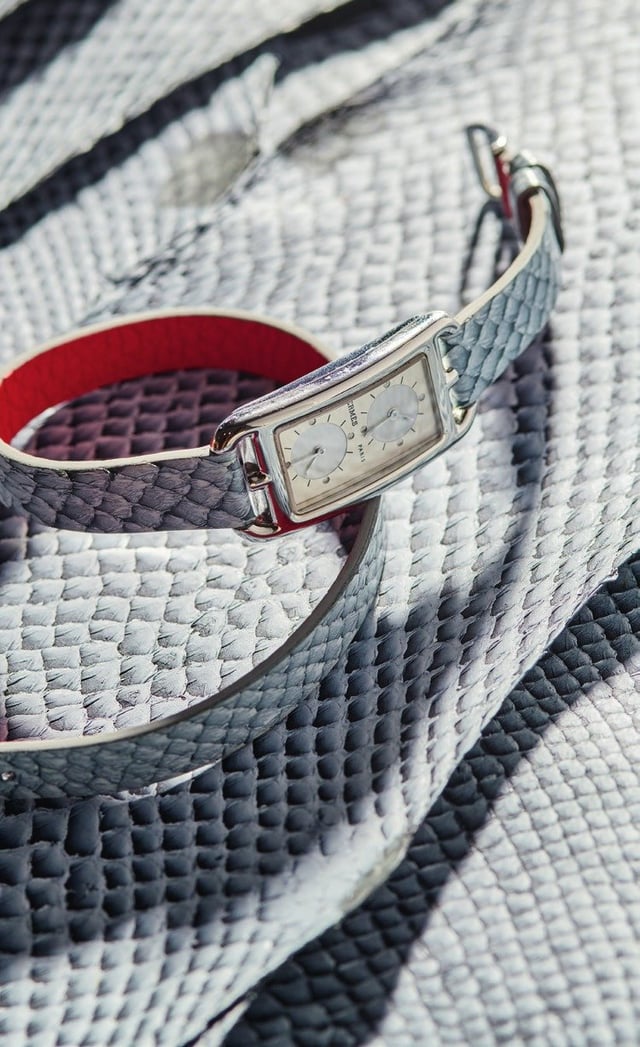
Sturgeon skin, a byproduct of the caviar industry, requires a bit more work. Due to its naturally occurring spicules, the skins must first be sanded down to get a smooth surface. The dying of the skins, and not only sturgeon, is mainly done by hand, as this is the only way to get the right hue and patina. Here it also results in a charismatic strap with a lower environmental impact. An added benefit for collectors is that this type of leather also ages beautifully.
Recycling is another hot topic within the watch industry as a whole, and that of strapmaking, in particular. While this is still challenging for leather itself, other materials offer interesting options, such as the plastic yarn from the Seaqual Initiative. By harvesting plastic waste from oceans and beaches, this initiative wants to protect marine biodiversity in international waters. Unfortunately, this is a muchneeded endeavor, as more than 8 million tons of plastic waste end up in our oceans yearly.
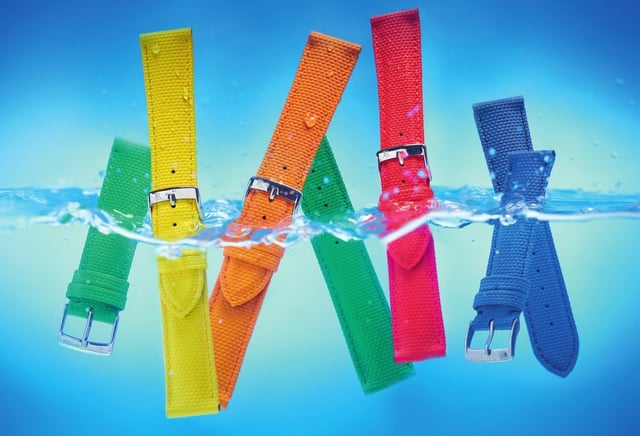
Manufacture Jean Rousseau plays its part by using the fabric made of this yarn for straps. They have a subtle denim effect, consisting of 35 percent recycled polyester, 35 percent recycled cotton and 30 percent polyester Seaqual fabric. With their distinct look and luxurious finish, it is hard to imagine that they once started their life as a waste product roaming the world‘s oceans.
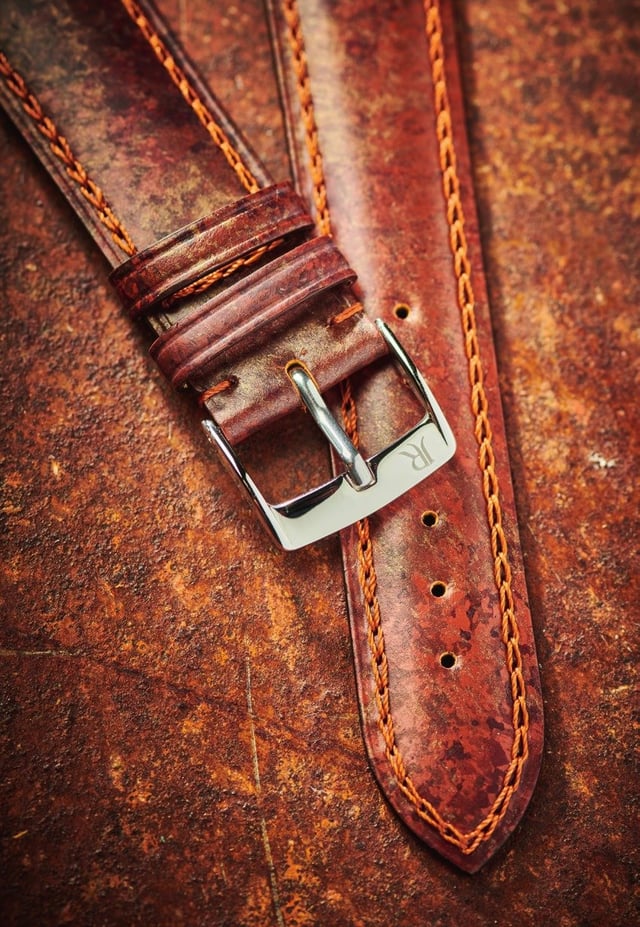
To create straps with a lower environmental impact, we also see a trend toward using alternative materials, such as cork, pineapple, and apple peels. The beauty of these materials is that they not only offer a more sustainable alternative to (exotic) leathers but that they also extend the range of textures and colors to choose from. Straps made from apple peels have a very fine texture, somewhat similar to calfskin, while the texture of straps made from pineapples is more robust. Cork is another exciting material with its unique grain. Manufacture Jean Rousseau has also developed a process that allows it to apply metallic segments on this material, giving it an even more unique look.
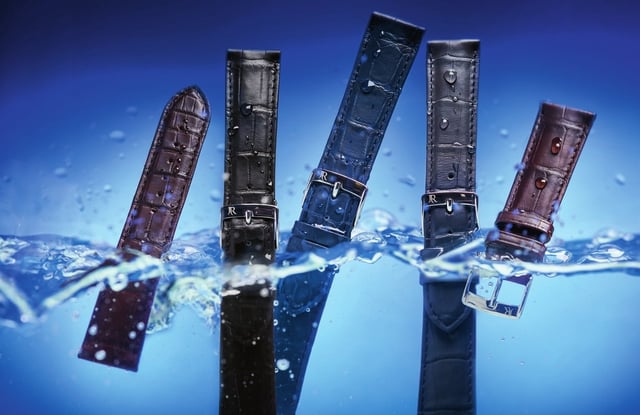
The quality of a product can also be traced to its durability. While the general credo has always been to never go swimming with a leather strap on your watch, Manufacture Jean Rousseau also took on that challenge. The result is a water-resistant strap made from genuine alligator leather, an innovation that was launched in 2021. Thanks to the special treatment of the skin, it can withstand immersion for up to 60 minutes without resulting in changes in color, shape, or wearing comfort. As you would also do with your watch, the strap must be rinsed with clean water to remove any dirt, salt, and/or chlorine traces. Thanks to its special treatment, it will also dry faster than a regular leather watch strap and without the accelerated wear and tear that water usually causes.
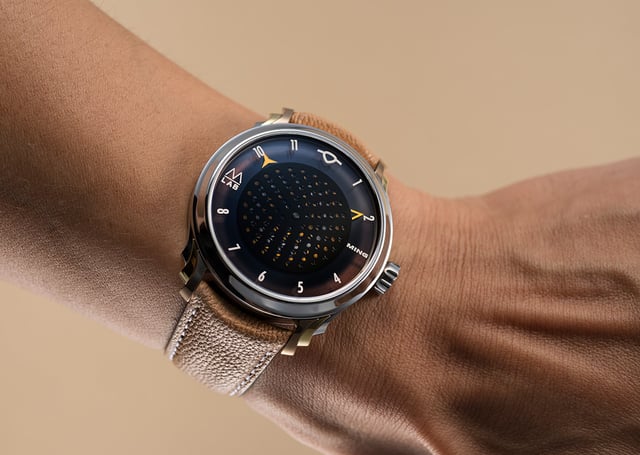
Thriving by collaborations, Manufacture Jean Rousseau is also keen on working with others. For the Magraph, a watch created by Massena LAB and watchmaker Raúl Pagès, Manufacture Jean Rousseau developed a strap that takes full advantage of the unique texture of sturgeon leather. A very expressive result that perfectly complements the watch has been achieved by combining a deep indigo hue with turquoise accents.
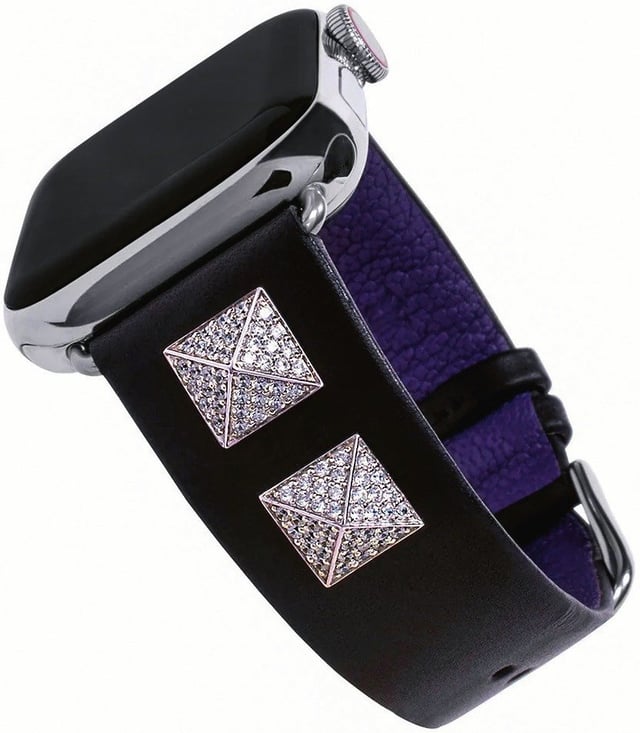
The partnership Manufacture Jean Rousseau has with Chalonne is of a different nature. For this brand, they also developed a wide range of unique straps, which include those set with pearls or decorative 14k gold inserts, with or without a setting of (semi) precious stones, such as diamonds and sapphires. To make such elements an integrated part of the strap, securely attached but also visually one, is quite challenging and requires substantial research and development to come to the right result.
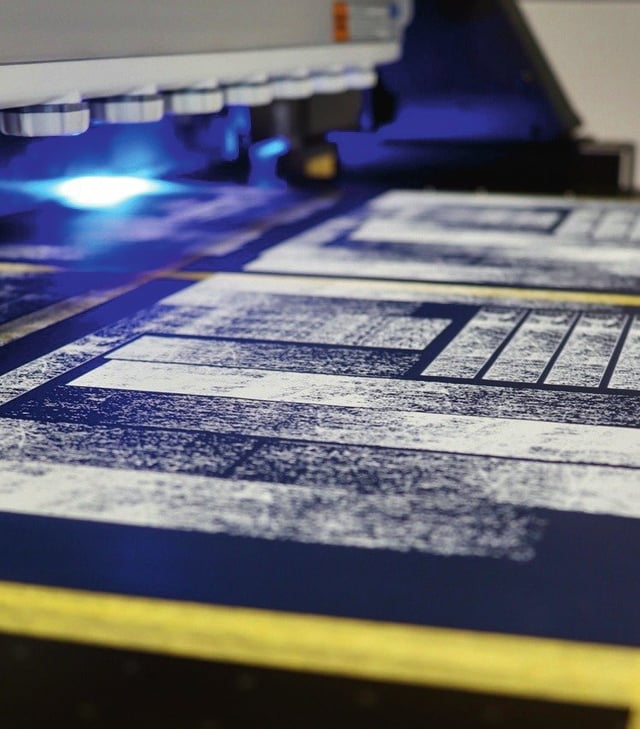
Together with Grand Seiko US, Manufacture Jean Rousseau created a unique strap for the GS9 Club, to be fitted on the limited edition SBGY023 with Spring Drive 9R31 movement. To underscore the heritage of this model, the strap should represent the texture of aged rice paper abstractly. Based on this given, Manufacture Jean Rousseau developed a pattern that was printed on the straps, complete with a subtle sparkling effect present on the rice paper from which it took its inspiration. Both the top leather as well as the lining in shrunk calf have the same pantone as the Grand Seiko blue, while a laser engraved GS9 and Grand Seiko lion logo offer the finishing touch.

In a way that serves both (individual) collectors as well as the (large) brands, Manufacture Jean Rousseau is always looking for ways to expand the options it can offer, sometimes to the extreme. With the gained experience, strides in technology, and challenges turned into opportunities, the future of strapmaking looks more exciting than ever before.
To learn more, visit Jean Rousseau, here.
This article was originally published in the September/October 2023 print issue. To subscribe to WatchTime Magazine, click here.