Mar 14, 2015
Reading time 5 min.
Brand to Watch: Angelus Returns

Baselworld is the peak time of year for the launch of new watches. But every so often it also serves as the coming-out party for a new brand that’s entering the market. Such is the case for Angelus, a name with serious watchmaking history. Angelus was a Swiss brand of some repute until (like many of its compatriots) it was wiped out by the quartz revolution in the 1970s. Now it’s making a return under notable new management. At Baselworld, Angelus will launch with its first new watch, the U10 Tourbillon Lumière. But in order to appreciate this accomplishment, we have to take a look at where the brand comes from.
Angelus Manufacture 560
PR
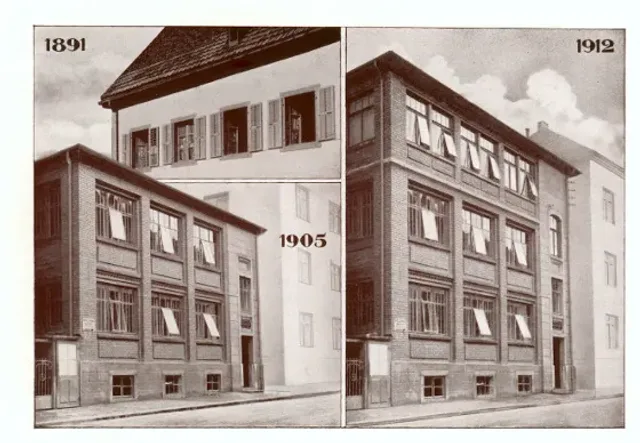
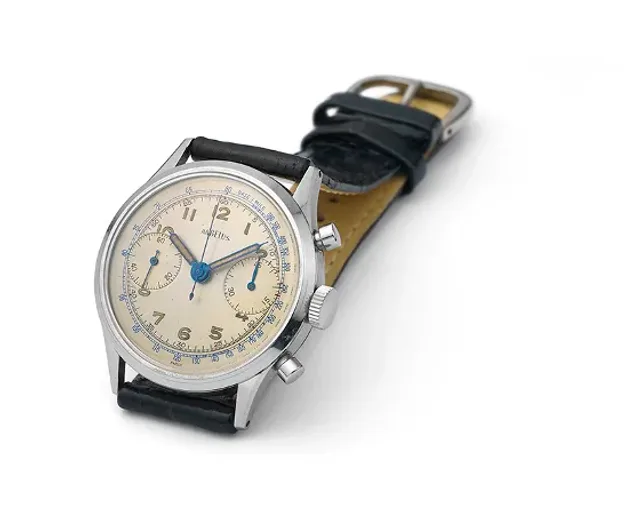
Angelus was founded by the brothers Albert and Gustav Stolz in 1891, in Le Locle. The Stolzes had studied under Henri Sandoz of the Tavannes Watch Company, and began their own company at a time when the watch business was booming. In the coming decades they established Angelus as a respected maker of both watches and watch movements. By the 1930s, its chronographs had become a major part of the business, and would become the brand’s most renowned creations. Angelus quickly adopted the design (conceived by Breitling) of a two-pusher chronograph, like this one from 1935.
Angelus 1935 Chronograph 560
PR
The brand also became known for its portable clocks and table clocks with eight-day power reserves and a host of functions, like alarm, barometer and thermometer. But the watch that would make everything possible for Angelus was the Chronodato. In 1942, the company introduced the first widely-produced chronograph wristwatch with calendar function. The watch had a bicompax design to display the running seconds and a 45-minute counter; a date hand circled the dial, and month and day were displayed in apertures at 12 and 6 o’clock, respectively.
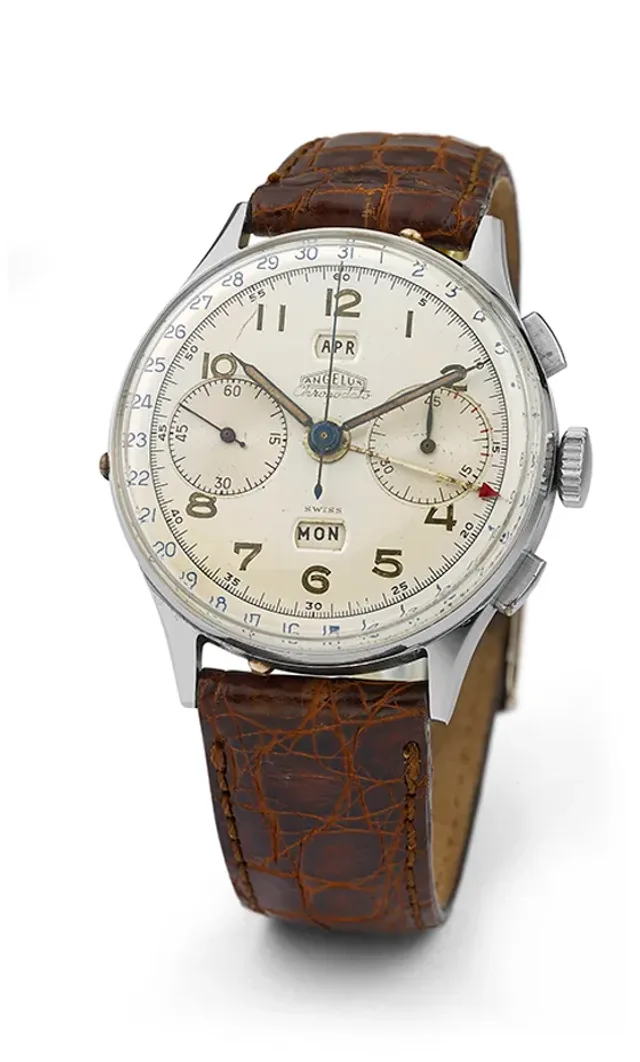
Angelus 1942 Chronodato 560
PR
The Chronodato paved the way for the brand’s pièce de résistance in 1948: the Chrono-Datoluxe. Using Angelus’s caliber SF250, the Chrono-Datoluxe again had a bicompax chronograph display, to which it added a moon-phase at 6 o’clock. But the watch’s real significance was that it was the first serially produced watch with a digital date display. Two numeral disks rotated underneath the window between 11 and 12 o’clock, right beside a day display.
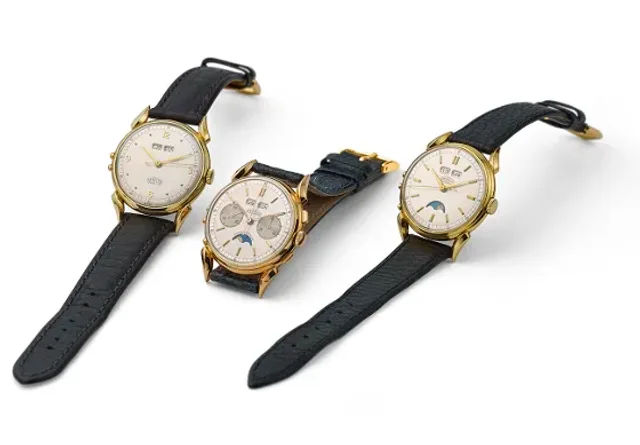
Angelus 1948 Chrono-Datoluxe (3x) 560
PR
Angelus had made a name for itself, but its time in the sun was unfortunately brief. By the end of the 1960s the Swiss watch industry was in decline, and that process was severely accelerated by the advent of quartz watches. Production was shut down in the 1970s; Angelus became known as a darling of vintage-watch collectors.
It wasn’t until 2011 that it found new owners. And not just anyone: Manufacture La Joux-Perret. The highly regarded movement maker, based in La Chaux-de-Fonds, makes original calibers for a number of clients. It also has its own brand, Arnold & Son, which creates manufacture movements in the same facility. So Angelus seems to be in very good hands.
The new Angelus is run out of the same La Chaux-de-Fonds site as La Joux-Perret and Arnold & Son. Like those companies, it is also directed by CEO Frédéric Wenger and technical director Sébastien Chaulmontet.
But since La Joux-Perret already has a powerful small brand in the form of Arnold & Son – and one that has produced a host of innovative and distinct watches based on its golden-age watchmaking heritage – what is left for Angelus to do in this new incarnation. The answer: something completely different.

Angelus_U10 Tourbillon Lumière_soldier 560
PR
Discover the U10 Tourbillon Lumière on the next page.
Angelus_U10 Tourbillon Lumière_soldier 560
PR
The U10 Tourbillon Lumière looks unlike anything to have come out of the La Joux-Perret factories to date. It has an almost sci-fi appearance, with its 62.75-mm-long stainless steel case and seven separate sapphire crystals. Angelus refers to it as a “deconstructed movement,” with its tourbillon sitting apart from the rest of the mechanism. The inside of the tourbillon chamber has a matte black PVD finish to add to the dramatic effect. It is a flying tourbillon suspended above a titanium bridge.

Angelus_U10 Tourbillon Lumière_case profile 560
PR
The U10 has a 90-hour power reserve, thanks to two serially mounted barrels. Caliber A100 has 38 jewels and beats at 18,000 vph. It is a manual-wind movement, and you can monitor the level of wind via a separate display window on the side of the case. The movement is finely finished, as can be seen through the caseback crystal.

Angelus_U10 Tourbillon Lumière_back 560
PR
The dial, which displays hours, minutes and dead-beat seconds, is concave with a spoke-like design for the minutes track. The hands, as well as the indexes, are coated with Super-LumiNova that glows white and blue.
In total, the U10 case is 38 mm lug-to-lug and 15 mm thick. It makes a very imposing statement on a black alligator strap, which has a steel folding buckle. If someone is walking towards you wearing an Angelus, there will be no mistaking it. However, the chance of seeing one on the street is still minimal: only 25 pieces of this limited edition will be produced. Hopefully this is the first of many brave new releases from the revamped Angelus.

Angelus_U10 Tourbillon Lumière_runabout 560
PR