First Love: Spotlight on TAG Heuer
As maker of many collectors’ first “nice” watch, TAG Heuer has a special influence in the industry
What does Kith founder Ronnie Fieg call “probably the most important watch in my lifetime?” The apparel designer’s collection is populated by Rolex, Patek Philippe, Audemars Piguet and other high-end watches. But he’s talking about a small, funky, colorful and affordable quartz watch from the ’80s. Why? His reasoning is eminently relatable: The TAG Heuer Formula 1 was his first watch and what kicked off a lifelong passion.
When he collaborated with the brand to revive the watch of his childhood, it became an unexpected hype phenomenon in 2024. Its success speaks to the nostalgia and experience many share with Fieg. There are many paths to watch collecting, but there’s often a single watch that serves as the initial hook. For a considerable segment of today’s enthusiasts, that gateway watch was a TAG Heuer — and you never forget your first.
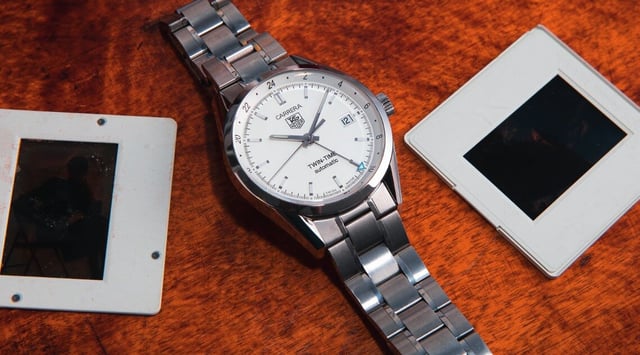
The author’s TAG Heuer Carrera Calibre 7 Twin-Time Automatic
Zen Love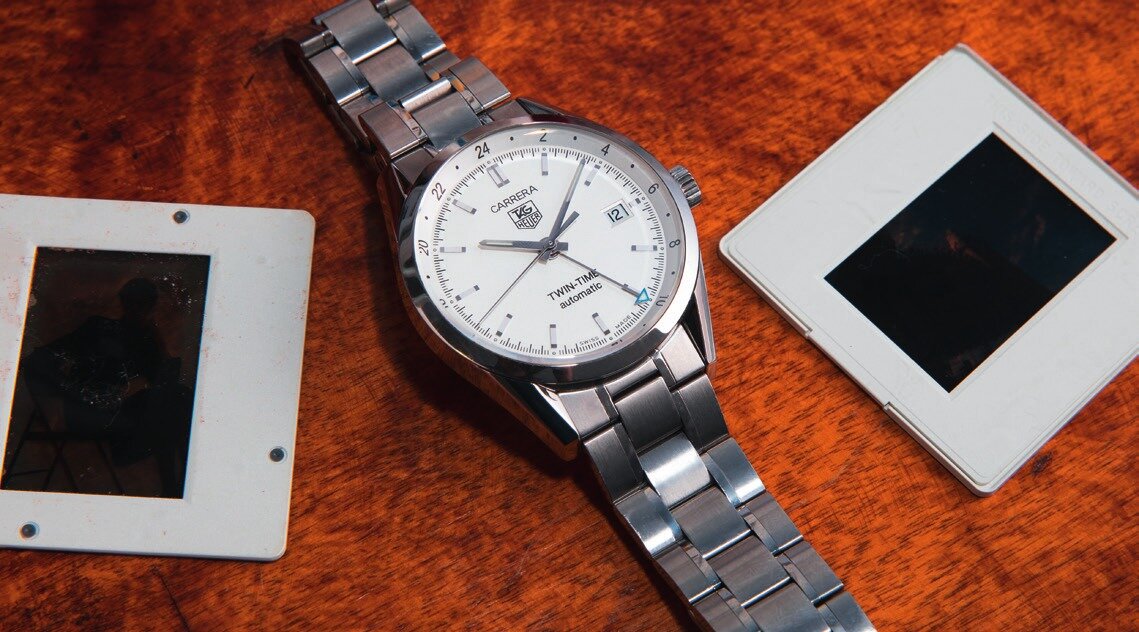
My first watch was not a TAG Heuer. But my first “nice,” comparatively expensive watch? The first “real” watch with a Swiss Made label and automatic movement? The one that ultimately sparked a deeper interest in watches? That was a TAG. And it’s not just me and Ronnie Fieg. TAG Heuer has a role like few other watchmakers of serving as a “first nice watch” for many and converting general consumers into enthusiasts. This gives it special influence in the industry and collector community, but it’s a facet of an important brand that collectors don’t often stop to appreciate.
TAG and Heuer
The brand Heuer was founded in 1860 and made some of the most significant racing chronographs of the 20th century. If you’re a watch collector today whose journey began in the 1990s or 2000s, however, there’s a decent chance you fell in love with a TAG before you ever learned about the Heuer history. You’re not alone.
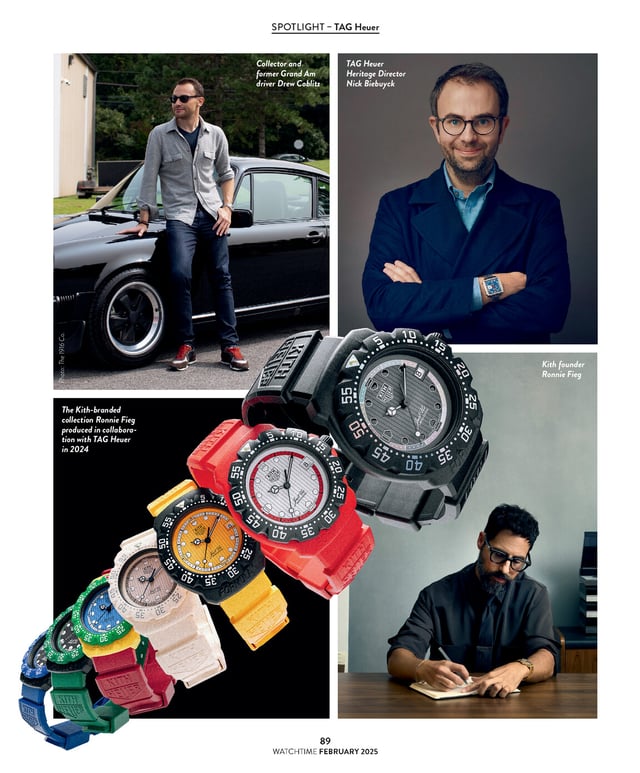
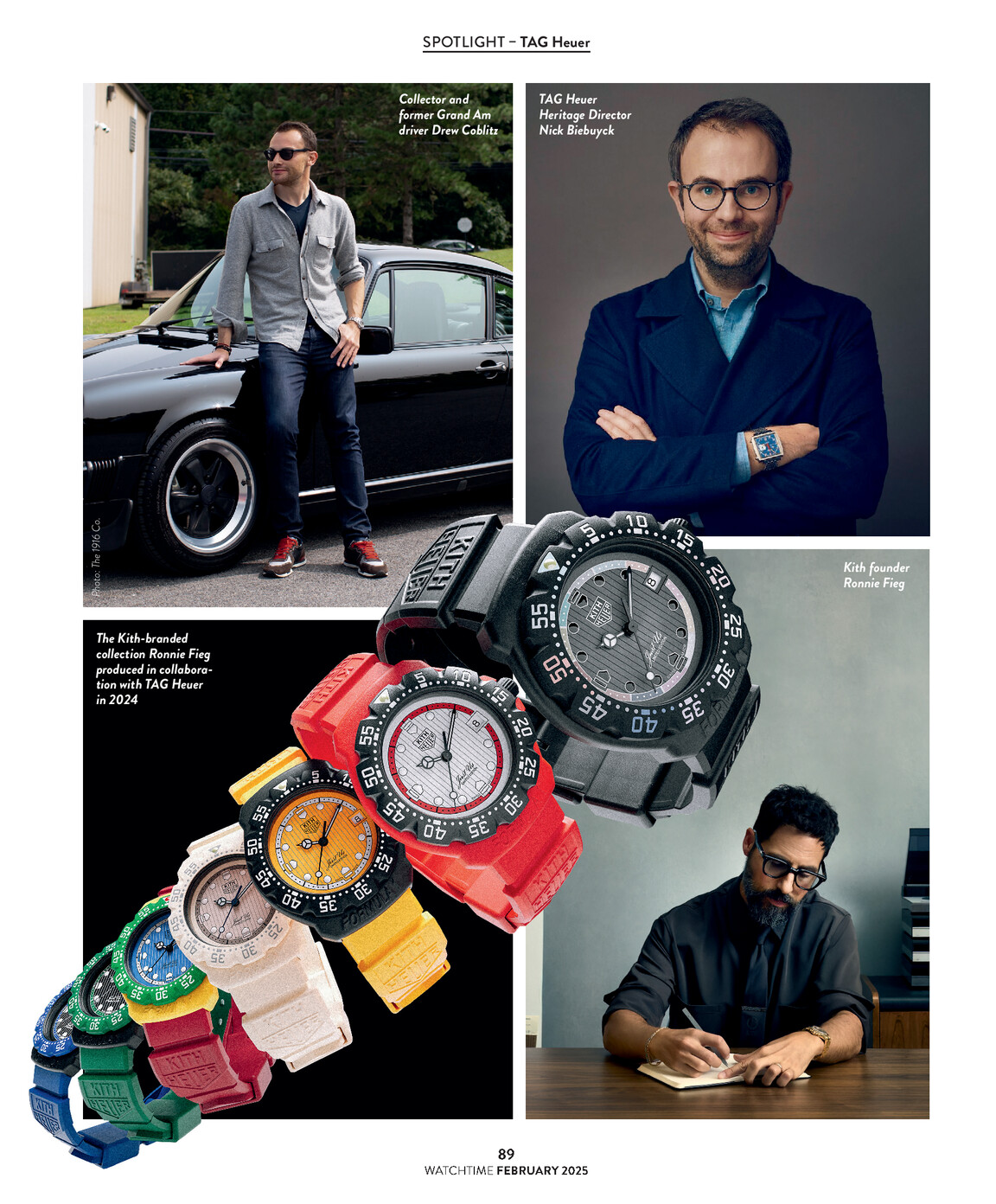
“The Quartz Crisis nearly killed the Swiss watchmaking industry, and then by the late ’80s there was this kind of resurgence,” says Nick Biebuyck, TAG Heuer’s Heritage Director. “It also came along at the same time as a relatively economically prosperous period for the U.S., which had just been through a recession in the ’70s. We see the transition of watches going from being a utilitarian object to a [status symbol].”
Fresh off the heels of Heuer’s acquisition by Techniques d’Avant-Garde (TAG) in 1986, the newly branded TAG Heuer embodied this era. Having abandoned time-only watches in the 1950s to focus on chronographs, Heuer had previously recognized the need for more affordable products for younger customers, such as the failed Easy Rider of 1973.
In other words, although the type of design and strategy of the brand around the 1990s is often associated with the TAG acquisition, it began much earlier. Business consultants following the acquisition apparently wanted to kill the Formula 1 to focus on more upmarket branding, according to Biebuyck, but TAG ultimately leaned into more affordable watches with time-only and quartz options.
Watches like the 1986 Formula 1, dive watches that would evolve into the Aquaracer collection, and others were, as Biebuyck notes, “never intended for anyone in the enthusiast community but, hilariously, have created this huge cultural resonance because they managed to encapsulate the zeitgeist of the period so perfectly.”

The 2023 Carrera Skipper reissue represents the modern brand’s focus on heritage and collector appeal.
TAG Heuer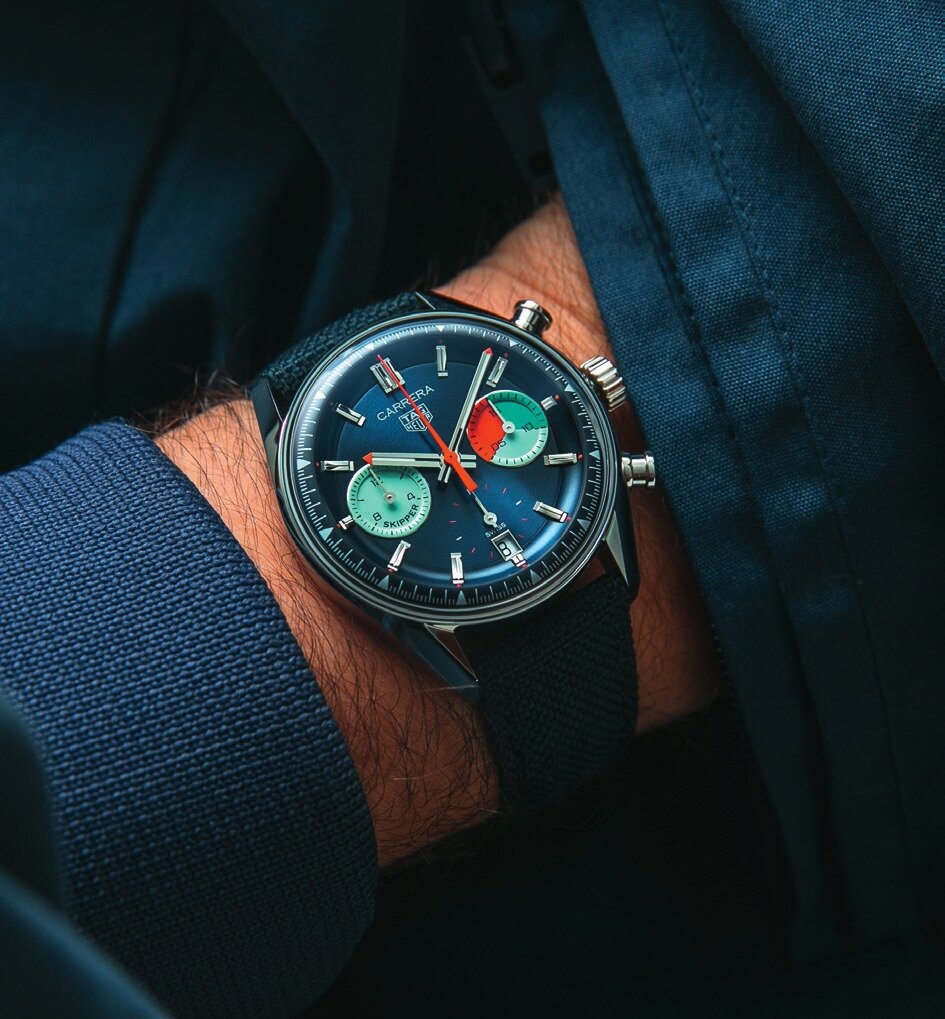
These watches helped expand TAG Heuer’s presence and built brand recognition in a big way. To consumers of the time, they were a luxury within reach and, as gifts, they were significant without being egregiously extravagant. They were produced in great numbers and their ubiquity still echoes on wrists today — whether it’s the same watch that’s been worn daily for 30 years or, perhaps, in the influence it had on a collector’s journey.
They might have captured the zeitgeist of the time, but it’s not an era that’s always celebrated by watch collectors today. Mass production, mass appeal, accessible pricing, quartz movements, small diameters, the experimental design of the 1980s and ’90s … collectors long bemoaned such things, but attitudes are evolving. Nostalgia is part of it. But look at the watches from those decades you still see on wrists today: They were built of a quality that has stood the test of daily, ignorant wear. I submit my own story as evidence.
My First “Real” Watch
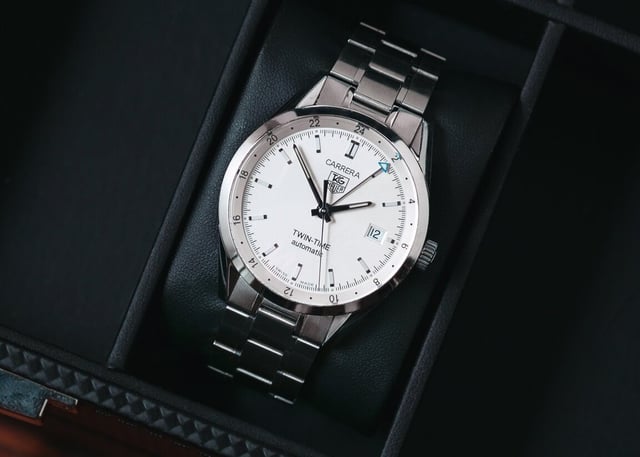
It’s often with mixed emotions that seasoned enthusiasts look back on the watch that ignited their interest — it might reflect tastes and knowledge that have since evolved, but that first watch will be seared into their memory. For me, it was a TAG Heuer Carrera Twin-Time Calibre 7, a handsome steel GMT watch on a bracelet with a silver dial and blue GMT hand.
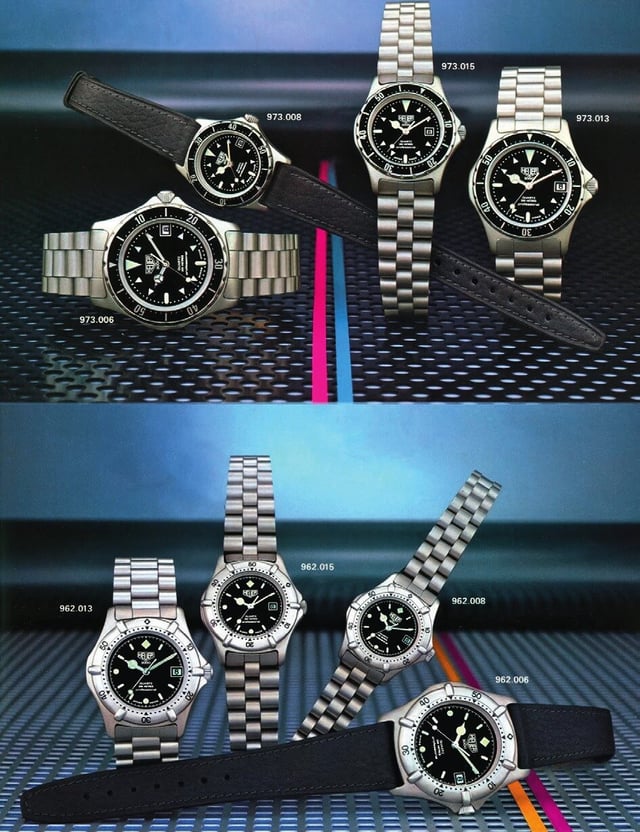
The Series 2000 was a link in the chain of dive watches that would lead to the modern Aquaracer collection.
TAG Heuer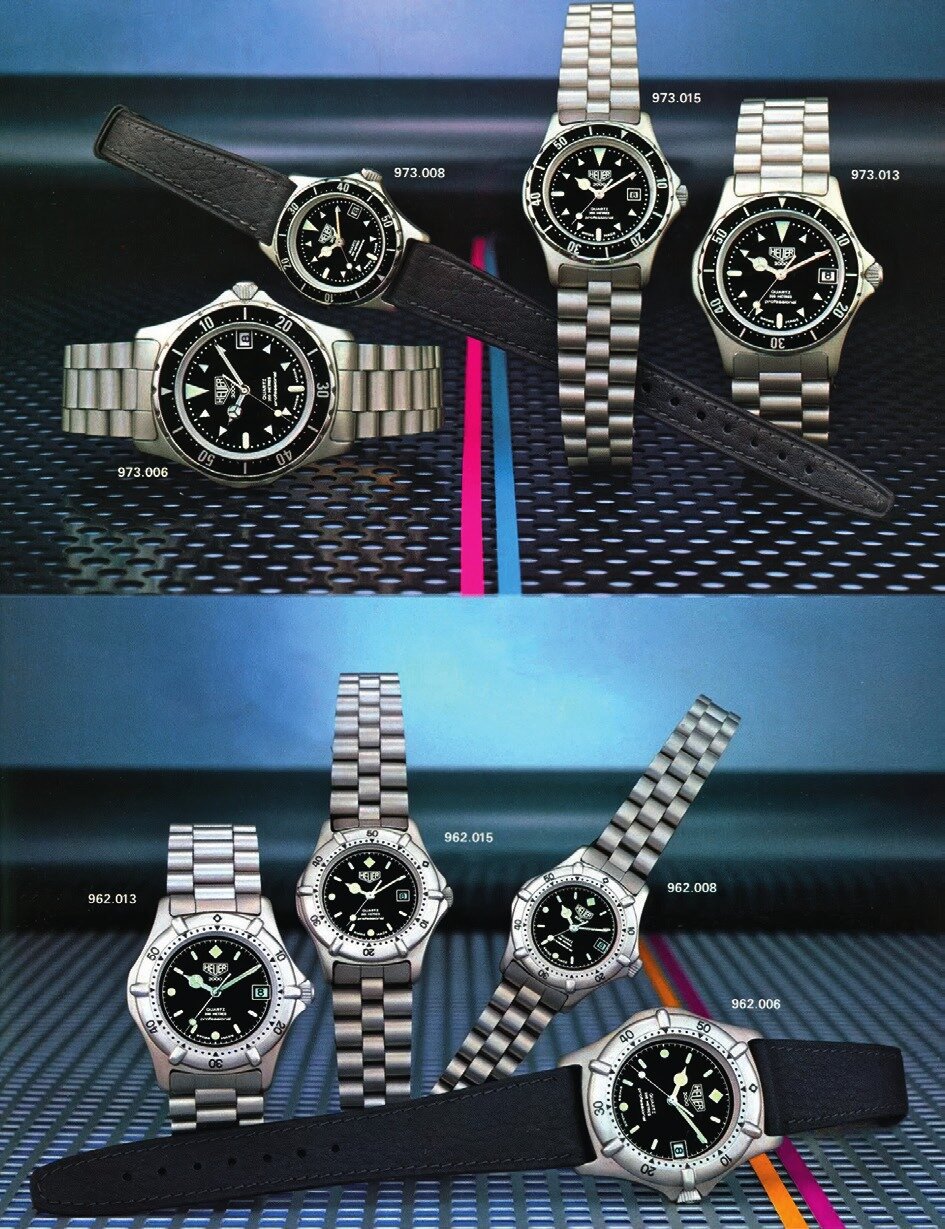
It was the mid 2000s and I knew essentially nothing about watches. The history, the industry, the way a mechanical movement works, why people spend thousands of dollars on watches? These were subjects I wasn’t even really aware of but which today are the fulcrum of my career in watches, and this little TAG Heuer helped jumpstart my understanding of each.
It was trying to wrap my head around such questions about the Carrera on my wrist that opened up the world of watchmaking to me. I was living in Shanghai and, one day, I caught a particularly nasty cold and the medical advice was to simply stay home and rest for several days. Single and not sure what to do with myself, I took the opportunity to start researching a question that had been simmering in my head for years: “Why is my watch so expensive?”
At one point, hours into my research and no closer to an answer, I stopped and asked myself: Is this a topic worth spending more time on? Should I just cut my losses and give up? Or are watches a topic that’s worthy of a deep education? You can guess my conclusion.
I’d been wearing this TAG Heuer Carrera daily for several years already and, frankly, not babying it. My stepfather had presented it to me on the occasion of my birthday just after having finished my master’s degree. It was at a restaurant, and I remember saying something oblivious like, “Oh, a watch!” and “Thanks!” In my mind I was thinking, “I already have a watch” — a cheap, thin, little, minimalist quartz watch that I liked and that said “CK” on the dial. Someone at the table said, “He doesn’t get it,” and that was certainly true.
It was explained to me that it doesn’t use a battery and demonstrated that taking a fork to its sapphire crystal won’t show even the hint of a scratch. I didn’t fully internalize this stuff but was impressed by the sapphire crystal and remember later replicating the party trick at a bar with an icepick. Still no scratches on the crystal, though the case is a different story.
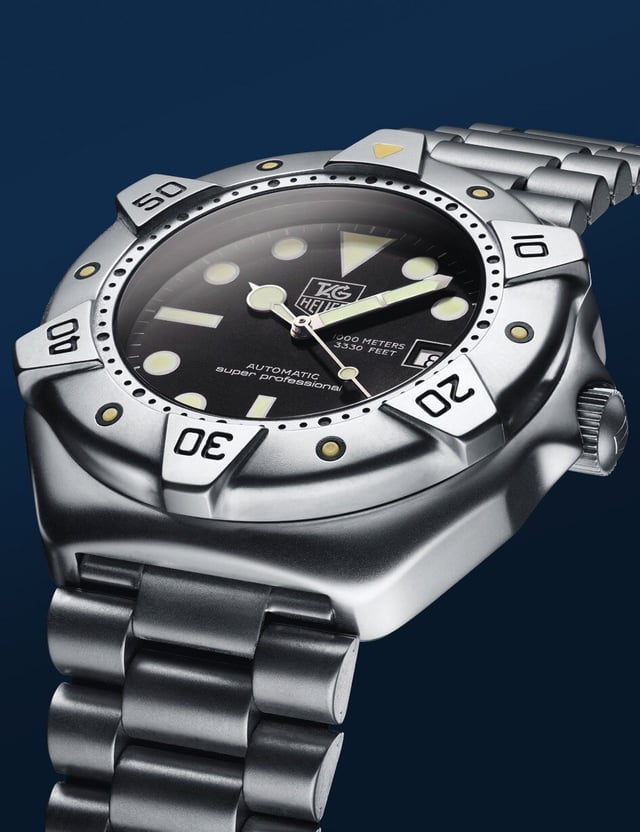
The Super Professional combined funky ‘80s design with serious diving specs.
TAG Heuer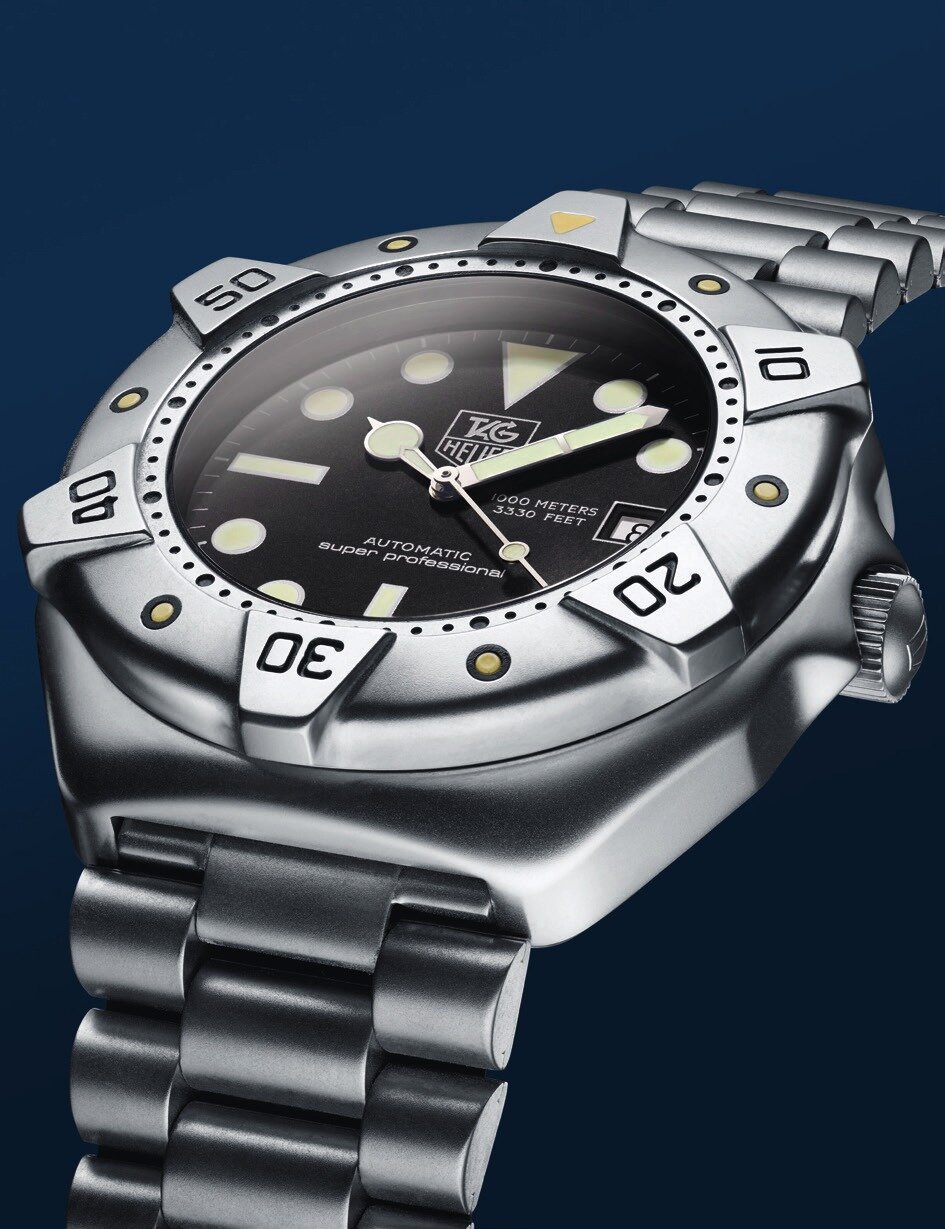
At some point I’d looked up the price and found myself shocked, baffled and a little bit sick. Should I sell it? But I couldn’t, of course. It was a gift, and it was meant to be worn, so that’s what I did. And as I looked down at my wrist over the years, it prompted admiration but also curiosity that would eventually lead to digging deeper.
This watch taught me a lot, but it’s a certain perspective it’s given me that remains most consistently front-of-mind. Just like the most exalted vintage watches today’s enthusiasts pine over, it wasn’t made for collectors. People wearing Rolex Daytonas and the like back in the day knew little more than the brand name. They didn’t know if the movement inside was in-house, finely finished or had a column wheel.
But that’s the mentality that resulted in the icons of today. They were made to be handsome, reliable and robust, and it seems like that was the simple intention behind my Carrera. I imagine that its target consumer was someone with more important things on their mind than the minutiae of watch design or the esoteric topics of collecting.
Now, I’m entrenched in the world of watch media and the collector community, but this TAG Heuer Carrera helps keep me grounded in watches’ origin and purpose. Moreover, it reminds me what it was like to be on the outside of the enthusiast mindset, and of the process of learning about watches from scratch. This informs everything about my approach to the topic today.
Collector Confessions
That’s just the story of one watch magazine editor with a humble collection. Some of the most serious and elite collectors on the planet, however, offer more powerful testimony to how deep and far down the rabbit hole an unassuming TAG can lead.
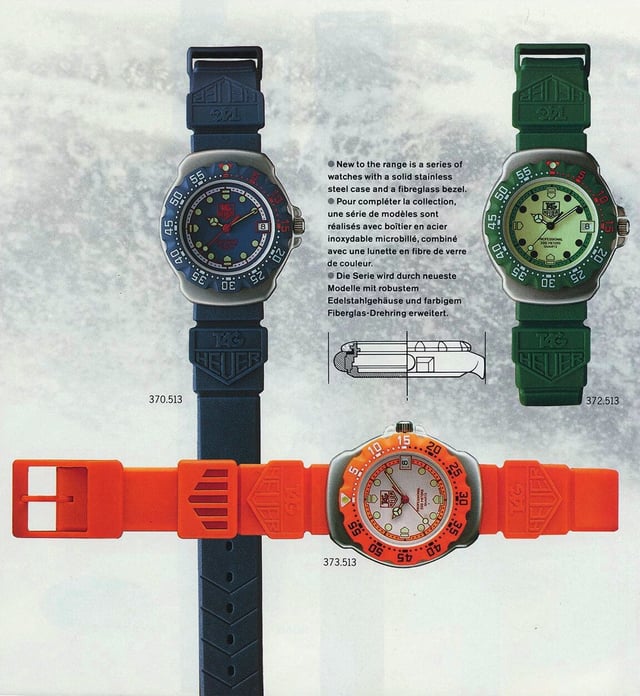
A vintage ad for the F1 series introduced in 1986
TAG Heuer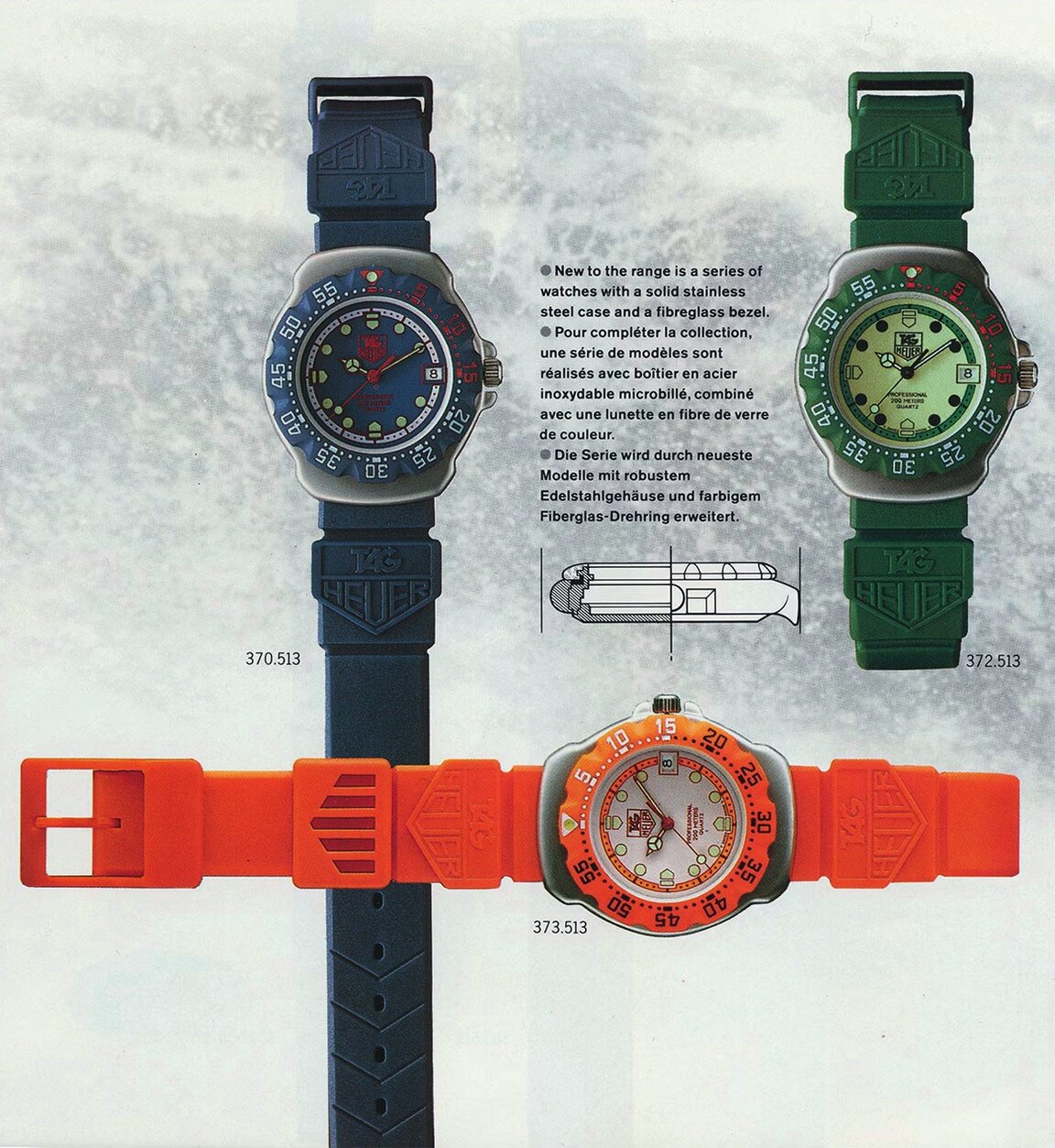
Collector Michael “Shani” Shanlikian spoke with me for an interview in Revolution magazine, and I asked him about his first watch. “The day I graduated from university, I took my last final and then I drove over to an authorized dealer and bought a TAG Heuer [Professional S/el Quartz] Chronograph …. It was the first ‘nice’ timepiece I ever owned,” he told me. “I was just waiting for that day when I graduated and would buy that watch.” Decades later, he’s known within the community for his collection focusing on what many consider the pinnacle of modern watchmaking, the so-called “independents” from F.P. Journe to Roger Smith, De Bethune and others.
It struck me that Drew Coblitz had a similar story. A former Grand Am driver with a garage full of supercars and a watchbox full of everything from Richard Milles to vintage Rolex Daytonas, where do you think he got his start in watches? “I had a couple legit toy watches before, but the TAG F1 was my first Swiss watch,” he says. “Then, when I turned 16, my parents bought me a Formula 1 with a metal bracelet after getting my driver’s license.” The latest TAG to grace his collection is the Kith collaboration.
In a video interview with Hodinkee, Ronnie Fieg discussed the range of colorful TAG Heuer Formula 1 models among his collection of decidedly more prestigious watches. “The F1 watch is probably the most important watch in my lifetime,” he says. Nostalgia plays a big role in his tastes and the watch has remained a fixture in his mind since he got it at the age of 12: “I still am stuck in the past,” he says, “so I’m still collecting footwear from the late ’90s to early 2000s. I’m still obsessed with that era. I think I’m chasing only that era as much as I can as I grow older.”
None of this would come as any surprise to Nick Biebuyck. “For me,” he notes, “it’s just crazy the number of guys that come to me with collections of vintage Heuer, vintage Rolex, big modern Pateks. When you say, ‘Okay, what was your first watch?’ They’re like, ‘Oh, it was a TAG or a Formula 1 that my parents bought me for my birthday in, like, 1989.’ And it was this that started the journey.” Hearing the same kind of story over and over is what made me want to write this article, but will future collectors be telling the same tales?
The Next Wave
TAG Heuer sometimes seems to have a split personality. Some collectors might speak of “TAG” and, separately, of “Heuer.” In this discourse, Heuer would refer to the historic brand before it was prefixed in 1986, and the collections that inform today’s more heritage- and enthusiast-oriented models. TAG, on the other hand, would be the personality that was born in the 1980s with affordable time-only and quartz watches, and a youthful disposition. It’s still very much part of the brand today.
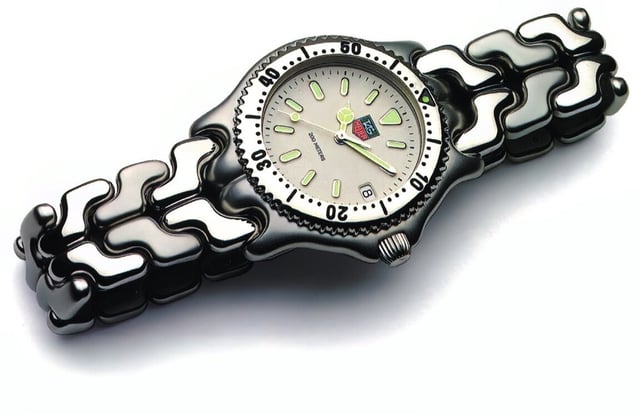
The TAG Heuer S/el series first released in 1987 would evolve into the modern Link collection.
TAG Heuer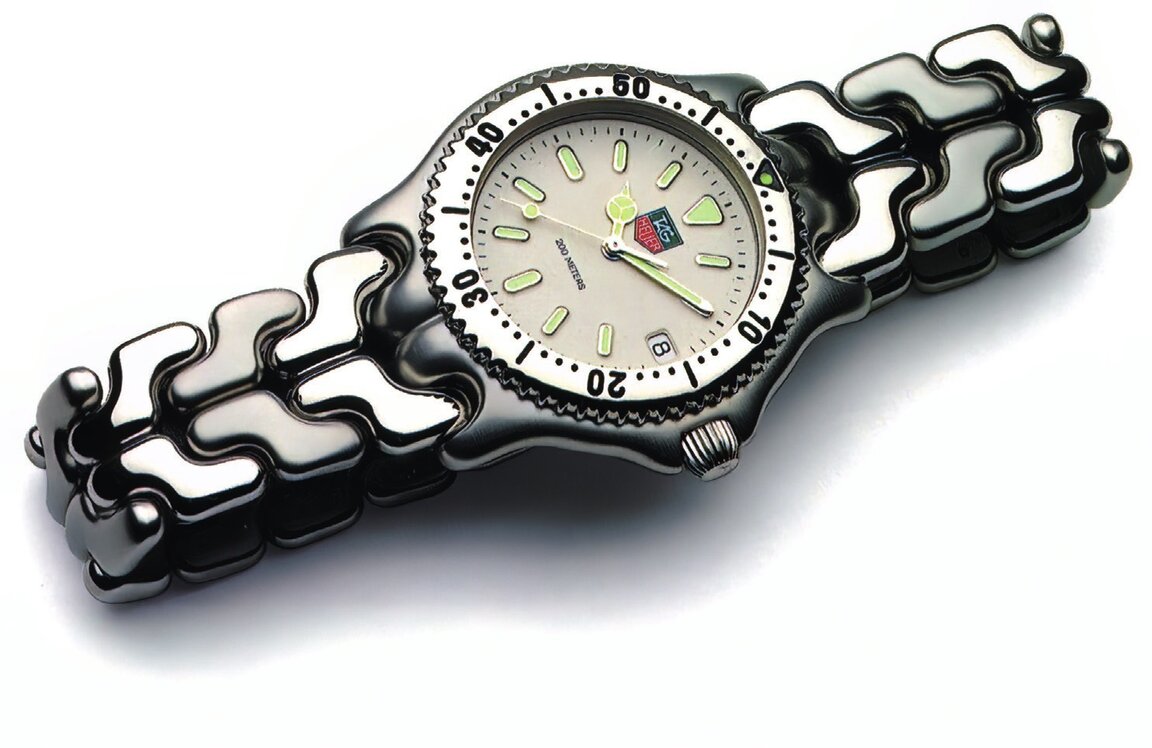
Today’s Formula 1, Aquaracer and Link collections still occupy an interesting spot in the market. The likes of Seiko, Hamilton and Tissot are great first watches for many, but TAG offers a step up: an entry point to mid-level Swiss luxury watchmaking from one of the “big” brands. It’s a tier of watches where specs might look similar on paper to “entry-level luxury,” but where the difference should be palpable in terms of that ill-defined but consequential quality known as “fit and finish.” At time of writing, the brand’s range starts at $1,450 for a quartz Formula 1 Date, with automatic watches starting about a grand above that.
The customers of those watches today might be drawn in by TAG’s roster of hip ambassadors or edgy releases. But they very well may be buying the likes of heritage-focused Carrera and Monaco chronographs in a few years. TAG might be playing toward its own future, but just as decades ago, its influence will also ripple in the industry and collector community. Today’s Kith x TAG Heuer Formula 1 customers might be those collecting De Bethune and Akrivia watches down the road.
To learn more, visit TAG Heuer, here.
This article was originally published in the January / February 2025 Issue. To subscribe to the print edition of WatchTime Magazine, click here.