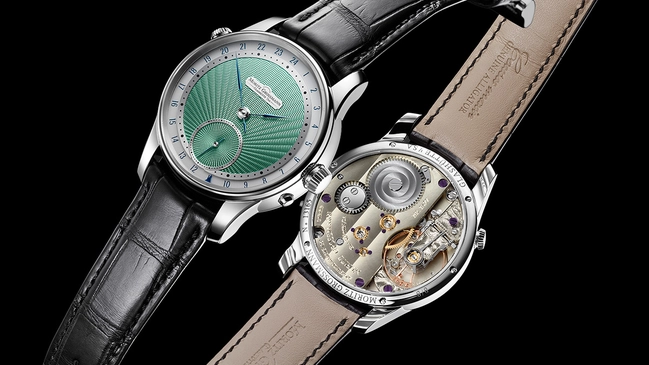
Moritz Grossmann Marks 200 Years with Tefnut 36 Silver-Plated by Friction Turquoise Blue
Traditional friction silvering in a compact steel case

Moritz Grossmann is continuing the celebration of its namesake’s 200th birthday with another limited-edition watch, this time in the form of the Tefnut 36 Silver-Plated by Friction Turquoise Blue.
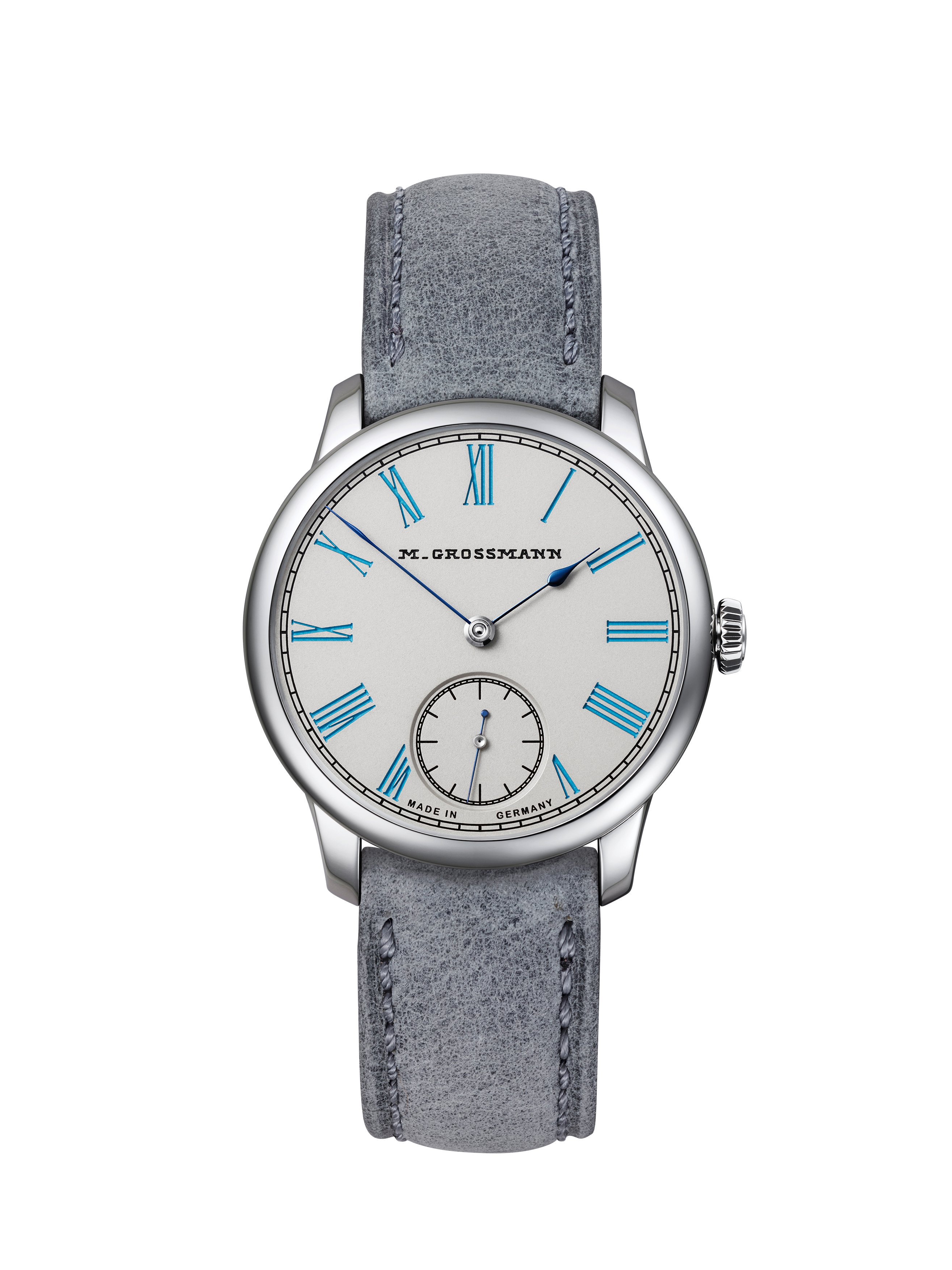
The name at first glance might be a little confusing, but it makes more sense if you mentally separate it into three parts: Tefnut 36 — Silver-Plated by Friction — Turquoise Blue. Tefnut 36 is the model, silver-plating by friction is the dial treatment, and turquoise blue describes this particular execution. Limited to 12 pieces, the new model combines a compact 36mm stainless-steel case with a dial made using a 19th-century silvering technique, finished with turquoise-blue details.
The watch follows a run of anniversary releases that’s put unusual handcraft techniques at the center of the celebration. Earlier this year, Moritz Grossmann introduced the Hamatic Silver-Plated by Friction, then the Tremblage Gold, then another Tefnut Silver-Plated by Friction, and after that the Backpage Tremblage. Across those watches, the manufacture has returned to friction silvering and tremblage engraving — both old, labor-intensive processes that are fairly uncommon in contemporary watchmaking, but each one serving as a natural continuation of the birthday party.
A Smaller Tefnut
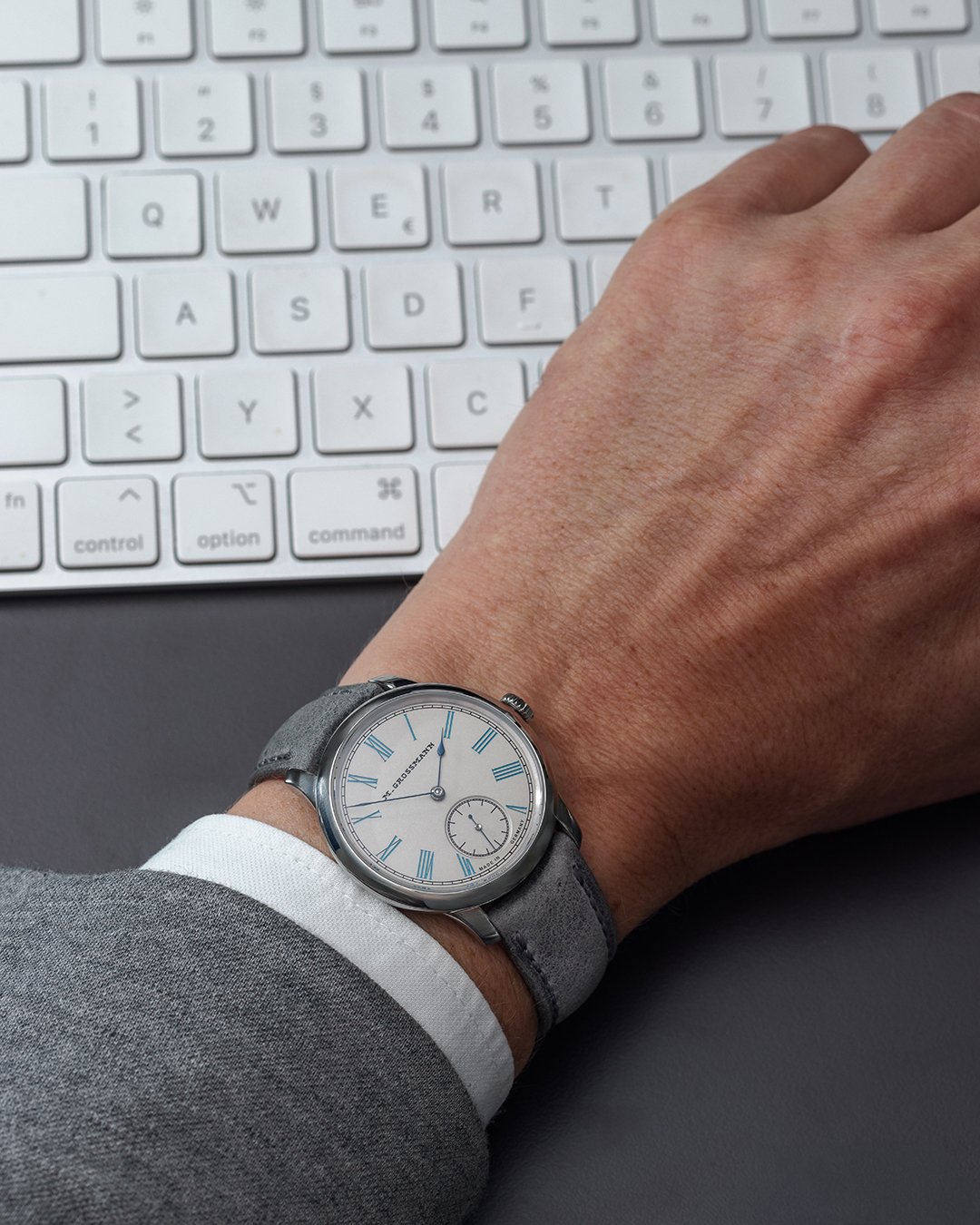
In this latest edition, there’s no new complication or major reinterpretation. Instead, Moritz Grossmann has taken one of its classic watches, reduced the case to 36mm, and used the anniversary to put more attention on the kind of detailed handwork that already defines much of what it does.
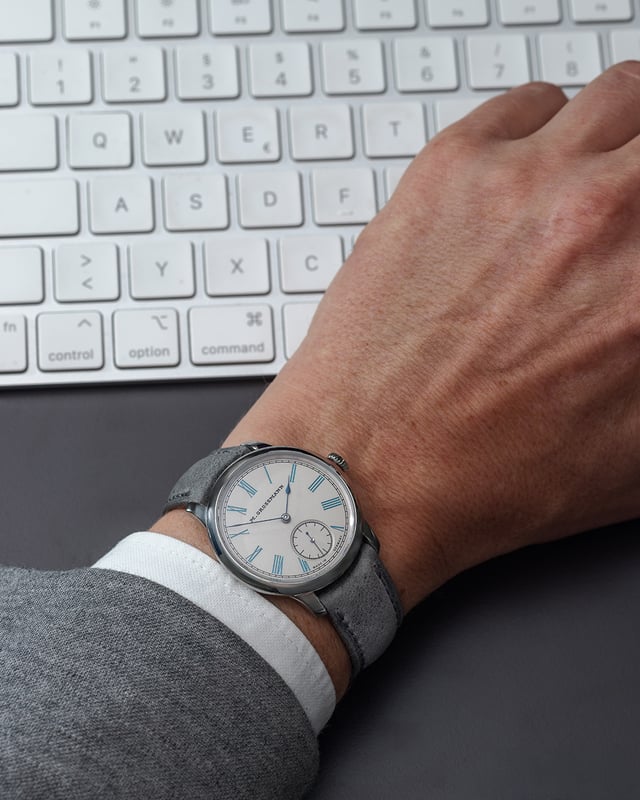
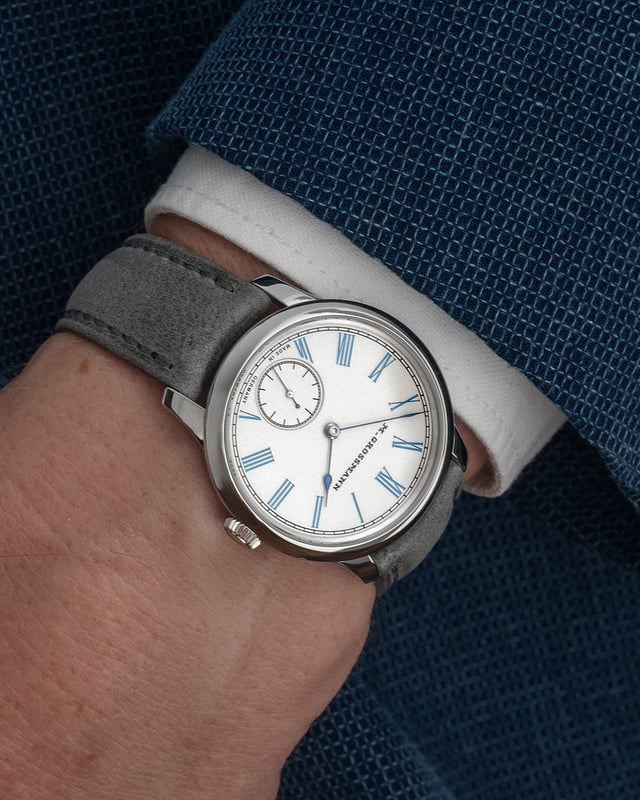
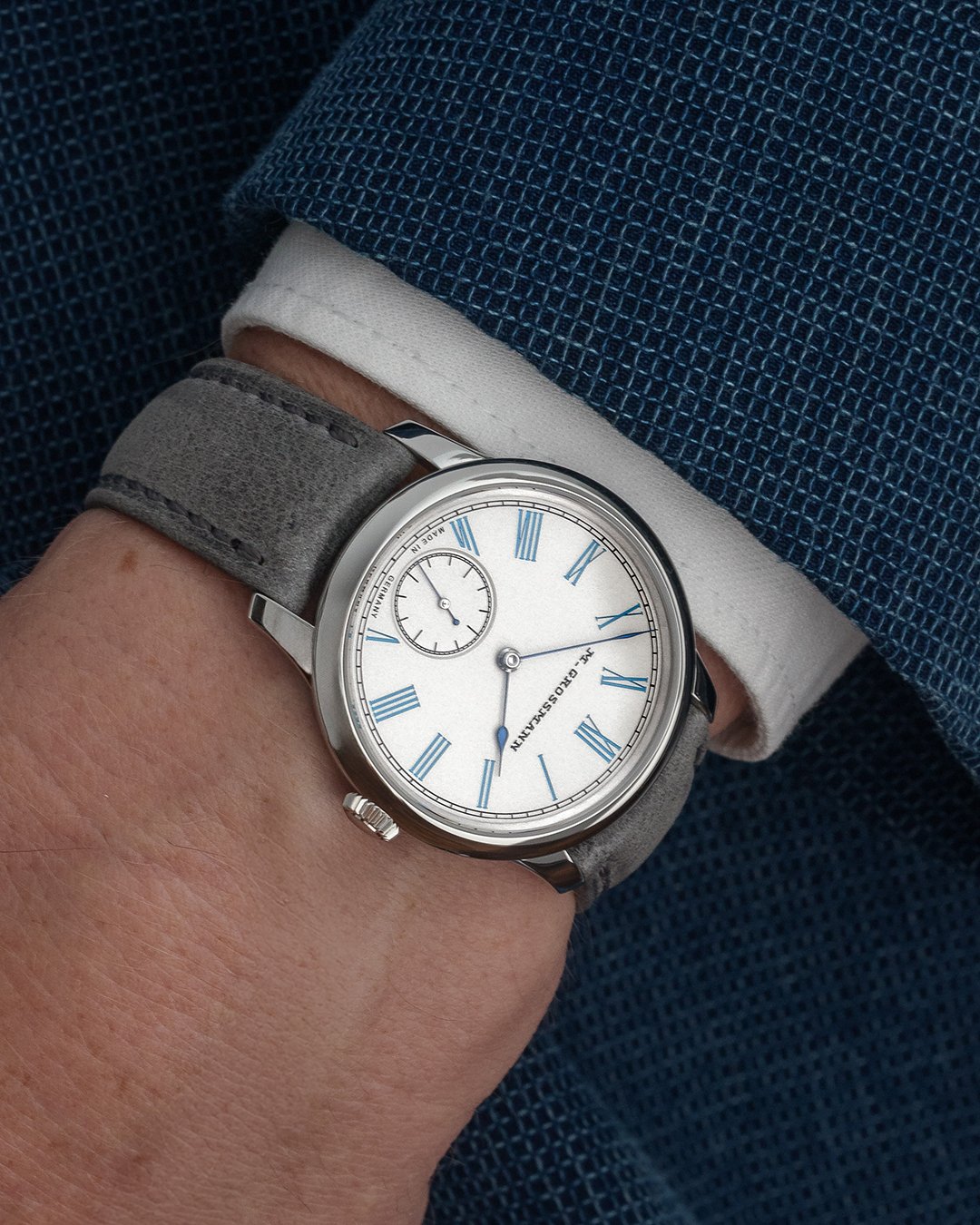
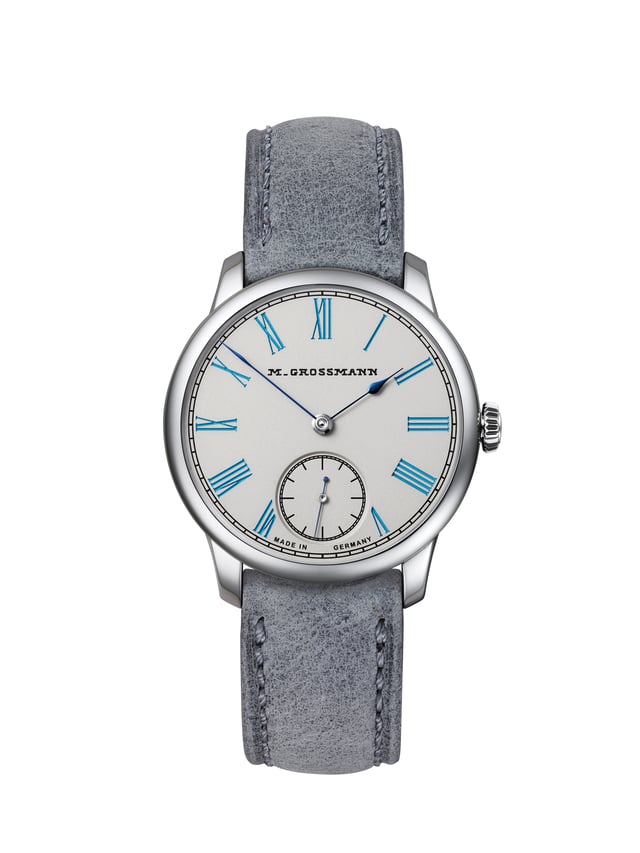
The stainless-steel case measures 36mm across and 8.5mm thick, with a three-part construction, sapphire crystal, and sapphire display caseback. Slim lugs and the familiar cross-grooved crown keep the design recognizably Moritz Grossmann, while a hand-stitched gray kudu leather strap secures the watch to the wrist.
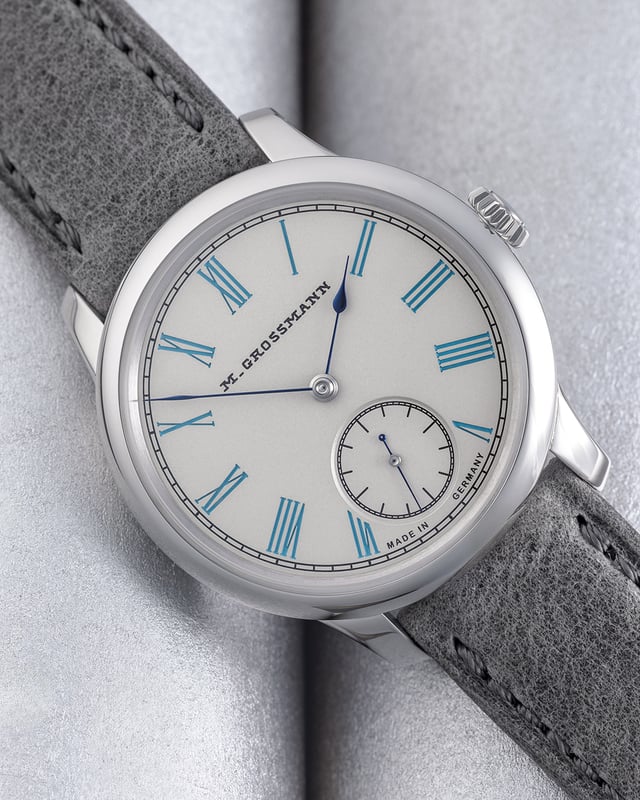
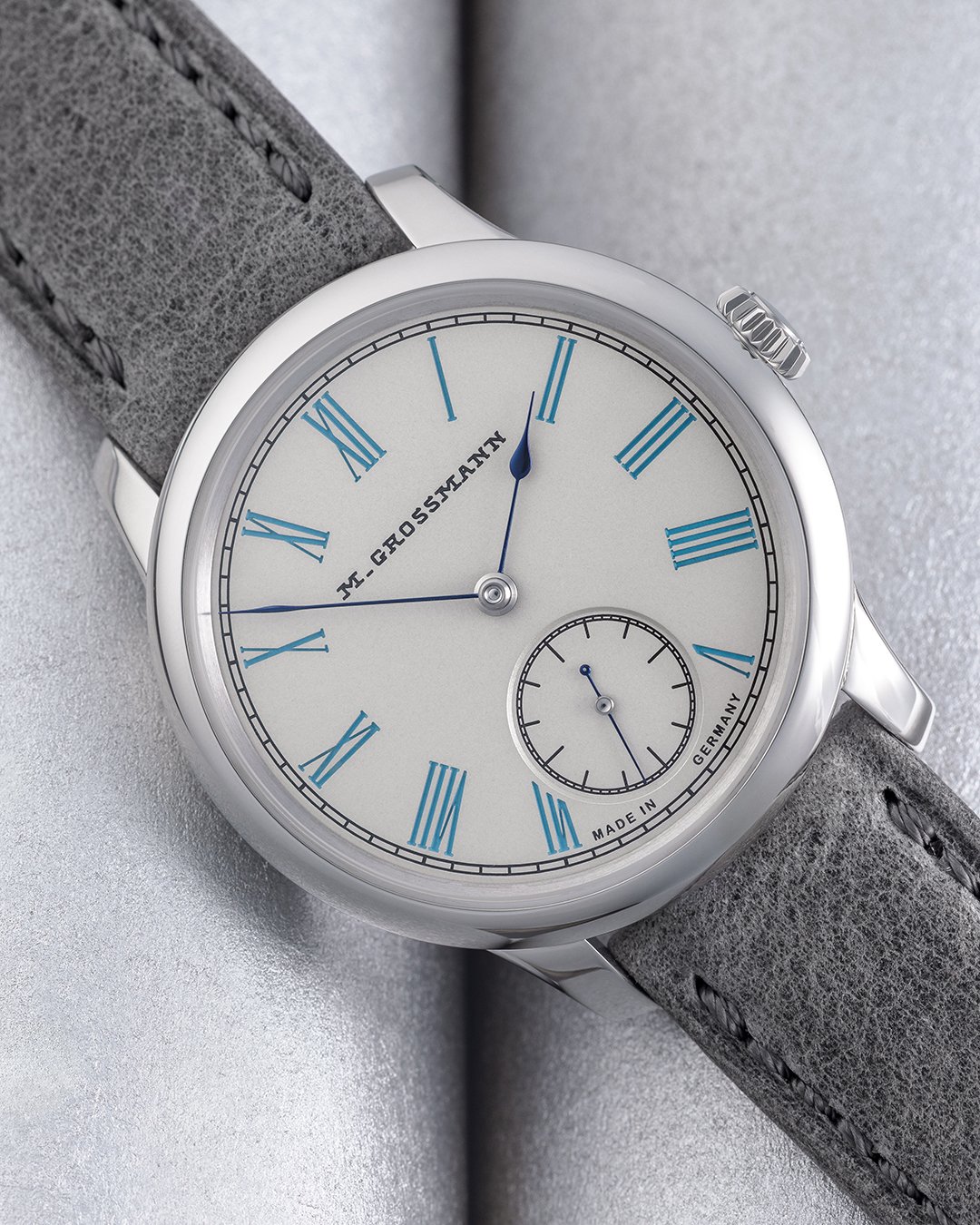
The 36mm size is a novel choice for the watch and feels like an organic continuation of the previous anniversary editions. It adds a bit of intrigue to what Moritz Grossmann has been doing with the series, while keeping the Tefnut subtle in wear. That restraint suits the brand, with much of its appeal coming through discovery — in the smaller details, the finishing, and the handwork — and allows the dial and movement to do most of the talking.
Silver-Plated by Friction
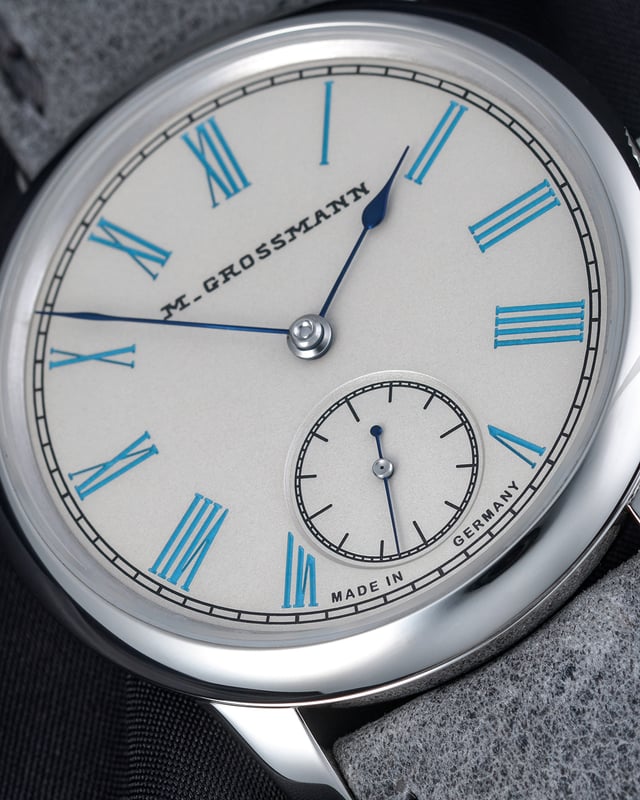
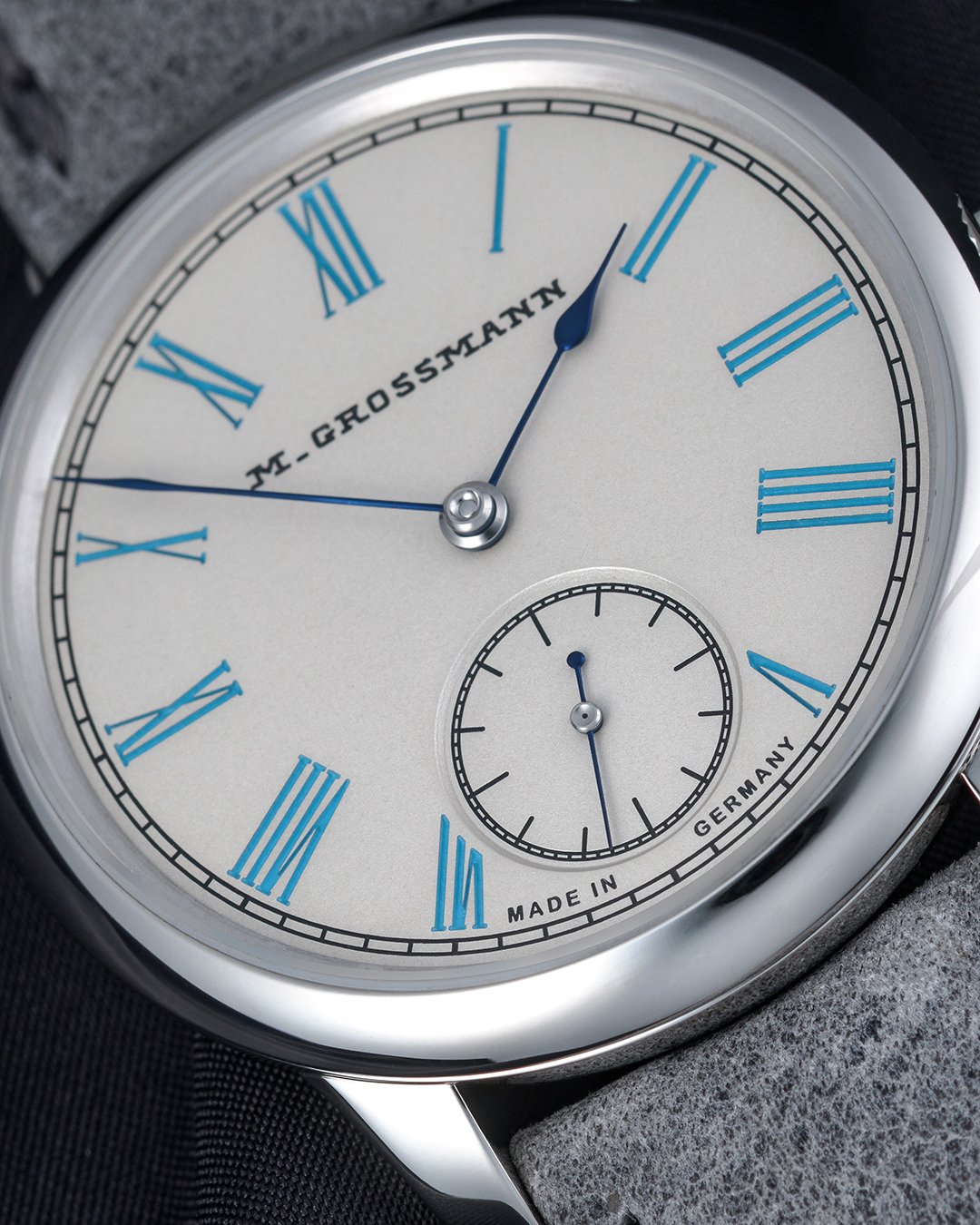
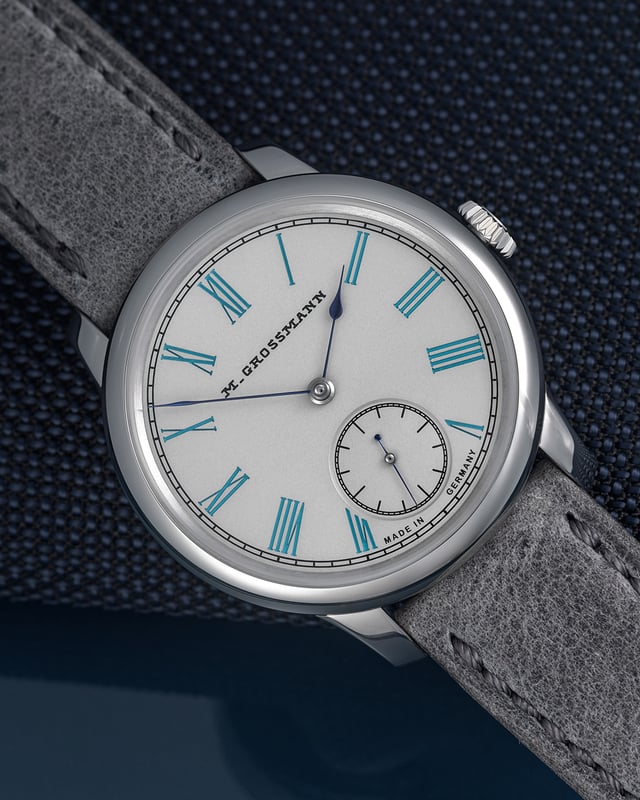
If the smaller case keeps the watch quiet, the dial is where most of its distinction comes into play. The surface is produced using silver-plating by friction, also known as silver-plating by grit, a 19th-century process that Moritz Grossmann has revisited in its Glashütte workshops. Silver powder, salt, tartar, and water are worked into the dial by hand with a small brush, gradually building up the fine grain and matte silver surface the technique is known for.
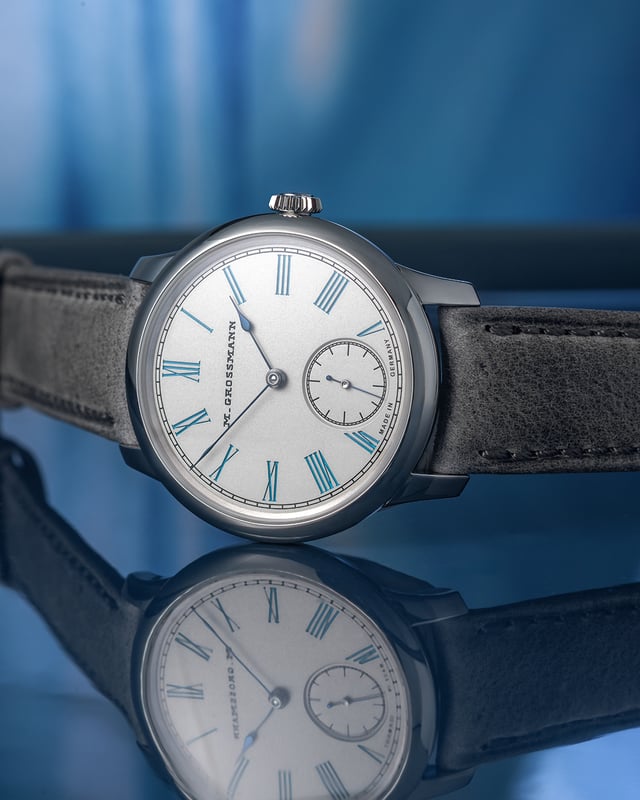
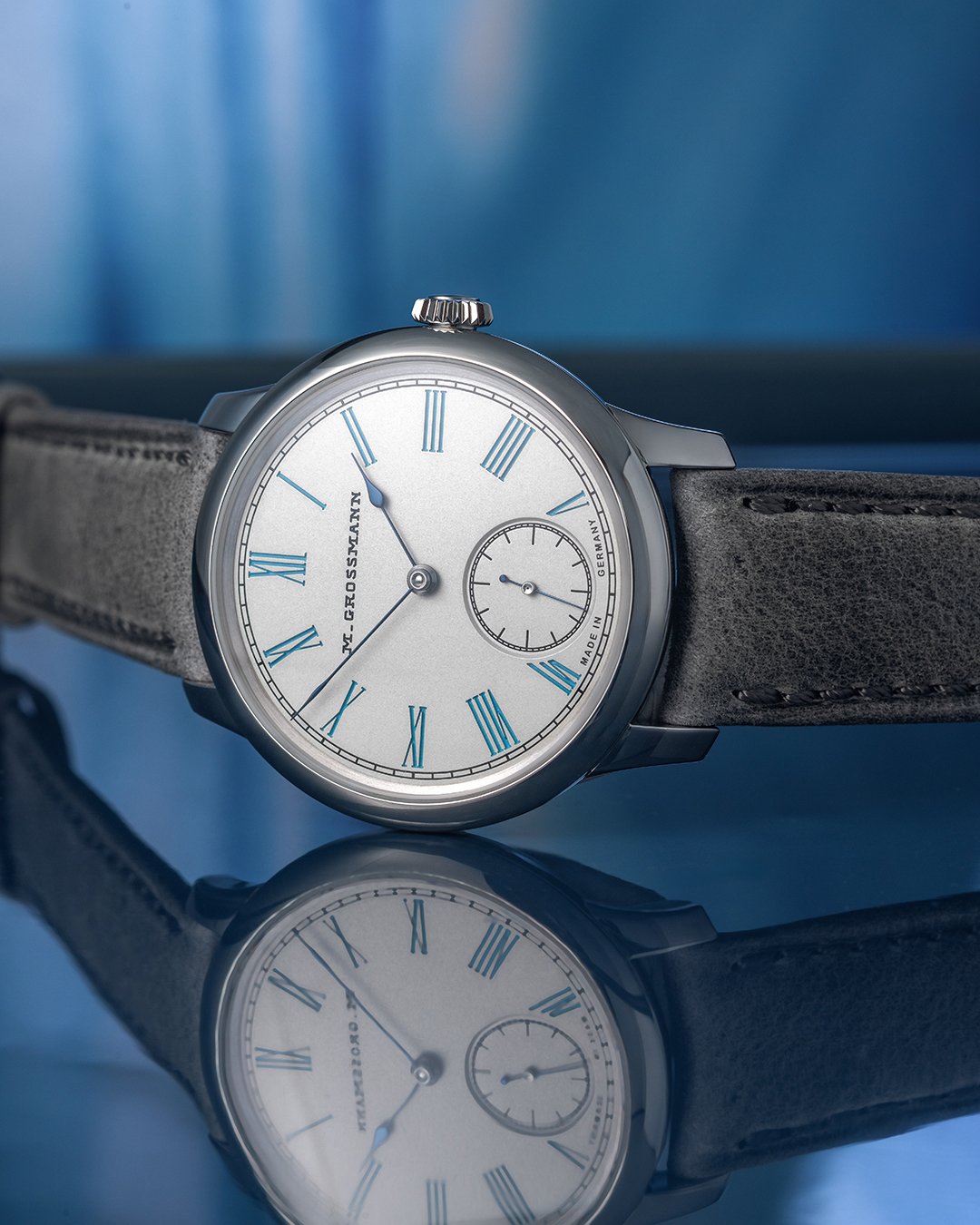
Silver-plating by friction is a fairly archaic and complicated way to make a dial that can look a bit simple at first, but that’s part of what makes it relevant here. The process gives the watch a real historical connection while also playing into the almost archaeological, material-study side of what Moritz Grossmann has been highlighting with these anniversary pieces. The amount of material applied must be carefully controlled throughout, and Grossmann says only a small number of specialists have mastered the technique.
The technique notably isn’t entirely unique to the brand — Glashütte Original also still uses manual friction silvering — but it remains unusual in contemporary watchmaking, especially outside Saxony. Moritz Grossmann has also used it before on previous Tefnut and Hamatic models, so the anniversary isn’t inventing a new connection so much as bringing existing work back into focus.
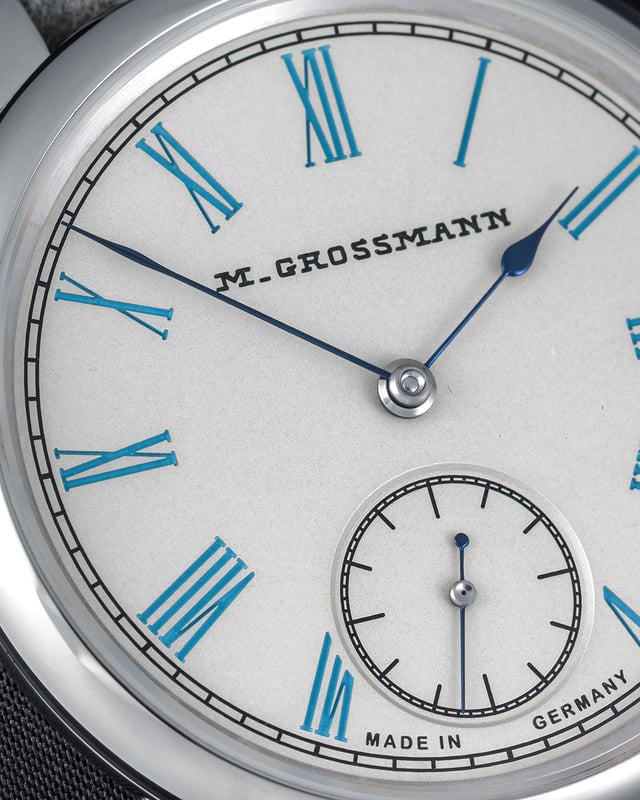
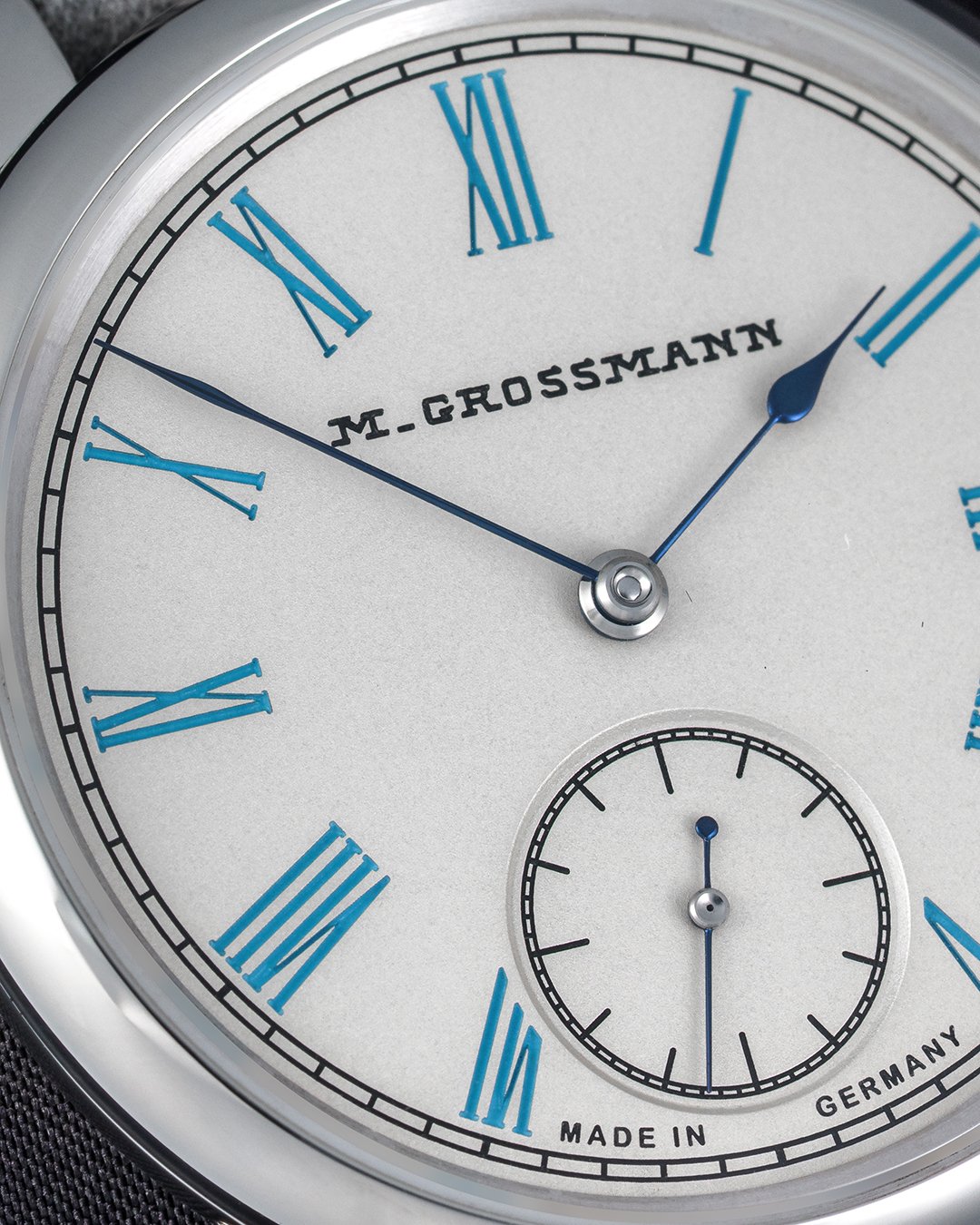
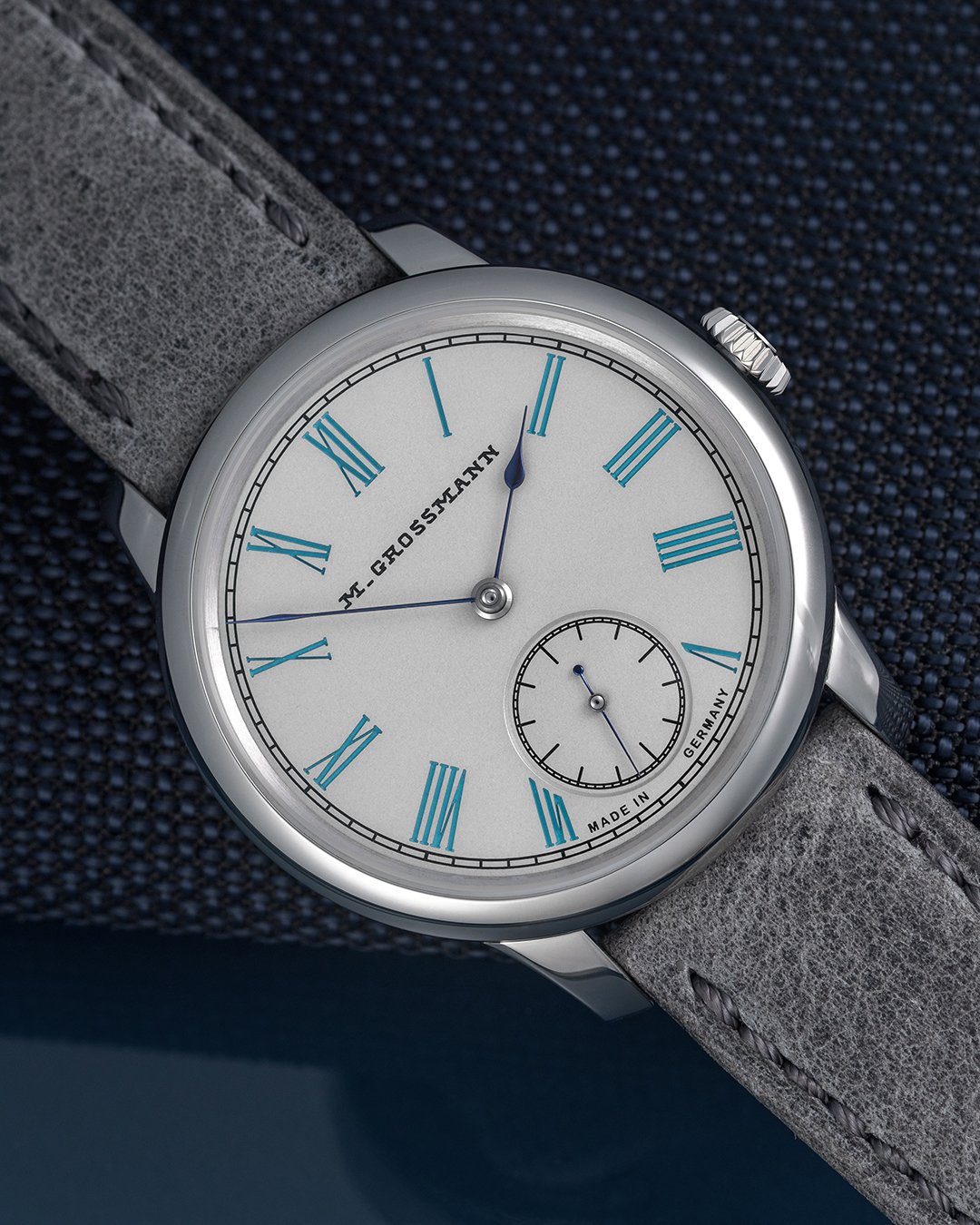
For the Turquoise Blue edition, the color in its name comes primarily through the engraved Roman numerals, which are lacquered in a blue with a slight green tint. Against the finely grained silver-plated surface, the turquoise tone changes somewhat with the angle and available light. As for the dial’s other details, the historical “M. Grossmann” logo from 1875, minute track, seconds scale, and “Made in Germany” inscription remain black, keeping the rest of the display closely in line with the brand’s traditional design language.
The lacquers are applied and kiln-fired before the friction-silvering process, then protected while the remaining dial work is completed. The steel hands are made in-house as well, shaped and finished by hand before being heat-annealed blue.
Calibre 102.1
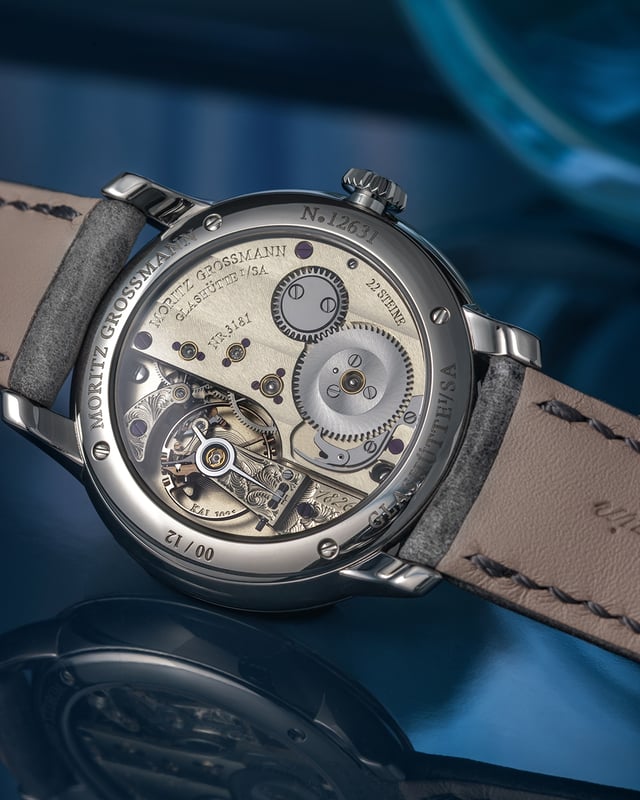
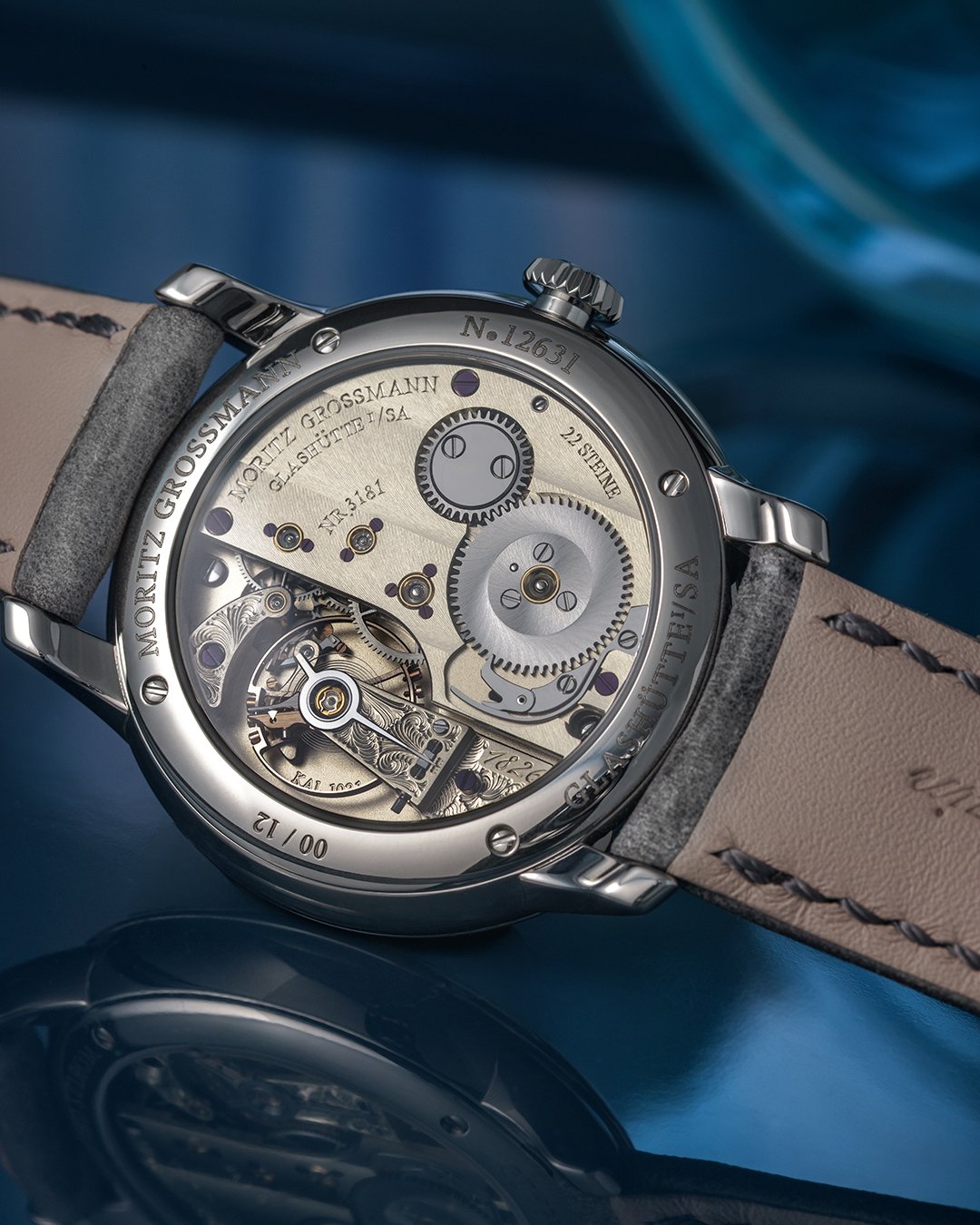
Inside is Moritz Grossmann’s hand-wound Calibre 102.1, measuring 26mm wide and only 3.45mm thick. The movement consists of 188 parts and 22 jewels, including three mounted in screwed gold chatons. It runs at 21,600 vibrations per hour, offers a 48-hour power reserve, and is regulated in five positions. The caliber uses a traditional three-fifths plate construction, along with raised chatons, a stepped balance cock, and Grossmann’s micrometer regulation system.
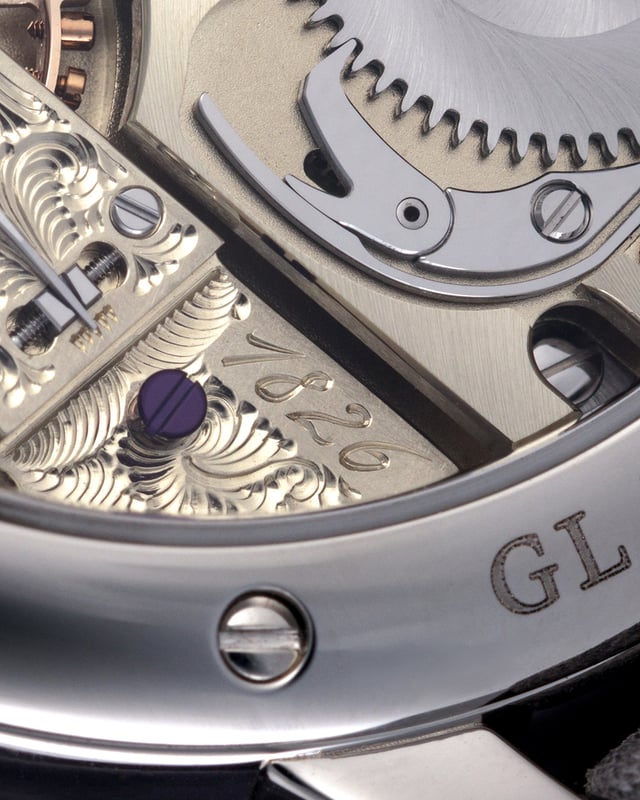
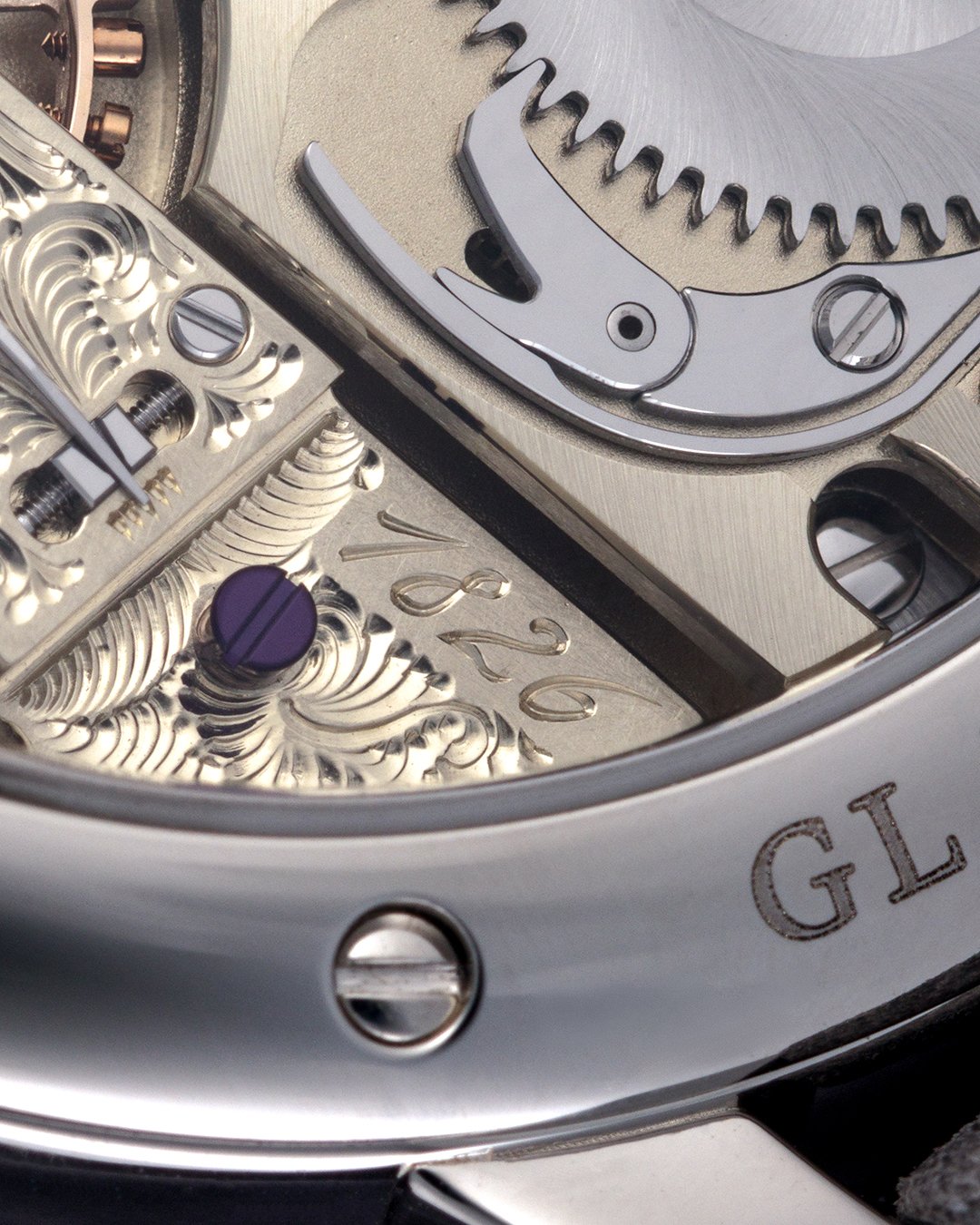
This is all familiar territory for the brand, so the finishing is where most of the intrigue comes in. The barrel bridge carries Glashütte ribbing and a hand-engraved inscription, while the balance cock is engraved by hand with a fine floral pattern. For this anniversary edition, Grossmann adds an “1826” engraving to the balance cock in reference to its founder’s birth year.
An Appropriate Anniversary Watch
Anniversaries can get a little complicated for revived brands, especially when the historical manufacture and the modern company bearing its name are separated by a long period of inactivity. Moritz Grossmann was born in 1826, established his workshop in Glashütte in 1854, and died in 1885. His manufacture was later liquidated, while the modern Grossmann Uhren GmbH was founded by Christine Hutter in 2008.
To its credit, Moritz Grossmann has been fairly precise about what it’s marking in 2026. The anniversary is specifically 200 years since the birth of Moritz Grossmann himself, not 200 years of uninterrupted production. The watches released around it have handled that distinction well and aren’t pretending to be direct recreations of something made two centuries ago. Instead, they’ve used old techniques and familiar finishing methods to point back toward the kind of Glashütte watchmaking the modern company has chosen to carry forward.
The Tefnut 36 may be one of the more understated examples of that approach. The smaller case gives it some novelty, the turquoise adds enough color to separate it from the rest of the collection, and most of the real interest still sits in details that are easy to miss unless you know what went into them. For a brand that has largely been comfortable letting its work speak for itself, that feels like an appropriate way to mark the occasion.
Availability and Pricing
The Moritz Grossmann Tefnut 36 Silver-Plated by Friction Turquoise Blue, reference MG-004153, is limited to 12 pieces, with pricing set at €29,000 excluding VAT, or approximately $33,500 at the time of writing.