Power Reserve Indicators: What They Are and How They Work
How mechanical watches show what’s left
What is a Power Reserve?
The term “power reserve” is often used imprecisely: it generally refers to the amount of time a watch will continue running from a full wind until the mainspring has completely unwound, without receiving any additional energy. Traditionally, watchmakers referred to this total running time as the watch’s autonomy. “Power reserve” originally described only the remaining running time after the first 24 hours had elapsed. Today, however, the term power reserve has almost entirely displaced “autonomy”.
Simplified, a watch’s power reserve is the amount of time it can continue running after being fully wound without receiving any additional energy. The length of that period depends on factors including the movement’s mainspring, barrel arrangement, frequency, and energy demands.

Arnold & Son: Longitude Titanium 5°W
Arnold & Son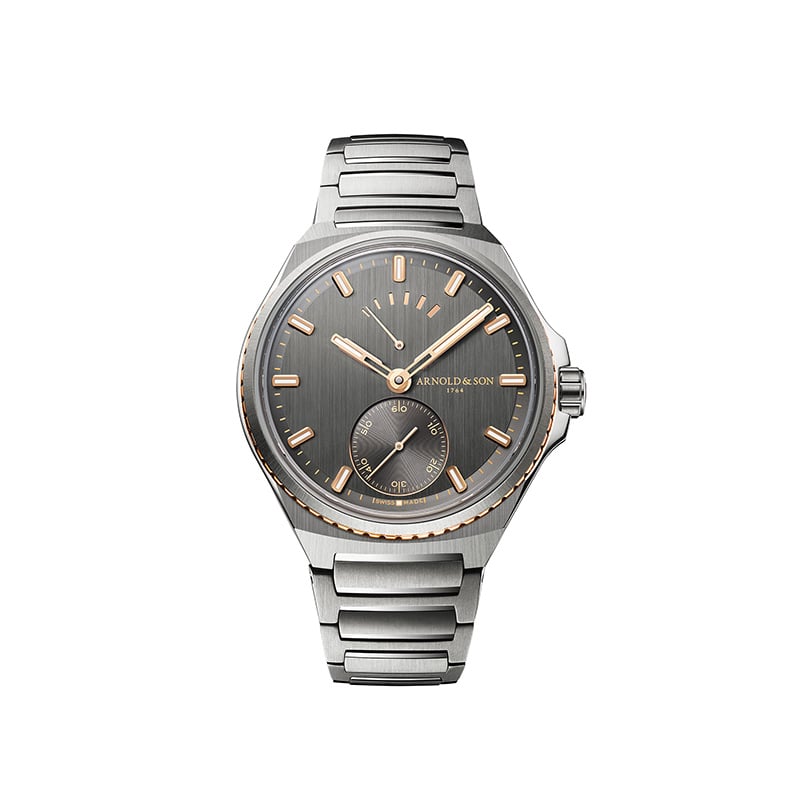
The Origins of the Power Reserve Indicator
As the mainspring unwinds, the torque it delivers gradually changes, which can affect the movement’s rate near the end of its power reserve. A power reserve indicator helps the wearer keep track of the mainspring’s state of wind. On a hand-wound watch in particular, it can also prevent the watch from unexpectedly running out of power and stopping.
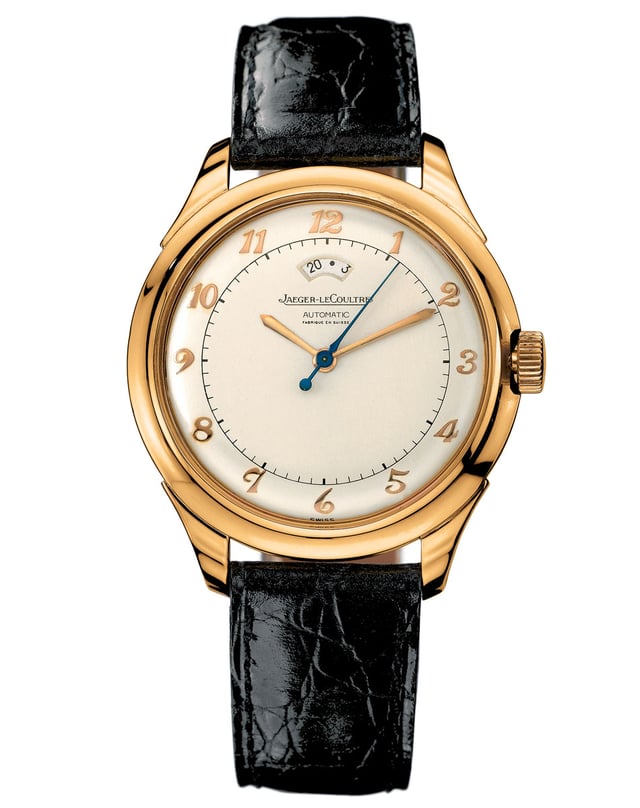
Presumably the first serial wristwatch with a power reserve indicator: Jaeger-LeCoultre Powermatic from 1948
Jaeger-LeCoultre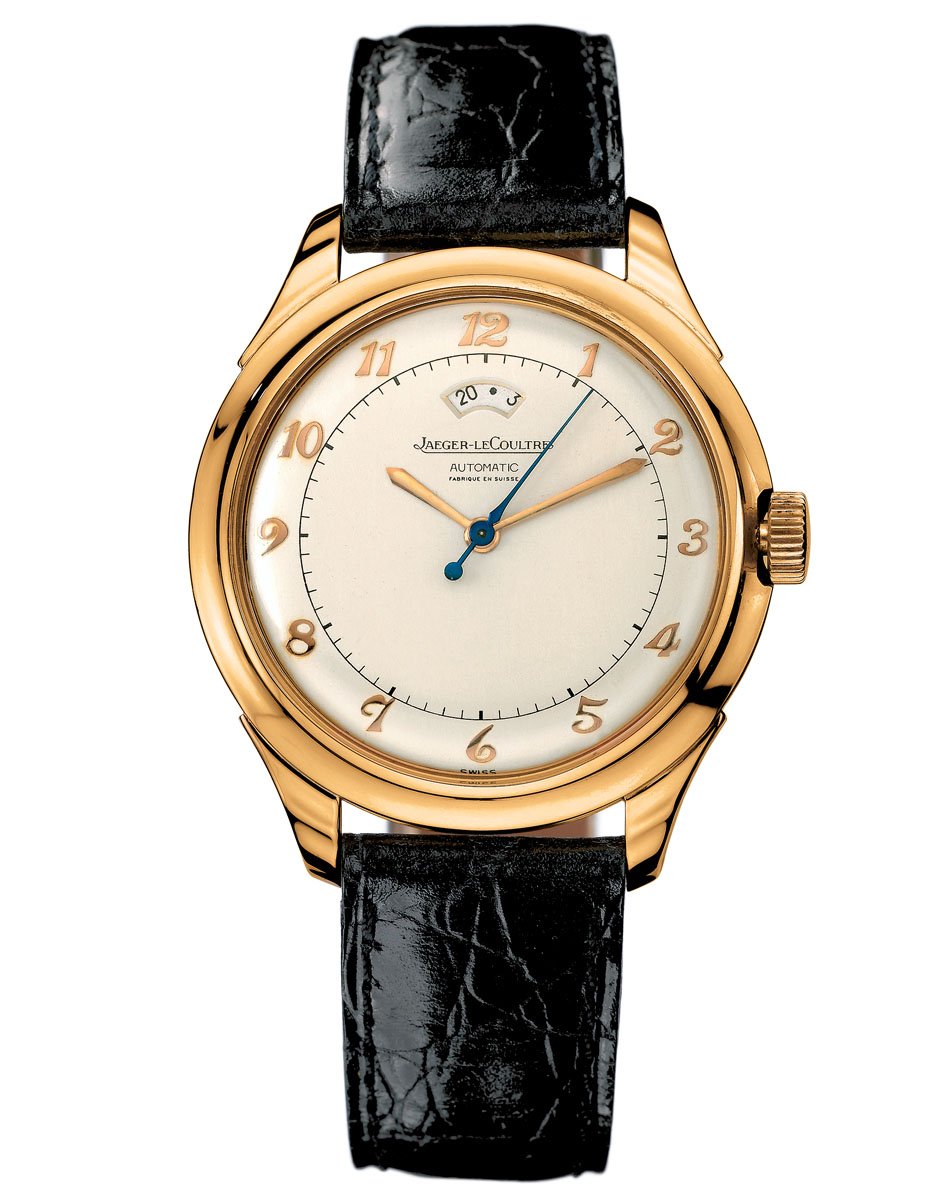
Power reserve displays were originally used primarily in precision timekeepers such as marine chronometers and railroad pocket watches. Breguet's historic wristwatch for Caroline Murat, Queen of Naples, included such an indication in the early 19th century. It was Jaeger-LeCoultre, however, that brought the power reserve display to a broader audience in 1948.
At the end of the 1940s, many customers still distrusted self-winding systems and worried that their watches might eventually stop despite being worn. Jaeger-LeCoultre responded with a watch that continuously displayed the tension remaining in the mainspring. A power reserve disk visible through an aperture in the dial was printed with hour numerals and dots to indicate the remaining energy. The watch, later known as the Powermatic, is recognized as the world’s first self-winding wristwatch with a power reserve gauge. The complication was later used primarily on hand-wound watches. Today, it is often found on watches with above-average running times, including self-winding models.
The Most Common Display: An Additional Hand
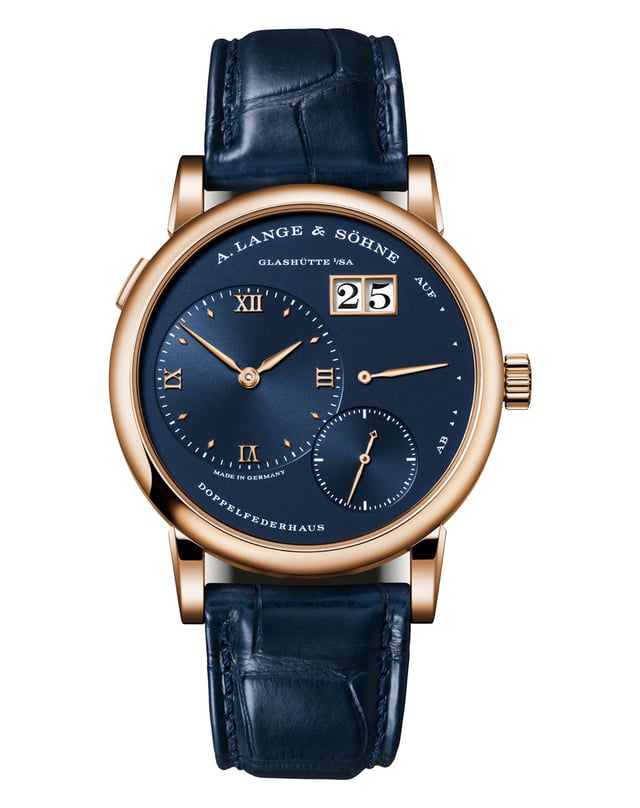
The power reserve indicator of Lange 1
A. Lange & SöhneIn most cases, the power reserve is shown by a hand connected to the winding mechanism through a gear train. As the watch is wound, the hand moves toward one end of the scale. As the mainspring gradually loses tension, it travels toward the other.
On historical German precision watches, the two ends of the scale were often marked “Auf” and “Ab,” meaning “up” and “down,” respectively. Those traditional markings can still be found today on classically styled watches such as the A. Lange & Söhne Lange 1.
The Nonlinear Power Reserve Indicator
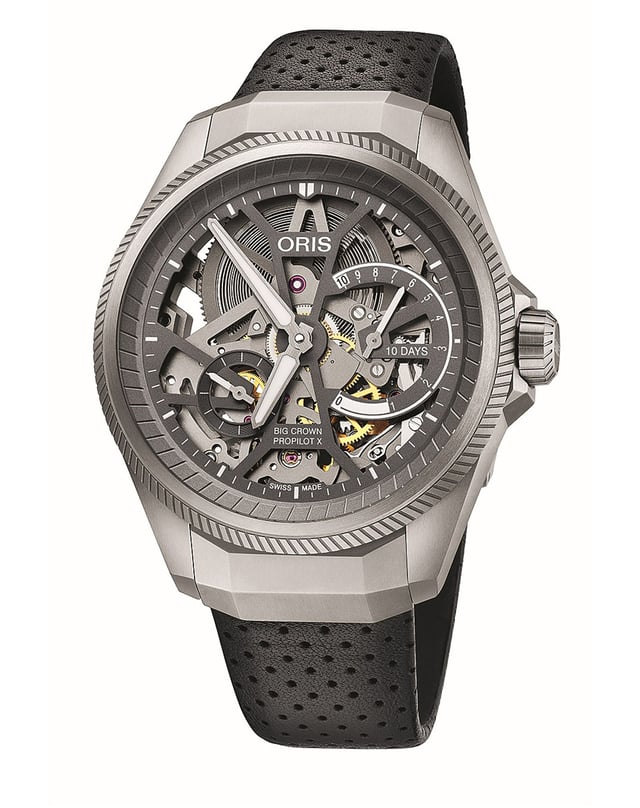
10 days power reserve: Oris Big Crown ProPilot X Calibre 115
OrisA power reserve display becomes especially useful on hand-wound and self-winding watches with very long running times. For its hand-wound Caliber 115, which offers a 10-day power reserve, Oris developed a nonlinear indicator. As the hand approaches the critical range between 1 and 0, the scale becomes progressively more detailed.
The Power Reserve Indicator as a Design Element
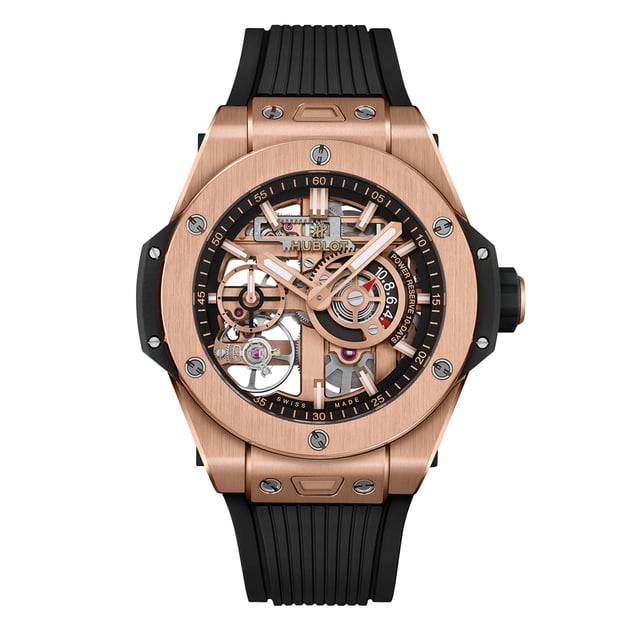
Model from 2025: Hublot Big Bang Meca-10 42 mm in King Gold
HublotWatchmakers increasingly treat the power reserve display not merely as useful information, but as a design feature in its own right.
Visible Mechanics
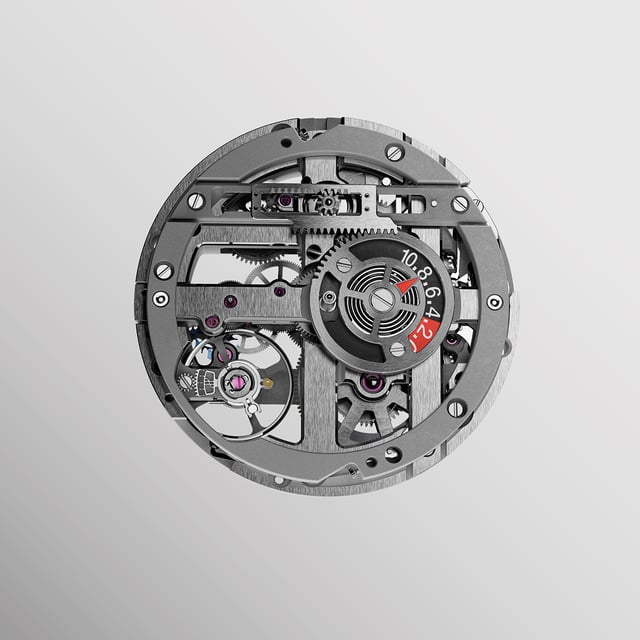
Hublot caliber HUB1205: This is how the power reserve indicator works on the Meca-10.
Hublot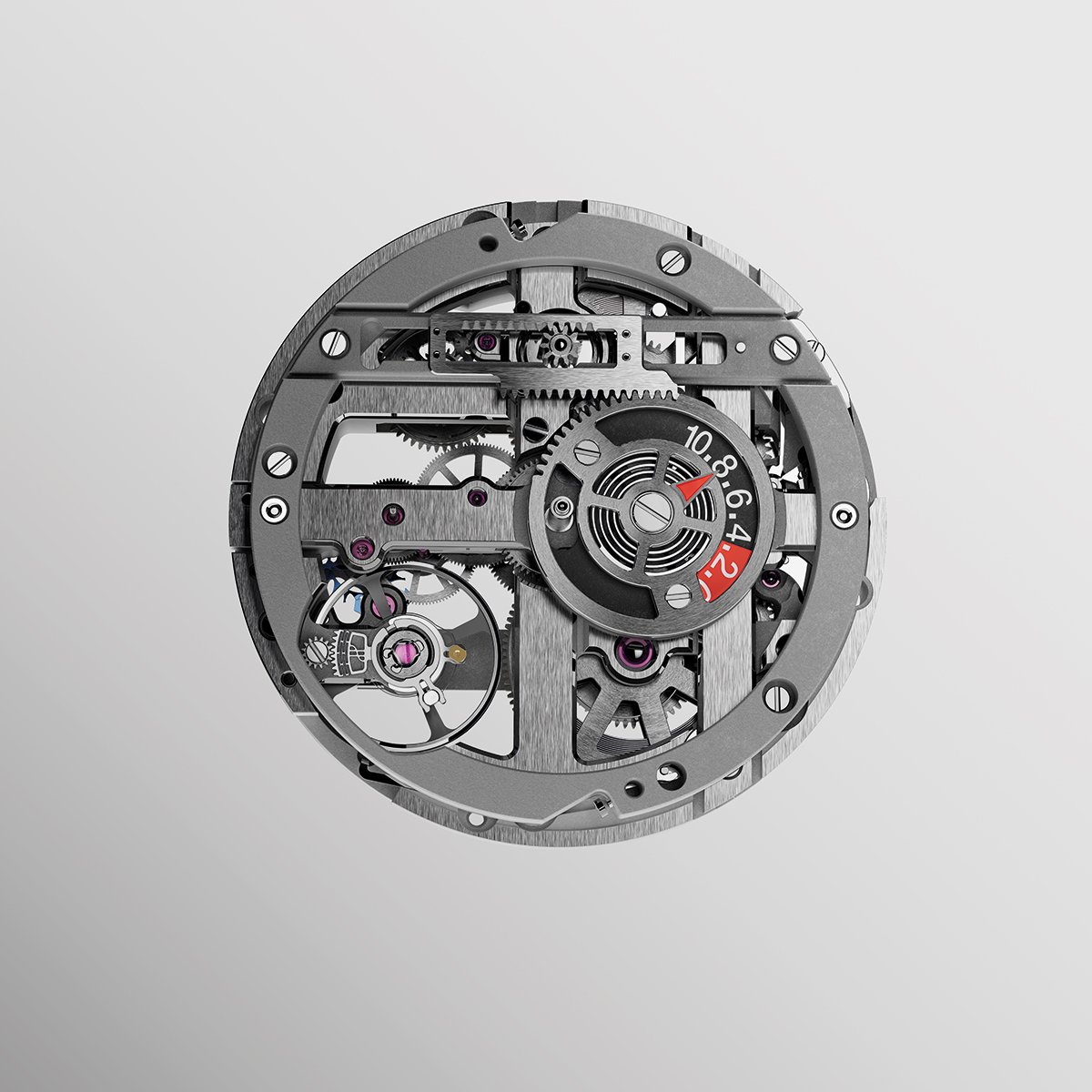
On the Hublot Big Bang Meca-10, the power reserve is displayed through a rack-and-pinion mechanism. Thanks to the skeletonized architecture of Caliber HUB1205 and a dial reduced largely to a minute track and hour markers, the mechanism is visible from the front and deliberately becomes part of the watch’s visual identity.
The Linear Display
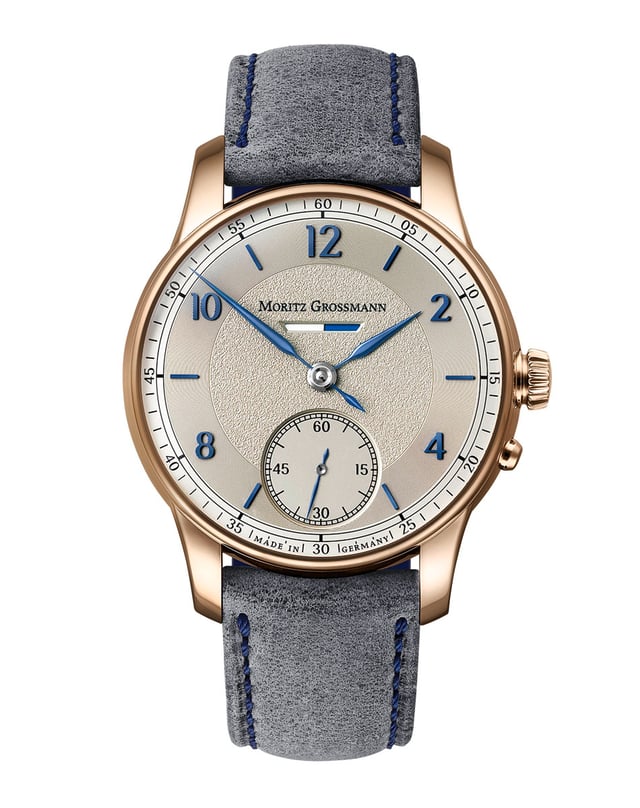
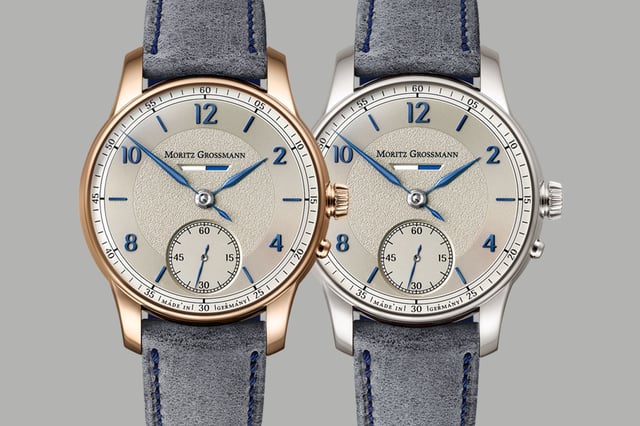
Horizontal power reserve indicator
Moritz Grossmann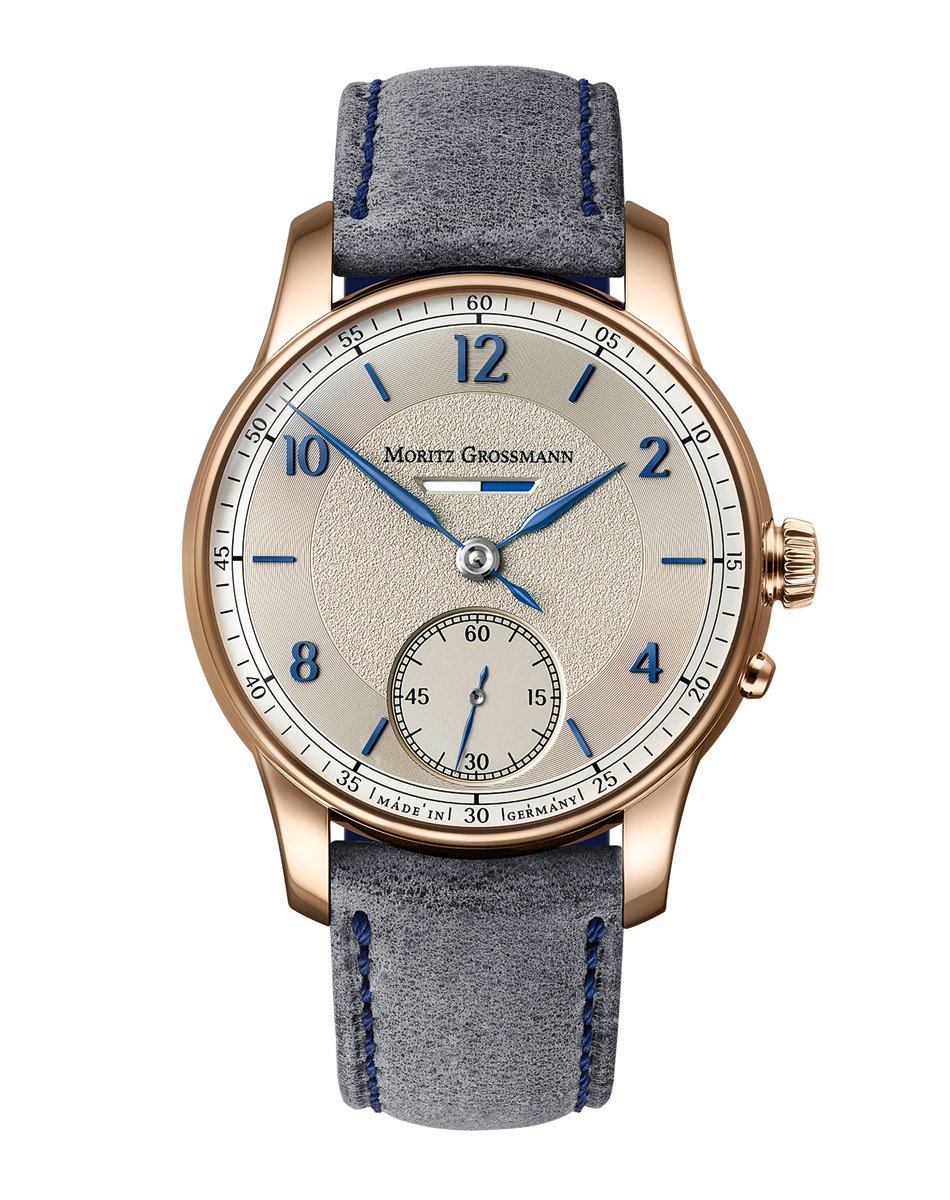
Linear power reserve indicators appear from time to time, most often in a horizontal format. Panerai is well known for using this arrangement, and Moritz Grossmann employs it on the Benu Power Reserve. Vertical displays also exist, as seen on the Junghans Meister Power Reserve, although that model is no longer part of the current collection.
A linear display typically uses a narrow aperture in the dial, behind which a bar appears to move. On the Benu Power Reserve, the blue section becomes increasingly prominent as the watch runs down; at full wind, only white is visible. In reality, a two-tone disk rotates behind the opening. Look closely, and the dividing line between the two colors is therefore not perfectly straight, but slightly curved. One advantage of this solution is its compactness: it requires relatively little dial space. On the Moritz Grossmann, the indication fits neatly beneath the brand name.
The Hidden Power Reserve Display
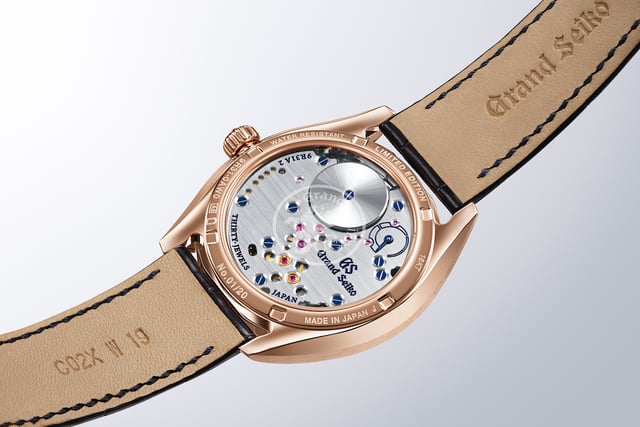
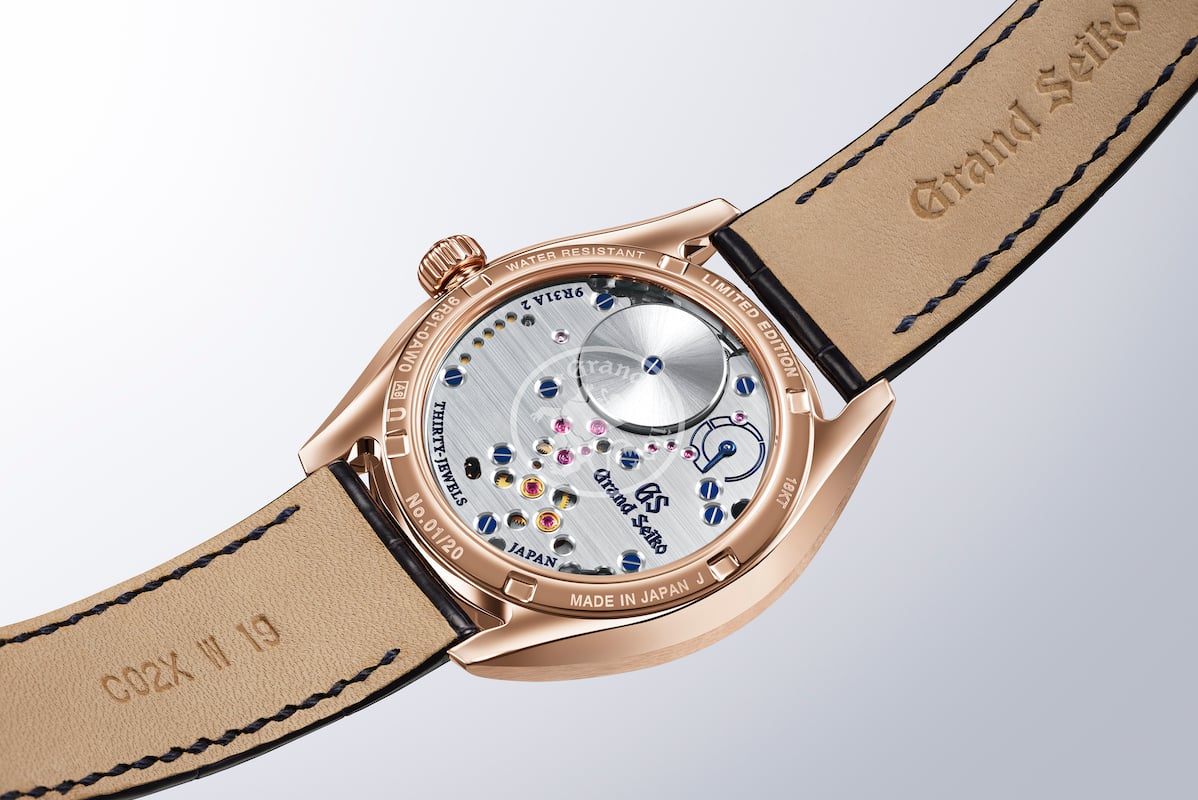
Some brands move the indication to the back of the watch, either because the front already carries numerous displays or because they do not want to interrupt the dial design. The latter is one reason Grand Seiko positions the power reserve indicator on the movement side of models such as the Chisen Teien SBGY040.
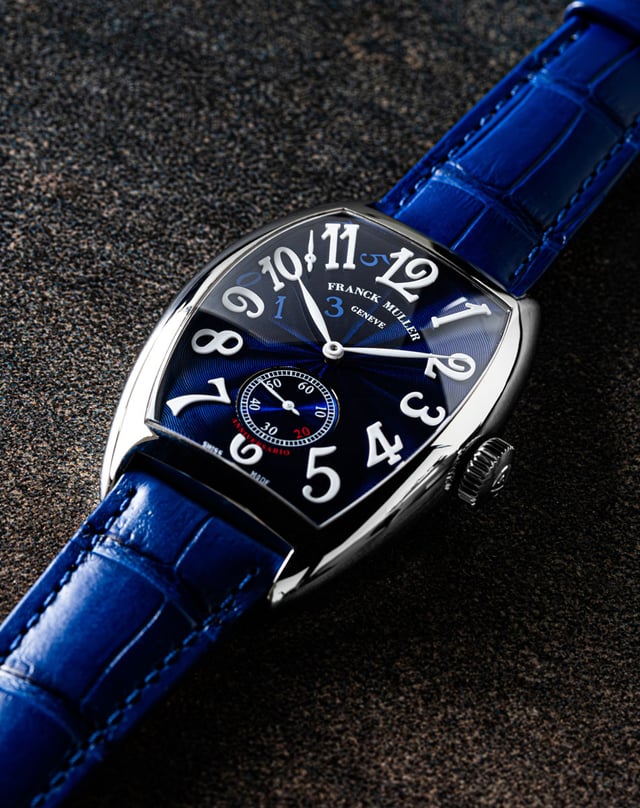
Franck Muller: Cintrée Curvex Crazy Power Reserve Watches & Passions
Franck Muller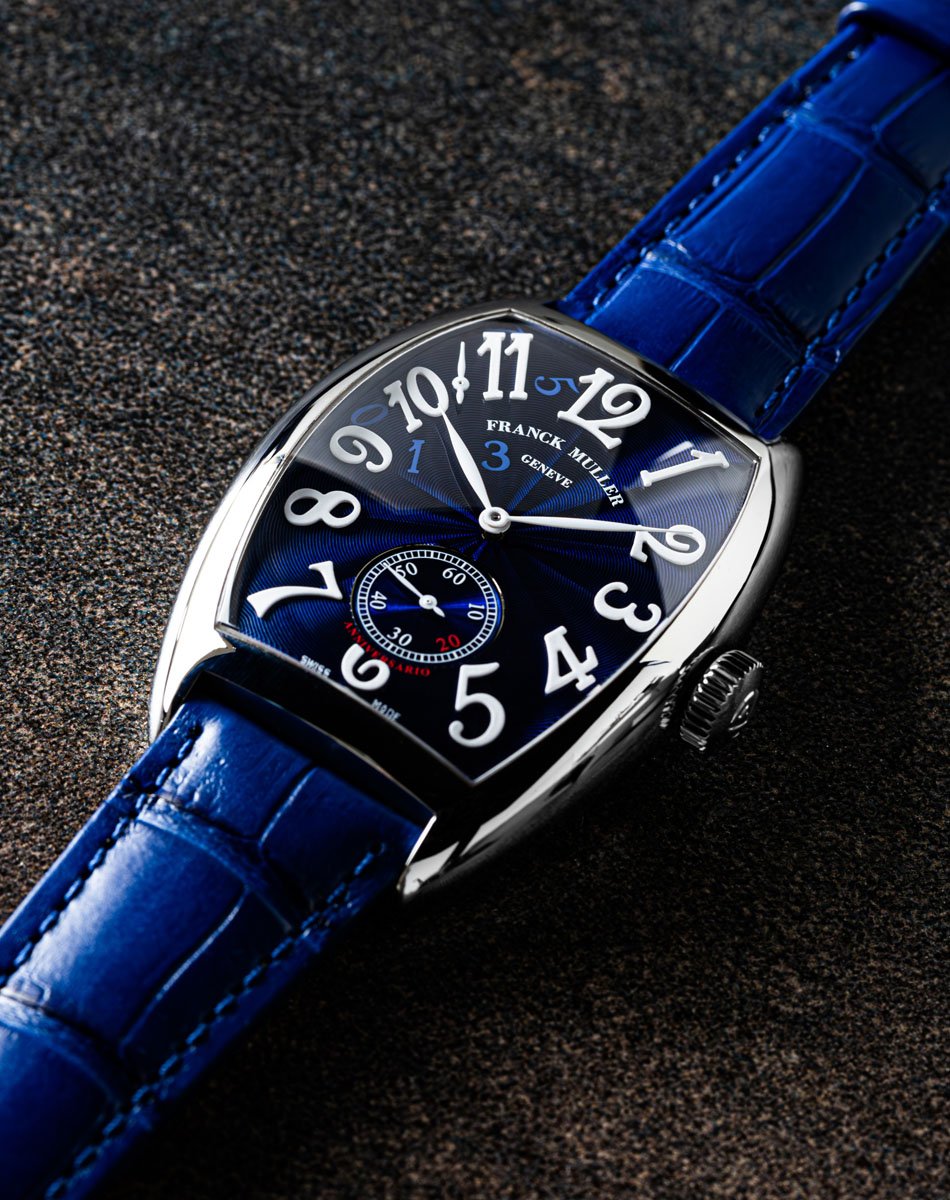
Franck Muller takes a different approach, one that might be described as hiding in plain sight. On the Cintrée Curvex Crazy Power Reserve Orologi & Passioni 20th Anniversary, the brand has tucked a small power reserve display between the oversized hour numerals. Can you spot it?
A Complication at Every Price Level
Bauhaus Dessau
Pointtec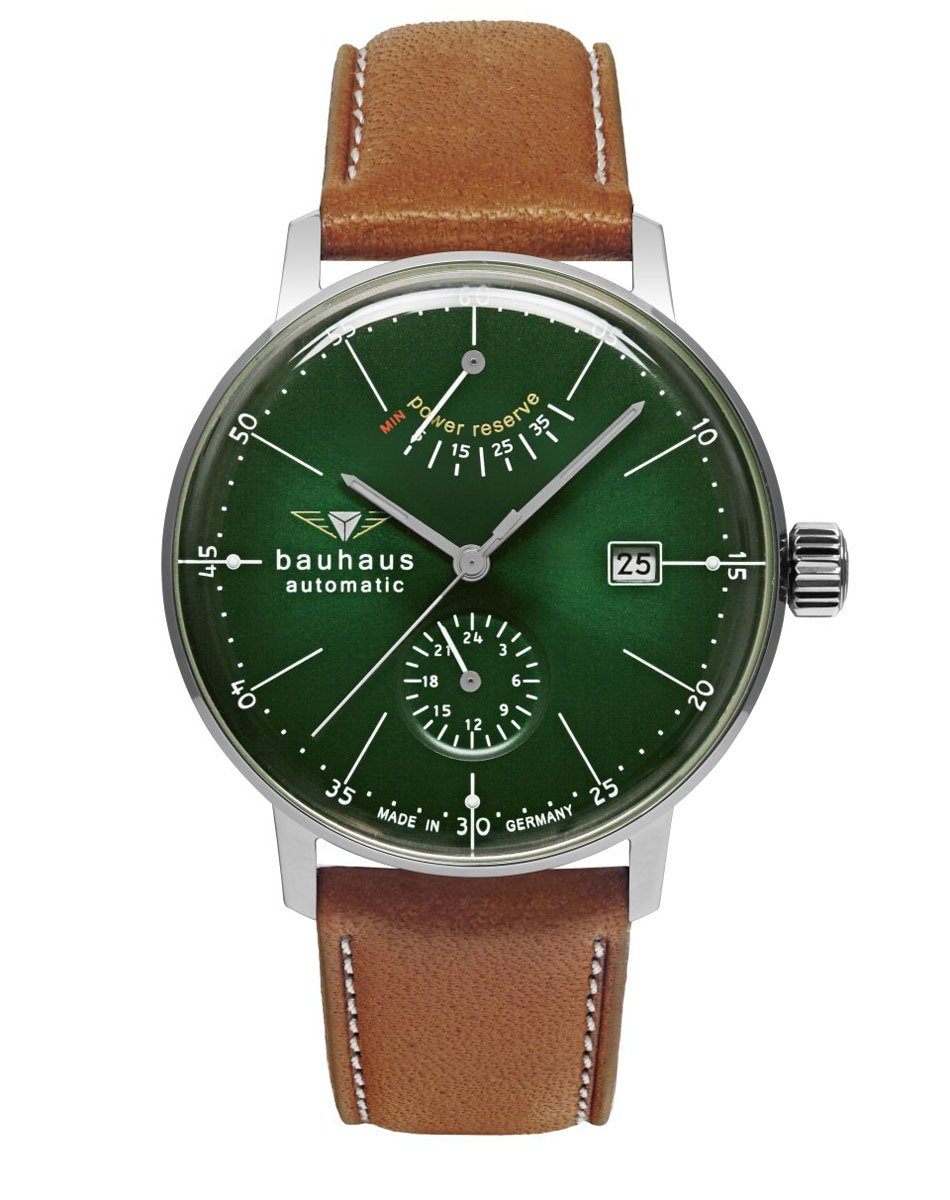
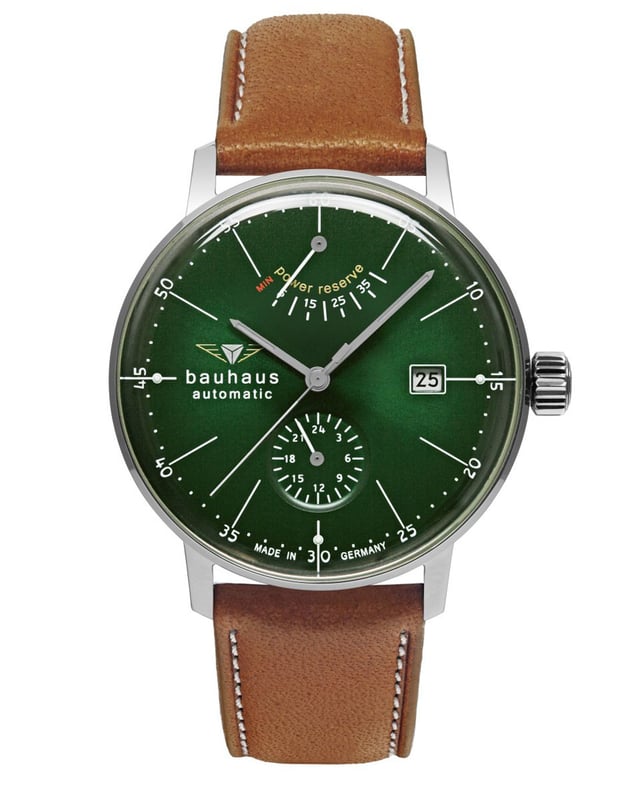
A power reserve indicator is by no means limited to watches with in-house movements. The function can be found on watches priced from around $400. At this level, self-winding movements from Citizen subsidiary Miyota are frequently used, including the Miyota 9132. One example is the Bauhaus Dessau from German watchmaker Pointtec.

Seiko: Presage SSA347 with power reserve indicator
Seiko
At $580, the Seiko Presage Automatic SSA347 even offers an in-house movement, Caliber 4R57. Its off-center power reserve display indicates the movement’s approximately 41-hour power reserve.