A Brief History of Watch Lume, From Radium to Super-LumiNova
From radioactive paint to modern glow-in-the-dark technology
Being able to read the time in the dark seems entirely ordinary. Yet luminous material on dials, hands, and markers ranks among the most important innovations in modern watchmaking. It is now standard on countless sports, pilot’s, and dive watches. Behind this seemingly simple feature lies a remarkable history shaped by scientific breakthroughs, military necessity, serious health risks, and decades of technological progress.
The Problem of Darkness
For centuries, watches could only be read in daylight or with the help of an external light source. In everyday life, that was rarely a major inconvenience. For sailors, soldiers, railroad workers, and pilots, however, reliable timekeeping after dark could be essential. During the 19th century, watchmakers experimented with a variety of materials, but no truly practical solution emerged. That changed with a major scientific discovery.
The Radium Revolution
In 1898, Marie and Pierre Curie discovered radium. The new element fascinated scientists because it emitted energy continuously and could make certain luminous materials glow without first being charged by light. Around 1910, manufacturers began mixing radium with zinc sulfide and applying the compound to watch hands and dials. The effect was revolutionary: for the first time, watches could glow throughout the night.
The technology became especially important during World War I. Soldiers could read their watches in darkness without using a flashlight and potentially revealing their position. What was not fully understood at the time was the danger involved. Factory workers, many of them young women, were instructed to shape their brush tips with their lips. In doing so, they repeatedly ingested small amounts of radium. The consequences were devastating. Many of these workers, later known as the “Radium Girls,” suffered severe illnesses, including bone damage and cancer. By the 1920s, their cases had become one of the most notorious workplace-safety scandals in industrial history. Even so, radium did not disappear from watchmaking immediately. Its practical advantages were considered too significant to abandon overnight.
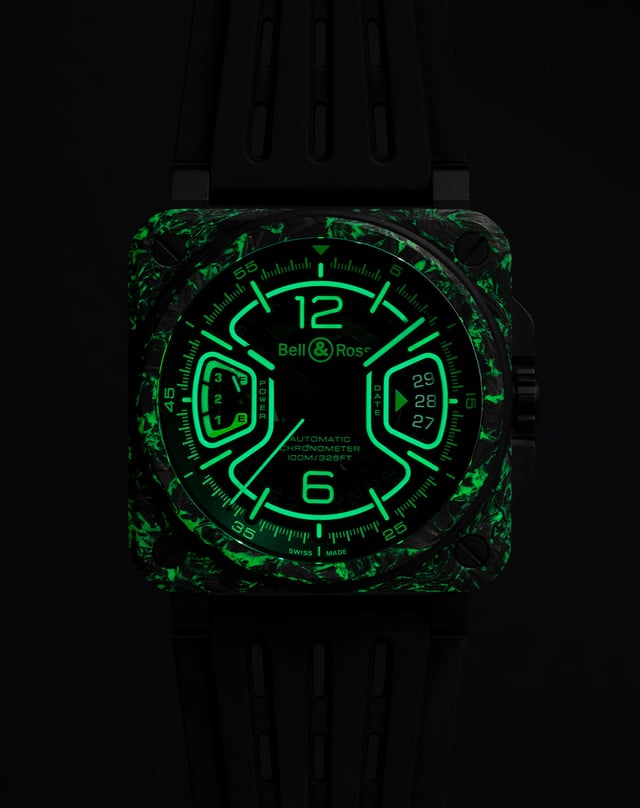
At Bell & Ross, not only the dial lights up, but also parts of the case.
Bell & Ross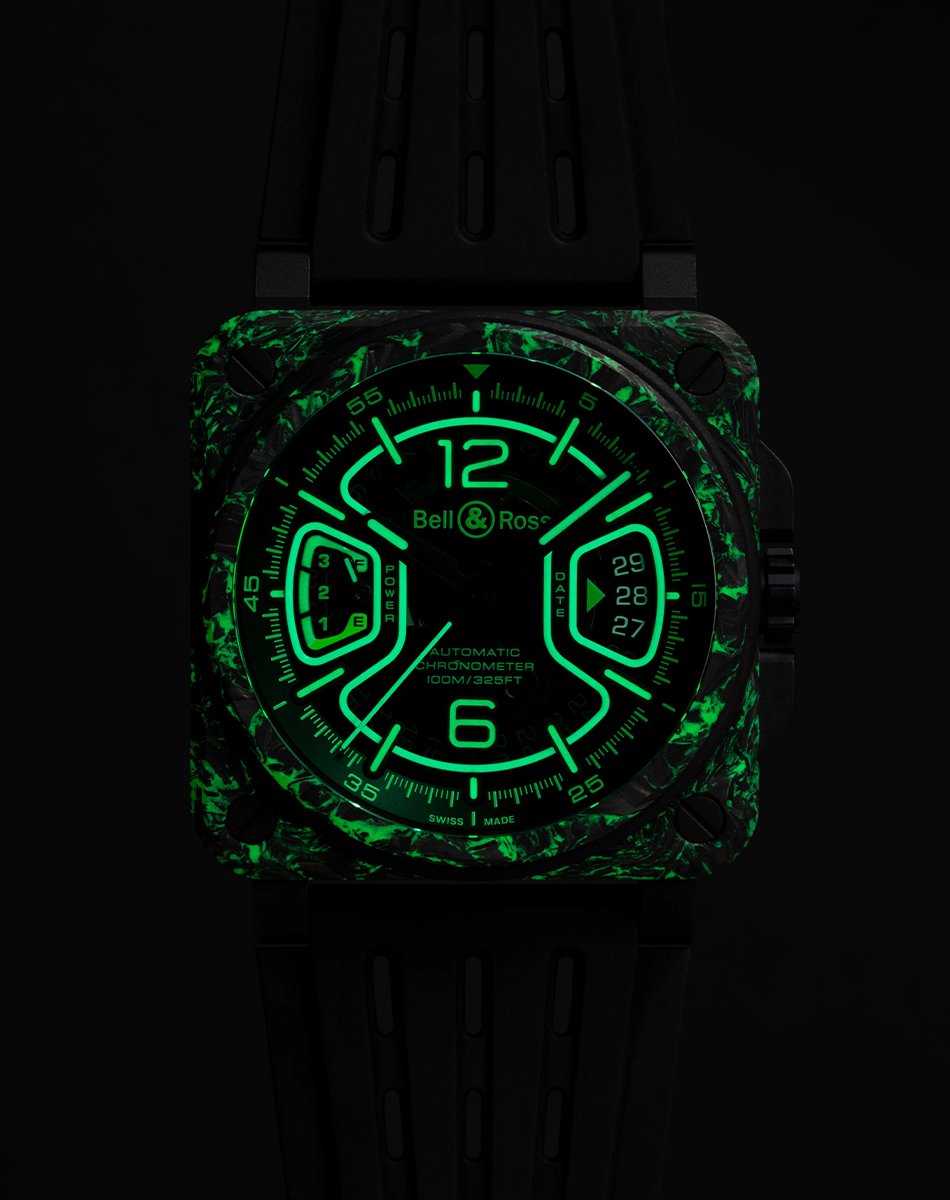
The Safer Replacement
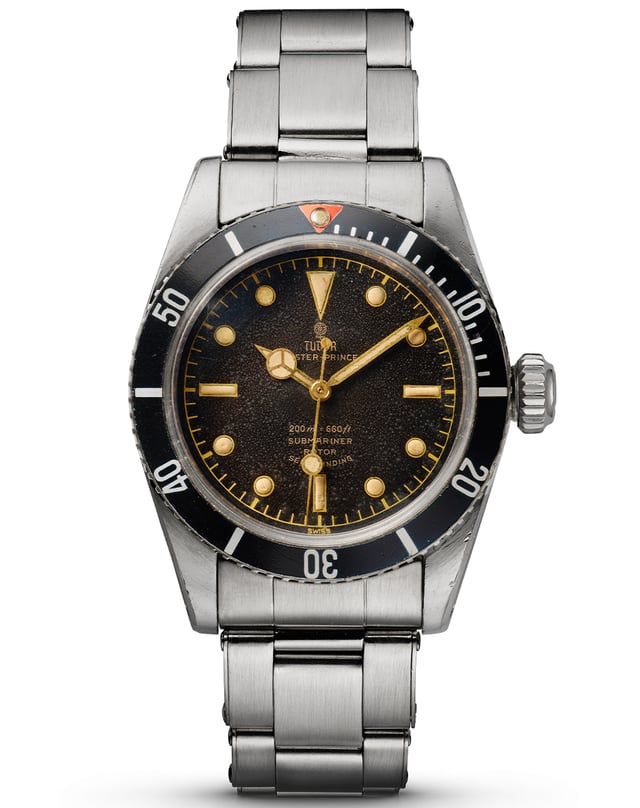
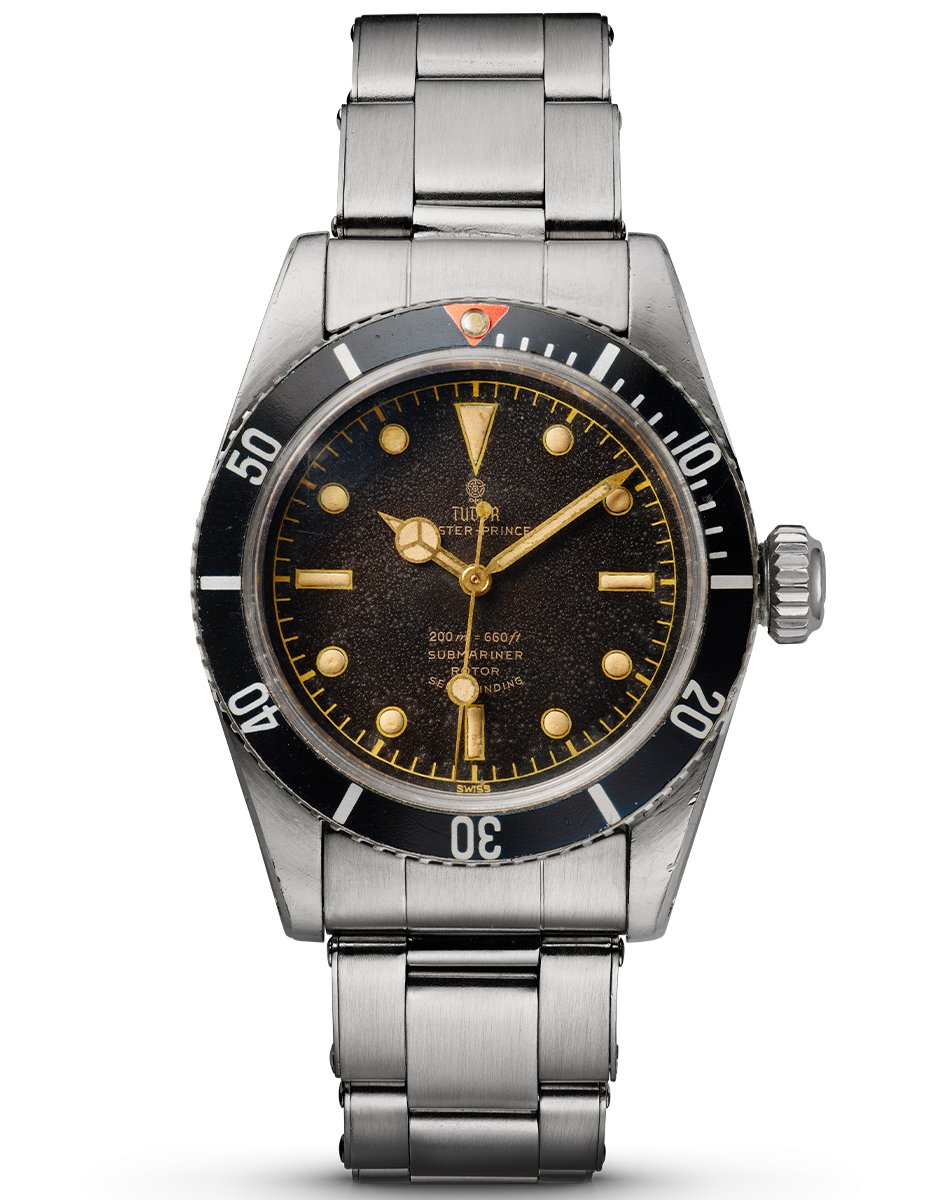
Radium remained the dominant luminous material in watchmaking until the early 1960s. Many of today’s most popular vintage watches were produced with radium lume, whose aging often gives dials their distinctive cream, beige, or honey-colored patina.
From the 1960s onward, the industry increasingly turned to tritium. That is why markings such as “T Swiss T” often appear on historic dials. Tritium is also radioactive, but it emits only very weak beta radiation. Its main drawback is a half-life of just 12.3 years, meaning its luminosity steadily fades over time. For collectors, that aging process is part of the appeal. Over the decades, originally white markers can turn yellow, cream, or even caramel-colored, giving each dial a character of its own.
The Birth of Superluminova
The modern era of watch lume began in the 1990s. Japanese company Nemoto & Co. Ltd. laid the foundation for a new generation of nonradioactive luminous materials with the development of LumiNova. An advanced version, produced by Swiss specialist RC Tritec AG under the name Super-LumiNova, went on to become an industry standard.
The fundamental difference from radium and tritium is simple: Super-LumiNova does not generate its own energy. Instead, it absorbs light and releases that stored energy gradually over several hours. The advantages are substantial: no radioactivity, greater safety, strong initial brightness, long service life, and a wide range of available colors.
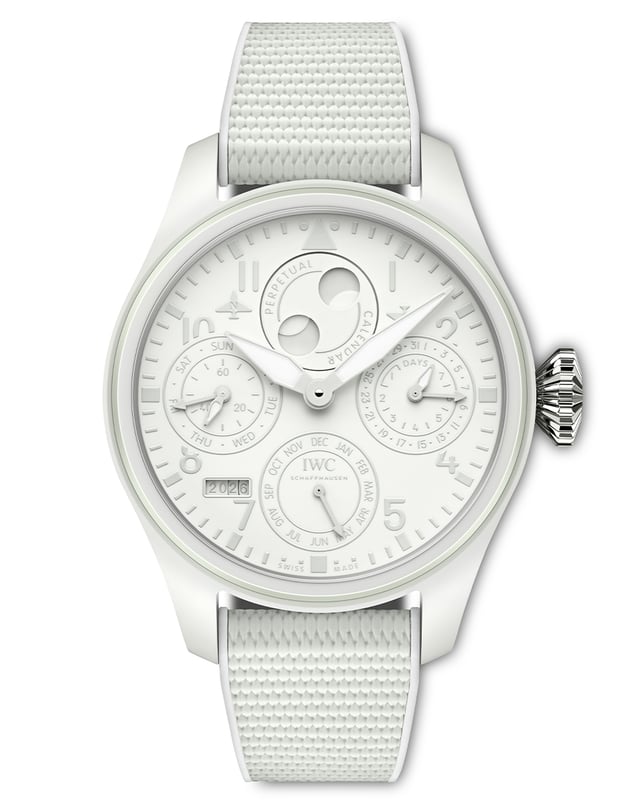
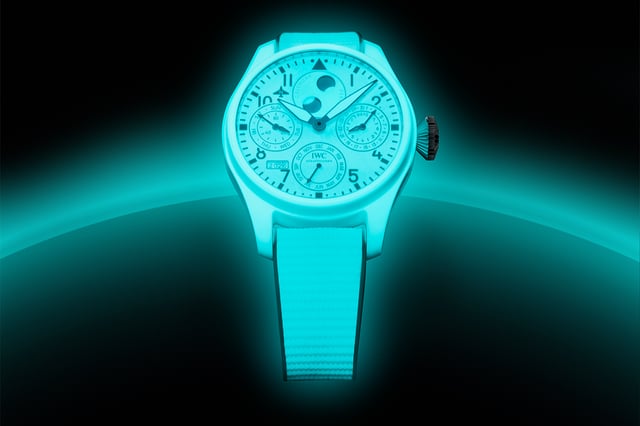
In the Big Pilot’s Watch Perpetual Calendar Ceralume from IWC, practically everything lights up – even the case and strap.
IWC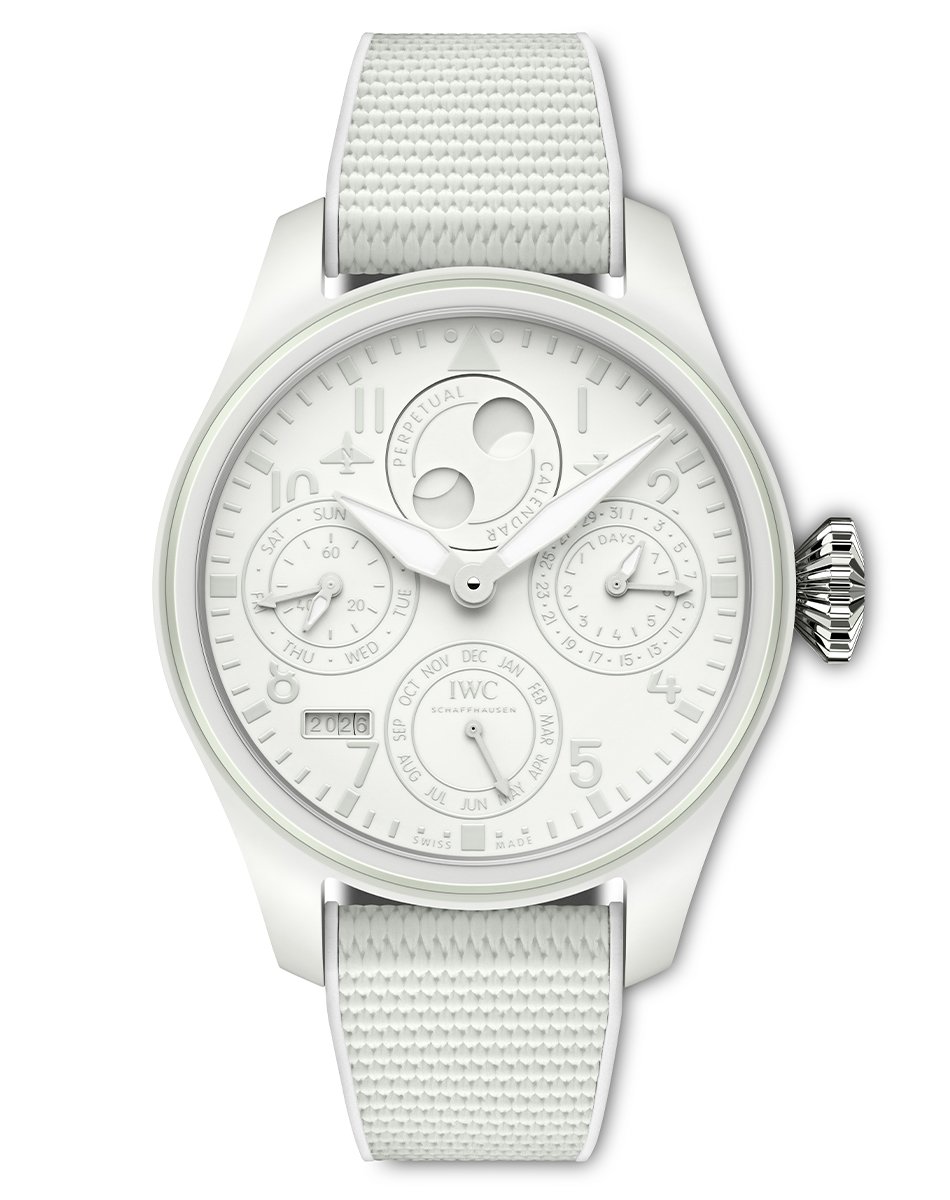
How Super-LumiNova Works
Super-LumiNova does not glow on its own. It is a photoluminescent material, typically based on strontium aluminate doped with rare-earth elements such as europium and dysprosium. When exposed to light, electrons within the crystal structure are excited and raised to a higher energy state. In simple terms, the material behaves like a tiny energy reservoir.
Once the light source is removed, the excited electrons gradually return to their original state, releasing the stored energy as visible light. This is the afterglow we perceive in darkness. The performance of modern luminous compounds is largely determined by their crystal structure. So-called “electron traps,” microscopic imperfections within the crystal lattice, temporarily hold some of the excited electrons and delay their return to the ground state. As a result, the stored energy is released gradually rather than all at once.
The more strongly Super-LumiNova has been charged, the brighter its initial glow. Immediately after intense light exposure, it reaches peak brightness before fading relatively quickly. The rate of decay then slows, allowing the time to remain readable for much of the night. Different pigment formulations produce different colors. Among the most common are C3, which glows green, and BGW9, which emits a blue glow.
Another major advantage over radium and tritium is longevity. Because Super-LumiNova does not rely on radioactive decay and its chemical structure is highly stable, it retains much of its performance even after decades.
The Future Looks Even Brighter
The development of luminous materials is not complete. Research continues into new pigments, longer afterglow times, and improved luminous performance. At the same time, watchmakers are increasingly using lume not simply as a functional element, but as part of the design itself.
What began as a practical solution for professional users has become a defining feature of modern luxury watches. Luminous material now shapes not only legibility, but often a watch’s character and visual identity. When the lights go out, a watch reveals just how thoughtfully it was designed.
This article was originally published in the WatchTime Germany edition 04/2026 and was first published by WatchTime Germany.