Hands-On with the Sopwith Aero Marquis Nieuport 28
Aviation history, recast
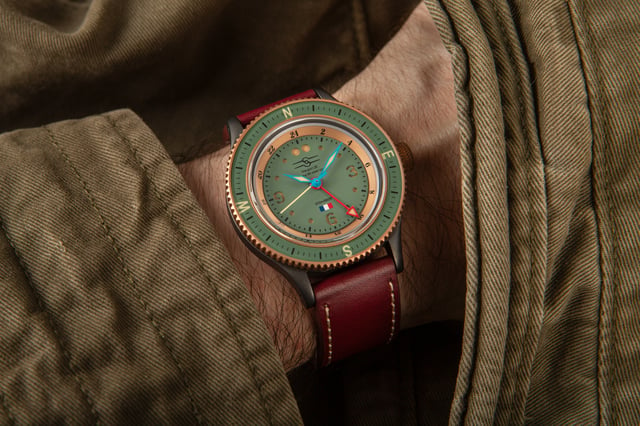
I tend to appreciate watches that commit to the bit, especially when the idea is a little unusual and the resulting design is acutely its own. There are plenty of perfectly agreeable watches out there, but a watch made from the engine of a World War I fighter plane is, at the very least, offering a different conversation.
That's the starting point for the Sopwith Aero Marquis Nieuport 28, a GMT whose aviation references extend from its case material to the package it arrives in. Having spent some time with the watch, what interests me most is how thoroughly the brand has followed through on its premise, with a particular enthusiasm for its inspiration felt from opening to wear.
A Case with a Previous Life
Sopwith manufactures its cases at its own foundry in Houston using steel recovered from historic aircraft. Working with a finite supply of that material also determines the size of each limited edition — once the steel is used, there are no more cases to make.
For the Nieuport 28, that material comes from Gnome Monosoupape 9N engine No. 55521, acquired by the United States Air Service in 1918 for use in a Nieuport 28 fighter. According to the brand, the recovered steel is analyzed, melted, and enhanced with additional alloying elements before being cast into a case, with a titanium carbide PVD coating protecting its surface. An engraved 316L stainless steel caseback completes the construction.
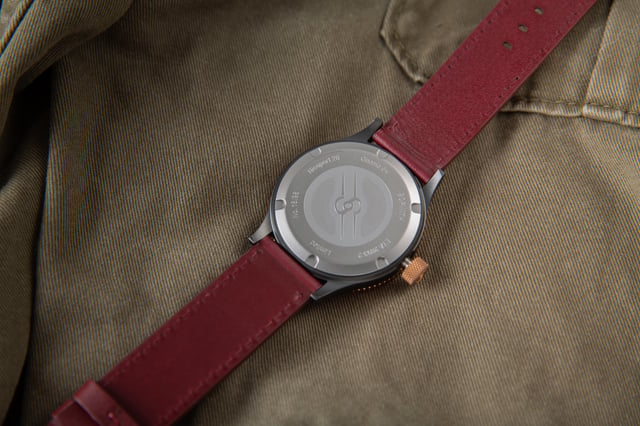
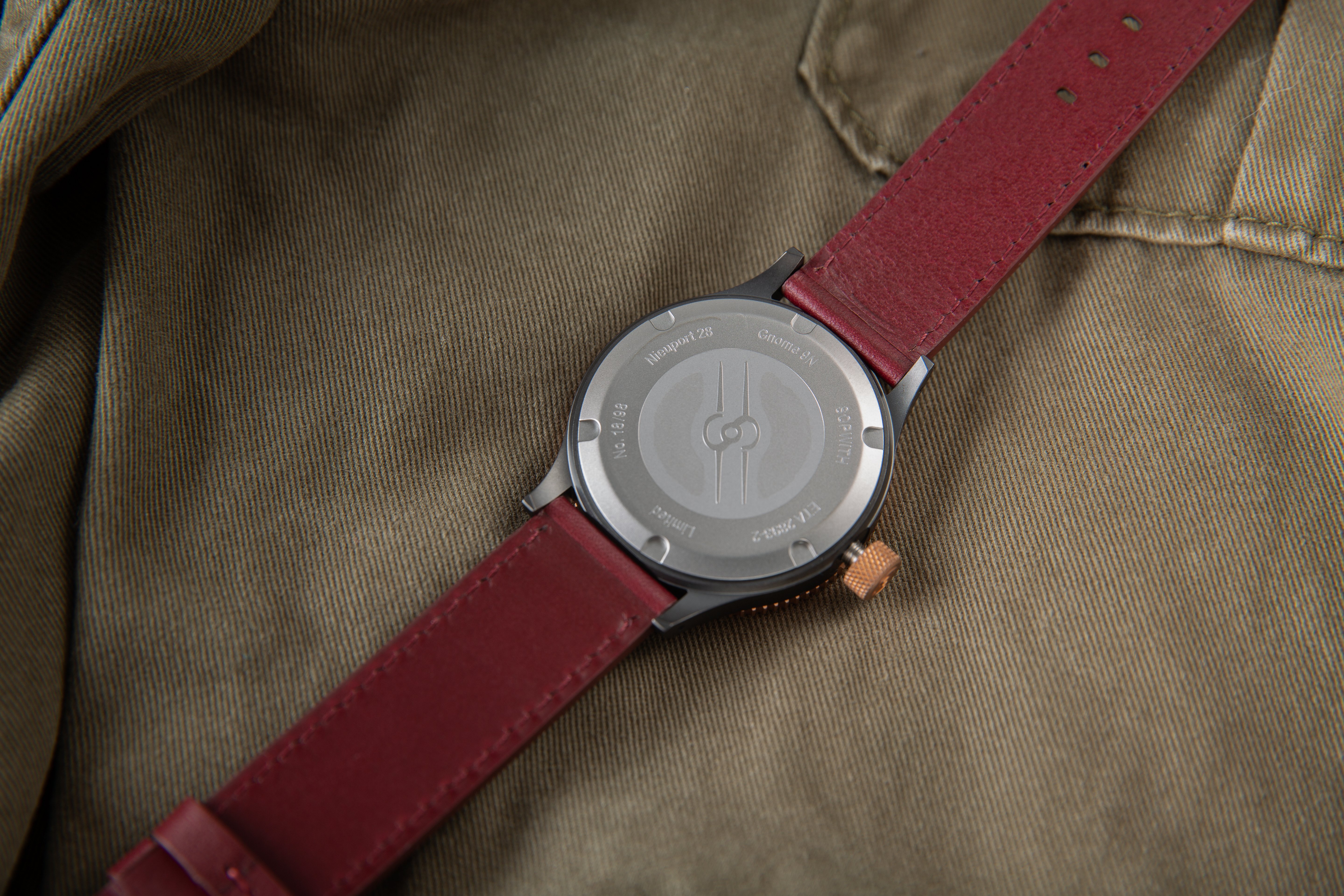
The appeal of that process will depend considerably on the person looking at it. For some, steel is steel, while for others its previous life inside an aircraft engine will be the entire reason to take a closer look. I’d argue that transformation is interesting in and of itself, particularly the idea of taking components from one mechanical assembly and giving them a second life housing another.
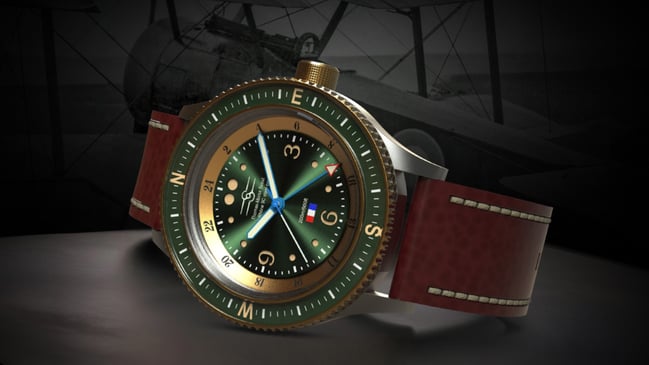
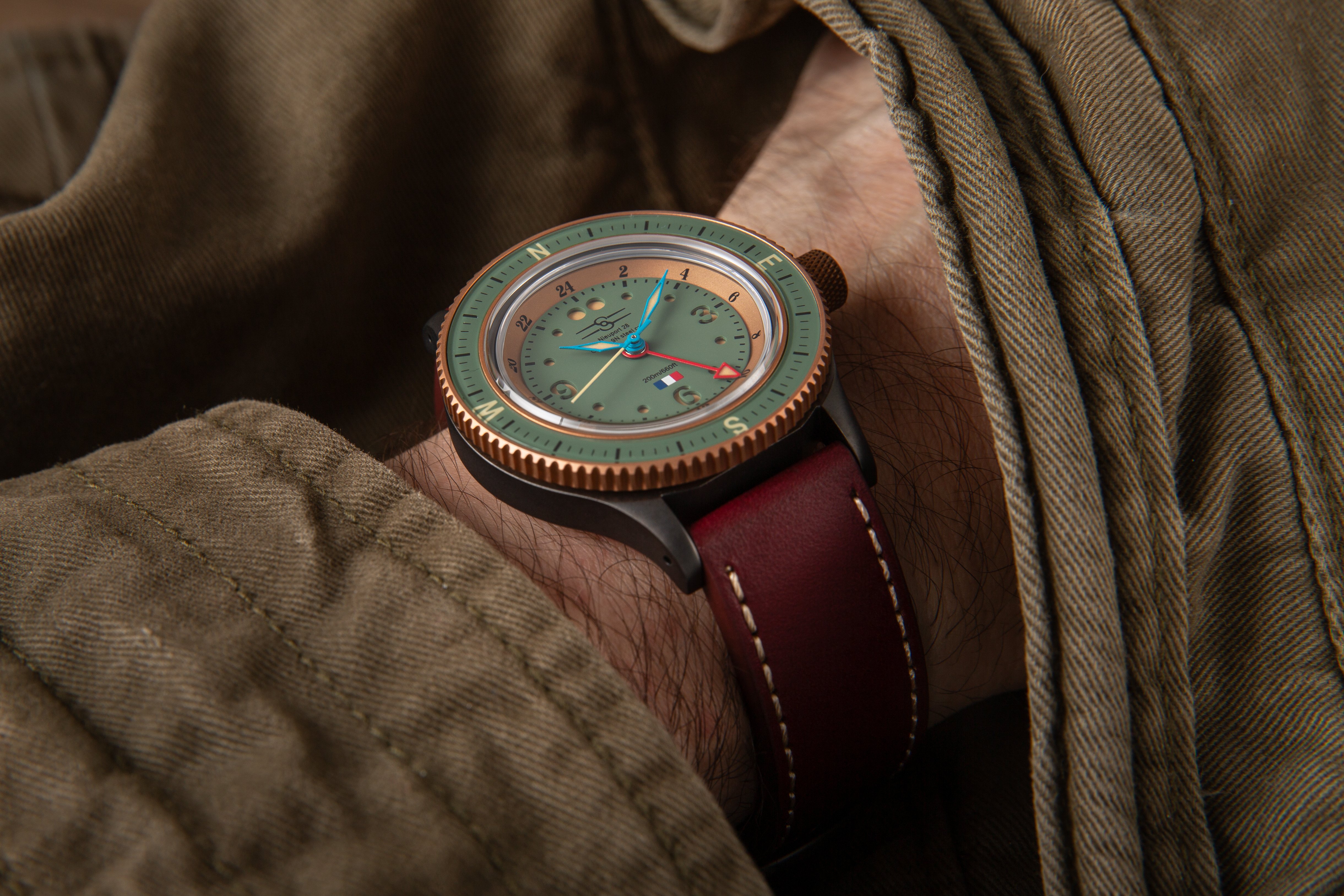
The resulting watch measures 41 mm across and 49 mm from lug to lug, with 200 meters of water resistance and a burgundy Horween leather strap. In person, those proportions work well, providing enough thickness to give it the slightly bulky, sporty feeling I want from a pilot’s watch without that bulk becoming its defining characteristic.
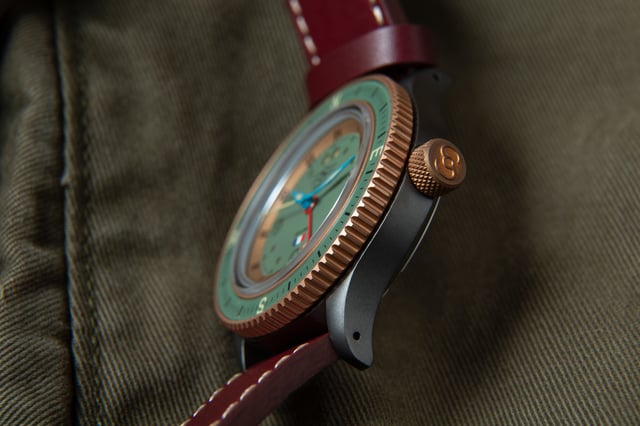
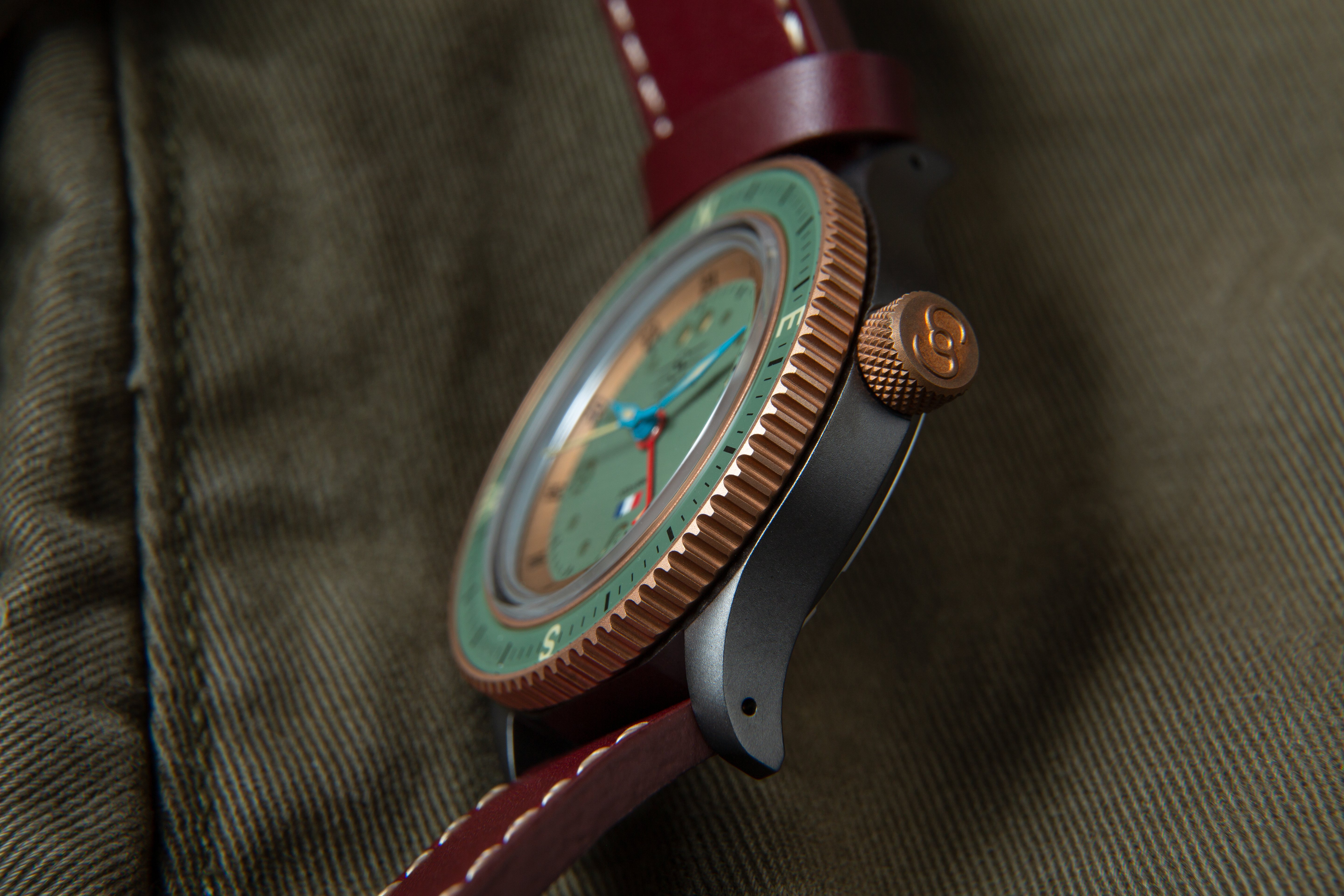
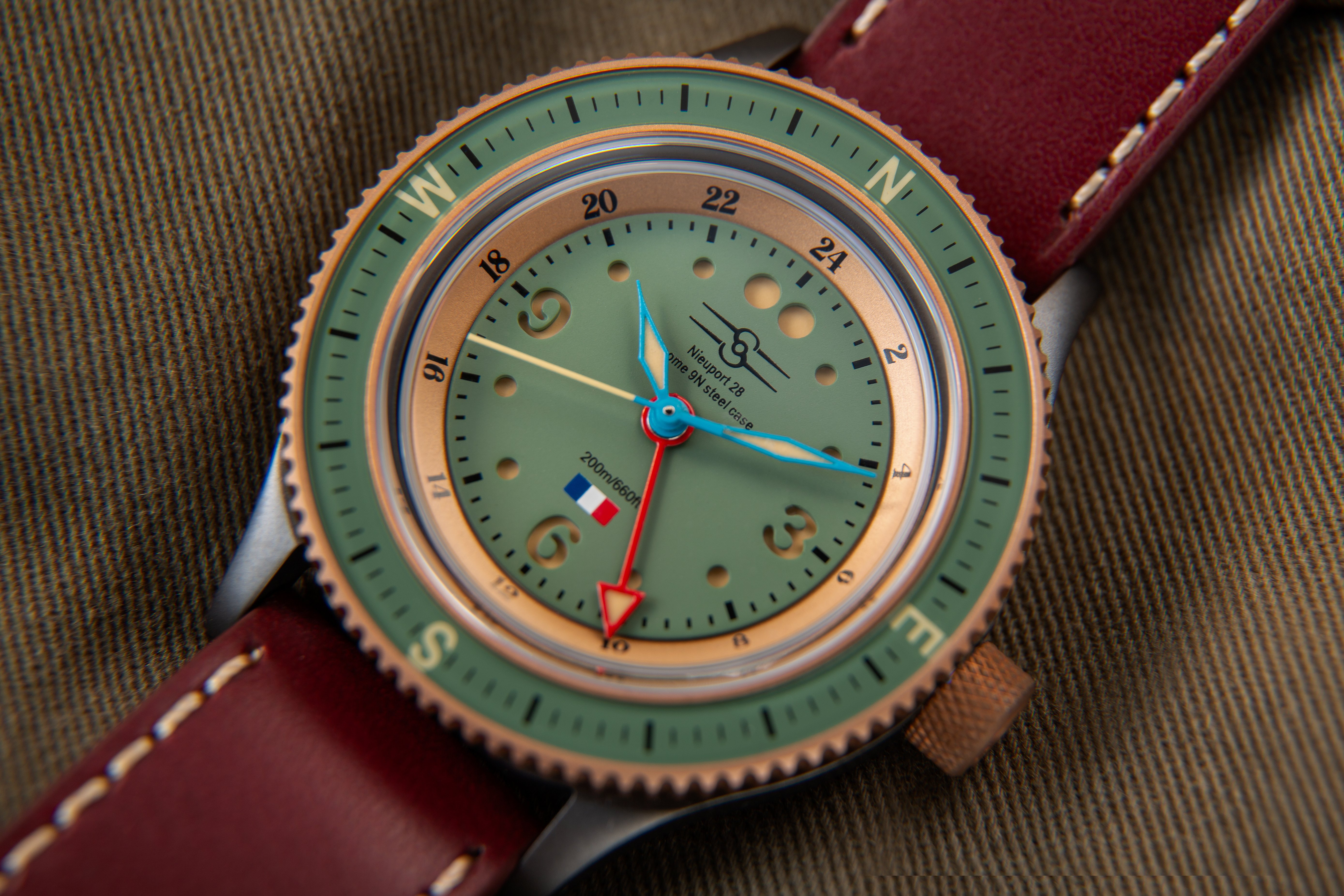
The bezel and crown also contribute considerably to that impression. The deep teeth of the former and pronounced knurling of the latter are very tactile, giving the watch something to offer beyond its appearance and encouraging you to handle it. For a design so invested in the idea of an instrument, that physical interaction feels like an important thing to get right.
Green, Bronze, and a Little Flag
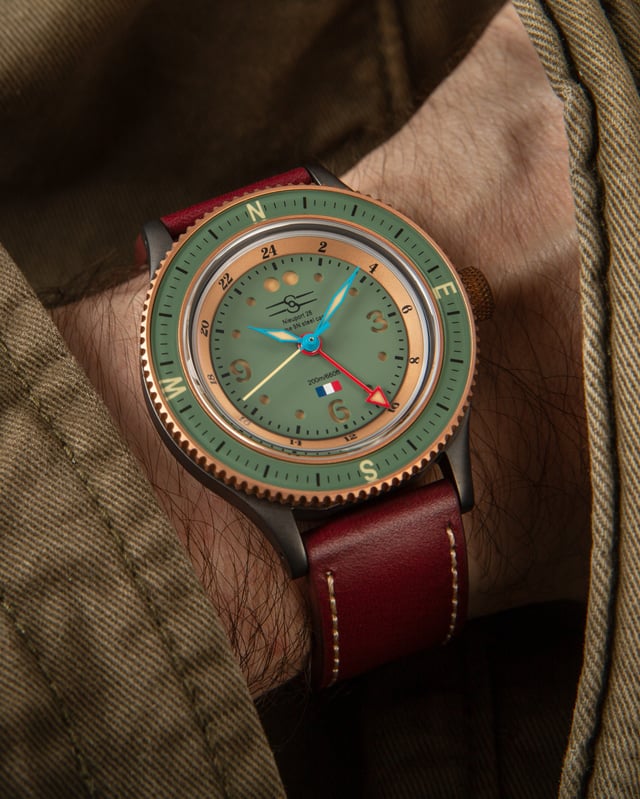
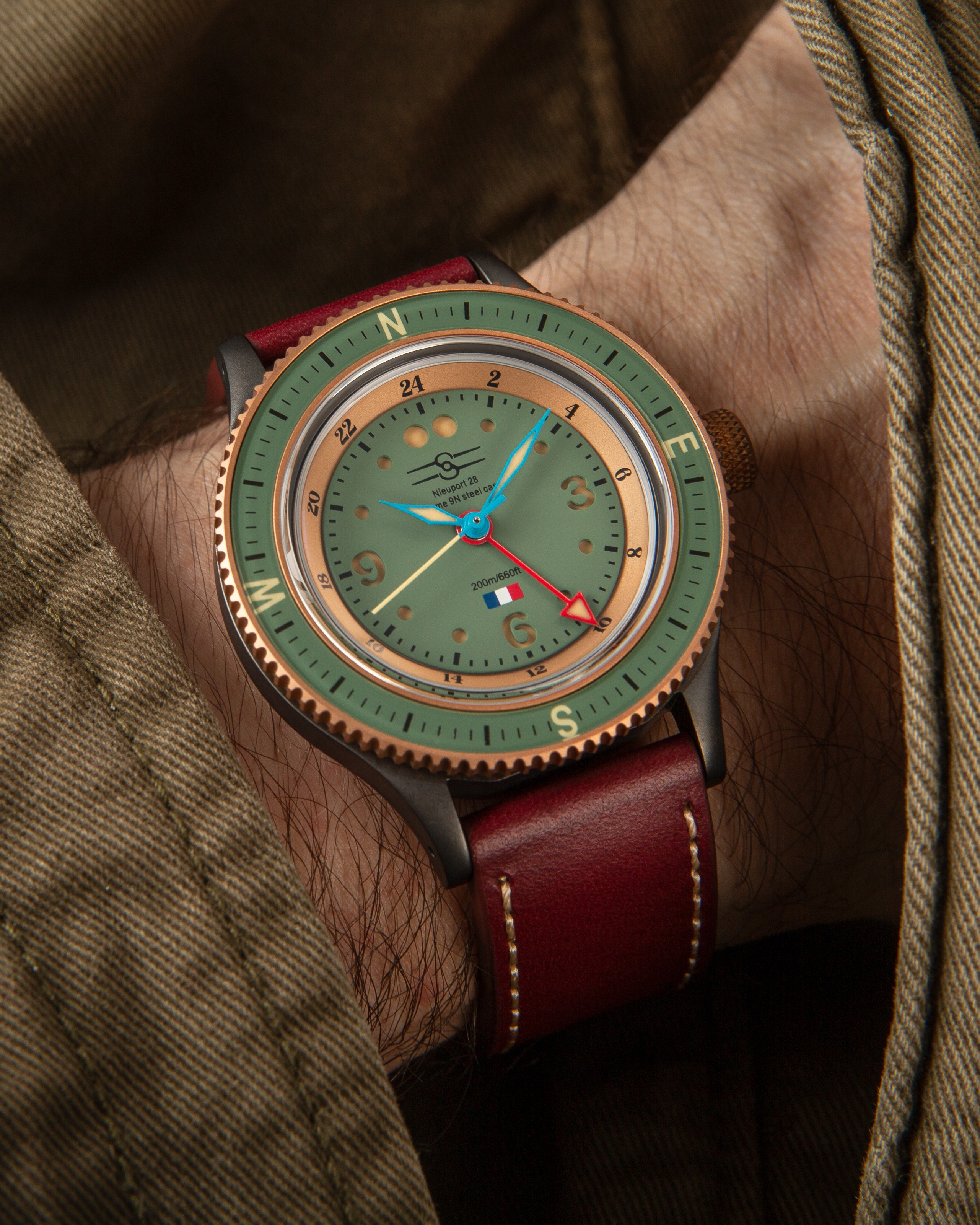
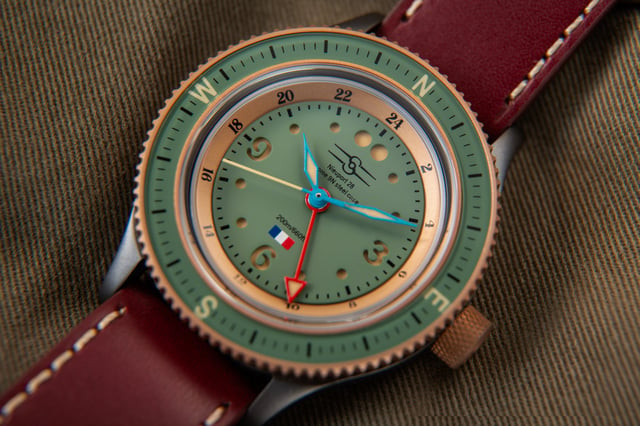
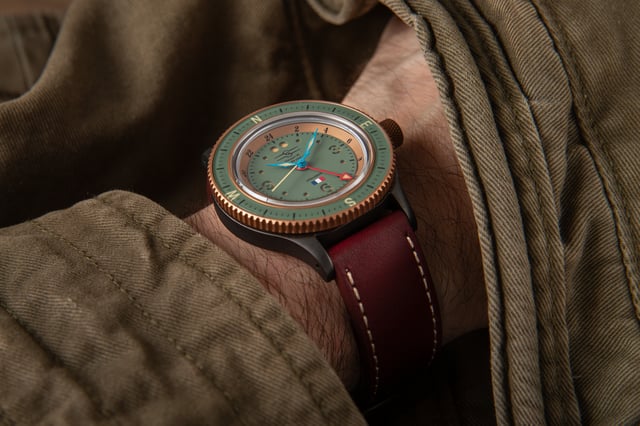
The dial is where the Nieuport 28 becomes most recognizably its own, bringing camouflage green together with a bronze 24-hour chapter ring and a matching green bezel insert. Blue hour and minute hands and a red GMT hand add further color, with the palette referencing the 95th Aero Squadron’s aircraft paint scheme in France in 1918.
Its construction uses two stacked stainless steel dial components and a chapter ring angled at 25 degrees, while the hands reference the Nieuport’s altimeter needle. I like the depth of the display, with the recessed appearance of the markers giving it more dimension and the raised outer scale adding to the impression of looking into a flight instrument. It rewards a closer look, which matters on a watch whose broader story could otherwise do all the talking.
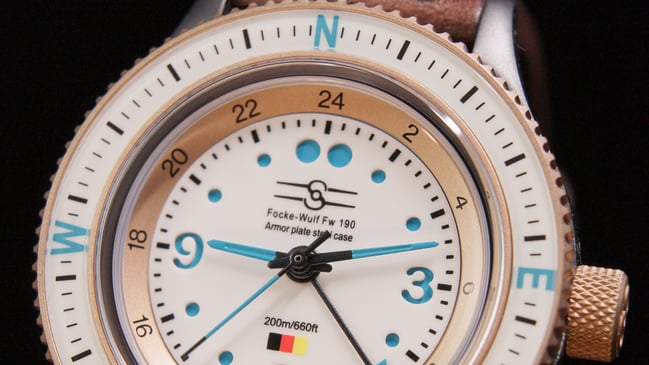
The small French flag adds a little oddity to an already specific arrangement. Sopwith uses a flag motif consistently across its catalogue, such as in the German-equipped Aero Marquis Focke-Wulf Fw 190 Arctic Sea. It's a signature of the brand, but it's personally a detail I could do without. Between the green and bronze, deep-set markers, and compass indications, there's already plenty competing for attention, but the overall design nonetheless feels deliberate and consistent to what they're doing. That said, this is a watch that will be loved by those who love it, and having it in hand made its appeal and design choices considerably easier for me to understand.
Bearings and a Second Time Zone
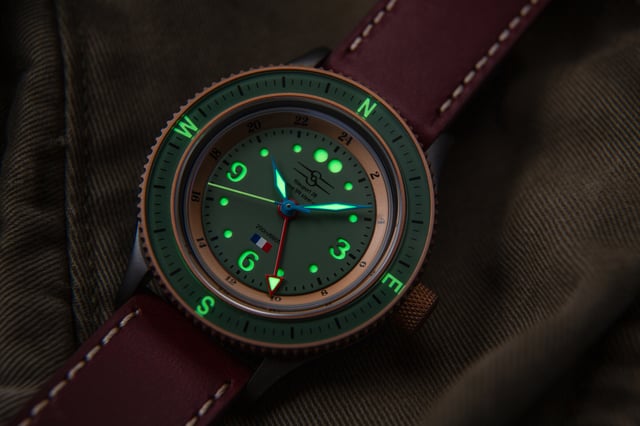
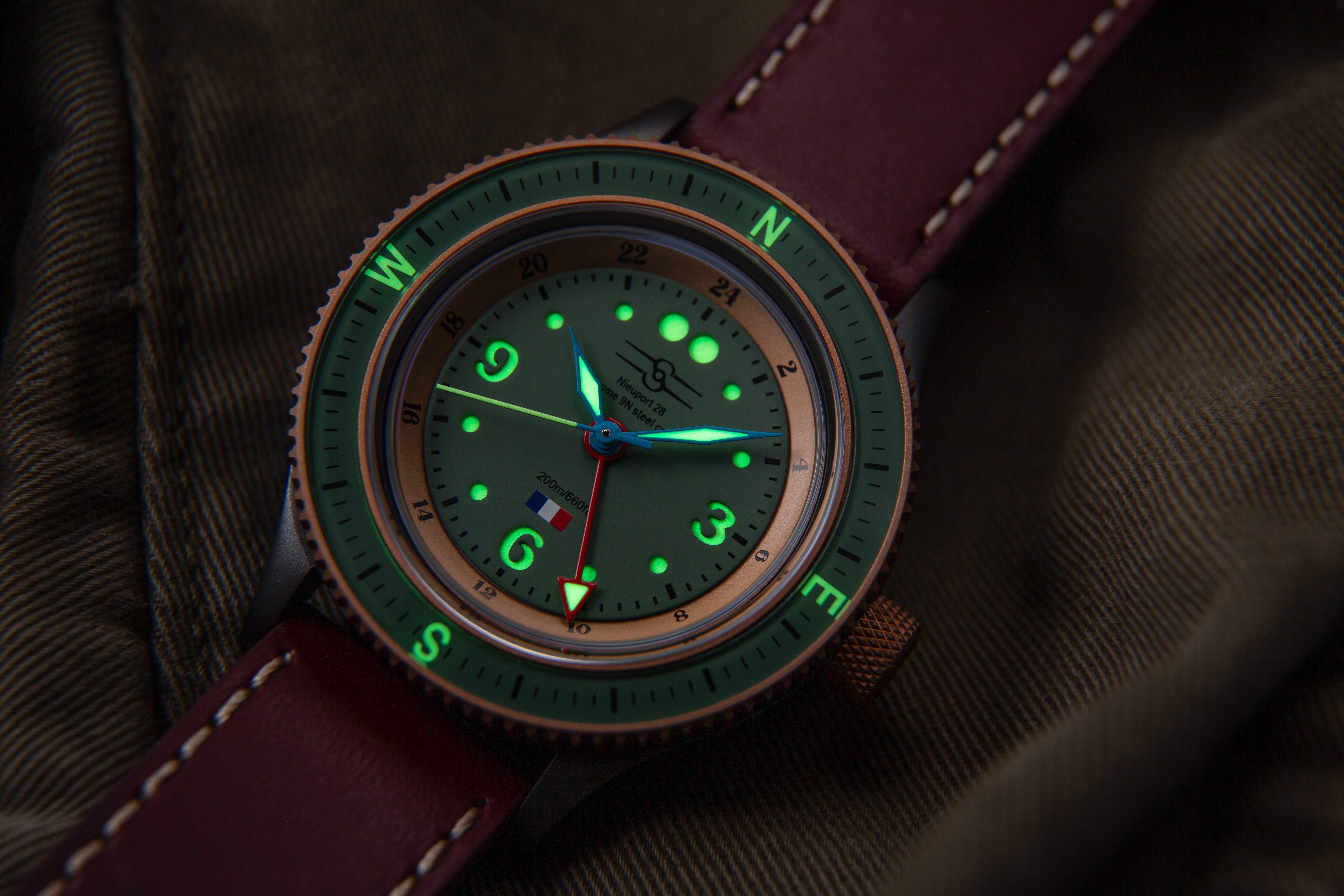
The compass bezel is perhaps the detail that most invites a practical question about how often I am actually going to use it. For my purposes, probably not often, though its presence makes sense within the watch’s broader navigational theme.
A compass bezel requires an external reference to establish direction. With the appropriate method, the time and position of the sun can provide an approximate bearing, with the bezel then helping indicate the other directions; location and daylight saving time affect the process. I appreciate it as part of the design, with its markings reinforce the instrument-like character already established by the case and dial.
The GMT is an easier everyday proposition. Powered by the automatic ETA 2893-A2 Élaboré, operating at 28,800 vibrations per hour with a 42-hour power reserve, the additional hand tracks a second time zone against the inner scale. It’s an appropriate complication for the concept, giving the watch a practical connection to travel that extends comfortably beyond the cockpit.
Enjoy the Unboxing
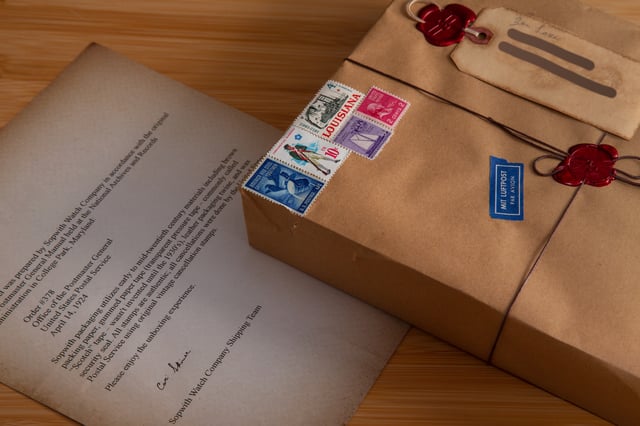
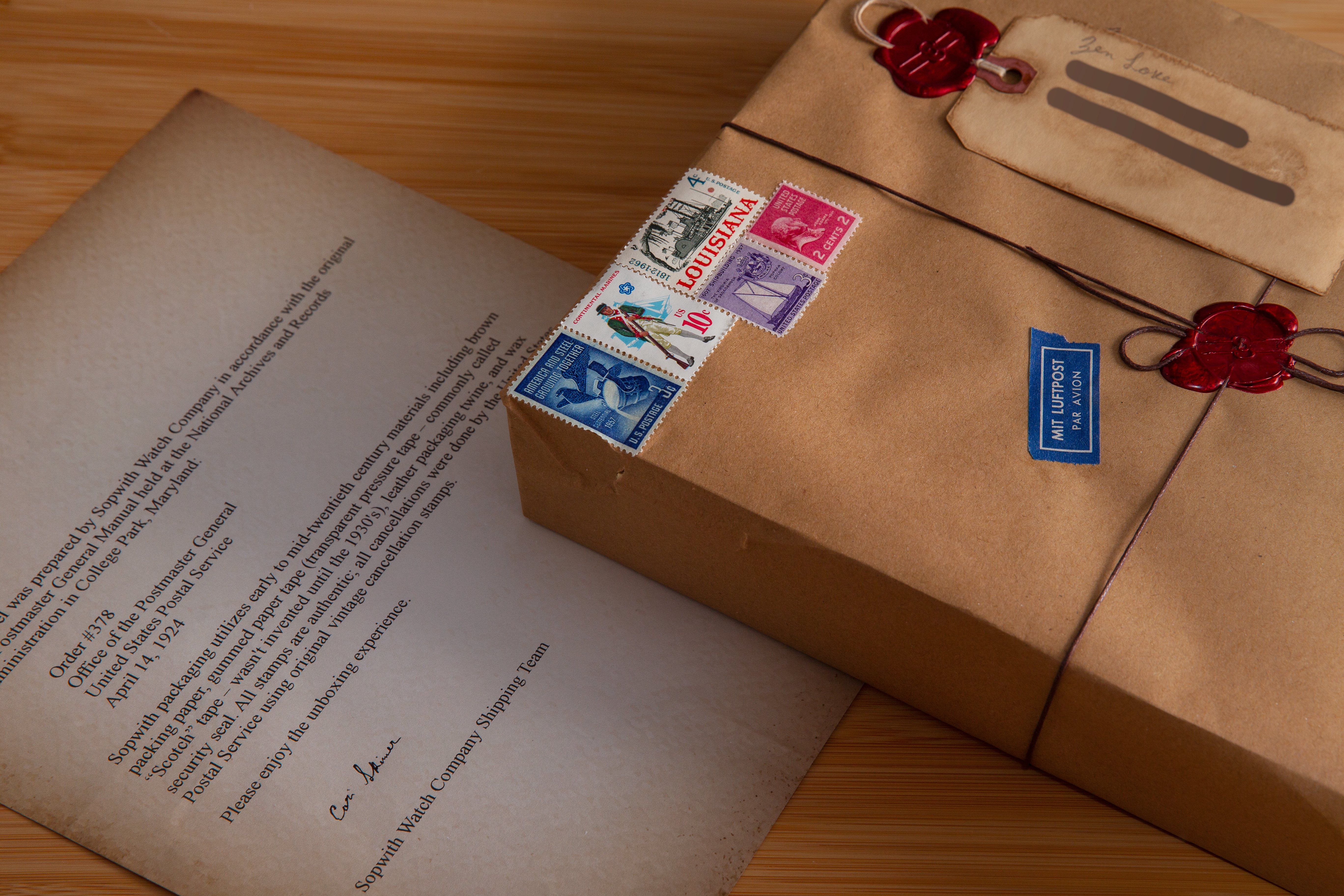
The package arrived with a letter explaining that it had been prepared according to a 1924 Postmaster General manual held at the National Archives. Sopwith describes using brown paper, gummed paper tape, leather twine, a wax seal, and authentic postage stamps, even going so far as to arrange vintage postal cancellations. All of this surrounds a lovely wooden watch box, which feels worth repurposing for use rather than relegating to the back of a closet.
Taken together, this is quite a lot of effort to put into mailing a watch, and I appreciate what it suggests about the people making it. The same enthusiasm that sends someone looking for century-old mailing instructions seems to inform the material choices and tactile details of the watch itself, making the presentation an early indication of how seriously Sopwith takes the overall experience.
The Proposition
The Sopwith Aero Marquis Nieuport 28 is limited to 98 pieces and priced at $8,500. At that price, buying from a small, relatively unfamiliar watchmaker requires some conviction, though the work involved in turning recovered aircraft steel into a finished case helps explain the cost. Its appeal rests on how much that process and history mean to you, supported by a distinctive design and a watch that wears well.
There is a degree of buy-in required here, as there often is with watches whose stories are central to their appeal. What I appreciate is how clearly Sopwith itself has bought in, carrying its enthusiasm through the materials, the details, and even the way the watch arrives at your door. Whether that enthusiasm translates into a purchase is personal, but having spent time with the watch, it is easy to appreciate the commitment.