A Cool Chronograph Companion: Meet 'The Atwood' by Oak & Oscar
One of my all-time favorite cities in the US is Chicago. Of course, not in the winter, because then it is too cold, or in the middle of summer, because then it is too hot, but right there in the middle of those two seasons, it is perfect. The lake, the river, the impressive skyline, and, most of all, the gorgeous historic buildings make this city magical. My favorite is the Fine Arts Building, now home to the Museum of Science and Industry. While many watch enthusiasts will thoroughly enjoy the exhibitions there, the building itself is also a gem worthy to admire. It was designed by Charles Atwood, an architect who was brought in to help create the buildings that would house the 1893 Columbian Exposition. Chicago-based watch brand Oak & Oscar paid tribute to the man by naming their flyback chronograph, The Atwood.
While Oak & Oscar has barely existed for a decade, they are an established player in the North American watch scene. One of the main reasons for that is consistent performance. They knew who they were and what they wanted to express with their watches from the beginning, and that resulted in a strong DNA chain that goes through their entire collection. The Atwood is no exception to this, as it has that rugged tool watch look with not a polished part in sight until you flip it over to admire the movement. Rugged as it may be, small details show that this watch is not as straightforward as you might think at first glance.
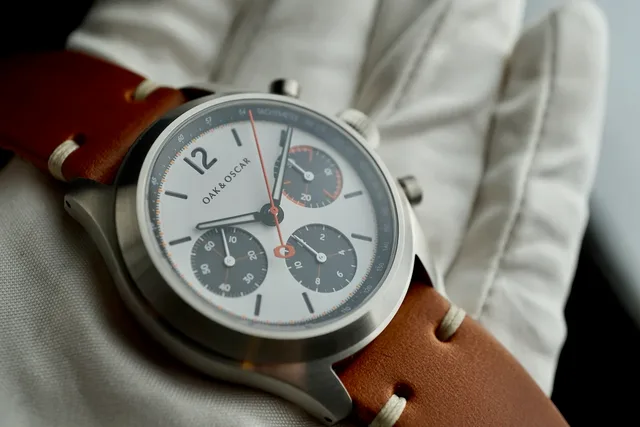
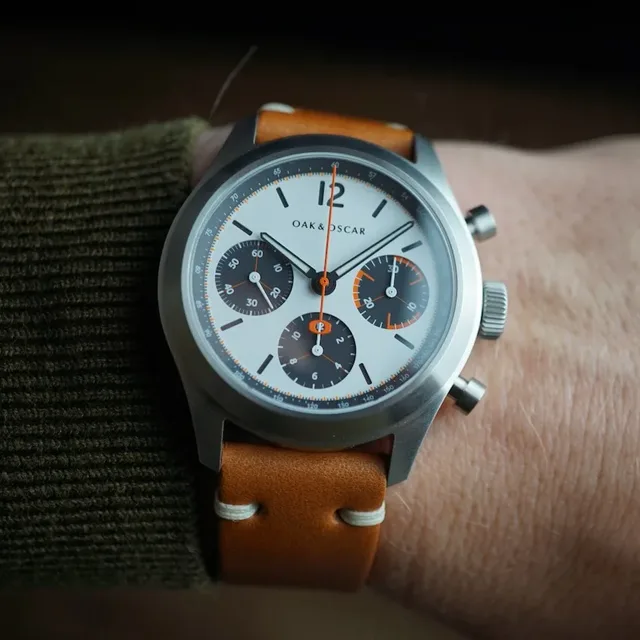
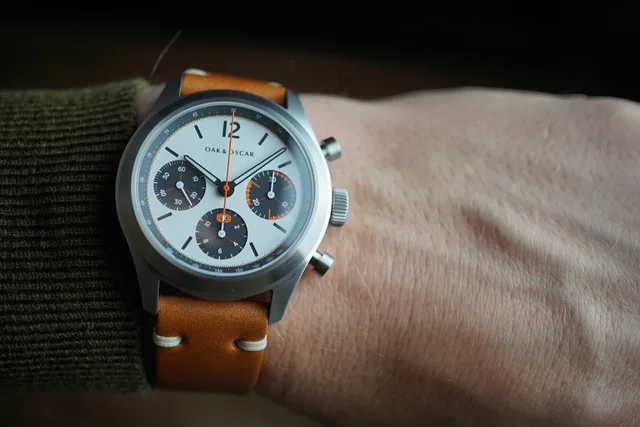
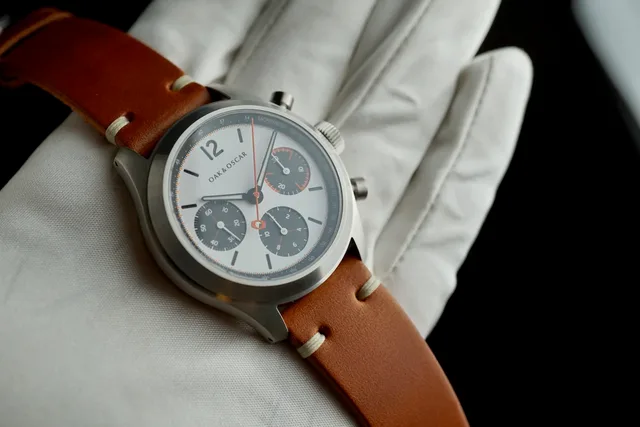
The most fascinating detail, at least to me, is that the Atwood has a sandwich dial. This is cleverly hidden in the design but shows its worth when it gets dark. The subdials also have a great deal of detail, and a fun aspect is that the tachymeter forgoes high speeds of 400 km/h in favor of dipping below 60 km/h by counting through 54 km/h. The only thing that surprised me is that an American brand like Oak & Oscar didn't opt for a tachymeter scale in mph. The dial is very legible, and Oak & Oscar gives it a lot of character by using only three colors. The Atwood is next to this White Panda configuration, also available as Navy Reverse Panda and Charcoal Reverse Panda.
The clean design of the dial also makes it that The Atwood looks larger than you might expect from the 39mm of the case. The watch is well proportioned, also in thickness. It has a bit of heft to it but doesn't go overboard there, making it a pleasant sports watch to wear. Operating the buttons is also a joy, with a nice resistance and a pleasant click confirming that the function is activated or stopped. Winding The Atwood is equally pleasing with, again, a nice resistance and pleasing sound. Sure, an automatic chronograph is perhaps more convenient, but like many of you, I love to wind watches. It is a bit of a ritual, an element of bonding, that adds even more to the experience.
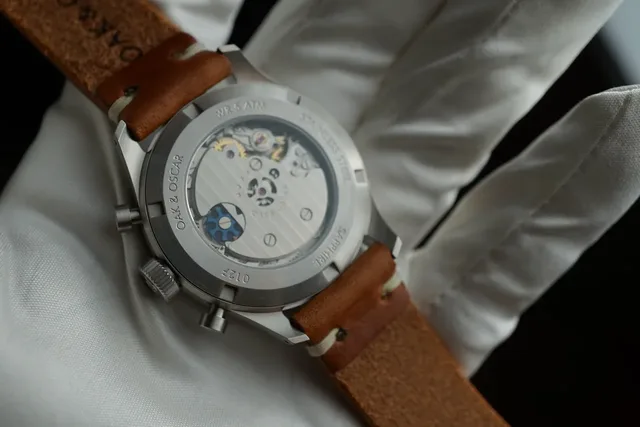
Oak & Oscar could have cut corners when it came to the movement, but fortunately, they did more of the opposite. They opted for the caliber AMT5100M, a very unsexy name for a great movement made by Sellita's AMT Manufacture division, which is in charge of making the higher-end movements. It features a chronograph with a tri-compax layout operated through a column wheel which is blued and clearly visible through the sapphire insert in the caseback. A pet peeve of mine is that many movements have these days a power reserve that is slouching. Not with The Atwood, as it has a proper 58-hour power reserve.
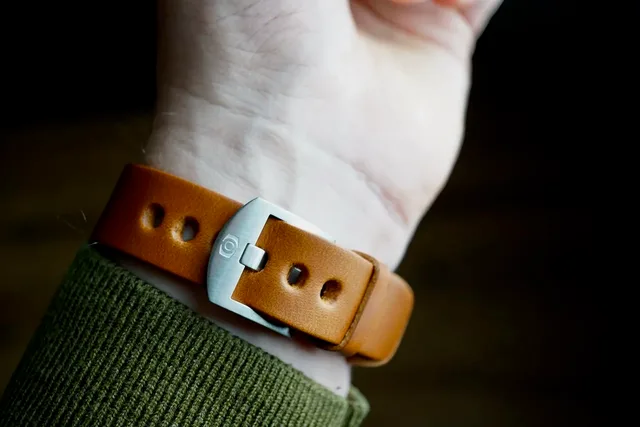
While I enjoyed The Atwood on its robust Horween leather strap, Oak & Oscar also offers it on a metal bracelet with easy-to-use fine adjustment integrated into the clasp. With both versions you also get a NATO strap, along with a canvas watch wallet, which I personally always prefer over the usual boxes, as they are far more convenient. Prices are at $2,450 on strap and $2,650 on bracelet.
For more information, visit Oak & Oscar, here.