The History and Evolution of the Omega Seamaster
A decade-by-decade look
Designing a single watch that is well received is quite an achievement, but to turn it into an entire family of watches with a heritage that spans several decades is something else entirely. The Seamaster had humble beginnings but grew to become one of the pillars of Omega and a collector favorite. Throughout the years, the brand relied on a careful balance of evolution and reinvention to keep the Seamaster just ahead of what watch enthusiasts were looking for. While this has resulted in widely different-looking watches over time, they are all instantly recognizable as Seamasters.
1940s
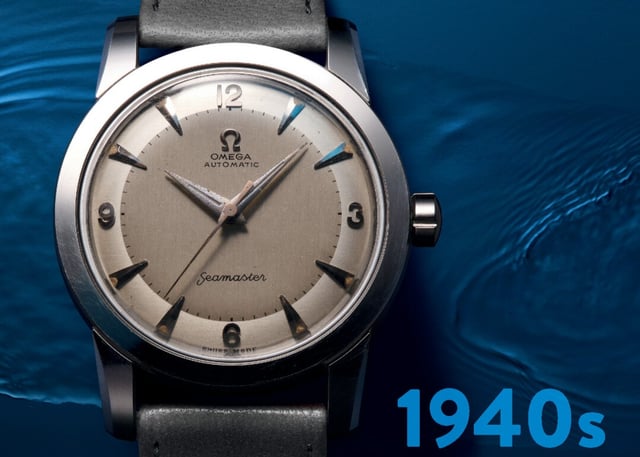
The legacy began in 1948 with the introduction of the very first Seamaster. Drawing on Omega’s experience producing military watches during World War II, the Seamaster demonstrated the brand’s technical prowess. Though its elegant lines and modest dimensions might lead modern eyes to classify it as a dress watch, it was, for its time, a capable and resilient sports watch. Water resistance was a core focus from the outset, establishing a foundation that would define the Seamaster for decades. Even as the collection evolved, it retained a balance between utility and refinement that allowed it to perform equally well on land and at sea.
1950s
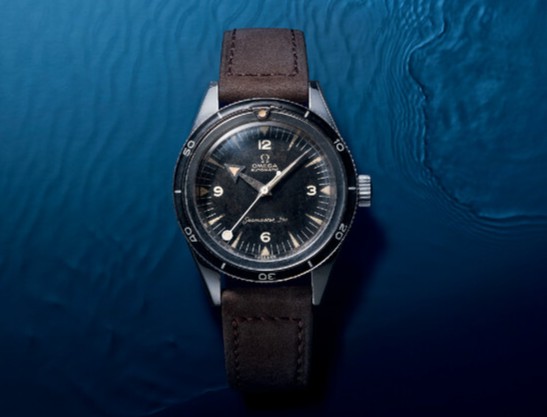
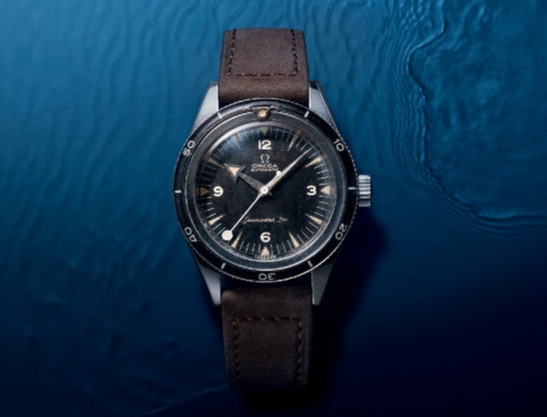
The Seamaster 300, introduced in 1957, marked a shift toward a more robust and utilitarian design language. Postwar prosperity brought increased interest in recreational diving, and watches designed for underwater use became popular beyond professional circles. Influential works such as Jacques Cousteau and Louis Malle’s 1956 documentary The Silent World helped fuel this trend. The Seamaster 300 featured flowing lugs integrated into the case, a larger crown for ease of use, and a highly legible dial. Distinctive elements such as the arrow-shaped hour hand and lollipop seconds hand would become visual signatures.
1960s
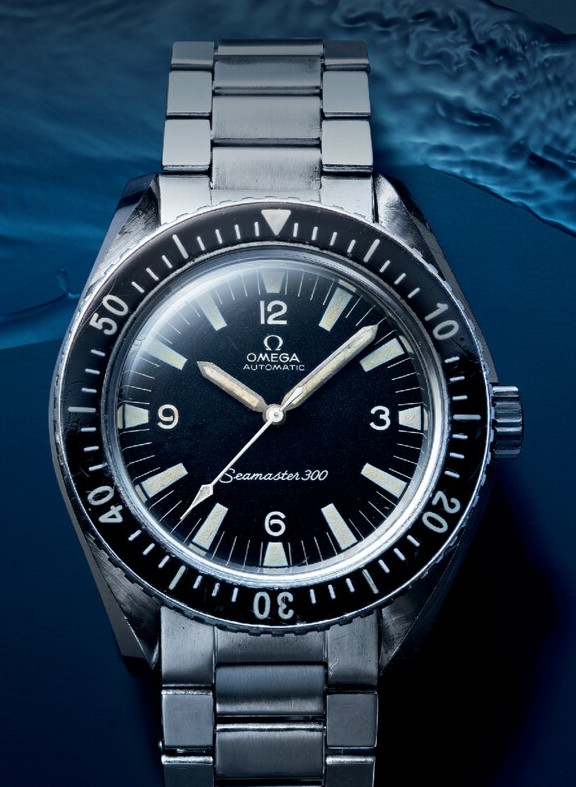
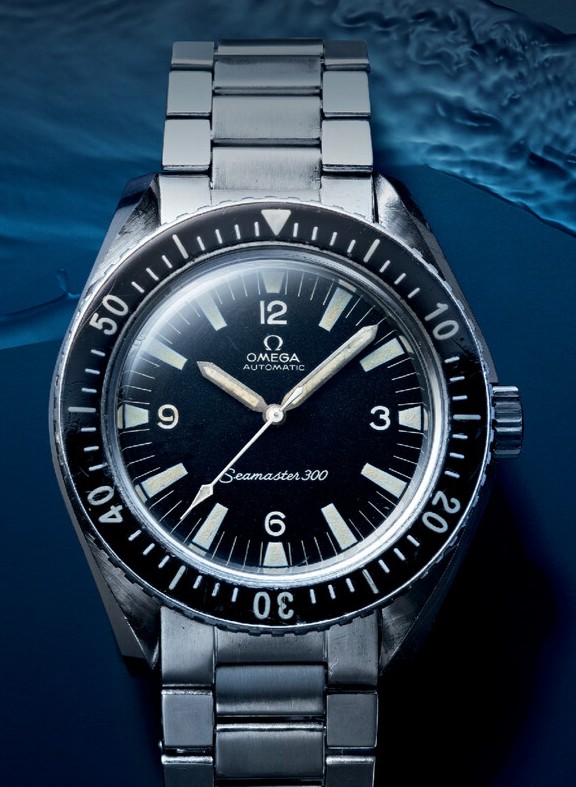
In 1963, Omega introduced the second generation of the Seamaster 300. The design evolved rather than changed dramatically. The diving bezel became more prominent, hour markers grew bolder, and the lugs curved inward toward the bracelet — a detail that would become a hallmark of the collection. The crown, while still sizable for functionality, was partially recessed into the case to offer greater protection.

1970s
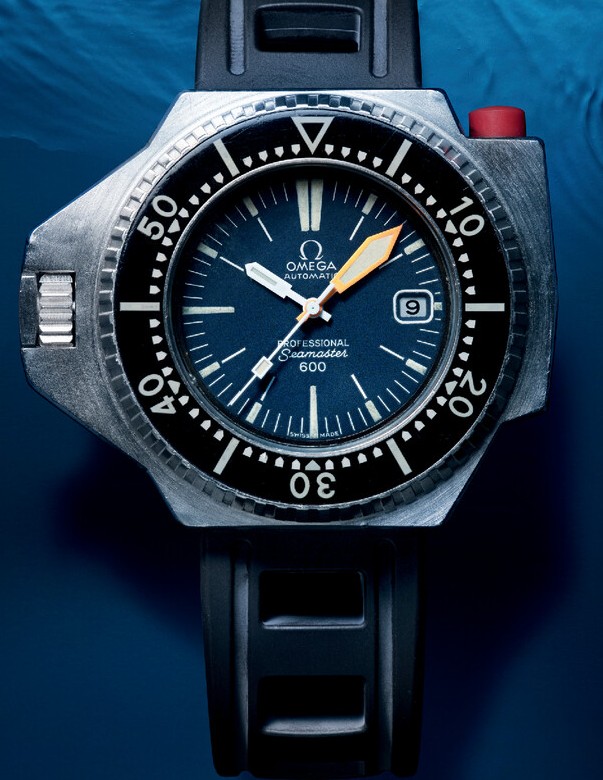
The 1970s opened with one of the most extreme expressions of the Seamaster: the Seamaster 600 “Ploprof.” Designed explicitly for professional divers, its size and unconventional case shape were dictated entirely by function. The name itself, short for plongeuse professionnelle, emphasized its purpose. Its large dimensions allowed Omega to incorporate a bezel-locking mechanism, oversized crown guards, and exceptional legibility. With water resistance rated to 600 meters, the Ploprof stood as a pure tool watch, unapologetically engineered for extreme conditions.
1980s
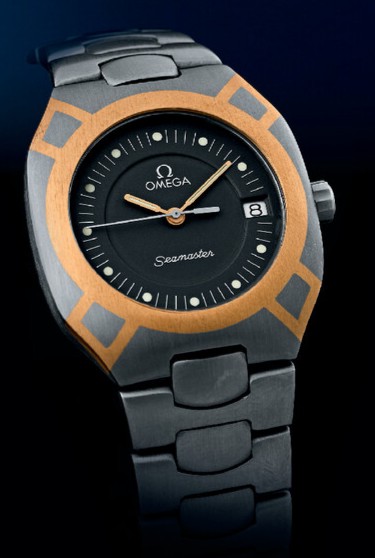
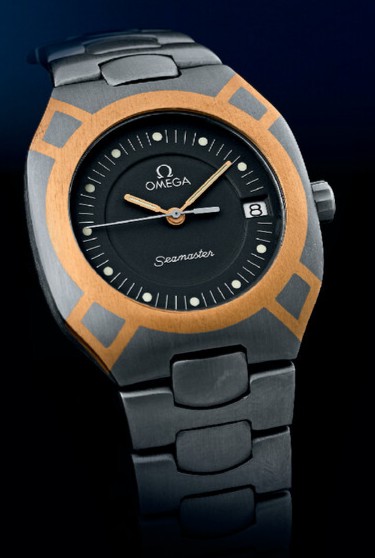
Quartz technology reshaped the watch industry in the 1980s, and Omega embraced the era by collaborating with Gérald Genta on the Seamaster Polaris. Crafted primarily from titanium and accented with gold, the Polaris departed from traditional dive watch aesthetics while staying true to the Seamaster’s original mission as a versatile, water-resistant sports watch. Its integrated bracelet, slim profile, and clean dial design reflected both technological advancement and the stylistic confidence of the decade. Water resistance ranged from 100 to 300 meters, depending on the model.
1990s
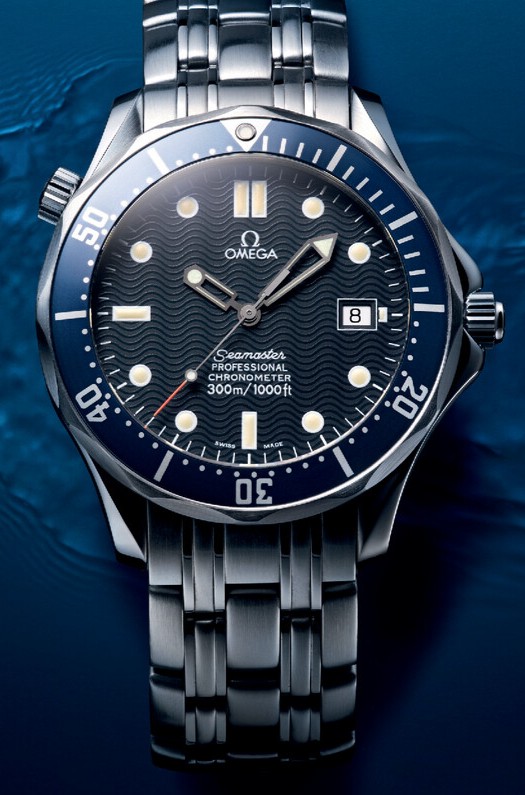
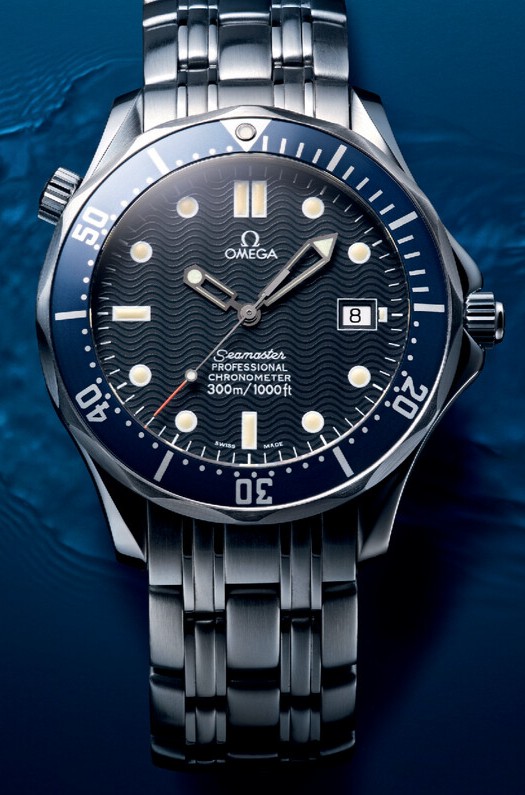
The Seamaster returned to global prominence in the 1990s with the introduction of the Seamaster 300M in 1993. Its influence was cemented when Pierce Brosnan wore it as James Bond in GoldenEye (1995). The design masterfully combined heritage elements with modern execution: a blue wave-pattern dial, skeletonized hands, luminous markers, and an orange-tipped seconds hand. Powered by the chronometer-certified ETA 2892-A2, the watch maintained a refined profile despite its robust capabilities. Its nine-link bracelet with diver extension became one of the most enduring bracelet designs in modern watchmaking.
2000s
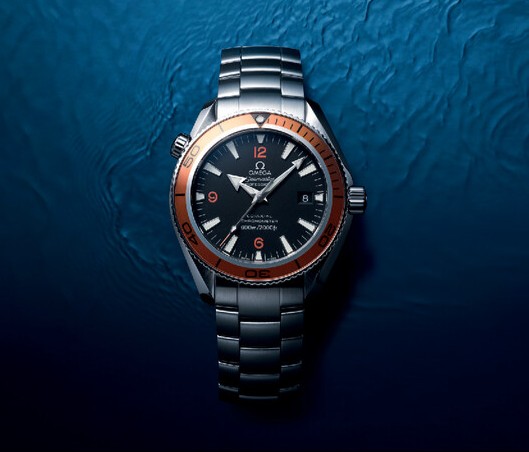
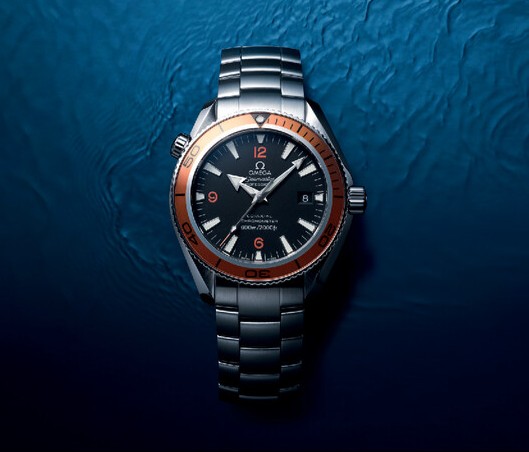
The Planet Ocean collection bridged past and present, blending classic Seamaster design cues with contemporary engineering. Arabic numerals, bold hour markers, and orange accents ensured legibility, while the case design echoed earlier Seamaster generations with a cleaner, more streamlined profile. Technologically, the Planet Ocean marked a milestone with the adoption of George Daniels’ Co-Axial escapement and a water resistance rating of 600 meters.
2010s
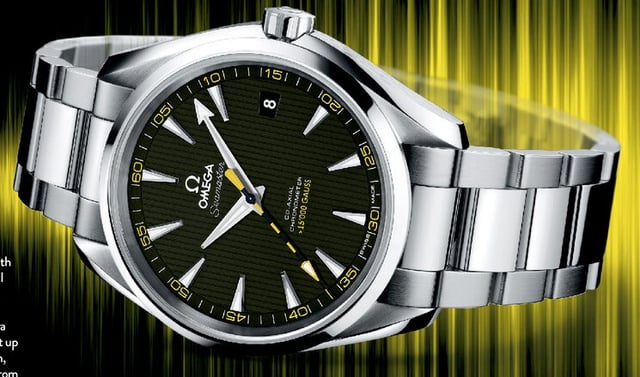
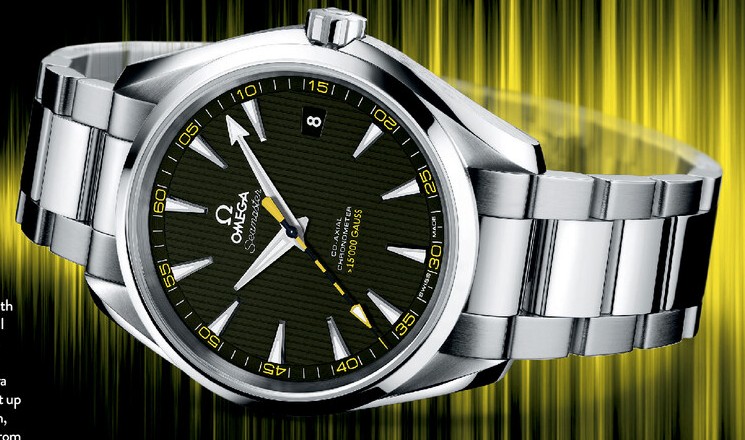
Omega expanded the Seamaster family further with the Aqua Terra, introduced as a modern interpretation of the original Seamaster concept. Though not a dive watch, it offered robust water resistance, a screw-down crown, and a versatile design suited for everyday wear. The 15,000-gauss model introduced in 2013 showcased Omega’s advancements in magnetic resistance, signaling a shift toward performance-driven innovation without sacrificing elegance.
2020s
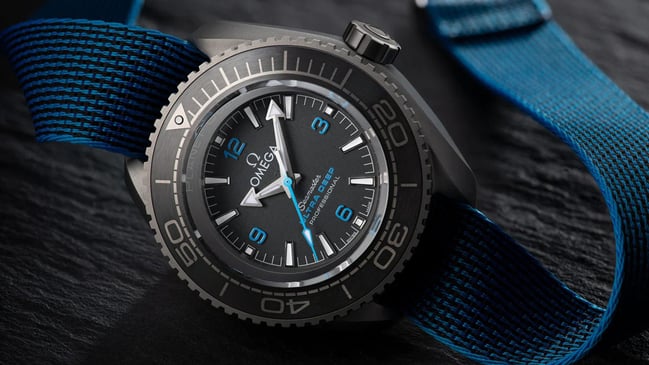
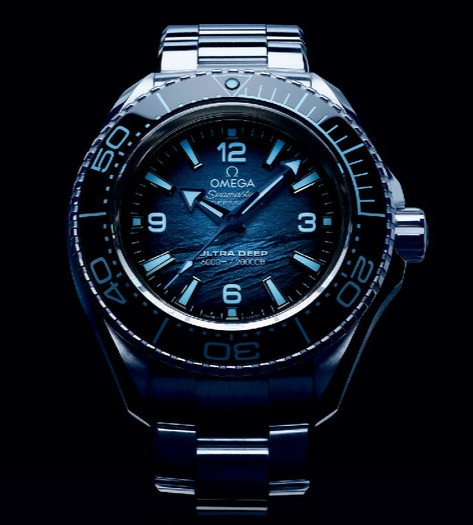
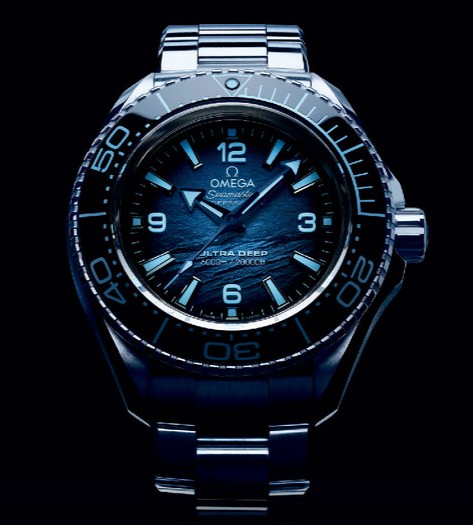
The Seamaster Ultra Deep represents the most extreme expression of the collection to date. Engineered to withstand pressures at depths of up to 6,000 meters, it is a pure tool watch that remains visually connected to its predecessors. The dial features a lacquered representation of the Challenger Deep, while the case and bracelet are crafted from O-MegaSteel, offering superior corrosion resistance. Powered by the Master Chronometer–certified Caliber 8912, the Ultra Deep brings the Seamaster story full circle, blending technical achievement with design continuity.
This article was originally published in the 2025 Special Design Issue. To subscribe to the print edition of WatchTime Magazine, click here.