Born to Serve: Spotlight on Military Watches
The interaction in design between military watches and their civilian siblings
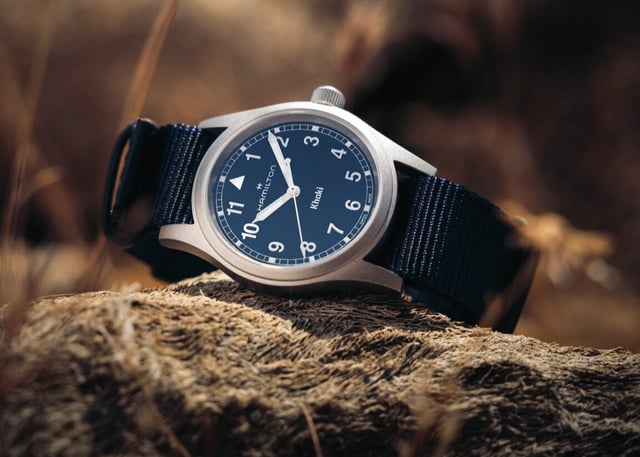
One of the most demanding environments for a watch is on the wrist of a policeman, firefighter, or soldier. Here, it becomes a tool for survival that needs to be both robust and precise, with excellent legibility while not limiting the motions of the wrist. To achieve this, a synergy between form and function is a must. This gives these battle-tested timepieces a functionality and purity in design that is so much appreciated in civilian life that they have greatly influenced the design of wristwatches in general.
When World War I broke out, wristwatches were not at all in fashion. Most men carried pocketwatches in the vests of their suits, and it was women who were the early adopters of wearing their timepieces on the wrist. The rigors of World War I were very different from large-scale armed conflicts in the past. Timing was no longer only important for generals and officers, but for individual soldiers as well. Coordinating attacks, timing artillery barrages, and maintaining communication required both hands — making pocketwatches impractical.
Wire-soldered lugs and fabric straps were the initial solution. While crude, they marked an important turning point in watchmaking history. World War I accelerated the shift from pocketwatch to wristwatch and underscored, for the first time, the need for timepieces specifically adapted to battlefield conditions.
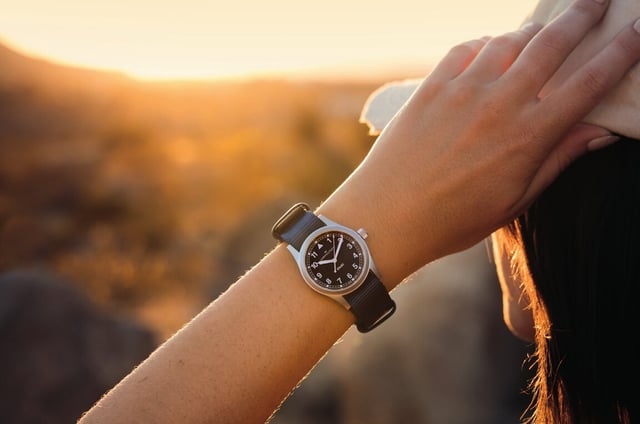
The Hamilton Khaki is a perfect example of a watch with solid military pedigree.
PR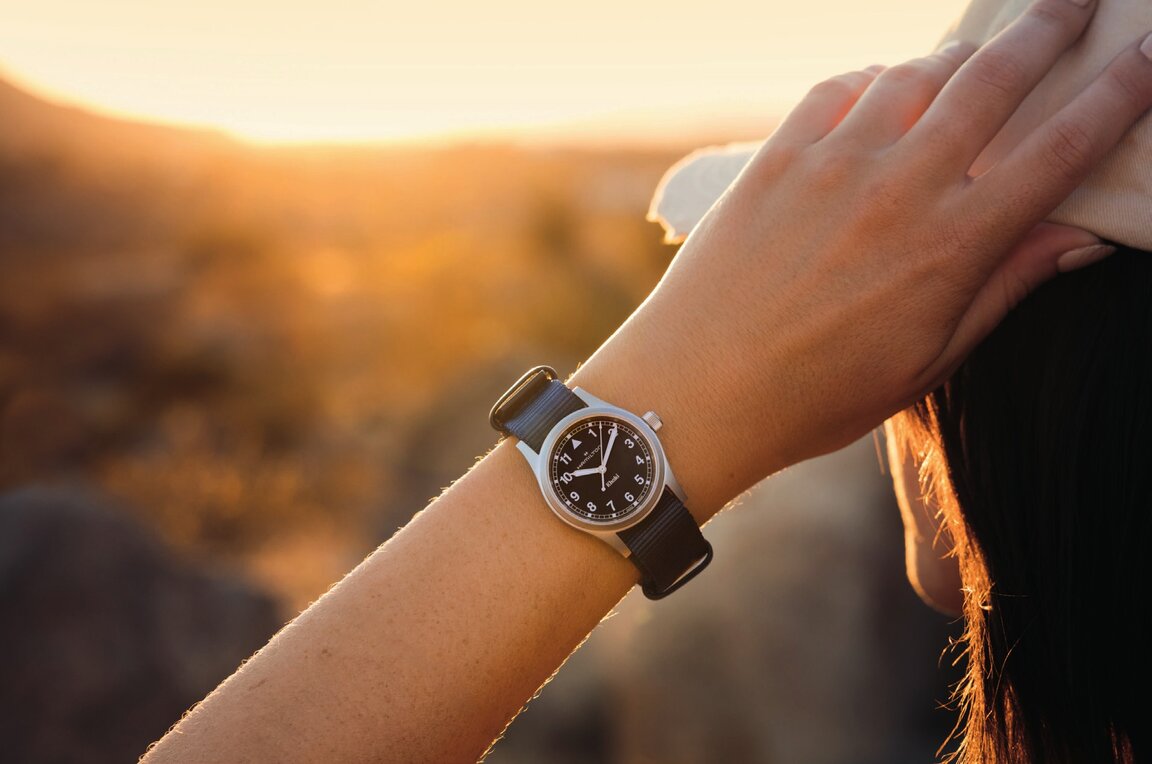
Constant Development
Watch manufacturers were keen to meet these demands. Smaller, more robust movements improved accuracy, while radium-painted dials and hands allowed time to be read in the dark. Legibility, accuracy, and toughness became the defining characteristics of military watches.
Some features evolved into lasting standards; others faded. Wire lugs were soon replaced by integrated lugs offering greater strength, though the aesthetic survived in civilian designs such as the Nomos Metro. As watches moved from pocket to wrist, fragile crystals required protection, leading to metal grilles — a feature that quickly became obsolete as stronger crystals emerged. The Cartier Pasha remains a rare civilian design that retained this military-derived element.
Another enduring military innovation was the canteen crown. Designed to improve water resistance, it consisted of a screw-down cap protecting the crown. Advances in sealing technology eventually made it unnecessary, but its distinctive look remains iconic.
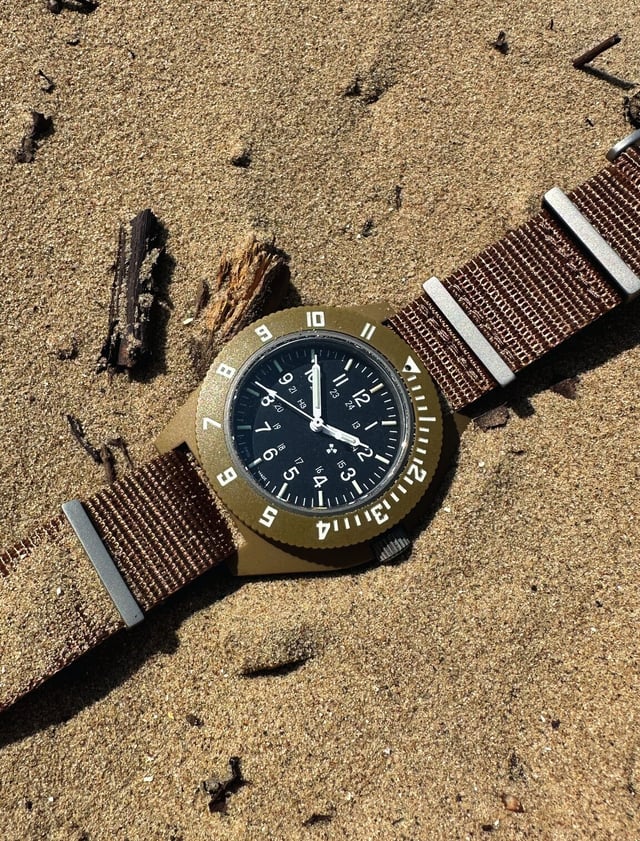
The Marathon Navigator (NAV) was initially developed in collaboration with Kelly Air Force Base in 1986.
PR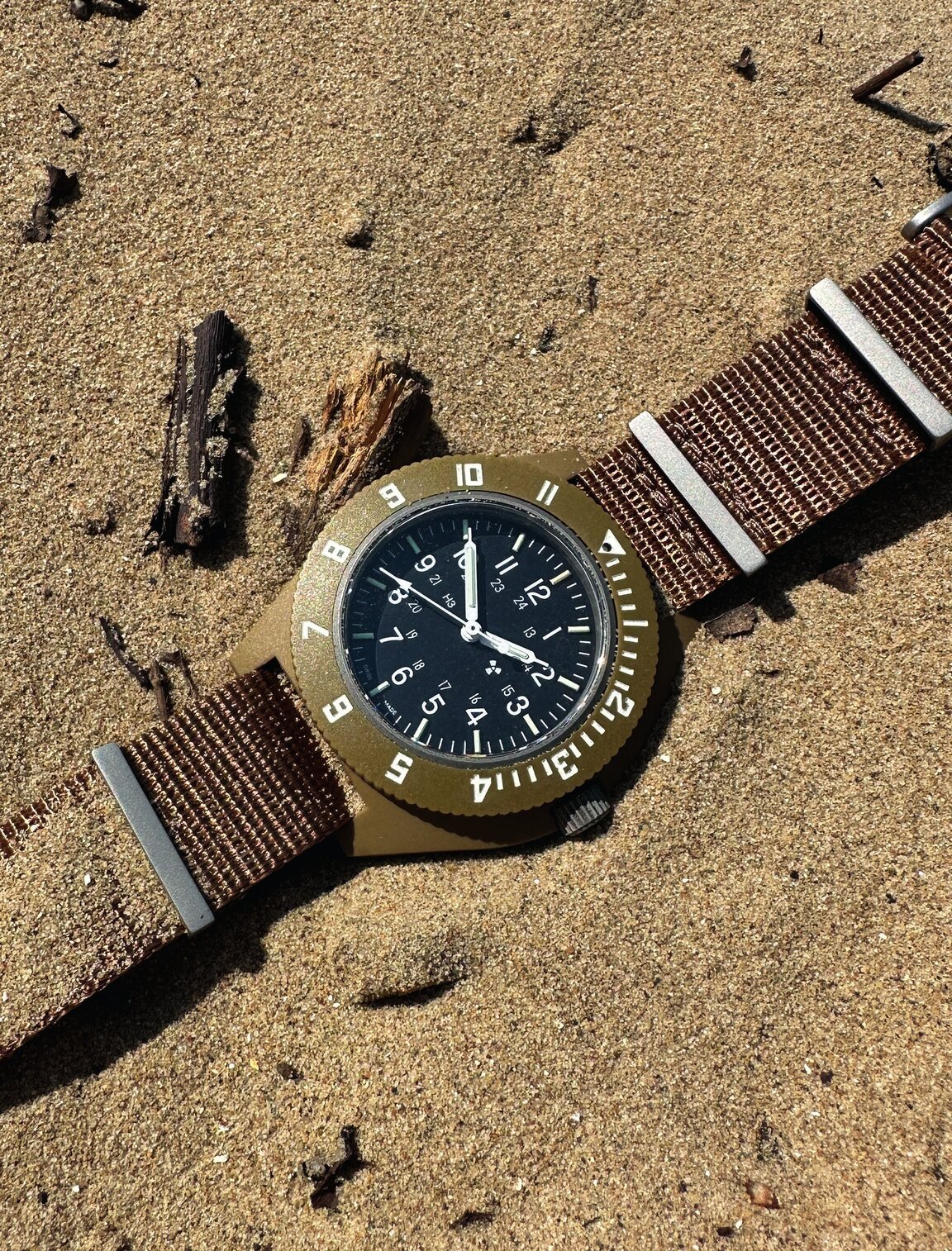
Battle Watches as a Business
Many historic watch brands — Omega, IWC, Hamilton, and even A. Lange & Söhne — produced military watches during times of conflict. For some, government contracts were a means of survival when civilian demand vanished. In extreme cases, such as Nazi Germany, production was commandeered outright.
Other companies began as military suppliers before expanding into civilian markets. Marathon is a notable example. Founded in 1904, the Canadian family-owned company began supplying the Allied Forces in 1941 and has specialized in military watches ever since.
Mitchell Wein, Marathon’s current president, explains the rigorous testing required: extensive shock testing, water-resistance validation, resistance to temperature extremes, chemicals, and pressure changes — all designed to replicate real combat environments.
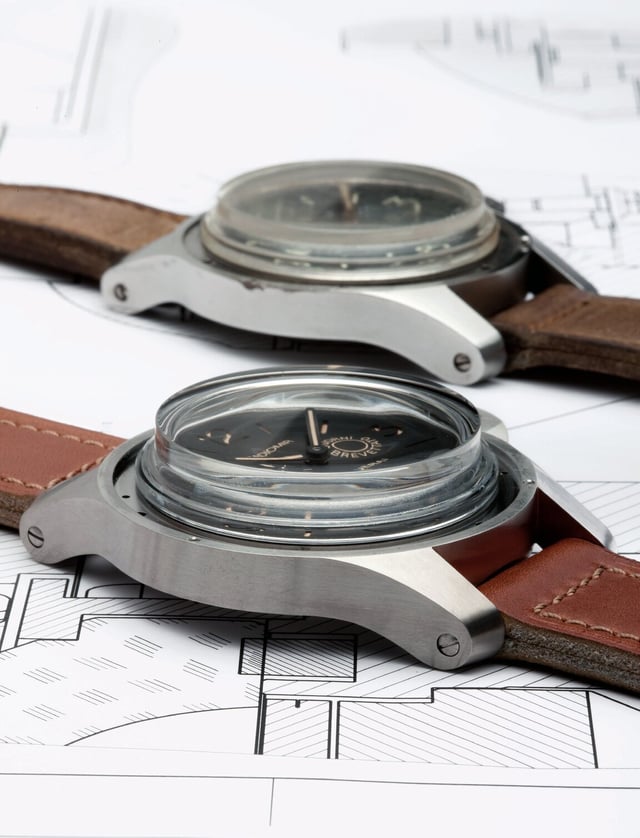
With the bezels removed, the rugged construction of the Egiziano is even more evident. This watch was the historic inspiration for the modern Panerai Submersible.
PR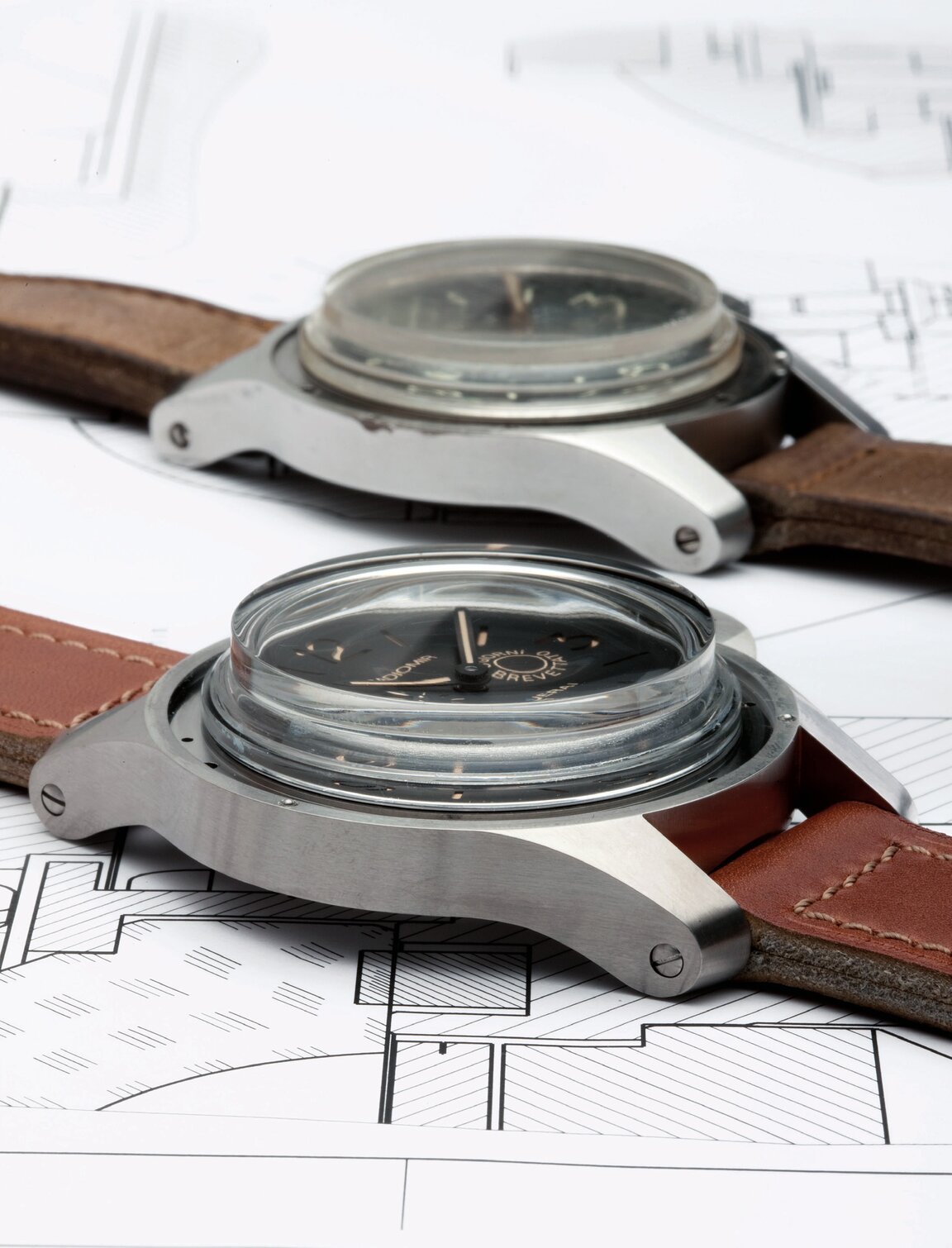
On the Penny
Military watches are also popular in civilian life because they are often competitively priced. There is little sense in issuing expensive watches to soldiers when functionality and durability are the priority. As taxpayer-funded purchases, military contracts emphasize value, reliability, and accountability.
Marathon is regularly audited by armed forces to ensure materials, construction, and pricing meet agreed standards. While military watches are not haute horlogerie, uniting precision, durability, legibility, and affordability is no small challenge. Feedback from active service members continues to refine designs based on real-world use.
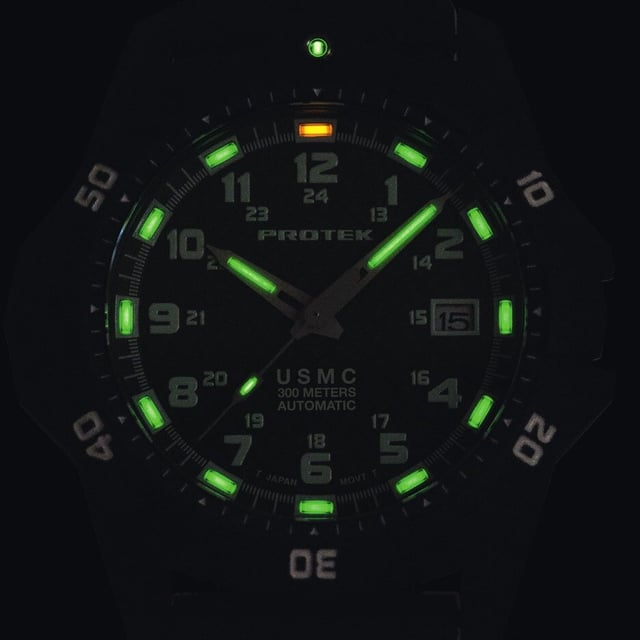
The tritium tubes ensure legibility under all conditions, as with this ProTek.
PR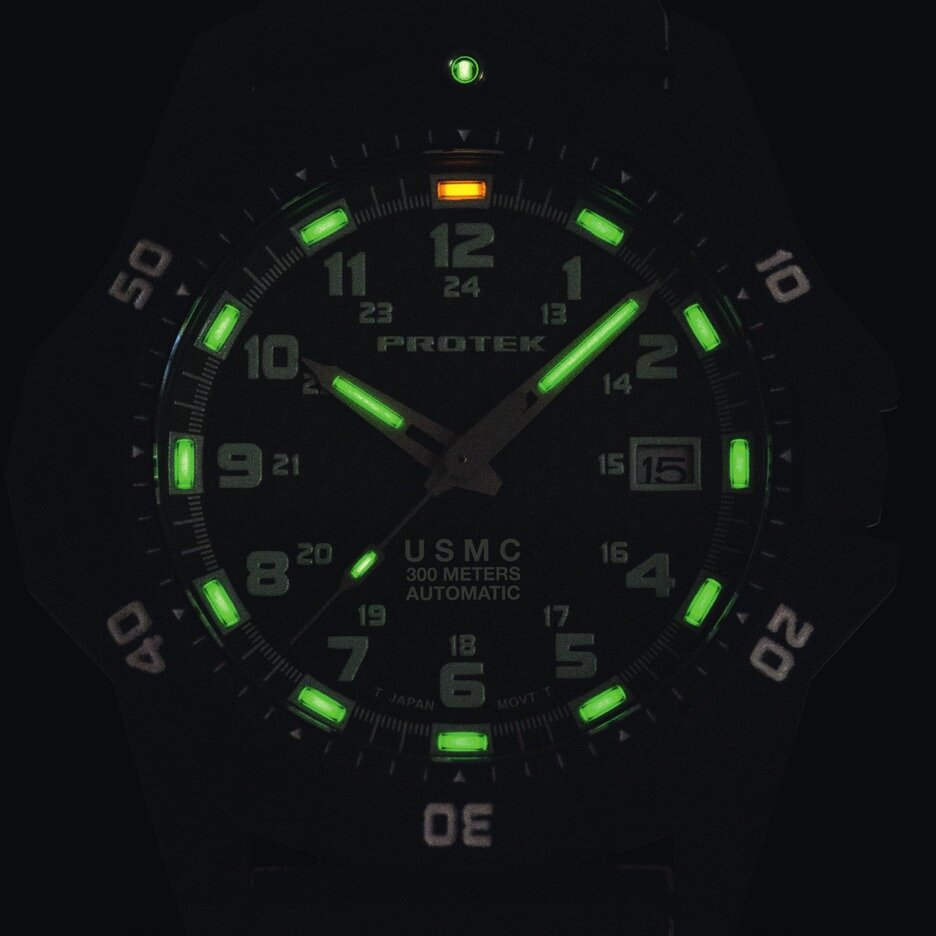
Bigger is Better?
The perception that military watches must be large and bulky is misleading. Size is purpose-driven. Oversized dive watches were strapped over wetsuits, while WWII pilot watches were worn on the leg for ease of navigation. Modern military watches serve primarily as backup instruments and are therefore smaller.
Civilian trends revived oversized military-inspired watches in the 1990s. Panerai gained global attention after appearing in the film Daylight (1996), while IWC’s Big Pilot reinterpreted WWII observation watches for wrist wear.
Marathon today divides its collection by use case: GP (General Purpose), NAV (Navigator), and SAR (Search and Rescue), with sizes ranging from 34 mm to 46 mm — illustrating that toughness does not require excess size.
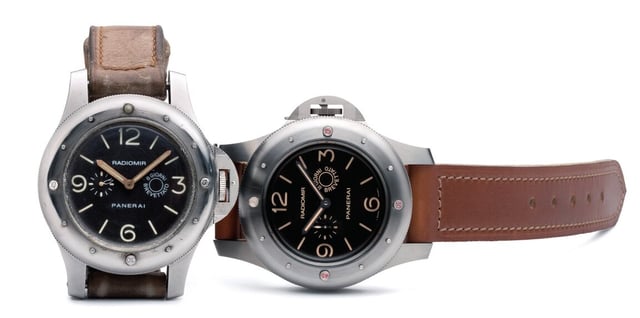
The Egiziano was developed in 1956 and it was the first Panerai diving watch supplied to the Egyptian Navy.
PR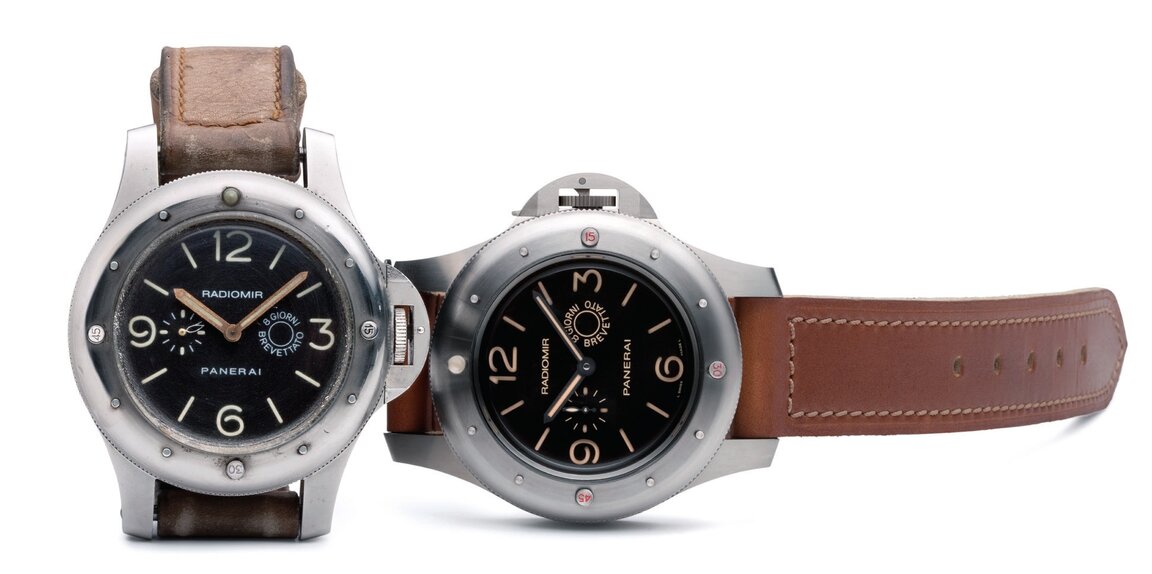
Looking for Legibility
Legibility remains the defining trait of military watches. Purpose-driven dial layouts — including 24-hour scales, distinct 12 o’clock markers, triangles, and broad arrows — minimize errors under stress. Night visibility has evolved from radium to safer alternatives like tritium tubes, which glow continuously without charging.
Brands such as Luminox, Ball, and ProTek have built their identities around tritium illumination. ProTek, an official watch of the U.S. Marine Corps, also uses carbon composite cases to reduce weight while increasing toughness — proving that even utilitarian tools can possess a refined visual character.
Ultimately, military-inspired watches resonate with civilians because they combine durability, clarity, and affordability — allowing them to be worn freely and without concern. That practicality, born on the battlefield, remains their greatest appeal.
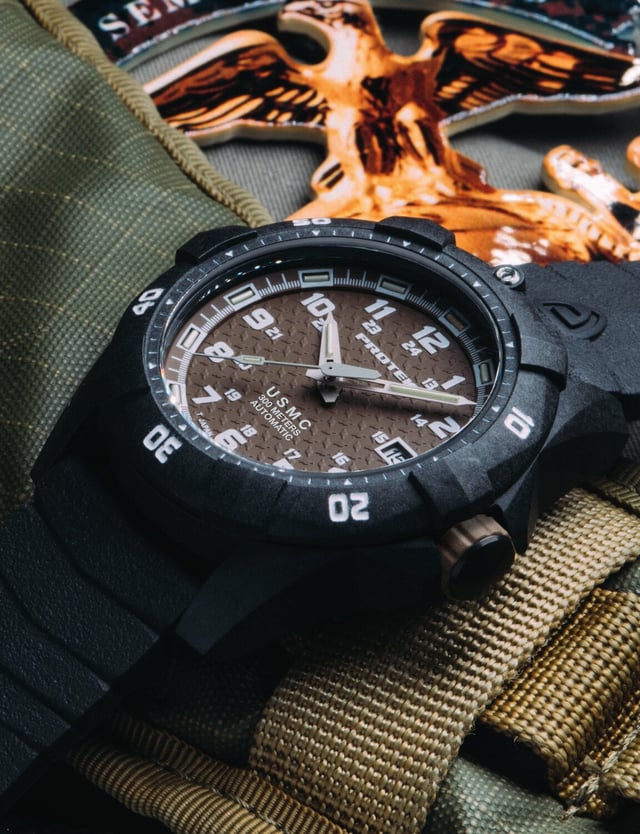
ProTek sculpts carbon composite into a watch that is both rugged and beautiful.
PR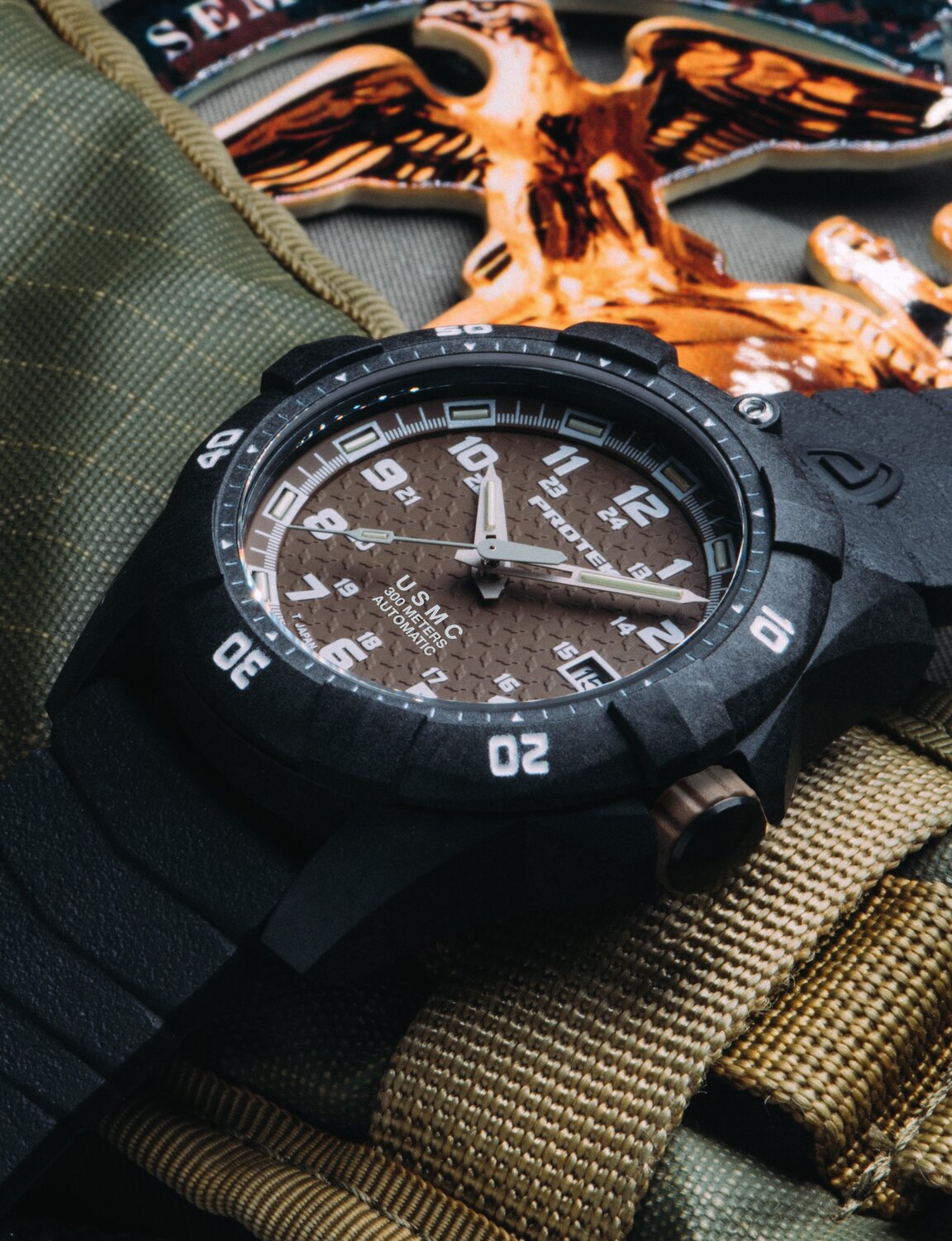
This article was originally published in the 2025 Special Design Issue. To subscribe to the print edition of WatchTime Magazine, click here.