Watch Movements Explained: Automatic, Manual-Wind, Quartz, and More
What really makes a watch tick
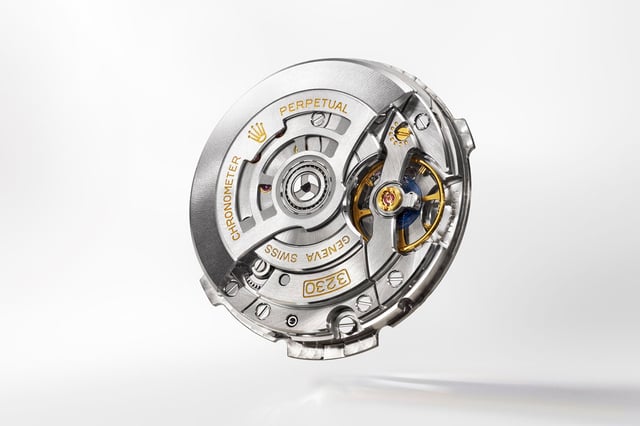
Mechanical or quartz, manual-wind or automatic, standard caliber or manufacture movement: the movement influences a watch’s precision, usability, maintenance requirements, and, ultimately, its character. We look at the most important movement types, their advantages and disadvantages, and who actually develops and manufactures them.
A watch’s first impression is shaped by its case, dial, and proportions. Day-to-day performance, however, depends largely on the movement inside. The caliber determines how often the watch needs to be wound or reset, how accurately it runs and how well it withstands external influences.
At the most basic level, wristwatches fall into two broad categories: mechanical and electronic. A mechanical movement draws its energy from a wound mainspring and requires no battery. In a quartz watch, an electronic oscillator regulates the timekeeping. Quartz movements are generally more accurate, robust, and easier to maintain. Mechanical movements, by contrast, fascinate through the visible and audible interplay of springs, wheels, levers, and the escapement.
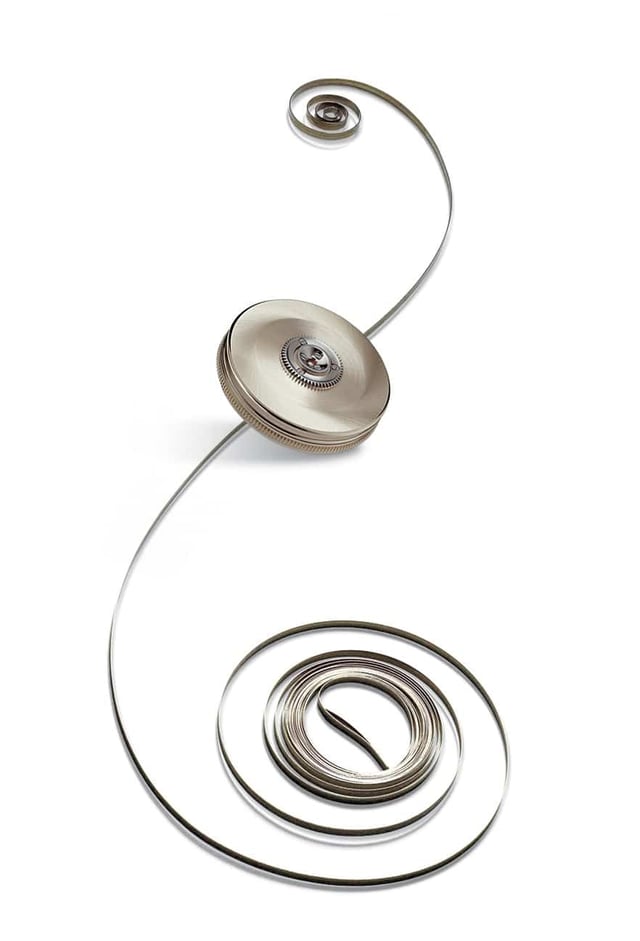
Exceptional: The extra-long mainspring of the caliber L034.1 by A. Lange & Söhne
A. Lange & Söhne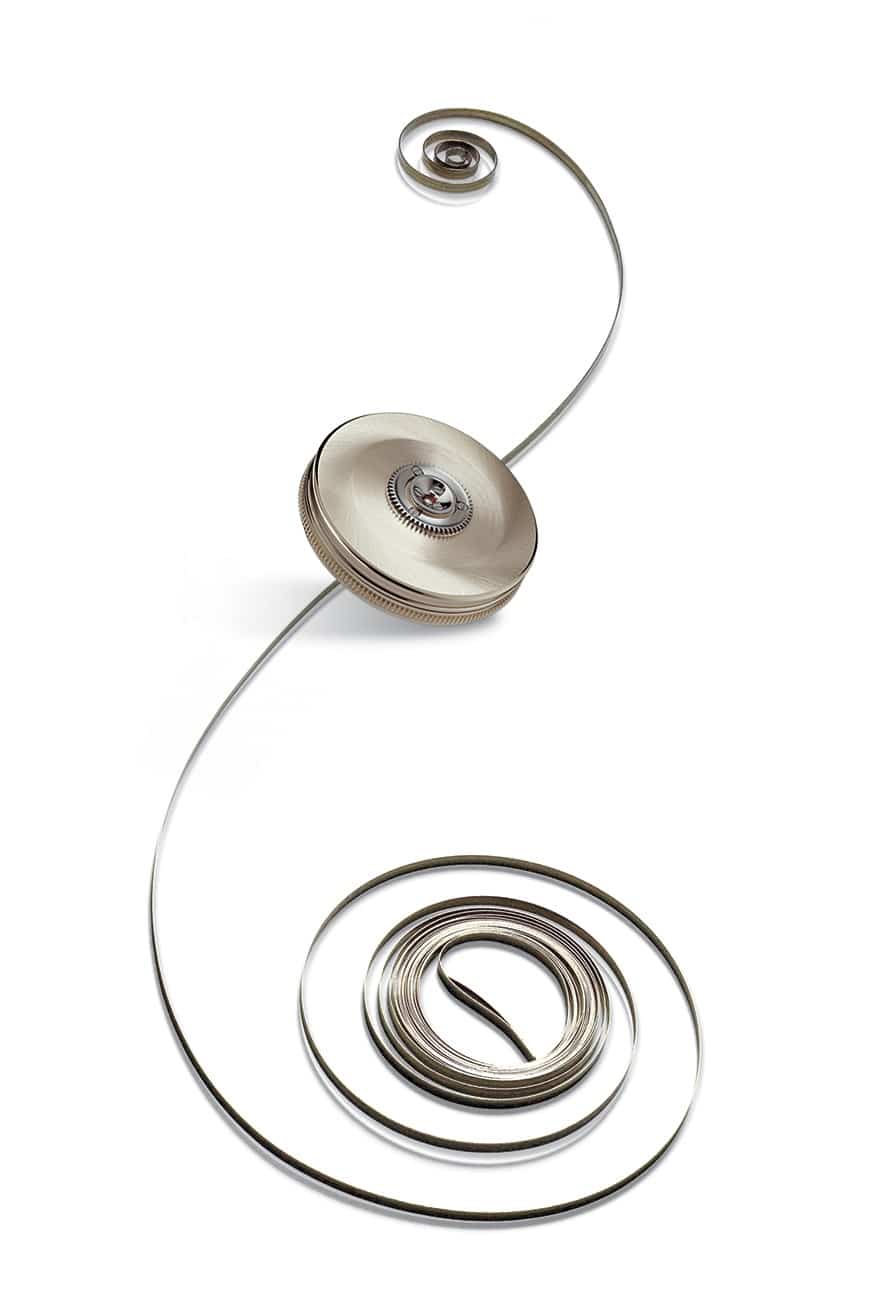
What Is a Mechanical Movement?
A mechanical watch runs on energy stored in a mainspring, which sits inside one or more barrels. Winding the watch tightens that spring. As it slowly unwinds, energy travels through the gear train to the escapement, which releases it in controlled intervals and keeps the balance wheel oscillating at a steady rate. That regulated motion gives a mechanical watch its characteristic sweeping seconds hand. The frequency of the movement, measured in hertz, determines how many steps the hand takes each second: the higher the frequency, the smoother the motion appears. A typical quartz watch, by contrast, advances the seconds hand once per second.
Mechanical movements require no battery, and much of their appeal lies in the interaction of dozens of tiny components working together through stored mechanical energy. Many of those parts can be cleaned, adjusted, refinished, and replaced when necessary. With proper maintenance and access to spare parts, a mechanical movement can remain serviceable for decades or even generations.
Quartz still has the advantage when it comes to outright accuracy. A mechanical watch can be affected by position, magnetic fields, shocks, and the amount of tension remaining in the mainspring. Quartz oscillators are generally more sensitive to temperature changes, which is why high-end quartz movements often use electronic temperature compensation. Mechanical watches also require more maintenance. Lubricants age, seals need to be replaced, and moving parts must be checked for wear. Service costs depend not only on the complexity of the movement, but also on availability, the manufacturer’s service network, and whether an independent watchmaker can work on the caliber.
Manual-Wind or Automatic: What Is the Difference?
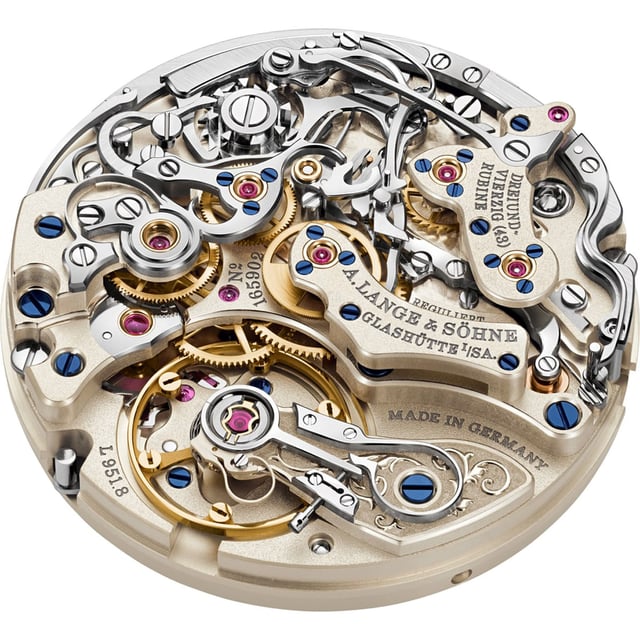
A feast for the eyes: the exquisitely finished hand-wound caliber L951.8 by A. Lange & Söhne.
A. Lange & Söhne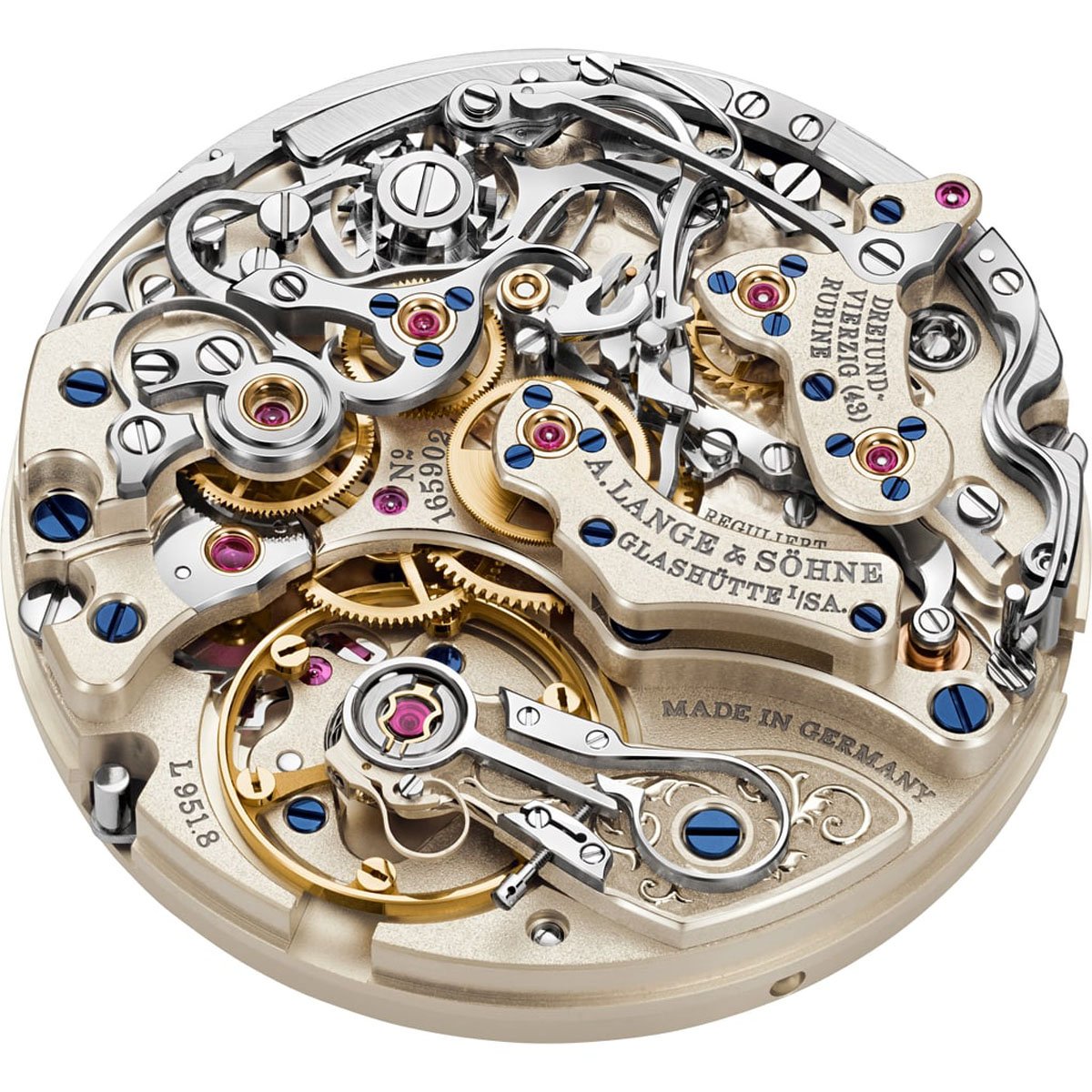
With a manual-wind movement, the mainspring is tensioned by turning the crown. These movements are generally slimmer than automatic calibers because there is no rotor and automatic winding mechanism. And if the watch has a display caseback, there is no rotor obscuring part of the movement. A hand-wound watch does require regular winding (usually once a day) but many enthusiasts appreciate this kind of interaction with their watch. The important point is to stop winding as soon as you feel clear resistance. Never force the crown beyond that point, as doing so can damage or even break the mainspring.
Most automatic watches can also be wound by hand, which is particularly useful if the watch has stopped. A few turns of the crown allow the movement to build up amplitude more quickly. Simply putting the watch on the wrist will usually get it running eventually, but if wrist movement is limited, the amplitude remains too low to achieve precise operation. Interestingly, Japanese manufacturers often state explicitly that their automatic movements can also be hand-wound. The same is true for Swiss and German calibers, even if it is not always highlighted in the specifications.
The main advantage of an automatic movement, of course, is that it winds itself, as long as the watch is moved regularly and sufficiently, whether on the wrist or in a watch winder. The rotor reacts to movement and transfers that energy through a gear train to the mainspring barrel. Because the watch is continually receiving energy, automatic movements are protected against overwinding: once the mainspring is fully tensioned, a slipping bridle allows it to slide in a controlled manner.
Special Features: Micro-Rotor and Peripheral Rotor
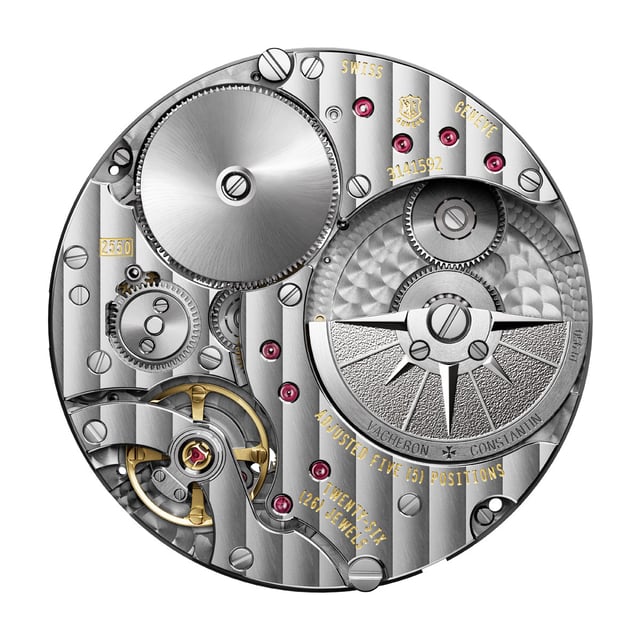
Vacheron Constantin: Caliber 2550 with Micro-Rotor
Vacheron Constantin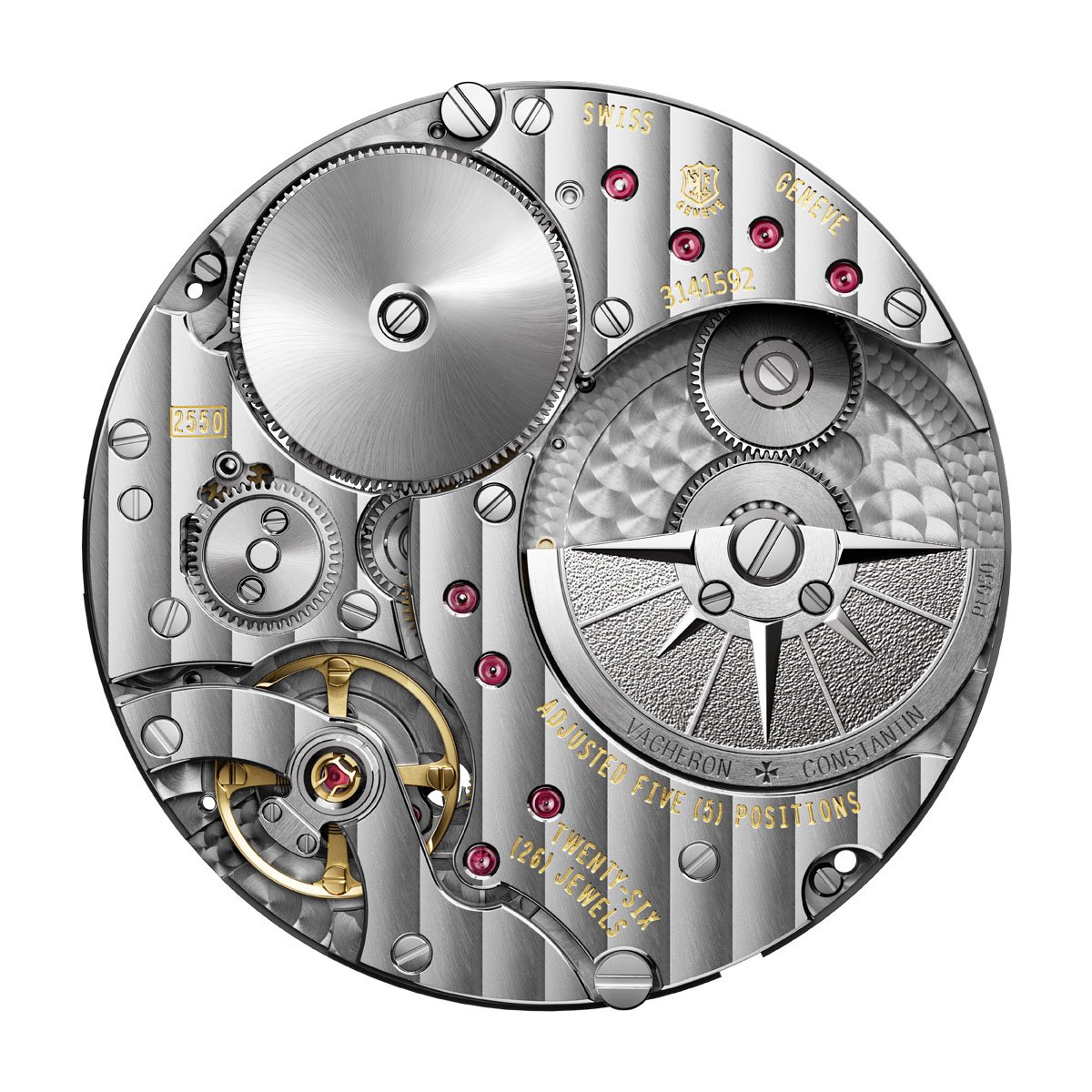
A micro-rotor is considerably smaller than a conventional central rotor and sits within the plane of the movement rather than above it. This allows the caliber to remain slimmer while also leaving more of the movement visible. To generate sufficient winding energy despite its smaller size, the rotor is often made from particularly dense materials such as gold, platinum, or tungsten carbide.
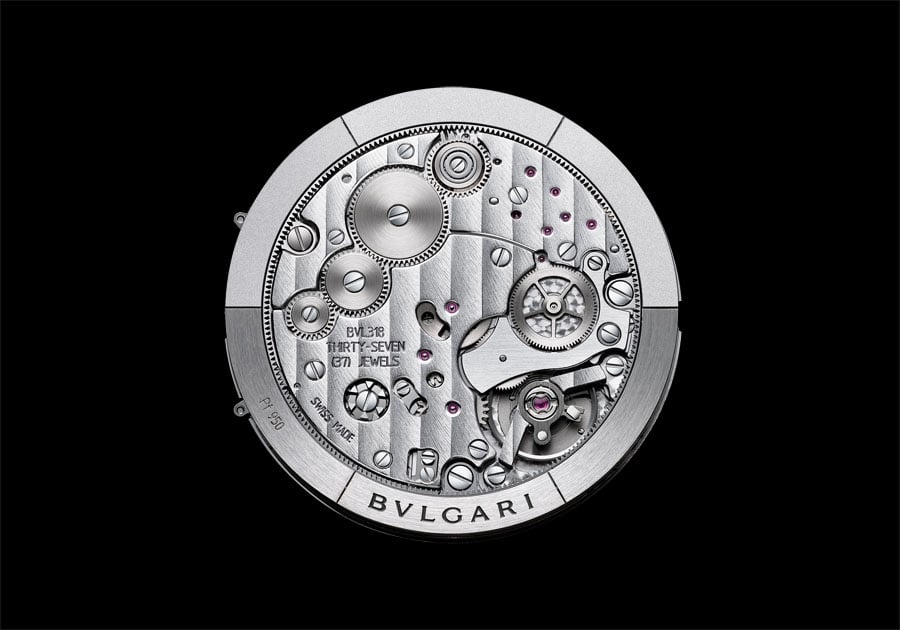
A peripheral rotor, on the other hand, takes the form of a ring running around the outer edge of the movement rather than swinging across its back. This leaves bridges, gear train, and finishing almost completely unobstructed and can also contribute to a thinner construction. Carl F. Bucherer once made the technology a defining feature of its movements, while peripheral rotors can also be found in Bulgari’s Caliber BVL 318 and in the tourbillon movements of selected Vacheron Constantin models.
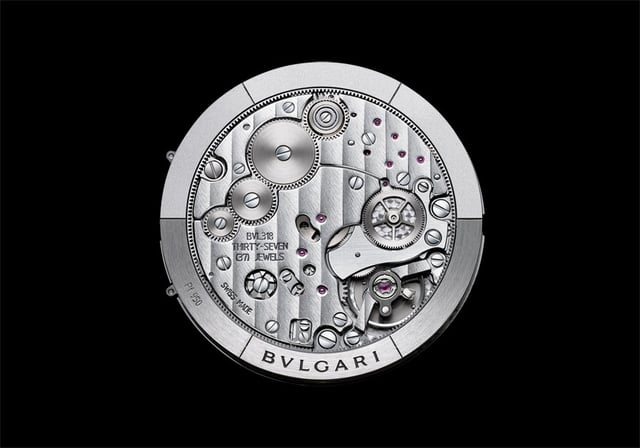
Bulgari
Automatic Winding: Unidirectional or Bidirectional?
Automatic winding systems can operate in one or both directions. In a unidirectional system, the rotor transfers energy to the mainspring barrel only when turning one way; in the opposite direction, it largely freewheels. This can sometimes be heard and even felt. The ETA Valjoux 7750 chronograph caliber, for example, is well known for this characteristic.
In a bidirectional system, reversing wheels, freewheels, or pawls make use of both directions of rotor rotation and convert them into a single winding direction. The mainspring is therefore tensioned regardless of which way the rotor happens to turn. Widely used movements such as the ETA 2824-2 and 2892-A2 wind in both directions.
Beyond conventional systems with reversing wheels, there are also various pawl-based winding mechanisms. In the Pellaton system developed by IWC technical director Albert Pellaton, an eccentrically mounted cam converts the rotor’s rotation into the back-and-forth movement of a rocking lever. Two pawls attached to it engage alternately with the winding wheel, tensioning the mainspring regardless of the rotor’s direction. In modern IWC calibers, some of the components subject to the greatest wear are made from highly durable ceramic. Seiko’s Magic Lever, developed in 1959, follows a similar principle. Two pawls convert the rotor’s motion into a single winding direction, again regardless of which way it turns. The system uses relatively few components and transfers the rotor’s movement to the mainspring over a short and efficient path.
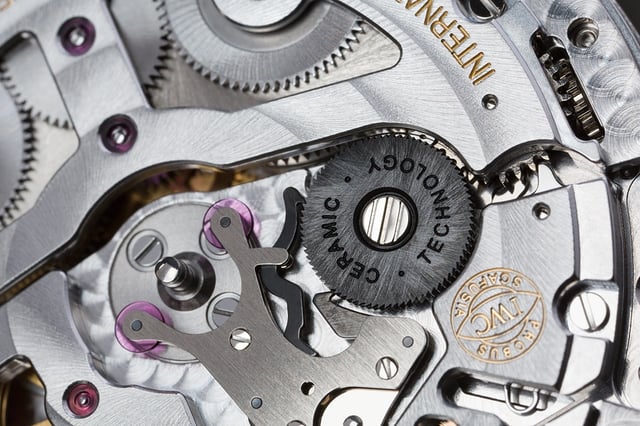
Pellaton pawl winding system by IWC: Two pawls alternately engage with the automatic wheel.
IWC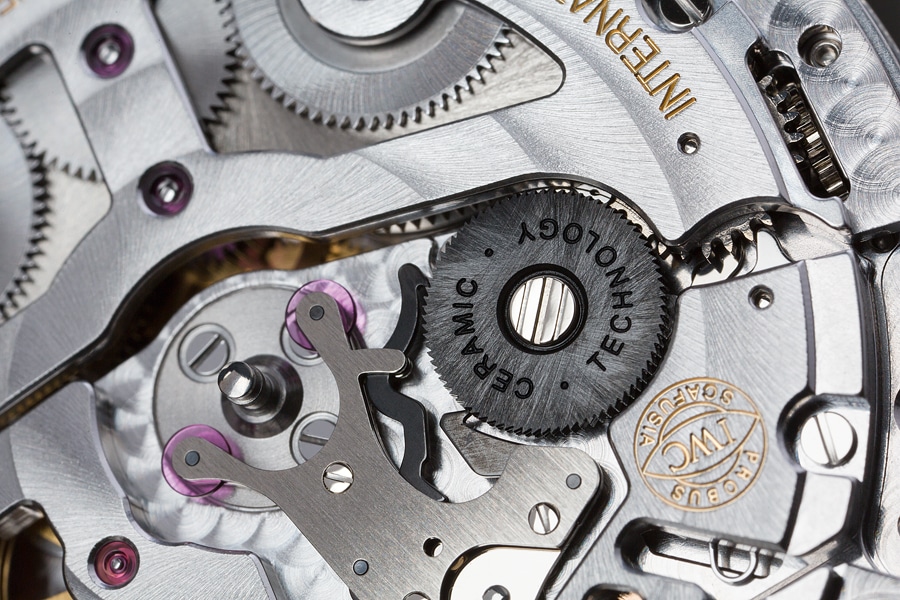
Whether unidirectional or bidirectional winding is better has been debated for decades. Ultimately, what matters most is the efficiency of the system as a whole, including gearing, friction losses, and the size and bearing arrangement of the rotor.
What Does "Manufacture Movement" Mean?
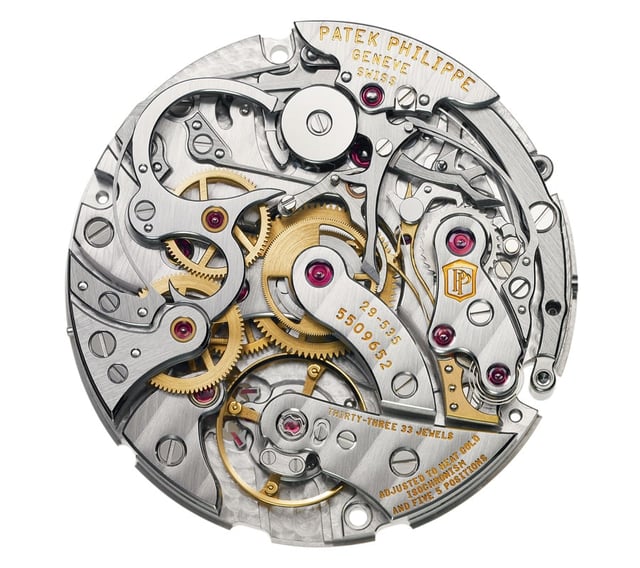
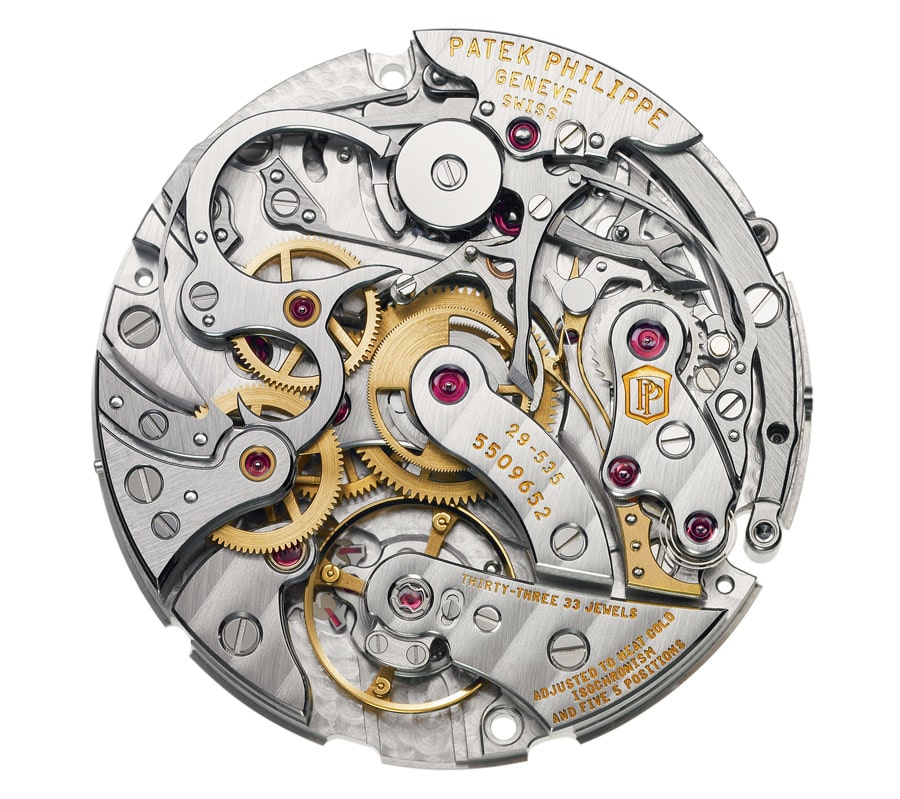
There is no universally accepted definition of a “manufacture movement.” In broad terms, the label usually refers to a caliber developed largely by the watch brand itself, or within its corporate group and produced under its control in key areas. The more of the process a company handles in-house, from movement design and component production to assembly, regulation, and quality control, the greater its level of vertical integration. But even highly integrated manufactures rarely make every single component themselves. Jewels, mainsprings, hairsprings, specialized parts, raw materials, and certain technical services are often sourced from outside suppliers. Some brands may produce certain components in-house, but only for selected calibers or in limited quantities. Others rely on external specialists for specific elements while retaining control over the overall architecture and production process. Given the historically interconnected nature of the Swiss watch industry, a completely self-sufficient manufacture is exceptionally rare. At the other end of the spectrum, some brands use the term “manufacture caliber” for movements developed and produced exclusively for them by an outside supplier.
Rather than relying on the label alone, it is more useful to ask four questions: Who designed the movement? Who produces its key components? Who assembles and regulates it? And is the caliber exclusive to the brand?
Mass-Produced Movements by Eta and Sellita
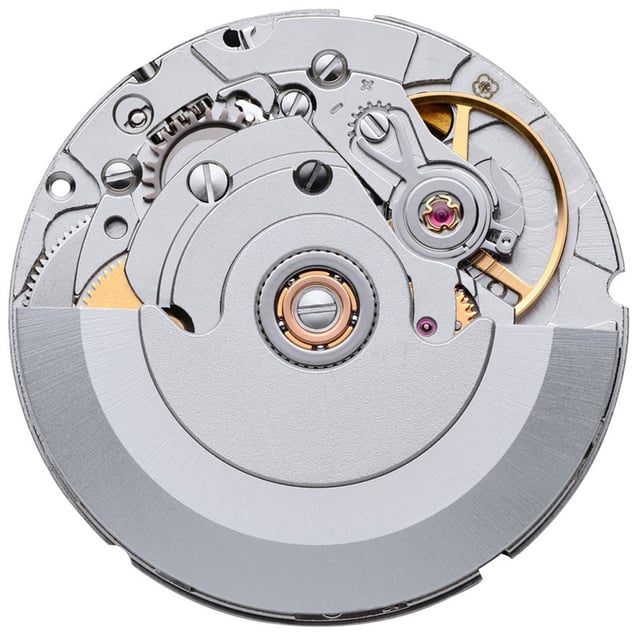
Specialist movement makers such as ETA and Sellita produce calibers on an industrial scale. ETA supplies both mechanical and quartz movements, while Sellita complements its widely used SW series with customized calibers and higher-end solutions through its AMT division. These movements are often described as standard, industrial, or high-volume calibers. Their biggest advantage is simple: they are proven. Movements such as the ETA 2824 and its Sellita counterpart, the SW200, have been in service for decades, and watchmakers know them inside and out. Spare parts, technical documentation, and the necessary tools are also typically easier to obtain than they are for rare proprietary movements. What they offer less of is exclusivity. For buyers who place a premium on distinctive architecture or a stronger sense of mechanical identity, a manufacture caliber may therefore hold greater appeal.
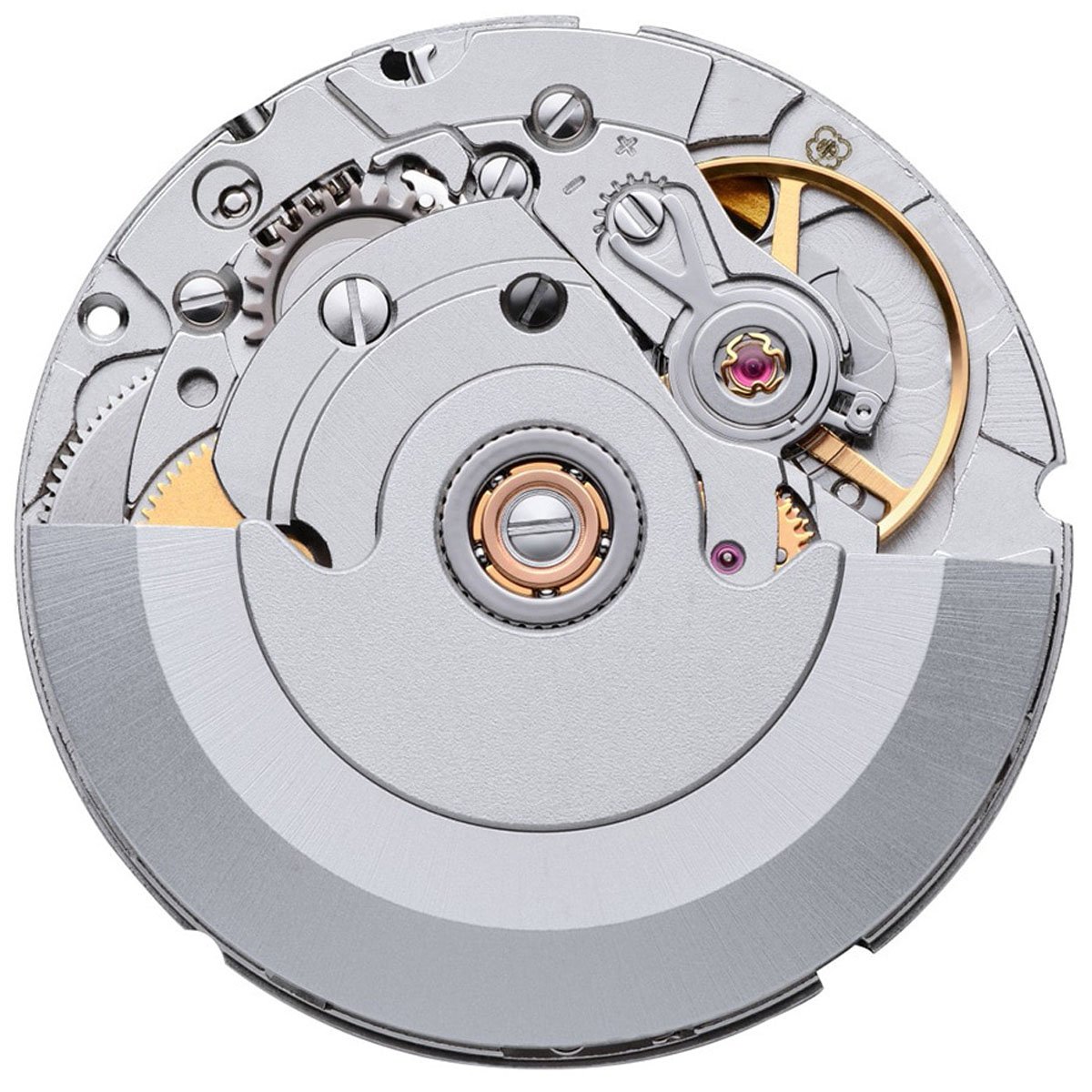
From Standard Movements and Manufacture Calibers
There is a wide spectrum between an off-the-shelf movement and a caliber developed entirely in-house. At the simplest level, brands may customize a standard movement cosmetically with a branded rotor, decorative finishing, blued screws, or engraving. These details can make a movement more attractive, but they do little to change its underlying mechanics.
The next step may involve finer regulation, stricter accuracy standards, or upgraded components. Some brands go considerably further, modifying the escapement, barrel, gear train, date mechanism, or automatic winding system. Additional functions can also be added to an existing base movement through a module. A chronograph, calendar, or GMT module may transform the capabilities of a proven caliber, but it does not automatically turn it into a manufacture movement.
For that reason, a proprietary caliber name tells you relatively little on its own. Some brands rename sourced movements even when the changes amount to little more than a customized rotor. Others substantially rework the architecture or commission key components exclusively for their use. The more useful question is not what the caliber is called, but what the brand has actually done to it: What is the underlying movement, and how extensively has it been modified?
A useful classification is:
Standard Caliber: Largely unchanged movement supplied by an external manufacturer.
Refined Caliber: Decorated, regulated, or fitted with selected brand-specific components.
Modified Caliber: Substantially altered on a technical level or enhanced with proprietary functions.
Exclusive Supplier Caliber: Produced exclusively for a single brand or corporate group.
Partner Development: Designed jointly with an external specialist.
Manufacture Caliber: Developed to a significant extent in-house or within the brand’s corporate group, with key components also produced internally.
The boundaries remain fluid.
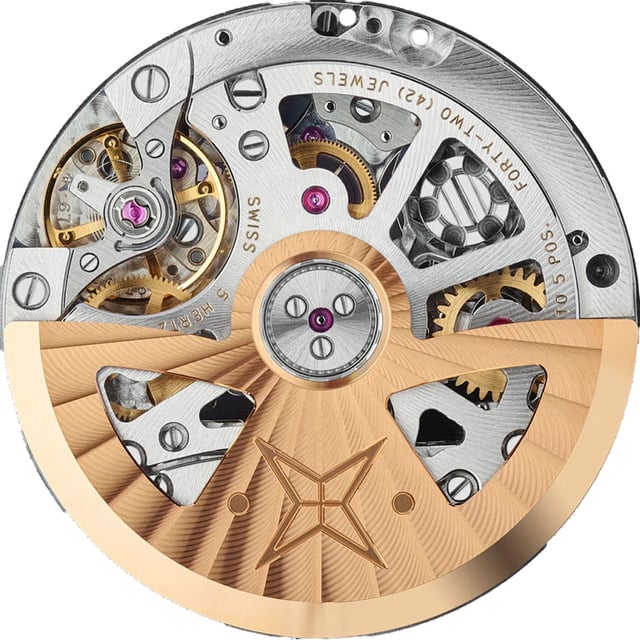
Vaucher: integrated chronograph caliber with 65-hour power reserve
Vaucher Manufacture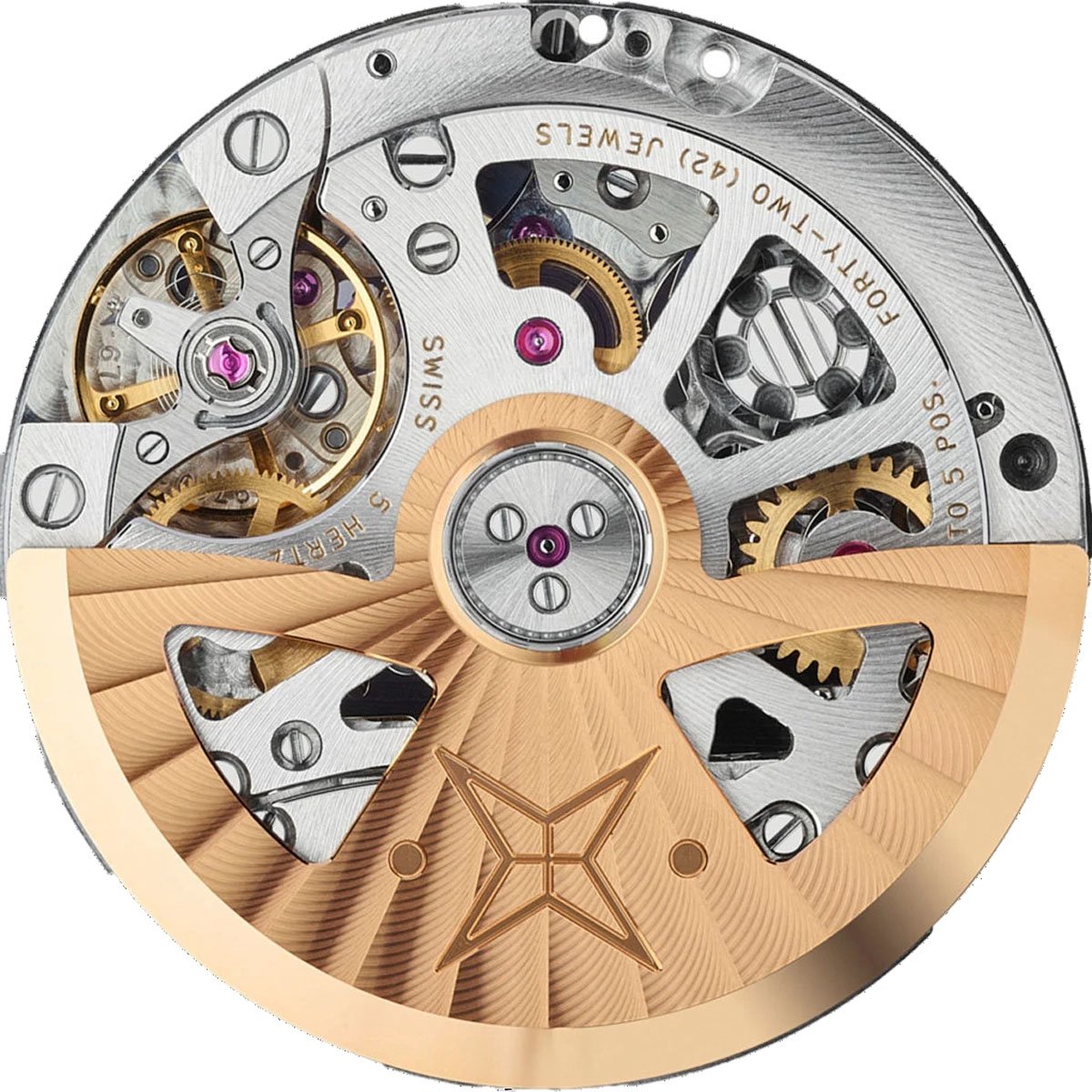
Which Movement Specialists Work Behind the Brands?
Much of the watch industry depends on movement specialists whose names rarely appear on the dial. In the high-volume segment, ETA and Sellita are joined by Miyota, part of the Citizen Group, and Time Module Ltd., which belongs to the Seiko Group. Both supply mechanical movements to a wide range of brands, with Time Module best known for its widely used NH series.
At the higher end of the market, Vaucher Manufacture in Fleurier develops and produces luxury movements for outside clients. Its portfolio ranges from traditional automatic calibers and micro-rotor movements to chronographs and tourbillons, with architectures that can be tailored to a brand’s specific requirements.
La Joux-Perret in La Chaux-de-Fonds also develops and manufactures movements for third-party brands. Its expertise spans automatic calibers, complications, and high-precision solar quartz movements. Breitling’s B21 tourbillon chronograph shows just how close such collaborations can become: Breitling openly credits La Joux-Perret as the specialist with which the movement was co-developed.
Geneva-based Agenhor focuses on bespoke complications and specialized movements, either adding proprietary mechanisms to existing calibers or developing entirely new architectures. Dubois Dépraz, based in Le Lieu in the Vallée de Joux, has long been known for add-on modules and chronograph mechanisms, but now also produces complete movements, including an integrated column-wheel chronograph. Soprod, headquartered in Les Reussilles near Tramelan, adds another option with Swiss-made industrial calibers, components, and customized solutions.
An exclusive movement from one of these specialists can be technically sophisticated, highly distinctive, and beautifully finished. But it is still not produced entirely within the watch brand’s own workshops. That is why labels such as “third-party movement” can be just as reductive as an overly broad use of “manufacture caliber.” In many cases, terms such as co-developed caliber, exclusive supplier movement, or specialist-produced exclusive caliber are more accurate.
Corporate Manufacture and Sister Companies
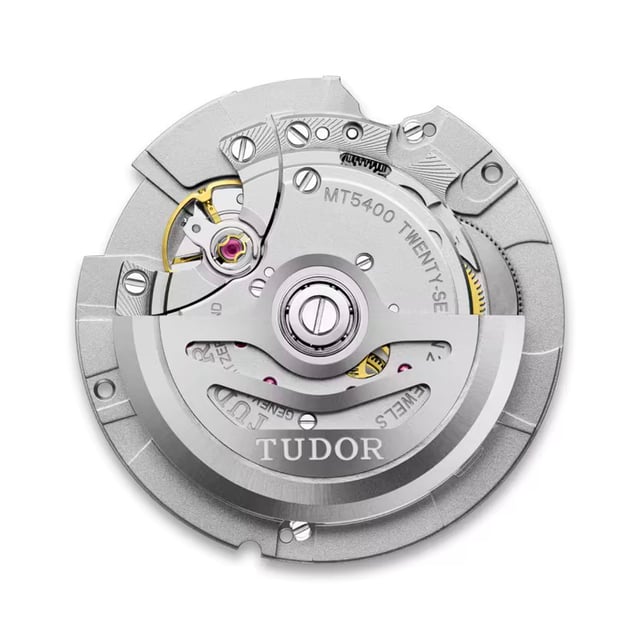
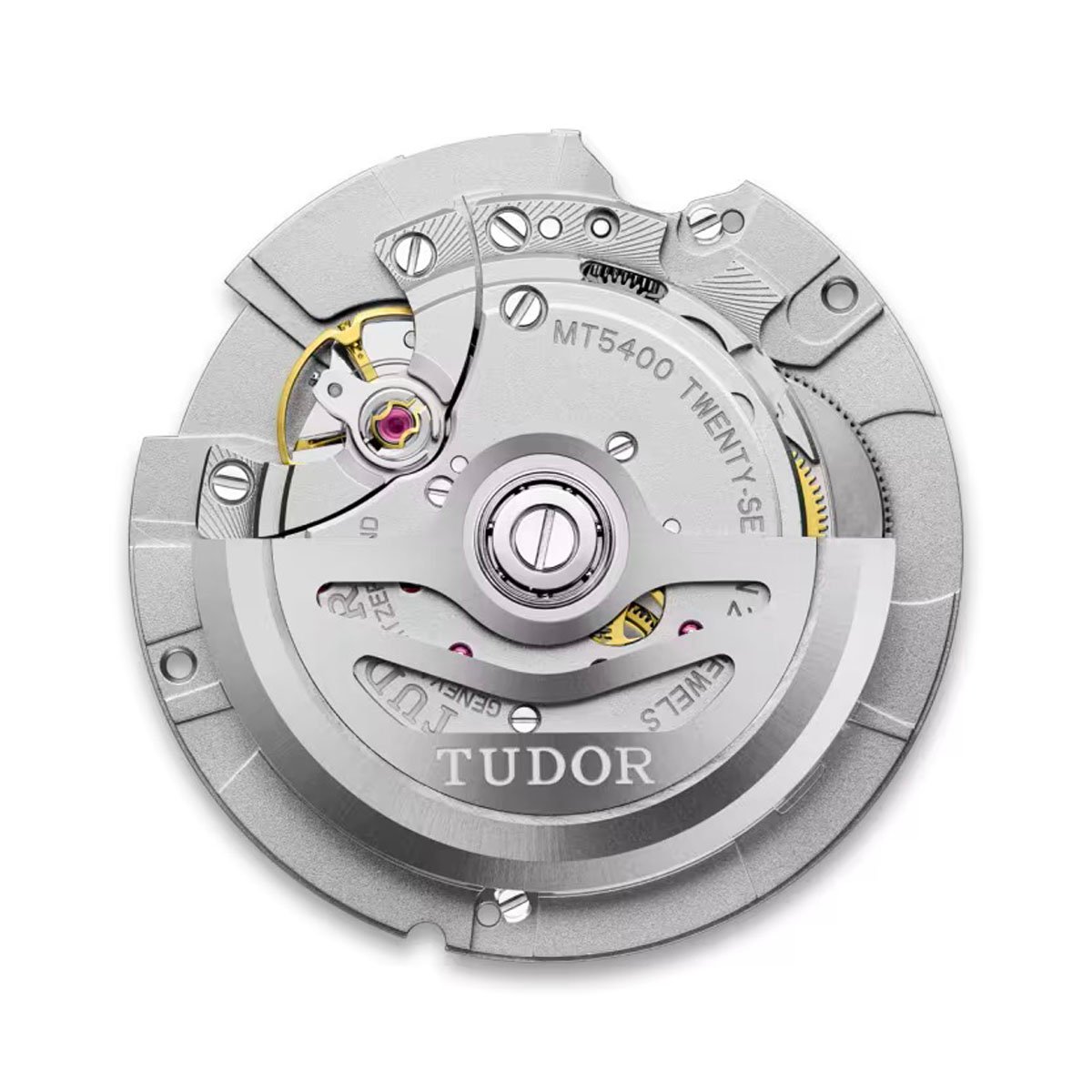
Another common setup is a movement manufacturer that operates separately from the watch brand but belongs to the same corporate group or maintains close ties to it. ETA, for example, is part of the Swatch Group and now supplies primarily the group’s own brands, while also producing exclusive calibers for selected companies within the portfolio. Kenissi follows a different model. It grew out of Tudor’s effort to build its own industrial movement-making expertise and has been developing and producing calibers since 2016. In addition to Tudor, Kenissi also supplies outside partners including Chanel, which owns a 20-percent stake in the company, as well as Bell & Ross, Breitling, Fortis, Norqain, and TAG Heuer.
Is a Manufacture Movement Better?
There is no simple answer. A manufacture caliber carries a special appeal because it does more than power the watch, it becomes part of the watch’s identity. At its best, the movement is conceived together with the case and display, creating a level of coherence that is difficult to achieve with an off-the-shelf caliber.
At the top end of watchmaking, especially in haute horlogerie, proprietary or brand-exclusive movements are now largely expected. Buyers spending five or six figures typically want more than a precious-metal case and an elaborate dial. The mechanics should feel just as individual. A movement can express a brand’s technical and aesthetic identity through its bridge architecture, winding system, escapement, or the way a complication is constructed and displayed.
Developing a movement specifically for a watch also gives designers far greater freedom. Diameter, thickness, and component layout can be tailored to the overall design instead of forcing the watch around the fixed architecture of an existing base caliber. This becomes especially important with complex mechanisms such as perpetual calendars, minute repeaters, tourbillons, and split-seconds chronographs, where a proprietary or exclusive construction often reflects the brand’s broader horological ambitions.
Finishing is another area where the difference can become obvious. High-volume movements may be attractively decorated with Geneva stripes, perlage, or sunburst finishes, but haute horlogerie often goes much further. Bridges may be beveled by hand, edges polished, screw heads black-polished, and recesses carefully finished. Sharp interior angles, which cannot be achieved in the same way by machine, are particularly prized as evidence of skilled handwork. On the most elaborate calibers, even surfaces and components hidden after final assembly may receive the same meticulous treatment. At the highest level, there are few practical limits. Some manufacture movements are produced in tiny series with an extraordinary amount of work carried out by hand.
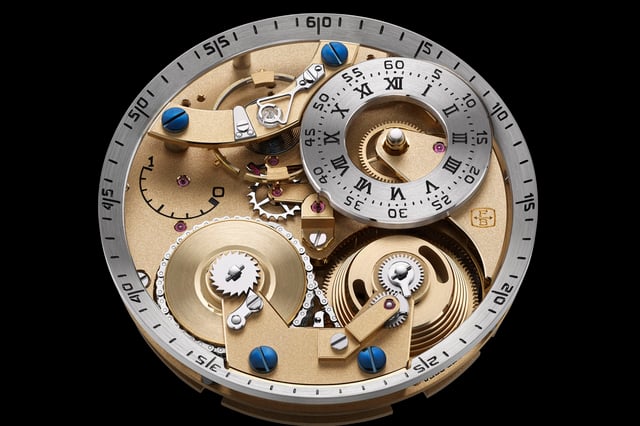
Fully handcrafted production: the work of "Naissance d'une montre 3" by Ferdinand Berthoux
Ferdinand Berthoux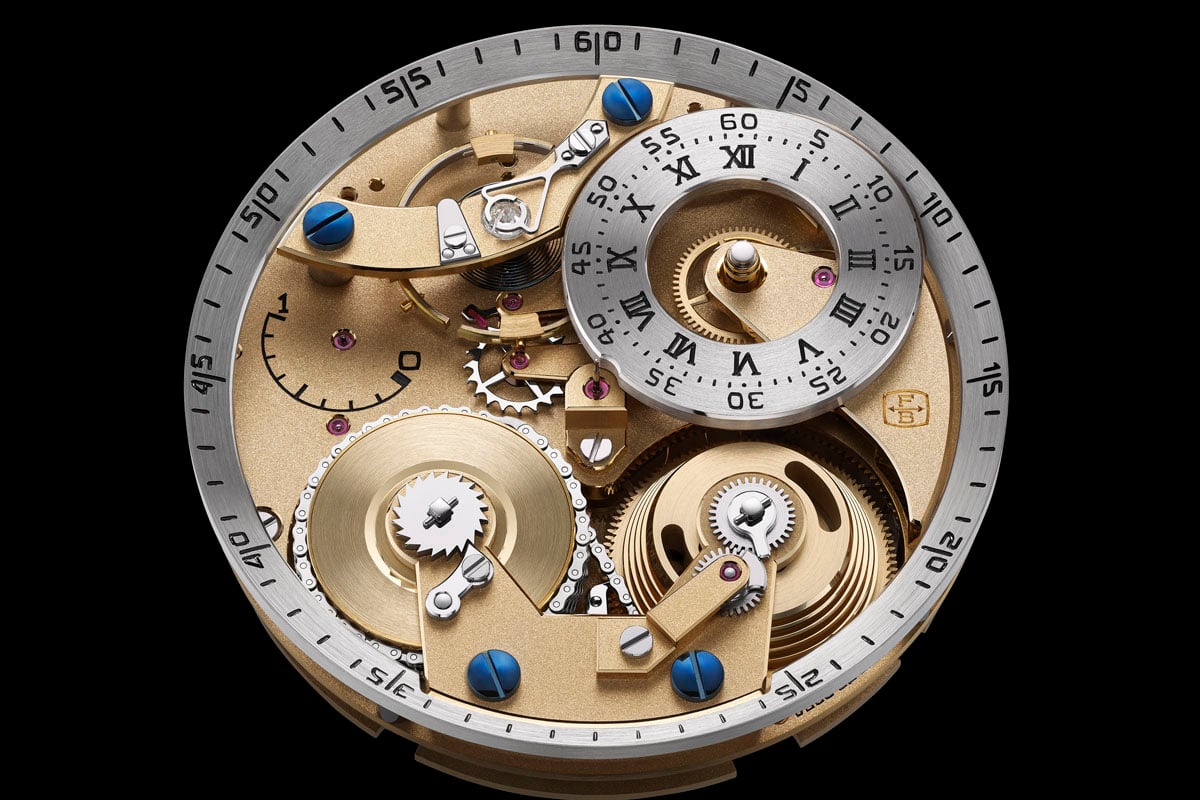
A manufacture movement can become more than the engine of a watch. In the best examples, it is part of the visual and emotional appeal. Through a sapphire caseback, collectors can see how movement designers, watchmakers, finishers, and engravers have contributed to the final result. Subtle variations, traces of handwork, and the time invested in finishing all become part of what makes the watch special. That level of craftsmanship comes at a cost. Developing a proprietary caliber can take years and require major investment. Hand-finishing limits production, while complex constructions and specialized components can make servicing more expensive. Spare parts, dedicated tools, and the necessary expertise may also be available only through the brand’s own service network. An in-house movement is not automatically more accurate or more reliable than a proven high-volume caliber that has been refined over decades. Its value lies elsewhere: in technical independence, exclusivity, distinctive architecture, and the ability to make the movement itself an expression of the brand. For a robust everyday watch, a proven industrial movement may be the more practical choice. In a high-end or horologically ambitious watch, however, a manufacture caliber can add a level of character and craftsmanship that goes far beyond basic timekeeping.
What To Look For In A Watch Movement?
A caliber name tells you only so much. What matters more are the details: power reserve, frequency, magnetic resistance, shock protection, accuracy, service intervals, and long-term serviceability. The movement should also make sense for the watch. A slim manual-wind caliber can be an ideal match for a dress watch, while a robust automatic movement with readily available parts may be the smarter choice for an everyday sports watch.
With a manufacture movement, it is worth looking beyond the label. Did the brand actually design the caliber? Which components does it produce in-house? Is the movement exclusive to the brand, and will it remain serviceable years from now? With a modified standard caliber, the same principle applies: what has actually changed beyond the finishing and a branded rotor?
And a proven supplier movement should not be viewed as second choice. For someone who plans to wear a watch for decades, wants the option of independent servicing, and prefers predictable maintenance costs, an established caliber can be a major advantage. Collectors who value proprietary architecture, technical originality, or elaborate hand-finishing, on the other hand, may find more to appreciate in a manufacture or exclusive movement.
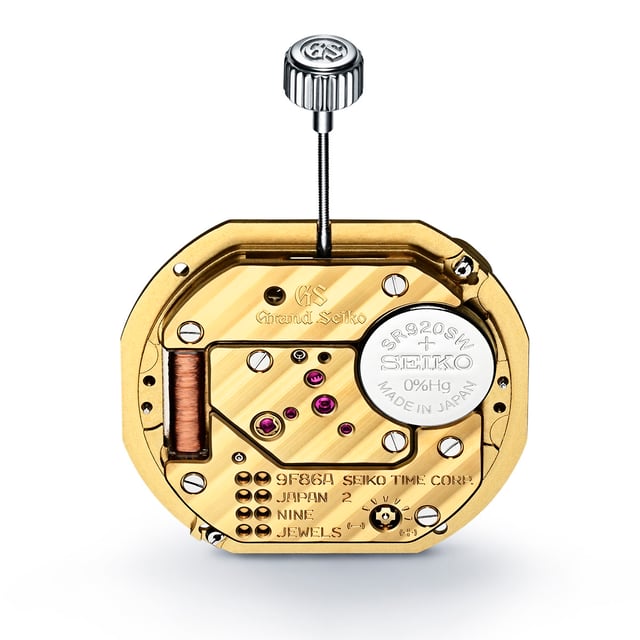
Grand Seiko: Caliber 9F86, high-precision quartz movement with GMT function
Grand Seiko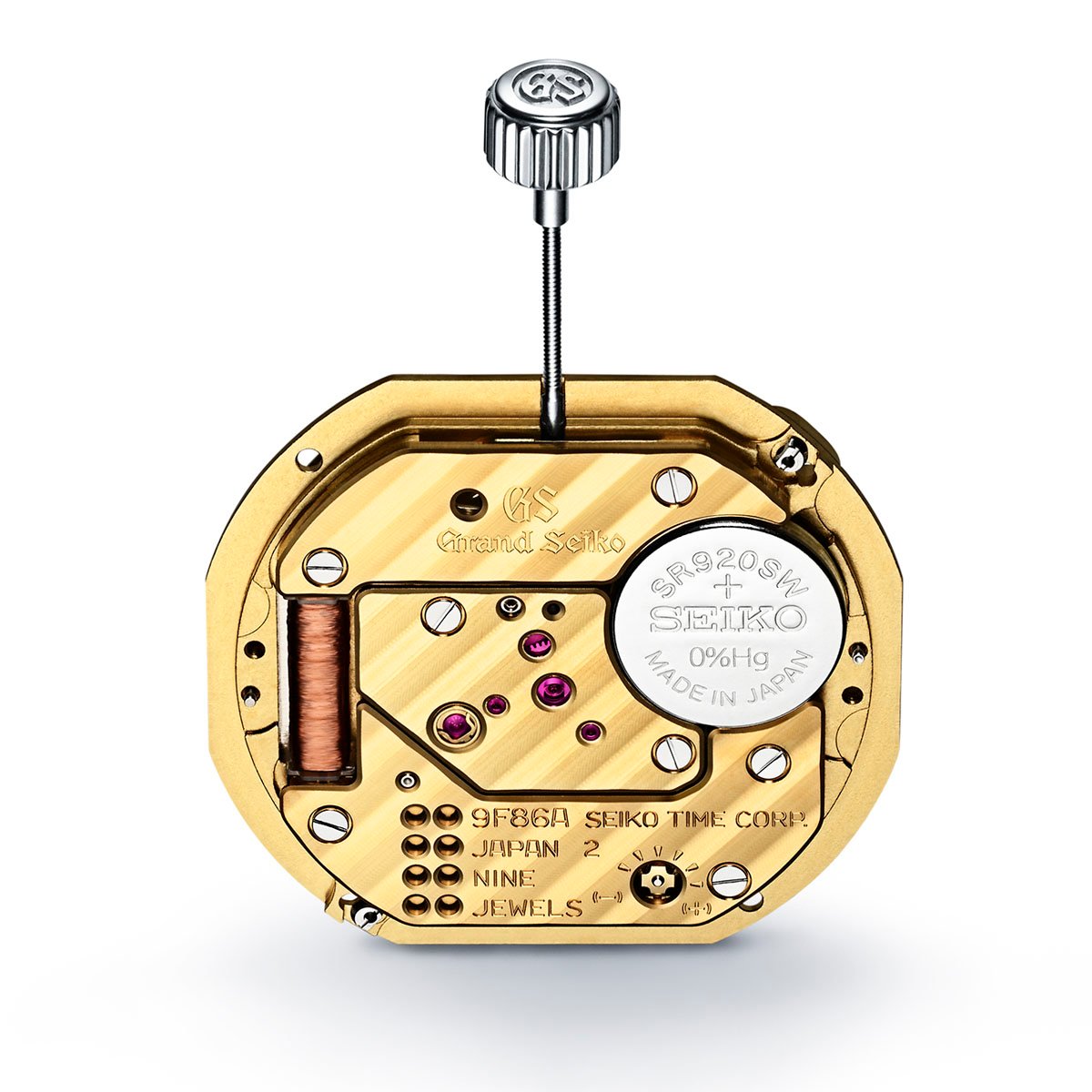
Quartz, Solar, and Radio: the Alternatives
In a quartz movement, a battery supplies electrical energy. A quartz crystal typically oscillates at 32,768 Hz; an integrated circuit derives the timekeeping signal from this frequency and uses a motor to drive the gear train and hands. Because this electronic reference oscillates far faster than the balance wheel of a mechanical watch, quartz watches are generally much more accurate. In addition to their far smaller rate deviations, quartz calibers offer high resistance to shocks, slim construction, and low maintenance costs. With simpler movements, however, the entire caliber is often replaced rather than repaired. High-end quartz movements demonstrate that the technology is not confined to entry-level watches: they can feature temperature compensation, refined finishing, and construction designed for long-term serviceability.
Solar watches are essentially quartz watches whose energy storage system is charged by light. A solar cell beneath or integrated into the dial converts sunlight and artificial light into electrical energy. Today, the technology no longer needs to appear as an obvious solar panel. Many manufacturers conceal the cell beneath a light-permeable dial. In the Junghans Max Bill Mega Solar, for example, a curved solar cell sits beneath the translucent dial, allowing the watch to retain much of its characteristic minimalist design. Citizen deliberately takes the opposite approach with the Eco-Drive Photon, introduced in 2026 to mark the 50th anniversary of Eco-Drive. Its multilayer metal dial incorporates openings that make the passage of light a visible part of the design. The new Eco-Drive Caliber E036 can run for up to 365 days on a full charge. Regular battery changes are unnecessary in a solar watch, although the rechargeable energy-storage cell also ages and may eventually need replacing after many years.
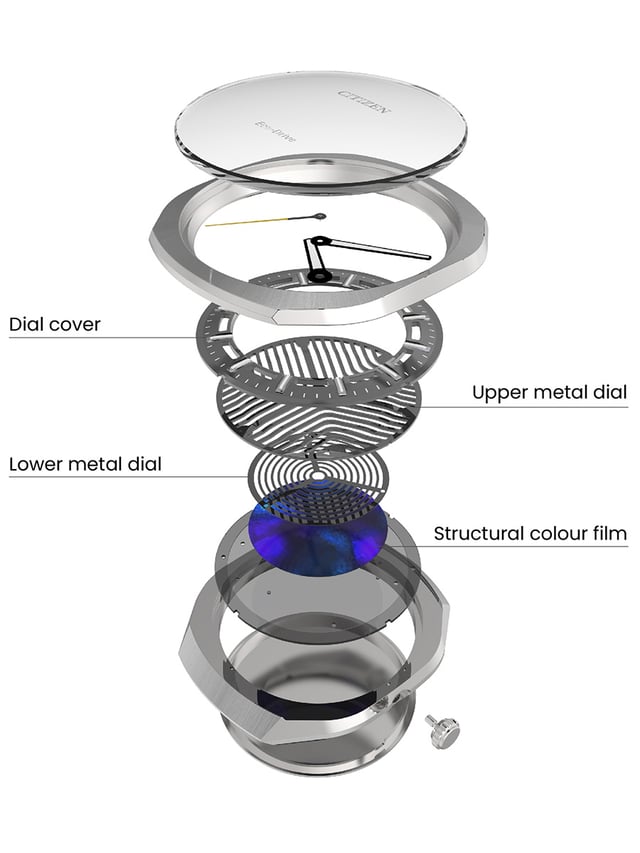
Citizen: Eco Drive Photon
Citizen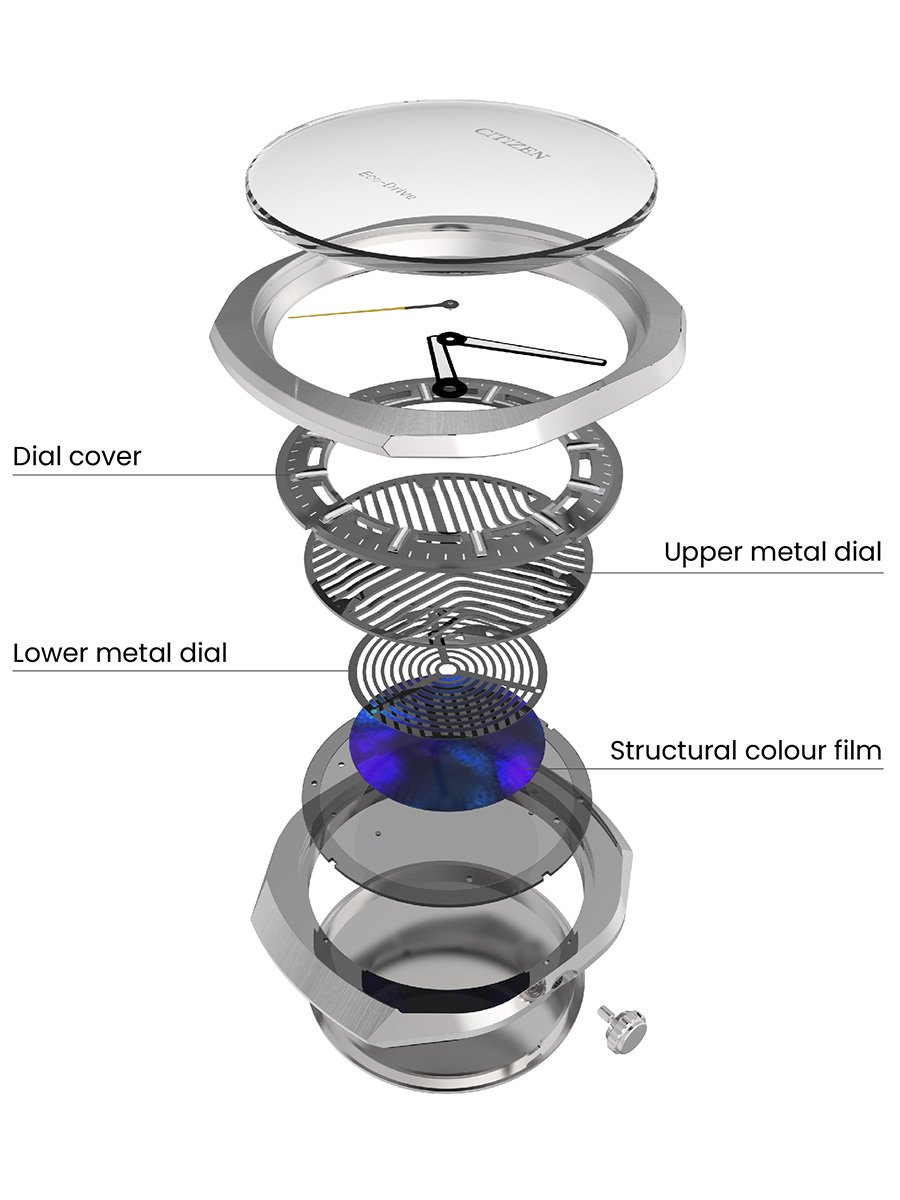
Radio-controlled watches pair a quartz movement with a receiver that picks up official time signals. When a signal is available, the watch automatically corrects the time and often adjusts the date and daylight-saving time as well. If reception is unavailable, it simply continues running as a conventional quartz watch. More advanced systems can synchronize time and location data via GPS or a connected smartphone.
Seiko’s Spring Drive technology sits in a category of its own. Like a mechanical watch, it draws its energy from a mainspring. But instead of relying on a traditional escapement, Spring Drive uses a quartz oscillator and electronic regulation to control the rate. At the end of the gear train is a smooth, continuously rotating glide wheel. Powered by the unwinding mainspring, its rotation generates the small amount of electricity needed to run the quartz oscillator and integrated circuit. The system constantly compares the glide wheel’s speed with the quartz reference and uses electromagnetic braking to regulate it when necessary. No battery is required. Because there is no conventional escapement repeatedly stopping and releasing the gear train, the seconds hand does not move in individual steps. Instead, it glides smoothly and almost silently around the dial, a visual signature unique to Spring Drive. The result is a system that combines the mechanical energy of a mainspring with the precision of electronic regulation.
This article was first published by WatchTime Germany.
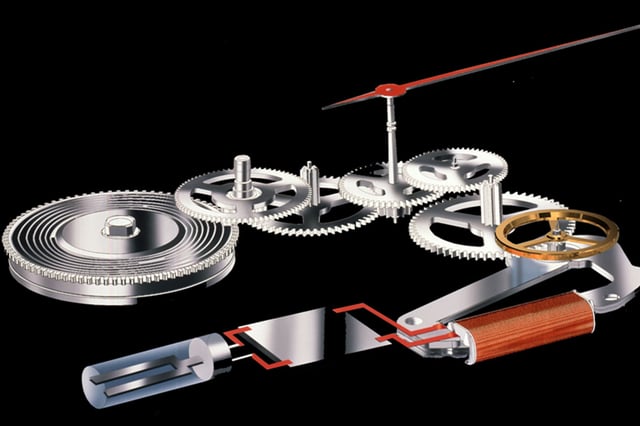
Grand Seiko Spring Drive: the Tri-Synchro Regulator with the toothless glide wheel (far right)
Grand Seiko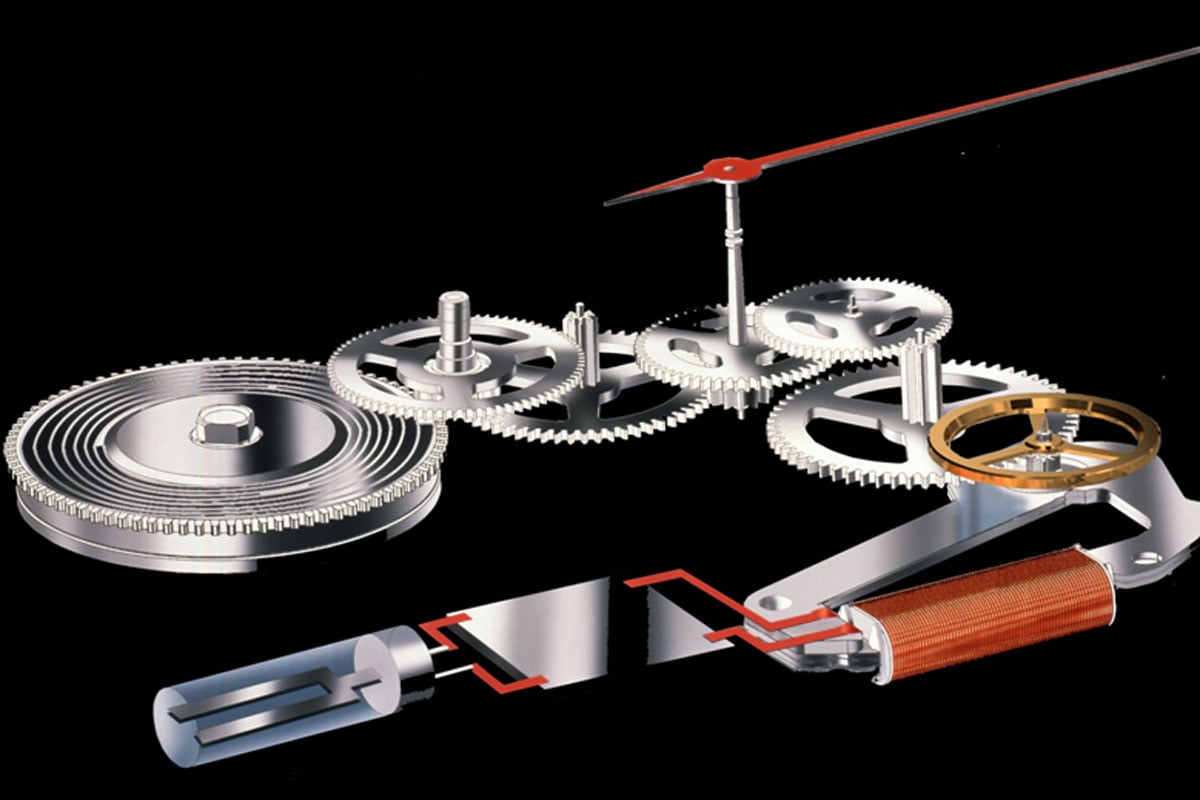
- What Is a Mechanical Movement?
- Manual-Wind or Automatic: What Is the Difference?
- What Does "Manufacture Movement" Mean?
- Mass-Produced Movements by Eta and Sellita
- From Standard Movements and Manufacture Calibers
- Which Movement Specialists Work Behind the Brands?
- Corporate Manufacture and Sister Companies
- Is a Manufacture Movement Better?
- What To Look For In A Watch Movement?
- Quartz, Solar, and Radio: the Alternatives