Of Earth and Space: Spotlight on Hard-Stone and Meteorite Dials
One Way to Steal the Limelight
Article written by Roberta Naas
Hard-stone and meteorite dials are a mesmerizing blend of natural wonders and meticulous craftsmanship — a rarity in the horological world and a coveted pinnacle. Found only in the collections of the finest watchmakers, these dials offer a breathtaking canvas that showcases the beauty of rare materials.
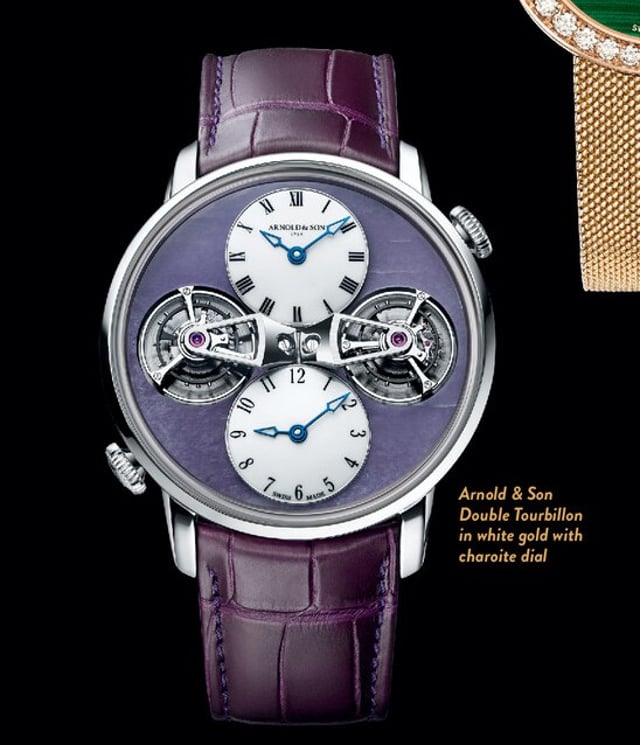
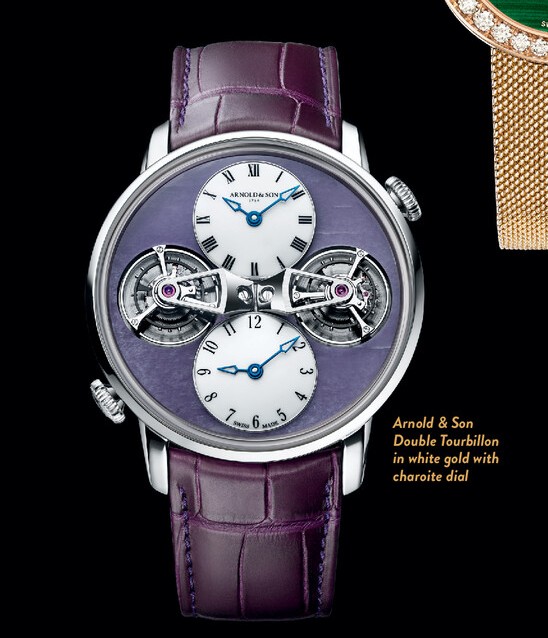
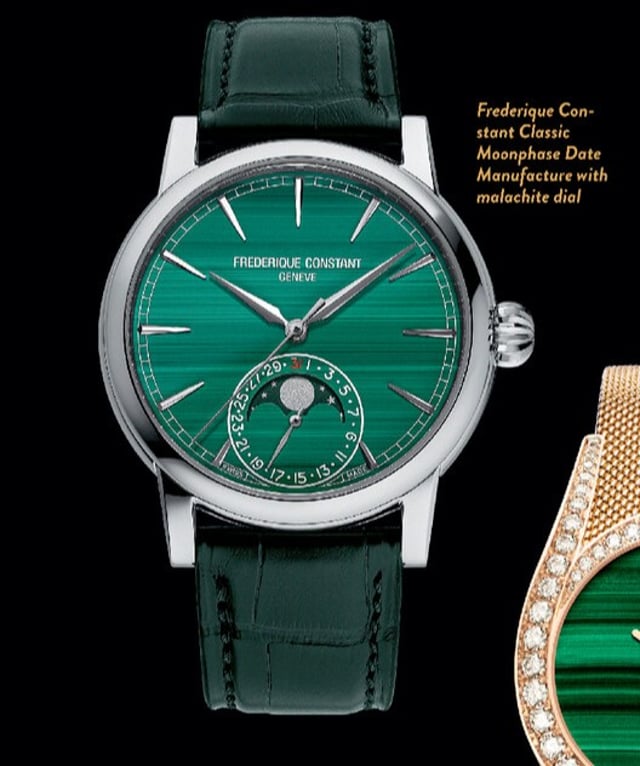
Whether it’s the deep blues of lapis lazuli, the swirling greens of malachite, or the cosmic allure of meteorites, each exclusive dial is a unique masterpiece of nature born from the Earth or from the skies. The rarity of these materials, combined with the immense skill required to transform them into timepiece dials, makes these watches extraordinary, as well as timeless.
The journey of a hard-stone or meteorite dial begins with the search for the raw material itself, often found in remote and extreme environments. Meteorite fragments, for example, land in frozen wastelands or arid deserts after traveling millions of miles through space, while precious stones are mined from the Earth’s depths in mountains, valleys, and rivers. Their origins alone render them exceptionally desirable for luxury watch dials.
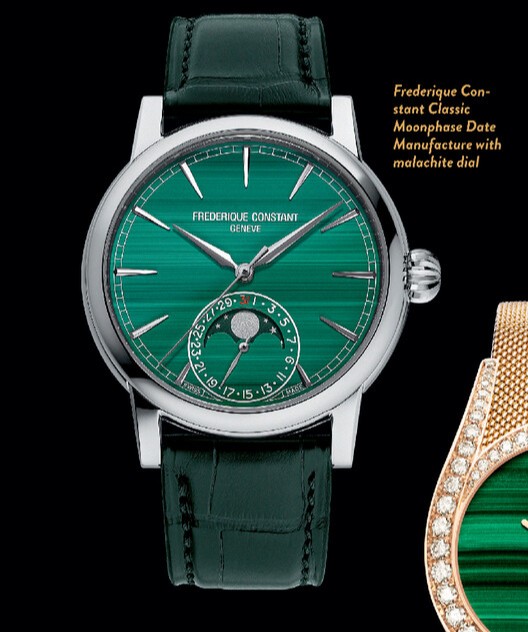
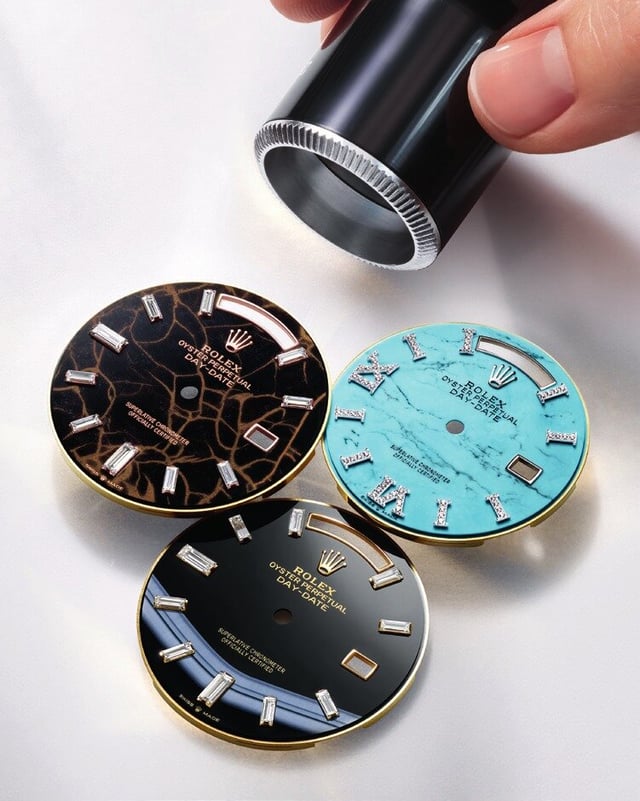
The making of specialty dials is so important to Rolex, which produces both hard-stone and meteorite dials, that the company established a separate creation process it calls “art cadranier,” and it stocks its ranks with gem-setters, electroplaters, enamellers, engineers, and a host of other skilled craftsmen.
In an interview published on the Rolex press site, David Riboli, in charge of the watch prototype department at Rolex, commented, “It is often said that the dial is the face of the watch and is what gives a particular model its individual personality. This is even more true in the case of dials made of natural stone … because materials like these inherently mean that each dial is unique.”
Challenges of Making Hard-Stone Dials
A pioneer in creating hard-stone dials, Piaget has led the way for decades. In fact, in the 1960s and ’70s, Piaget regularly embraced bold gold cuff watches with dials made of tiger’s eye, malachite, and lapis lazuli, as well as other precious stones.
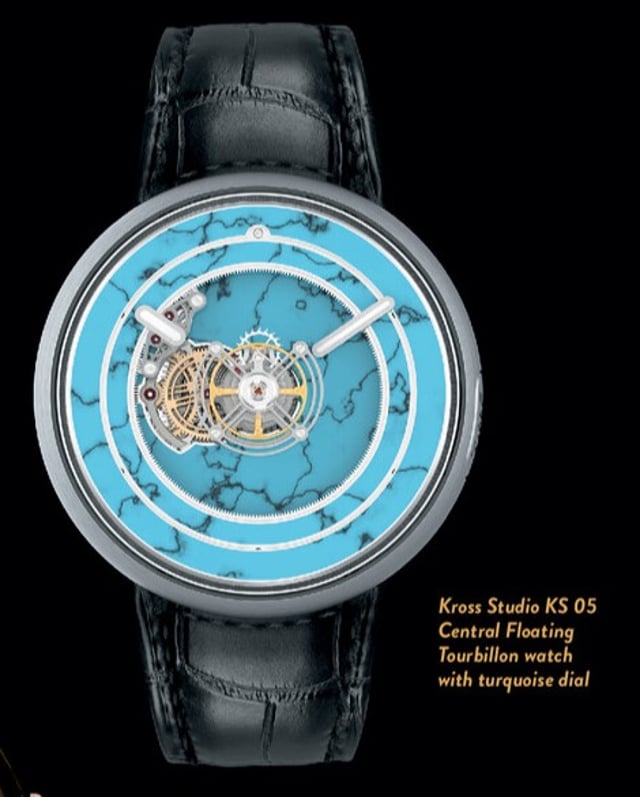
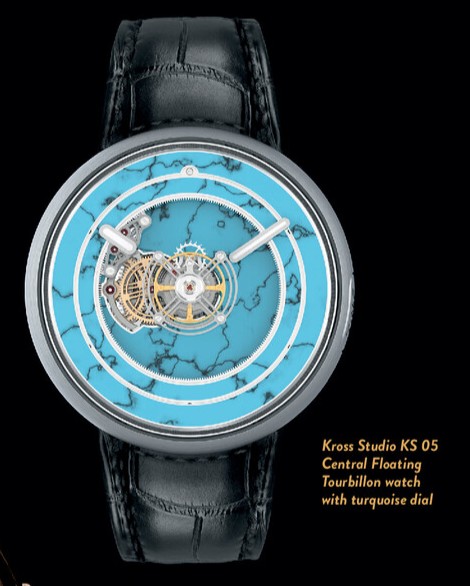
Today, those historically important stones make incredible dials, but adventurous watch brands also look to other hard stones for diversity in color and veining. Stones that translate beautifully into dials now include lapis lazuli, malachite, tiger’s eye, onyx, coral, opal, turquoise, carnelian, aventurine, sodalite, ruby, and even recent premieres like charoite and various jades and jadeites.
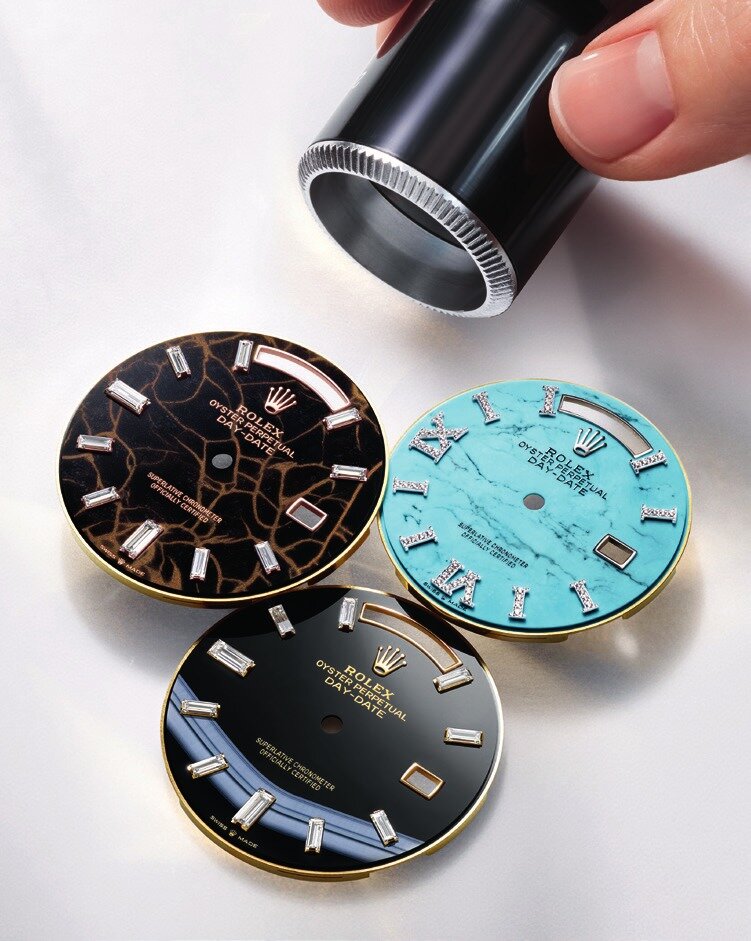
Once discovered, these roughs are entrusted to expert gem cutters who begin the delicate process of transforming raw stone into watch dials. The stone must be sliced into slabs, then cut again into thinner sheets. From there, the sheets of stone eventually land in the hands of master dial makers, where the thin slabs are cut again into impossibly thin — mere fractions of a millimeter thick — individual disks destined for dials.
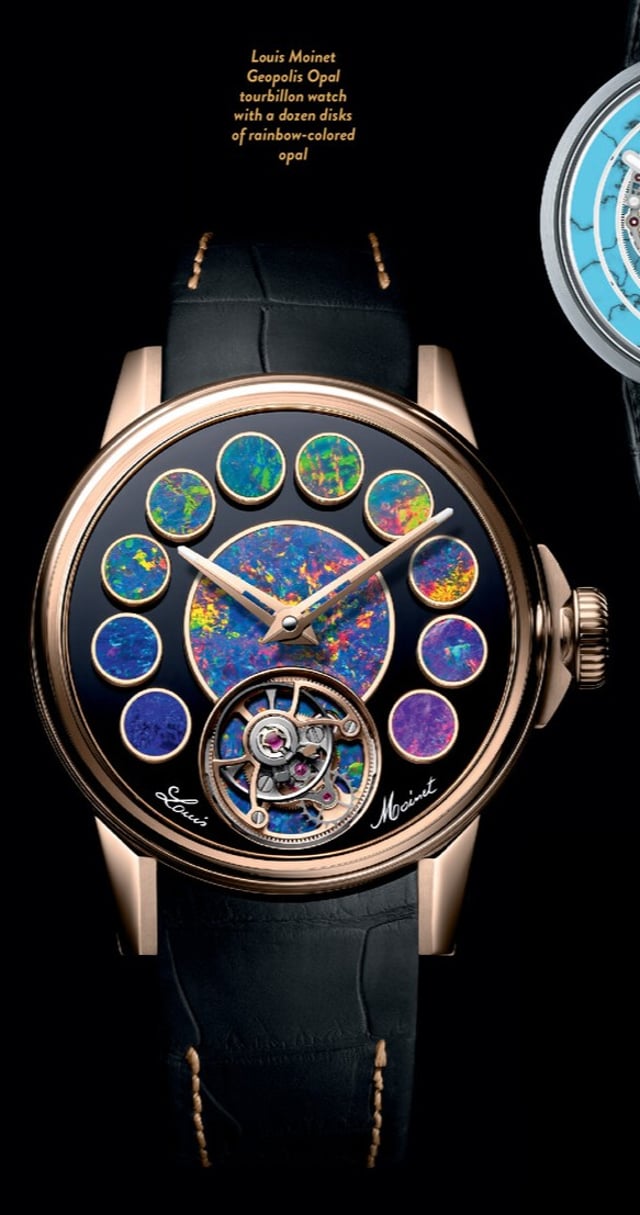
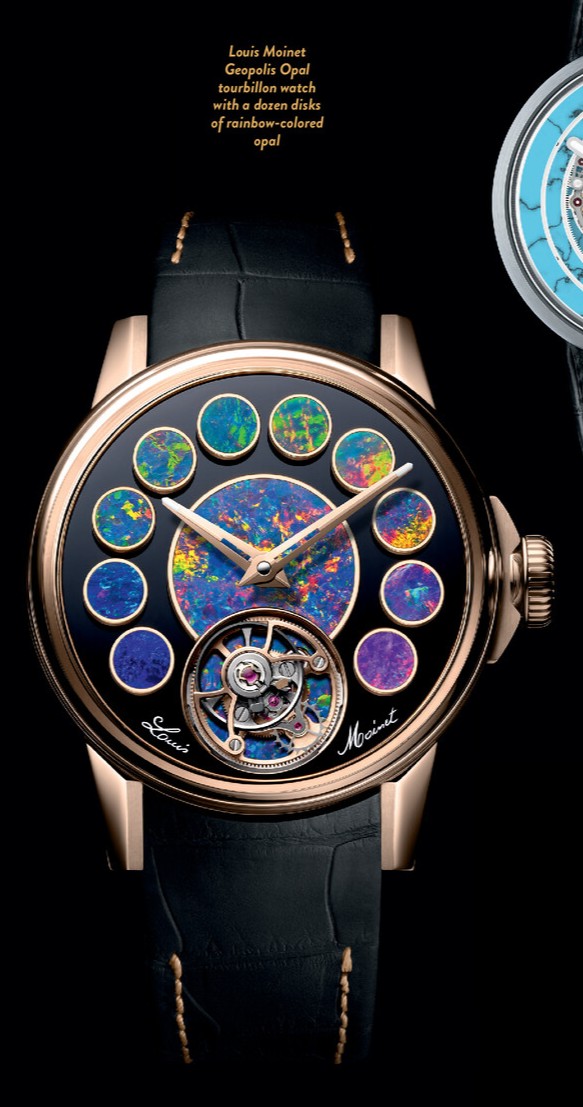
Jean-Marie Schaller, founder and creative director of Louis Moinet, entrusts the cutting of rare minerals to specialist Daniel Haas, who travels the world looking for the highest-quality specimens. Such is the case for the Louis Moinet Geopolis Opal watch, which incorporates a dozen opal disks arranged in a painter’s palette of colors.
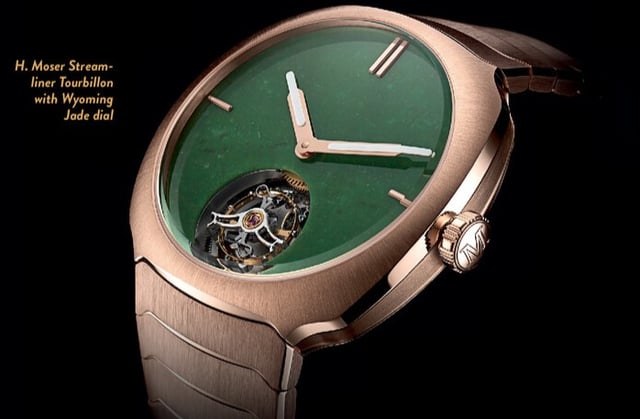
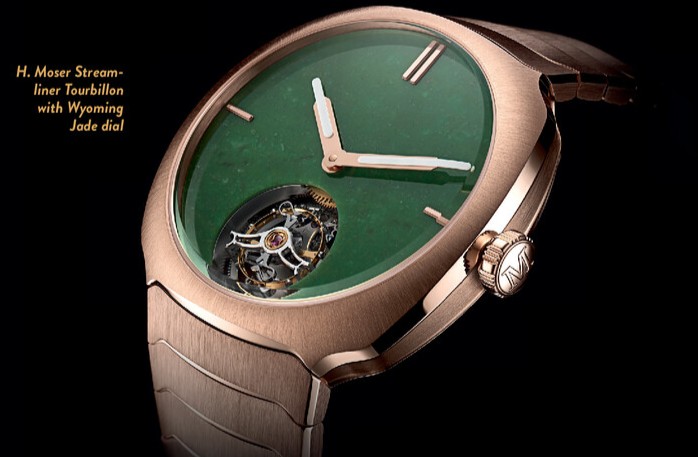
Independent Swiss brand H. Moser & Cie. recently released its Streamliner Tourbillon Concept Wyoming Jade watch after carefully selecting each piece of jade for color and quality. The cutters utilized CNC technology in a “liquid” environment to reduce stress and breakage when cutting the final 1-mm-thick slabs, which were then cut into round disks for dials.
Typically, when using hard stone for dials, round is the first shape choice simply because it is deemed the “easiest” to cut. But these dials are anything but easy to complete. Precision is everything. Every slab must be cut into perfect circles, ovals, squares, rectangles, or other shapes to fit the watch.
After cutting, polishing follows — revealing the stone’s natural beauty. But the process is fraught with risks. The slightest scratch can render a dial useless. For this reason, stone dials are often polished in dust-free, environmentally controlled atmospheres and then carefully glued to metal plates before further milling and refinement.
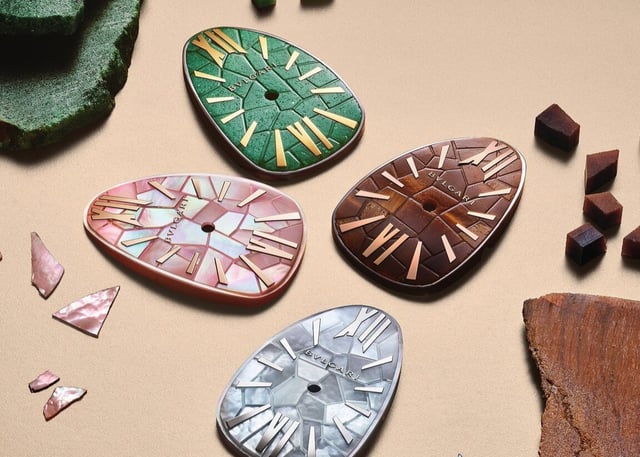
Some brands take this a step further with marquetry dials made of numerous tiny shards of stone. Bulgari, for example, used tiger’s eye and green aventurine for its Serpenti Across the Seasons collaboration with architect Tadao Ando, evoking nature’s rhythms through stone-based dial art.
The Making of Meteorite Dials
As alluring as hard-stone dials are, those using meteorites are perhaps even more so. Some feel that a watch with a meteorite dial represents the ultimate luxury, since the material hails from outer space and is extremely rare.
Over millions of years, meteorites cool and form unique crystallization patterns known as Widmanstätten patterns — geometric structures that cannot be replicated on Earth.
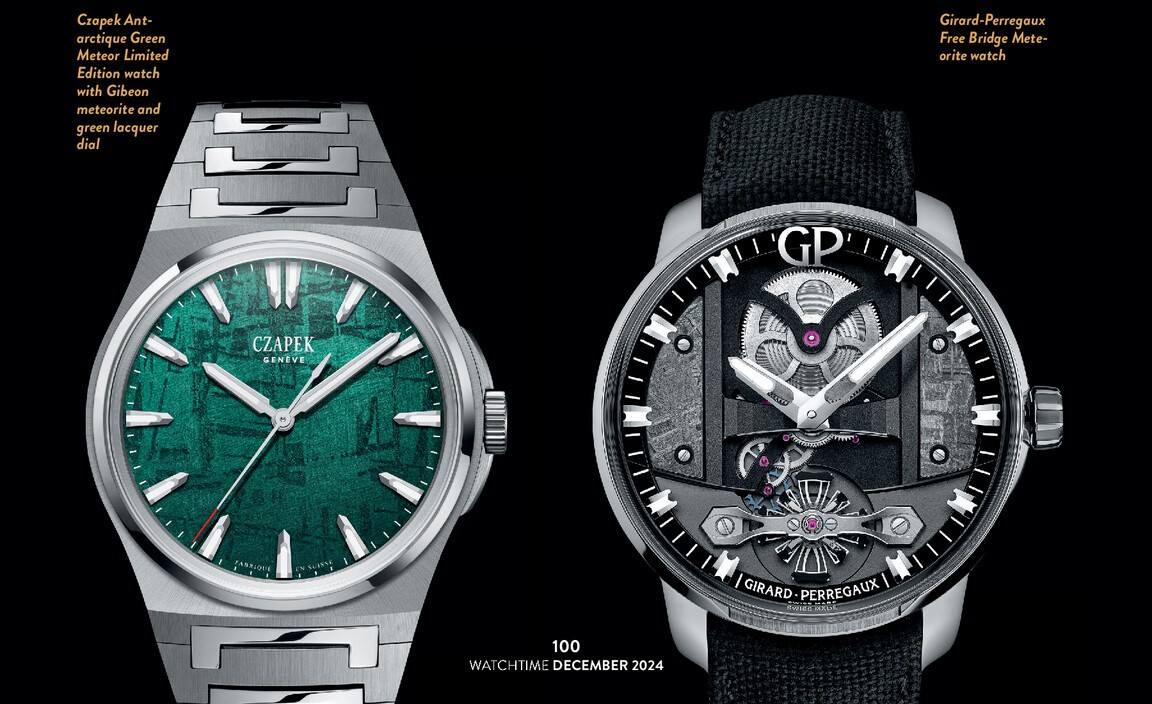
One of the most commonly used meteorites is the Gibeon meteorite, which fell in Namibia roughly 600 million years ago. Brands such as Louis Moinet and Girard-Perregaux have used it extensively.
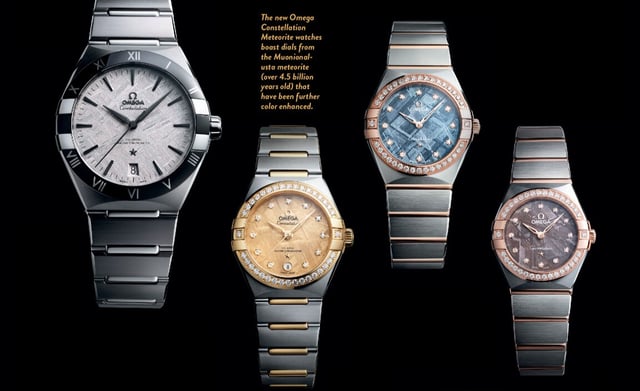
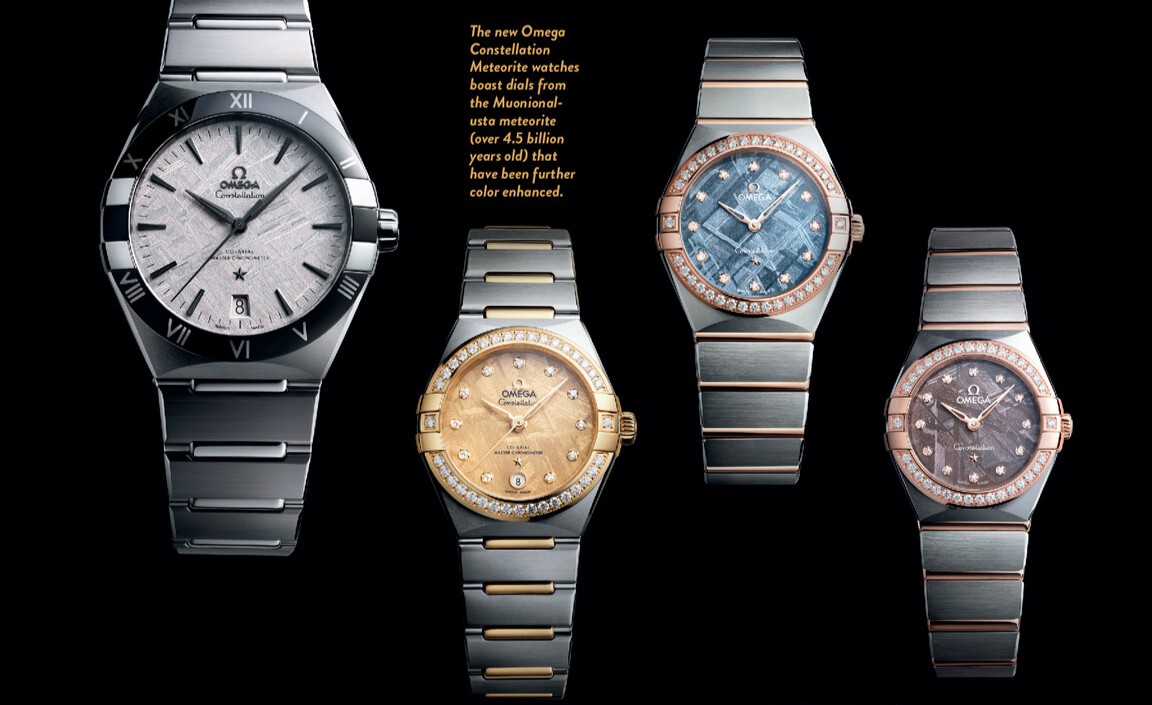
Omega, however, turned to the Muonionalusta meteorite — potentially the oldest known meteorite on Earth — for its Constellation Meteorite collection. Meteorite is notoriously difficult to work with, requiring electro-erosion cutting, diamond tools, and chemical treatments to reveal and preserve its structure.

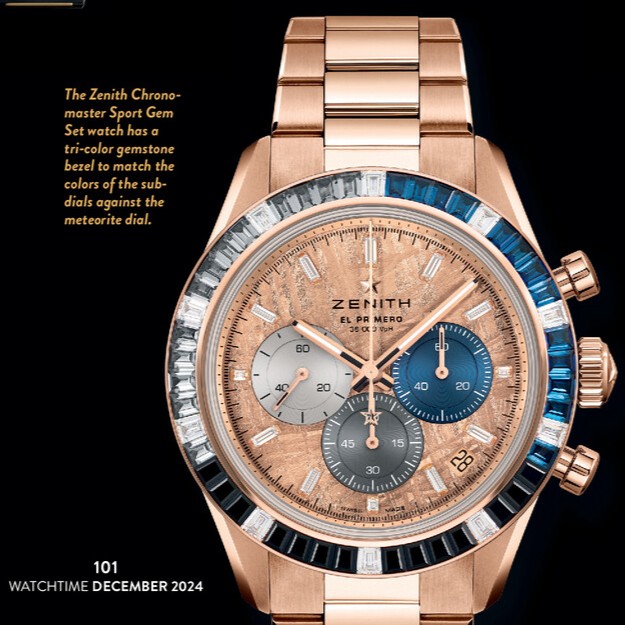
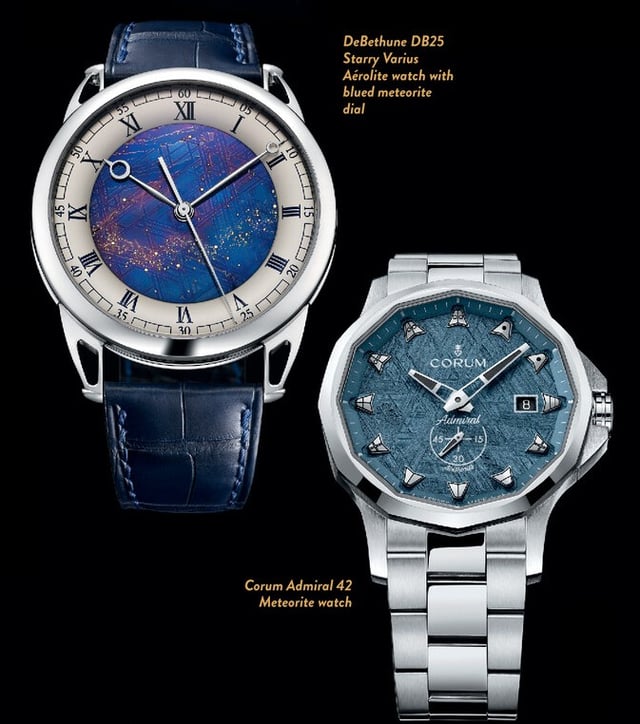
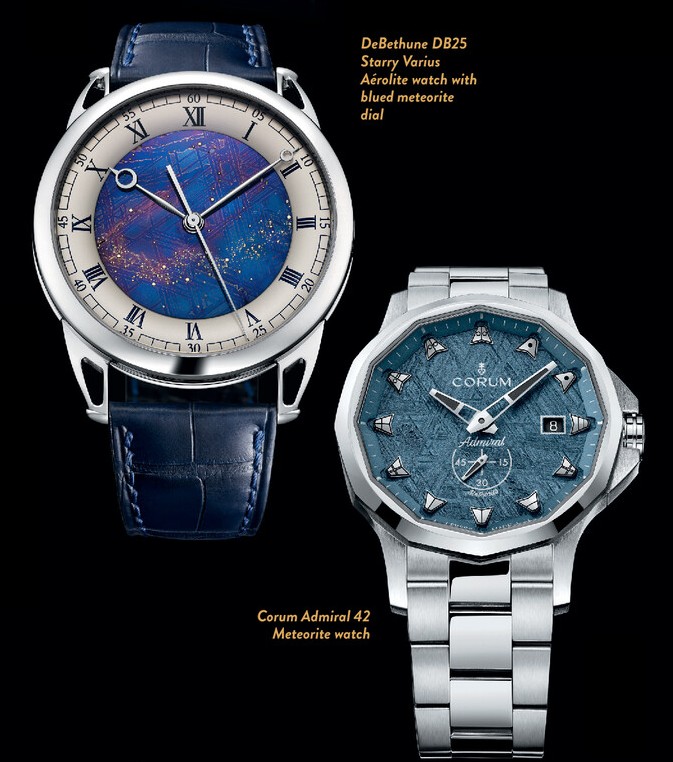
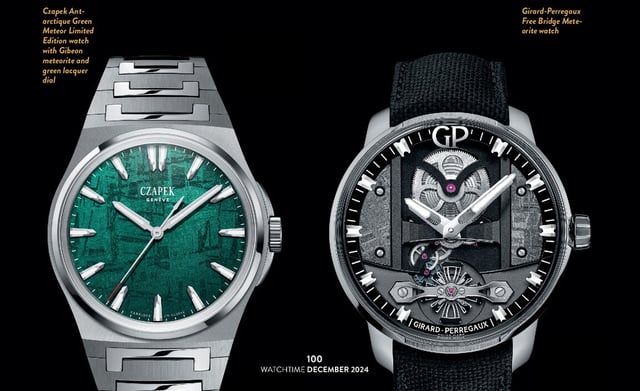
Brands like Czapek and De Bethune have gone even further, adding color through lacquer, hand guilloché engraving, and heat bluing to create dramatic, space-inspired effects. Zenith, too, enhanced the natural beauty of meteorite with gold tones and diamond-set markers in its Chronomaster Sport Gem-Set.
All of the painstaking steps involved in creating these exclusive and beautiful dials are a testament to the patience and expertise of the artisans involved. Combined with the rarity of the materials and the uniqueness of each dial, these watches command a premium — but when executed flawlessly, they remain among the most compelling triumphs of watchmaking craftsmanship.
This article originally appeared in the September / October issue of WatchTime Magazine. To subscribe, click here.