14 Milestones That Shaped Omega Watch History
From the first Omega caliber to James Bond and the Ultra Deep
Omega has repeatedly shaped its history with watches that set new standards in technology, design, or historical significance. Some marked the beginning of entire collections, while others introduced new movement technology or became famous through their use under extreme conditions. From the 19-line pocket watch of 1894 to the Speedmaster and Seamaster, the Co-Axial escapement, the Master Chronometer, and the extreme dive watch Ultra Deep, these milestones show how Omega has continued to evolve.
1894: First Pocket Watch with an “Omega” Caliber
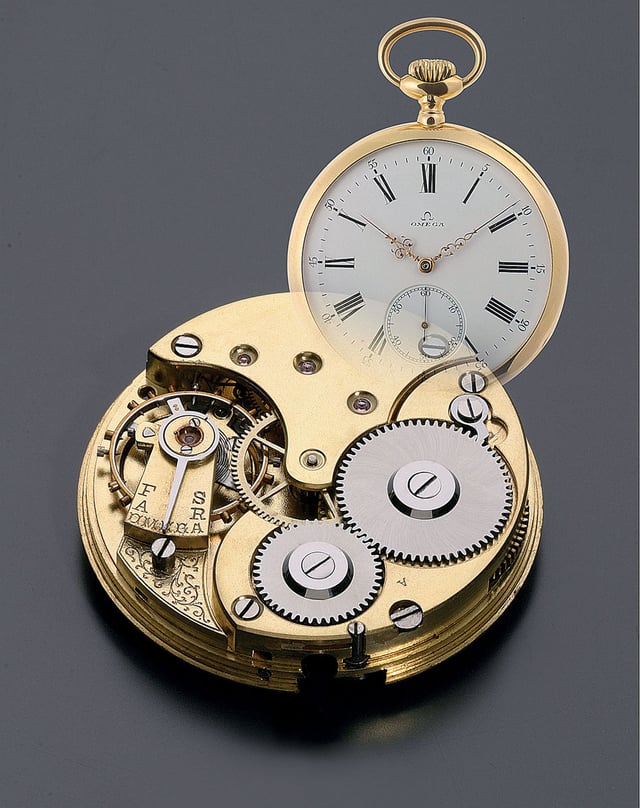
Omega: Pocket watch with caliber "Omega" from 1894
Omega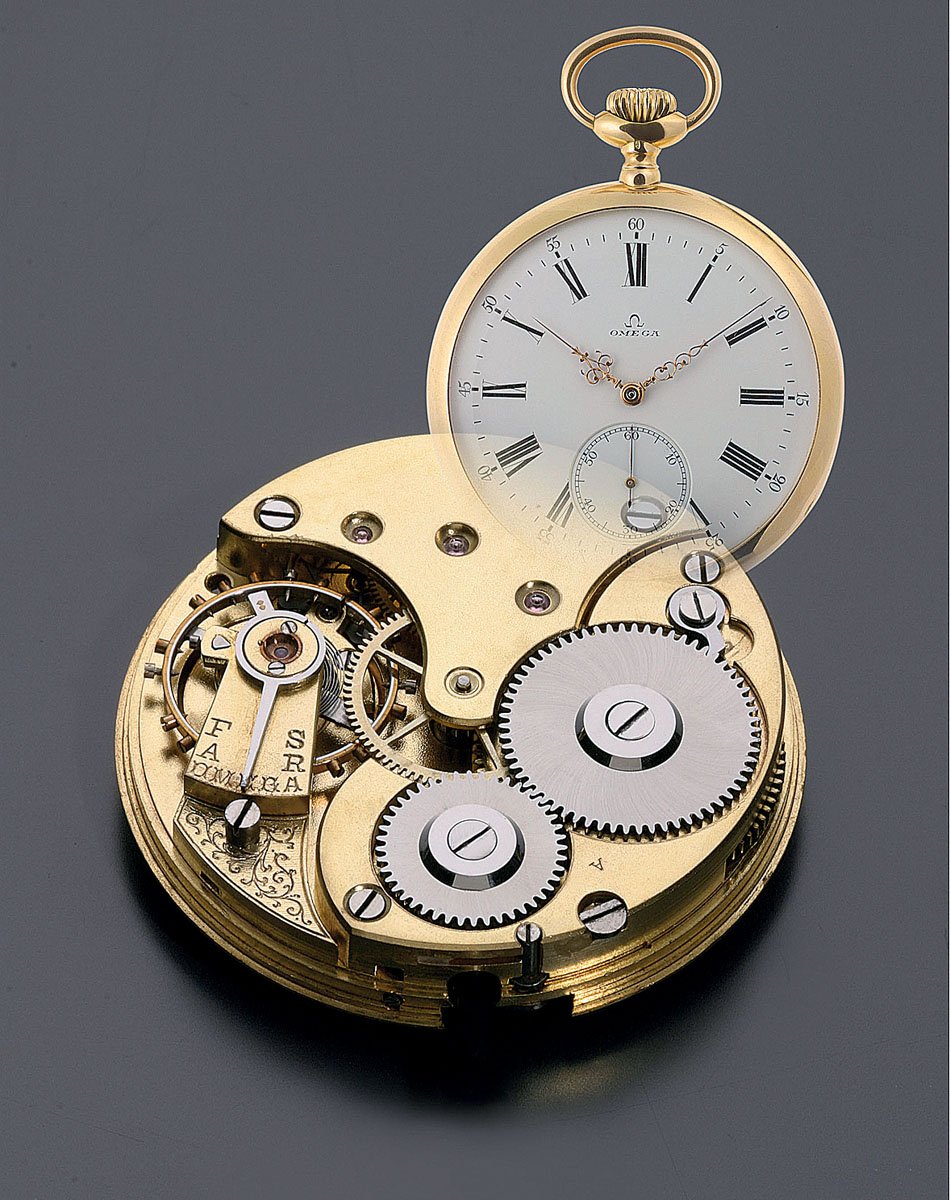
It is a unique story in the history of watchmaking: a brand name derived from the name of a caliber. In Omega’s case, however, this was no ordinary movement. By the technical standards of the time, it appeared to represent the ultimate in watchmaking, a notion symbolized by Omega, the final letter of the Greek alphabet.
The 19-line pocket-watch caliber developed by Louis-Paul Brandt and César Brandt, the sons of company founder Louis Brandt, was completed in 1894. By then, the Brandt brothers had already systematically industrialized production at their Biel facility. The Omega caliber was conceived for large-scale production using standardized, largely interchangeable components. That was still far from standard practice at the time. In traditional Swiss watchmaking, many parts still had to be individually fitted during assembly. The components of the Omega caliber could be assembled far more efficiently. It also offered an advanced operating system for its era: a patented mechanism allowed both winding and hand-setting through the crown.
According to company lore, the name “Omega” was suggested by the company’s banker, Henri Rieckel. It was so successful that the name ultimately came to represent the company itself. In 1903, Louis Brandt & Fils was renamed Omega. Under that name, the company went on to write a remarkable success story throughout the 20th century. Today, Omega ranks among the most famous watch brands in the world.
1932: The Waterproof Marine
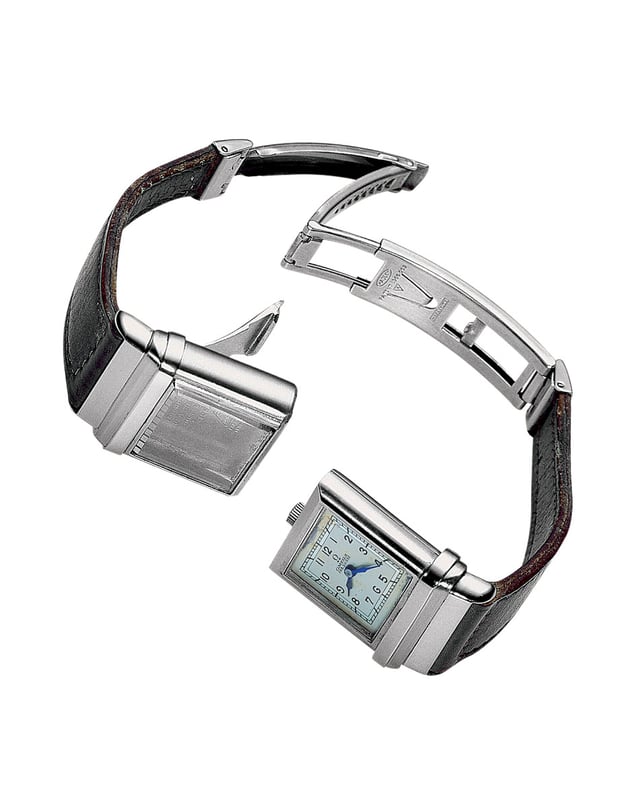
Omega: Waterproof Marine from 1932
Omega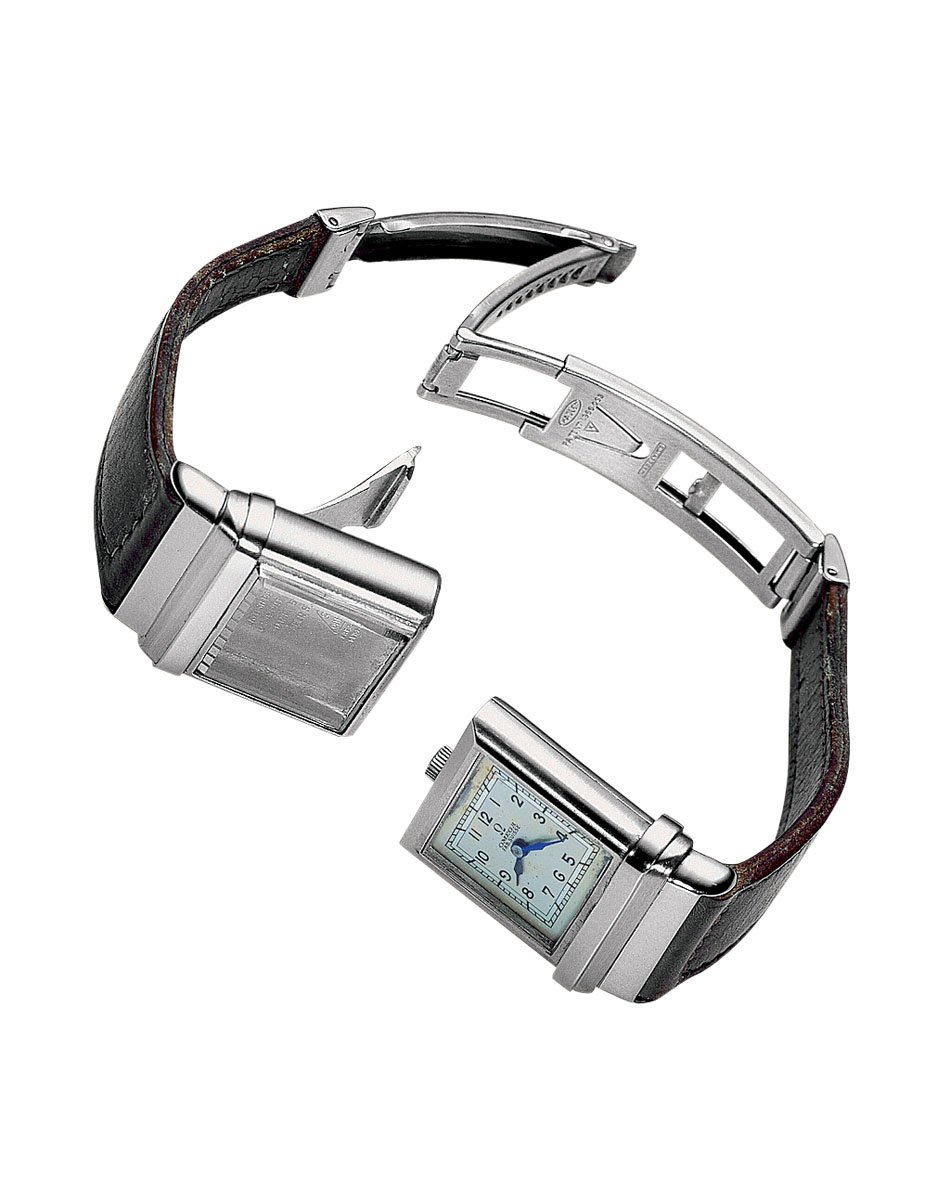
Long before dive watches adopted the now-familiar formula of a rotating bezel, screw-down crown, and oversized luminous markers, Omega pursued a very different approach. Introduced in 1932, the Marine was one of the first wristwatches specifically designed and tested for greater diving depths. Yet with its rectangular Art Deco case, it looked more like an elegant dress watch than a professional instrument.
Its defining feature was a patented double-case construction developed by Geneva-based Louis Alix. The watch’s inner case slid into a second outer shell, where a tensioning mechanism pressed the two sections against a gasket to create a waterproof seal. Even the crown was protected within the outer case. Another remarkable feature was the scratch-resistant sapphire crystal, still highly unusual in the early 1930s. The Marine was offered in versions including Staybrite stainless steel and gold, while a specially treated bracelet was designed to withstand salt water.
Omega demonstrated that the concept was far more than a technical exercise through a series of demanding tests. In 1936, three Marine watches were subjected to a severe temperature shock and then lowered to a depth of 73 meters in Lake Geneva for 30 minutes. All remained fully functional. In 1937, the Swiss Laboratory for Horological Research, or LSRH, exposed a Marine to pressure equivalent to a depth of 135 meters for 14 hours. Again, no water entered the case. Diving pioneers such as Yves Le Prieur and American underwater explorer William Beebe used the watch.
The Marine marked the beginning of Omega’s long history as a producer of professional underwater watches. Its construction had little in common with the Seamaster 300 that would follow decades later, but it established a principle Omega would revisit all the way to today’s Ultra Deep: new case technology should not merely be developed in theory, but proven under extreme real-world conditions.
1948: The Beginning of the Seamaster Saga
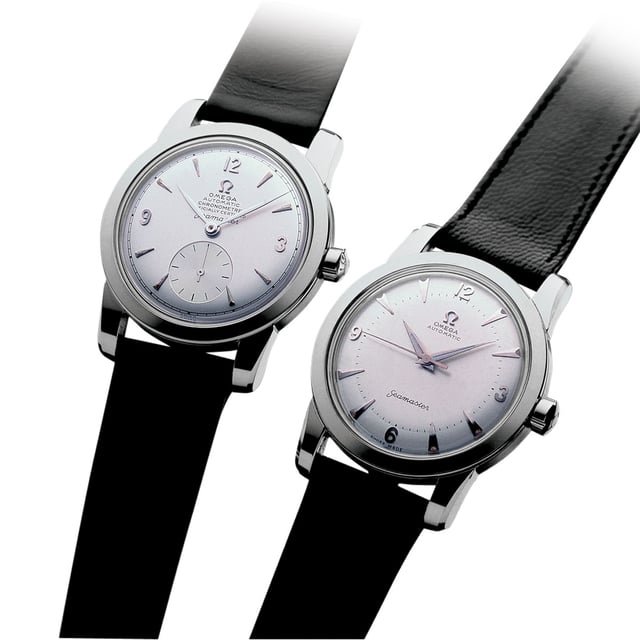
First Seamaster models from 1948
Omega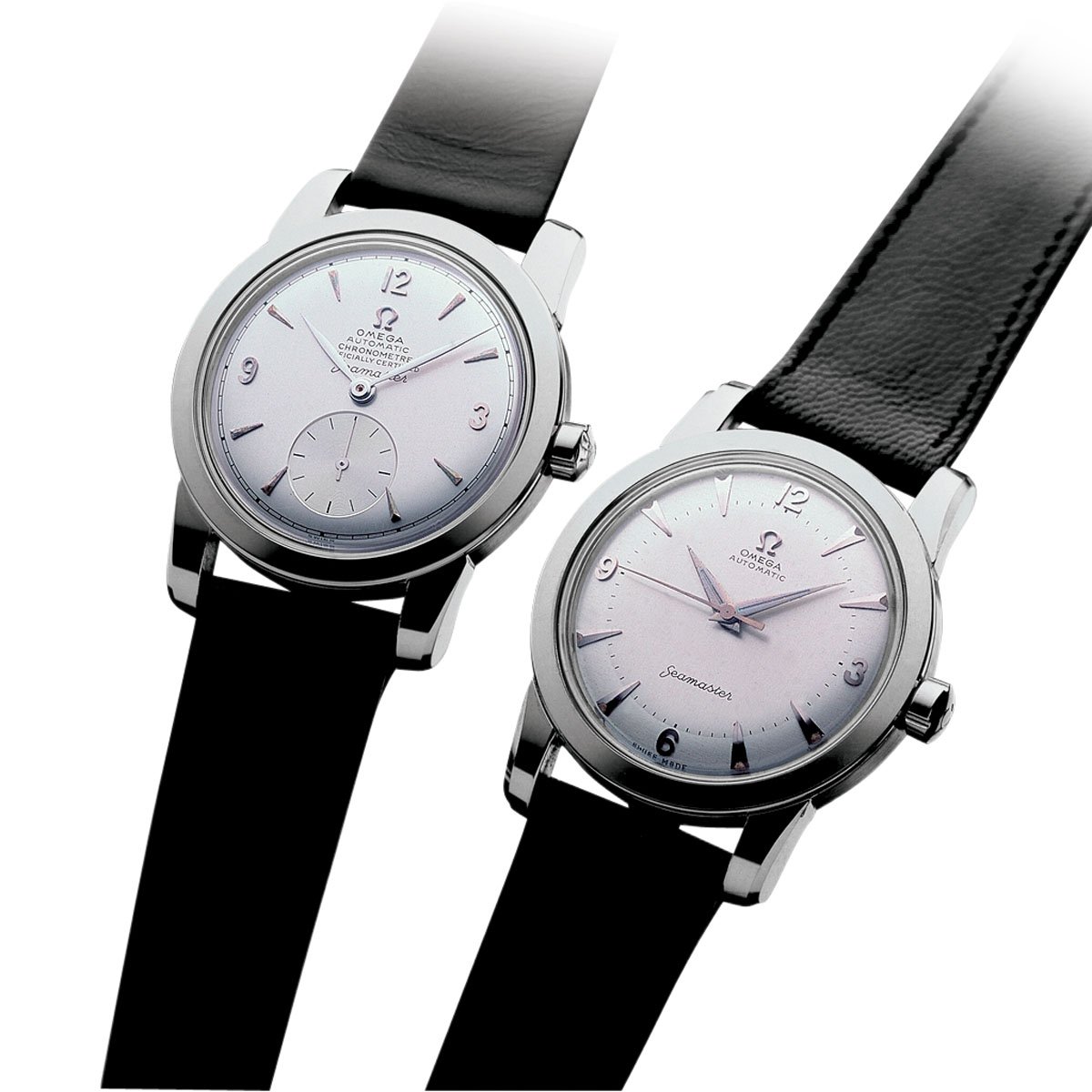
When Omega introduced the first Seamaster in 1948 to mark the company’s 100th anniversary, it was still far from the modern dive watch. Omega’s commercial director, Adolphe Vallat, wanted a sporty, durable, and water-resistant wristwatch. René Bannwart, who would later found Corum, played a major role in bringing that idea to life.
In 1940, Bannwart had established a design department at Omega, an unusual move at the time, when new case designs in the Swiss watch industry were typically supplied by specialist case manufacturers. Bannwart allegedly presented his first design to Vallat with the remark that it was “far too clumsy,” feeling he had not been given enough time because Vallat was pushing for a quick solution. Vallat, however, was impressed. The design became the basis for the first watch to carry the name “Seamaster” on its dial.
Technically, Omega built on the experience it had gained producing watches for the British armed forces during World War II. The Seamaster was a development of those robust pilot’s and service watches. A new O-ring gasket helped seal the case against moisture, and the early models were water-resistant to five bar, or 50 meters. The Seamaster was offered with either small seconds or central seconds. The small-seconds version used the new automatic caliber 28.10 RA RG-343, which was also available as an officially tested chronometer. The central-seconds model was powered by caliber 28.10 RA SC-350.
The 1948 Seamaster marked the beginning of a more systematically conceived collection and a new approach to watch design that would later become standard across the industry.
1952: The First Constellation
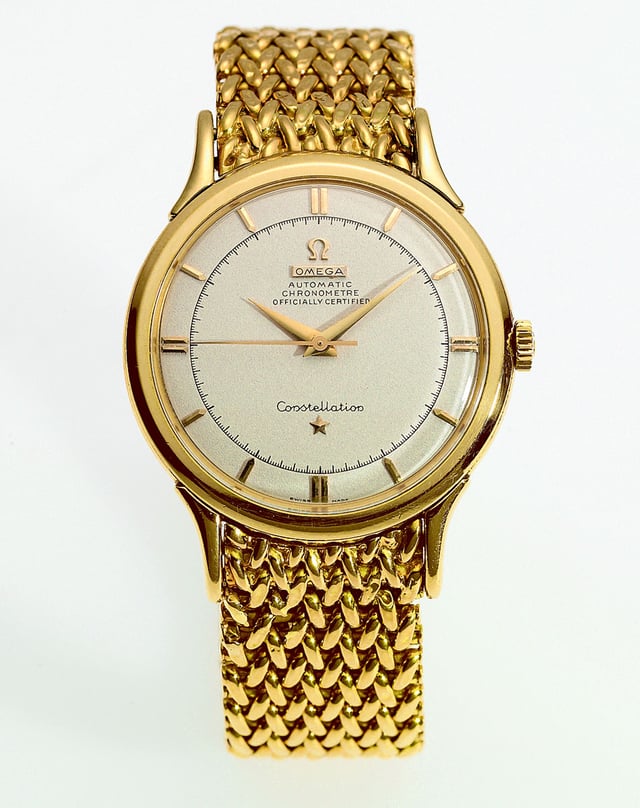
First Constellation from 1952
Omega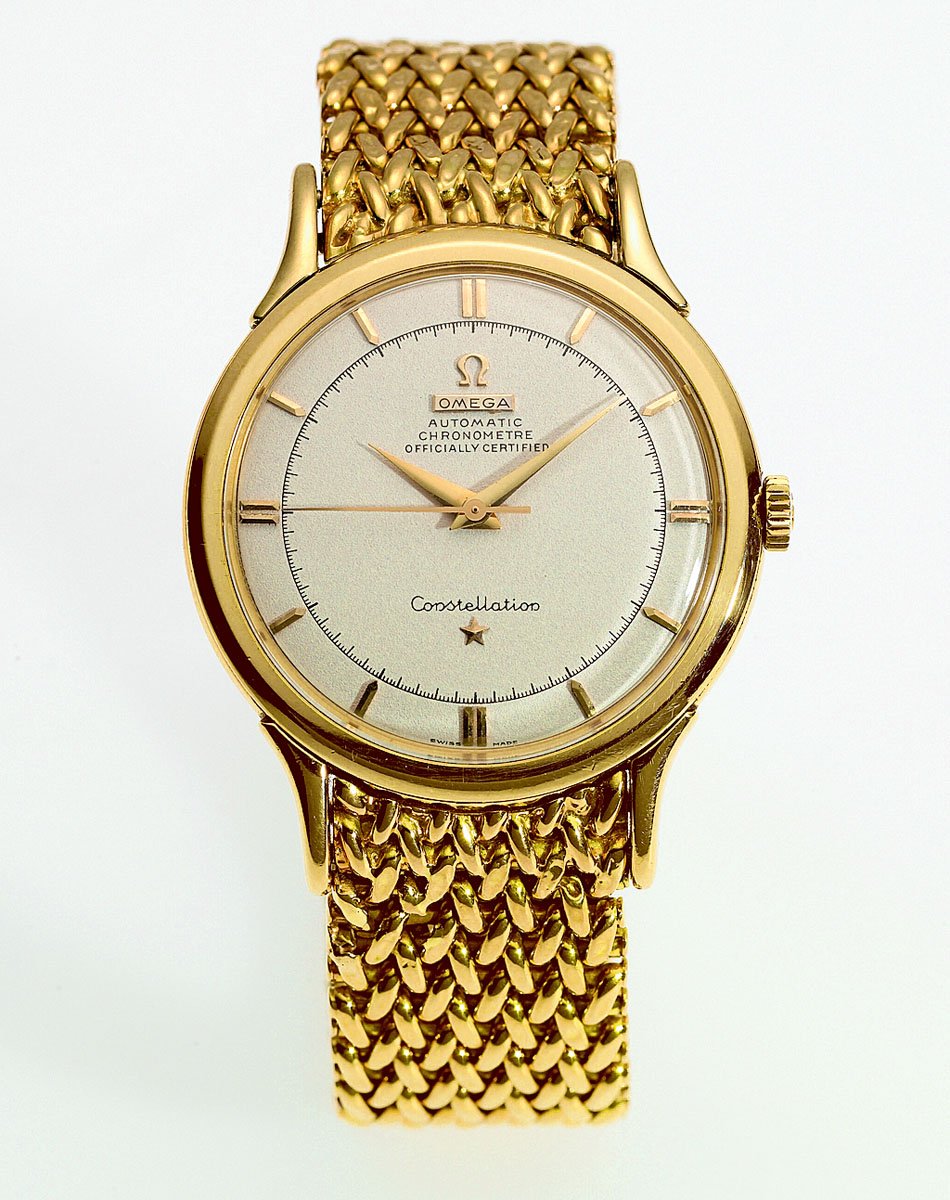
With the Constellation, Omega made precision the defining principle of an entire collection. Since 1952, the name has stood for officially certified chronometer quality and the highest level of prestige within the brand.
The new line evolved from the Centenary, introduced in 1948 for Omega’s 100th anniversary and the brand’s first chronometer-certified automatic watch. Its success demonstrated that there was a market for an elegant wristwatch powered by a particularly precise self-winding movement. What had begun as an anniversary model therefore developed into a permanent collection: the Constellation became Omega’s first serially produced wrist chronometer.
The first model was powered by the caliber 28.10 RA SC PC RG AM, better known as caliber 352, which had already been introduced in 1945. Measuring 28.1mm in diameter and 5.4mm thick, the automatic movement used a unidirectional bumper winding system and an indirectly driven central seconds hand. Unlike a modern rotor, the oscillating weight could not rotate through a full 360 degrees, but instead moved back and forth between two stops. Robust and reliable, the movement achieved excellent results in official chronometer testing and played a major role in establishing the Constellation’s reputation. Other early models used related bumper-automatic calibers before Omega switched to freely rotating rotors in the mid-1950s.
1957: Speedmaster CK 2915
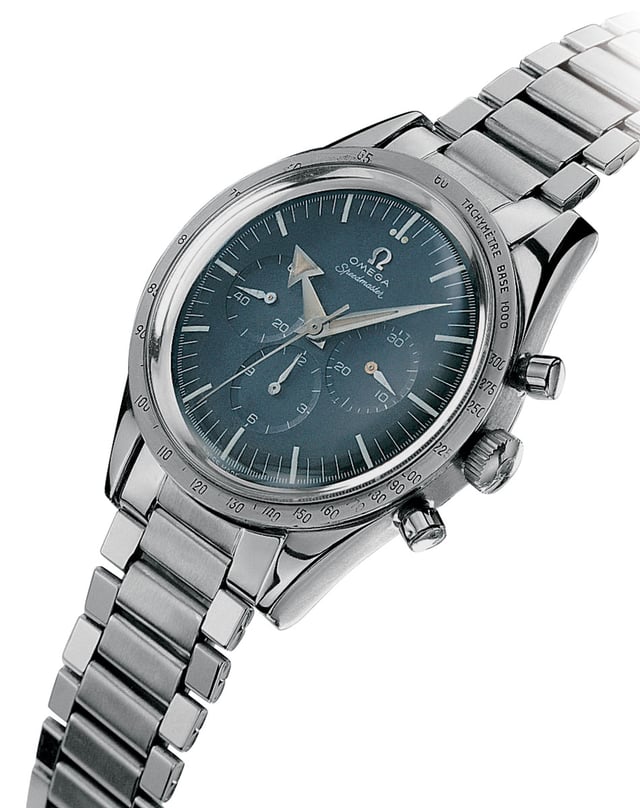
Omega: first Speedmaster from 1957
Omega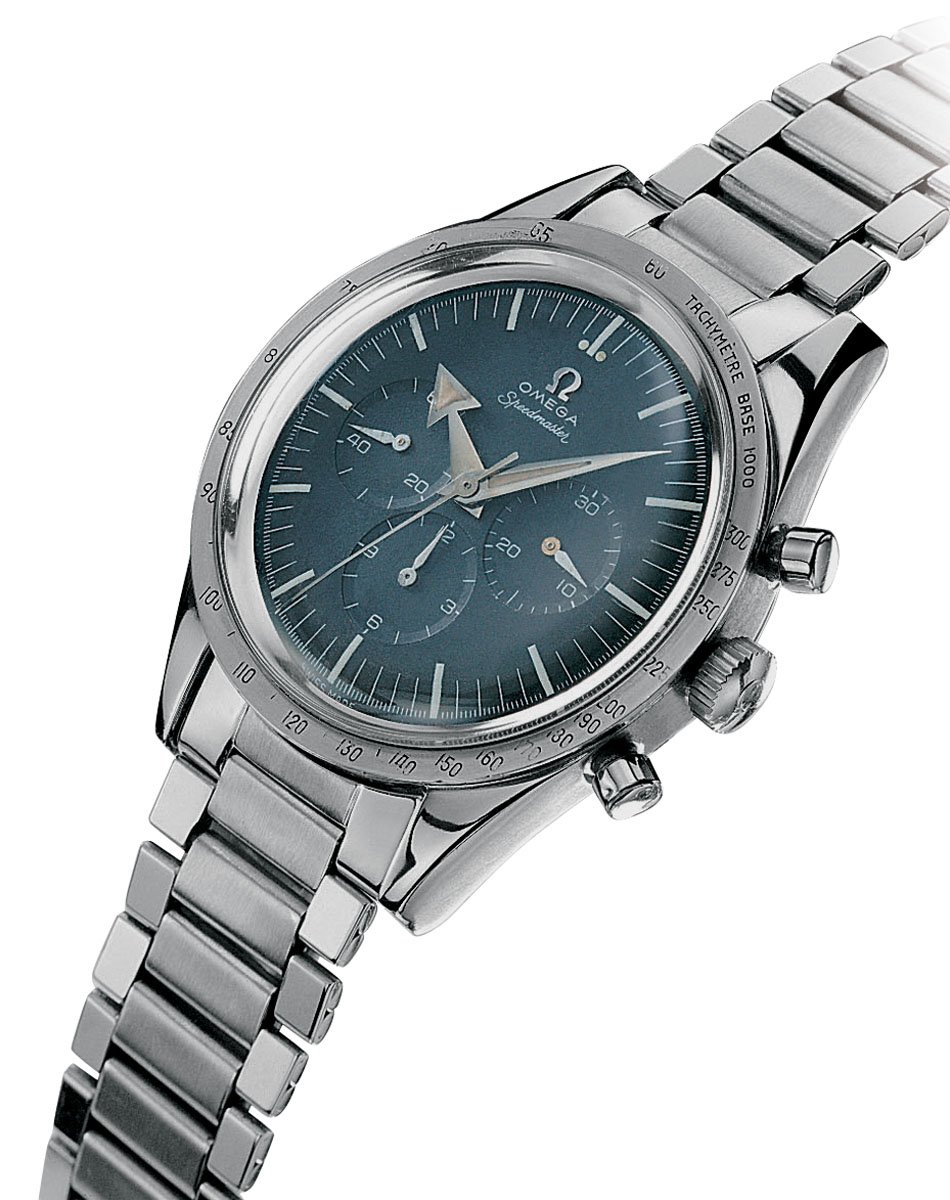
When Omega introduced the first Speedmaster in 1957, spaceflight was not yet part of the story. Ref. CK 2915 was conceived as a robust, precise chronograph for science, industry, and sport. Together with the Seamaster 300 CK 2913 and Railmaster CK 2914, it formed part of a new generation of purpose-built Omega sports watches.
One of its most important innovations was the placement of the tachymeter scale on the bezel rather than on the dial. This kept the dial cleaner and allowed speed to be read directly from the edge of the case. The black dial with three subdials, luminous hands and markers, prominent Broad Arrow hour hand, domed Plexiglas crystal, and screw-down caseback already established the essential visual identity of the Speedmaster. The 39mm case was developed with contributions from several specialists, including Claude Baillod from case manufacturer Huguenin, prototype maker Georges Hartmann, and Desire Faivre, who was responsible for finishing work. From 1960 onward, the case grew to around 40mm with the introduction of the black tachymeter bezel.
Inside was the manually-wound caliber 321, whose origins date back to 1943. That year, Omega subsidiary Lémania developed the caliber 27 CHRO C12 with the significant involvement of Jacques Reymond. The number “27” referred to the movement diameter in millimeters, “CHRO” to the chronograph function, and “C12” to the additional 12-hour counter. Albert Piguet further developed the movement in 1946, after which Omega introduced it as caliber 321. With its column-wheel control and frequency of 2.5 Hz, or 18,000 vibrations per hour, it was considered an especially compact chronograph movement for its time. A related version without the 12-hour counter was known as caliber 320. Around 1949, the names 27 CHRO C12-321 and 27 CHRO-320 were used.
Omega established the technical and aesthetic foundations of the Speedmaster in 1957 with the CK 2915.
1959/1962: Speedmaster CK 2998, the First Omega in Space
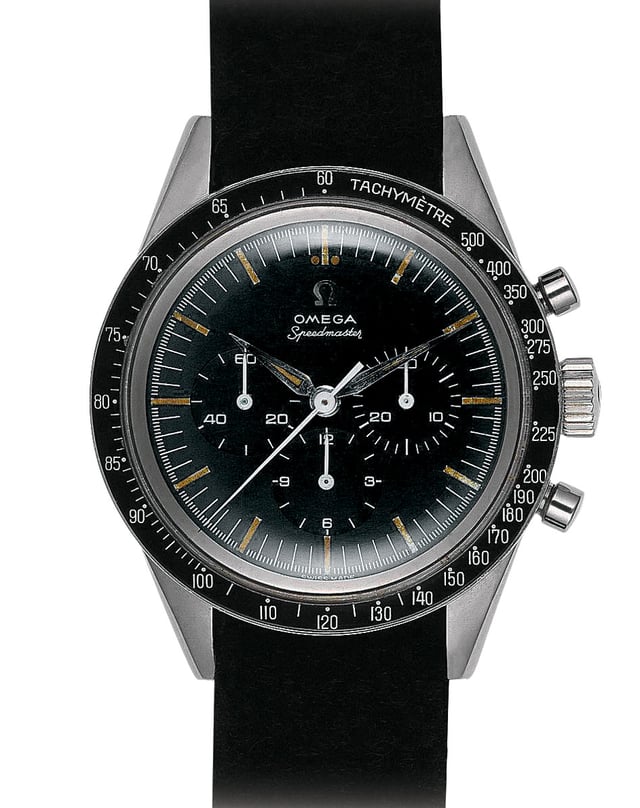
Astronaut Walter Schirra orbited the Earth in 1962 with the Speedmaster CK 2998 on his wrist.
Omega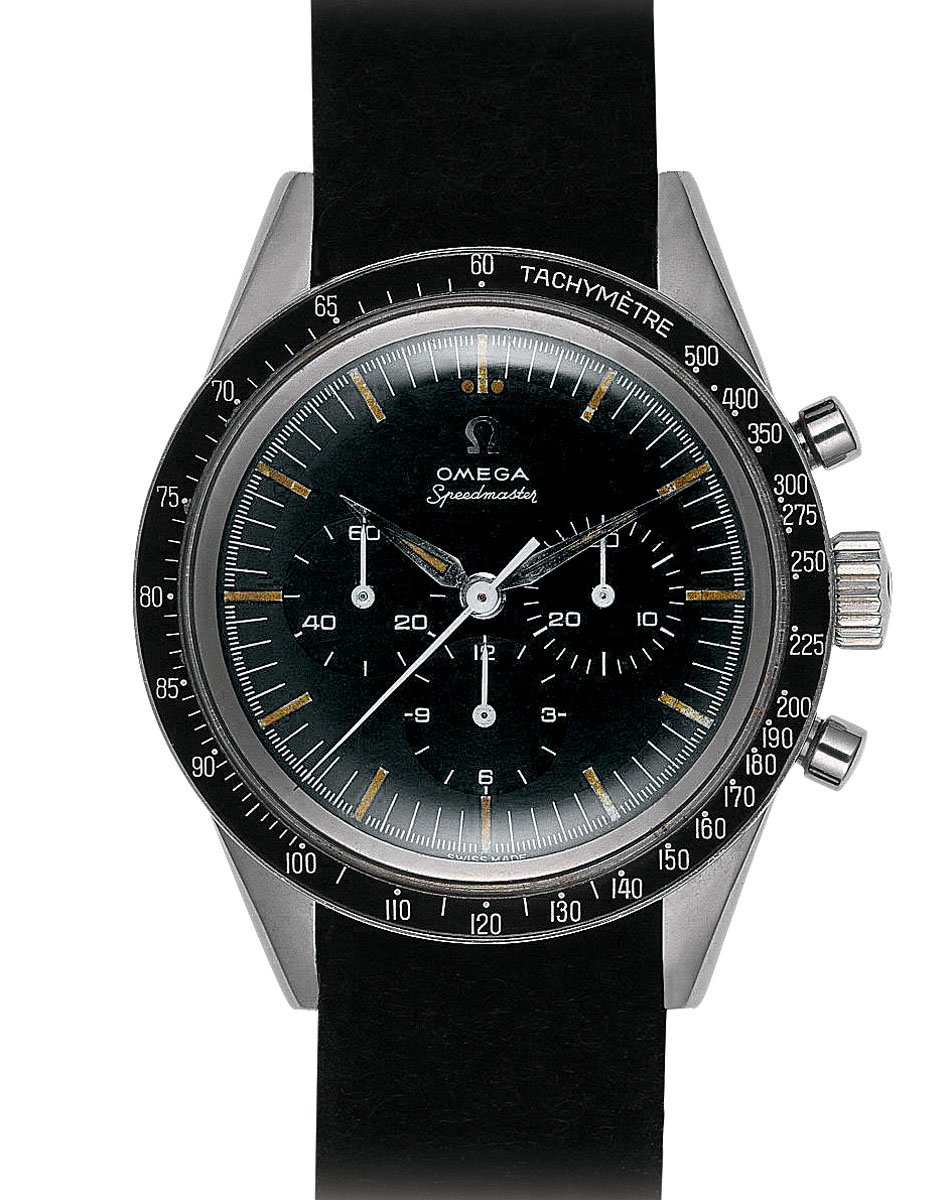
Just two years after the original Speedmaster, Omega introduced the second generation of the chronograph in 1959 with the CK 2998. Technically, it remained closely related to the CK 2915, but visually the model evolved significantly. The prominent Broad Arrow hour hand was replaced by slimmer Alpha hands, while the metallic-looking tachymeter bezel received a dark insert. These changes brought the CK 2998 much closer to the Speedmaster design that would later become world-famous. The CK 2998 still retained the original symmetrical case and continued to use the manually wound caliber 321.
Its particular historical importance stems from a private purchase. American NASA astronaut Walter “Wally” Schirra had bought a Speedmaster CK 2998 for himself and wore it on his wrist during the Mercury Sigma 7 mission on October 3, 1962. It thus became the first Omega to travel into space, three years before NASA officially qualified the Speedmaster for crewed space missions. The CK 2998 therefore marks a pivotal moment in Speedmaster history.
1969: Speedmaster Professional ST 105.012 “Moonwatch”
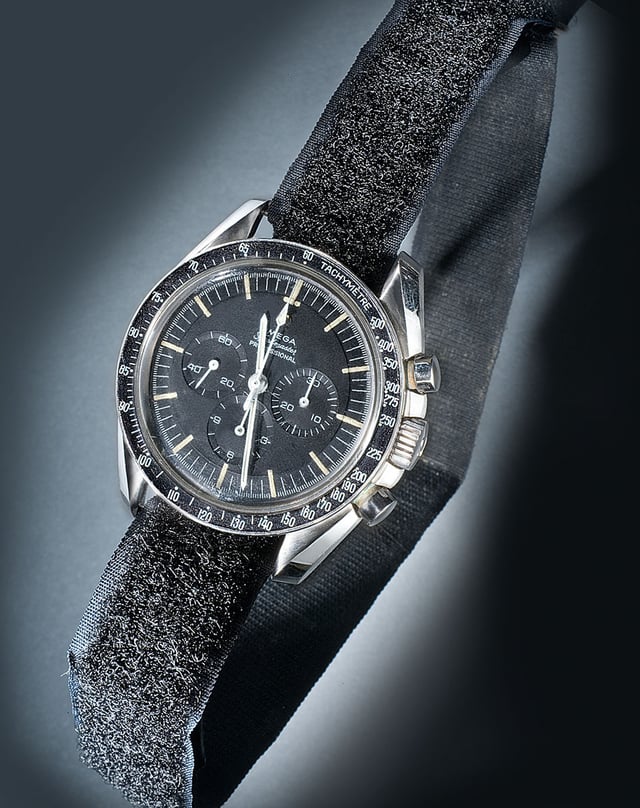
Omega: Speedmaster Moonwatch by Neil Armstrong
Smithsonian Institution/Eric Long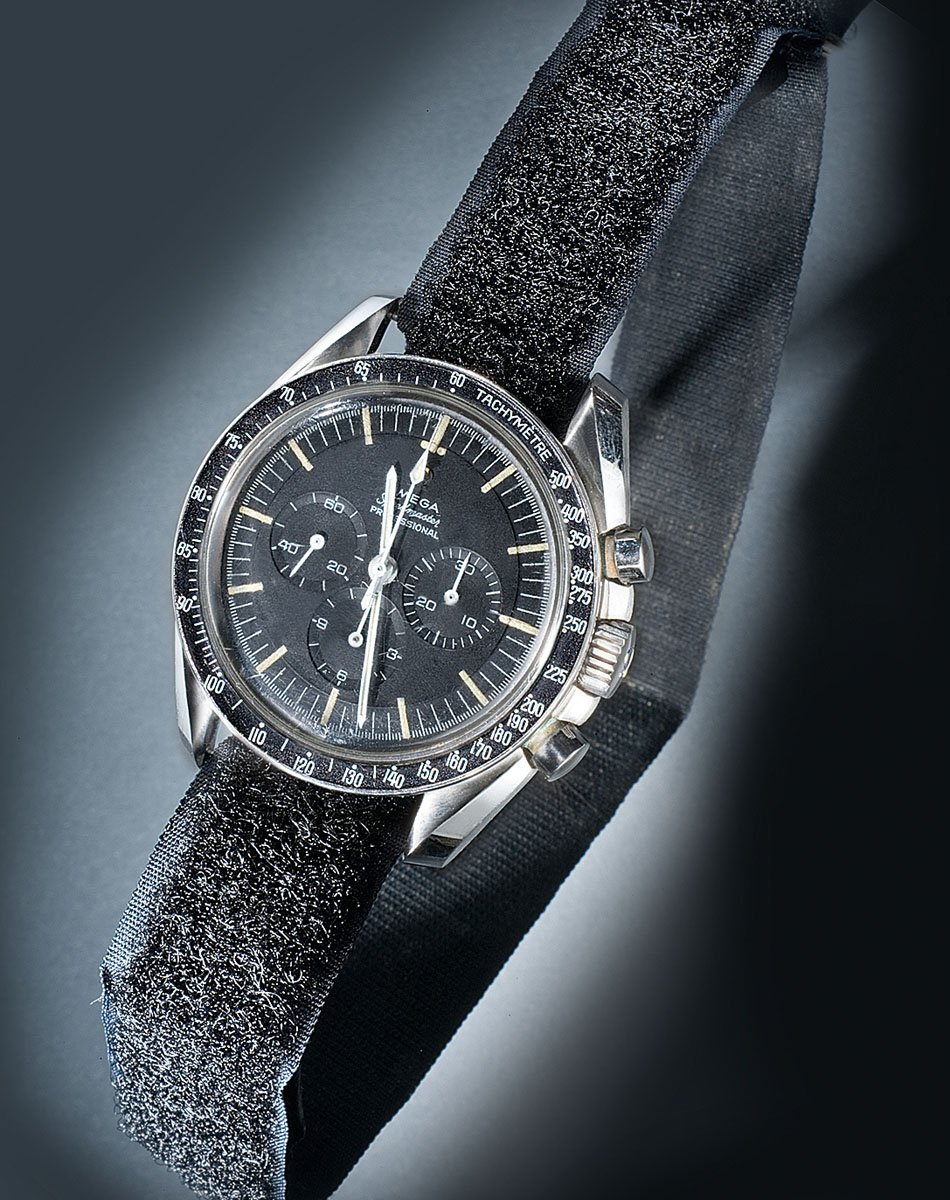
The Speedmaster became the “Moonwatch” in 1969 with Apollo 11. The ST 105.012 worn on the mission had already been introduced in the mid-1960s and represented a crucial step in the evolution of the model. For the first time, the Speedmaster received the characteristic asymmetrical case, measuring around 42mm, with a reinforced right side that offered greater protection for the crown and chronograph pushers. The word “Professional” also appeared on the dial.
Mechanically, Omega continued to rely on the proven manually wound caliber 321. The column-wheel chronograph, running at 18,000 vibrations per hour, had already powered earlier generations of the Speedmaster. The ST 105.012 combined it with the new “Professional” case, a black step dial with three subdials, a Hesalite crystal, and a black tachymeter bezel.
The reference achieved immortality during Apollo 11. Neil Armstrong and Buzz Aldrin were both equipped with Speedmaster Ref. 105.012 for the July 1969 mission. Armstrong left his watch inside the lunar module Eagle during the first moonwalk after its electronic timer had failed, but Aldrin wore his Speedmaster over the sleeve of his spacesuit. When Aldrin followed Armstrong onto the lunar surface on July 20, 1969, his ST 105.012 became the first wristwatch worn on the Moon. Armstrong’s watch is now held by the National Air and Space Museum, while Aldrin’s was later lost while being shipped to the Smithsonian.
The ST 105.012 therefore unites two defining chapters of Speedmaster history: it established the design of the Speedmaster Professional that continues to shape the collection today and, as the first watch worn on the Moon, became one of the most famous timepieces ever made.
1971: The Ploprof
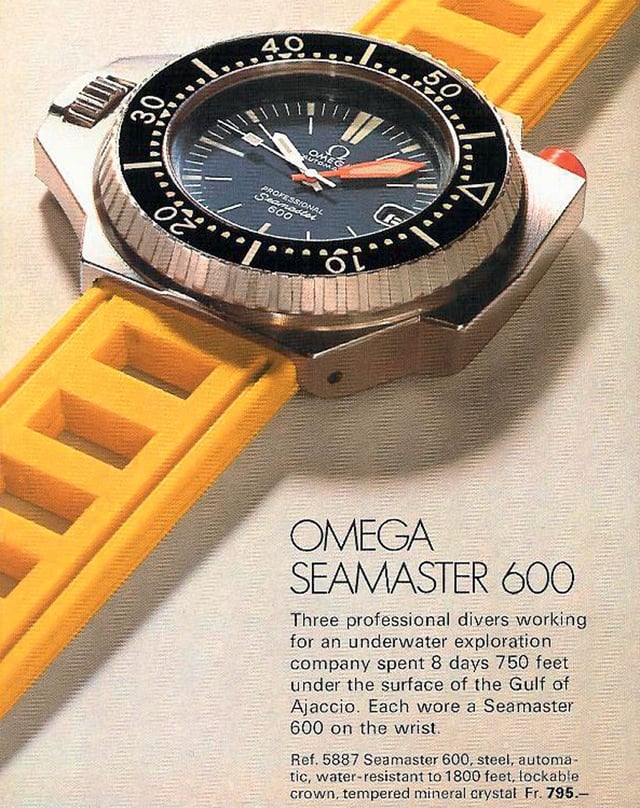
Omega: Seamaster 600 Ploprof from 1970, contemporary display
Omega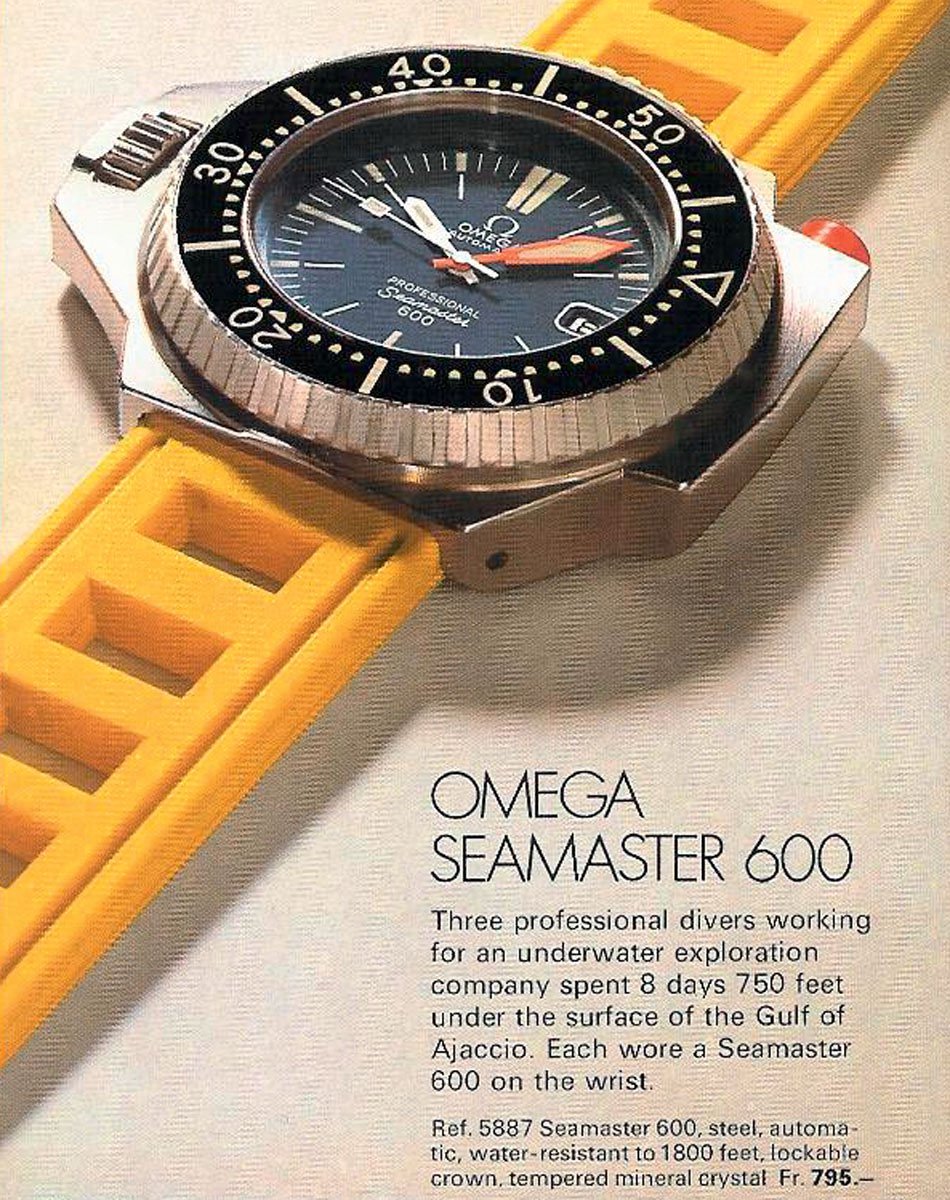
With the Seamaster 600 Ploprof, Omega created a professional dive watch. Its name came from “Plongeur Professionnel,” French for professional diver. Under the direction of Frédéric Robert, Omega developed an entirely new construction in the late 1960s. Prototypes were tested under real conditions by COMEX divers and during Operation Janus in 1969.
The strikingly asymmetrical case of Ref. ST 166.077 was crafted from a solid block of steel. There was no separate caseback: the movement and dial were inserted from the front and then sealed with the crystal and gaskets. This eliminated a potential entry point for water and helium. Omega thus took a different approach from manufacturers that relied on helium escape valves for saturation diving. The Ploprof was designed to prevent helium from entering the case in the first place. Although officially rated to 600 meters, according to an Omega service bulletin, each watch was tested to 1,000 meters.
The crown and bezel were equally functional. The heavily protected screw-down crown was positioned on the left, while a large red safety pusher sat on the right. The dive bezel could only be adjusted while this pusher was depressed, helping prevent accidental rotation. The Ploprof was powered by the automatic caliber 1002.
The Ploprof was therefore the opposite of an all-purpose sports watch. Its unconventional appearance was the direct result of its function. That uncompromising construction made it one of the most distinctive professional dive watches of its era.
Omega revived the unusual concept in 2009 with the Seamaster Ploprof 1200M, a modern reinterpretation featuring a Co-Axial movement and water resistance increased to 1,200 meters. A further evolution followed in 2015/16, adding features such as a titanium case, ceramic bezel, and Master Chronometer caliber 8912. Omega continues to offer the Ploprof 1200M in the Seamaster collection today. The latest version appeared in 2023 for the Seamaster’s 75th anniversary, finished in “Summer Blue” and featuring a monobloc O-Megasteel case, 1,200 meters of water resistance, and Master Chronometer caliber 8912.
1993: Seamaster Professional Diver 300M
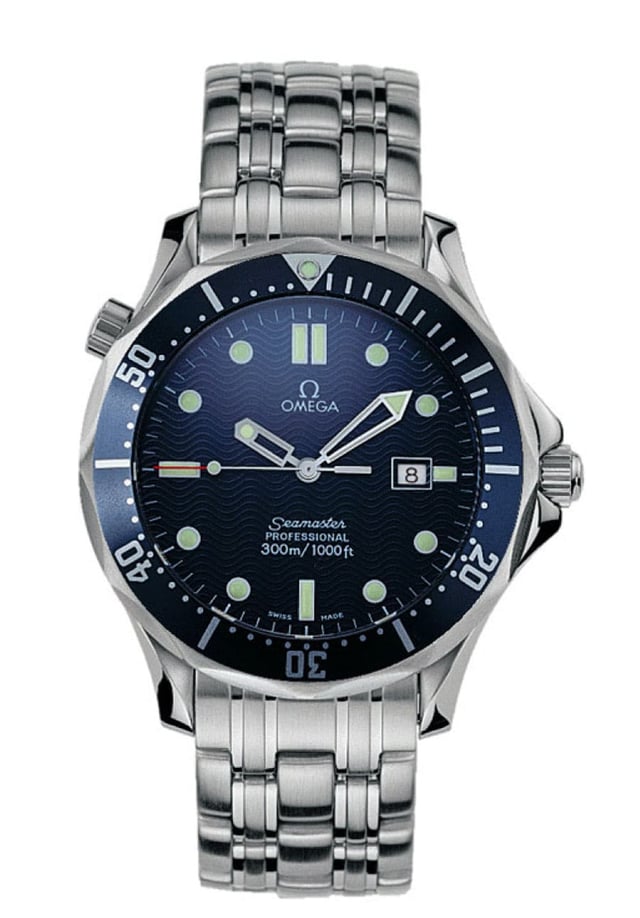
In 1995, Pierce Brosnan as James Bond wore the quartz reference 2541.80.00 in "GoldenEye".
Omega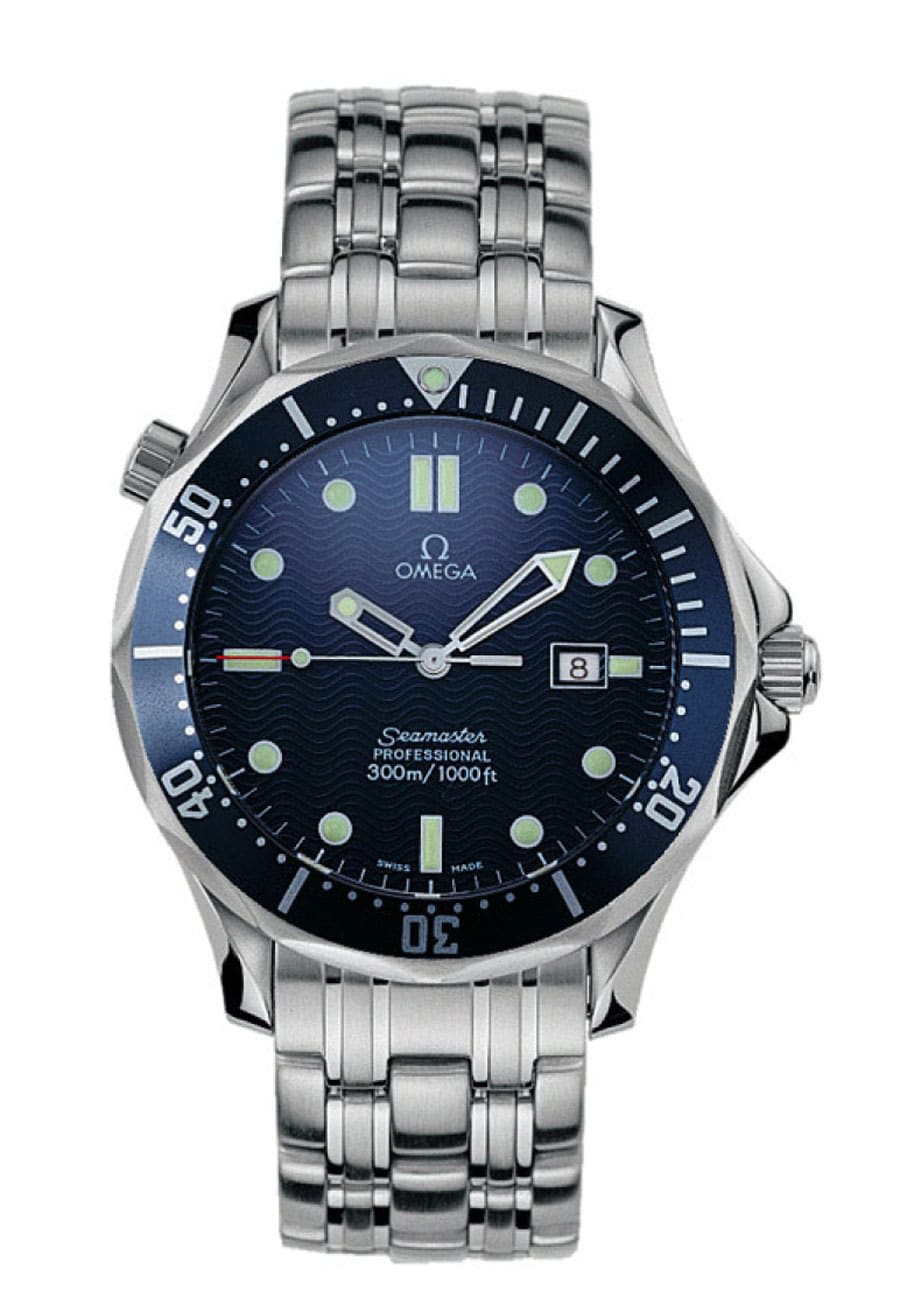
In 1993, the Seamaster Professional Diver 300M established a modern visual language that remains recognizable today: a blue wave-pattern dial, skeletonized hands, a unidirectional bezel, pronounced crown guards, and a manually operated helium escape valve at 10 o’clock. With water resistance to 300 meters, it was designed for serious diving while remaining far more practical for everyday wear than the uncompromising Ploprof. The three-hand version was initially launched with a quartz movement, followed soon afterward by an automatic chronometer model.
Just two years later, the still-young collection received an enormous boost in popularity when Pierce Brosnan wore the quartz Ref. 2541.80 in the 1995 James Bond movie GoldenEye. It marked the beginning of the partnership between Omega and James Bond that continues to this day.
Omega continued to evolve the Diver 300M both technically and visually. For its 25th anniversary in 2018, the collection received a comprehensive update. The case grew to 42mm, the signature wave pattern returned as a laser-engraved motif on ceramic dials, and the Co-Axial Master Chronometer caliber 8800 brought a modern, highly antimagnetic automatic movement together with a sapphire display caseback.
At the end of 2024, Omega opened another chapter. New 42mm models dispensed with the date and combined a domed sapphire crystal and mesh bracelet with aluminum or titanium elements, powered by the Master Chronometer caliber 8806. Since then, the line has expanded with additional materials and colors. In 2026, the Diver 300M remains one of the pillars of the Seamaster collection, more than three decades after its debut and still defined by the essential design cues introduced in 1993.
1999: Omega De Ville Co-Axial
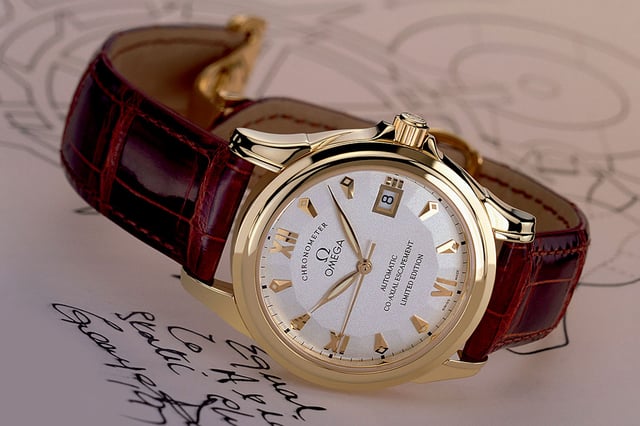
Omega: De Ville Co-Axial from 1999
Omega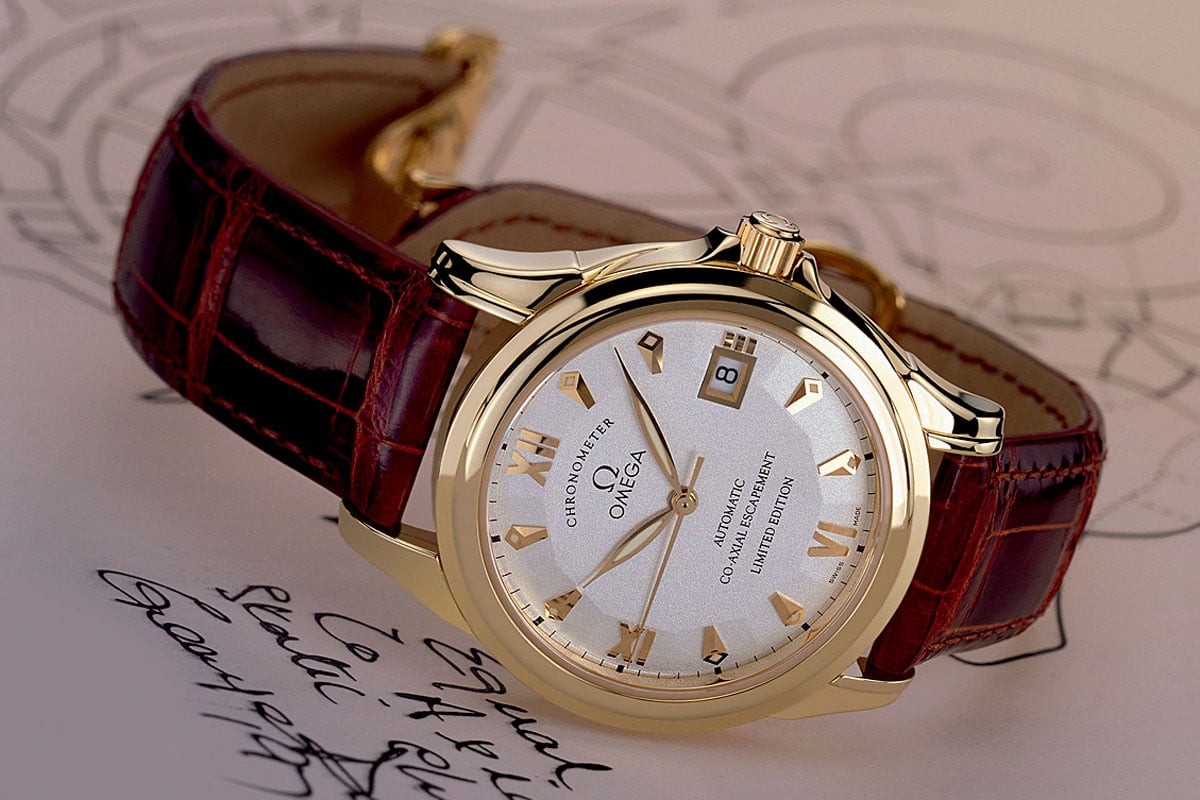
The De Ville first appeared in the early 1960s as an elegant branch of the Seamaster family before becoming an independent collection in 1967. Over the following decades, it evolved into Omega’s classic dress-watch line. In 1999, however, it became the platform for a technical innovation that would eventually transform nearly the entire mechanical Omega collection.
That year, Omega introduced the Co-Axial escapement in a serially produced wristwatch for the first time. British watchmaker George Daniels (1926–2011) had invented the system in the 1970s. Omega adopted the concept in the 1990s and worked with Daniels to adapt it for industrial production. Inside was the automatic caliber 2500, based on the ETA 2892. The technology initially debuted in limited precious-metal editions.
The Co-Axial escapement represented a fundamental alternative to the Swiss lever escapement that had long dominated mechanical watchmaking. Its distinctive geometry reduces sliding friction as energy is transmitted to the balance. This lowers the need for lubrication at critical contact points and, above all, is intended to provide greater long-term rate stability. Omega described it as the first practically viable new mechanical escapement in roughly 250 years.
The technology did not remain confined to a single caliber. The caliber 3313 chronograph family followed in 2005, and in 2007, caliber 8500 became the first Omega movement designed from the ground up around the Co-Axial escapement. Additional sizes and complications followed.
From 2013, Omega combined Co-Axial technology with largely antimagnetic movements. In 2015, the Globemaster became the first Master Chronometer-certified watch. Today, the Co-Axial escapement is one of Omega’s defining technical signatures. Together with magnetic resistance and Master Chronometer certification, it forms the foundation of the brand’s modern mechanical calibers, including caliber 3861 used in the Moonwatch since 2021.
One exception remains the Speedmaster Calibre 321. Its manually wound movement, returned to production in 2019 and reconstructed to remain largely faithful to the historic original, continues to use a traditional Swiss lever escapement. All other current mechanical Omega calibers rely on the Co-Axial escapement.
2007: De Ville Hour Vision
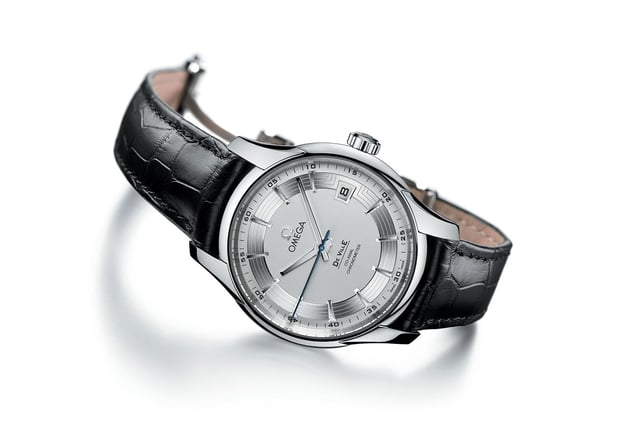
De Ville Hour Vision from 2007
Omega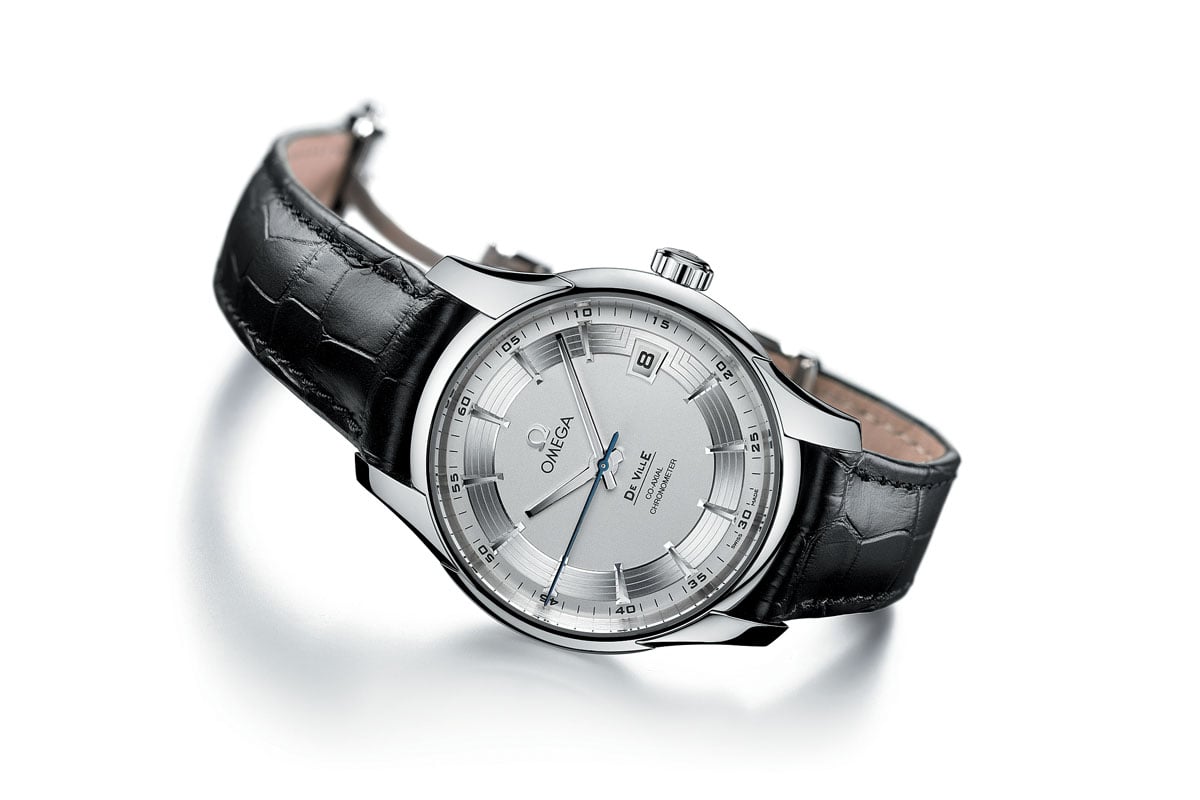
With the De Ville Hour Vision, Omega took a crucial step in the industrialization of Co-Axial technology in 2007. The brand had already introduced George Daniels’s escapement in the De Ville Co-Axial in 1999, but its caliber 2500 was still based on an existing ETA architecture. With the new caliber 8500, Omega designed an entire movement from the ground up around the Co-Axial escapement for the first time. All 202 components were developed specifically for the caliber, which was also engineered for industrial-scale production.
The automatic caliber 8500 ran at 25,200 vibrations per hour, or 3.5 Hz, and featured a free-sprung balance together with two barrels mounted in series, providing a 60-hour power reserve. A bidirectional rotor handled the winding. The Co-Axial escapement itself now used a three-level construction, allowing it to be integrated more thoroughly into the movement than in caliber 2500.
Omega also made this new level of technical independence visible from the outside. The 41mm Hour Vision lived up to its name with an unusual case construction incorporating sapphire elements. In addition to the sapphire caseback, four transparent sections in the caseband offered lateral views of the movement.
More important, however, was the role of caliber 8500 as the foundation of a new movement generation. Its architecture subsequently found its way into other Omega collections, including the Aqua Terra, Planet Ocean, and Constellation. In 2013, it evolved into caliber 8508, the largely antimagnetic movement used in the Aqua Terra >15,000 Gauss. Later, the 8900-series calibers combined this concept with Master Chronometer certification.
The Hour Vision itself never occupied the spotlight quite like the Speedmaster or Seamaster. From a technical and historical perspective, however, it remains one of the most important modern Omega watches. With it, the Co-Axial escapement introduced in 1999 became the structural foundation of an independent movement family.
2013: Seamaster Aqua Terra >15,000 Gauss
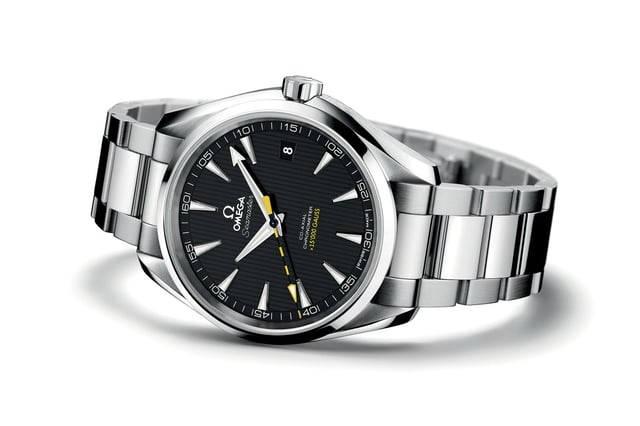
Omega: Seamaster Aqua Terra >15,000 Gauss from 2013
Omega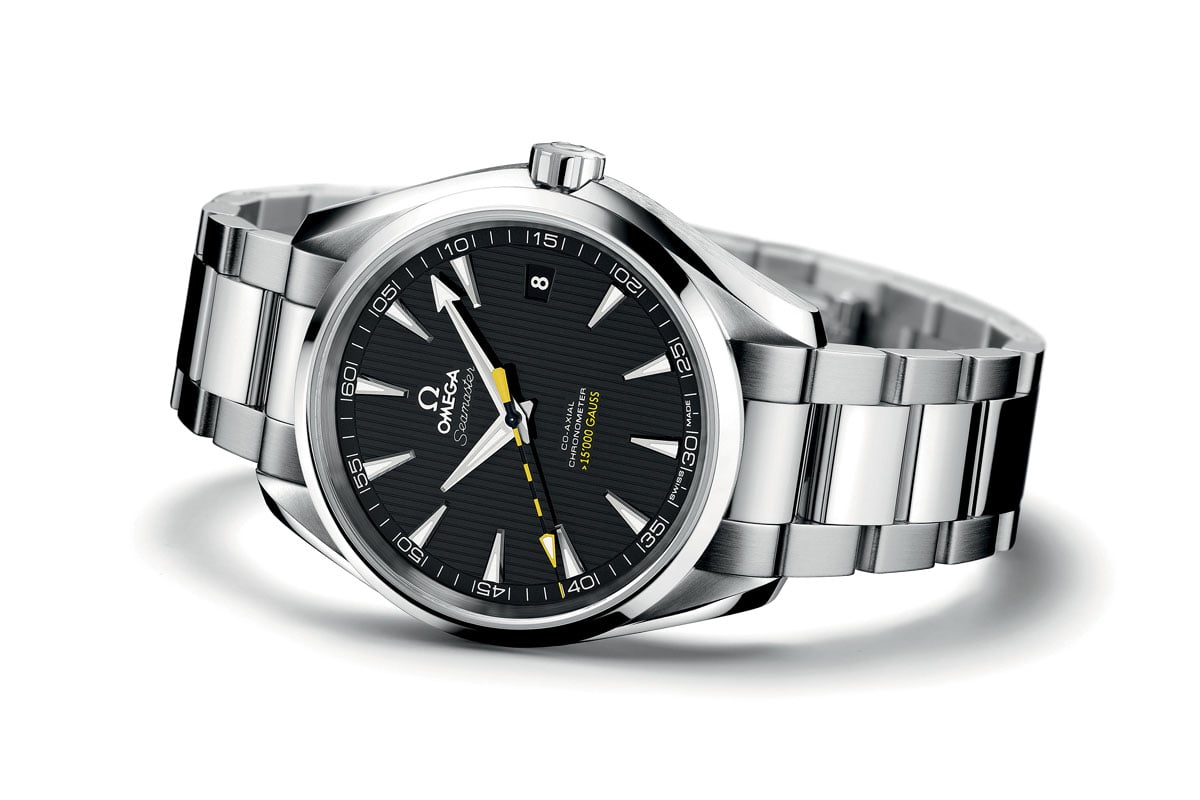
Magnetic fields are among the biggest disruptive forces affecting mechanical watches. If the hairspring or other components of the escapement become magnetized, substantial rate deviations can result. Traditionally, the watch industry addressed the problem with a soft-iron inner cage that shielded the movement. That solution, however, had its limitations. With the Seamaster Aqua Terra >15,000 Gauss introduced in 2013, Omega therefore pursued a fundamentally different approach.
Rather than shielding the movement from magnetism, Omega made the Co-Axial caliber 8508 itself largely insensitive to it. Working with specialists from Asulab, ETA, and Nivarox-FAR, the brand relied systematically on non-ferromagnetic materials. These included the already introduced Si14 silicon hairspring, components made from the Nivagauss alloy, and parts of the Co-Axial escapement produced using LIGA technology. Even the springs used in the shock-protection system were made from antimagnetic materials.
As a result, the movement could withstand magnetic fields exceeding 15,000 gauss, or 1.5 tesla, without compromising its timekeeping performance.
The 41.5mm stainless-steel model, Ref. 231.10.42.21.01.002, highlighted its technical distinction with black-and-yellow accents and the inscription “>15,000 GAUSS.” In 2014, Omega extended the antimagnetic construction to its Master Co-Axial calibers. In 2015, the Globemaster became the first watch certified according to the Master Chronometer standard developed together with the Swiss Federal Institute of Metrology, METAS, with testing at 15,000 gauss among its central requirements.
Today, this level of magnetic resistance is standard on nearly all mechanical Omega watches carrying Master Chronometer certification. In that sense, the Aqua Terra of 2013 became the prototype for the modern Omega watch.
2015: Omega Globemaster Master Chronometer
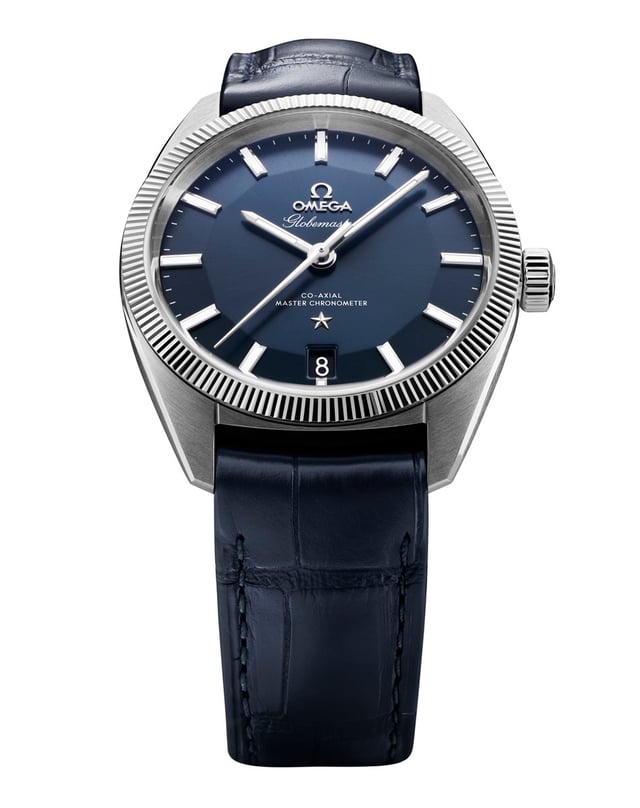
Omega: Globemaster Master Chronometer from 2015
Omega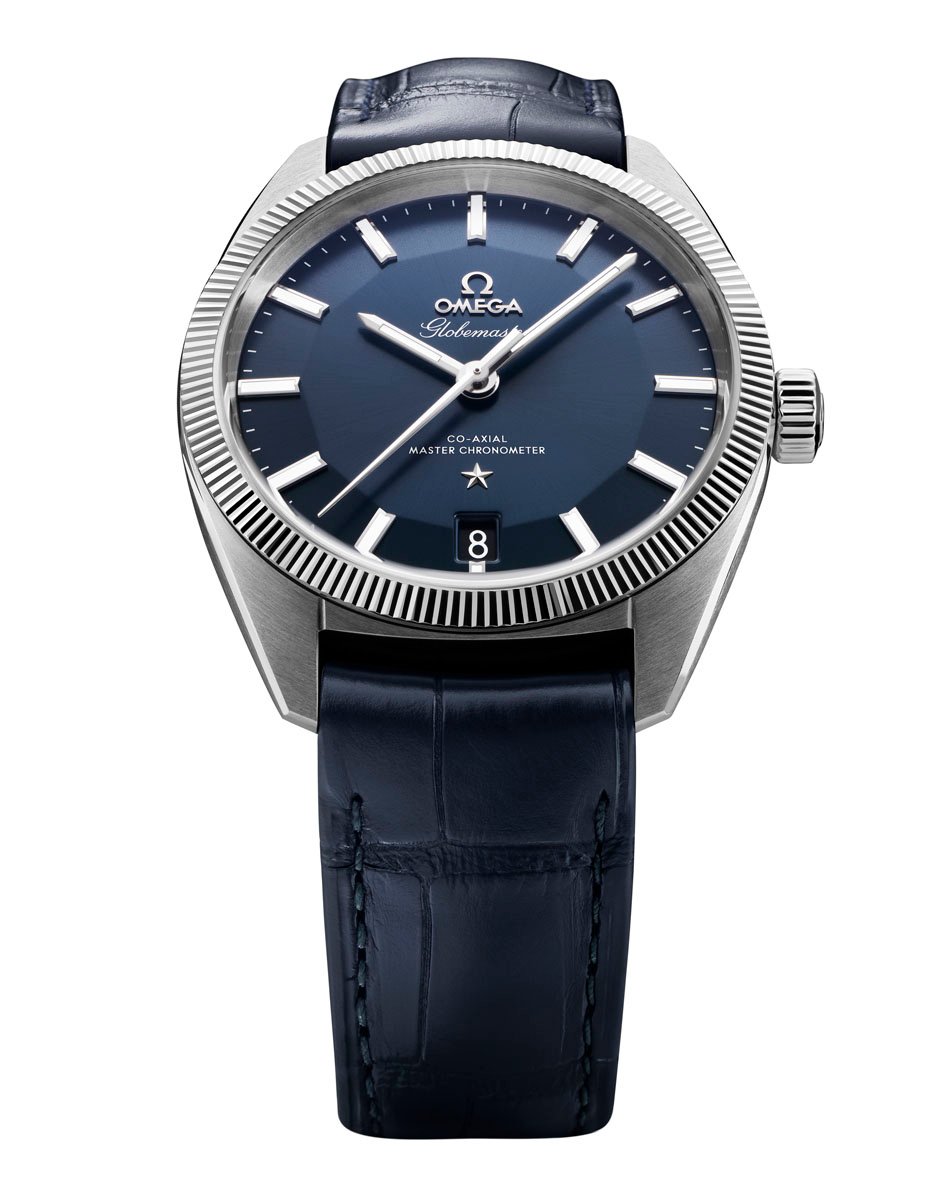
With the Globemaster, Omega introduced a new quality standard in 2015 that continues to shape the brand’s technical direction today. It became the first watch ever to receive Master Chronometer certification, a standard Omega had developed together with the Swiss Federal Institute of Metrology, METAS. While the traditional COSC test evaluates the uncased movement alone, the new standard was designed to assess the complete watch under conditions much closer to those encountered in everyday use.
COSC certification of the movement remained the first requirement. The finished watch then underwent additional testing for accuracy, power reserve, water resistance, and performance in magnetic fields of 15,000 gauss. Its average daily rate had to remain between 0 and +5 seconds. In this way, the Globemaster turned the antimagnetic movement technology Omega had introduced two years earlier into a broader and more comprehensive quality standard.
Power came from the self-winding Co-Axial caliber 8900. The 39mm Globemaster also drew clear visual links to Omega’s history of precision timekeeping. Its faceted “Pie-Pan” dial recalled historic Constellation models, as did the fluted bezel. The sapphire caseback also carried an observatory medallion surrounded by eight stars, a modern interpretation of the emblem found on early Constellation chronometers.
The significance of the Globemaster, however, extends far beyond a single model. Over the following years, Omega gradually introduced Master Chronometer certification across nearly all of its mechanical collections, from the Seamaster and Constellation to the Speedmaster. By 2025, more than 2.5 million Omega watches had met the standard.
Another important step followed in 2023 with the Laboratoire de Précision. Operating independently, the testing laboratory combines chronometer and Master Chronometer testing and is accredited and certified accordingly by SAS and METAS.
This development reached a new high point in 2026 with the Constellation Observatory. A newly developed acoustic measuring method, combined with optical hand detection, made it possible for the first time to certify a watch without a seconds hand as a Master Chronometer. The two-hand Constellation undergoes continuous testing over 25 days. It thus became the first hours-and-minutes-only watch to earn Master Chronometer certification.
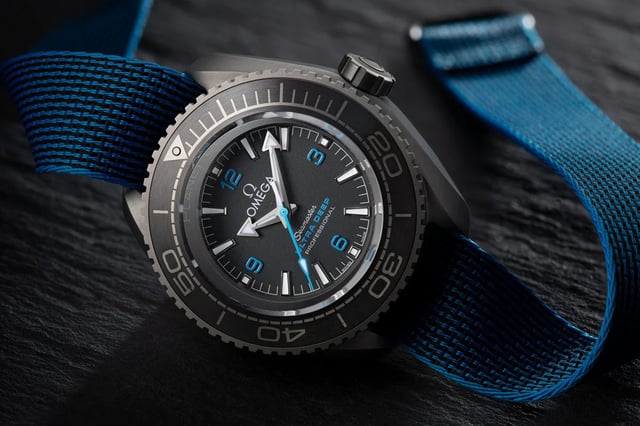
2019: Seamaster Planet Ocean Ultra Deep Professional
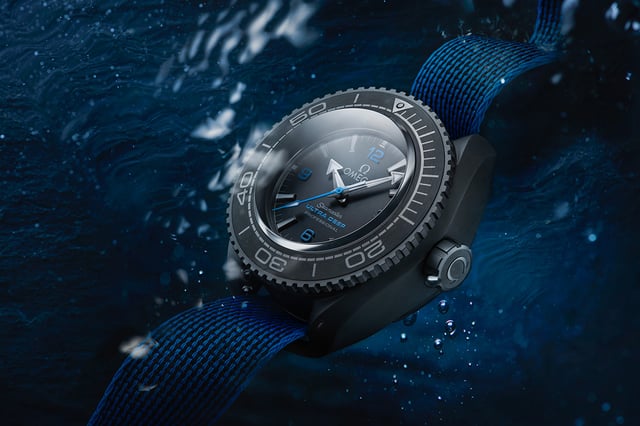
Omega: Seamaster Ultra Deep
Omega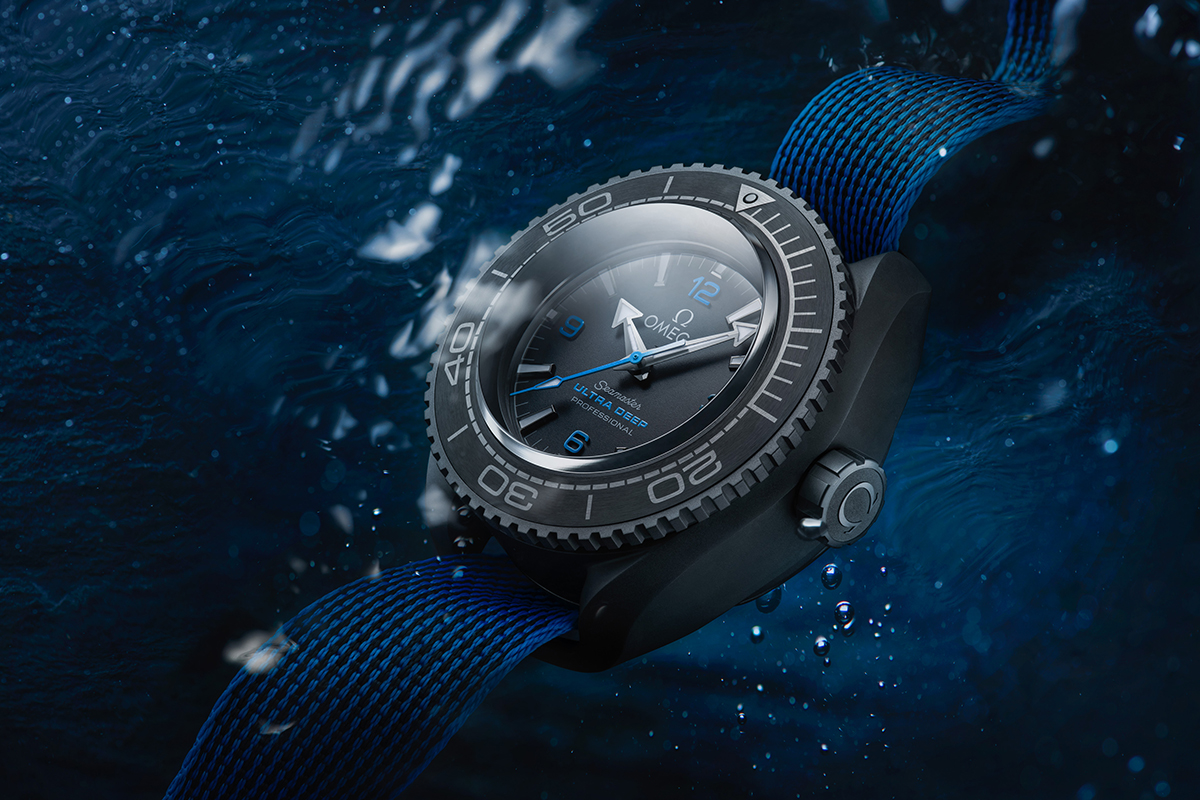
With the Seamaster Planet Ocean Ultra Deep Professional, Omega pushed the limits of the mechanical dive watch to new extremes in 2019. The watch was developed for Victor Vescovo’s “Five Deeps Expedition,” whose goal was to reach the deepest point of each of the world’s five oceans in a crewed submersible.
In May 2019, Vescovo piloted the Limiting Factor into the Mariana Trench. According to the measurements recorded at the time, the submersible reached a depth of 10,928 meters, and three specially developed Ultra Deep prototypes went with it. Two were mounted on the robotic arms of the submersible, while a third was attached to a so-called lander. Omega had set a new depth record for a watch.
To withstand such extreme conditions, Omega developed the watch from the ground up. Its case, nearly 28mm thick, was made from Grade 5 titanium, with sections for the case, bezel, caseback, and crown taken from the same titanium batch used for the pressure hull of the Limiting Factor. Particularly distinctive were the open “Manta” lugs integrated directly into the case. For the junction between the sapphire crystal and the case, Omega’s engineers took inspiration from the submersible’s conical viewing ports. A Liquidmetal bond helped distribute the enormous pressure forces more evenly.
The Ultra Deep was designed to withstand pressures well beyond those encountered during the actual dive. Omega had all three watches tested at 1,500 bar with a 25-percent safety margin, corresponding to a theoretical water depth of 15,000 meters. One of the watches even remained on the bottom of the Mariana Trench for around two and a half days after a technical issue affected its lander, surviving this unplanned long-duration exposure as well. The watches also passed Master Chronometer testing.
The record-setting project had a direct impact on Omega’s regular production models. In 2022, the brand transferred key design principles to the production Seamaster Planet Ocean Ultra Deep. The 45.5mm models are water-resistant to 6,000 meters and are offered in materials including Grade 5 titanium and Omega’s proprietary O-Megasteel alloy. Inside is the Co-Axial Master Chronometer caliber 8912. The titanium version even carries over the characteristic Manta lugs of the record watch.
The 2019 Ultra Deep therefore stands in a direct line with the Marine of 1932 and the Ploprof. As with those watches, Omega used an extreme technical challenge as a testing ground for new dive-watch solutions, this time all the way to the deepest point of the ocean.
This article was first published by WatchTime Germany.
- 1894: First Pocket Watch with an “Omega” Caliber
- 1932: The Waterproof Marine
- 1948: The Beginning of the Seamaster Saga
- 1952: The First Constellation
- 1957: Speedmaster CK 2915
- 1959/1962: Speedmaster CK 2998, the First Omega in Space
- 1969: Speedmaster Professional ST 105.012 “Moonwatch”
- 1971: The Ploprof
- 1993: Seamaster Professional Diver 300M
- 1999: Omega De Ville Co-Axial
- 2007: De Ville Hour Vision
- 2013: Seamaster Aqua Terra >15,000 Gauss
- 2015: Omega Globemaster Master Chronometer
- 2019: Seamaster Planet Ocean Ultra Deep Professional