The Graduate: A Close-Up on the Girard-Perregaux Laureato
The Girard-Perregaux Laureato has come of age
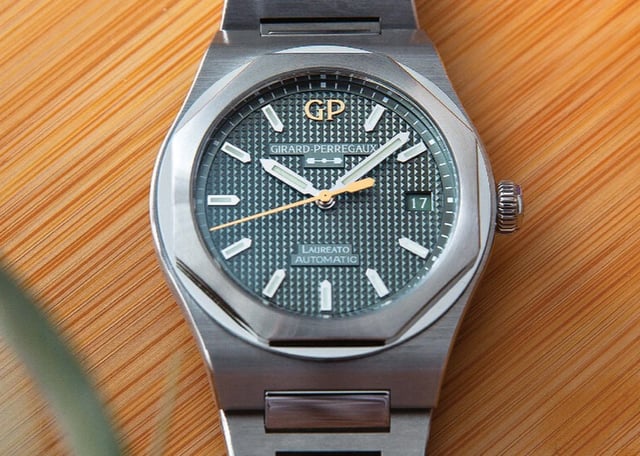
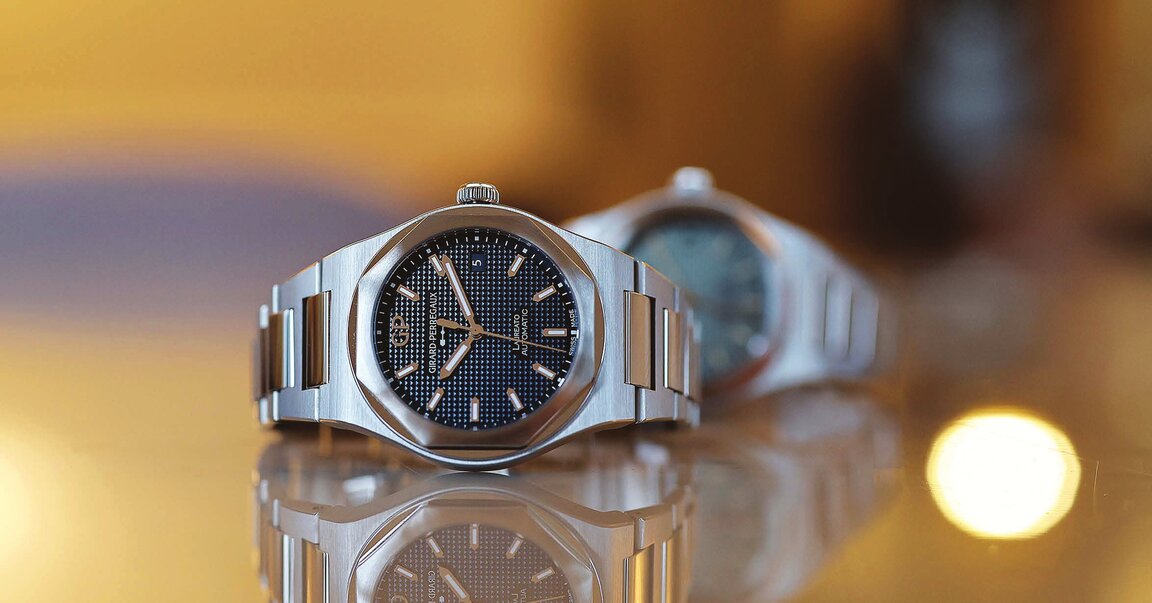
An eight-sided bezel does something funny to watch collectors’ brains: It sends them into overdrive. Synapses fire between references to famous watches, a certain celebrity designer and luxury lifestyles, but also hype, controversy and a range of emotions. It’s all often funneled into strong opinions. The Girard-Perregaux Laureato 38 mm sits quietly in the middle of this maelstrom.
Based on a model from the 1970s and tapping into the hottest modern category of watches today, the Laureato is heavy with context. But any watch should also be able to stand on its own. That, the Laureato certainly does, and in its 38-mm variant, it nails the proportions many modern enthusiasts crave. Does it all add up to perfect? Here’s what you need to know.
The Institution
Most watches are defined by their purpose, whether it’s diving, driving, flying or dressing up. But what kind of watch is the Girard-Perregaux Laureato 38 mm? Any watch enthusiast not living under a rock more or less knows the answer, even if they might struggle to put a name to it.
Some will use a vague term like “integrated bracelet” or “steel sports watch” for something like the Laureato — or a cringy one like “sports chic” or “urban chic.” They’re all ways of grasping at a label for watches influenced by a couple of seminal models designed in the 1970s by one Gérald Genta: the Audemars Piguet Royal Oak and Patek Philippe Nautilus.
The entire genre has long revolved around those two icons — to the degree that any watch with features even hinting at similarity can’t be discussed without mentioning them. We’re talking about features like faceted bezels, exposed screws and cases made to fit bracelets designed specifically for them (“integrated”). Those individual elements weren’t entirely novel when the Royal Oak debuted in 1972, but Genta and Audemars Piguet combined them in a compelling way and helped codify them into a certain style.
The real innovation, however, was in the concept of positioning a steel “sport watch” as a luxury item, without the pretension of an actual sporty purpose, and imbuing it with the kind of details and refined finishing previously reserved for the likes of elegant watches crafted from precious metals. Some would even credit this notion as having helped create the post-quartz crisis watch industry we know today.
Those prestige watches, however, are especially notable for their exclusivity and cost — which at first seems counterintuitive for being, in their most representative forms, steel and functionally basic. Each typically starts at around double the retail price of a Laureato, but market prices are often double that and more. They serve as flexes even for the likes of elite celebrities, so it’s no wonder that by the early 2020s, nearly every watchmaker seemed to capitalize on the hype and offer their own interpretation of the genre.
This is all well-trodden ground in the enthusiast conversation, but necessary context for discussing a watch like the Laureato. However, as this style has proliferated in recent years, it’s matured and evolved, taking on a very different character by 2025 than it had even a few years ago. Such watches now seem less referential, or like mere compromises for those who can’t afford a Royal Oak or Nautilus. They’ve become a bona fide (almost obligatory) genre and a creative outlet for watchmakers.
The Freshman
The first Laureato was launched in 1975, and it had the octagonal bezel, integrated bracelet design and hobnail dial texture that have remained consistent over the decades. They’re also features that inevitably taxonomize it in the Royal Oak and Nautilus family in enthusiasts’ minds.
But there are many elements that set the Laureato apart from the Genta-designed watches of the same decade. First, it wasn’t designed by Genta. Nor was it designed by Italian architect Adolfo Natalini, as has been erroneously reported. Girard-Perregaux confirmed with WatchTime that he was not the designer and was not employed by the brand. Like the vast majority of watches, the design is credited only to the brand itself and was “a collaborative effort.”
There’s similarly been confusion regarding the name’s origin, with Il Laureato meaning “The Graduate” in Italian and some having asserted that it was a reference to the 1967 Dustin Hoffman film. Others claim that it came from the watch's popularity as a graduation gift in Italy. The brand mentions that it might stem from having been “delivered with its COSC certification like a diploma.” The 1975 model was called simply “Quartz Chronometer,” and Girard-Perregaux only officially adopted the name Laureato in 1995.
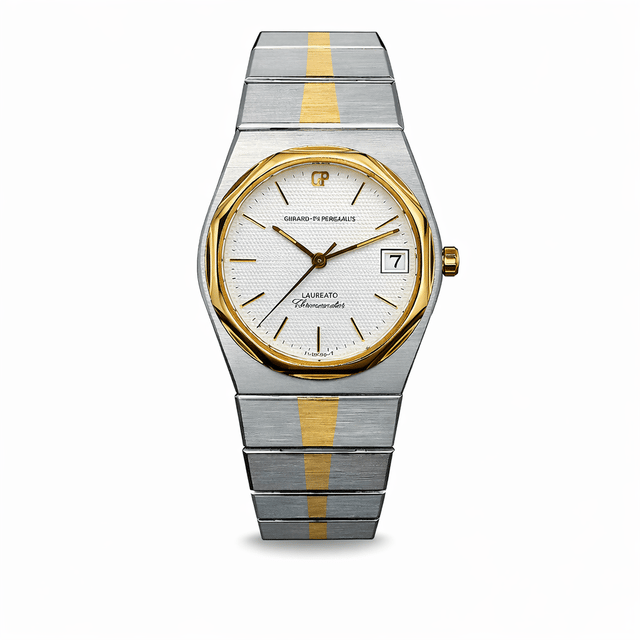
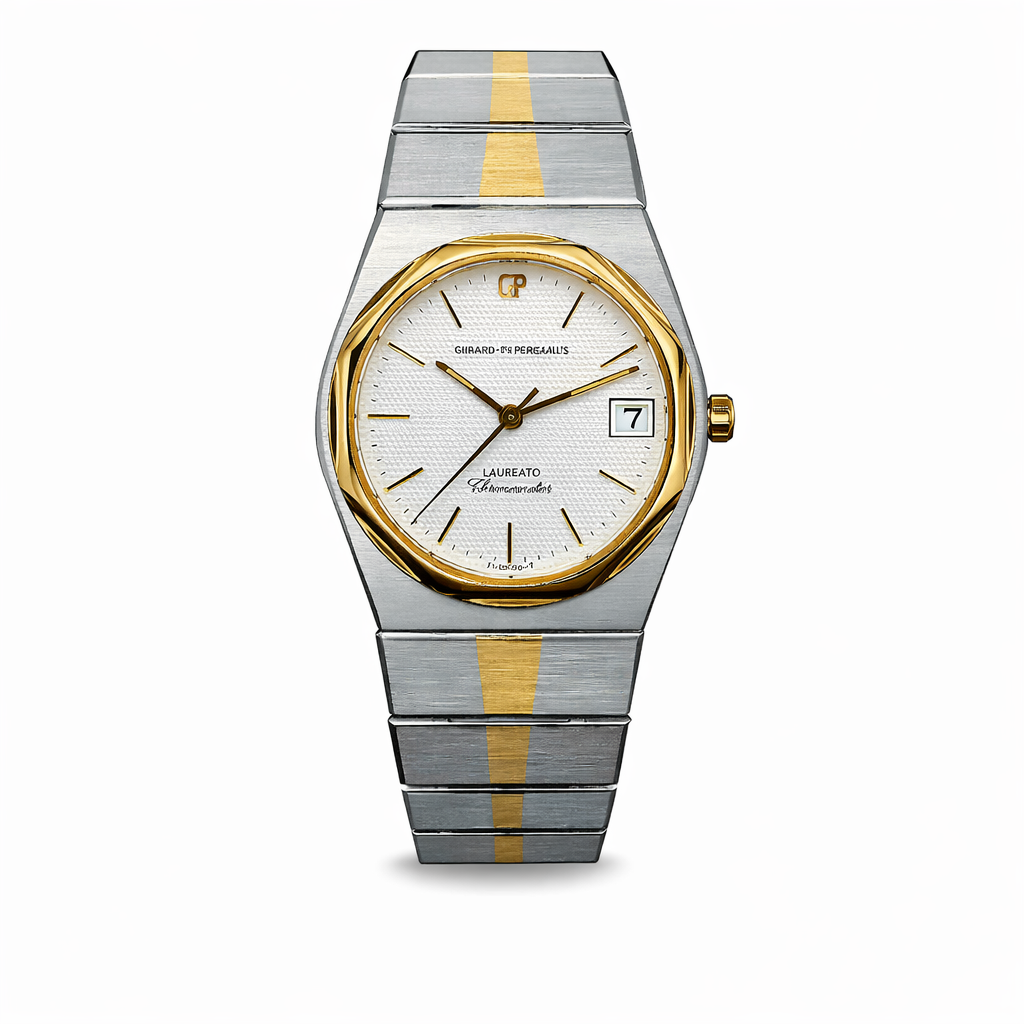
The Laureato might have been influenced by the success of the Royal Oak launched three years prior, but that’s hard to definitively substantiate. And, more importantly, it differs in significant ways. The Royal Oak’s prominent brushed bezel gave it a more aggressively masculine presence — and it was automatic in a time when quartz was ascendant.
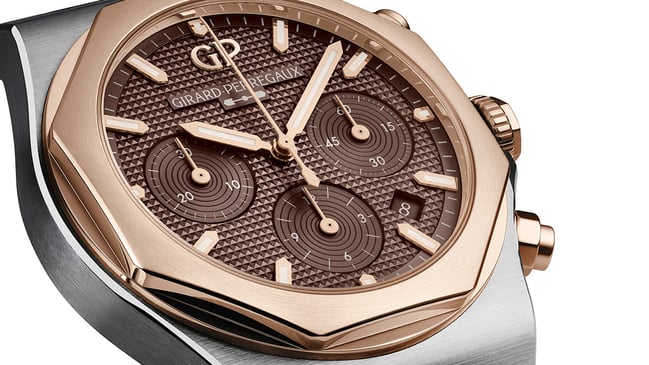
The Laureato, on the other hand, had a more elegant character with its thin, polished bezel, and it ran on an in-house quartz movement. Quartz was still a young field in which Girard-Perregaux was a leader at the time. The Laureato wouldn’t get an automatic movement until 20 years later. In 1984 came the Nautilus-reminiscent polished center links, and by the time it went automatic and was renamed in 1995, it was more or less the steel luxury sport watch we know today.
The Sophomore
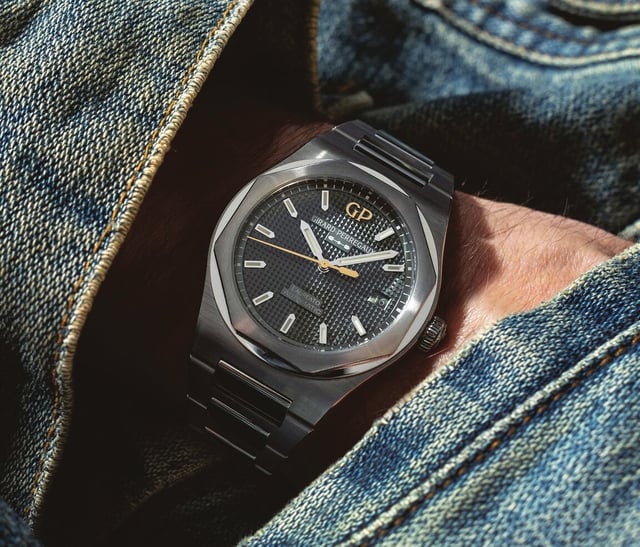
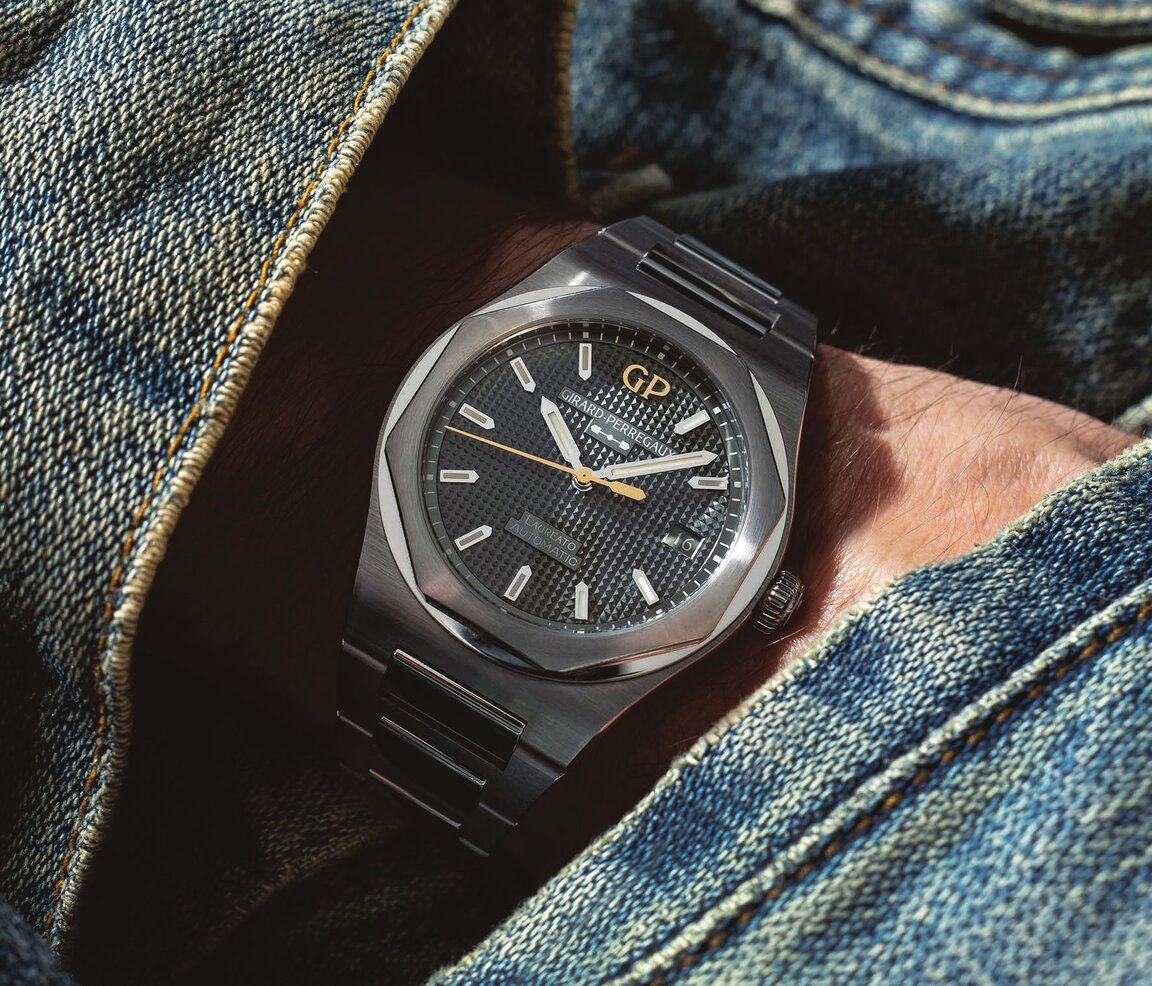
It was in 2017, however, that the Laureato came into its own. The year before had seen a return to a more restrained size and style from the aggressive designs of the Evo variants, which had dominated the collection since 2003. The limited-edition 2016 model had the thin, polished bezel of earlier models, but it was quickly followed up in 2017 with a subtly but impactfully redesigned collection.
With a slightly broader bezel now featuring a brushed top surface, the 2017 Laureato collection included multiple variants in 42 mm, 38 mm and other sizes. Positioned as either feminine or unisex at the time, the 38 mm subsequently faded from the lineup. The Laureato collection went in the direction of the Evo’s edgy designs, sporty looks, bold sizes, alternative materials and skeletonization.
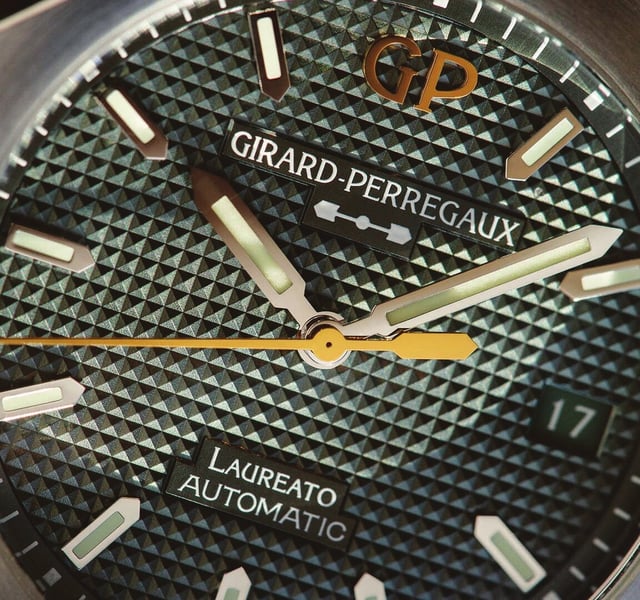
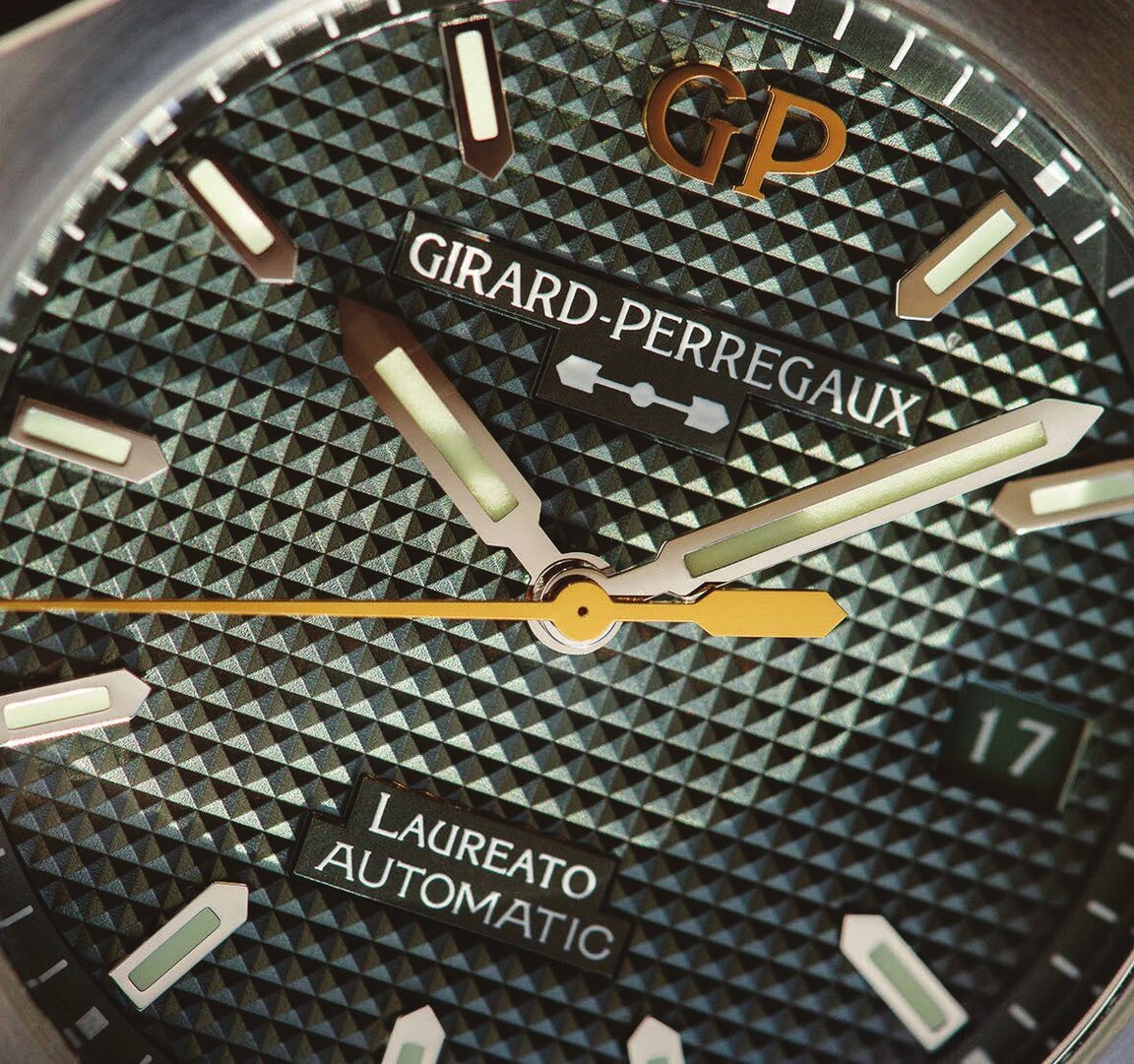
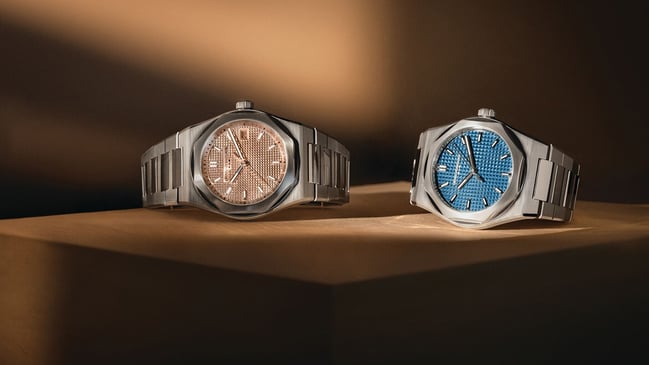
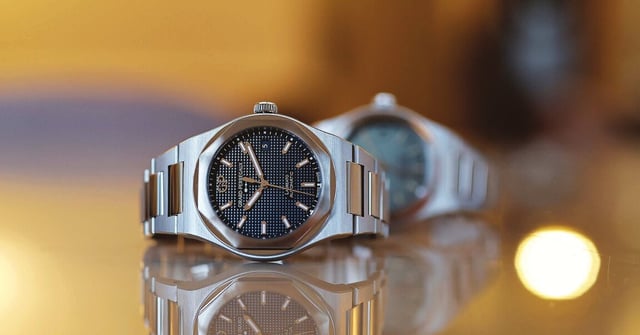
When the Laureato 38 mm was reintroduced in 2023 with only a copper dial variant, the watch world was finally ready for it. It was hailed as the Laureato finally returning to its roots and fulfilling its potential, and the additions in 2024 with dial options of blue and green (reviewed here) were welcomed with enthusiasm.
However, the blue dial 38-mm model from 2024, for example, is nearly indistinguishable from the 2017 release. The major difference? Their reception. Today, it’s much easier for a watch like the Laureato to be appraised on its own merits and style, and it’s increasingly outmoded to call a 38-mm watch feminine or unisex.
Curriculum Vitae
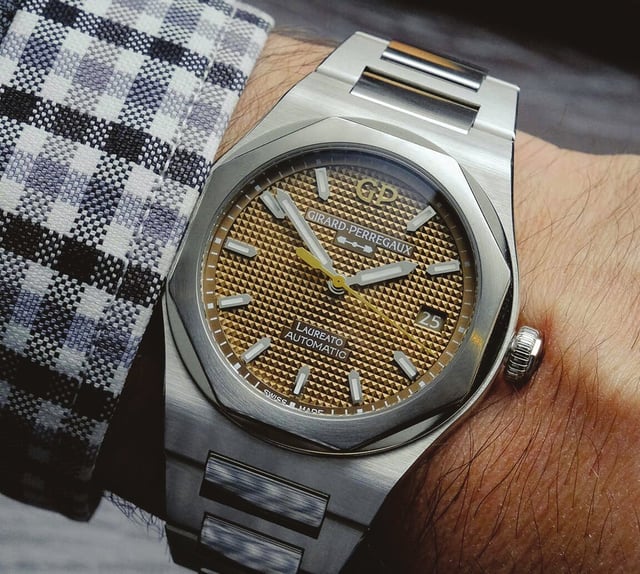
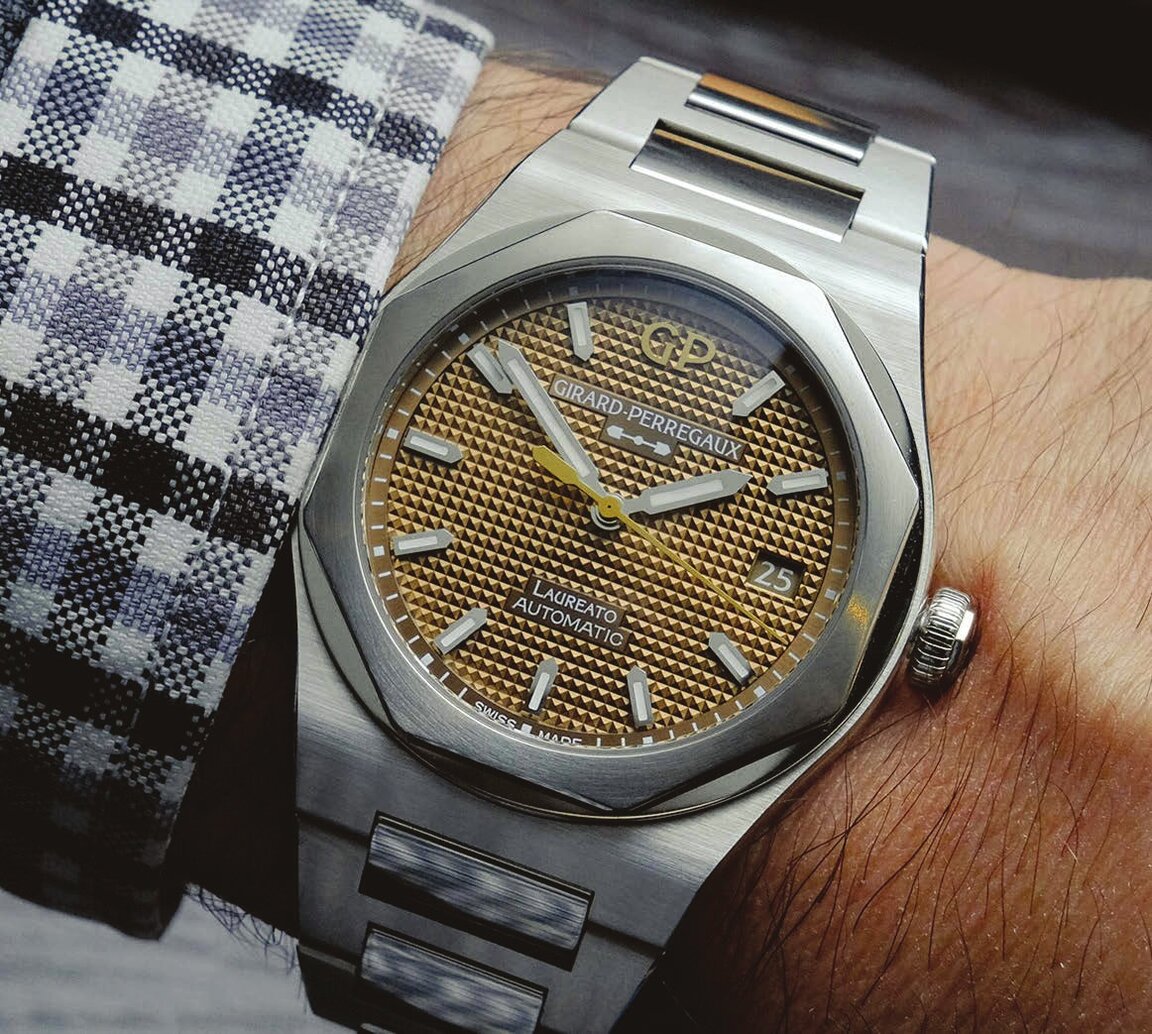
The Laureato would seem to have all the ingredients to make it a modern classic: the history, the brand prestige, the thinness, the bezel, the bracelet, the style. But does it have that “X factor” that makes it special and exciting?
In 2025, there are watches available at nearly every price point made to scratch a similar itch whether it’s for a prestige watch, an integrated bracelet, an octagonal bezel or what have you. There are many compelling options, but very few offer the provenance of a genuine 1970s pedigree and the prestigious, historic name of the Laureato.
Wearing the Laureato around in the real world is a quieter experience than those famous, over-hyped designs. Yes, the Laureato 38 mm catches the eye and elicits reactions of “very nice” and the like, but it’s less aggressively styled than a Royal Oak, and that’s been its character since 1975. It’s a matter of predilection whether that’s a pro or con for you.
More than anything else, the Laureato 38 mm is a fantastic watch for everyday wear. It balances sportiness and refinement, projects taste and is unique enough to remain interesting, but without shouting its presence or being a major security risk.
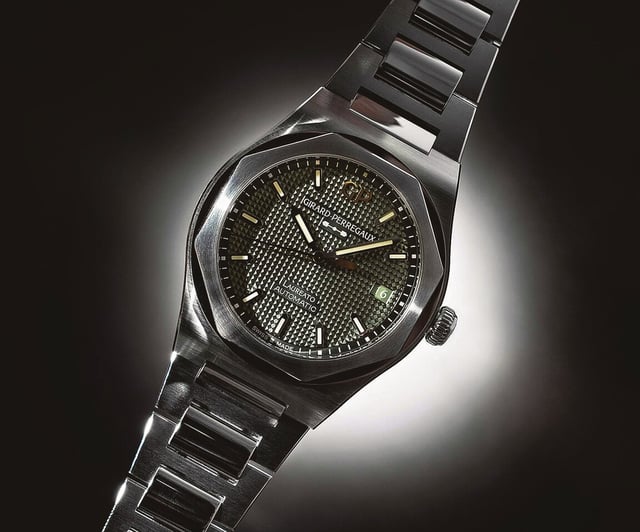
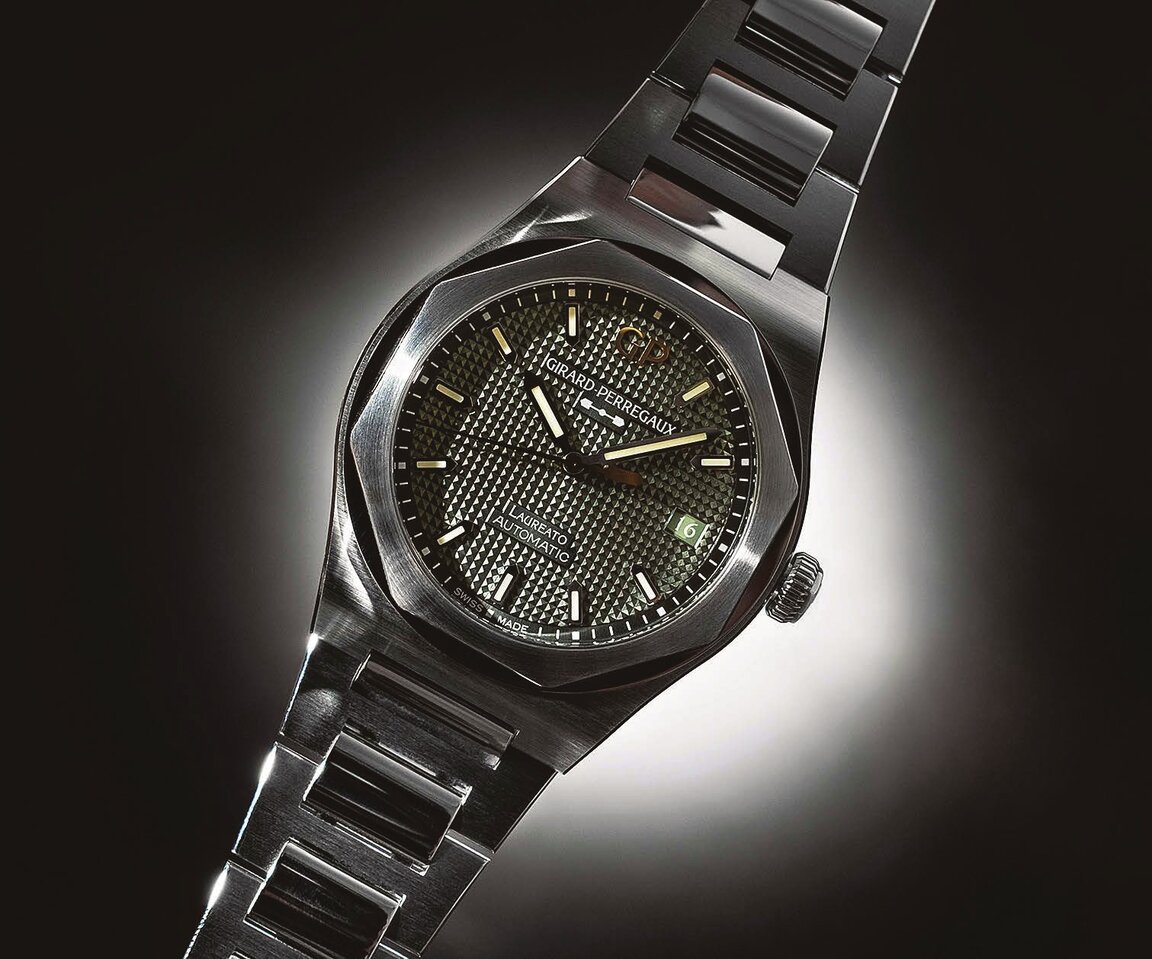
The finishing and construction are textbook luxury sport watch design: brushed surfaces projecting a sporty, pragmatic image offset by polished elements communicating luxury and elegance. At 10 mm thick, with fully articulating links, it wears comfortably and proportionally.
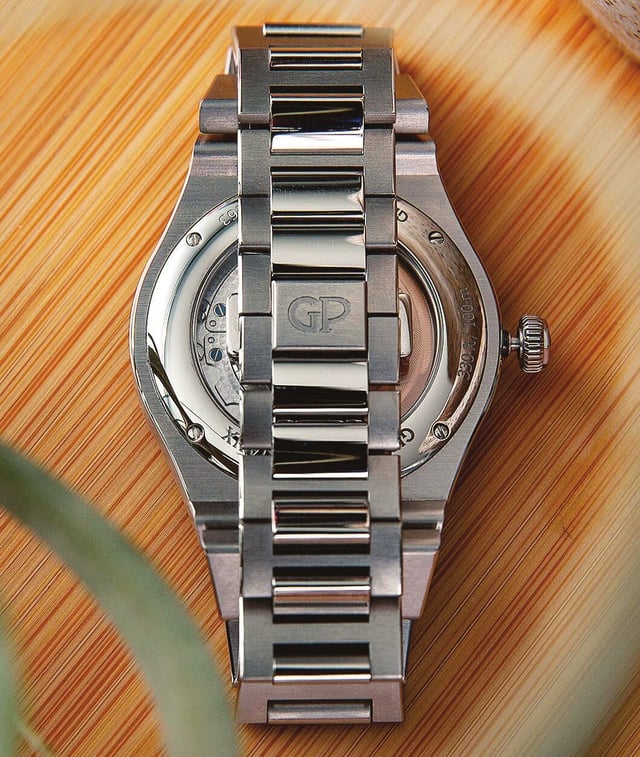
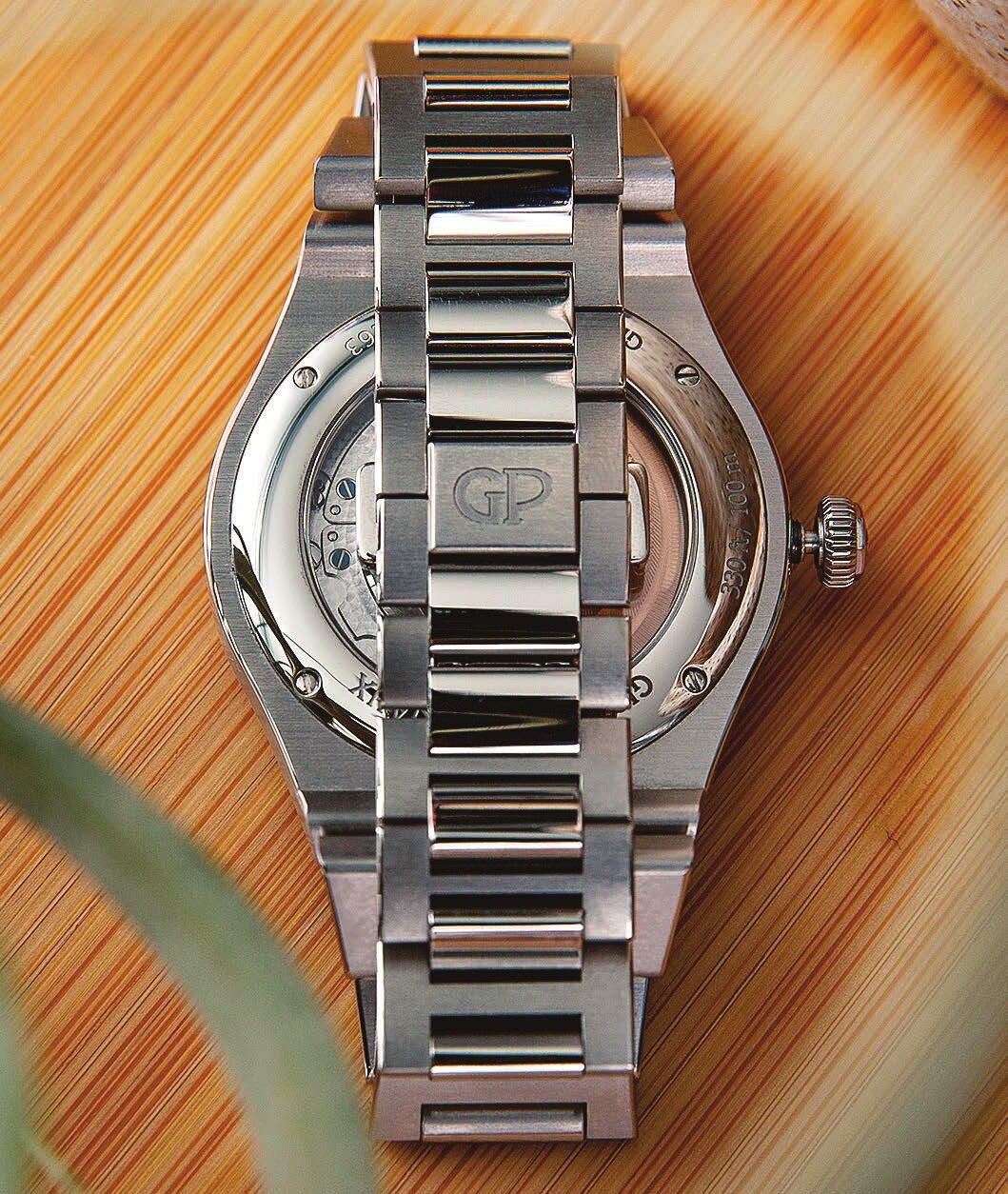
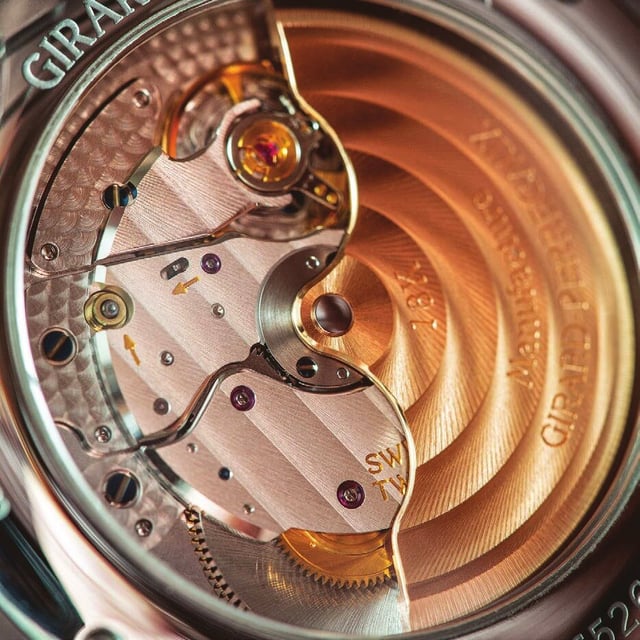
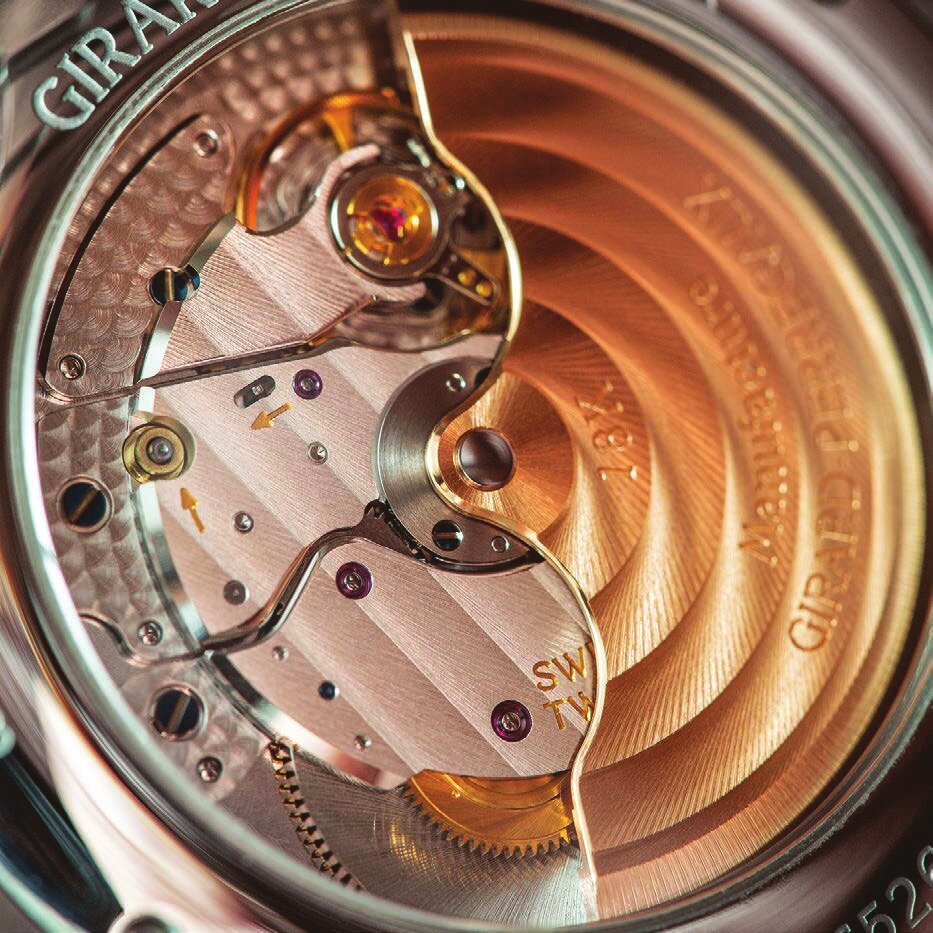
Visible through the caseback, the in-house GP03300 automatic movement features polished chamfers, Geneva stripes, snailing and a gold rotor. With a power reserve of 46 hours, it remains solid, though an update would enhance competitiveness.
At around $14,900, the Laureato 38 mm sits in a sweet spot: elevated but still practical for daily wear. For those drawn to the style and shopping in this range, it remains one of the most restrained, balanced and versatile options in the segment.
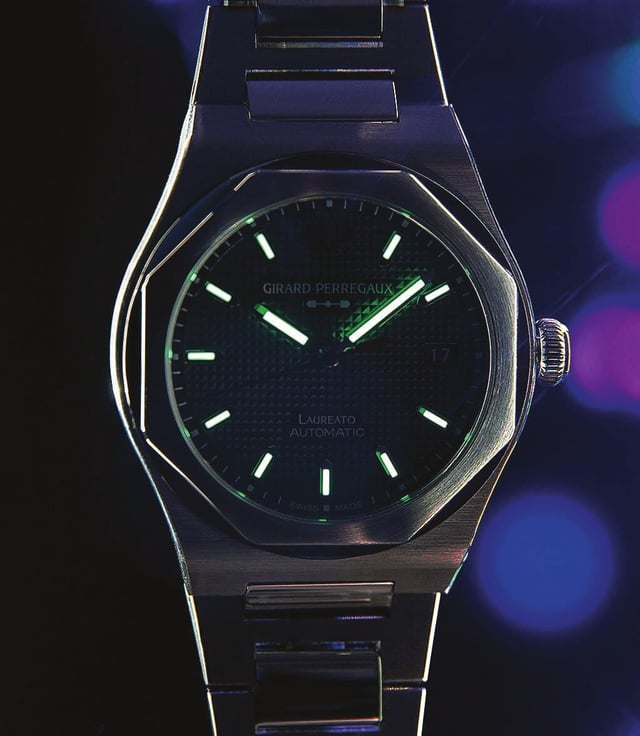
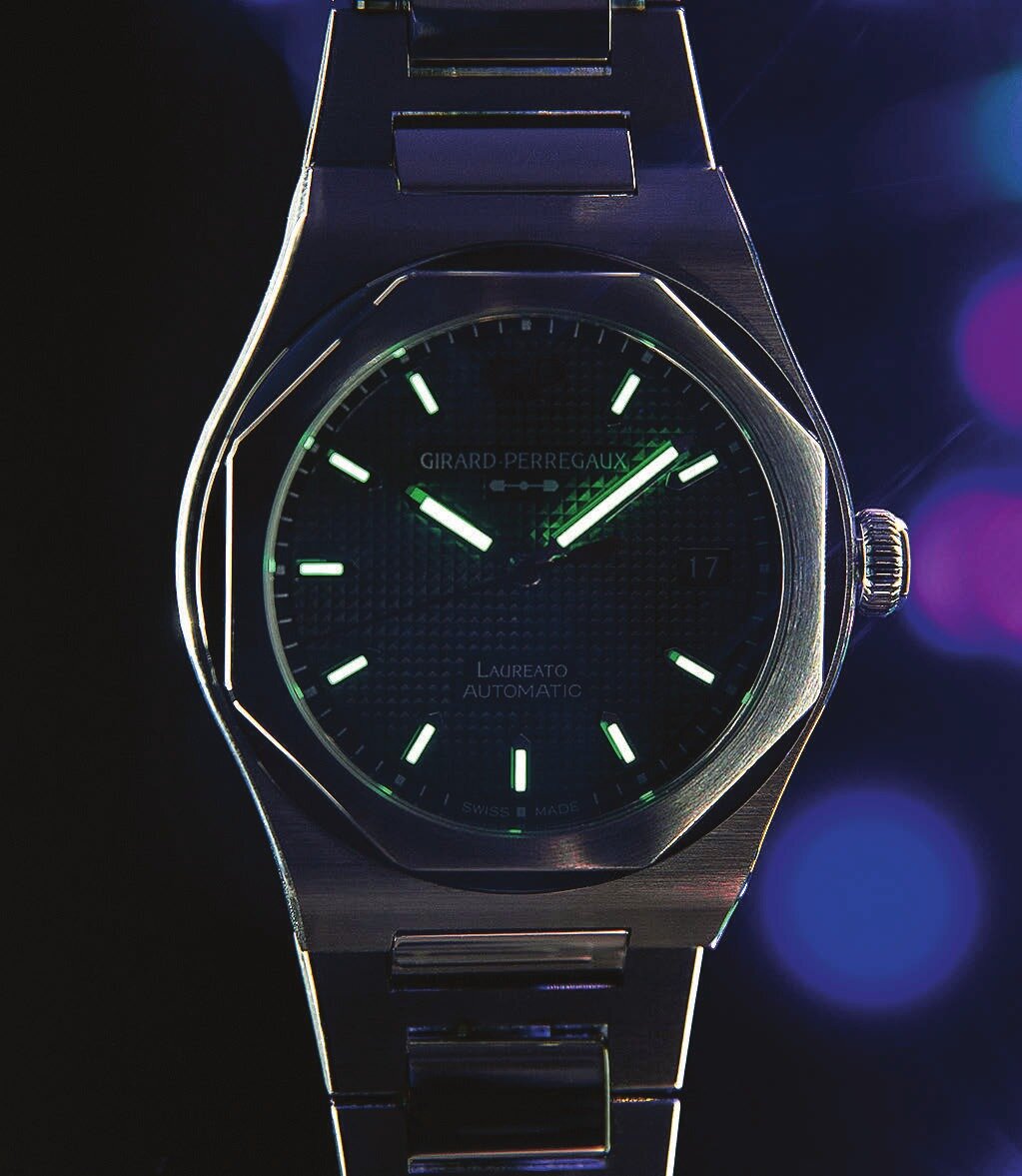
SPECS – Girard-Perregaux Laureato 38 mm
Manufacturer:
Girard-Perregaux, Rue Numa Droz 136, La Chaux-de-Fonds, Neuchâtel 2300, Switzerland
Reference number:
81005-11-3407-1CM
Functions:
Hours, minutes, seconds, date
Movement:
Girard-Perregaux GP03300 automatic; 46-hour power reserve
Case:
Polished and satin-finished stainless steel; sapphire crystal; water resistant to 100 m
Bracelet and clasp:
Steel bracelet, triple-folding clasp
Dimensions:
Diameter = 38 mm; thickness = 10 mm; lug-to-lug = 44.5 mm
Variations:
Copper dial (Ref. 81005-11-3154-1CM); blue dial (Ref. 81005-11-3460-1CM); green dial (Ref. 81005-11-3407-1CM)
Price:
$14,900
This article was originally published in the March / April 2025 Issue. To subscribe to the print edition of WatchTme Magazine, click here.