Amida's Digitrend Finally Gets the Lume It Deserves
A digital-mechanical throwback evolves
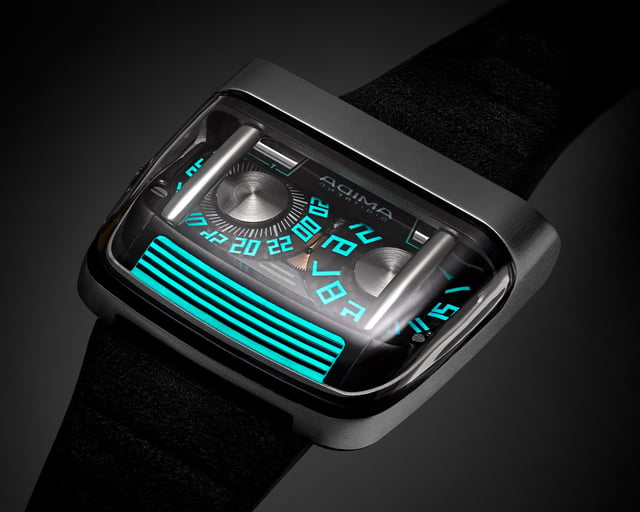
Amida had a varied range since its founding around a century ago. But the brand is today essentially synonymous with a single product and style. Resurrected in 2024, it’s all-in on the “driver’s-style,” ‘70s-funky Digitrend. But is it stuck in the past? No, sir. Reinterpreting the design with a sapphire “hood” last year made the Digitrend suddenly as futuristic as the original must have seemed back in the day. Now a new, luminescent version takes the concept a step further with a sequel to 2025’s Open Sapphire (“OS”) model as the Amida Digitrend OSII Black.
With a rather atypical shape and use, a refresher is perhaps in order: The Digitrend’s time display faces the user from the side of the wrist. It does so with the hour and minute discs mounted parallel to the mainplate — but the time display is projected at a 90-degree angle by prisms. Meanwhile, the watch’s body has an automotive fastback-style design with brushed steel that slopes toward the outside of the wrist. The Open Sapphire version, however, replaces a section of that steel with sapphire crystal to display the discs, and it changes the character of the watch considerably.
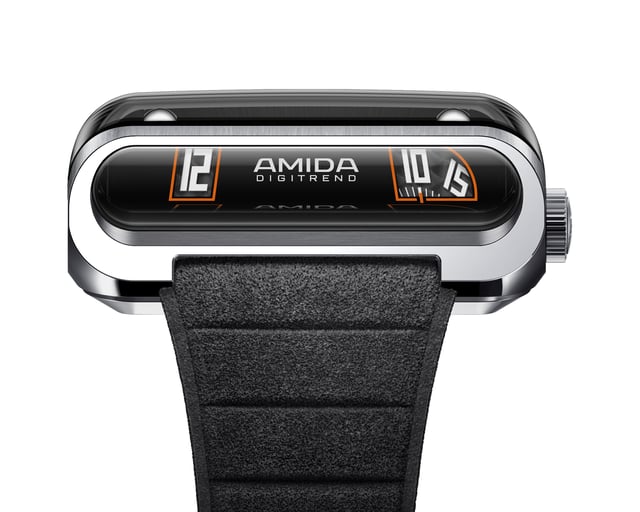
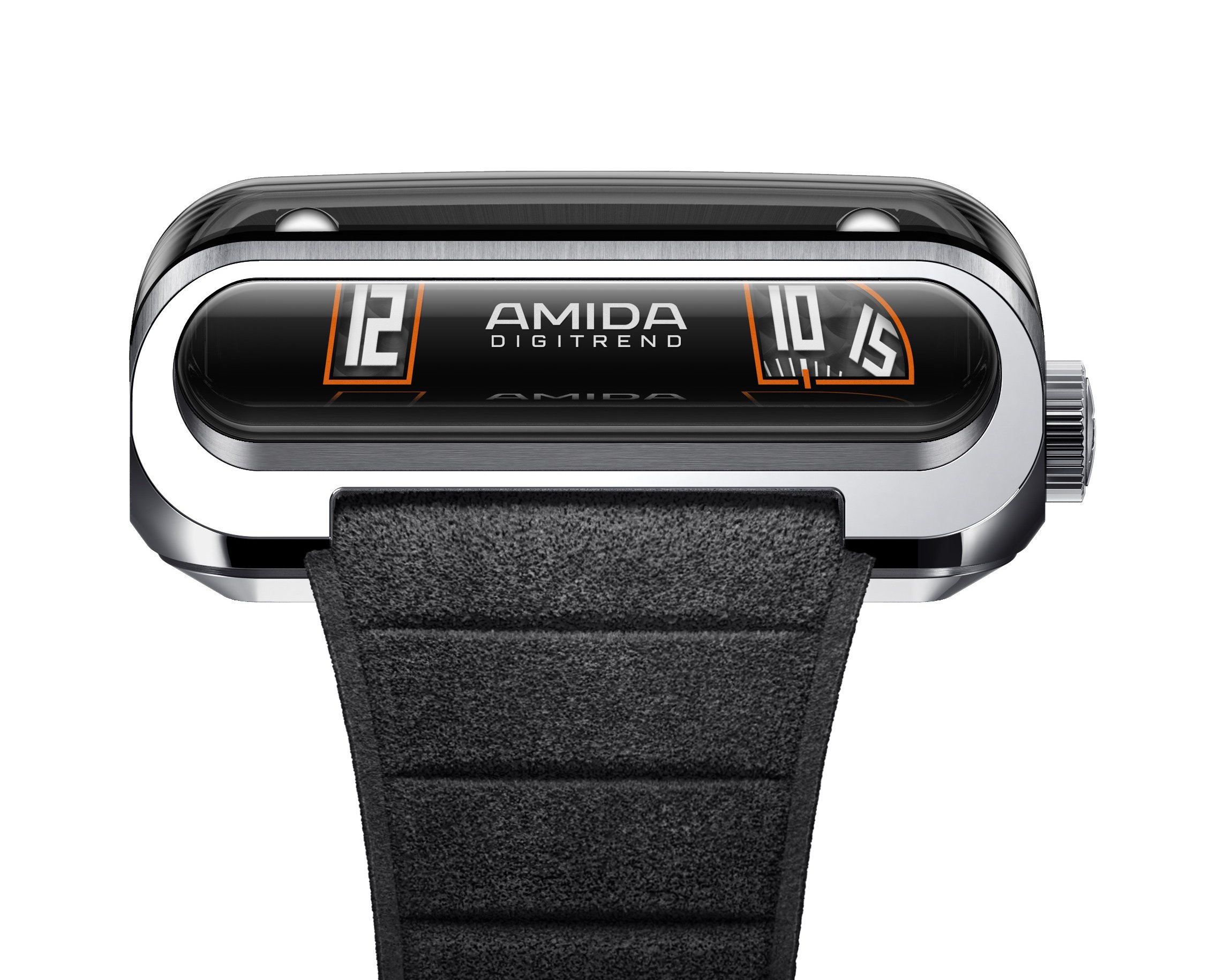
Ostensibly intended for easy reading with one’s hands on a steering wheel, the term “driver’s watch” is often applied to this and designs of the same apparent purpose. Some of the early digital LED watches took this approach. The Girard Perregaux Casquette and Bulova Computron, for example, debuted in 1976 — the same year as Amida’s Digitrend. Before that, in 1972, the first solar-charging watch, the Synchronar 2100, had solar panels on top and a similar form factor.
Amida’s design might be comparable, but it was a completely different product in one significant way: It was powered by an unwinding spring rather than batteries and electricity. In other words, it was mechanical. In the Open Sapphire version, that difference is emphasized, its trick is revealed, and its mechanical nature becomes the centerpiece. With the automatic Soprod Newton P024 (38-hour power reserve) as the base movement, an in-house designed module provides jump-hour functionality.
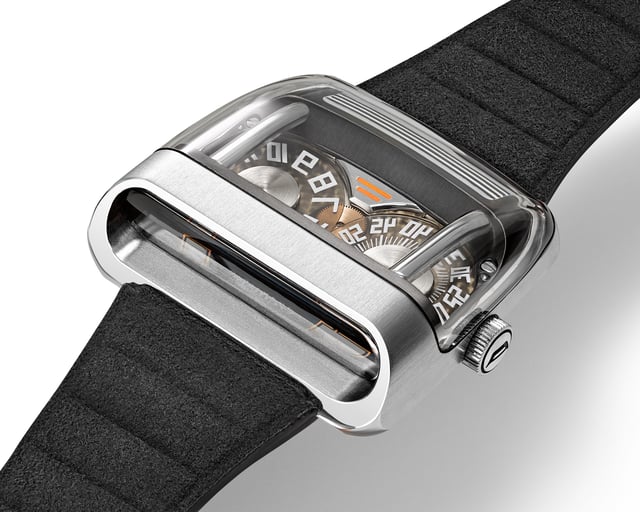
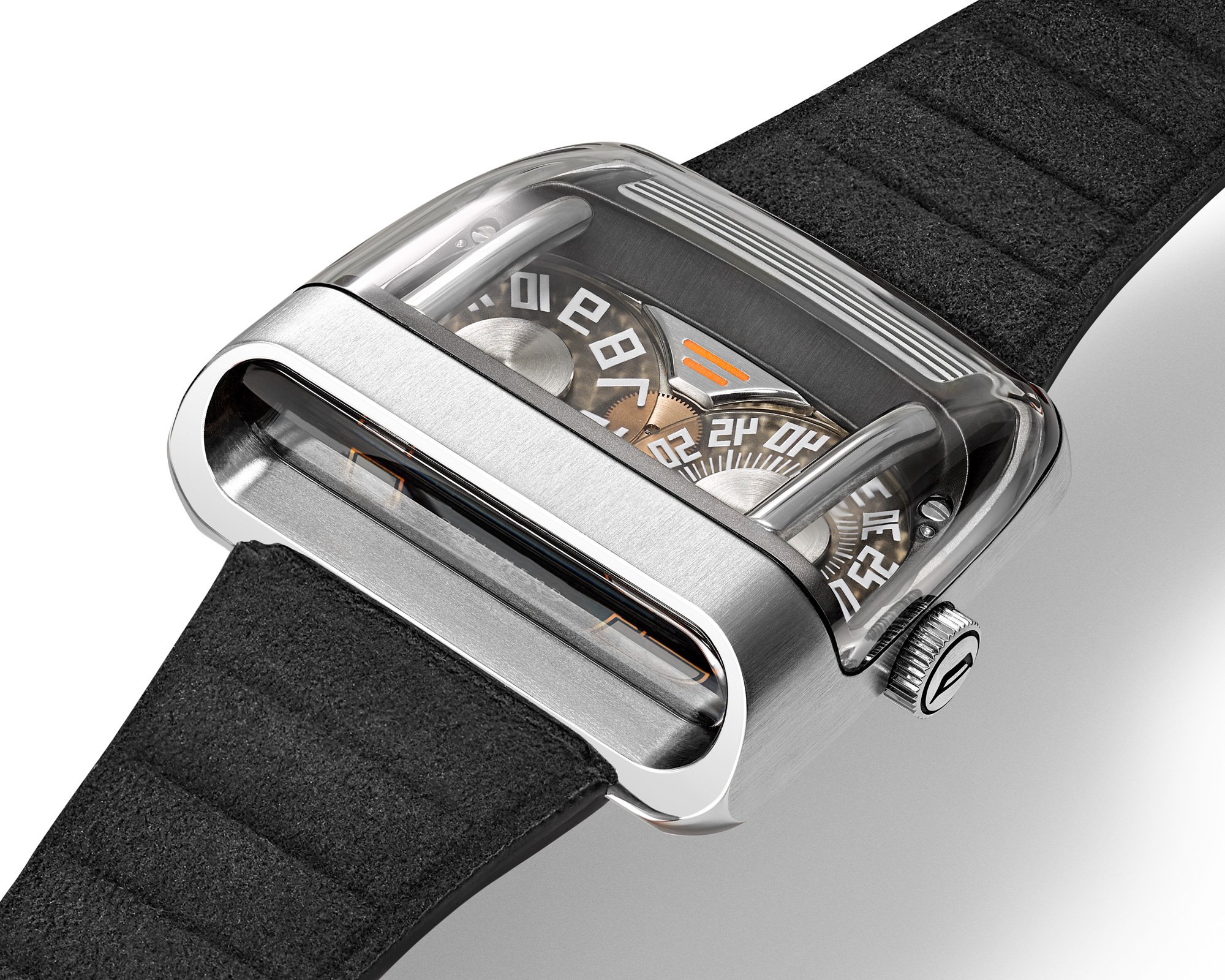
You can see a number of its components through the display caseback, while the top view reveals the movement’s dial side with transparent hour and minute discs allowing for a view of the baseplate and some other components beneath. Exposing the discs might seem like a purely aesthetic choice, but it has one significant practical function: it allows for the use of lume. Exposing the discs to light means any luminescent paint would have the opportunity to charge.
On the standard all-metal version, only the currently displayed digits would be able to absorb some light — and even then, they probably wouldn’t get much through those prisms as well as the hood under which the time display is tucked. Moreover, as the displays advance, the new digits would be completely uncharged. It makes sense that the brand hasn’t previously used lume at all for the Digitrend.
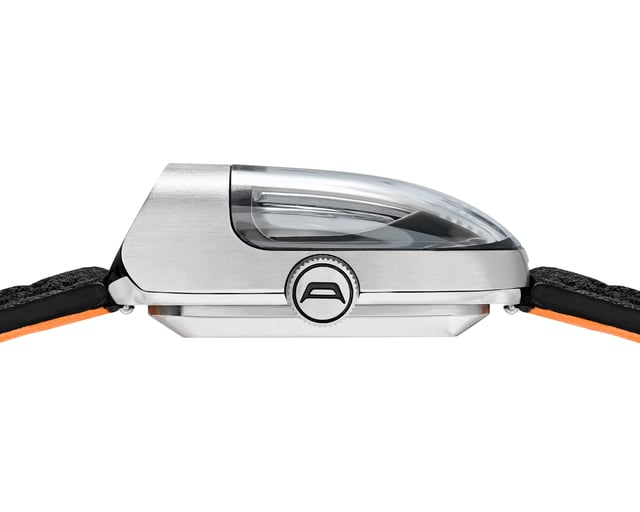
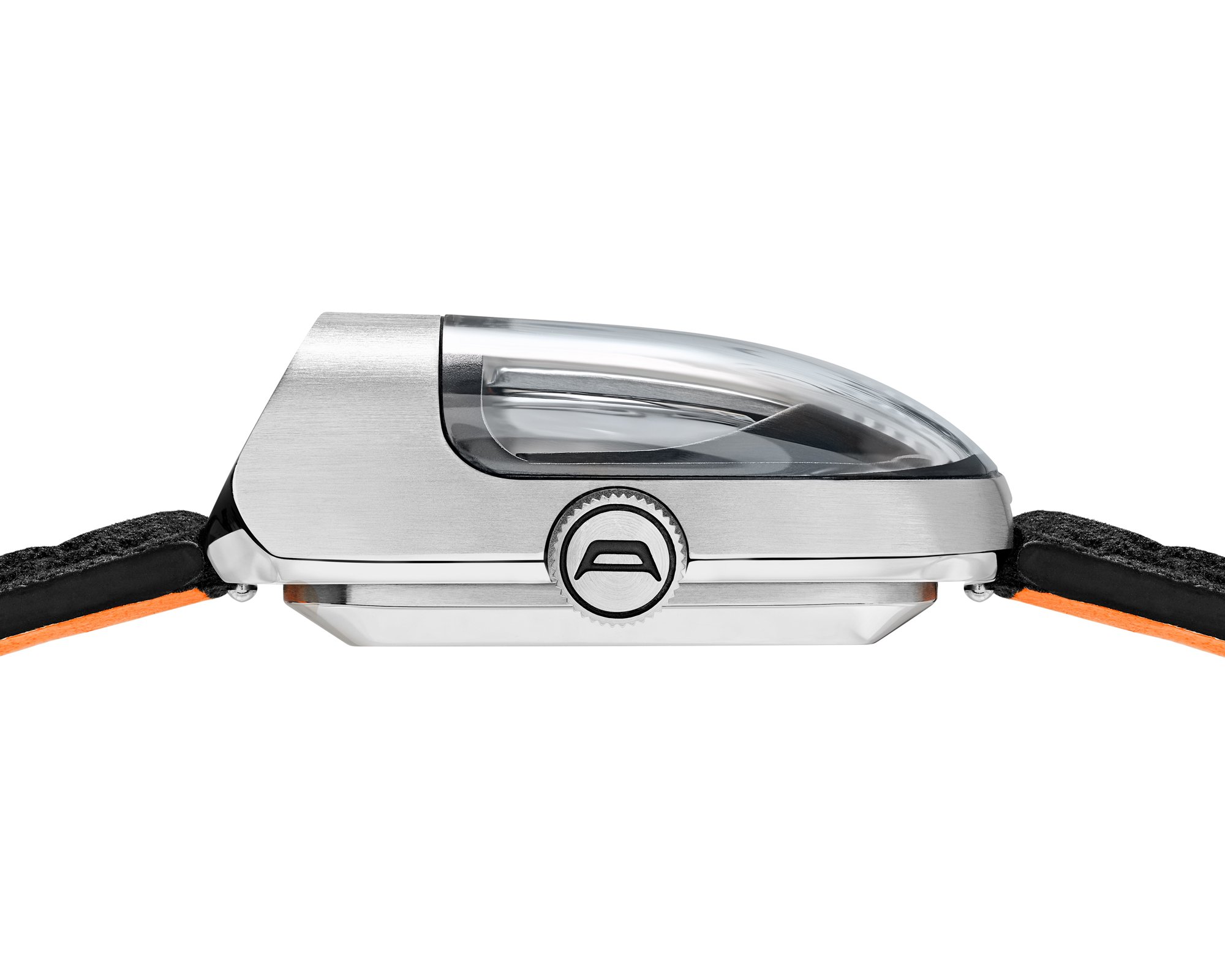
For the Digitrend OSII, that changes along with the surrounding components’ design (as compared to the first Open Sapphire model). Not only do the numerals glow in the dark, but there are some elements of decorative lume as well. These are only aesthetic accents, but they achieve their purpose well: looking cool and driving home the technical and retro-futuristic concept — and they’re emphasized due to the surrounding components getting a black DLC coating.
Measuring 39.6mm wide and 39mm long, it’s not going to wear like a typical watch. But the lugless design helps it fit easier than one might expect, even with a 15.6mm thickness and avant-garde shape. Limited to 150 examples, the Amida Digitrend OSII Black (Reference: LRD-05-Noir) has a price of CHF 5,150 on a strap or CHF 5,500 on a steel bracelet.
Learn more on Amida’s website, here.