Ad
Ad
Ad
Ad
Ad
Ad
Reading time 3 min.

Did You Know That: A Tourbillon Is Not A Complication
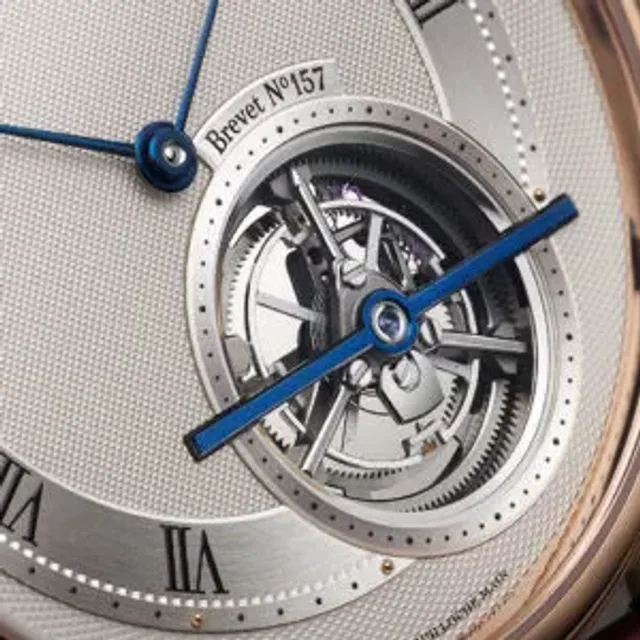
Breguet_Classique_Tourbillon_ExtraPlat_Anniversaire_dialCU_1000-300x300
© PR

This article is from the WatchTime Archives and was originally published in February 2022.

In a successful attempt to cancel out as much of the influence of gravity on the precision of a pocket watch, Abraham-Louis Breguet invented the tourbillon. On June 26, 1801, he was granted a patent for it, yet the production for clients didn't commence before 1805. Even after the patent expired, a pocket watch with a tourbillon remained rare, as it took exceptional skills to craft. In wristwatches, the tourbillon was a late bloomer. Some brands, including Omega, experimented with tourbillon movements in prototypes, but it wasn't until after the quartz crisis that this complication became truly popular and more commonly seen.
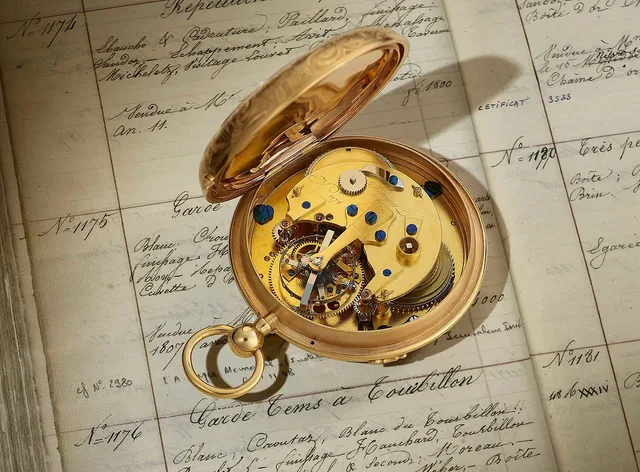
Breguet-tourbillon-pocketwatch_1000
© PR

Many still think that the tourbillon is a complication. While it is most certainly complex to make, it is an addition to the escapement of the watch. As this is an essential piece of a mechanical watch, it doesn't count as a complication. In this same light is also a remontoire, or the co-axial escapement invented by George Daniels, not a complication, while they do require considerable expertise to make.
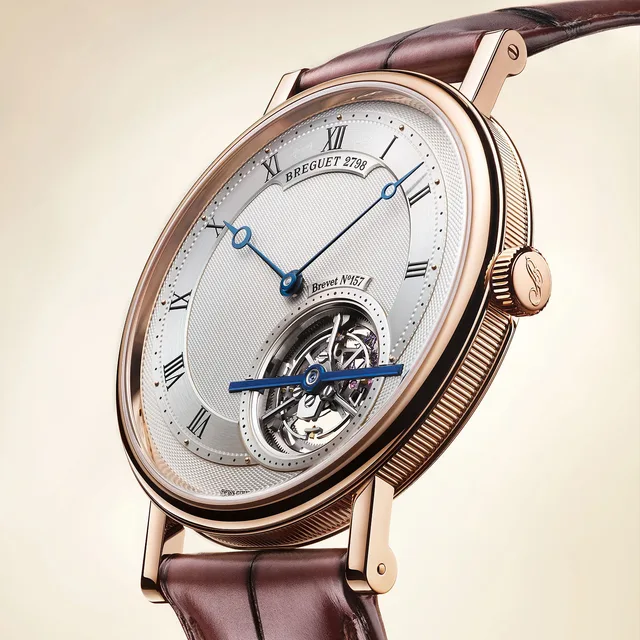
Breguet Classique Tourbillon Extra-Plat Anniversaire
Breguet Classique Tourbillon Extra-Plat Anniversaire © PR

This brings up the question of what is a complication? The answer to that depends on who you are asking. A purist might say anything but the hour hand. Early clocks had only a single hand to tell the time. However, as we are talking here about wristwatches, the most widely accepted consensus on this matter is that any added function to a watch beyond the display of hours, minutes, and seconds counts as a complication. So even when a 60-seconds tourbillon doubles as a seconds hand, it still doesn't make the cut.

Do you have any questions you want the answer to? Ask us in the comment box below, and we might feature it in an upcoming edition of "Did you know that…."

Archiv

Latest Articles

Ebel Turns 115. Its Anniversary Watches Split the Difference Between Mechanics and Sparkle - One milestone, told two ways
Ebel marks its 115th anniversary with two limited Sport Classic watches — a Dubois Dépraz chronograph and a gemstone-set quartz model.
4 minutes
Sep 11, 2026
Louis Vuitton: Five New Directions for the Spin Time Complication - Round and round and round
Five new Tambour Spin Time models from Louis Vuitton bring in-house calibers, a world-time antipode function, a flying tourbillon, and an opal dial — here are all the details.
6 minutes
Sep 10, 2026
Norqain Independence Skeleton Titanium: Lightweight and Uncompromising - Lightweight, open-worked, and all black
Weighing a mere 82 grams, the new Norqain Independence Skeleton Titanium combines a Grade 5 titanium case with a fully skeletonized movement and COSC-certified precision.
3 minutes
Sep 11, 2026

You might also be interested in

To the Summit without Oxygen: A Spotlight on the Montblanc 1858 Geosphere 0 Oxygen
Montblanc is emphasizing the meaning of its brand name to a greater degree and creating innovative watches connected to alpinism. The company recently collaborated with extreme mountaineer Reinhold Messner to create a watch with no oxygen inside its case.
9 minutes
May 25, 2026
James Bond's Watches: The Complete Movie Timeline - FEATURE
He’s the world’s most famous secret agent, and the selection of watches on his wrist is at least as varied as the parade of “Bond girls” at his side. Our timeline presents an overview of James Bond's watches throughout the years.
7 minutes
Who Owns What: A Guide to the Watch Groups - INDUSTRY
We present here a guide to the major watch groups and their holdings, including Swatch Group, Richemont, LVMH, Kering Group, Seiko Group and others.
9 minutes
Ad
Ad
Ad
Ad
Ad