Angelus Revives the Tinkler 1958
Revisiting a forgotten chapter of repeater watchmaking

With the Tinkler 1958, Angelus revived one of the rarest and most characterful chapters of its own history. The new repeater watch is not a simple reinterpretation of a historical theme, but an exceptionally close, stylistically precise, and technically ambitious homage to a model that was among the most remarkable wristwatches of its time in 1958. Back then, the manufacture combined a quarter-hour repeater with automatic winding and water-resistant construction. Now the Tinkler returns in two limited editions: in 18-carat yellow gold, limited to 15 pieces, and in stainless steel with an edition of 25 pieces.
Angelus – Tinkler 1958
Angelus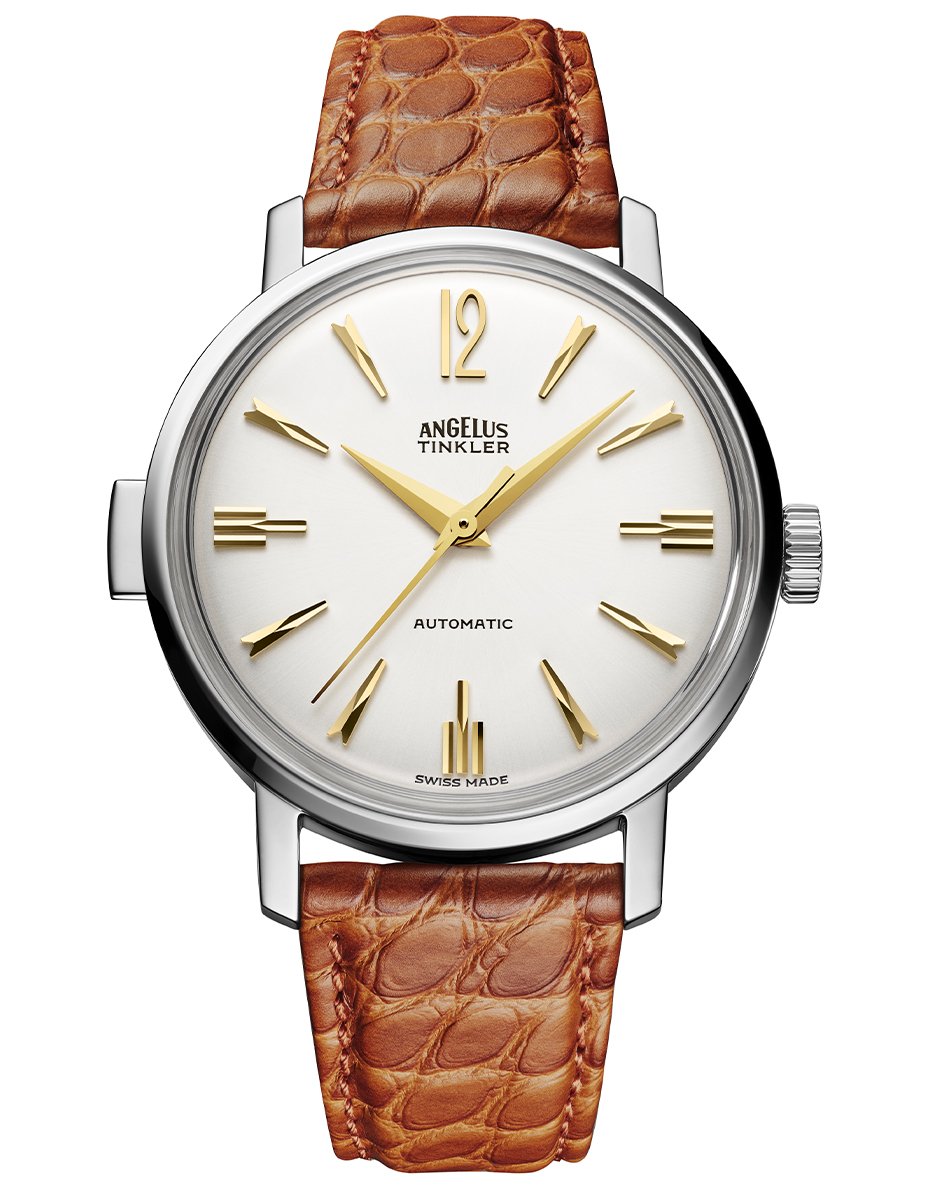
Tradition of the Strike Mechanism
That Angelus is relaunching a repeater watch today is historically logical. The name of the manufacture, founded in 1891, already refers to the ringing of bells and thus to a form of time indication that determined the rhythm of everyday life long before the spread of personal timepieces. Just a few years after its founding, on April 15, 1896, brothers Albert and Gustav Stolz applied for a patent for a silent regulator for the chime mechanism of repeater watches. Repeater mechanisms are thus among the earliest and identity-forming competencies of the brand.
It is remarkable that Angelus also approached this technology functionally. The manufacture developed such models with Braille for soldiers blinded in World War I. These watches made time not only audible, but also tangible. After a period of intensive research into other complications, including the famous Chronodate from 1942, Angelus returned to striking mechanisms in the 1950s. In 1958, a patent was filed for a wristwatch with a striking mechanism, shortly after which the Tinkler appeared. It was one of the pioneering models of that rare breed of waterproof wristwatches with automatic winding and quarter-hour repetition.
Angelus – Tinkler 1958
Angelus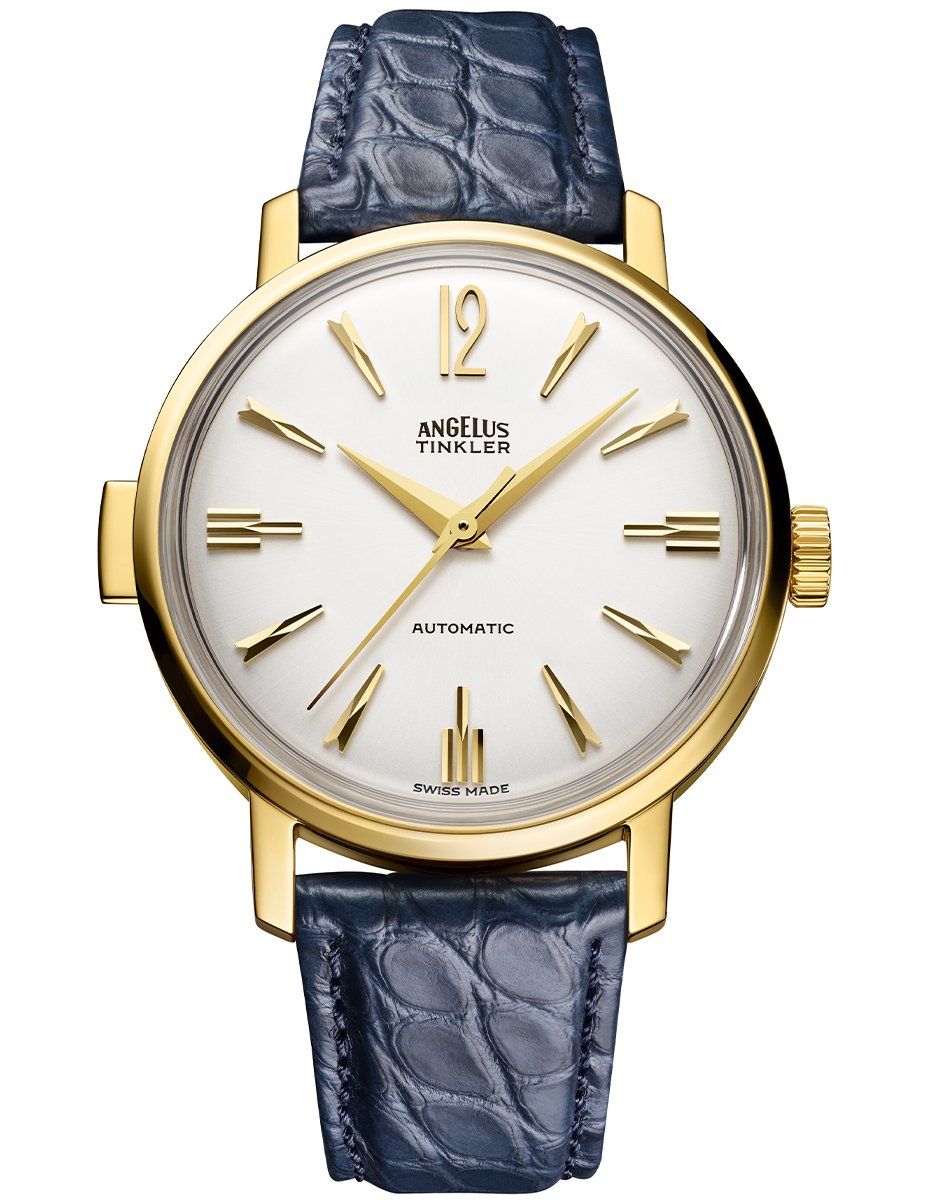
New Edition with Stylistic Discipline
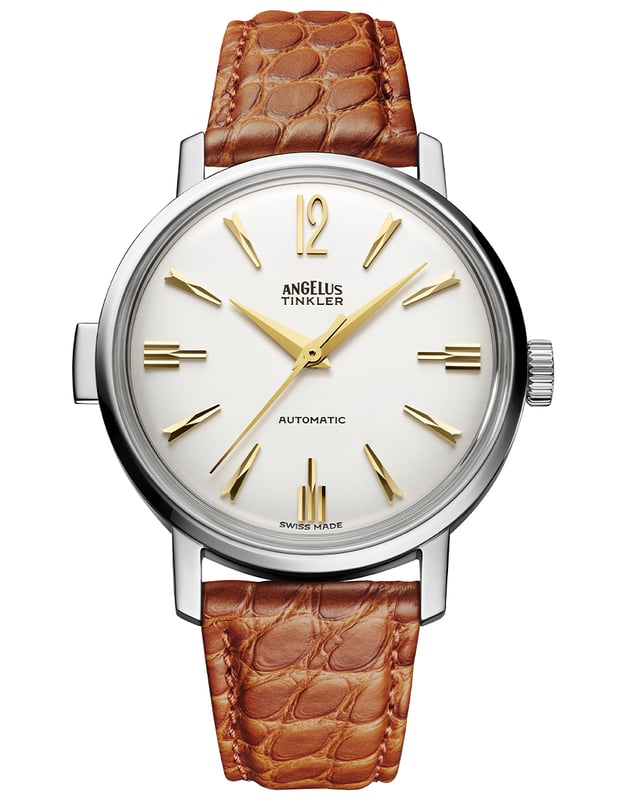
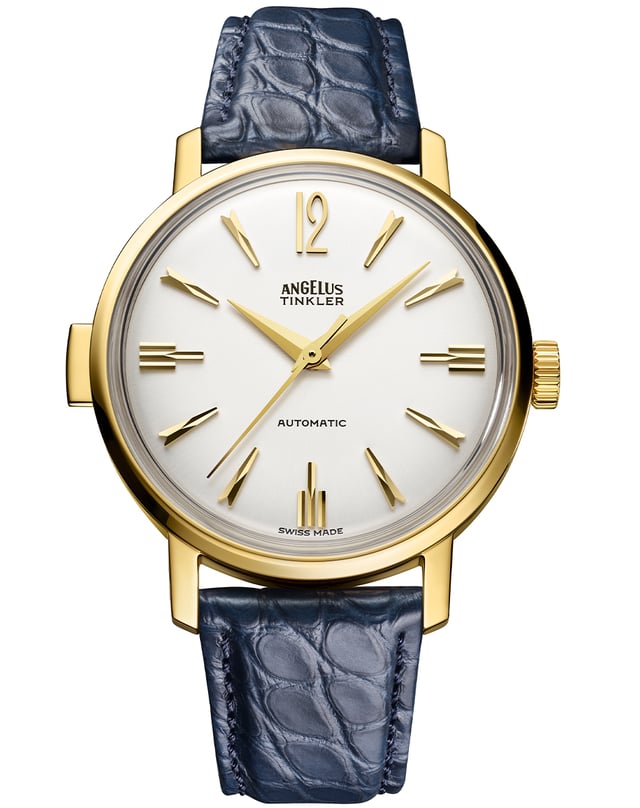
The new Tinkler 1958 takes up the basic idea of the historical model with pleasing consistency. Its 38-millimeter case is oriented toward the balanced proportions of the 1950s and thus appears elegant, slim, and refined. Angelus refrains from unnecessary modernization of the design and instead relies on that mixture of clarity, refinement, and technical seriousness that also characterized the original.
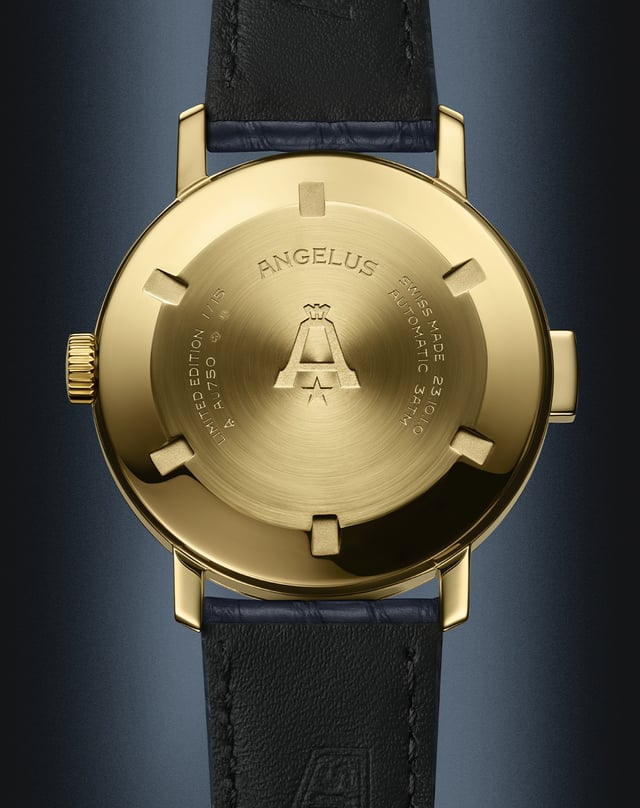
Particularly striking is the classic arrangement of the controls. The crown is located at three o’clock, with the pusher on the opposite side at nine o’clock to trigger the quarter-hour repeater. This solution is not only historically correct but also gives the watch its distinctive character. The screwed case back bears the embossed “A” monogram of the Maison and is intentionally kept closed.
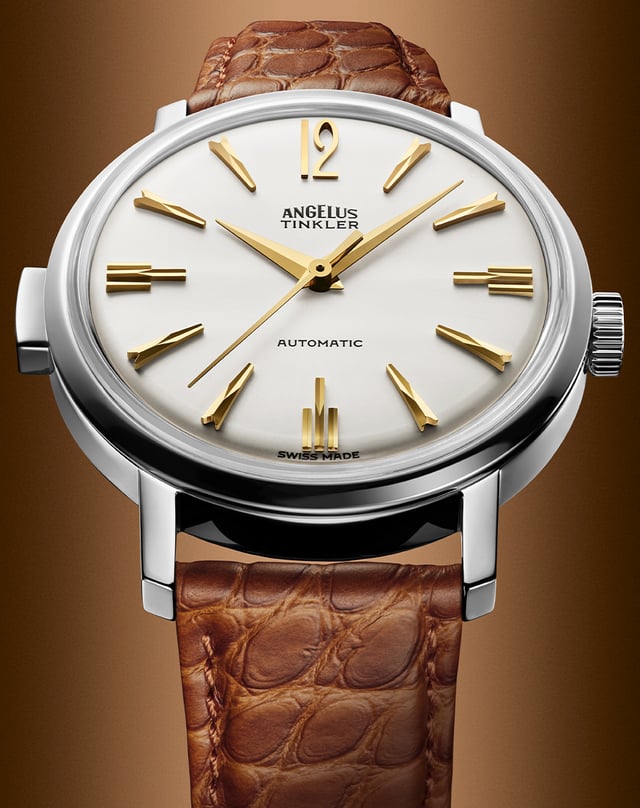
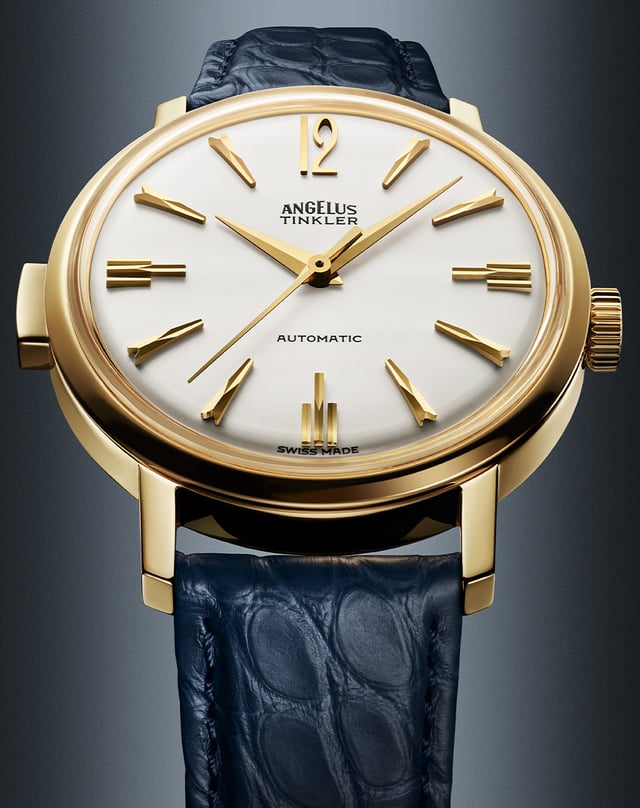
The Tinkler 1958 is available in two case variations. The more refined version in yellow gold appears particularly warm and classic. The stainless steel version appears somewhat more restrained and instrumental, without losing its appeal, as the material fits well with its origin as a functional specialty watch.
Angelus – Tinkler 1958
Angelus
In the Spirit of the Fifties
Particularly successful is the dial of the Tinkler 1958. It is slightly domed, finished in white, and features a sunburst finish, which gives it a lively appearance depending on the light. The design follows the aesthetic DNA of the original. The modernist typography of the twelve is striking, immediately giving the dial a distinctive vintage signature.
The indices at three, six, and nine o’clock — crucial positions for the quarter-hour repeater — are newly designed and appear in the form of stylized exclamation points. All complex dial elements are finished in gold tones, adding depth and creating a harmonious effect, especially in combination with the gold version. At the same time, readability remains excellent.
Angelus also remains consistent with the straps. The new release is completed with a strap made of alligator flank leather. The yellow gold version is paired with a deep ink blue, and the steel version with a warm saddle brown.
Angelus – Tinkler 1958
Angelus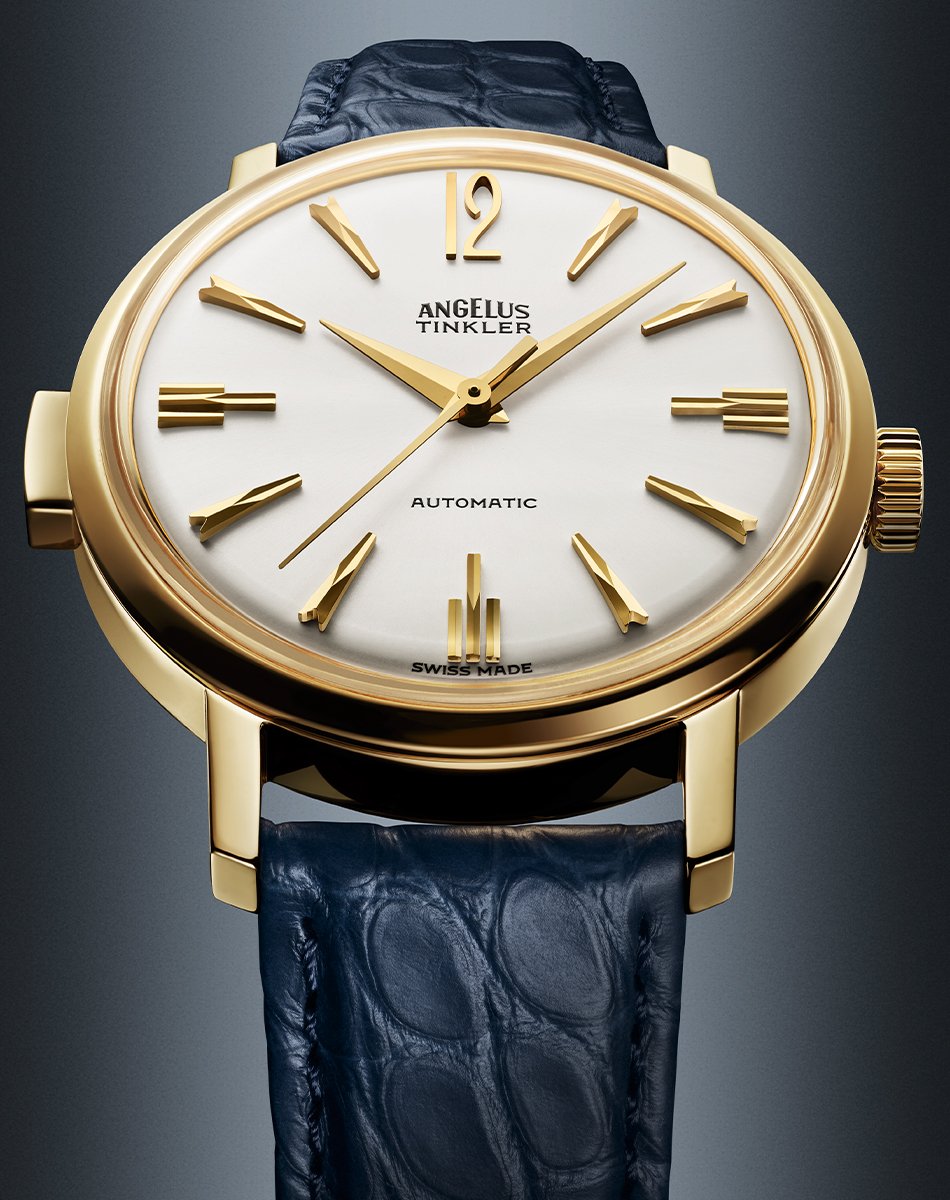
Audible Mechanics
At the center of the watch is, of course, its repeater function. The Tinkler 1958 strikes the hours and quarter hours on demand. The striking mechanism is activated by the pusher at nine o’clock. Past hours are indicated by clear single strikes on the first gong. For each past quarter hour, a sequence of two short tones follows, with a maximum of three sequences for three quarters of an hour.
It is precisely this quarter-hour repetition that makes the Tinkler so appealing. It is less complex than a minute repeater, but historically often more practical and straightforward. It belongs to those complications that have become rare today, even though they possess a very distinct form of mechanical charm.
Angelus – Tinkler 1958
Angelus
Classical Architecture with Modern Performance Values
Inside, the new automatic caliber A600 is at work. It measures 28 millimeters in diameter and 7.35 millimeters in height, operates at a frequency of four hertz, and offers a power reserve of 70 hours. Noteworthy is the level of finishing. The base plate is spiral-patterned, the bridges feature a palladium coating, Geneva stripes, and polished angles. Additionally, there are circular-grained wheels, blued and chamfered screws with high-gloss polished heads, as well as a rotor made of tungsten with a sunburst finish.
While the price of the yellow gold version amounts to approximately $72,000, the stainless steel version costs about $49,000.
A "Special Watch"
Particularly interesting is the classification of the Tinkler 1958 within the philosophy of Angelus. The brand traditionally considers itself a manufacturer of “special watches,” meaning timepieces with a clearly defined function or usage idea. In the past, this included chronographs for motorsport, medical applications, or telemetering.
The new Tinkler fits seamlessly into this lineage. It carries forward a rare chapter of its own history with convincing consistency into the present. Its appeal lies in the unusual mix of historical authenticity, acoustic complication, and stylistic discipline. The 38-millimeter case, the carefully crafted dial, and the finely decorated caliber together create a model that clearly stands out from the often louder, more demonstrative complication watches on today’s market.
To learn more, visit Angelus, here.