The Watch Came First: Inside Louis Vuitton and Singer’s Porsche 911 Collaboration
A dashboard clock became two one-off Porsche 911s
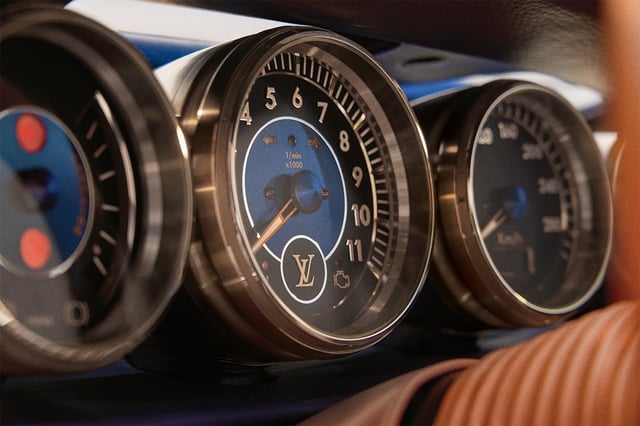
Every great collaboration has an origin story, and this one begins somewhere unexpected: not on a runway, not in a design studio, but on the dashboard of a car. Louis Vuitton's watch division, La Fabrique du Temps, was asked to build a single dashboard clock for a customized Porsche. One clock turned into two full vehicles, a year-long partnership, and Louis Vuitton's first-ever complete automotive project — done in collaboration with Singer, the California-based atelier whose restorations of classic Porsche 911s have made it something of a cult name among collectors. The result: two reimagined Porsche 911s, built on the beloved 964 chassis, each one a rolling argument for what happens when a luxury maison's savoir-faire meets a car culture obsessed with precision.
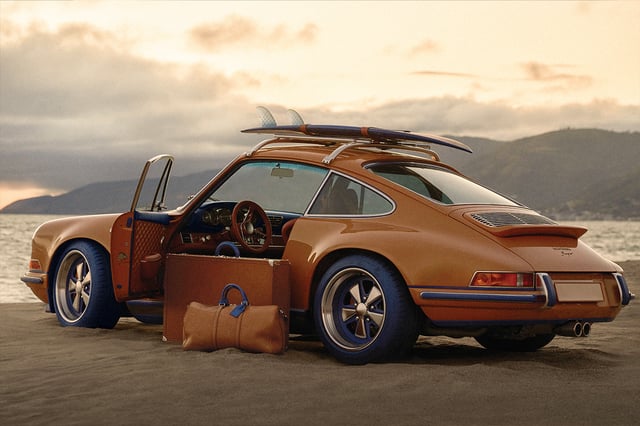
Porsche 911 Classic Reimagined by Singer x Louis Vuitton
Louis Vuitton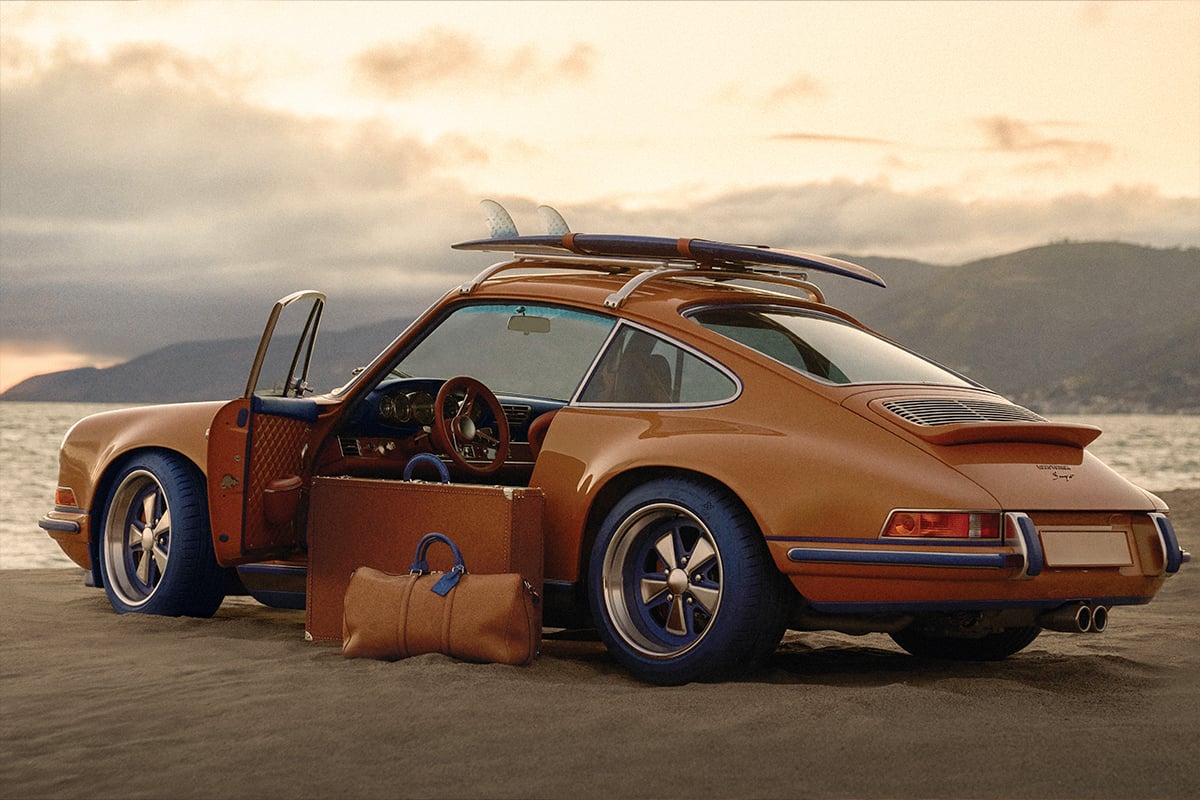
Two Cars, Two Distinct Personalities
The first, simply called the Classic, is a coupé finished in saffron and cobalt blue — colors pulled straight from Louis Vuitton's archives, with a lineage that traces back over 150 years to a 1924 trunk made for Citroën. Under the hood: a naturally aspirated 4.0-liter flat-six, a six-speed manual, and carbon-ceramic brakes.
The second, the Classic Turbo, is a cabriolet developed under the direction of Nicolas Ghesquière, Louis Vuitton's Artistic Director of Women's Collections. Painted in Calcaire Lutétien white and finished with wood trim inside, it trades motorsport bravado for something closer to the elegance of a vintage motorboat. A 3.8-liter twin-turbo flat-six with selectable drive modes sits underneath all that restraint.
The Clock That Started It All
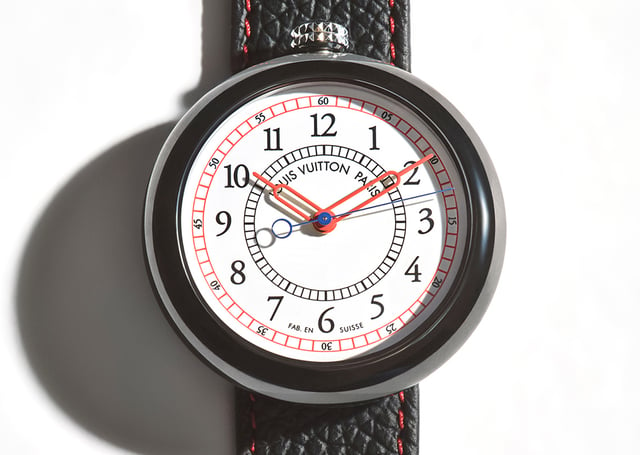
Here's where things get genuinely interesting for anyone who loves objects with mechanisms inside them: both cars carry a fully functional, hand-wound clock on the dashboard — not a design flourish, an actual mechanical instrument. Each one runs on an eight-day power reserve, ticks at 18,000 vibrations per hour, and carries the engraved double signature "Louis Vuitton Paris, Fab. En Suisse." Pop it out of its housing, set it on its included stand, and it becomes a desk clock. It's the kind of detail that rewards the kind of person who'd actually notice it.
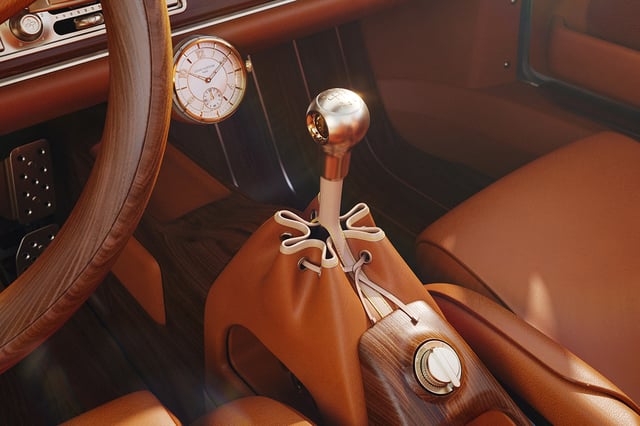
Porsche 911 Classic Turbo Reimagined by Singer x Louis Vuitton Console Clock
Louis Vuitton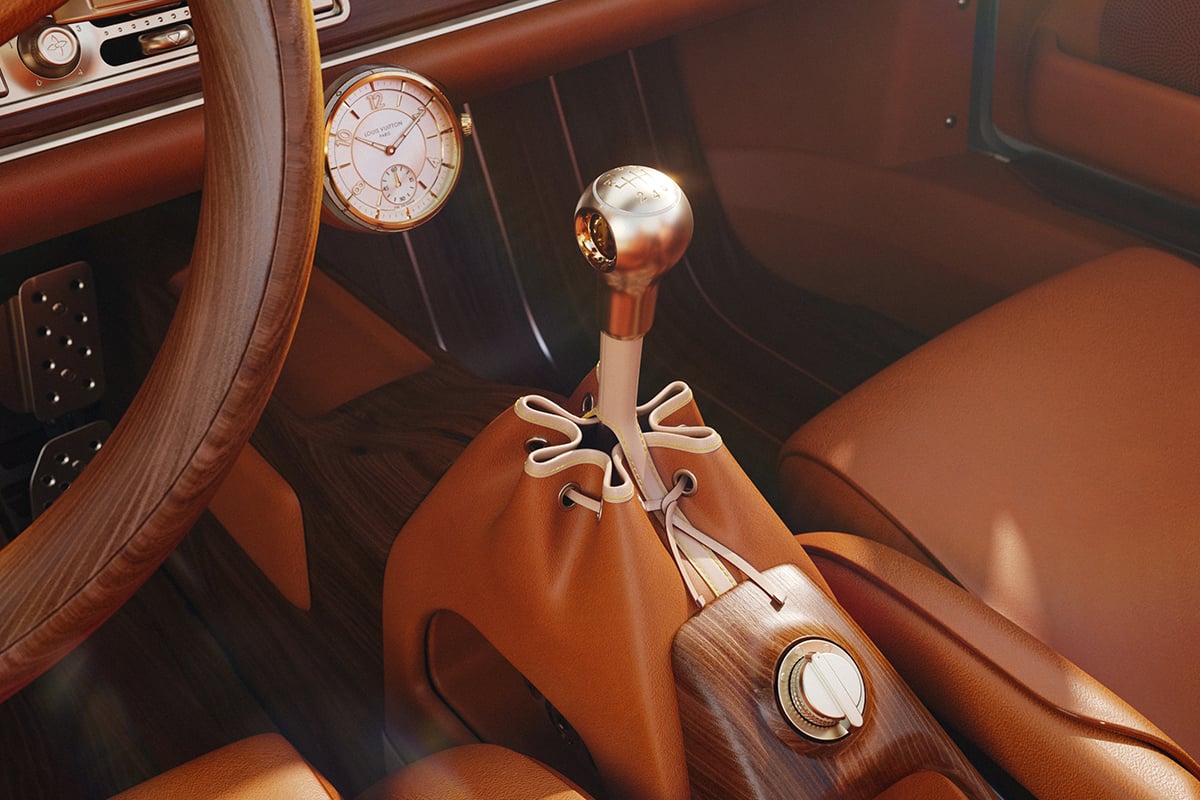
On the Classic, the clock sits to the right of the dashboard, framed by four Tambour-inspired gauges. On the Classic Turbo, it's mounted front and center in the console, with gold-toned dials and five gauges total — a nod to the car's more technical, turbocharged spirit.
The Classic Turbo's capsule wardrobe goes a step further, adding a 40mm Tambour Automatic watch in ceramic and yellow gold — chronometer-certified, powered by a rose gold micro-rotor, with 50 hours of power reserve and an invisible folding clasp that lets the bracelet wrap the wrist without interruption.
A Full Wardrobe for Two Cars
Naturally, neither car arrives without a matching capsule collection — because if you're commissioning a Louis Vuitton Porsche, you're not driving it in whatever you happen to be wearing. The Classic comes with a leather jacket detailed in Monogram Flower eyelets, a carbon-fiber helmet, and a made-to-measure three-piece luggage set with a roof rack built for a surfboard or skis.
The Classic Turbo's capsule leans quieter and more tailored: a parachute-silk suit, driving gloves, and a Coffret Trésor — a case design first made by Louis Vuitton in 1896 — reimagined here to hold both the wristwatch and the dashboard clock when they're not in use.
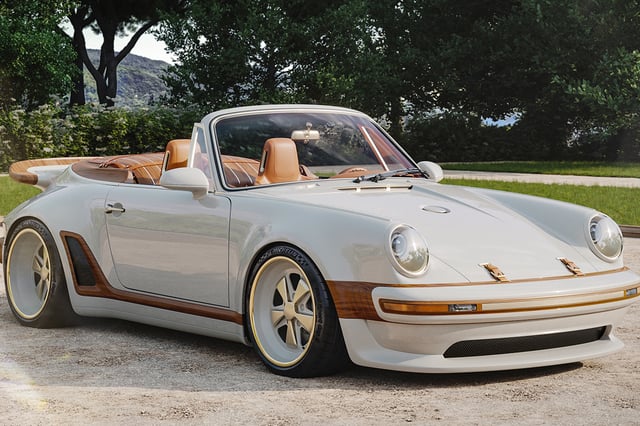
Porsche 911 Classic Turbo Reimagined by Singer x Louis Vuitton
Louis Vuitton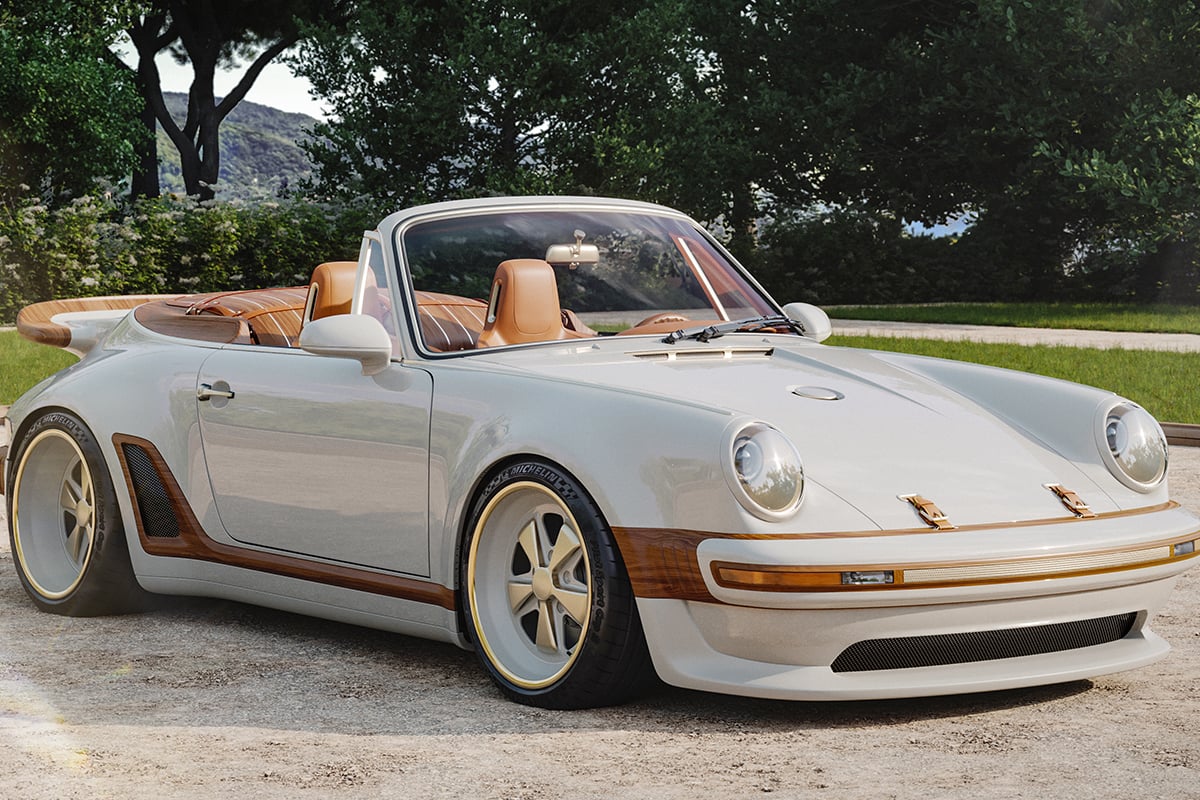
How Much Does It Cost to Drive a Piece of Watchmaking History?
Neither Louis Vuitton nor Singer has disclosed pricing, and don't expect them to. Singer restorations typically start around $500,000 before any customization — and a project of this scope, layering in Swiss watchmaking and hand-finished leatherwork, will land well above that. If you have to ask, as they say. Both cars are one-of-a-kind. Which is, in the end, the whole point.