Audemars Piguet 2026: Three Timepieces, Three Craft Concepts
Watches and Wonders 2026

Audemars Piguet joined Watches and Wonders in Geneva this year— the first trade fair appearance with Rolex and Patek Philippe under one roof since 1990. For seven years, the manufacture from Le Brassus avoided all major watch platforms, focused on AP Houses, and reduced the number of concessionaires from several hundred to virtually zero. The return to the fair signals a realignment under CEO Ilaria Resta, who has been setting the strategic direction since François-Henry Bennahmias's departure in 2023. Following a whole series of new products in early February, the Atelier des Établisseurs is the most unusual novelty that AP presents on this occasion.
The Concept
The Atelier des Établisseurs adopts an organizational principle that has shaped watchmaking in the Vallée de Joux since the 18th century: the établissage system. At that time, établisseurs coordinated the work of specialized individual workshops, each of which manufactured only a few components— wheels, bridges, screws. Audemars Piguet itself acted as such an établisseur in its early decades before the manufacture gradually internalized all production steps in the 20th century. What AP understands today under this name is not a nostalgic byproduct. The atelier is housed in the brand's historical headquarters, which also hosts the Audemars Piguet Museum, and works with artisans inside and outside the manufacture: enamellers, engravers, stone cutters, jewelers.
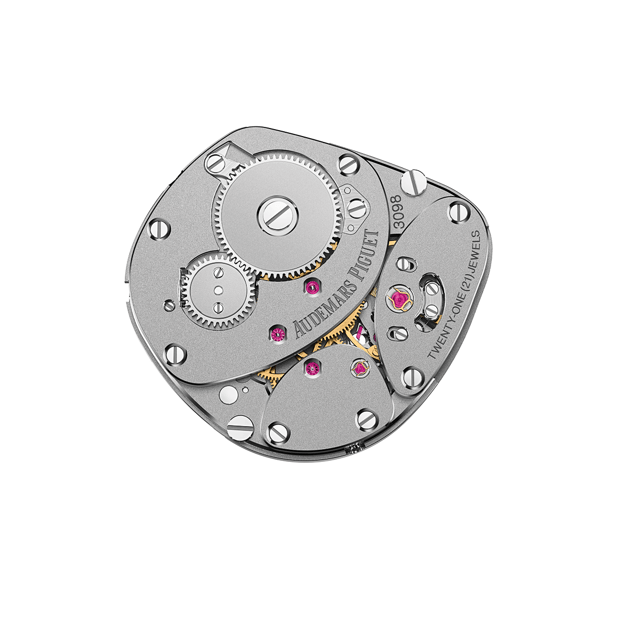
Audemars Piguet Etablisseurs Galets, Caliber 3908
Audemars Piguet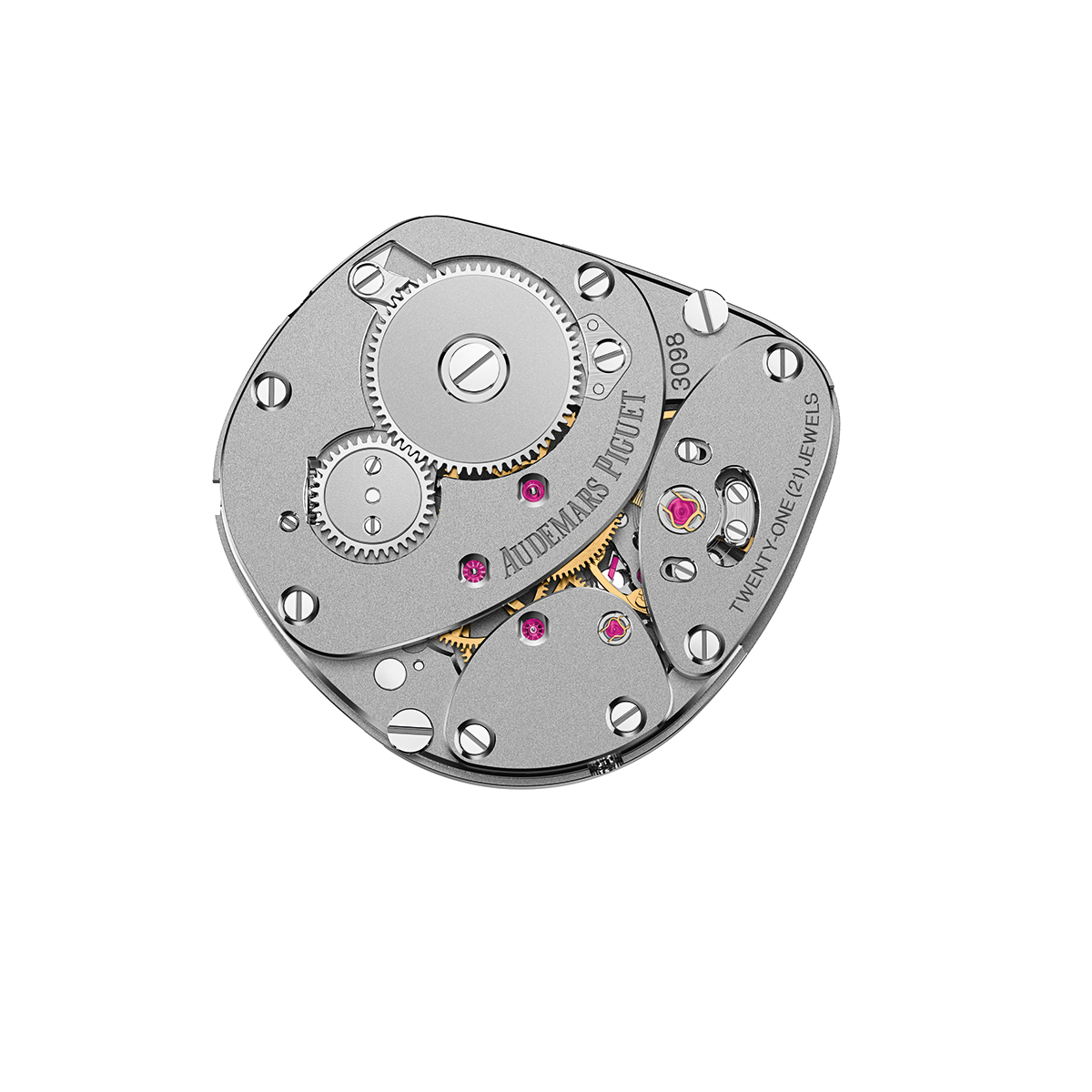
Each watch is produced in a very limited number and is assembled, regulated, and cased by a single watchmaker— following the model of the original établisseurs. The strategic context is clear: AP continues to position itself in the segment of haute horlogerie, which is defined by rare artisanal techniques and not by volume. At the same time, the atelier creates a structure to preserve skills that are threatened with extinction due to a lack of demand.
AP Atelier des Établisseurs: Rethinking Haute Horlogerie
Établisseurs Galets – Jewelry, Stone, and Watchmaking Art
The first model is called Établisseurs Galets (meaning Pebbles) and takes its starting point from the landscape of the Lac de Joux. The 18-karat yellow gold case follows an oval, organic shape; the dial is made of natural stone, without hour indices. The bracelet consists of pebble-shaped links of varying silhouettes, connected by gold ball joints, and can be set with stones or engraved. The caliber 3098 powers the watch. It is derived from the ultra-thin caliber 3090, which debuted in 1999 as the first completely in-house developed manufacture movement by Audemars Piguet. The adaptation to the pebble shape of the case makes this movement technically remarkable: the bridges were hand-grained, a decorating technique that today counts among the rarest in haute horlogerie. The caliber 3098 consists of 141 individual parts, offers a power reserve of at least 48 hours, and operates at 21,600 semi-oscillations per hour (3 Hz).
In 2026, five variants with different stone combinations will be released. Behind the watch are more than a dozen named specialists: two watchmakers, two jewelers, a lapidary, a dial maker, a case designer, an engraver.
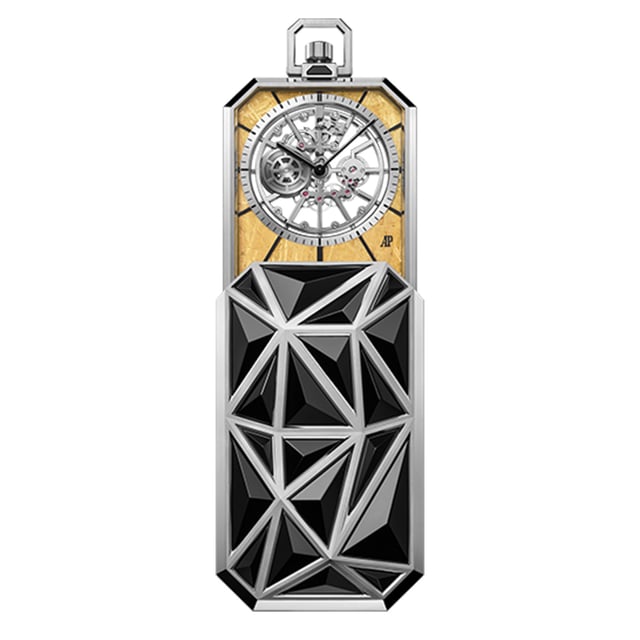
Audemars Piguet Etablisseurs Nomade
Audemars Piguet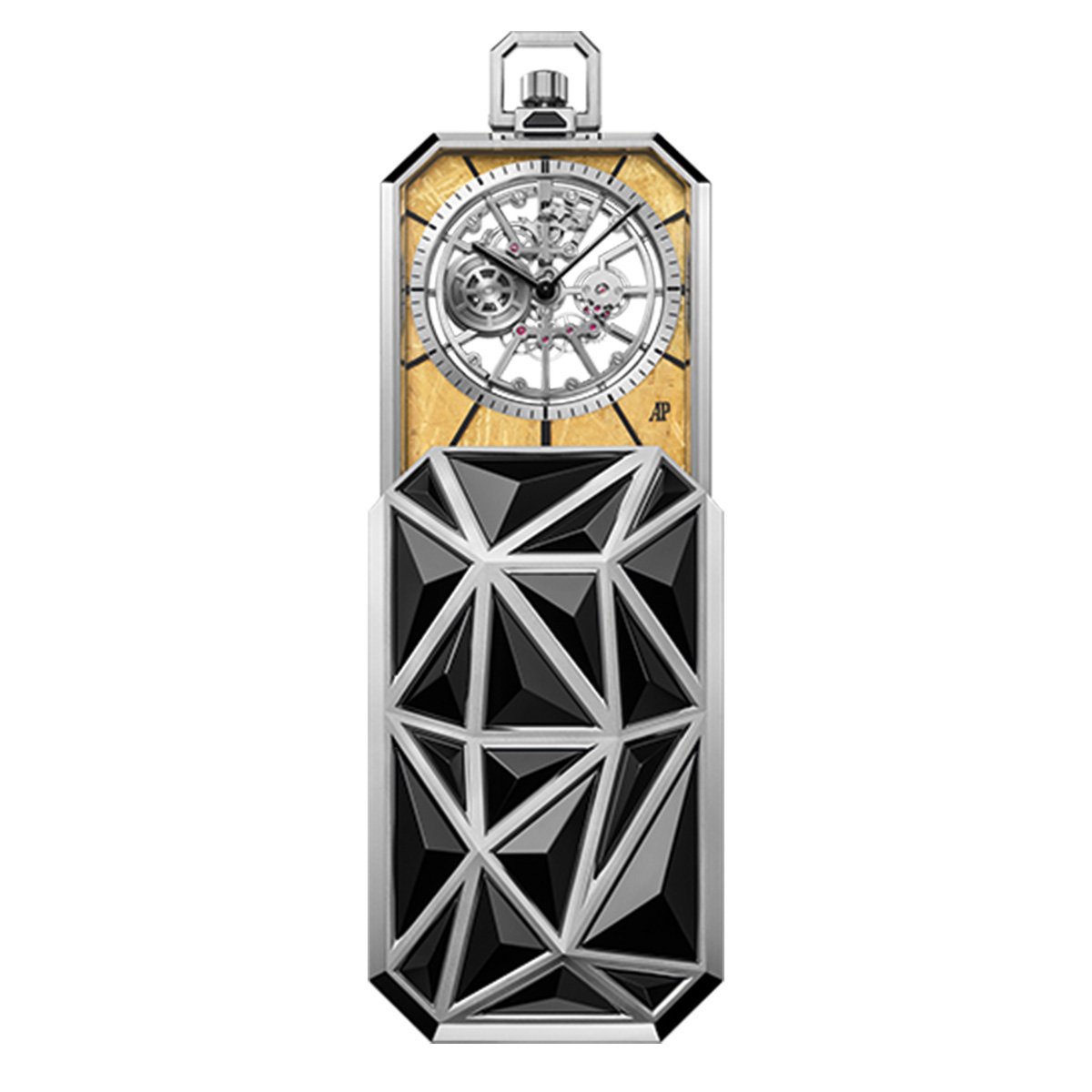
Établisseurs Nomade – Skeletonized Caliber, Three Wearing Options
The Établisseurs Nomade model is inspired by the tradition of versatile travel watches. The case measures 68 × 42 millimeters and allows for three positions: worn closed (like a pocket watch), opened as a regular wristwatch, or as a pendant on a supplied chain made of titanium or gold, 40 centimeters in length. A discreet double pusher lets the inner titanium case slide on a guide into the outer case. The centerpiece is the caliber 7501, based on the ultra-thin caliber 7121 introduced in 2022. It was skeletonized by hand using a jeweler's saw, a fine saw utilized in watchmaking for generations. The bridges serve as hour markers at the same time. The hand-skeletonization, which includes precise angling and polishing of all inner angles, is one of the most demanding techniques in watchmaking craftsmanship and has been practiced by Audemars Piguet since the 1930s. The caliber 7501 consists of 149 individual parts, has a power reserve of at least 65 hours, and runs at 28,800 semi-oscillations per hour (4 Hz). Five variants are planned for 2026.
Audemars Piguet Etablisseurs Peacock
Audemars Piguet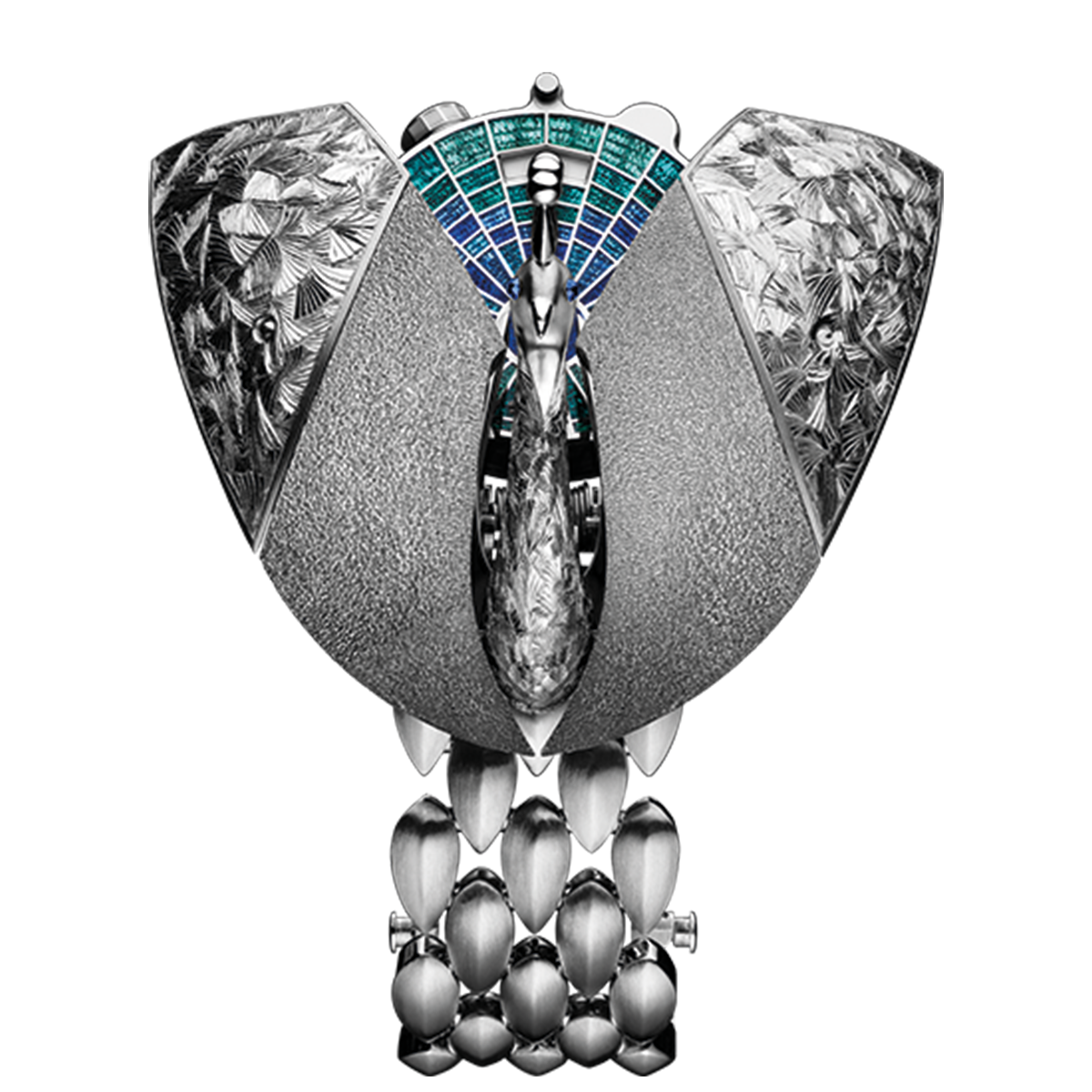
Établisseurs Peacock – Secret Watch with Automaton Mechanism
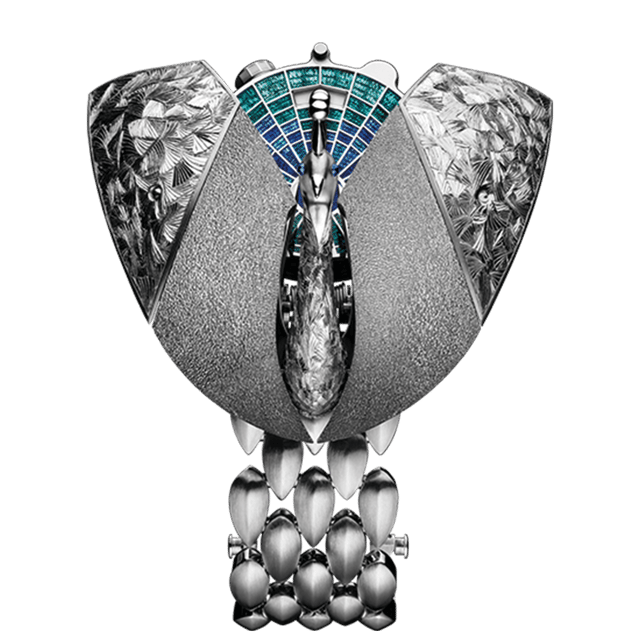
The most spectacular of the three creations is the Établisseurs Peacock, a secret watch in the tradition of classic haute horlogerie. When closed, the 18-carat white gold case displays a finely engraved beetle. At the push of a button, the wings and head of the peacock motif unfold mechanically, revealing an enamel dial that has been hand-engraved and represents the peacock tail. The trailing hour appears in a window at 12 o'clock. The caliber 3098.2 with manual winding powers the timepiece. The automaton mechanism that realizes the opening process was conceived by Giulio Papi, one of the most renowned specialists for complicated mechanical constructions in the Vallée de Joux. The bracelet consists of feather-shaped links made of 18-carat gold, which are hollowed and engraved and connected via ball joints. Jewelers, enamellers, engravers, and watchmakers worked on this model. Three variants will be available in 2027.
What the Atelier means
The atelier of the Établisseurs is not a special project in the classic sense. It is an institutionalized structure that will regularly produce new timepieces at Audemars Piguet in the future— each in very limited quantities, always with the aim of showcasing artisanal techniques that are not feasible on an industrial scale. This distinguishes it from classic manufacture collections like the Royal Oak as well as from typical special edition series. Whether the concept holds in the long term depends on two questions. First: Does AP find enough buyers who are willing to pay for watches where craftsmanship is at the forefront and the brand name consciously takes a backseat? The Peacock model, for example, functions more according to the laws of jewelry sales than those of classic complication watches. Second: Can Audemars Piguet succeed in permanently binding the specifically named artisans to the manufacture? The transparency with which AP lists the participants is unusual for the industry and seems like a conscious decision to establish these individuals as part of the brand narrative.
To learn more, visit Audemars Piguet, here.
Technical Data
Établisseurs Galets
Caliber 3098, manual winding, 48 h power reserve, 3 Hz
Établisseurs Nomade
Caliber 7501, manual winding, 165 h power reserve, 4 Hz
Établisseurs Peacock
Caliber 3098.2, manual winding, 48 h power reserve, 3 Hz