Jan 16, 2010
Reading time 5 min.
THE MAN BEHIND THE BRAND: Daniel JeanRichard
 (This is the first of a series of articles on historical watchmakers whose names have been revived as contemporary watch brands.)
In 1986, Luigi (Gino) Macaluso, a Swiss watch distributor in Italy, bought the rights to the name Daniel JeanRichard from Lemania, the Swiss movement manufacturer. Daniel JeanRichard was not a watch brand. It is the name of a 17th century Swiss watchmaker, who was an extremely important, if obscure, figure in the development of the Swiss watch industry.
Macaluso at the time was contemplating a shift from being a Swiss watch brand distributor to a brand owner. The DJR name might come in handy one day, he thought.
Six years later, Macaluso made his move, acquiring the Girard-Perregaux firm. He moved to La Chaux-de-Fonds, Switzerland, where GP has been based since its founding in 1845, and proceeded to revive one of the industry’s premier marques.
Gino Macaluso
(This is the first of a series of articles on historical watchmakers whose names have been revived as contemporary watch brands.)
In 1986, Luigi (Gino) Macaluso, a Swiss watch distributor in Italy, bought the rights to the name Daniel JeanRichard from Lemania, the Swiss movement manufacturer. Daniel JeanRichard was not a watch brand. It is the name of a 17th century Swiss watchmaker, who was an extremely important, if obscure, figure in the development of the Swiss watch industry.
Macaluso at the time was contemplating a shift from being a Swiss watch brand distributor to a brand owner. The DJR name might come in handy one day, he thought.
Six years later, Macaluso made his move, acquiring the Girard-Perregaux firm. He moved to La Chaux-de-Fonds, Switzerland, where GP has been based since its founding in 1845, and proceeded to revive one of the industry’s premier marques.
Gino Macaluso
 Later in the 1990s, when he had put GP on a solid footing, he launched Daniel JeanRichard (later shortened simply to JeanRichard) as a small sister brand to Girard-Perregaux in the Sowind Group, Macaluso’s holding company.
So who is Daniel JeanRichard and why did Gino Macaluso take an interest in him? “I was fascinated by the fact that Daniel JeanRichard lived at the beginning of the Swiss watchmaking industry,” Macaluso told WatchTime. “He is important. He is part of the roots of the watchmaking industry.”
Daniel JeanRichard was born in 1672 in Bressels, near La Sagne, in the Jura Mountains in what is now the Swiss canton (equivalent to a state) of Neuchâtel. According to the JeanRichard legend, around 1690, an English horse trader, while passing through the area, left his watch for repair with the teenaged JeanRichard, who was some sort of craftsman. (Some speculate he was a locksmith. Kathleen Pritchard, in her two-volume Swiss Timepiece Makers 1775-1975 says he was “probably” a goldsmith. No one knows for sure.) The young man took the watch apart and made drawings of the parts. The horse trader picked up the watch on his return trip. Based on his drawings, JeanRichard proceeded to teach himself and his fellow Jura craftsmen and farmers how to make watch parts. In this way he introduced watchmaking to the Jura.
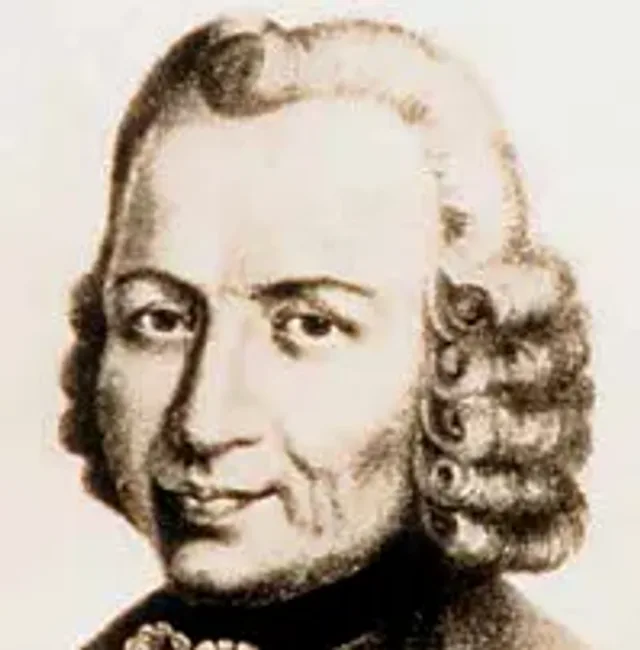
Daniel JeanRichard portraits
Later in the 1990s, when he had put GP on a solid footing, he launched Daniel JeanRichard (later shortened simply to JeanRichard) as a small sister brand to Girard-Perregaux in the Sowind Group, Macaluso’s holding company.
So who is Daniel JeanRichard and why did Gino Macaluso take an interest in him? “I was fascinated by the fact that Daniel JeanRichard lived at the beginning of the Swiss watchmaking industry,” Macaluso told WatchTime. “He is important. He is part of the roots of the watchmaking industry.”
Daniel JeanRichard was born in 1672 in Bressels, near La Sagne, in the Jura Mountains in what is now the Swiss canton (equivalent to a state) of Neuchâtel. According to the JeanRichard legend, around 1690, an English horse trader, while passing through the area, left his watch for repair with the teenaged JeanRichard, who was some sort of craftsman. (Some speculate he was a locksmith. Kathleen Pritchard, in her two-volume Swiss Timepiece Makers 1775-1975 says he was “probably” a goldsmith. No one knows for sure.) The young man took the watch apart and made drawings of the parts. The horse trader picked up the watch on his return trip. Based on his drawings, JeanRichard proceeded to teach himself and his fellow Jura craftsmen and farmers how to make watch parts. In this way he introduced watchmaking to the Jura.
Daniel JeanRichard portraits
 Historians caution us to take the story of the horse trader with a grain of salt: a similar tale is told in France and Germany. If history is uncertain whether JeanRichard was one of the watch industry’s earliest knock-off artists, it is sure that in 1691 at the age of 19, he opened a watch workshop near Le Locle and proceeded to revolutionize the watch industry.
What he did was defy the power of the watchmakers’ guilds that controlled the industry in and around Geneva. As the guilds developed they became increasingly exclusive, the preserves of master watchmakers, whose guild rules protected their power and restrained competition. The masters refused to mechanize their production and forbade the use of tools which would permit mass production of watches. They kept the number of apprentices to a minimum and paid their workers, bound to them by cast-iron contracts, poorly. The guild system was designed to keep watch production low, watch quality high, and watch prices exorbitant.
JeanRichard scorned the guild system. He introduced division of labor to the industry, a system known as établissage. JeanRichard taught the local peasant farmers to make watch components, each specializing in producing certain parts, with final assembly by master watchmakers. Instead of restricting the secrets of watch production, he spread them throughout the Neuchâtel Jura. He also pushed mechanized watchmaking, working with local toolmakers to create horological tools to increase production so that watches could be more affordable. The Jura farmers turned quickly to watchmaking, which provided welcome income during the long, slow winters. In this way, JeanRichard paved the way for Swiss industrial watch production.
The new system, which was an early form of subcontracting, spread rapidly throughout the region and gave birth to more than a hundred new specialist professions – chain smiths, axle makers, hinge makers, escapement adjusters, makers of pinions, gongs, keys and other assorted watch parts – most of which have survived to this day. By the time of JeanRichard’s death in 1741, there were several hundred watchmakers in the mountain towns of Le Locle and La Chaux-de-Fonds and the surrounding villages. Later, watchmakers from the now famous Vallée de Joux learned the trade in the Neuchâtel Jura and adopted JeanRichard’s établissage system.
The seed JeanRichard sowed bore fruit. The next generation of Jura watchmakers produced geniuses like Abraham-Louis Perrelet, inventor of the self-winding watch, and Abraham-Louis Breguet, who contributed mightily to the making of the modern watch.
Jean Richard married a Le Locle woman and opened a watchmaking business in Les Petits Monts above the town in 1705. He was known for making plain watches that an average person could afford. A few of his watches have survived; two are on display in Le Locle’s Watch Museum. JeanRichard had five sons, all of whom became watchmakers.
Daniel JeanRichard statue
Historians caution us to take the story of the horse trader with a grain of salt: a similar tale is told in France and Germany. If history is uncertain whether JeanRichard was one of the watch industry’s earliest knock-off artists, it is sure that in 1691 at the age of 19, he opened a watch workshop near Le Locle and proceeded to revolutionize the watch industry.
What he did was defy the power of the watchmakers’ guilds that controlled the industry in and around Geneva. As the guilds developed they became increasingly exclusive, the preserves of master watchmakers, whose guild rules protected their power and restrained competition. The masters refused to mechanize their production and forbade the use of tools which would permit mass production of watches. They kept the number of apprentices to a minimum and paid their workers, bound to them by cast-iron contracts, poorly. The guild system was designed to keep watch production low, watch quality high, and watch prices exorbitant.
JeanRichard scorned the guild system. He introduced division of labor to the industry, a system known as établissage. JeanRichard taught the local peasant farmers to make watch components, each specializing in producing certain parts, with final assembly by master watchmakers. Instead of restricting the secrets of watch production, he spread them throughout the Neuchâtel Jura. He also pushed mechanized watchmaking, working with local toolmakers to create horological tools to increase production so that watches could be more affordable. The Jura farmers turned quickly to watchmaking, which provided welcome income during the long, slow winters. In this way, JeanRichard paved the way for Swiss industrial watch production.
The new system, which was an early form of subcontracting, spread rapidly throughout the region and gave birth to more than a hundred new specialist professions – chain smiths, axle makers, hinge makers, escapement adjusters, makers of pinions, gongs, keys and other assorted watch parts – most of which have survived to this day. By the time of JeanRichard’s death in 1741, there were several hundred watchmakers in the mountain towns of Le Locle and La Chaux-de-Fonds and the surrounding villages. Later, watchmakers from the now famous Vallée de Joux learned the trade in the Neuchâtel Jura and adopted JeanRichard’s établissage system.
The seed JeanRichard sowed bore fruit. The next generation of Jura watchmakers produced geniuses like Abraham-Louis Perrelet, inventor of the self-winding watch, and Abraham-Louis Breguet, who contributed mightily to the making of the modern watch.
Jean Richard married a Le Locle woman and opened a watchmaking business in Les Petits Monts above the town in 1705. He was known for making plain watches that an average person could afford. A few of his watches have survived; two are on display in Le Locle’s Watch Museum. JeanRichard had five sons, all of whom became watchmakers.
Daniel JeanRichard statue
 Le Locle still remembers its hero. In the center of the town, in front of the post office, stands a statue of young JeanRichard, apron askew, examining a watch. Macaluso, too, has done his part to keep the name alive. In addition to the JeanRichard SA subsidiary in La Chaux-de-Fonds, he has created the JeanRichard Museum of Tools in the city in a restored villa called Villa JeanRichard. The museum traces the evolution of watchmaking tools in the 300 years since young Daniel introduced watchmaking to the Jura.
Villa JeanRichard
Le Locle still remembers its hero. In the center of the town, in front of the post office, stands a statue of young JeanRichard, apron askew, examining a watch. Macaluso, too, has done his part to keep the name alive. In addition to the JeanRichard SA subsidiary in La Chaux-de-Fonds, he has created the JeanRichard Museum of Tools in the city in a restored villa called Villa JeanRichard. The museum traces the evolution of watchmaking tools in the 300 years since young Daniel introduced watchmaking to the Jura.
Villa JeanRichard