A Legacy to be Proud of: A History of the Valjoux 7750

On April 4, 1974, the United States Patent Office received a request from Valjoux S.A. for a patent on its new automatic chronograph caliber. While the paperwork for a Swiss patent was already filled a year before, the fact of the matter is that Valjoux was very late to the party. In the late 1960s, the battle for which brand would introduce the first automatic chronograph caliber was on. In 1969, this resulted in the “Chronomatic,” a movement developed by Breitling, Hamilton, Heuer, Buren and Dubois Dépraz under the code name “Project 99,” while in that same year, Zenith-Movado launched its El Primero, while Seiko impressed with its Caliber 6139. While apparently underestimating the development speed and/or impact these movements would have, it let Valjoux scramble for a suitable answer. The company was already feeling the squeeze the relatively inexpensive quartz movements made in Japan had on the industry and couldn’t lose more ground in the market.
The Heat Is On
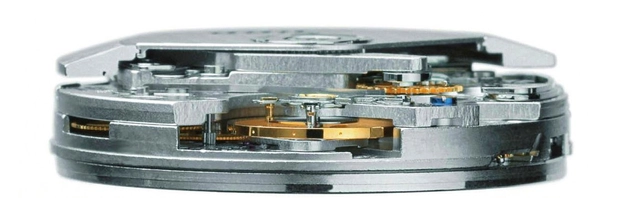
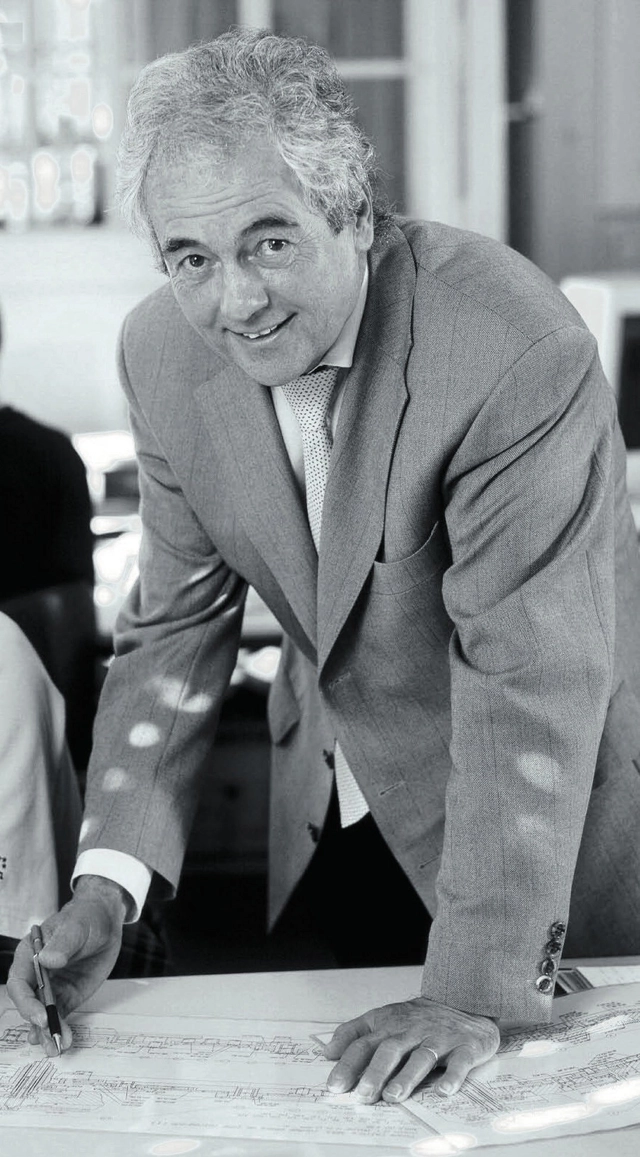
Valjoux puts its faith in Edmond Capt, who has just joined the company, to come up with a suitable answer. The requirements set for this new caliber were ambitious, to say the least. Of course, it needed to be precise and reliable, but Valjoux would also want it to feature a day and date complication in addition to the automatic chronograph. The movement should also be inexpensive to produce and ready for production as soon as possible. Challenges enough for Capt, who sought the help of experienced watchmaker Donald Rochat. In order to gain valuable speed, Capt decided not to start with a blank sheet of paper but instead base the new movement on the Valjoux Caliber 7733 manual-wind chronograph. Another advantage Capt had, was that he could use a computer in the design process, which was very unusual at the time.
To meet all the demands set by Valjoux, Capt and Rochat developed a different mechanism for the chronograph to operate. Instead of opting for a column wheel, the Valjoux 7750 relied on levers and an oblong-shaped cam for the chronograph functions. This simplified production, making it faster and less expensive. While this gave Valjoux a brief edge in the market, the full force of the inexpensive yet very accurate quartz-powered watches flooding the market from Asia put pressure on the Swiss watch brands. The demand for mechanical movements plummeted, and just two short years after its introduction, the production of the Valjoux 7750 came to a complete stop. In boardrooms across the nation, Swiss watch manufacturers considered this the end of an era. While they sent Capt on a mission impossible to create the Valjoux 7750, they also sent him on another one when they ordered him to destroy everything related to the project.

Running the Renaissance of Mechanical Watchmaking
Fortunately, Capt’s response was like that of Charles Vermot at Zenith, who was also told to destroy everything of the El Primero. Like Vermot, Capt also kept all the drawings and tools needed to make the caliber he was so attached to in a safe place. In a twist of fate, the dominance of quartz watches resulted in a renewed interest in mechanical watchmaking as the 1980s approached. While quartz watches were unmatched in their precision, particularly related to their price, an increasing number of people were looking for a more individual choice to express their own character. Mechanical movements were suddenly not seen as a thing of the past but as an expression of human ingenuity. This surge in demand led movement manufacturers like Valjoux to scramble in the opposite direction, and thanks to the “disobedience” of Capt, the production of the Valjoux 7750 could be resumed in the early 1980s.

It fell into fertile ground there, as quite a few watch brands were looking for an automatic chronograph caliber to power their new watches. Among them was Ernest Schneider, the man who purchased Breitling in 1979 and was looking for a suitable way to celebrate the brand’s 100th anniversary in 1984. This would become the Chronomat, a new version of the chronograph Breitling initially introduced in 1940. While it was the bold new design that gave Breitling wings again, its success couldn’t have been possible without the Valjoux 7750 that powered it.
Another company keen on riding the wave of the renaissance of mechanical watchmaking was IWC. Its CEO at the time, Günter Blümlein, saw an opportunity and asked technical director Kurt Klaus to develop a perpetual calendar with a chronograph. Klaus took a liking to the Valjoux 7750, for which he constructed a perpetual calendar module. Named “Da Vinci,” it was launched during the 1985 edition of Baselworld, ushering in a new era for both the Valjoux
7750, as well as for IWC.
The Perfect Canvas
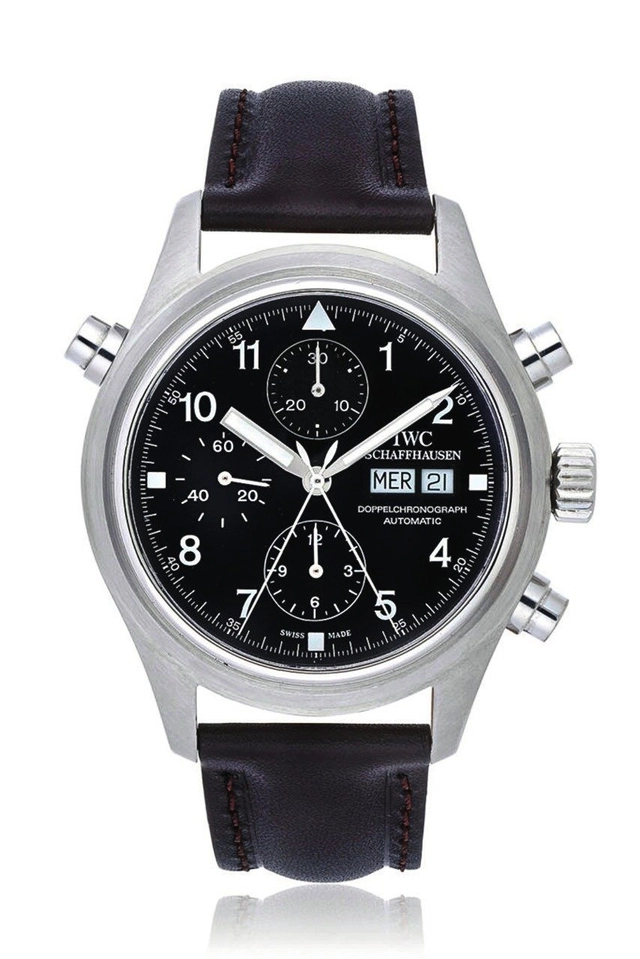
Klaus wasn’t the only one at IWC adding complications to the Valjoux 7750, as now independent watchmaker Richard Habring faced a challenge of his own during his time with the brand. Asked to find a more affordable way to create a rattrapante, or split-second chronograph, he also turned to the Valjoux 7750 as the canvas for his creation. This required an entirely new approach, as until then, a split-second chronograph relied on two column wheels to work correctly, and the Valjoux 7750 had none. To work his way around this, Habring tapped into the unique nature of the caliber that Capt and Rochat designed and devised a lever-andcam system.
IWC thought it appropriate to add a 10th hand to the watch to celebrate the 10th anniversary of the Da Vinci Perpetual Calendar Chronograph. They did so by incorporating the split-second chronograph complication with the perpetual calendar module developed by Klaus. This elevated the humble Valjoux 7750 to heights unheard of and underscored the role it could play in serving watchmakers as a canvas to build other complications upon. The examples of this are numerous and include many industries’ firsts. It was, for example, Paul Picot who launched with its Atelier Technicum the first automatic split-second chronograph with a power reserve indicator, and Fortis created the first automatic chronograph with an alarm function in 1998. To develop this, they collaborated with independent watchmaker Paul Gerber, who lifted the oscillating weight of the Valjoux 7750 by 1.5 mm to make room for a second spring barrel. This spring barrel was used to supply the alarm with sufficient energy.
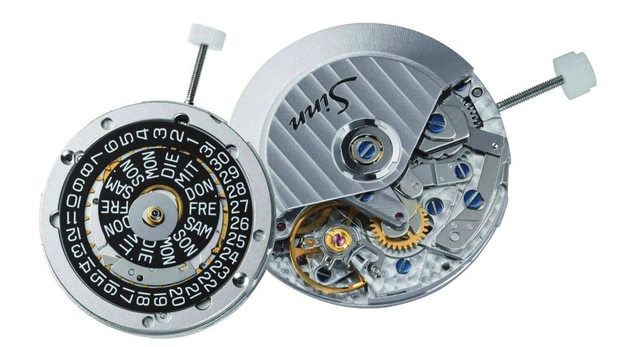
Interestingly is also that movement specialists like, for example, La Joux-Perret modified the Valjoux 7750 to include a column wheel. As the renaissance of mechanical watchmaking was in full swing, the column wheel chronograph stood in higher regard. Modifying the Valjoux 7750 to include one, although going entirely against the original idea of Capt’s design, proved to be more cost efficient than creating a new column wheel chronograph.
It wasn’t only outsiders that tinkered with the Valjoux 7750, as the company also did so themselves. To offer a wider variety of options to its clients they developed, for example, the Valjoux 7751, which included a complete calendar with a moon-phase display in addition to the chronograph. For those who preferred a more symmetrical layout of the subdials, the Valjoux 7753 changed them from the left side of the dial to the bottom half. The Valjoux 7750 was also developed further into the Valgranges line of calibers, which has a larger diameter of 16 lignes (36.6 mm) compared to the 13 lignes (30 mm) of the original, making them more suitable for watches with a larger diameter.
How the Wobble Adds Character
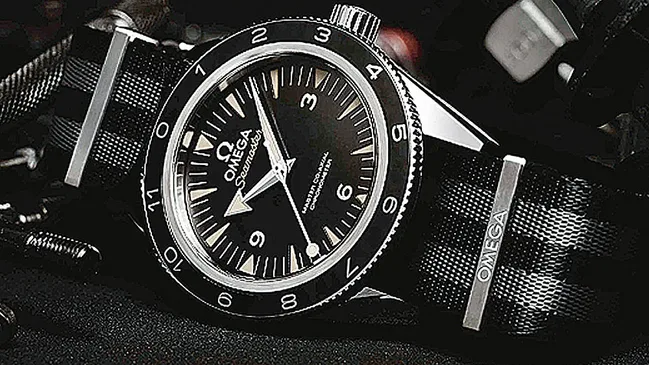
While these (complex) modifications show the versatility of the Valjoux 7750 as a base caliber, they remain exotics compared to the sheer number of regular Valjoux 7750 movements produced throughout the years. The list of brands that have used it at some point in their collections reads as the who’s who in watchmaking and includes brands like Omega, Eterna, Maurice Lacroix, Longines, Breitling, Eberhard, Chronoswiss, Baume & Mercier, Hamilton, Tissot and many more.
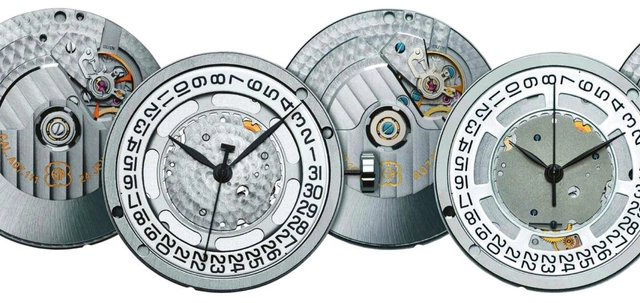
Not only brands took a liking to the Valjoux 7750 but also watch enthusiasts and collectors were equally fond of it. Its robust nature made it so it could be enjoyed in a carefree way, and when something happened, or a service was needed, this wasn’t going to break the bank either. Also, in terms of precision, the Valjoux 7750 was pleasing as it could easily meet the chronometer certification requirements. As the oscillating weight was quite heavy and only wound in one direction, it created a “wobble effect” when it turned in the opposite direction. While this can be seen as an unwanted effect, many actually grew fond of it and considered it a charismatic characteristic of the movement.
A Legacy to be Proud Of
The relevance of the Valjoux 7750 in today’s watch market has somewhat diminished, its place being taken by more manufacture calibers on one side, as well as automatic chronograph movements from suppliers like Sellita. Also, the decision by Swatch Group to strictly limit the supply of its movement producer ETA, of which Valjoux is a part, to brands other than its own, had its impact. However, the legacy of the Valjoux 7750 lives on — not only in the many watches containing this movement that have been produced in the past but also in its influence on the current generation of calibers.
This article is from the WatchTime Archives and was originally published in the September/October 2023 Issue. To subscribe to WatchTime Magazine, click here.