Jun 24, 2018
Reading time 5 min.
Vintage Eye for the Modern Guy: Tutima Grand Flieger Classic Chronograph
FEATURE:
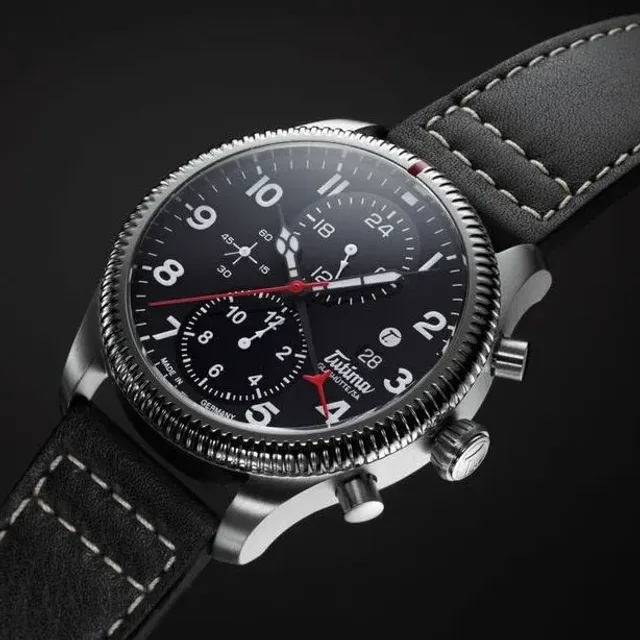
Of the many noteworthy World War II watches, there have been few, if any, designs that have become more recognizable and influential than the original B-Uhr (Beobachtungs-Uhren, or observation watch) pilots' watch of the 1940s. Excluding this general style as a whole, still seen in watches from historical companies IWC, Laco, and Stowa, among others, the individual components of the design like the wide sword hands, focus on readability, large case, and crown, and the importance of anti-magnetism remain as relevant features on many watches today as almost eighty years ago.
PR
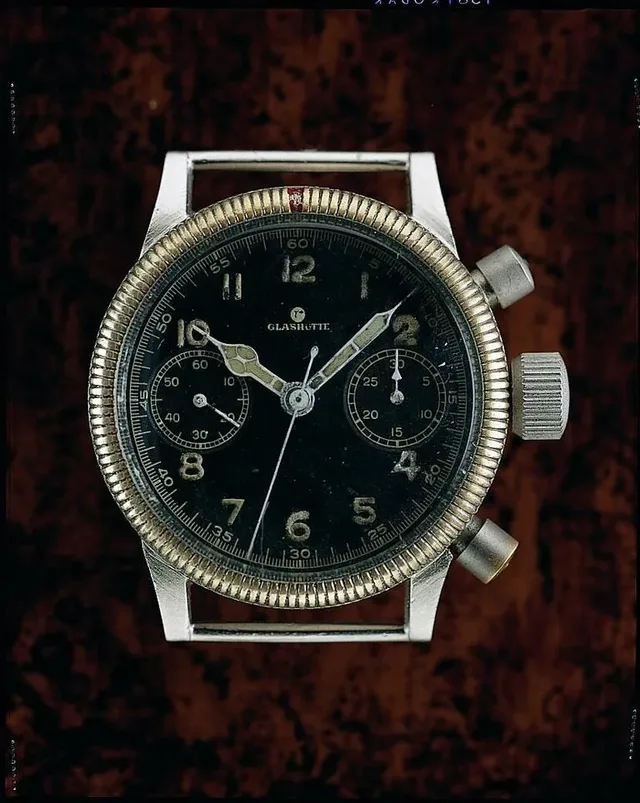
Yet this style wasn’t formed in a vacuum, nor was it the only style of watch the German Luftwaffe was commissioning for its pilots during wartime. Often forgotten as an important manufacturer before and during the war years is Glashütte-based Tutima, which was actually two separate brands during that era, Uhren-Rohwerke-Fabrik Glashütte AG (UROFA) and Uhrenfabrik Glashütte AG (UFAG), though they are commonly referred to as UROFA-UFAG. The brands, led by their founder Dr. Ernst Kurtz since 1927, began producing the first German two-pusher flyback chronograph movement (the Calibre 59) in 1939, featured inside what is now known as the Tutima Flieger Chronograph.
PR
This original watch had a nickel-plated brass case, prominent crowns and pushers, coin-edge rotating bezel, cathedral style hands, and a highly-legible black and white dial. While Tutima wasn’t an official brand, each of the watches produced by UROFA-UFAG featured a small “T” towards the top of the dial to stand for the word, as derived by the Latin “Tutus” which translates to “safety,” “protected,” and “secure.” It was a piece uncommon in its time, having only about 30,000 examples over about six years, but one produced throughout the war and for a short while in post-war era after Russian commandeering of the brand and its resources.
PR
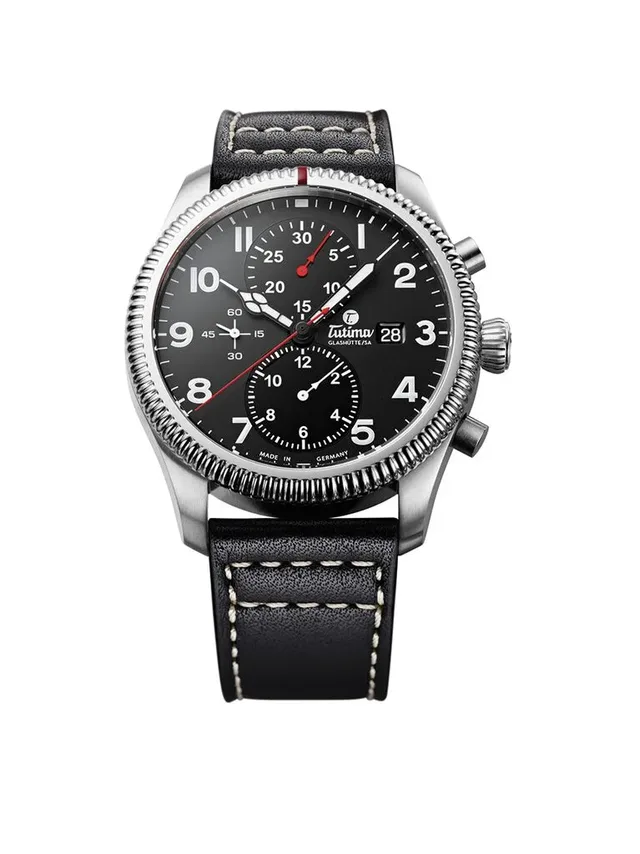
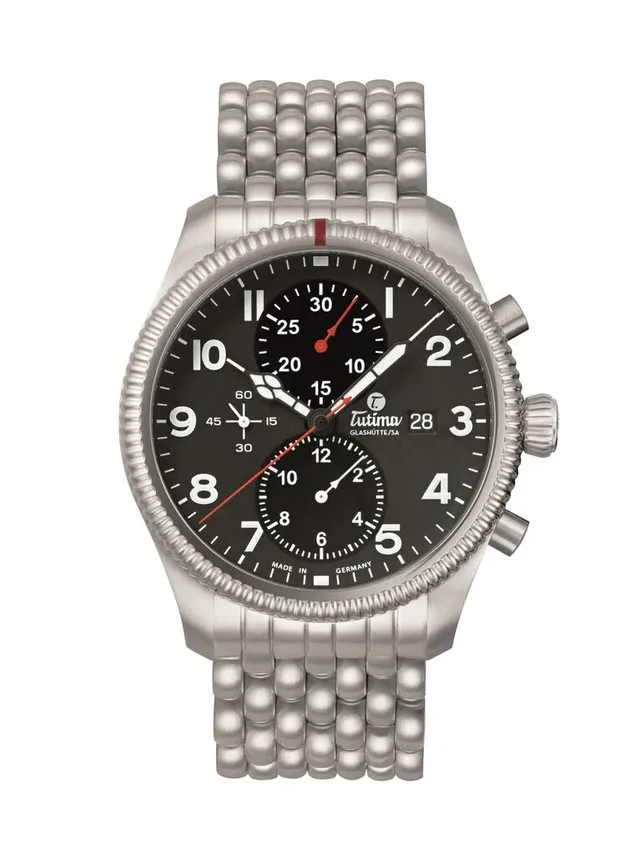
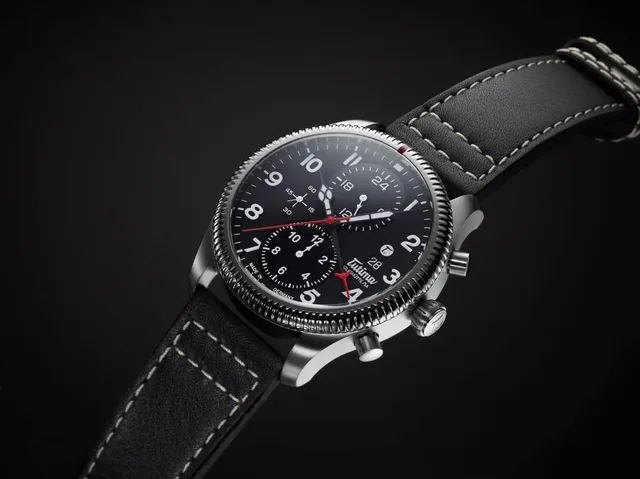
The modern watch is a 43-mm steel cased piece with many of the vintage attributes of its predecessor; it comes equipped on either a leather strap (ref. 6402-01) or a seven link “rice bead” bracelet (ref. 6402-02). The “flieger” style case has sharp lugs, simple pump pushers, a modernized onion crown, and the watch’s signature rotating and red-tipped coin-edged bezel to assist in tracking passed time. The dial, called "velvet black" by the brand, is a matte black background with large and slightly glossier sub-dials towards the twelve and six o’clock positions for a 30-minute and 12-hour counter, respectively; towards the nine o’clock position you’ll find a subtle running seconds indicator. Around the dial are prominent white Arabic numerals with a clear focus on legibility, another subtle feature in a small date indicator at the 3 o’clock mark, and a pair of cathedral hands with a red chronograph seconds pointer to sweep over it all.
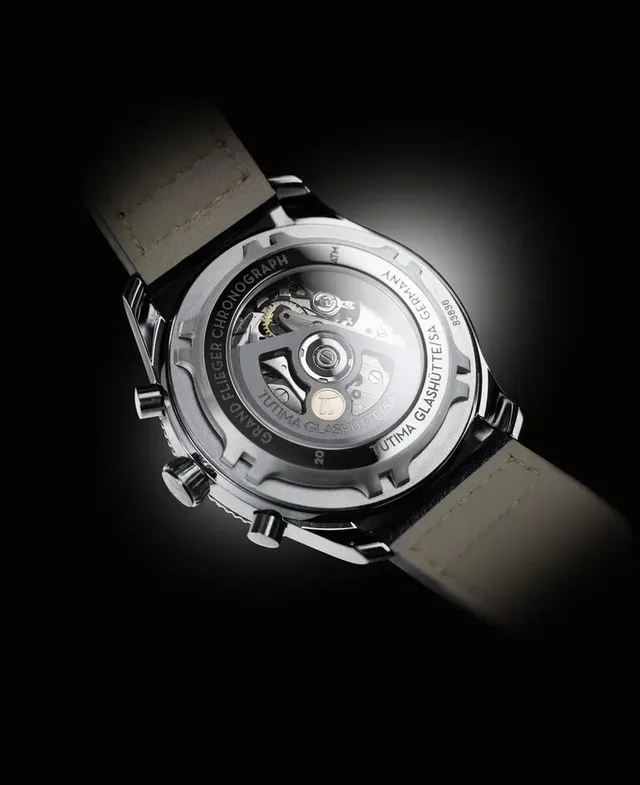
The automatic movement is the Caliber Tutima 320 — a brand finished Valjoux 7750. The gold seal embedded caliber is regulated to German chronometer standards and holds a power reserve of 44-hours. The watch is currently priced at $5,100 on the leather strap, and $5,500 on the rice bead bracelet.
PR
The differences between the modern watch and its vintage counterpart are apparent. Where the historical piece was nickel plated, under 40-mm, used enlarged pushers and crown, and held a simple dial configuration common during the era, the contemporary model bolsters many of today’s design norms in luxury sports watches. The dial is a deep matte black, with a vertical configuration, red accents, and additional features in an extra sub-dial and 3 o’clock date window; while the case uses contemporary polished and brushed finishing with a sapphire case back, and less prominent pushers. The two most interesting changes are in the use of the onion crown, which itself was not an uncommon feature during the 1930s and ‘40s, but was not the standard design on the original flyback chronograph; and secondly in the shrunken cathedral hands and enlarged sub-dials which together give the watch a very balanced look on what could have easily became a busy face.
To Tutima’s credit, the watch maintains enough elements to make a clear allusion to its past. These are seen in the flieger style case, the printed dial, and vintage-style leather bracelet. Most of all the vintage elements are seen in the coin-edged bezel which is the original’s trademark, and the cathedral hands — together which make the watch easily recognizable to the historical era and as the brand's own.
PR
Tutima is not a brand synonymous with homage watches, but the Grand Flieger Classic Chronograph represents some of the best elements of the trend: a unique historical look revived in the coin-edged bezel and cathedral hands, modernized features in the vertical sub-dials and enlarged case, and some historically informed (though not completely accurate) aspects in the onion crown and red seconds counter which enhances the vintage aesthetic without becoming distracting. I remember the first time I saw the Tutima watch at WatchTime New York in 2016, and I maintain now what I did then: it’s a fascinating watch with a detailed history, and besides a limited edition piece by Hanhart, is a unique style uncommon on the modern market.
For the most recent article in the “Vintage Eye” series, in which we compare the Omega Seamaster 1948 to its historical counterpart, click here.
Caleb Anderson is a freelance writer with a primary focus on vintage watches. Since first discovering horology, he has garnered extensive knowledge in the field and spends much of his time sharing his opinions among other writers, collectors, and dealers. Currently located near New York City, he is a persistent student in all things historical, a writer on many topics, and a casual runner.