Favre Leuba Introduces the 1737 Triple Calendar and Revives the Harpoon
A new triple calendar moonphase and a faithful reinterpretation of its 1966 Harpoon
Favre Leuba used its first appearance at Watches and Wonders Geneva last month to reinterpret two central themes of its long brand history: classic calendar complications and historical instrument watches. The novelties, which come after the brand's relaunch, consist of the 1737 Triple Calendar and the Harpoon Revival, each addressing different chapters of the brand's history.
1737 Triple Calendar: Return of the Calendar Complication
1737 Triple Calendar with black dial
Favre Leuba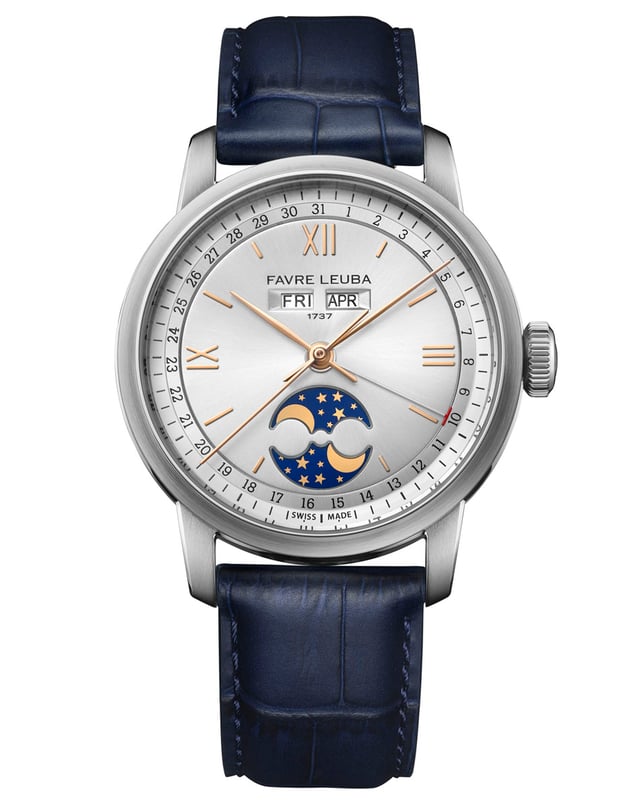
1737 Triple Calendar with silver dial
Favre Leuba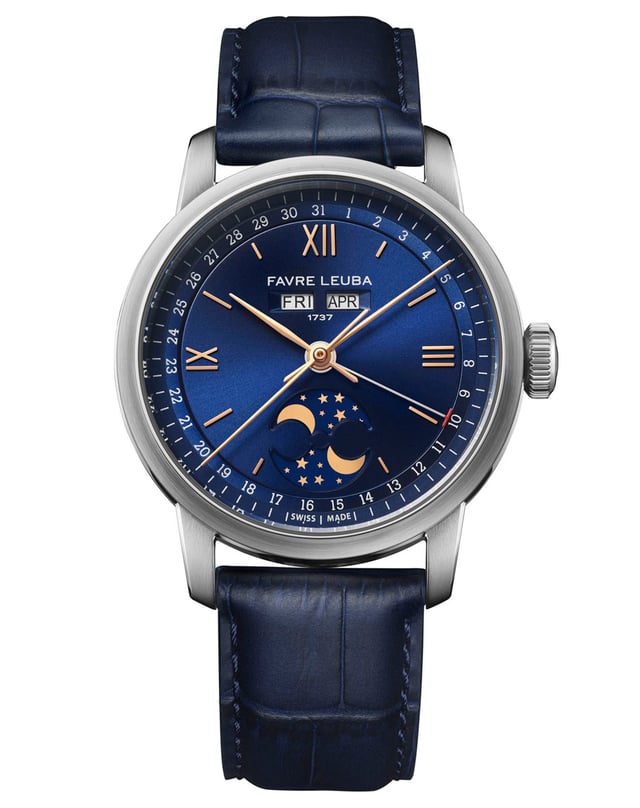
1737 Triple Calendar with blue dial
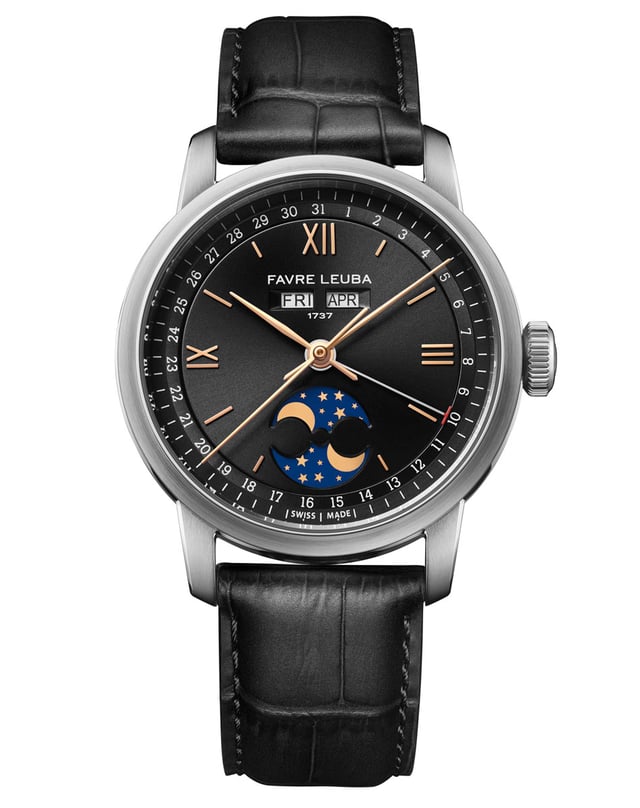
Favre LeubaWith the new 1737 collection, Favre Leuba is introducing a watch with a full calendar for the first time in decades. The name refers to the brand's founding year. The watch combines the classic displays of a triple calendar — day of the week, date, and month — with a moon phase display. Two windows at 12 o'clock show the day and month, while the date is shown as a pointer date at the edge of the dial. The moon phase at 6 o'clock adds an astronomical component to the display. Historically, the model connects to the brand's calendar watches from the 1940s and 1950s, in particular the Datora from 1946, as well as later triple calendar models, some of which were developed in collaboration with external movement manufacturers. This tradition is now carried into a modern form.
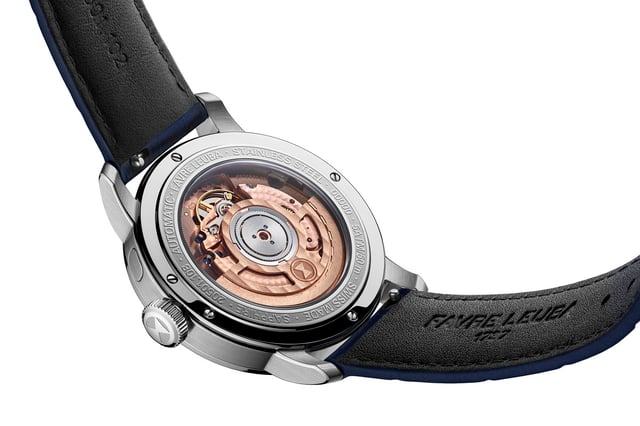
Through the glass bottom, you can view the caliber FLD06.
Favre Leuba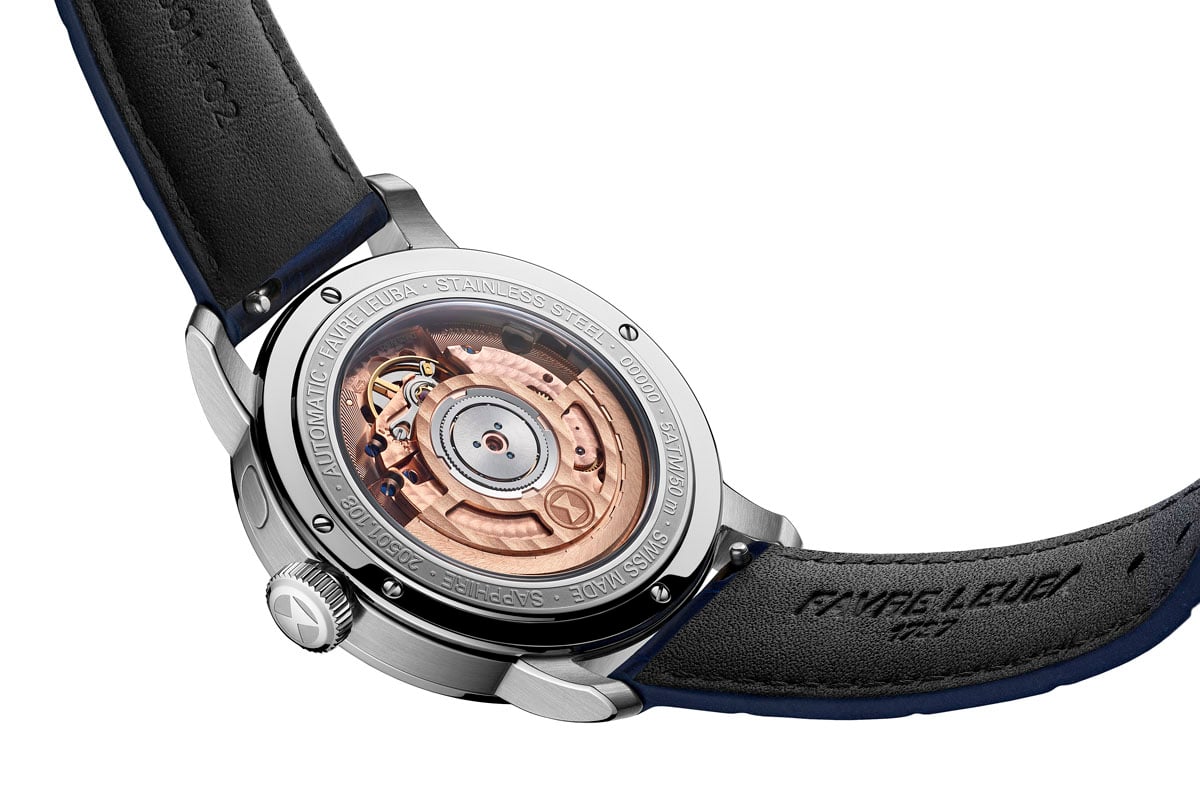
The 39 mm stainless steel case is classically proportioned and suited to current wearing preferences. The dial features a differentiated design with various surface finishes: a sunray finish in the center, a brushed date scale, and an azurated minute track create a clear visual structure. The applied indices, like the hands, are made of 4N rose gold.
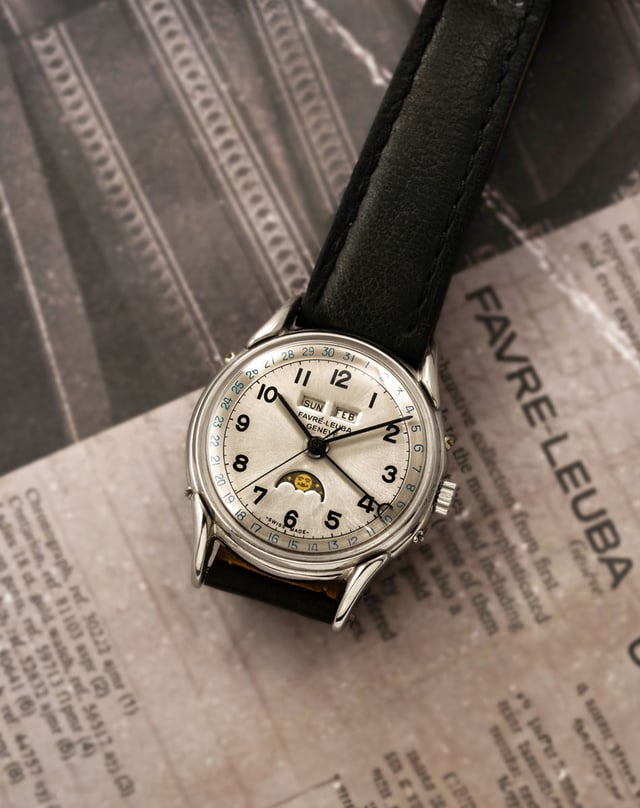
Favre Leuba: Historical Triple Calendar
Favre Leuba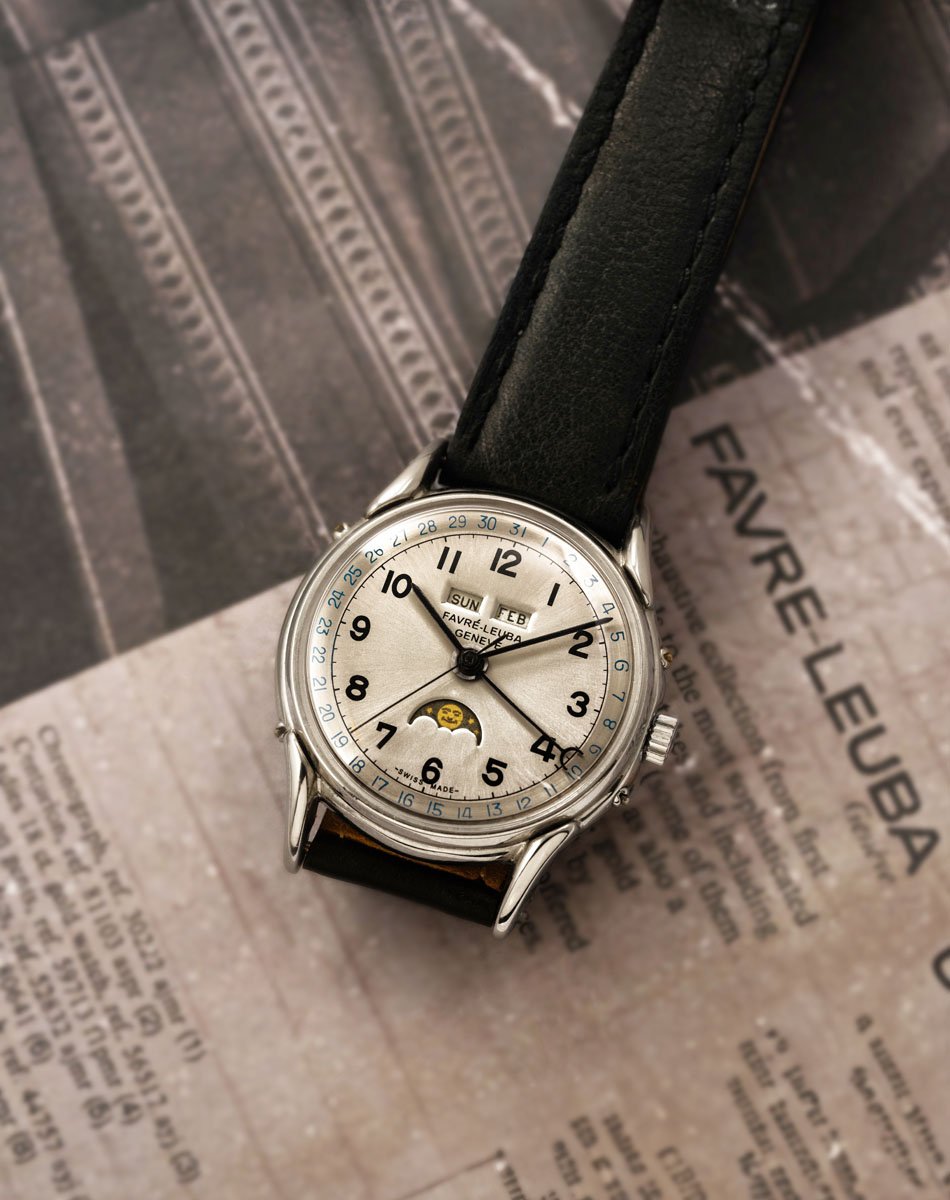
Inside, the automatic caliber FLD06 operates with a power reserve of 56 hours. The decoration includes Geneva stripes, perlage, and blued screws, visible through the sapphire crystal case back. Operation is carried out via correctors integrated into the case at 2 and 10 o'clock, allowing adjustment of the calendar displays. The watch is worn on a color-coordinated leather strap equipped with a quick-change system, allowing the strap to be exchanged without tools. A pin buckle with the Favre-Leuba hourglass logo secures the strap to the wrist. The water resistance of the 1737 Triple Calendar is 100 meters, and the price is $4,500.
Harpoon Revival: Return of a 1960s Design
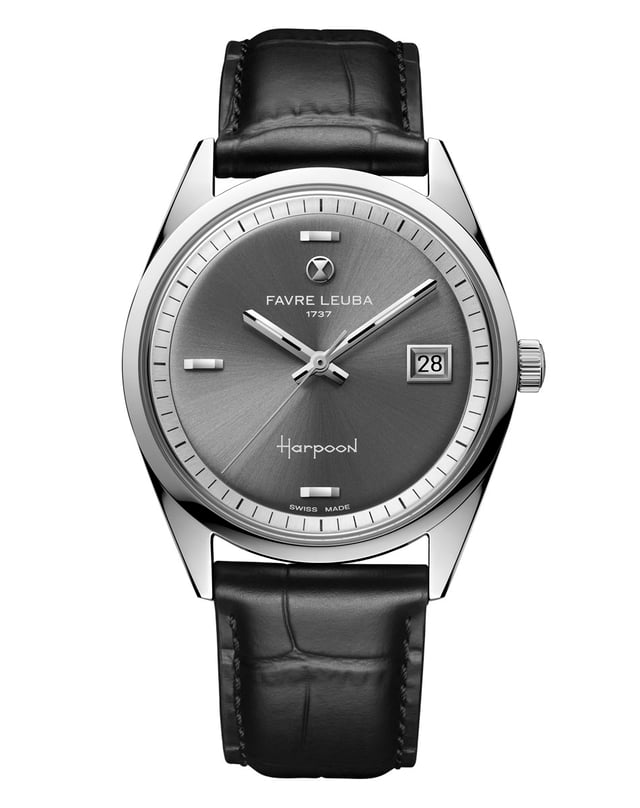
Retro design, modernly interpreted: Harpoon Revival
Favre Leuba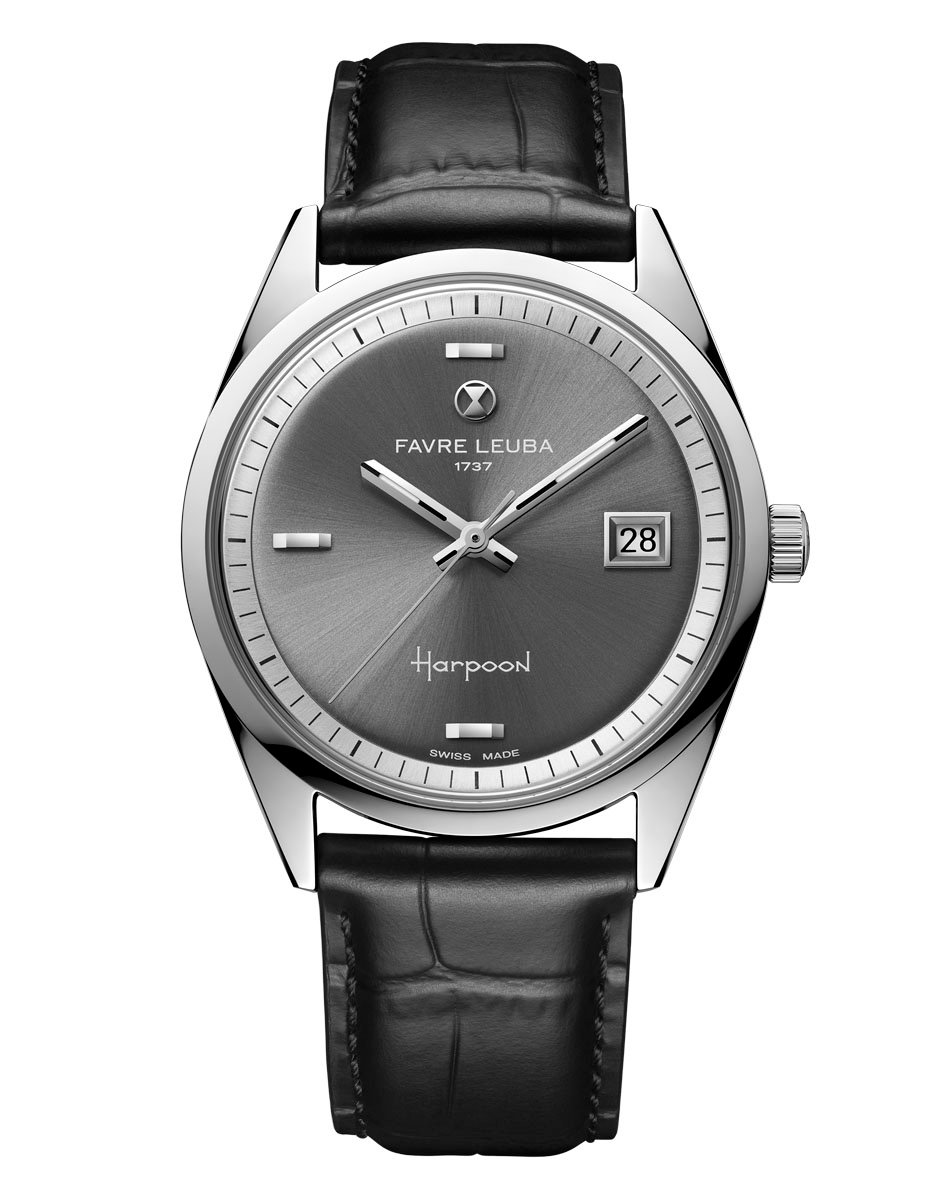
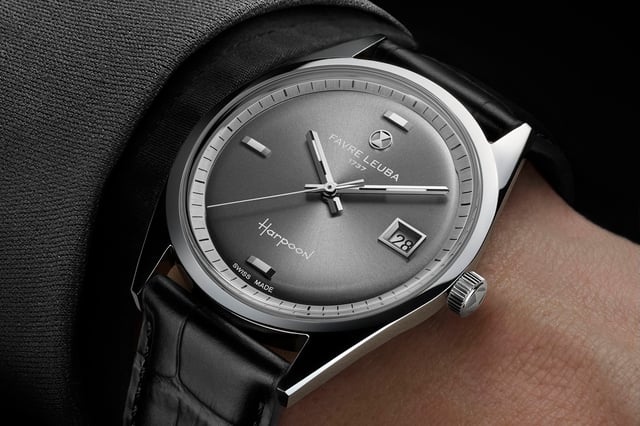
With the Harpoon Revival, Favre Leuba brings back a model originally introduced in 1966. The goal was a faithful reinterpretation, preserving the proportions and design of the original while incorporating modern technology. This includes the automatic caliber FLD04, which is based on the La Joux-Perret G100. Its power reserve is rated at 68 hours.
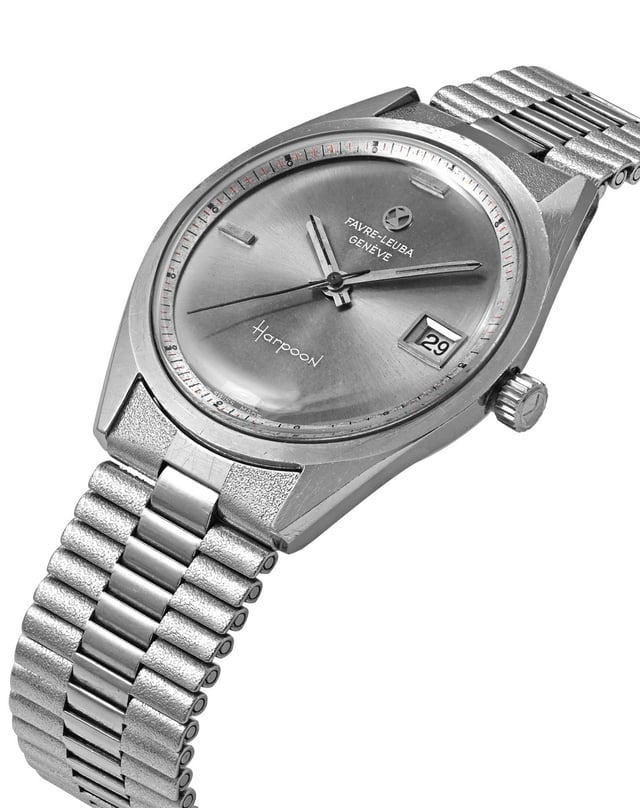
Favre Leuba Harpoon: the historical model from the 1960s
Favre Leuba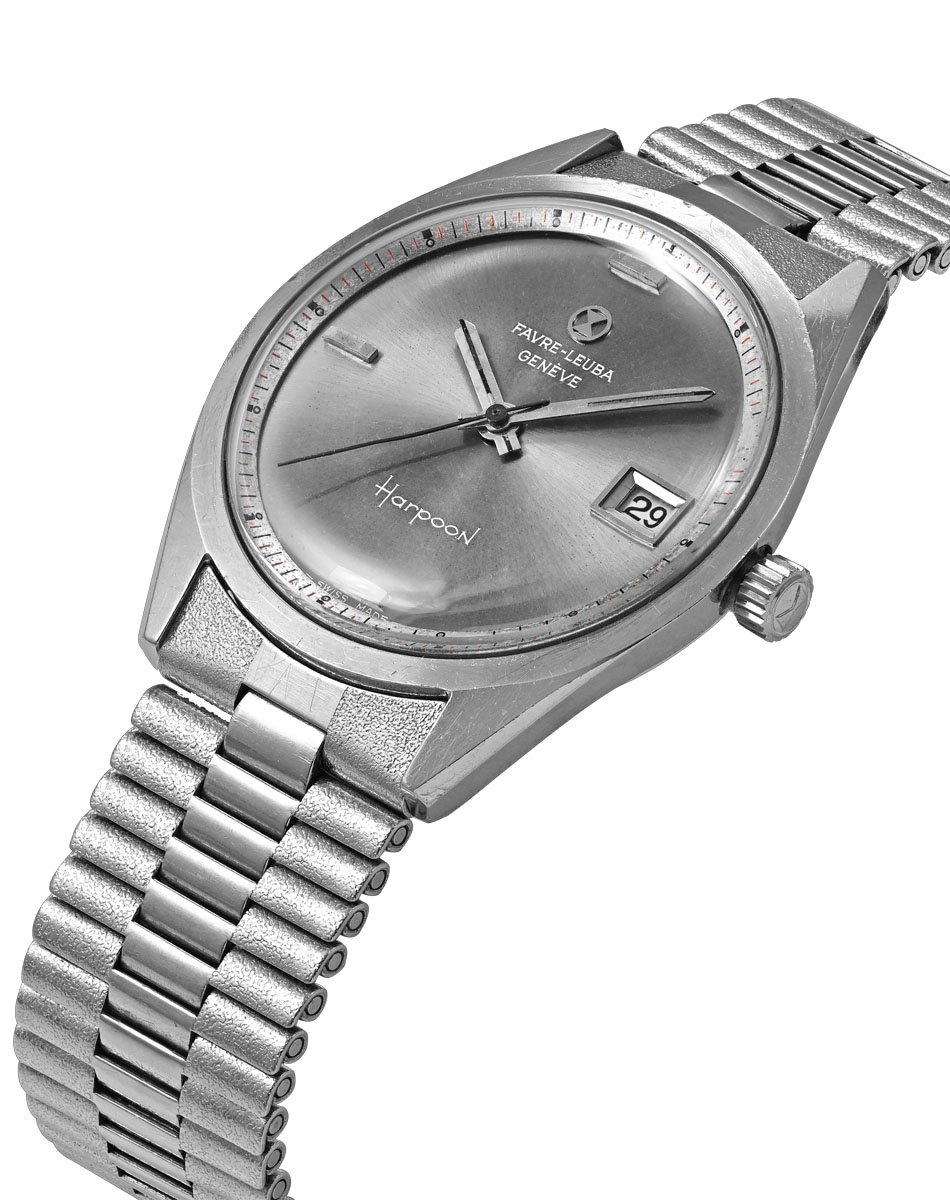
The stainless steel case measures 36.8 mm in diameter and 10 mm in height, largely corresponding to the historical dimensions. Details such as the polished bezel, the engraved medallion on the case back, and the period-typical typography also reflect the design of the original. The gray dial is decorated with a sunburst finish and retains the characteristic index arrangement of the original Harpoon: The hour indices at 12, 6, and 9 o'clock are horizontally aligned, giving the model a distinct visual identity. The watch is water-resistant to 50 meters and is worn on a leather strap with a quick-change system. The price is $2,500.
To learn more, visit Favre Leuba, here.