Lift-Off: 6 Watches (Other Than the Omega Speedmaster) That Went to Space
This article is from the WatchTime Archives.
Among watch enthusiasts, collectors, and just about everyone in between, the below photo of Buzz Aldrin photo inside the lunar module, wearing his Omega Speedmaster (Ref. 105.012), during the lunar landing mission has perhaps become as iconic as the timepiece featured.
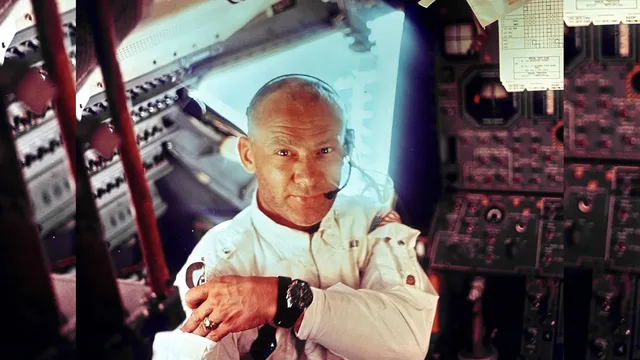
On July 21st, the NASA-approved Speedmaster became "the first watch worn on the Moon," or simply the "Moonwatch" (more detail on this here, here and here ), but the famous chronograph was neither the first watch in space, nor the last one that traveled to the only place in our solar system, other than Earth, where humans have visited. Here are six history-making timepieces that also played a significant role in conquering the infinite vastness of space:
Fortis Cosmonaut Chronograph
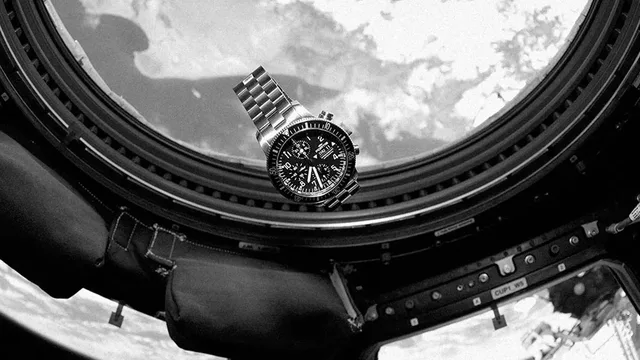
The first watch to be used for space missions by Russia's Roscosmos State Corporation for Space Activities was the 38-mm Cosmonauts Chronograph from Fortis in 1994 (powered by the Lemania 5100 movement). Surprisingly, Fortis had originally designed the chronograph as a limited edition for an art project. The current version is the B-42 Official Cosmonauts Chronograph (Ref. 638.10.11) with Valjoux movement, introduced in 2003. It has been used by Russian space travelers for more than 20 years — at one point even as a makeshift hammer (after a cosmonaut had forgotten his tools on the ISS).
Sinn Chronograph 142
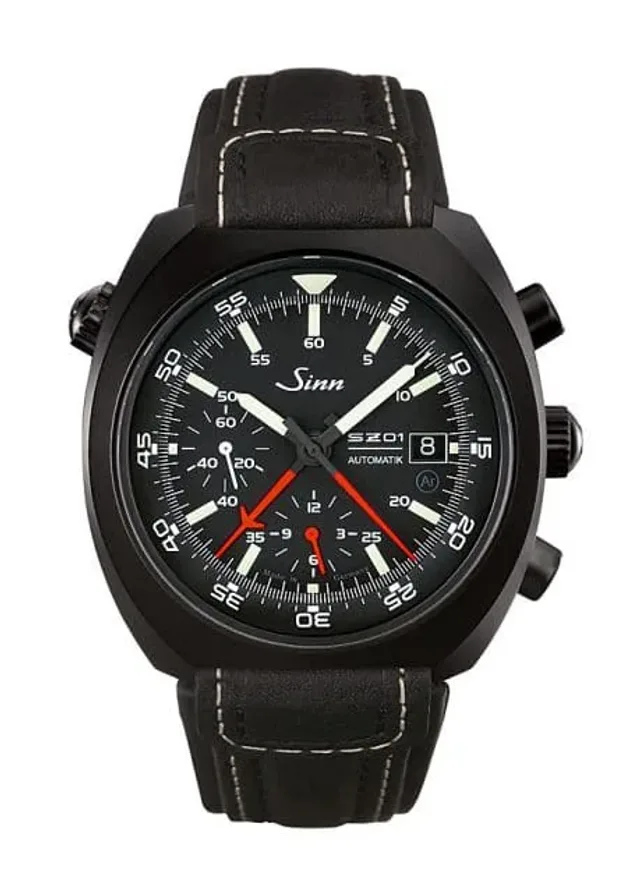
German Astronaut and physicist Reinhard Furrer wore his personal black-PVD 140S during the Spacelab Mission D1, in 1985. This chronograph from Sinn was powered by the Lemania 5100 movement (which is no longer manufactured today); for the current version (Ref. 140.020 and 140.030), Sinn developed a module for the Valjoux 7750 that placed the stop-minute function in the center of the movement.
Seiko Speed-Timer 6139-6009
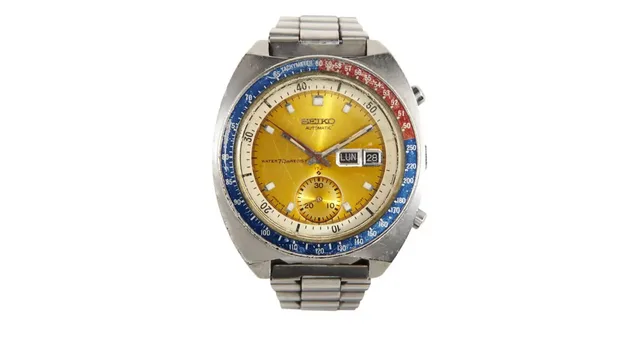
Already a strong contender in the race to bring the first automatic chronograph to the market in 1969 (read more on the history of Seiko chronographs here), Japan's Seiko also made its mark in space. American astronaut and pilot of the Skylab 4 mission, William Reid "Bill" Pogue, boarded the longest space flight, at the time, to be carried out, while wearing the Seiko Speed-Timer 6139-6002. After 84 days, Skylab 4 and the Seiko on Pogue's wrist landed.
Breitling Navitimer Ref. 809
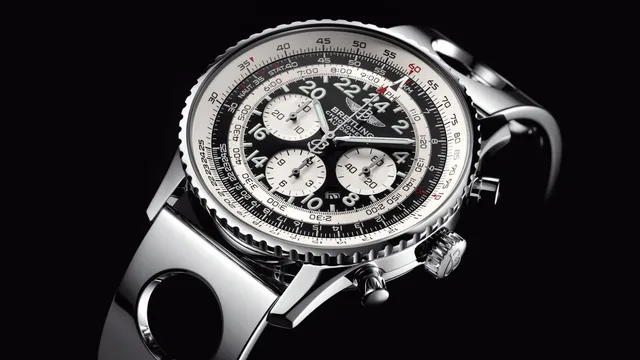
One of the original seven astronauts to orbit the Earth three times in the Aurora 7 spacecraft, American astronaut Scott Carpenter launched into space on May 24, 1962, making him the second American in orbit. He wore a modified Breitling Navitimer (Ref. 809) made of stainless steel on his wrist that featured a Venus 178 hand-wound caliber, specially converted for Breitling. Fifty years later, Breitling launched a limited edition of that watch, which had become known as the Navitimer Cosmonaute. Like the watch from 1962, it had a 24-hour display, a slide rule bezel, and a manual-winding movement. For more info on the Breitling Navitimer Cosmonaute, click here.
Heuer Stopwatch 2915A
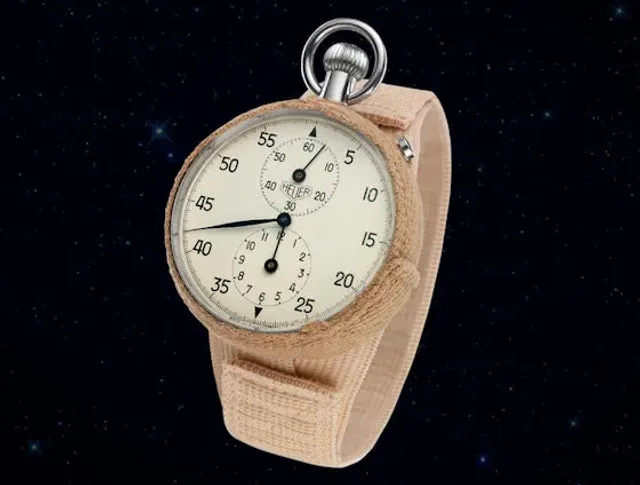
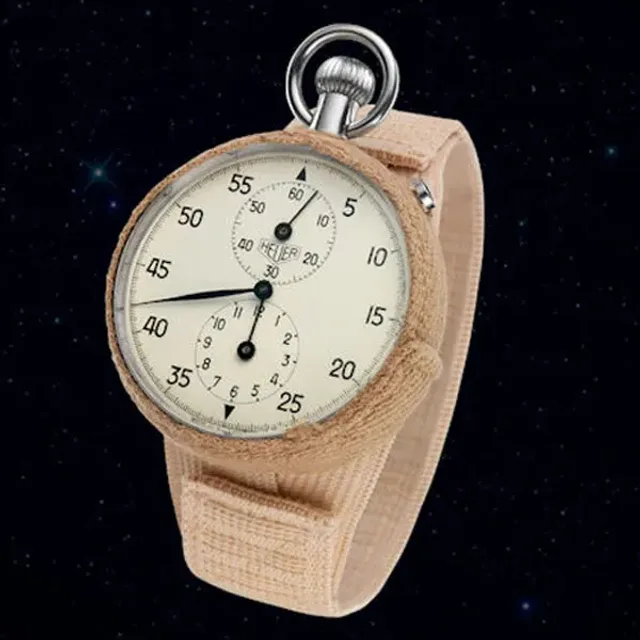
American astronaut John Glenn wore the Heuer stopwatch (Ref. 2915A), attached by rubber bands, over his spacesuit. The stopwatch accompanied the astronaut three times around the world on February 22, 1962, on his nearly four-and-a-half-hour "Friendship 7" mission. This makes it the first Swiss timepiece in space and the second everyday watch that has ever accompanied a space traveler after the Shturmanskie worn by Russian cosmonaut Yuri Gagarin. The 2915A was never produced in high numbers, making it virtually impossible to find. If the design and history fascinate you, the brand launched the limited edition TAG Heuer Carrera 1887 SpaceX Chronograph, with only 2,012 pieces produced, in 2012, to commemorate the 50th anniversary of the Luna mission. The chronograph takes its design cues from the 2915A and features an image of the Friendship 7 capsule, both on the dial and across the display caseback. Click here to read more about the 2915A.
Rolex GMT-Master
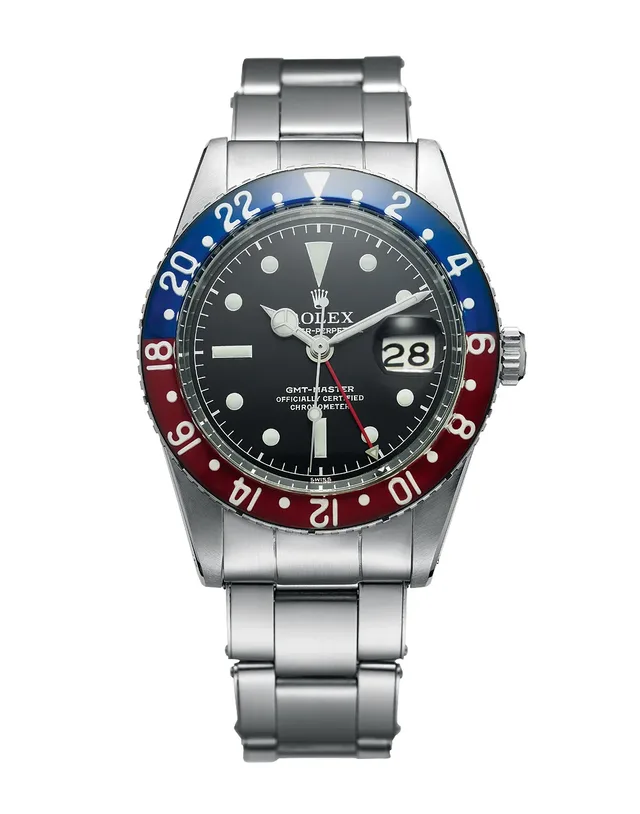
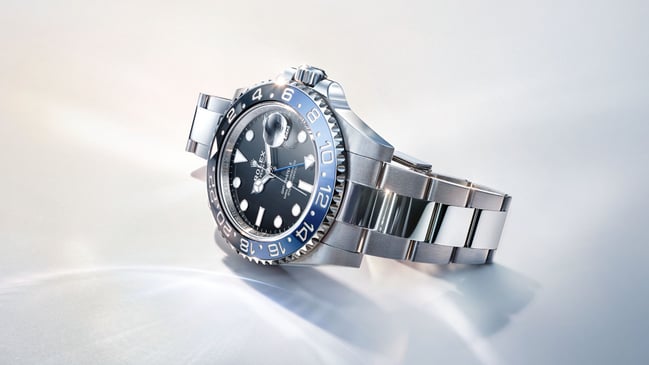
While the Speedmaster was the official watch issued by NASA, some astronauts brought their own watches along: During the Apollo missions, the Rolex GMT-Master was worn by astronauts such as Alan Shepherd, Dr. Edgar Mitchell, and Eugene Cernan. NASA Apollo 17 astronaut Ronald Evans brought this model with him on the last crewed moon mission in 1972. While the design has changed very little over the last 60 years, the latest reissue of the "Pepsi" GMT-Master II is the reincarnation of the classic in its original form. Rolex has improved the technology within and provides even greater value with a longer power reserve. If you prefer Pepsi over Coke, check out our hands-on review of the GMT classic, here.